To save content items to your account,
please confirm that you agree to abide by our usage policies.
If this is the first time you use this feature, you will be asked to authorise Cambridge Core to connect with your account.
Find out more about saving content to .
To save content items to your Kindle, first ensure no-reply@cambridge.org
is added to your Approved Personal Document E-mail List under your Personal Document Settings
on the Manage Your Content and Devices page of your Amazon account. Then enter the ‘name’ part
of your Kindle email address below.
Find out more about saving to your Kindle.
Note you can select to save to either the @free.kindle.com or @kindle.com variations.
‘@free.kindle.com’ emails are free but can only be saved to your device when it is connected to wi-fi.
‘@kindle.com’ emails can be delivered even when you are not connected to wi-fi, but note that service fees apply.
This work is intended for those who would like to read something, but not too much, about the life stories of some of the most remarkable engineers born since the Renaissance. There are five or six profiles in each of nine chapters, making 51 engineers altogether. The emphasis is mainly on their varied life stories, not so much on the details of their achievements. Although I knew none of them personally – most of them died long before I was born – I know something of their works. In France I have sailed along Riquet's Grand Canal de Languedoc, been impressed by the fortifications of Vauban and ascended the Eiffel tower. In England, I have seen mighty beam engines at work, and in museums. I have ridden on the footplates of steam engines, and I have frequently used Brunel's Great Western Railway. In the United States, I have walked across Roebling's Brooklyn Bridge and have inspected the Wrights' biplane in the Smithsonian National Air and Space Museum. In the Second World War, I had first-hand experience of the V-1 flying bomb and the V-2 ballistic missile. In Russia, I have flown in one of Tupolev's aircraft. My house is full of electrical appliances, as is the car I drive. I write this book on a laptop computer, the descendant of Babbage's analytical engine, which was to be powered by steam.
Among Smeaton's apprentices was a young man who became first his assistant, then his partner. William Jessop has been unfairly neglected; because not very much is known about his life, apart from his work. His parents, Josias and Elizabeth Jessop, had three other children: two younger sons and one daughter. William, the future engineer, was born on 23 January 1745 at Devonport, where his father was employed. When Smeaton arrived in Plymouth in 1756 to build the new Eddystone lighthouse, he placed Josias in charge of the workyard and they worked together until it was finished three years later. It was hardly surprising when Josias' son William, who was keen to be trained in engineering, was accepted by Smeaton as an apprentice and thus William learned the basics of theoretical and practical engineering at Austhorpe Lodge.
At the age of 27, Jessop was beginning to act as Smeaton's junior partner. His first major work was in Ireland, where he extricated the government from difficulties over the construction of the Grand Canal that links the Liffey at Dublin with the Shannon near Banagher. Under his capable aegis, the line westwards was resurveyed, the fine Leinster aqueduct was built over the Liffey at Sallins, and the canal was driven successfully across the Bog of Allen. In 1773, still under 30, he was elected a member of the Smeatonian society.
The internal combustion engine was developed in stages during the last quarter of the nineteenth century. The Otto four-stroke gas engine was introduced in 1876, the small revolutionary petrol engines of Gottlieb Daimler in the decade 1880–90. This was followed by the development of the diesel engine. Nowadays, these powerful, economical and reliable engines are to be found everywhere, not only for transport in trucks, locomotives and ships, but in many other situations. While diesel technology has been greatly developed over the years, the basic principles were established by the man whose life is profiled next.
Rudolf Christian Karl Diesel was born on 18 March 1858 of South German protestant parents in Paris, where he received his early education. His father, Theodor, was a craftsman in leather with an interest in spiritualism who, around 1850, had moved to the French capital, where he struggled to support his family by practising Mesmerism as well as his craft. His wife Elise, née Strobel, a native of Nuremberg who was living in London at the time of her marriage, was the more practical one. They had three children, Louise in 1856, who died in her teens, Rudolf in 1858 and Emma in 1860.
There are some experimental physicists who might also be classified as engineers. I shall profile a few of these, beginning with the American Joseph Henry. He was born in Albany, the state capital of New York, on 17 December 1797. His father, William Henry, was a sometime day labourer from Argyle, distantly related to the earls of Stirling, while his mother Ann, née Alexander, was a miller's daughter. William Henry died young, and it was chiefly his widow Ann who brought up her son. She was a small woman with rather delicate features who lived to an advanced age. A devout and strict member of the Scottish Presbyterian church, she passed its Calvinist principles on to her son. Before he had turned six she sent him to nearby Galway to live with her stepmother and her twin brother John.
After three years of elementary school, Joseph took a job in a general store where the shopkeeper, an educated man, encouraged him to continue with his education after work. When the boy was approaching 14, he returned home to Albany, where he was apprenticed to a watchmaker and silversmith. After the business had failed, he was released from his apprenticeship but not before he had acquired some practical skills, which were to be useful to him later.
Most people know what an engineer is without being able to produce a definition. We say that someone has engineered the solution to a problem, and the dictionary allows this by defining an engineer as someone who contrives, designs or invents, with the same root as genius, a word whose meaning has varied much over the years. This covers not only traditional types of engineering, building bridges or railways, for example, or cars or aeroplanes, but also modern types, such as software engineering. Engineering overlaps with science, on the one hand, and with technology, on the other. There are many specialities: civil (as opposed to military) engineering, mechanical, electrical, medical, sanitary, computer, etc., are in common use. Feibleman (1961) has attempted to distinguish between these, but the distinctions matter little for my purposes. I give several examples of people who might be classified as applied physicists, others who might be regarded as electrical technologists, but they are still engineers. Although I have written about some of these engineers before (James, 2004; 2009a; b), the profiles here are not the same.
The profiles that follow are arranged chronologically by date of birth, so that when read in sequence they convey in human terms something of the way in which engineering developed. In writing this book, I had in mind the reader who, like myself, is interested in engineering but is not necessarily familiar with the history of the subject. To avoid being too discursive, I have focused in this book on certain themes.
As we have seen, the kinds of people who were attracted to engineering as a career were quite various. Some, such as Vauban, Brindley, Telford, the elder Stephenson, Ayrton and Woods, and perhaps also Edison, grew up in the shadow of poverty. Several, such as Riquet, Trevithick, Marc Brunel, Diesel and Lanchester, fell seriously into debt in the course of their careers. A few, like Cayley, Parsons and von Braun were born into wealthy families. They differed greatly in their social background and their degree of education. Engineers, however distinguished, were seldom accepted into the scientific academies. Instead they formed societies or other bodies to regulate their branch of the profession. Four engineers, namely Braun, Marconi, Gabor and Shockley won Nobel Prizes. Telford, the younger Brunel, Bazalgette and Parsons were knighted; Vauban, Thomson and Marconi were ennobled. Cayley and von Braun inherited a title.
The job of the practising engineer varies enormously according to the speciality. The work of a civil engineer, for example, might involve planning, costing and organizing the construction of something, dealing with legal problems and managing a work force. A mechanical engineer, might expect to design, manufacture, install and maintain machinery. There are also different ranks, different levels of skill, knowledge and responsibility, and different official or unofficial levels of status. However, any engineer requires a good business sense if he is to succeed. He also needs to develop managerial skills, to deal with contractors and employees, both skilled and unskilled.
The idea of a canal between the Atlantic and the Mediterranean, cutting out the long and dangerous haul around the coasts of the Iberian Peninsula, had been conceived by Leonardo da Vinci. Although much discussed, it remained no more than an idea until the middle of the seventeenth century, when the Grand Canal de Languedoc came into being. Voltaire, writing of the building achievements of the reign of Louis XIV, described it as ‘le monument le plus glorieux’ and Skempton describes it in the History of Technology (Singer et al., 1954–84) as, ‘the greatest feat of civil engineering in Europe between Roman times and the nineteenth century.’ Nowadays the canal, known as the Canal du Midi, is mainly used by pleasure boats but there is still some commercial traffic.
The man who was responsible for the construction of the canal was born at the town of Béziers, not far from Montpellier, on 29 June 1604 to Guillaume Riquet, a wealthy lawyer, and his wife. The Riquet family are said to be of Italian origin, but centuries earlier they had settled in the Languedoc region of France. Riquet was educated at the Jesuit college in Béziers, where he excelled in science and mathematics, but he received no formal training in engineering. At 19, he married Catherine de Milhau, the daughter of a wealthy bourgeois family of Béziers, whose dowry was such that he was able to purchase the old chateau and estate of Bonrepos, near the little village of Verfeil 12 miles to the east of Toulouse, on the slopes of the valley of the river Girou.
The name of Eads has already been mentioned in the profile of Roebling. James Buchanan Eads, the future bridge-builder, was born in Lawrenceburg, Indiana, on 23 May 1820, the son of Thomas Clark Eads, a businessman, and Ann Buchanan. He was named after his mother's cousin, James Buchanan, a Pennsylvania Congressman who later became the undistinguished 15th President of the United States. After leaving school at the age of 13, he tried his hand at a variety of jobs, until in 1838 he became purser on a Mississippi steamboat, the Knickerbocker, which before long hit a snag in the river and sank, like many other boats. Eads decided to become a salvage engineer, using his own design of diving bell and by the time he was 25 he had made enough money to invest some of it in establishing the first glassworks west of the Ohio river. When this proved unsuccessful he returned to salvage work on the Mississippi until 1857.
At the outbreak of the Civil War, in 1861, Eads realized that control of the Mississippi would be an important strategic objective and advised President Lincoln to acquire a fleet of steam-propelled iron-clad gunboats to patrol the western rivers. Although he had no experience of shipbuilding he successfully contracted to build seven such boats without their guns in 65 days. After these gunboats provided the first Union victories of the war, he was awarded a second contract to build or convert another 18.
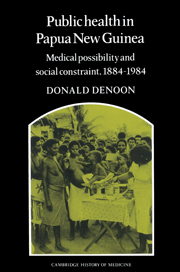
This book concerns the development of institutional medicine, medical practice and health care during the initial colonisation and later colonial rule of Papua New Guinea. It discusses the relationship between public health and the medical profession and colonial bureaucracy, and also analyses the profession's social and technical ideas which determined the kinds of health policies and programmes attempted. The first part describes the era of tropical medicine which predominated at the turn of the century and survived until the 1950s. The second part investigates the transformation of tropical medicine by the introduction of new drugs and the curative campaigns of the 1950s and 1960s, and thereafter discusses the emergence of a new medical strategy known as 'primary health care'. This original, comparative study will be of value not only to anthropologists and historians of tropical medicine but also to historians of colonialism and its effects on public health care.
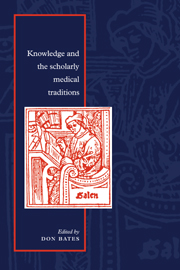
However much the three great traditions of medicine - Galenic, Chinese and Ayurvedic - differed from each other, they had one thing in common: scholarship. The foundational knowledge of each could only be acquired by careful study under teachers relying on ancient texts. Such medical knowledge is special, operating as it does in the realm of the most fundamental human experiences - health, disease, suffering, birth and death - and the credibility of healers is of crucial importance. Because of this, scholarly medical knowledge offers a rich field for the study of different cultural practices in the legitimation of knowledge generally. The contributors to this volume are all specialists in the history or anthropology of these traditions, and their essays range from historical investigations to studies of present-day practices.
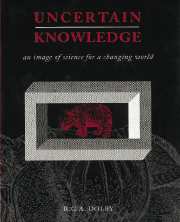
What is science? How is scientific knowledge affected by the society that produces it? Does scientific knowledge directly correspond to reality? Can we draw a line between science and pseudo-science? Will it ever be possible for computers to undertake scientific investigation independently? Is there such a thing as feminist science? In this book the author addresses questions such as these using a technique of 'cognitive play', which creates and explores new links between the ideas and results of contemporary history, philosophy, and sociology of science. New ideas and approaches are applied to a wide range of case studies, many of them from controversial and contested science. This book will be of interest to historians and sociologists of science, to anyone interested in science studies, and to educated general readers with an interest in the history, philosophy, and social context of science.
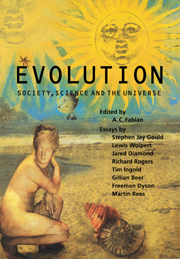
Cutting across boundaries of art and science, evolution is a fundamental process that has beguiled thinkers through the ages. This collection draws together world-renowned thinkers and communicators with their own intriguing insights. In these essays they offer a feast of dazzling thoughts and ideas to challenge and enthral the reader. Why and how do civilizations and societies change over time? Why do our cells develop the way they do? Why are some villages still villages while others have grown into vast cities? Can we learn from our evolutionary past to plan a better future for our health and society? Tracing a line from the history of biological evolution, through the evolution of cultures, society, science and the universe, Evolution brings together intriguing parallels from all levels of life. From the evolution of the developing embryo to the evolution of a developing star, common threads develop into a fascinating story.
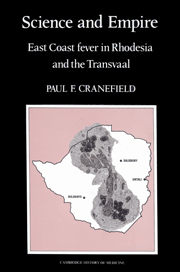
East Coast fever is a lethal disease of cattle, caused by a parasite that multiplies within T-lymphocytes, causing them to become lymphoblasts that behave like cells in leukaemia and lymphoma. This is the story of the disease and its effects on farmers, as well as of the scientists who studied it. The disease was unknown to western science or to veterinary practice until it was introduced into Rhodesia in 1901. It devastated the cattle-raising and ox-cart dependent transport systems of Rhodesia and South Africa and was not fully brought under control for some 50 years. The book describes the social and economic impact of the outbreak, the scientific investigations into it, and the effort to control it. The scientific study of the disease was done in part by the famous bacteriologist Robert Koch, whose many early errors had a negative effect on later investigators whose work was far more sound.
Martha Turner's 1993 book examines the relationship between British fiction and the tradition of mechanistic science derived from Isaac Newton, and provides a bridge between the mechanical philosophy of the eighteenth century and present-day habits of thought. Tracing the evolution of the concept of mechanism among science writers and novelists of the past 200 years, it shows how the pre-mechanistic world of Pride and Prejudice and the relatively unproblematic empiricism of The Bride of Lammermoor were succeeded by the quandaries of Bleak House, The Ordeal of Richard Feverel, and The Egoist, and how alternatives to the mechanistic tradition were worked out in The Secret Agent and Women in Love. Analysis of Doris Lessing's Canopus in Argos: Archives identifies features of the tradition which still survive.
This is one of the first books in a new series that will publish the very best work in the philosophy of biology. The series will be non-sectarian in character, will extend across the broadest range of topics, and will be genuinely interdisciplinary. The Immune Self is a critical study of immunology from its origins at the end of the nineteenth century to its contemporary formulation. The book offers the first extended philosophical critique of immunology, in which the function of the term 'self' that underlies the structure of current immune theory is analysed. However, this analysis is carefully integrated into a broad survey of the major scientific developments in immunology, a discussion of their historical context, and a review of the conceptual arguments that have moulded this sophisticated modern science.
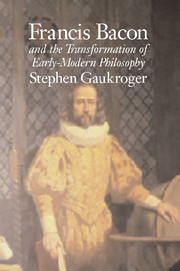
This ambitious and important book, first published in 2001, provides a truly general account of Francis Bacon as a philosopher. It describes how Bacon transformed the values that had underpinned philosophical culture since antiquity by rejecting the traditional idea of a philosopher as someone engaged in contemplation of the cosmos. The book explores in detail how and why Bacon attempted to transform the largely esoteric discipline of natural philosophy into a public practice through a program in which practical science provided a model that inspired many from the seventeenth to the twentieth centuries. Stephen Gaukroger shows that this reform of natural philosophy was dependent on the creation of a new philosophical persona: a natural philosopher shaped through submission to the dictates of Baconian method. This book will be recognized as a major contribution to Baconian scholarship, of special interest to historians of early-modern philosophy, science, and ideas.
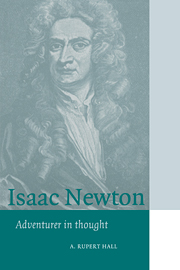
In this elegant, absorbing biography of Isaac Newton (1642–1727), Rupert Hall surveys the vast field of modern scholarship in order to interpret Newton's mathematical and experimental approach to nature. Mathematics was always the deepest, most innovative and productive of Newton's interests. However, he was also a historian, theologian, chemist, civil servant, and natural philosopher. These diverse studies were unified in his single design as a Christian to explore every facet of God's creation. The story of Newton's life and discoveries has been greatly altered by exploration of his huge manuscript legacy during the last forty years, throwing new light upon his personality and intellect. Hall's discussion of this research shows that Newton cannot simply be explained as a Platonist, mystic, or magus. He remains a complex and enigmatic genius with an immensely imaginative and commonsensical mind.
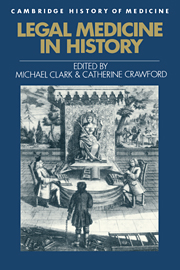
This collection of essays presents fresh interpretations of the growth of medico-legal ideas, institutions and practices in Britain, Europe and America over the past four hundred years. Based on a wealth of new research, it brings the historical study of legal medicine firmly into the realm of social history. Case studies of infanticide, abortion, coroners' inquests and criminal insanity show that legal medicine has often been the focus of social change and political controversy. The contributors also emphasise the formative influence of legal systems on medico-legal knowledge and practice. Legal Medicine in History enlarges our understanding of the public role of medicine in modern western societies, while opening up new perspectives on social, cultural and political history.