To save content items to your account,
please confirm that you agree to abide by our usage policies.
If this is the first time you use this feature, you will be asked to authorise Cambridge Core to connect with your account.
Find out more about saving content to .
To save content items to your Kindle, first ensure no-reply@cambridge.org
is added to your Approved Personal Document E-mail List under your Personal Document Settings
on the Manage Your Content and Devices page of your Amazon account. Then enter the ‘name’ part
of your Kindle email address below.
Find out more about saving to your Kindle.
Note you can select to save to either the @free.kindle.com or @kindle.com variations.
‘@free.kindle.com’ emails are free but can only be saved to your device when it is connected to wi-fi.
‘@kindle.com’ emails can be delivered even when you are not connected to wi-fi, but note that service fees apply.
Where shall we set the beginning of modern skepticism? As we have seen, the modern skeptical movement can trace its roots back to David Hume and René Descartes in the Enlightenment. Francis Bacon, a courtier in the court of King Henry VIII, could be called a skeptic. We could also look at many important skeptics in the nineteenth century, such as Herbert Spencer, and early twentieth century skeptics such as Harry Houdini (1980). Later on we will look at one of these early skeptics, William Clifford. However, most modern skeptics regard a clear and simple sequence of events as marking the founding of the modern movement.
The key event is the publication in 1952 of a book by the polymath writer Martin Gardner, titled In the Name of Science. The book did not sell well in its original incarnation, but it was reissued in 1957 under a different title, Fads and Fallacies in the Name of Science (Gardner 1957) and it has remained in print ever since. Half a century later, its contents are intriguing, and we will review them in a moment.
By itself, Gardner's book made little perceptible difference. However, in 1975 a statement appeared in Science News titled ‘Objections to Astrology’ (Bok et al 1975), signed by a number of Nobel Prize winning scientists. The following year a conference was held in Buffalo, New York, on ‘The New Irrationalisms: Antiscience and Pseudoscience’.
You may feel a little cheated by the subject of this chapter. Isn't this book about investigating the paranormal? Why should we spend a whole chapter looking at science? There are at least two compelling answers. First, both the paranormal and skepticism are defined in terms of science: we will see this in Chapters two and three. Without some understanding of science, the other key terms will make no sense. Second, many paranormal practitioners argue that they are in fact doing science. Others are fiercely opposed to the idea. Science is simply too important to be ignored, and we need to know how it works.
What is science? For centuries, philosophers have tried to work out exactly how scientific knowledge differs from other types of knowledge. In general, the attempts have failed. Alan Chalmers (1988) has written a good summary of the major attempts. In this chapter we will outline a couple of simple models of science. In turn, these will enable us to understand some key points about both skepticism and the paranormal.
We might start with the views of one of the greatest scientists of all time. Albert Einstein summarised the entire goal of science in a single sentence: ‘The grand aim of all science is to cover the greatest number of empirical facts by logical deduction from the smallest number of hypotheses or axioms.’ (Calaprice 1996, p. 178).
Let us unpick this concise statement a bit more, as it tells us a great deal.
What exactly is the paranormal? The term comes from the Greek prefix para meaning ‘beyond’. Hence, the paranormal is beyond normal. It has been equated with ‘weird things’, pseudoscience, the supernatural and a great deal more. But what exactly is it?
Carl Sagan takes one approach when he lists the items which can, in his view, be investigated as part of the paranormal. He lists several dozen phenomena, starting with ‘astrology, the Bermuda Triangle, “Big Foot” and the Loch Ness Monster’ (Sagan 1997, p. 208) and ending with ‘innumerable cases of acute credulity by newspapers, magazines and television specials and news programs’ (Sagan 1997, p. 209).
Sagan's list is very inclusive, and he also manages to make it quite funny. A problem may occur to the reader, though: why those beliefs in particular? And, if we only use a list like Sagan's, what if other possible forms of paranormality appear? How do we decide what should go on the list? Sagan gives us no guide, no way of deciding what is and what is not paranormal.
Clearly, what we need is some sort of definition. Here is a skeptic's definition of the paranormal. David Marks defines it as follows: ‘as related to psychic research, faculties and phenomena that are beyond “normality” in terms of cause and effect as currently understood’ (Marks 2000, p. 28).
And here is a believer's definition. JB Rhine is the founder of modern parapsychology.
We have seen that paranormal belief can have extremely dire effects. The deaths of Caleb Moorhead and Liam Williams-Holloway were both, in part at least, probably caused by the paranormal beliefs of their parents. We also saw that a young woman's credulous approach to paranormal beliefs made her vulnerable to a ‘clairvoyant’ who relieved her of large amounts of money. We have also seen that many skeptics have concerns about the suffering caused by some paranormal claims, and the threat they pose to science.
This suggests an important dimension to scepticism, an ethical perspective, and we will look at this more closely in this chapter. The implication is that in some cases skepticism may not simply be a useful set of intellectual tools, but an approach to human affairs that can have profoundly beneficial effects. If this is so, then we should be able to discern some concern within skepticism for right and wrong conduct. That is, skepticism has an ethical dimension, giving us guidance about right and wrong conduct. We will begin by asking a rather surprising question: can it be unethical to hold certain beliefs? As we will see, some very serious thinkers argue that this is so. We will also look at some aspects of skeptical behaviour and will try to sketch an outline of a skeptical ethic.
A major approach to ethics is termed ‘consequentialism’ and it focuses on the consequences – the results – of particular courses of action.
In the previous chapter, we looked at the key principles of modern skepticism. Between them, they provide a foundation for a skeptical outlook on the paranormal and, as we shall see, on the world generally. However, if the reader tries to apply these concepts directly to the paranormal, there is likely to be disappointment. The ideas are far too general to apply to most paranormal claims. For example, Sagan's balance states that the evidence must be sufficiently strong to justify an extraordinary belief.
But how does one decide exactly what the evidence is, or whether it is strong enough? The general statements give little guidance. Clearly, another step is needed between the general skeptical principles and the actual paranormal claims. For any claim, the skeptic has to understand the main ideas involved in the claim, the main skeptical ideas that can be brought to bear, and the evidence which is involved. There is no shortcut or easy way, although some approaches are better than others. We will call this new set of ideas ‘intermediate concepts’ as they stand between general skeptical principles and the amazing range of paranormal claims.
Paranormalists who approach me are often disappointed. They proffer some sort of evidence (‘My friend saw a UFO!’, or similar) and expect me to be able to demolish the claim there and then, or else to concede that the claim is justified. In fact, of course, this is impossible.
We have seen that skepticism is a powerful tool in evaluating paranormal claims. We have started with a set of important skeptical principles, and have argued that these are crucial in grasping the nature of the argument. Between them, the burden of proof, Occam's razor and Sagan's balance provide the kernel of a skeptical approach to all aspects of the paranormal.
In addition, we have seen that a range of intermediate concepts are needed to link the general principles with the paranormal claim. For example, claims that an alternative therapy can cure diseases – with an amazing story of how someone was cured – can lead to discussion in terms of the placebo effect, and the need for double-blind controlled experiments to see whether the treatment actually works. The burden of proof is clearly on the claimant. Since the claim is an amazing one, Sagan's balance suggests that the quality of evidence must be extremely high. Finally, if the placebo effect can explain the results, there is no need for the paranormal explanation at all. In this way, thinking about the paranormal can be revolutionised by the use of these basic principles, and the intermediate concepts.
Paranormal ideas are only a small fraction of all ideas in the world. In this chapter we ask an important question: have skeptical approaches any value outside the field of the paranormal?
This book has its genesis in a lengthy period I spent in hospital in 2001. The illness was painful – and I had a near-death experience – but as I recovered, I spent weeks reviewing my own life and the inevitable coming of my own demise. So, I asked myself, what did I want to do with the time that was left? Experiences of this kind are common among middle-aged men, and can lead to monumentally foolish decisions. I claim no special wisdom, but my change of course seems to have been completely beneficial.
I had acquired a great deal of respect for the skeptical movement, especially in the way it had helped stop the creation scientists from infiltrating education in my home state of Queensland, and so I conceived the idea of a course in skepticism at Griffith University. On being released from hospital I began to plan such a course. To my surprise, no one at the university objected to such a radical change in my teaching. When it was taught, the course was a great success. Numbers rapidly rose to unprecedented heights and the enthusiasm and involvement of the students was greater than I had ever witnessed.
There were some reasonable books in the area, I found, but none which quite fitted the course. I decided to do things the hard way and write my own. I was greatly helped in this by study leave from Griffith University in 2005.
We will now look at the third term in the book's title: skepticism. As with science and the paranormal, we will begin with the intellectual aspects of skepticism. Then, just as we did with science and the paranormal, we will ask how skepticism is rooted in modern society. Because there is a long history involved, we will look at some important historical figures here, and move to the modern movement in Chapter four.
Some aspects of skepticism can be traced back to thinkers more than two thousand years ago. As we will see, some of these ancient skeptics had something in common with modern skepticism, but in general their aims were rather different. Still it is worthwhile to look at the approaches of the ancient philosophers. Their ideas helped form the modern movement, and their thoughts are often fresh, vital and relevant today.
This is not a complete history of skepticism, and it does not mention all of the people who called themselves skeptics. The aim is simply to highlight some of the most important thinkers and exactly what they contributed to modern skepticism. We will start with a simple question: exactly what do we mean?
WHAT EXACTLY IS SKEPTICISM?
If we look at almost any definition of skepticism (or scepticism) in a dictionary, we will find one recurring element: the idea of doubt. Skeptics, we are told, doubt the truth of propositions. They may also doubt religious belief.
Let us begin with a few stories. All are rather startling, and all make a point crucial for this book. In the UK a few years ago four jurors were involved in the trial of a man for murder. One weekend they became drunk, and decided to use an Ouija board. They would contact the spirits of the murder victim and ask who had committed the crime. In the light of the spirits' replies, the jurors had no hesitation in finding the defendant guilty. The Court of Appeal was not impressed with this method of deliberation, and threw out the verdict (Sydney Morning Herald 2001).
Next, we will look at the deaths of two young boys in New Zealand. According to prominent medical authorities, both could probably have been saved. Caleb Moorhead was six months old when he died. His parents, Deborah Ann Moorhead and Roby Jan Moorhead were Seventh Day Adventists and also vegans (which meant that they did not eat meat, fish or dairy products). Caleb was suffering from a vitamin B12 deficiency. The parents received many warnings about what would happen, but stuck to their principles – Caleb's mother said that conventional medicine was ‘Satan's way’ (Guardian 2002) and the parents did not change their son's diet. Caleb died in March 2001 of bronchopneumonia, caused by the lack of an easily injected vitamin (Stickley 2002).
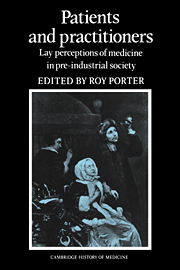
The essays in this volume provide an unusual historical perspective on the experience of illness: they try to reconstruct what being ill (from a minor ailment to fatal sickness) was like in pre-industrial society from the point of view of the sufferers themselves. The authors examine the meanings that were attached to sickness; popular medical beliefs and practices; the diffusion of popular medical knowledge; and the relations between patients and their doctors (both professional and 'fringe') seen from the patients' point of view. This is an important work, for illness and death dominated life in earlier societies to an enormous degree. Yet almost no studies of this kind have ever been carried out before, practically all previous treatments having been written from the traditional point of view of the doctor, the hospital, or medical science. It will accordingly interest a wide range of readers interested in social history as well as the history of medicine itself.
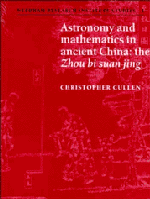
This translation of an ancient Chinese book on astronomy (which is believed to date back to the first century AD) provides the non-specialist with a lucid account of how Chinese astronomers did their work in ancient times. The book also shows how the Chinese imperial government made use of and supported the work of astronomers, and explores the links between astronomy and politics. It will be of equal interest to historians of science and those studying the history of Chinese culture.
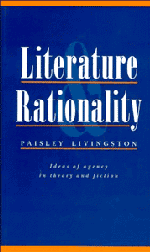
This interdisciplinary study establishes connections between divergent approaches to rationality in philosophy, social science, and literary studies. Livingston provides a broad survey of the basic assumptions and questions associated with concepts of rationality in philosophical accounts of action, in decision theory, and in the theory of rational choice. He gives examples of the ways in which rationality is involved in the writing and reading of literary works, ranging from Icelandic sagas to Beckett, Dreiser, Lem, Poe and Zola. Topics examined include the role of concepts of desire, intention, and planning in action explanations, the relation between cognition and motivation, the rationality of desire, atomic versus agential perspectives on rationality, the rationality of groups and institutions, and the question of the rationality of science.
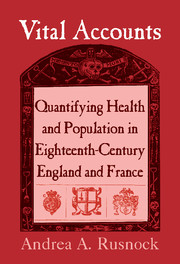
Why did Europeans begin to count births and deaths? How did they collect the numbers and what did they do with them? Through a compelling comparative analysis, Vital Accounts charts the work of the physicians, clergymen and government officials who crafted the sciences of political and medical arithmetic in England and France during the long eighteenth-century, before the emergence of statistics and regular government censuses. Andrea A. Rusnock presents a social history of quantification that highlights the development of numerical tables, influential and enduring scientific instruments designed to evaluate smallpox inoculation, to link weather and disease to compare infant and maternal mortality rates, to identify changes in disease patterns and to challenge prevailing views about the decline of European population. By focusing on the most important eighteenth century controversies over health and population, Rusnock shows how vital accounts - the numbers of births and deaths - became the measure of public health and welfare.
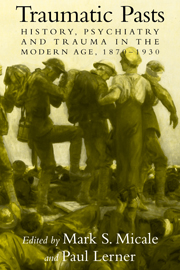
Traumatic Pasts, originally published in 2001, offers a variety of perspectives on mental trauma in war, medicine, culture and society in modern European and American history. Its primary goals are: to provide a generous sampling of the best of the historical scholarship about trauma; to indicate the empirical, analytical and methodological scope of this work; and to present some of the conceptual and methodological issues inherent in writing about the subject. The book operates on the premise that the historical humanities have something crucially important to say about trauma; its essays may be read, in part, as attempts to introduce a deep historical dimension into ongoing debates and controversies. However, it is important to stress that these essays are not simply addressed the concerns; rather, they reflect a shared conviction that trauma opens up fresh perspectives in the study of social and cultural history.
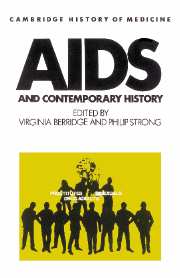
The advent of AIDS has led to a revival of interest in the historical relationship of disease to society. There now exists a new consciousness of AIDS and history, and of AIDS itself as an historic event. This provides the starting-point of this collection of essays. Its twin themes are the 'pre-history' of the impact of AIDS, and its subsequent history. Essays in the section on the 'pre-history' of AIDS analyse the contexts against which AIDS should be measured. The section on AIDS as history presents chapters by historians and policy scientists on such topics as British and US drugs policy, the later years of AIDS policies in the UK and the emergence of AIDS as a political issue in France. A final chapter looks at the archival potential in the AIDS area. As a whole the volume demonstrates the contribution that historians can make in the analysis of near-contemporary events.
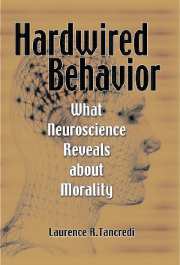
This book explores the impact of neuroscience research over the past 20 or more years on brain function as it affects moral decisions. Findings show that the mind and brain are very close, if not the same, and that the brain 'makes' the mind. This is bringing about a change of focus from examining mental activity (mentalism) to the physical activity of the brain (physicalism) to understand thinking and behavior. We are discovering that the physical features of the brain play the major role in shaping our thoughts and emotions, including the way we deal with 'moral' issues. This book sets out the historical framework of the transition from 'mentalism' to 'physicalism', shows how the physical brain works in moral decisions and then examines three broad areas of moral decision-making - the brain in 'bad' acts, the brain in decisions involving sexual relations, and the brain in money decision-making.
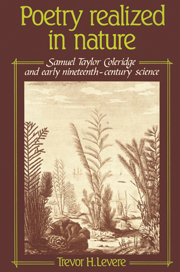
Poetry Realized in Nature shows Coleridge's method at work and, more generally, explores German philosophical science, Naturphilosophie, and the relations between science and romantic thought. It combines a biographical approach with intellectual history, reconstructing Coleridge's imaginative enterprise across the whole range of the physical and life sciences. Coleridge strove for coherence in all realms of thought, and so the ways in which he explored scientific ideas illuminate all aspects of his inquiring spirit. He sought self-knowledge, which required a knowledge of man and mind in relation to nature and God. There was, accordingly, an intimate relationship between his theology and philosophy, and his ideas about the natural world. Science functioned as a touchstone in his philosophy, thus indirectly reinforcing his theology. The ideas he derived from science also bore directly on his critical doctrines, including the theory of imagination.