To save content items to your account,
please confirm that you agree to abide by our usage policies.
If this is the first time you use this feature, you will be asked to authorise Cambridge Core to connect with your account.
Find out more about saving content to .
To save content items to your Kindle, first ensure no-reply@cambridge.org
is added to your Approved Personal Document E-mail List under your Personal Document Settings
on the Manage Your Content and Devices page of your Amazon account. Then enter the ‘name’ part
of your Kindle email address below.
Find out more about saving to your Kindle.
Note you can select to save to either the @free.kindle.com or @kindle.com variations.
‘@free.kindle.com’ emails are free but can only be saved to your device when it is connected to wi-fi.
‘@kindle.com’ emails can be delivered even when you are not connected to wi-fi, but note that service fees apply.
This 1982 book examines the changes in hospital care in New York that occurred around the turn of the twentieth century. It represents a fundamental departure from traditional medical history, which has usually emphasised 'progress' through science and technology. Professor Rosner identifies the economic, political and demographic pressures that brought about a reshaping of the health care system, and analyses the dramatic reorganisation of hospitals that took place. He also discusses major scientific advances such as the discovery of anaesthetic properties of ether, nitrous oxide and chloroform, and the consequent increase in surgical solutions to medical problems.
Paul Adrien Maurice Dirac was one of the founders of quantum theory. He is numbered alongside Newton, Maxwell and Einstein as one of the greatest physicists of all time. Together the lectures in this volume, originally presented on the occasion of the dedication ceremony for a plaque commemorating Dirac in Westminster Abbey, give a unique insight into the relationship between Dirac's character and his scientific achievements. The text begins with the dedication address given by Stephen Hawking at the ceremony. Then Abraham Pais describes Dirac as a person and his approach to his work. Maurice Jacob explains how Dirac was led to introduce the concept of antimatter, and its central role in modern particle physics and cosmology, followed by an account by David Olive of the origin and enduring influence of Dirac's work on magnetic monopoles. Finally, Sir Michael Atiyah explains the deep and widespread significance of the Dirac equation in mathematics.
This book is about the methods used for unifying different scientific theories under one all-embracing theory. The process has characterized much of the history of science and is prominent in contemporary physics; the search for a 'theory of everything' involves the same attempt at unification. Margaret Morrison argues that, contrary to popular philosophical views, unification and explanation often have little to do with each other. The mechanisms that facilitate unification are not those that enable us to explain how or why phenomena behave as they do. A feature of this book is an account of many case studies of theory unification in nineteenth- and twentieth-century physics and of how evolution by natural selection and Mendelian genetics were unified into what we now term evolutionary genetics.
During the 1930s, psychologists Gordon Allport, Gardner Murphy, and Lois Barclay Murphy emerged from the fields of social and personality psychology to challenge the neo-behavioralist status quo in American social science. Willing to experiment with the idea of 'science' itself, these 'rebels within the ranks' contested ascendent conventions that cast the study of human life in the image of classical physics. Drawing on the intellectual, social, and political legacies of William James' radically empiricist philosophy and radical Social Gospel theology, these three psychologists developed critiques of scientific authority and democratic reality as they worked at the crossroads of the social and the personal in New Deal America. Appropriating models from natural history, they argued for the significance of individuality, contextuality and diversity as scientific concepts as they explored what they envisioned as the nature of democracy, and the democracy of nature.
For a generation, the history of the ancien régime has been written from the perspective of the Annales school, with its emphasis on the role of long-term economic and cultural factors in shaping the development of early modern France. In this detailed 1995 study, Henry Heller challenges such a paradigm and assembles a huge range of information about technical innovation and ideas of improvement in sixteenth-century France. Emphasising the role of state intervention in the economy, the development of science and technology, and recent research into early modern proto-industrialisation, Heller counters notions of a France mired in an archaic, determinist mentalité. Despite the tides of religious fanaticism and seigneurial reaction, the period of the religious wars saw a surprising degree of economic, technological and scientific innovation, making possible the consolidation of capitalism in French society during the reign of Henri IV.
By examining German university medicine between 1750 and 1820, this book presents a new interpretation of the emergence of modern medical science. It demonstrates that the development of modern medicine as a profession linking theory and practice did not emerge suddenly from the revolutionary transformation of Europe at the opening of the nineteenth century, as Foucault and others have argued. Instead, Thomas H. Broman points to cultural and institutional changes occurring during the second half of the eighteenth century as reshaping both medical theory and physician's professional identity. Among the most important of these factors was the emergence of a literary public sphere in Germany between 1750 and 1800, a development that exposed medical writing to new discourses such as Jena Romanticism and created the stage on which would be played out the bitter medical controversies of the 1790s.
Why was it that Francis Bacon, trained for high political office, devoted himself to proposing a celebrated and sweeping reform of the natural sciences? Julian Martin's investigative study looks at Bacon's family context, his employment in Queen Elizabeth's security service and his radical critique of the relationship between the Common Law and the monarchy, to find the key to this important question. Deeply conservative and elitist in his political views, Bacon adapted Tudor strategies of State management and bureaucracy, the social anxieties and prejudices of the late Elizabethan governing elite, and a principal intellectual resource of the English governing classes - the Common Law - into a novel vision and method for the sciences. Bacon's axiom that 'Knowledge is Power' takes on far-reaching implications in Martin's challenging argument that the reform of natural philosophy was a central part of an audacious plan to strengthen the powers of the Crown in the State.
For centuries, poets have been ensnared - as one of their number, Andrew Marvell put it - by the beauty of flowers. Then, from the middle of the eighteenth century onward, that enjoyment was enriched by a surge of popular interest in botany. Besides exploring the relationship between poetic and scientific responses to the green world within the context of humanity's changing concepts of its own place in the ecosphere, Molly Mahood considers the part that flowering plants played in the daily lives and therefore in the literary work of a number of writers who could all be called poet-botanists: Erasmus Darwin, George Crabbe, John Clare, John Ruskin and D. H. Lawrence. A concluding chapter looks closely at the meanings, old or new, that plants retained or obtained in the violent twentieth century.
In this book, Robert Wardy, a philosopher and classicist, turns his attention to the relation between language and thought. He explores this huge topic in an analysis of linguistic relativism, with specific reference to a reading of the ming li t'an ('The Investigation of the Theory of Names'), a seventeenth-century Chinese translation of Aristotle's Categories. Throughout his investigation, Wardy addresses important questions. Do the basis structures of language shape the major thought-patterns of its native speakers? Could philosophy be guided and constrained by the language in which it is done? What factors, from grammar and logic to cultural and religious expectations, influence translation? And does Aristotle survive rendition into Chinese intact? His answers will fascinate philosphers, Sinologists, classicists, linguists and anthropologists, and will make a major contribution to the existing literature.
When we consider how the scientific revolution came to medicine, we often think of the rise of the great laboratory disciplines of the nineteenth century. Often overlooked in these accounts, however, is the role of clinical medicine and its important early branch, pathology. Morbid Appearances traces the emergence in France and England of this important medical tradition. Dr. Maulitz shows how the pathology of tissues came to occupy a central position in the teaching and research of French medical luminaries such as Bichat, Bayle, and Laennec, and he describes how the new pathology helped shore up the fortunes of the Paris medical faculty and the medicine of the 'Paris Hospital'. The author also details the efforts of Thomas Hodgkin, Robert Carswell, and others to import the new science of pathology to Great Britain - and he shows how their efforts to assign a place for pathological anatomy in their own medical culture met with rather mixed success.
The science called 'harmonics' was one of the major intellectual enterprises of Greek antiquity. Ptolemy's treatise seeks to invest it with new scientific rigour; its consistently sophisticated procedural self-awareness marks it as a key text in the history of science. This book is a sustained methodological exploration of Ptolemy's project. After an analysis of his explicit pronouncements on the science's aims and the methods appropriate to it, it examines Ptolemy's conduct of his investigation in detail, concluding that despite occasional uncertainties, the declared procedure is followed with remarkable fidelity. Ptolemy pursues tenaciously his novel objective of integrating closely the project's theoretical and empirical phases and shows astonishing mastery of the concept, the design and the conduct of controlled experimental tests. By opening up this neglected text to historians of science, the book aims to provide a point of departure for wider studies of Greek scientific method.
Newton's philosophical views are unique and uniquely difficult to categorise. In the course of a long career from the early 1670s until his death in 1727, he articulated profound responses to Cartesian natural philosophy and to the prevailing mechanical philosophy of his day. Newton as Philosopher presents Newton as an original and sophisticated contributor to natural philosophy, one who engaged with the principal ideas of his most important predecessor, René Descartes, and of his most influential critic, G. W. Leibniz. Unlike Descartes and Leibniz, Newton was systematic and philosophical without presenting a philosophical system, but over the course of his life, he developed a novel picture of nature, our place within it, and its relation to the creator. This rich treatment of his philosophical ideas will be of wide interest to historians of philosophy, science, and ideas.
Constructing the Subject traces the history of psychological research methodology from the nineteenth century to the emergence of currently favored styles of research in the second quarter of the twentieth century. Kurt Danziger considers methodology to be a kind of social practice rather than simply a matter of technique. Therefore his historical analysis is primarily concerned with such topics as the development of the social structure of the research relationship between experimenters and their subjects, as well as the role of the methodology in the relationship of investigators to each other in a wider social context. The book begins with a historical discussion of introspection as a research practice and proceeds to an analysis of diverging styles of psychological investigation. There is an extensive exploration of the role of quantification and statistics in the historical development of psychological research. The influence of the social context on research practice is illustrated by a comparison of American and German developments, especially in the field of personality research. In this analysis, psychology is treated less as a body of facts or theories than a particular set of social activities intended to produce something that counts as psychological knowledge under certain historical conditions. This perspective means that the historical analysis has important consequences for a critical understanding of psychological methodology in general.
In Mission and Method Ann La Berge shows how the French public health movement developed within the socio-political context of the Bourbon Restoration and July Monarchy, and within the context of competing ideologies of liberalism, conservatism, socialism, and statism. The dialectic between liberalism, whose leading exponent was Villerme, and statism, the approach of Parent-Duchatelet, characterized the movement and was reflected in the tension between liberal and social medicine that permeated nineteenth-century French medical discourse. Professor La Berge also challenges the prevalent notion that the British were the leaders in the nineteenth-century public health movement and set the model for similar movements elsewhere. She argues that an active and influential French public health movement antedated the British and greatly influenced British public health leaders.
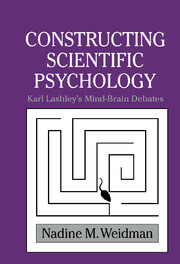
Constructing Scientific Psychology, published in 1999, was the first full-scale interpretation of the life and work of the major American neuropsychologist Karl Lashley. It sets Lashley's research at the heart of two controversies that polarized the American life and human sciences in the first half of the twentieth century. These concerned the relationship between 'mind' and 'brain' and the relative roles of 'nature' and 'nurture' in shaping behaviour and intelligence. The book explodes the myth of Lashley's neuropsychology as a fact-driven, 'pure' science by arguing that a belief in the power of heredity and a nativist and deeply conservative racial ideology informed every aspect of his theory and practice.
Why is wine considered more sophisticated even though the production of beer is much more technologically complex? Why is wine touted for its health benefits when beer has more nutrition value? Why does wine conjure up images of staid dinner parties while beer denotes screaming young partiers? Charles Bamforth explores several paradoxes involving beer and wine, paying special attention to the culture surrounding each. He argues that beer can be just as grown-up and worldly as wine and be part of a healthy, mature lifestyle. Both beer and wine have histories spanning thousands of years. This is the first book to compare them from the perspectives of history, technology, the market for each, and the effect that they have on human health and nutrition.
In Experiment, Right or Wrong, Allan Franklin continues his investigation of the history and philosophy of experiment presented in his previous book, The Neglect of Experiment. Using a combination of case studies and philosophical readings of those studies, Franklin again addresses two important questions: (1) What role does and should experiment play in the choice between competing theories and in the confirmation or refutation of theories and hypotheses? (2) How do we come to believe reasonably in experimental results? Experiment, Right or Wrong makes a significant contribution to an important area in contemporary history and philosophy of science. Philosophers and historians of science, physicists, and advanced students in these areas will find much of interest in this engaging study.
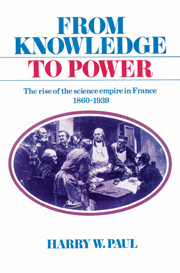
France has played a pivotal role in the development of modern science. Especially striking and controversial has been the way in which the state has organized scientific endeavor. After the 1880s reinvigorated university faculties played a key role in the growth of science in France, and many faculty scientists enjoyed close relations with industry, agriculture, the military, and politics. During the Third Republic the idea of governmental responsibility to support research became a dogma, due to the stimulus that science was perceived to give to the French economy. By 1939 a working mechanism of state funding for science, buttressed by a complex scientific ideology, had come into existence and provided the foundations for the development of a new structure of scientific research and education in the postwar era. From Knowledge to Power is the first full-scale treatment of this dramatic expansion of French science between 1860 and 1939.
Why are there so few women scientists? Persisting differences between women's and men's experiences in science make this question as relevant today as it ever was. This book sets out to answer this question, and to propose solutions for the future. Based on extensive research, it emphasizes that science is an intensely social activity. Despite the scientific ethos of universalism and inclusion, scientists and their institutions are not immune to the prejudices of society as a whole. By presenting women's experiences at all key career stages - from childhood to retirement - the authors reveal the hidden barriers, subtle exclusions and unwritten rules of the scientific workplace, and the effects, both professional and personal, that these have on the female scientist. This important book should be read by all scientists - both male and female - and sociologists, as well as women thinking of embarking on a scientific career.
Reasoning in Biological Discoveries brings together a series of essays, which focus on one of the most heavily debated topics of scientific discovery. Collected together and richly illustrated, Darden's essays represent a groundbreaking foray into one of the major problems facing scientists and philosophers of science. Divided into three sections, the essays focus on broad themes, notably historical and philosophical issues at play in discussions of biological mechanism; and the problem of developing and refining reasoning strategies, including interfield relations and anomaly resolution. Darden summarizes the philosophy of discovery and elaborates on the role that mechanisms play in biological discovery. Throughout the book, she uses historical case studies to extract advisory reasoning strategies for discovery. Examples in genetics, molecular biology, biochemistry, immunology, neuroscience and evolutionary biology reveal the process of discovery in action.