To save content items to your account,
please confirm that you agree to abide by our usage policies.
If this is the first time you use this feature, you will be asked to authorise Cambridge Core to connect with your account.
Find out more about saving content to .
To save content items to your Kindle, first ensure no-reply@cambridge.org
is added to your Approved Personal Document E-mail List under your Personal Document Settings
on the Manage Your Content and Devices page of your Amazon account. Then enter the ‘name’ part
of your Kindle email address below.
Find out more about saving to your Kindle.
Note you can select to save to either the @free.kindle.com or @kindle.com variations.
‘@free.kindle.com’ emails are free but can only be saved to your device when it is connected to wi-fi.
‘@kindle.com’ emails can be delivered even when you are not connected to wi-fi, but note that service fees apply.
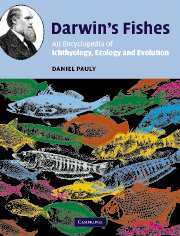
In Darwin's Fishes, Daniel Pauly presents an encyclopaedia of ichthyology, ecology and evolution, based upon everything that Charles Darwin ever wrote about fish. Entries are arranged alphabetically and can be about, for example, a particular fish taxon, an anatomical part, a chemical substance, a scientist, a place, or an evolutionary or ecological concept. The reader can start wherever they like and are then led by a series of cross-references on a fascinating voyage of interconnected entries, each indirectly or directly connected with original writings from Darwin himself. Along the way, the reader is offered interpretation of the historical material put in the context of both Darwin's time and that of contemporary biology and ecology. This book is intended for anyone interested in fishes, the work of Charles Darwin, evolutionary biology and ecology, and natural history in general.
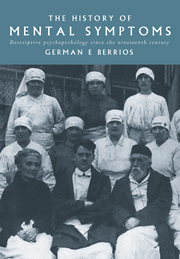
Since psychiatry remains a descriptive discipline, it is essential for its practitioners to understand how the language of psychiatry came to be formed. This important book, written by a psychiatrist-historian, traces the genesis of the descriptive categories of psychopathology and examines their interaction with the psychological and philosophical context within which they arose. The author explores particularly the language and ideas that have characterised descriptive psychopathology from the mid-nineteenth century to the present day. He presents a masterful survey of the history of the main psychiatric symptoms, from the metaphysics of classical antiquity to the operational criteria of today. Tracing the evolution of concepts such as memory, consciousness, will and personality, and of symptoms ranging from catalepsy and aboulia to anxiety and self-harm, this book provides fascinating insights into the subjective nature of mental illness, and into the ideas of British, Continental and American authorities who sought to clarify and define it.
This book can be described as a student's edition of the author's Dynamical Theory of Gases. It is written, however, with the needs of the student of physics and physical chemistry in mind, and those parts of which the interest was mainly mathematical have been discarded. This does not mean that the book contains no serious mathematical discussion; the discussion in particular of the distribution law is quite detailed; but in the main the mathematics is concerned with the discussion of particular phenomena rather than with the discussion of fundamentals.
The Belgians commonly referred to their colonisation of the Congo as a 'civilising mission', and many regarded the introduction of western bio-medicine as a central feature of their 'gift' to Africans. By 1930, however, it was clear that some features of their 'civilising mission' were in fact closely connected to the poor health of many of the Congolese. The Europeans had indeed brought scientific enquiry and western bio-medicine; but they had also introduced a harsh, repressive political system which, coupled with a ruthlessly exploitative economic system, led to the introduction of new diseases while already-existing diseases were exacerbated and spread. Tropical, or 'colonial', medicine was a new field at the turn of the century, linked closely both to European expansionism and human trypanosomiasis, or sleeping sickness. In 1901 a devastating epidemic had erupted in Uganda, killing well over 250,000 people.
Science is a curious profession. It is relatively easy to get into, but much harder to be truly successful at. There are many different paths to success and just as many ways to fail. Many who have an interest in science in school never find their way into a science career. Many who do get an advanced degree in science are never able to get a grant or conduct a successful research program and may leave the field after a while. Some are tempted to cut corners and thus ruin their careers. Even those who have a science job may not be secure in their abilities or their productivity.
This book has four parts. In Chapter 1, science as a career is explored. What do scientists in different fields study? What skills are needed? How do scientists spend their time? How do you choose the right career path? Chapters 2 and 3 cover the ins and outs of creativity and problem solving, the central keys to success in research. Chapter 4 discusses the social dimension of being a scientist.
The most difficult part of a scientist's job is conducting research. Huge amounts of time are wasted in science experiments that fail, ideas that don't pan out, and papers that are never finished. Effort is wasted on proposals that don't get funded and projects whose results are never published. Even published studies are often flawed. Why?
Science is not merely conceptual, but instead involves active manipulation of the world to arrive at new knowledge. In this chapter, the implications of the ideas presented in the first chapters are explored. First, the process of developing and executing a scientific research program are explored, publishing papers is discussed, some ethical issues are touched on, and finally, the problem of interfacing science with the world of policy is addressed.
CONDUCTING A RESEARCH PROGRAM
Research that is random and aimless is unlikely to be very productive. In the age of naturalists, it was productive to collect specimens and observe animals in the wild because little or nothing was known. But today, any random observation is likely to be already known. Thus a key to success is to focus on a problem.
Earlier chapters discussed concepts that can help one to identify a problem worth working on. To review briefly: paradox can help one identify an opportunity; new tools and methods can open up topics to analysis; obtaining a larger data set or one at a larger scale than previous studies can lead to insights; and refining or testing a theory is always a productive avenue. Of course the idea of leverage as embodied in the Medawar zone can help one pick topics with a high payoff.
Given that a promising topic has been picked, the textbook view and the impression given to graduate students is that you should next design and conduct an experiment or study.
Science as a career is fascinating and fulfilling. The popular picture of what scientists do, however, does not provide a useful guide to those considering a science career. The first section of this book provided an overview of science as a profession and what scientists do. The central focus of the book, however, is on the inner game of science. How do scientists solve problems and discover new things? How can they increase productivity? What techniques can they use? To address this issue, a strategic problem solving approach is proposed.
Strategic thinking is an overall technology for problem solving with the potential for increasing both the quantity and quality of work in fields where creation of novel solutions is critical, such as design, invention, institutional innovation, research, software development, and engineering. It is based on an understanding of both outward processes (actions) and inner operations (cognition, attitudes). It takes particular care to be alert to the inherent flaws in all aspects of the problem solving process, and builds in checks and balances against these flaws.
There are four factors involved in the successful development of an innovative creation: creative mental functioning, an understanding of the discovery process, an appreciation of the structure of multistep problems, and the utilization of reality checks. Creative mental functioning is necessary to be able to recognize problems, overcome intimidation by the status quo, overcome barriers to thought, and avoid stagnation.
The second chapter of this book presented the techniques of strategic thinking in terms of the nature of problem solving, how discoveries are made and tested, how creativity can be harnessed and enhanced, and how attitude and style affect strategic problem solving effectiveness. This provides the foundation for actual strategic problem solving in terms of the mastery of one's cognitive tools and abilities. Such an understanding is essential to success, but there is more to it than this. There are characteristics of the problems themselves that one must also get a feel for before even the best strategist can be successful. To make an analogy, it is not sufficient for the sculptor to have an aesthetic vision, to know the symbolism he wishes to convey, and to have harnessed his mental faculties to the task, it is also essential that he understand the nature of his materials: the way that different woods respond to carving and polishing, the receptivity of these woods to stain, the susceptibility of different types of stone to cracking, and so on. That is, one must know something about the subject to be strategized about per se. This is usually considered domain-specific knowledge (of cars or diseases, of pizza or electronics) which of course is beyond the scope of this book because there are hundreds of domains and their intersections where people are faced with problems.
Science is about mathematics and rigor, but the human mind is sloppy and vague. We are prone to jumping to conclusions, prefer short chains of logic, are easily duped by optical illusions (even when told they are illusions beforehand), and are influenced by group think. This section is about the inner game of science, the mental world where discovery and proof take place. This is the terra incognita that few scientists have thought about, but about which they remain ignorant at their peril. A strategic approach to problem solving is presented and applied to help elucidate the solution to the paradox of how our illogical mind can ever produce reliable, logical results.
Because scientific discovery is inherently about open-ended, complex problems, it is not really possible to apply a cookbook approach (“the scientific method”). Rather, I suggest that a strategic approach to problem solving is a more effective approach. For those who are not born strategists, this involves tuning up one's thinking machinery specifically for this type of problem. Specifically, there are three steps to creating successful novel products. First, one must be capable of generating novel (but useful) ideas, of overcoming routine ways of functioning, and of putting together information in new ways. Without this capacity, one is limited to solving problems defined by others (the definition of a drone). Second, one must be able to use this creative capacity to discover/invent something new.
In this 1990 book John Limon examines the various ways American authors have approached the writing of fiction (and justified that writing) in an age increasingly dominated by science. He focuses in particular on Charles Brockden Brown, Edgar Allen Poe and Nathaniel Hawthorne - three highly articulate and highly alarmed witnesses to the professionalisation of science, the great crisis in modern intellectual history. It was, he argues, especially specially difficult for American writers to face this crisis since they could make no appeal to traditional values: America, after all, had never really been a pre-scientific society.
This collection of essays by leading philosophers of physics was first published in 2000, and offers philosophical perspectives on two of the central elements of modern physics, quantum theory and relativity. The topics examined include the notorious 'measurement problem' of quantum theory and the attempts to solve it by attributing extra values to physical quantities, the mysterious non-locality of quantum theory, the curious properties of spatial localization in relativistic quantum theories, and the problem of time in the search for a theory of quantum gravity. Together the essays represent some of the last decade's research in philosophy of physics, particularly interestingly within the philosophy of quantum theory.
This classic book, long out of print, investigates the experimental determination of one of the fundamental constants of astrophysics and its significance for astronomy. The equations of general relativity include a constant lambda in their solution. If lambda is non-zero and positive, this represents the existence of a phenomenon of cosmical repulsion. In this book Eddington discussed the implications of this for models of the universe. The book offers a unique sidelight upon the history of ideas and Eddington's artistry. His evident enjoyment of writing and exposition shine through, and astrophysicists and historians of science will find that this reissue throws fascinating light on one of Britain's greatest scientists.
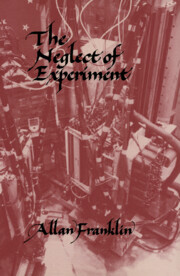
What role have experiments played, and should they play, in physics? How does one come to believe rationally in experimental results? The Neglect of Experiment attempts to provide answers to both of these questions. Professor Franklin's approach combines the detailed study of four episodes in the history of twentieth century physics with an examination of some of the philosophical issues involved. The episodes are the discovery of parity nonconservation ( or the violation of mirror symmetry) in the 1950s; the nondiscovery of parity nonconservation in the 1930s, when the results of experiments indicated, at least in retrospect, the symmetry violation, but the significance of those results was not realized; the discovery and acceptance of CP ( combined parity-charge conjugations, paricle-antiparticle) symmetry; and Millikan's oil-drop experiment. Franklin examines the various roles that experiment plays, including its role in deciding between competing theories, confirming theories, and calling fo new theories. The author argues that one can provide a philosophical justification for these roles. He contends that if experiment plays such important roles, then one must have good reason to believe in experimental results. He then deals with deveral problems concerning such reslults, including the epistemology of experiment, how one comes to believe rationally in experimental results, the question of the influence of theoretical presuppositions on results, and the problem of scientific fruad. This original and important contribution to the study of the philosophy of experimental science is an outgrowth of many years of research. Franklin brings to this work more than a decade of experience as an experimental high-energy physicist, along with his significant contributions to the history and philosophy of science.
In Science and Ethics, Bernard Rollin examines the ideology that denies the relevance of ethics to science. Providing an introduction to basic ethical concepts, he discusses a variety of ethical issues that are relevant to science and how they are ignored, to the detriment of both science and society. These include research on human subjects, animal research, genetic engineering, biotechnology, cloning, xenotransplantation, and stem cell research. Rollin also explores the ideological agnosticism that scientists have displayed regarding subjective experience in humans and animals, and its pernicious effect on pain management. Finally, he articulates the implications of the ideological denial of ethics for the practice of science itself in terms of fraud, plagiarism, and data falsification. In engaging prose and with philosophical sophistication, Rollin cogently argues in favor of making education in ethics part and parcel of scientific training.
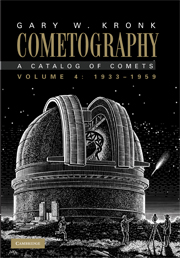
Cometography is a multi-volume catalog of every comet observed throughout history. It uses the most reliable orbits known to determine the distances from the Earth and Sun at the time a comet was discovered and last observed, as well as the largest and smallest angular distance to the Sun, most northerly and southerly declination, closest distance to the Earth, and other details to enable the reader to understand the physical appearance of each well-observed comet. Volume 4 provides a complete discussion of each comet seen from 1933 to 1959. It includes physical descriptions made throughout each comet's apparition. The comets are listed in chronological order, and each listing includes complete references to publications relating to the comet. This book is the most complete and comprehensive collection of comet data available, and provides amateur and professional astronomers, and historians of science, with a definitive reference on comets through the ages.