To save content items to your account,
please confirm that you agree to abide by our usage policies.
If this is the first time you use this feature, you will be asked to authorise Cambridge Core to connect with your account.
Find out more about saving content to .
To save content items to your Kindle, first ensure no-reply@cambridge.org
is added to your Approved Personal Document E-mail List under your Personal Document Settings
on the Manage Your Content and Devices page of your Amazon account. Then enter the ‘name’ part
of your Kindle email address below.
Find out more about saving to your Kindle.
Note you can select to save to either the @free.kindle.com or @kindle.com variations.
‘@free.kindle.com’ emails are free but can only be saved to your device when it is connected to wi-fi.
‘@kindle.com’ emails can be delivered even when you are not connected to wi-fi, but note that service fees apply.
This article explores the practice of the sport of tiger hunting among the Wodeyars, the maharajas of Mysore, through an examination of art, archival records, state gazetteers, and a tour diary of Krishnaraja Wodeyar IV. It argues that the Wodeyars only adopted the sport as an expression of kingship in the late nineteenth century, under British influence. This, I posit, was part of their larger attempt to align their kingship to more popular Indian modes, specifically the Rajputs. By reading accounts of the sport in Krishnaraja Wodeyar’s tour diary, along with examining the Wodeyars’ attempts at forging kinship relations with the Rajputs, the article demonstrates how the sport became crucial to the Wodeyars’ assertion of a Rajput identity and to attempts to obtain a higher position in the princely hierarchy of the colonial period. The recognition that the success of tiger hunts was significant to Rajput kingship and identity, along with rising concern over the diminishing tiger population, led the Wodeyars to enclose forests, establish private hunting preserves and a shikar department, and classify tiger as game in an attempt to improve the sport and make it exclusive.
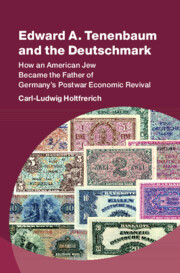
German industry had survived Allied bombing largely unscathed. Currency reform was necessary to provide incentives for capital owners and labor to produce. The abundance of old Reichsmarks had to be curtailed to a scarce supply of Deutschmarks that users would expect to retain value. It was Edward A. Tenenbaum, currency expert of US military government in Berlin since 1946, who managed the exceptionally successful currency reform in West Germany 1948, which was implemented by the legislative powers of the three Western Allies against opposition from West German financial experts. It was the foundation of West Germany's 'economic miracle.' The West German currency conversion is part of the founding myth of the Federal Republic of Germany. Yet Tenenbaum's pivotal role is largely unknown among the German public. Besides providing a full-blown biography of the true father of the currency reform, this book elevates Tenenbaum to his proper place in German history.
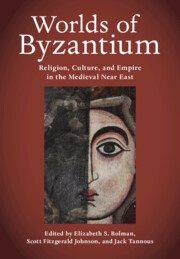
Worlds of Byzantium offers a new understanding of what it means to study the history and visual culture of the Byzantine empire during late antiquity and the Middle Ages. Arguing that linguistic and cultural frontiers do not always coincide with political ones, it suggests that Byzantine studies should look not only within but also beyond the borders of the Byzantine empire and include the history of Christian populations in the Muslim-ruled Middle East and neighbouring states like Ethiopia and Armenia and integrate more closely with Judaic and Islamic studies. With essays by leading scholars in a wide range of fields, it offers a vision of a richly interconnected eastern Mediterranean and Near East that will be of interest to anyone who studies the premodern world.
This article contributes to a recent shift in the study of early modern political thought, moving away from a state-centric view of the period towards an interest in the political significance of a range of other communities. More specifically, I argue that debates about the scope of one key concept, that of societas, resulted in different visions of the relationships between a variety of human associations. To demonstrate this, I reconstruct Johannes Althusius’s theory of societas and compare it to those of several contemporaries, ranging from Renaissance Ciceronianism to Jean Bodin and Hugo Grotius. I show that Althusius provided an innovative juridical interpretation of societas, which he used to ground a conception of politics according to which all human associations, from the family to the corporation to the state, are political. This complements traditional theological interpretations of his thought, which alone cannot fully account for its distinctiveness. Althusius’s conception of politics enabled him to chart an original middle way between two options available at the time: on the one hand, the isolation of politics from social and religious life; on the other, its subordination to or full identification with other kinds of community.
The aim of this study is to estimate the minimum prevalence of intestinal parasites in the population of Roman London through analysis of pelvic sediment from 29 third- to fourth-century burials from the 1989 excavations of the western cemetery at 24–30 West Smithfield, 18–20 Cock Lane and 1–4 Giltspur Street (WES89). Microscopy was used to identify roundworm eggs in 10.3 per cent of burials. We integrate these results with past palaeoparasitological work in the province of Britannia to explore disease, hygiene and diet. The most commonly found parasites (whipworm and roundworm) were spread by poor sanitation, but other species caught from animals were also present (fish tapeworm, beef/pork tapeworm and liver flukes). Parasite diversity was highest in urban sites. The health impacts of these infections range from asymptomatic to severe.
The burgeoning nineteenth-century public-museum sector built a significant part of its natural-history specimen collections through extensive international trading. The early 2020s has seen an upsurge of scholarly interest in this largely overlooked trade. Exchange was a distinctive aspect of the natural-history trade that reveals much about the diverse practices and motives of the institutional collectors. Economic-geographic benefits included conserving the limited financial resources of museums and exploiting complementarities in the geographic distribution of specimens. Collection management, institutional reputation, social connection and international diplomacy were also part of a complex mix of value making that shaped this important international trade. We analyse the exchange practices of the three largest museums in the Australian colonies in the final three decades of the nineteenth century who exchanged Australia’s ‘rare and curious’ fauna with collectors across the globe. By deploying and analysing extensive, comparative data on a particular form of natural history, zoology, and a particular kind of trade, exchange trading, among three Australian museums, this paper extends and enriches recent scholarship on the mobility of natural-history specimens and how they were traded.
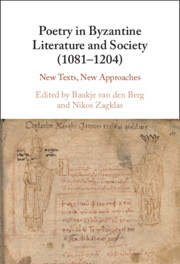
The twelfth century was one of the most fertile periods in Byzantine literary history and this volume is the first to focus exclusively on its abundant poetic production. It explores the broader sociocultural tendencies that shaped twelfth-century literature in both prose and verse by examining the school as an important venue for the composition and use of texts written in verse, by shedding new light on the relationship between poetry, patronage and power, and by offering the first editions and interpretive studies of hitherto neglected works. In this way, it enhances our knowledge of the history of Byzantine literature and enables us to situate Medieval Greek poetry in the broader literary world of the medieval Mediterranean.
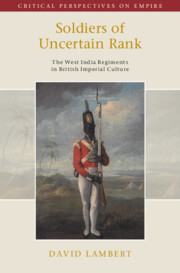
The West India Regiments were an anomalous presence in the British Army. Raised in the late eighteenth-century Caribbean in an act of military desperation, their rank-and-file were overwhelmingly men of African descent, initially enslaved. As such, the regiments held a unique but ambiguous place in the British Army and British Empire until their disbandment in 1927. Soldiers of Uncertain Rank brings together the approaches of cultural, imperial and military history in new and illuminating ways to show how the image of these regiments really mattered. This image shaped perceptions in the Caribbean societies in which they were raised and impacted on how they were deployed there and in Africa. By examining the visual and textual representation of these soldiers, this book uncovers a complex, under-explored and illuminating figure that sat at the intersection of nineteenth-century debates about slavery and freedom; racial difference; Britishness; savagery and civilisation; military service and heroism.
The Conclusion raises the question of how the study of the literature and visual cultural of non-Greek-speaking, non-Constantinopolitan communities in the East Roman empire should relate to Byzantine studies. It further asks how the literature and visual culture of these communities should be seen as relating to Byzantine studies after these communities came under Muslim political control. A cultural, “Big Tent,” understanding of Byzantium is advocated for, one which de-privileges the state and which recognizes the importance of Christianity and its literary and visual manifestations for defining Byzantium as an object of study. This exapanded view of Byzantium includes in Byzantine studies the broader eastern Mediterranean world, Greek-speaking and non-, Chalcedonian and non-, Christian and non-.
Anthony Kitchin, the bishop of Llandaff between 1545 and 1563, is traditionally seen as a self-serving careerist, an unprincipled hypocrite, and a pastoral failure. He was one of only two Marian Catholic bishops to serve under Elizabeth I, and Eamon Duffy memorably jests that he ‘would doubtless have become a Hindu if required, providing he was allowed to hold on to the see of Llandaff’. But re-evaluating Kitchin’s career uncovers a man with a consistent stance that was not unusual amongst his peers, and reveals that the Elizabethan government retained serious hopes of bringing numerous Marian bishops, not just Kitchin, into conformity. Still more striking, while Kitchin has been reviled as a hypocrite for swearing the 1559 oath of supremacy, there is persuasive evidence that he did not in fact swear that oath, keeping his see only through a contingent and awkward compromise with the Elizabethan state, and that the details of this compromise were conveniently forgotten, perhaps even deliberately suppressed. Re-evaluating Kitchin significantly advances our understanding of the period by contributing to the extensive and developing historiography on Catholic conscience and loyalty to the crown, helping problematize binary distinctions between zealous Catholic resistance and craven conformity.
Historians of Judaism often call the first Islamic centuries the “gaonic period.” The term alludes to the gaonic yeshivot – scholastic academies in Abbasid and Buyid Baghdad, as well as in Palestine, whose leaders helped to canonize the Babylonian Talmud. However, this essay argues that these yeshivot were not commensurate across regions. I revisit the early history of the Palestinian yeshiva and conclude that it developed long after its Iraqi counterparts, likely sometime in the tenth century. The essay closes by considering briefly how this thesis might help us begin to better understand the Palestinian rabbinic culture that preceded the yeshiva–a distinct form of rabbinic Judaism that thrived in Byzantine and Umayyad Palestine during the fifth to eighth centuries, before giving way to a new brand of gaonic rabbinism imported from the Abbasid heartlands.
As the recovery of the rich history of the expansive Byzantine Commonwealth pushes forward, we must renew our emphasis on the sturdy multi- and cross-cultural foundation upon which it was constructed. Christian Caucasia was a charter member of the Byzantine Commonwealth, but its social fabric and cultural orientation remained locked on the Iranian world for centuries to come. The fundamentally Iranic, or Persianate, nature of Christian Caucasian society is a reminder of the intense cross-cultural connections of Rome-Byzantium and Iran across late antiquity and into the medieval period.
Pilgrims to Sinai in the fourth century witnessed a flourishing monastic presence at the traditional sites of God’s revelations to the Prophets Moses and Elias. Sinai was an extension of the Holy Land. As such, it was also a part of the Greek speaking world. This is borne out by inscriptions dating from the sixth century, when the Emperor Justinian ordered the construction of a basilica and surrounding fortress walls. And yet, if Greek was the language of the Sinai monks at that time, it was not exclusively so, for Sinai was the destination of monks and pilgrims from the whole of Christendom. The history of the centuries immediately following must be reconstructed from the surviving documentary evidence. Manuscripts, icons, and the writings of Saints Hesychius and Philotheus testify to continuity at Sinai. It is especially in the basilica of Sinai that we can sense this continuity even today.
By the late fifth century, Armenian writers had developed a local historiography including the idea of righteous kingship linked to and assisted by the new institution of the Christian episcopacy.This essay considers the Letter of Macarius and the royal establishment of Christianity from the perspective of several early Armenian historians.
If the Armenological scholarship of the past five decades is any indication, close and deep examination has tended to reveal shared concerns, broader cultural horizons, and a strong sense of Armenia’s connectedness to other traditions and places. This could be shown for virtually all periods of Armenian history, but this essay focuses on the seventh to tenth centuries. Exploring some points of convergence between Armenian and Byzantine artistic traditions, I ask three very specific questions: 1) Is there such a thing as an Armenian imperial image? 2) What if an Armenian church were constructed in the imperial palace at Constantinople? and 3) What if an early medieval Armenian icon panel was shown to have survived? These are all hypothetical scenarios, but they are not entirely fantastical; each finds at least some support in historical evidence. Moreover, all of them urge a broader, more complex, and more dynamic conceptualization of visual culture than most studies of Byzantine and Armenian art have allowed.
Ethiopia is home to a unique Christian culture dating back to Late Antiquity. Even after the Ethiosemitic language of Gəʿəz died out as a spoken language after the collapse of the kingdom of Aksum, it remained for centuries and, indeed, down to the present, as one of the mainstays of the Ethiopian Church. This ancient culture has been shaped by such historical factors as the kingdom of Aksum and its contact with the Roman Empire, relations between medieval Ethiopia and the Coptic Church of Egypt, and political events within Ethiopia. In the course of its long history, the Ethiopian Church has not only produced a vast literature of its own but has also preserved translations of literature now lost in its original language.
The pseudo-Arabic motifs found in middle Byzantine religious structures in Greece, especially at the tenth- to eleventh-century monastery complex of Hosios Loukas, document an awareness of Arab-Christian communities in the “Near East,” especially religious foundations of the Holy Land that were among the most revered centers of early monasticism. A variety of Christian portable objects inscribed with Arabic and pseudo-Arabic – including manuscripts, icons, and liturgical vessels and furnishings – offer possible vehicles for the dissemination of Arabic as a Christian language and for Arabic and pseudo-Arabic inscriptions as signs of ancient monastic authority. Networks of communication between the Byzantine Empire and regions of the south-eastern Mediterranean (that were under Islamic political hegemony) facilitated the movement of people, things, and ideas. Tracing the dissemination of the visual culture of Arab-Christianity generates a revised map of middle Byzantine artistic and cultural connections, challenging Constantinople’s status as the dominant model for middle Byzantine art and central source of Orthodox Christian authority and identity.