To save content items to your account,
please confirm that you agree to abide by our usage policies.
If this is the first time you use this feature, you will be asked to authorise Cambridge Core to connect with your account.
Find out more about saving content to .
To save content items to your Kindle, first ensure no-reply@cambridge.org
is added to your Approved Personal Document E-mail List under your Personal Document Settings
on the Manage Your Content and Devices page of your Amazon account. Then enter the ‘name’ part
of your Kindle email address below.
Find out more about saving to your Kindle.
Note you can select to save to either the @free.kindle.com or @kindle.com variations.
‘@free.kindle.com’ emails are free but can only be saved to your device when it is connected to wi-fi.
‘@kindle.com’ emails can be delivered even when you are not connected to wi-fi, but note that service fees apply.
With contributions from a team of renowned scholars, this two-volume Handbook is a comprehensive guide to the Distributed Morphology (DM) framework, providing an overview of all major theoretical issues in morphology. This volume, the second, looks at morphology post-syntax within the Distributed Morphology (DM) framework, exploring its phonological and semantic aspects. It is divided into three parts; Parts I and II focus on morphology post-syntax, exploring its phonological and semantic aspects. Part III broadens the discussion to interfaces between morphology and other areas of linguistics and cognitive science, extending DM's reach well beyond core language components. Each chapter focuses on different theoretical issues, as well as empirical phenomena across a variety of languages. Filling a crucial gap in the domain of morphology, this volume is an essential resource for anyone who wants to understand the depth and scope of Distributed Morphology research.
With contributions from a team of renowned scholars, this two-volume Handbook is a comprehensive guide to the Distributed Morphology (DM) framework, providing an overview of all major theoretical issues in morphology. This volume, the first, covers the core components of DM, its historical context, and its foundational principles. It is divided into three parts; Part I introduces the basics of DM and compares it with alternative models, Part II delves into the core components of DM, and Part III addresses key issues for the syntax-morphology interface. Each chapter focuses on different theoretical issues, as well as empirical phenomena across a variety of languages. Filling a crucial gap in the domain of morphology, this volume is an essential resource for anyone who wants to understand the depth and scope of Distributed Morphology research.
Older than the pyramids, Sumerian was used in ancient Mesopotamia (Southern Iraq). It is probably the world's first written language, and survives on clay tablets in the cuneiform script, dating from c.3000 BCE to the beginning of the Common Era. It abounds in simple inscriptions, ideal for beginners, but also boasts a wealth of more advanced writings, such as fascinating mythological poetry. This comprehensive textbook equips students to read the full range of texts – including the special variety of the language known as Emesal. Drawing on the authors' experience in the classroom, it uses intuitive terminology and also makes extensive use of diagrams, which unravel the language's structures in an easy-to-learn way. The examples and readings are all taken from original sources. The learning journey is further supported by exercises (with key), a full sign list and glossary, and online recordings with 'approximate pronunciations'.
Religious texts played a central role in the historical development of English. Harnessing corpus linguistic techniques, historical pragmatics, and the history of the English church, this book interrogates the keywords that have dominated English religious expression from the end of the medieval period to the eve of the Darwinian age. Exploring a number of historical religious works from the late medieval period to the nineteenth century, it shows how changes in the deployment of key words reflected their evolving socio-cultural functions, and how their usage subsequently moved beyond religious texts to shape contemporary literary and political works. It includes numerous case-studies involving prophetic women, pamphleteers, preachers and philosophers, alongside prominent theologians, literary authors and other well-known figures. Offering new insights into the growing cross-disciplinary enterprise of theolinguistics in an engaging and accessible way, this study is essential reading for both English historical linguists and historians of English Christianity.
The study of English usage has to take account of changes in grammar, word choice and nuances of communication. In recent decades, developments in linguistic methodologies have catalysed modifications In our approach to linguistic variation, with perspectives changing from a primarily prescriptive to a more descriptive approach. Bringing together contributions from a team of distinguished scholars, this book explores sociolinguistic and structural dimensions of variability in English usage through new research and methods such as corpora and survey instruments. It embraces the variety and diversity of English usage, exploring global attitudes towards language, including examples from countries where English is either a first language, such as Australia and Britain, to second language users from China, South Africa and beyond. Variability is investigated across both a number of media and registers, while lively and engaging discourse is used to introduce the global language landscape to anyone interested in this fascinating field.
Applied linguists' interests and values have expanded in synergy with evolving technologies over the past decades, and with the tools and concepts developed in other disciplines. This timely book explains applied linguists' interest in technology in connection with their study of language-related problems in the real world. The decades of history and intersections with other disciplines provide background for introducing 11 types of technology-mediated language learning activities, grounded in the research-practice interface characterizing applied linguistics. Examples of past research are interpreted through the lens of design-based research to examine how design principles are developed for language learning and language assessment. Concrete implications are outlined for language pedagogy and its evaluation, language teacher education, and technology studies in applied linguistics. These foundations of technology and language learning will animate a spirit of critical professional inquiry toward current and future digital technologies as they intersect with language learners.
Linguistic imitation is not mere repetition, but is instead a foundational mechanism of language use. It underpins the engagement and categorisation of meaning as a conceptual pact among speakers. This book redefines imitation as the creative engine of human communication, showing how language evolves through our engagement with what others say. It discusses dialogic resonance – the reuse and reshaping of communicative constructions – as a unifying framework that bridges pragmatics and construction grammar. Combining evidence from first and second language acquisition, intercultural communication and neurodiverse interaction, the book highlights the crucial role of imitation in shaping social conformity, engagement, categorisation and innovation. It combines detailed qualitative case studies with innovative corpus-based and statistical analyses to provide new theoretical insights and methodological tools. It is essential reading for scholars and students of linguistics, psychology, education and sociology, and for anyone interested in how language emerges from the creative interplay of human voices.
A clear, practical introduction to the theory and practice of translanguaging, this book explores this innovative approach and shows how English language teachers can benefit from implementing multilingual pedagogy in the classroom. Whether you teach English as a foreign language (EFL), a second language (ESL), work in English medium instruction (EMI) or Content and Language Integrated Learning (CLIL), this engaging and accessible book will help you understand the key implications of translanguaging theory, and carry these over into practice in your classroom, whether this is in government-sponsored or private education, from primary to secondary, tertiary and adult contexts. As well as discussing important contextual differences, challenges and constraints that teachers frequently face across both the Global North and Global South, it includes many examples from real English language classrooms, exploring both teacher and learner translanguaging, and offering numerous suggestions, ideas and activities to evaluate critically for your own classroom practice.
Reconceptualising language as a dynamic, relational, and embodied practice, this book explores the concept of languaging. Moving beyond static, standardised, and purified understandings of languages, it traces how communication is lived, contested, and embodied across urban, rural and remote mobility, everyday encounters, classroom pedagogies, and digital platforms. Through critical analyses of First Knowledging and First Languaging, nomadic languaging and knowledging, racialised and AI-mediated communication, it highlights how languaging is both playful and precarious. It entails creativity and resistance, while also exposing language users to inequality and surveillance, and is deeply entangled with histories of colonialism, racial hierarchies and displacement. Concluding with the concept of pedagogical languaging, the book calls for a reimagining of education as interactional design, rather than the delivery of standardised curricula, with learning environments where diverse semiotic repertoires - linguistic, embodied, cultural, and digital - are recognised as epistemic resources rather than treated as deficits.
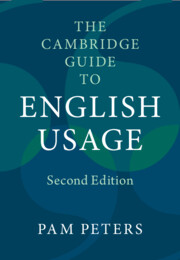
American and British English in the twenty-first century are still divided by a common language. Now in its second edition, this highly readable guide provides an authoritative reference to English usage, covering the differences, and some emerging similarities, between British, American and international English. It has been thoroughly updated and expanded to document hundreds of variable points of usage for the benefit of British and American readers, and for those seeking international forms of English for written communication, as first- or second-language users. It discusses the current status of each usage item with quantitative evidence from the NOW (News on the Web) corpus and contemporary research. Lively examples of usage are provided to capture aspects of twenty-first century culture world-wide. It also discusses issues in the use of personal names and ethnic naming practices, as well as sexist and homophobic words, and person-centred words for those living with a disability.
What are the causes of language change? Where do words come from? Is modern technology and social media corrupting our language? Language change is just as relevant today as it ever was, yet the secrets of how and why it occurs remain tantalisingly out of reach to anyone without a background in linguistics. This book has the answers. Written by one of the leading experts in the field, it provides readers with an accessible account of language change, unraveling the processes and phenomena that have so far remained locked within academia. It explores a range of fascinating topics, such as whether language change is bad, whether change is different in some kinds of languages than others, and if television, AI, and modern technology have any impact on language change. Written in a lively and engaging way, it uncovers the marvels and mysteries of language change for anyone curious about this captivating field.
The Minimalist Program is a long-established branch of Chomsky's Generative approach to linguistics, which, since its first incarnation in the early 1990s, has become one of the most prominent frameworks for syntax. Bringing together a team of world-renowned scholars, this Handbook provides a comprehensive guide to current developments in generative syntactic theory. Split into five thematic parts, the chapters cover the historical context and foundations of the program, overviews of the major areas of research within modern syntactic theory, and a survey of the variety of phenomena dealt with within Minimalism through a focus on concepts, primitives, and operations. It offers in-depth perspectives on the core concepts and operations in the Minimalist Program for readers who are not already familiar with it, as well as a complete overview of the state-of-the-art in the field, making it essential reading for both scholars and students in the field.
When faced with a cancer diagnosis, navigating the maze of emotions and decisions can be overwhelming. In this inspiring and deeply personal memoir, Michael Handford – a professor of intercultural communication – shares his experience of a stage-4 throat cancer diagnosis at the age of 42 while living and working in Japan and the UK. Weaving together his professional insights and personal experiences, and through vivid storytelling, Handford examines how communication – whether with doctors, loved ones, or oneself – can shape the cancer experience. He shows that creating meaning and agency in the face of illness can provide a sense of control amidst the chaos. This book is not just about surviving cancer but about reframing it as part of a quest for connection, resilience, and understanding. Poignant, and at times brutally funny, Lump in My Throat offers guidance, hope, and tools to navigate the toughest of times with dignity and strength.
It is crucial to apply robust analytic methods to the study of discourses deemed 'ideological'. This book applies the Guidelines and Procedures for ideological research, as presented in Verschueren's Ideology in Language Use, to an exciting new area of study; discourses intended to improve humanity. It analyses the discourse of Amnesty International appeal letters, to show (contrary to what the field of critical discourse analysis often assumes) that ideological discourse can sometimes have a positive, rather than a negative, agenda. It explores how Amnesty's choice of words, sentence structures, speech acts, and other discourse elements, enact its ideological meanings, functions, frames of reference and interpretation, as well as the social, interactional, and ideological positioning of discourse participants in its reports, communications, and appeals. These findings have wider implications not only for the field of discourse analysis, but also for theories within pragmatics, such as speech act theory and (im)politeness.
Entertaining usage of language is all around us and can explain more about how language works than we realise. This lively and engaging book explains key linguistic concepts, illustrated throughout with humorous and entertaining examples. Providing an accessible yet comprehensive survey of the field, it is especially helpful for students who might struggle with an overly technical text. Now in its second edition, it has been extensively updated and expanded to be more comprehensive and include culturally relevant content, from memes to smartphone autocorrect errors, to misheard song lyrics. It includes four new chapters on lexical meaning, onomastics, writing systems, and language in the digital world. Key linguistic terminology is clearly introduced throughout, ensuring that students are well equipped for more technical and formal courses in their later studies. With thorough coverage of nearly all linguistic subfields, the book is an ideal text for an introduction to linguistics or language.
Written by a team of leading experts, this groundbreaking handbook provides the first comprehensive and current account of Natural Linguistics. It offers a state-of-the-art survey of the theoretical developments that have arisen from, or are related to, the framework of Natural Phonology – across subfields as diverse as phonology, morphology, morphophonology, syntax, pragmatics and text linguistics. The handbook is split into five parts, with chapters covering the origins, foundational principles, semiotic, cognitive and functional bases of Natural Linguistics, as well as external evidence for the theory, and a critical appraisal of its position amongst modern linguistic theories. It fills a gap in the available accounts of modern linguistic theories and demonstrates the potential of the theory to a wider audience, addressing both advocates of the school, and those who are open to alternative approaches to linguistic science. It will be a definitive reference work on Natural Linguistics for years to come.
Now in its second edition, this handbook is a comprehensive and up-to-date resource that explores the applications of corpus-based research in linguistics. Since the first edition, corpus linguistics has evolved dramatically, and this edition has been fully updated to reflect these developments, with new chapters on emerging areas such as online language, legal discourse, and lexical complexity in learner language. Bringing together contributions from leading scholars, it critically evaluates methodologies, presents cutting-edge research, and includes empirical case studies that showcase corpus analysis in action. Each chapter surveys key studies, assesses methodological strengths and weaknesses, and highlights what corpus linguistics has uncovered about language variation and use. Covering topics ranging from phraseology to World Englishes, it serves as an essential reference for linguistics students, researchers, and educators. Whether you're new to corpus linguistics or an experienced scholar, this handbook provides valuable insights into the evolving role of corpora in linguistic research.
Introducing Environmental Communication offers a critical and interdisciplinary introduction to the field, designed primarily for undergraduate students in both specialist and general courses, as well as for postgraduate and professional learners. Its modular structure allows chapters to be used independently across a wide range of teaching, training, and coaching contexts. The book addresses underrepresented themes, including intercultural communication, postcolonial studies and social psychology, while combining theory with real-world application through staggered tasks, discussion prompts, case studies, and projects. Each chapter is supported by up-to-date examples and structured to guide learners from foundational concepts to more complex analysis. Adopting a critical lens, power and justice inequalities are highlighted and perspectives from the Global South are amplified, conveying both the urgency and complexity of the field. Short videos with accompanying discussion points are available online, enhancing the book's multimedia resources.
Although the unattested language of Proto-Indo-European has been studied for over 200 years, the greater part of this literature has focused on its phonology and morphology, with comparatively little known of its syntax. This book aims to redress the balance by reconstructing the syntax of relative clauses. It examines evidence from a wide range of archaic Indo-European languages, analysing them through the lens of generative linguistic theory. It also explains the methodological challenges of syntactic reconstruction and how they may be tackled. Ram-Prasad also alights on a wide range of points of comparative interest, including pronominal morphology, discourse movement and Wackernagel's Law. This book will appeal to classicists interested in understanding the Latin and Greek languages in their Indo-European context, as well as to trained comparative philologists and historical linguists with particular interests in syntax and reconstruction.
Now in its second edition, this Handbook is a current overview of Second Language (L2) research, providing state-of-the-art synopses of recent developments in each sub-area of the field, and bringing together contributions by emerging scholars and experts in Second Language Acquisition (SLA). Since the first edition, broad socio-political movements, alternative views of bilingualism, emergence of global markets, vast expansion of electronic resources, the development of social media, and the availability of big data have transformed the discipline, and this edition has been thoroughly updated to address these changes. It is divided into six main parts: Part I situates SLA in terms of research and practice; Part II explores individual cognitive, age-related and neurolinguistic similarities and differences; Part III outlines external, sociocultural, and interactive factors; Part IV presents profiles of bilinguals who take differing paths of acquisition; Part V describes interlanguage properties; and Part VI comprises clear models of L2 development.