To save content items to your account,
please confirm that you agree to abide by our usage policies.
If this is the first time you use this feature, you will be asked to authorise Cambridge Core to connect with your account.
Find out more about saving content to .
To save content items to your Kindle, first ensure no-reply@cambridge.org
is added to your Approved Personal Document E-mail List under your Personal Document Settings
on the Manage Your Content and Devices page of your Amazon account. Then enter the ‘name’ part
of your Kindle email address below.
Find out more about saving to your Kindle.
Note you can select to save to either the @free.kindle.com or @kindle.com variations.
‘@free.kindle.com’ emails are free but can only be saved to your device when it is connected to wi-fi.
‘@kindle.com’ emails can be delivered even when you are not connected to wi-fi, but note that service fees apply.
Germany is Europe's biggest import country and transshipment point of wildlife products, including live animals for the domestic pet market and hunting trophies (Altheer and Lameter 2020: 2; Fachtagung Artenschutzrecht 2021: 5). Germany is also signatory to numerous regional and international wildlife protection treaties, such as the Washington Convention on International Trade in Endangered Species of Wild Fauna and Flora (CITES), the Convention on the Conservation of Migratory Species of Wild Animals (CMS), and the Convention on the Conservation of European Wildlife and Natural Habitats (Bern Convention). Furthermore, as a member of the European Union (EU), Germany is bound by extensive EU regulations and directives for the protection of endangered species – namely, the various Wildlife Trade Regulations that transpose CITES into EU Law, as well as the Habitats Directive and the Birds Directive (BfN 2010: 15– 17). Finally, Germany is an active participant in international meetings where its delegations regularly advocate for expanding the protection of endangered species (Interviews (Ints) 13, 17; Klaas et al 2016: 23). For all these reasons, we would expect Germany to be an exemplary protector of endangered wildlife at home. Alas, although Germany has faithfully incorporated international treaties and European law into federal legislation, law enforcement is wanting and sentencing is routinely too lenient to have a deterring effect. Germany's wildlife protection legislation is thereby rendered into a paper tiger.
This chapter attempts to explain why Germany's actions at home so glaringly contradict its demonstrated ambitions abroad. Understanding this gap is crucial, as Ragnhild Sollund points out:
The ways in which legislation is enforced is also an indicator of the human-animal relationship and can regulate humans’ relationship to non-human animals. Analysis of enforcement (or lack of enforcement) can show the influence of general norms on legislation and vice versa and whether duties towards wildlife are respected. (Sollund 2016: 82)
The most obvious reason for lack of enforcement is the insufficient allocation of resources needed for the effective enforcement of wildlife protection laws. Germany's federal system further compounds insufficient resource allocation by adding inefficiency to the mix. The enforcement of nature protection laws is left to the 16 federal states (Glaser 2011: 7f).
In recent years, the illegal wildlife trade has received increasing attention. In the political debate, the focus is mainly on iconic species such as elephants, rhinoceroses, and tigers, but reptile populations are also seriously harmed by the illegal reptile trade. For example, reptiles are an easy target for criminal groups because they can often survive for a long time under poor transport conditions, reptiles are quiet, and they can easily be transported in suitcases or postal parcels (Altherr 2014). It has been determined that between 2010 and 2014, approximately 64,000 live wild vertebrates with protected status were seized; 95 per cent of these seized animals were reptiles (D’Cruze and Macdonald 2016).
Even though the illegal trade in reptiles is often associated with Asian origin countries, Europe is one of the biggest markets for illegal reptiles. This has been illustrated by research showing that the majority of all live animal seizures in the European Union (EU) over a ten-year period were reptiles (van Uhm 2016a). Sometimes the seizures concern reptile species from Europe, but many reptile species do not occur naturally within the EU. In fact, the majority of the illegal reptiles is first being imported from outside the EU and then the reptiles are freely traded within the EU borders (Gussow 2009; Sollund and Maher 2016; Mărginean et al 2018; van Uhm et al 2019; Sollund, this volume).
The Netherlands is an important player in the illegal reptile trade, both as a transit country and a destination country (van der Grijp 2016; van Uhm 2016b; Janssen and Leupen 2019). For example, the Netherlands is in the top ten of EU countries that import endangered reptile species, but a substantial part of the legal trade actually has an illegal origin (Janssen and Leupen 2019). In addition to many live reptiles for the pet market, reptile products are on the market as belts, boots, bags, meat, medication, shields, skulls, skeletons, teeth and taxidermy (Auliya et al 2016; Harvey 2017). The more scarce, attractive and expensive some rare endangered reptiles become, the more interesting they are on the reptile black market (van der Grijp 2016).
Entanglement in static fishing gear is the largest cause of non-natural mortality for minke whales (Balaenoptera acutorostrata) in Scottish waters. To mitigate whale entanglement, one priority is to identify areas where the risk of entanglement is consistently high. Sightings data for minke whales and creel fleets were collected by the Hebridean Whale and Dolphin Trust, during vessel line transect surveys conducted between 2008 and 2014. Habitat modelling was used to relate survey, environmental, and temporal variables to the co-occurrence of minke whales and creels in coastal waters of western Scotland. This revealed that minke whale occurrence was related to depth, peaking around 70 m. Using predictive habitat modelling, the overlap between minke whale habitat and the creel fishery was measured as risk of entanglement. A method was developed to quantify the consistency of risk over the seven-year time period. This allowed for the identification of areas where there had been a consistently low, medium, or high risk of entanglement from 2008 to 2014. The three areas with a consistent high risk of entanglement were identified: Inner Sound and Sound of Raasay, east of North and South Uist, and north of The Small Isles. The method presented here could be used to guide management to areas where mitigation efforts will be the most consistently effective over time.
Historic species records of the families Onuphidae and Eunicidae, from the Falkland Islands region, are reviewed and updated, new records added from intertidal and nearshore localities on and around the Falkland Islands, and a new species of Hyalinoecia described. Eight genera are reported from around the region including eight taxa of Onuphidae and two of Eunicidae, although most are only known from deep offshore waters. Kinbergonuphis dorsalis is re-described from type material, Kinbergonuphis sp. from the Falkland Islands is described and discrepancies between the two descriptions are examined. Hyalinoecia falklandica sp. nov. is described and the history of the genus and its misidentification in the region is discussed. The new species is distinguished from all other species in the genus through a combination of simple, unidentate falcigers on chaetigers 1 and 2, ventral cirri present to chaetigers 3 or 4, and branchiae present from chaetigers 26 or 27 to the end of the body. The historic record of Marphysa aenea from the Falkland Islands is also shown to be a misidentification and the actual, as-yet-undetermined species present is described. Problems surrounding a correct identification of Marphysa species, other species that do not quite fit current descriptions, and additional Eunicoidea taxa that might be expected to occur in the region are also discussed.
Variations in sagittal otolith shape and morphometry, including length (Lo), width (Wo), area (Ao), and perimeter (Po), were investigated in two populations of Chelon ramada collected from the Boughrara and El Bibane lagoons located in southeastern Tunisia. The objective was to assess the geographic variation in the sagittal otoliths' shape and morphometry and the effect of potential fluctuating asymmetry (FA) in morphometry on the stock structure of C. ramada in the two lagoons to inform on appropriate management procedures. At the interpopulation level, analysis of sagittal otolith shape showed a statistically significant difference (P = 0.0001), i.e. there was a bilateral asymmetry, in the shape of left and right otoliths between individuals of the two populations. In addition, significant FA was found only in Lo between the left and right otoliths. At the intrapopulation level, a significant shape difference (P < 0.0001), particularly asymmetry, was observed in both left and right otoliths between males and females, indicating sexual dimorphism in shape within the Boughrara lagoon. However, significant shape similarity, i.e. symmetry, was observed in the left and right otoliths among individuals of the El Bibane lagoon. Moreover, a significant FA was detected in Lo between the left and right otoliths only among males, as well as between males and females of the Boughrara lagoon. However, a significant FA between the left and right otoliths was found only in Wo among males and in all morphometric dimensions among females and Wo between males and females of the El Bibane lagoon. Discriminant function analysis of the otolith contour shape confirmed the presence of two separate C. ramada stocks, one corresponding to the Boughrara lagoon and the other representing the El Bibane lagoon, which should be managed separately. The possible cause of morphological variation in the sagittal otoliths' shape and morphometry due to FA between individuals of the two populations was discussed in relation to the biotic and abiotic factors.
The Cuvier's beaked whale, Ziphius cavirostris, is a cosmopolitan species and the only beaked whale species commonly found in the Mediterranean Sea. Five strandings of Cuvier's beaked whale were reported along the Aegean/Mediterranean Seas coasts of Türkiye and northern coast of Cyprus in 2016–2017. Mitochondrial DNA (mtDNA) control region (430–444 bp) and cytochrome b (cytb) (382–424 bp) sequences each revealed two different haplotypes (four out of five individuals had the same haplotype for each locus) on these stranded animals. The control region haplotypes were identical to two previously identified haplotypes from the Ionian (Greece) and Adriatic (Croatia) Seas. Only one of the cytb haplotypes had previously been described from the Adriatic Sea (Italy) and the other one was detected for the first time. In a comparison of these haplotypes with Cuvier's beaked whale haplotypes previously reported from outside the Mediterranean Sea, the Mediterranean subpopulation shows genetic differentiation based upon the presence of two unique haplotypes. Additional mtDNA sequences from the Mediterranean Sea are needed for a better understanding of the genetic population structure of this species and to elaborate more concrete conservation measures.
We describe Pericelis nivea sp. nov. from sunken wood collected 330 m deep, off the coast of Owase, Japan. This is the first record of Pericelis from the bathyal zone. Unlike other congeners, P. nivea sp. nov. is characterized by the absence of eyespots. We provide a partial sequence of the mitochondrial cytochrome c oxidase subunit I gene as a DNA barcode for the new species. Phylogenetic analyses based on concatenated sequences of nuclear 18S and 28S ribosomal DNA showed that P. nivea sp. nov. was nested in the clade of Pericelis with high support; however, the relationship between P. nivea sp. nov. and other Pericelis species was unclear.
Pseudechinus magellanicus is an ecologically important and small sea urchin in coastal and nearshore habitats off southern South America. We provide the first growth assessment for the species using tag (calcein) and recapture procedures in central Patagonia (Argentina). The individual growth rate of P. magellanicus ranged 0.05–1.3 mm year−1. The Brody–Bertalanffy and Richards growth models provided asymptotic maximum diameters of 29.89 and 26.01 mm, respectively. Both models yielded low values for the growth constant (k), with 0.046 (Brody–Bertalanffy) and 0.062 (Richards). Maximum instantaneous growth rate was estimated at 1.36 mm year−1 for the Brody–Bertalanffy model, and 2.69 mm year−1 for the Richards model. Model selection (corrected Akaike information criterion) showed a slight better fit for the Brody–Bertalanffy growth model compared to the Richards model. A significant variability in growth was observed within the studied population, which can be attributed to genetic factors and micro-environmental effects. P. magellanicus displays a combination of slow growth and small body size, with the lowest recorded growth performance index (θ = 3.72) recorded so far in sea urchins. The species has a long lifespan, with the most common adult sizes estimated to range from 15 to 21 years according to the Brody–Bertalanffy model. Due to the broad geographic distribution and occupation of contrasting habitats, further studies are necessary to explore growth of P. magellanicus under different environmental conditions and/or along a bathymetric gradient.
Several individuals of the sea anemone Telmatactis cricoides (Duchassaing, 1850) (order Actiniaria) were observed in the Mediterranean continental Spanish coast (Almeria) and the Balearic Islands (Mallorca) showing an expansion of the species, possibly related to rising sea water temperatures. This finding contributes to increase the knowledge on the geographical distribution range of this actiniarian in the Mediterranean basin.
Sharks are scarce in much of the Caribbean due to widespread depletion. Trinidad and Tobago, in the southern Caribbean, is a shark meat consumer and international exporter of dried shark fins. Despite limited fisheries management there is a small Marine Protected Area (MPA; 7 km2) in urbanised southwest Tobago, but its effect on sharks and rays (elasmobranchs) is unknown. The rural northeast is a recently designated UNESCO Man and the Biosphere Reserve with a significant marine component and plans for a large MPA, but no baseline data for elasmobranchs exist. Given the local importance of elasmobranchs and a newly drafted Sustainable Shark and Ray Management Plan, we used baited remote underwater video stations within a 40 m depth contour at 270 randomly generated points around Tobago to: (i) establish a baseline of species richness and relative abundance, (ii) investigate the influence of season, habitat relief, depth and water temperature on relative abundance, and (iii) investigate spatial variation in relative abundance. Caribbean reef sharks, nurse sharks, and southern stingrays were observed at all sites, the latter two more frequently in the urbanised southwest. Shark diversity was unexpectedly high in the northeast, driven by rarer species (sharpnose, smoothhound, tiger, scalloped hammerhead, great hammerhead) only observed there. Habitat relief, depth and season likely influence relative abundance of elasmobranchs around Tobago, but research is needed to elucidate species-level effects. Shark species richness in northeast Tobago is high for the Caribbean, warranting research attention, while the larger MPA presents an opportunity to strengthen elasmobranch management.
In this study, we applied generalized additive model to investigate the influence of spatial temporal variables and vessel length on catch per unit-effort (CPUE) of Atlantic bluefin tuna (ABFT) purse seine fishery using catch and effort data from commercial logbooks and field surveys from 1992 to 2006. The vessel lengths of sampled purse seines ranged from 20 to 64 m. The number of ABFT caught within each operation varied between 1 and 2000. A total of 386 CPUE values for ABFT were calculated 0.05 and 60 t ⋅ (haul day)–1 with mean CPUE of 5.51 ± 0.54 t ⋅ (haul day)–1. Although the sea surface temperature had little influence on the CPUE, the effect of time and spatial variables, vessel length and salinity was found as significant. In conclusion, the spatial dynamics of ABFT should be considered if the impact of fisheries on the ecosystem is to be reduced.
We report the first record of Ramari's beaked whale (Mesoplodon eueu) from the temperate Southwestern Atlantic. Our analysis is based on an adult female and a plausibly associated calf/juvenile that stranded on the coast of Canelones Department, Uruguay. The species of the two individuals was identified via a combination of morphometric and molecular mitochondrial data and provide new insights into the Ramari's beaked whale, including previously unknown polymorphisms in the mitochondrial genome and a re-estimated date of divergence from Mesoplodon mirus at 2.5902 Mya.
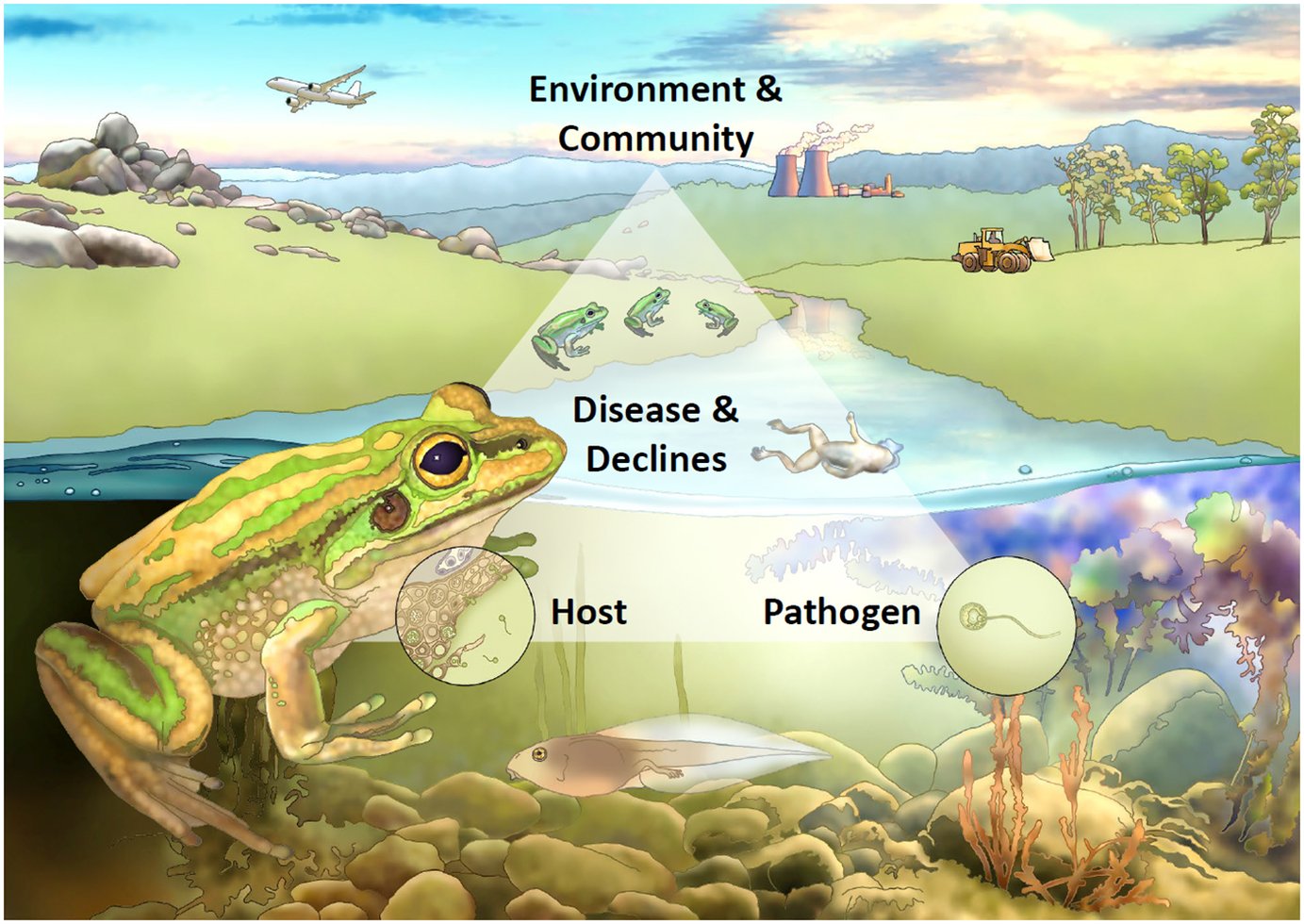
Infectious disease is an important driver of extinctions and population declines. With a few exceptions, such as the fungal disease chytridiomycosis in frogs, disease is probably underestimated as a cause of both local and global extinction because it often co-occurs with other more overt drivers of extinction, and its signs can be easily overlooked. Here, we discuss issues around attributing extinction to infectious disease and overview key underlying factors. We then examine the extent to which anthropogenic influences, such as climate change, habitat destruction and exotic species introductions, are likely to lead to increased extinction risk in association with infectious disease. Finally, we discuss strategies to mitigate the threat of extinction due to infectious disease.
Gadfly petrels Pterodroma spp. are among the most threatened bird taxa. Conservation interventions have been successfully developed and applied for some gadfly petrel species, but a substantial gap remains in conservation science for this group in the tropical Pacific Ocean. The Vanuatu Petrel Pterodroma [cervicalis] occulta is an ideal exemplar to develop a pipeline for conservation science in tropical Pacific gadfly petrels as it is subject to many of the challenges facing other gadfly petrel taxa in the region. We review over 40 pelagic Vanuatu Petrel records and five research expeditions to the only known colony on the island of Vanua Lava, Vanuatu. These records provide a baseline from which to recommend conservation research actions for the taxon. The population status, taxonomy, distribution, and threat profile of the taxon are all poorly known, and these areas are high priorities for future research.
Despite attacks of bottlenose dolphins towards conspecifics and other species of dolphins being reported worldwide, inside the Mediterranean Sea these behaviours are still considered sporadic and have been, to date, only recorded in Spain and France, mostly directed to striped dolphins. In this work, we reported the necropsy outcomes of a dead striped dolphin that suggest a fatal interaction with bottlenose dolphins inside the Italian side of the Pelagos Sanctuary, Western Ligurian Sea. Results from the post-mortem examination showed multiple, multifocal external rake marks spaced 1–1.2 cm and several internal injuries, consisting of subcutaneous and muscular haematomas and haemorrhages, multiple vertebral and rib fractures, haemothorax and lung laceration. The inter-tooth distance and all the internal findings were consistent with a fatal traumatic interaction with bottlenose dolphins as reported in similar cases in other parts of the world where the same results were found. No other significant gross and microscopic findings and concurrent significant pathogens were detected. This case highlights the existence of negative interspecific interactions in an area where they have never been reported before and adds new important information to the literature for understanding their occurrence, expanding the geographical range of observation in the western Mediterranean Sea.
The unsolved systematics of the genus Cardiomya has led to a sequence of astonishing identification mistakes. This scenario is a result of the rarity of specimens and, more importantly, the lack of knowledge about which characters are relevant to the genus taxonomy. In this study, we developed a method based on standard linear discriminant analysis to identify the smallest number of morphological characters that efficiently distinguish individuals at the species level of Brazilian Cardiomya. Starting from 29 morphometric measurements obtained from photographed Cardiomya shells, we were able to identify only five characters: the dorsal inflection of the rostrum, the distance from the posterior most rib end to the umbonal posterior margin and the distance from the central point of the valve to the anterior margin at 45°, 15° and −30° angles. Surprisingly, all these characters are related to the shell outline and not the ornamentation, which is a remarkable character in Cardiomya. We performed a one-way ANOVA with post-hoc Tukey HSD test specifically using the total number of ribs to verify its discriminant power in species identification. Our analysis demonstrated that the number of ribs does not show a significant difference between the analysed species.
The rocky intertidal zone of sheltered shores in Breiðafjörður, north-west Iceland is dominated by monospecific stands of canopy-forming brown algae Ascophyllum nodosum, which provide habitat for mobile organisms and has been subjected to long-standing rotational harvesting. We investigated the assemblage composition of little-studied mobile brachyuran crabs in this area, to track distributional shifts in a native species responding to climate change and extent of occupancy of the intertidal by a primarily subtidal invasive non-native species. Potential interactive effects of seaweed harvesting were explored. Breiðafjörður was compared with two reference sites in Faxaflói, south-west Iceland. The study revealed clear poleward expansion of the native European green crab Carcinus maenas in the region, displacing the native spider crab Hyas araneus particularly at mid-shore levels. The invasive non-native Atlantic rock crab Cancer irroratus had negligible occupancy in the intertidal zone, indicating limited effects on the intertidal crab assemblage, composition, and abundance. The current harvesting regime of A. nodosum in Breiðafjörður did not affect the composition and abundance of the brachyuran crab assemblage in the rocky intertidal zone. H. araneus is likely being squeezed by displacement subtidally by C. irroratus, and intertidally by C. maenas. Overall, we provide insights into the potential interactions between climate change, invasive species, and human activities in the rocky intertidal zone.