To save content items to your account,
please confirm that you agree to abide by our usage policies.
If this is the first time you use this feature, you will be asked to authorise Cambridge Core to connect with your account.
Find out more about saving content to .
To save content items to your Kindle, first ensure no-reply@cambridge.org
is added to your Approved Personal Document E-mail List under your Personal Document Settings
on the Manage Your Content and Devices page of your Amazon account. Then enter the ‘name’ part
of your Kindle email address below.
Find out more about saving to your Kindle.
Note you can select to save to either the @free.kindle.com or @kindle.com variations.
‘@free.kindle.com’ emails are free but can only be saved to your device when it is connected to wi-fi.
‘@kindle.com’ emails can be delivered even when you are not connected to wi-fi, but note that service fees apply.
The study of plant physiological responses to the environment (i.e., ‘ecophysiology’) has attracted researchers since early times, starting from Hales’ proposal that plants took their nourishment from the surrounding air (Hales, 1727), through Charles Darwin’s observations on leaf and chloroplast movements in response to external conditions and experimental manipulations (Darwin, 1881a,b; 1882), to Darwin’s son Francis’ early works on the relationship between transpiration and stomatal aperture (Darwin and Pertz, 1911; Darwin, 1916). From its very early re-foundations in modern times, plant ecophysiology has focused on photosynthesis – and transpiration, its undissociable process in terrestrial environments – as the most central physiological characteristic of plants changing in response to the environment. In parallel, considerable progress in the structural and biochemical basis of photosynthesis enabled improvement in the understanding of photosynthetic processes (Calvin and Benson, 1948), the integration of photosynthesis with transpiration and respiration and the view of photosynthesis as the basis for quantitative models of plant growth and crop production. Monsi and Saeki (1953) developed a theoretical frame to describe the distribution of light within plant communities, as Gaastra (1959) worked on photosynthesis in terms of gas exchange along a series of resistances in and out of leaves. Studies on leaf energy balance were initiated (Raschke, 1956; Gates, 1962) and later developed (Monteith, 1973), when portable infrared (IR) gas analysers for measuring photosynthesis became available (Bosian, 1960), allowing field campaigns of measuring photosynthesis in natural environments around the globe (Tranquilini, 1957; Lange et al., 1969; Björkman et al., 1972; Billings, 1973). In the late sixties and early seventies, the C4 pathway was discovered (Hatch and Slack, 1966) as well as the oxygenase activity of ribulose-1,5-bisphosphate carboxylase/oxygenase (Rubisco) (Ogren and Bowes, 1971), revealing a greater diversity of photosynthetic pathways than thought. Meanwhile, photosynthesis-based plant growth models were developed (Brouwer and de Wit, 1969; Penning de Vries et al. 1974). In the late seventies, an optimisation-theory model to explain stomatal behaviour linking photosynthesis to transpiration was developed by Cowan and Farquhar (1977), and the most widely used leaf photosynthesis model was presented (Farquhar et al., 1980a). After those decades, the importance of photosynthesis and related processes (such as transpiration, respiration and growth) was such that, according to several authors, plant ecophysiology in the eighties was fully focused on photosynthesis-related subjects, such as energy and mass exchange (Mooney et al., 1987; DeLucia et al., 2001; see Fig. 1.1).
Historical Overview of Stable Isotopic Studies in Plant Science
Isotopes are atoms of the same element having the same numbers of protons and electrons but a different number of neutrons. Stable isotopes are those that do not decay to other isotopes on the geological timescales, but can themselves be originated from the decay of radioactive isotopes.
The stable isotopes of carbon and oxygen have major relevance for photosynthesis, respiration and photorespiration, and link the carbon and water cycles. Hence, this chapter will attempt to summarise the current knowledge of processes affecting the stable carbon and oxygen isotopic composition of plants and the exchange between plants (and ecosystems) and the atmosphere.
In addition, hydrogen, nitrogen and sulphur isotopes also have major relevance for plant biology and physiological ecology, but these will not be covered here as these subjects are out of the scope of this book.
Early studies and measurements of stable isotopes in plants were initiated by scientists outside biology, with the initial interest developed in physical science and subsequently extended to geology. Studies were focused on deuterium and its variation in nature, as it was the first isotope to be discovered and was the easiest to measure with the equipment then available, mainly spectrographs. It was not until the late 1930s/early 1940s, with the development of a modern sector i eld-isotope mass spectrometer by Alfred Nier ( 1940 ), that precise measurements of other isotopes such as carbon and oxygen became possible.
Photosynthesis is the physiological process that overwhelmingly supports the Earth’s primary production. For this reason, photosynthesis research has attracted interest worldwide since the earliest foundations of modern science several centuries ago. Renewed interest in photosynthesis research has been spurred in recent decades. In part this is owing to the impressive technological advancements in analysing the molecular and physiological bases of the photosynthetic processes. But interest in photosynthesis also derives from the need to know how global climate change will impact on the primary productivity of the globe, and on ecosystem stability. Being a highly dynamic process, the precise understanding of how photosynthesis responds to environmental changes is crucial to predict how single plants and entire agro- or ecosystems will be affected in a scenario of rising CO2, rising temperature, and large disturbances in water and nutrient cycles. Finally, photosynthesis studies are the cornerstone for the development of new crops better suited for novel purposes, primarily high yield for biomass and biofuel use.
Whereas several books have proficiently addressed the photosynthetic process, the recent important advances in photosynthesis are still in need of comprehensive coverage. To mention just a few: new techniques have been tested for remote sensing of photosynthesis; important limitations of traditional gas-exchange analysis have been highlighted and solutions proposed; advances have been made in the measurements of diffusive resistance of CO2 inside leaves; the mechanistic knowledge of leaf mesophyll conductance to CO2 has been identified as a decisive but often neglected aspect of leaf photosynthetic; an increasing interest has arisen regarding photosynthetic responses to biotic stresses, a field that has been under-explored or totally unrecognised; photosynthetic responses under leaf development and ontogeny have been assessed; evolutionary trends have been described for several photosynthesis-related processes, such as leaf morphology or stomatal responses to environmental cues; and of course, large-scale studies have been performed regarding photosynthesis at ecosystem level, and the response of ecosystems to climate change.
The interest of researchers for a more precise estimation of primary productivity of terrestrial ecosystems and its underlying mechanisms dates back to the 1960s, when the International Biological Programme was launched (Lieth and Whittaker, 1975). At that time, primary productivity was assessed almost exclusively by destructive sampling of plant biomass and measurements of growth, whereas gas-exchange measurements were focused on investigating physiological responses and on model parameterisation. Indeed, estimates of photosynthesis and/or respiration of entire plants or ecosystem was limited by technical problems, and measurements performed on single leaves or plant parts were scaled up using knowledge on plant architecture and ecosystem-structure parameters, such as leaf area index or wood area index (Schulze and Koch, 1971; Tenhunen et al., 1990; Pearcy and Sims, 1994; Matteucci et al., 1995). Nevertheless, knowledge on primary productivity of the terrestrial biosphere increased significantly, and the first attempts of regression modelling were performed (Lieth, 1975; Reichle, 1981).
Since then, the interest for scaling physiological processes in time and space has increased strongly (Ehleringer and Field, 1993; Jarvis, 1995) and a series of new technologies have expanded the spatial scale of observations from leaves to canopy, from ecosystems to globe (e.g., Waring and Running, 1998), and the availability of new measurements, such as canopy fluxes through eddy covariance (EC), remote sensing of absorbed radiation and atmospheric CO2 concentration measurements by tall towers, aircraft or high elevation stations, have improved the understanding of biosphere processes at larger and longer scales, providing better constraints to the estimation of photosynthetic fluxes and carbon-budget components by biogeochemical models (Running et al., 1999; Griffith and Jarvis, 2005).
Human societies are dependent upon the productivity of domesticated plant species, including cereals, oilseeds, pulse crops, fruits, vegetables and nuts consumed directly by people; also domesticated animals kept for milk, egg and meat production are reared on feed derived from plants, including grains and leguminous and non-leguminous forage species. Thus, the worldwide availability of calories, protein, dietary fats and other nutrients for human sustenance depends directly on the growth, and therefore the photosynthetic activity, of crops. Accordingly, carbon assimilation of crop species has been extensively studied as a matter of practical importance. Most recently, the expanding use of agricultural crops and crop residues as feedstocks for biofuel production has rejuvenated interest in the potential for increased fixation of atmospheric carbon and capture of solar energy by crop species and agronomic systems (Brown et al., 2000; Heaton et al., 2004). All together, the importance of crop productivity has led in recent years to increased efforts for improving crop photosynthesis by means of mutation discovery and/or transgenic (Parry et al., 2009; Mittler and Blumwald, 2010; see Chapter 13) or epigenetic (Hauben et al., 2009; Mittler and Blumwald, 2010) approaches.
The most relevant spatial scale for the study of crop photosynthesis is often the whole-canopy (plant-community) scale. Communities of crop plants are unique in that they tend to be extremely uniform, usually consisting of a single species (indeed, most often a single genotype), with all members closely synchronised in terms of their phenological development. This unusual uniformity greatly simplifies the study and modelling of crop photosynthesis and growth at the community scale, and has allowed the relevant theory to advance very quickly in comparison with other areas of plant ecology. For example, because crop canopies are spatially quite uniform, they can for some purposes be treated as homogeneous surfaces. This allows photosynthesis of crop canopies to be characterised using theoretical approaches similar to those used for single leaves, quantifying such aspects as light absorption and gas exchange in one dimension (i.e., fluxes per unit area, in this case ground area).
Whole-plant photosynthesis is a complex process depending on photosynthetic activity of single leaves, plant architecture and plant biomass distribution between support and assimilative tissues. This chapter reviews the importance of whole-plant photosynthesis in ecology and plant science, the possible ways of estimating whole-plant carbon-gain rates and the determinants of whole-tree carbon gain. It further analyses the changes in whole-tree carbon gain in different environments and with plant aging and increasing size. The main message of this chapter is that whole-plant photosynthetic productivity is determined collectively by a series of physiological and structural traits, by within-canopy variation in environmental drivers and by foliage acclimation to the within-plant environmental heterogeneity. Therefore, whole-plant photosynthesis responds differently to the environment than does the sum of single-leaf photosynthetic responses.
Whole-plant photosynthesis: importance for large-scale carbon fluxes
Driven by the need to understand and predict global change, there is strong interest in determinants of vegetation carbon gain at higher scales ranging from whole plants to canopies, landscapes, biomes and globe (e.g., Williams et al., 2004; Ollinger et al., 2008; Duursma et al., 2009). There is a large variation in physiological activity among the leaves of the same plant owing to differences in leaf ontogenetic status, as well as owing to leaf acclimation to within-canopy light, temperature and humidity gradients. Because of this large variation among leaves, the whole-plant performance is difficult to assess from single-leaf measurements (Klingeman et al., 2000), and poor correspondence of single-leaf gas-exchange rates and plant growth has been observed in numerous studies (e.g., Lambers and Poorter, 1992; Lawlor, 1995).
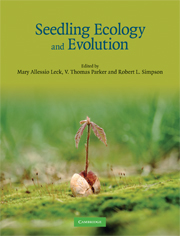
Seedlings are highly sensitive to their environment. After seeds, they typically suffer the highest mortality of any life history stage. This book provides a comprehensive exploration of the seedling stage of the plant life cycle. It considers the importance of seedlings in plant communities; environmental factors with special impact on seedlings; the morphological and physiological diversity of seedlings including mycorrhizae; the relationship of the seedling with other life stages; seedling evolution; and seedlings in human altered ecosystems, including deserts, tropical rainforests, and habitat restoration projects. The diversity of seedlings is portrayed by including specialised groups like orchids, bromeliads, and parasitic and carnivorous plants. Discussions of physiology, morphology, evolution and ecology are brought together to focus on how and why seedlings are successful. This important text sets the stage for future research and is valuable to graduate students and researchers in plant ecology, botany, agriculture and conservation.
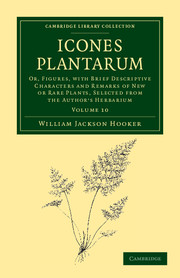
This world-famous work was begun by Sir William Jackson Hooker (1785–1865) in 1837, and the ten volumes reissued here were produced under his authorship until 1854, at which point his son, Joseph Dalton Hooker (1817–1911) continued the work of publication. Hooker's own herbarium, or collection of preserved plant specimens, was so extensive that at one point he stored it in one house and lived in another; it was left to the nation on his death. Each volume contains 100 line drawings of plants, and each is accompanied by a full Latin description, with notes in English on habitat and significant features. The order of the plants in each volume is not systematic, but two 'indexes' at the beginning provide plant lists, in alphabetical order and 'arranged according to the natural orders'.
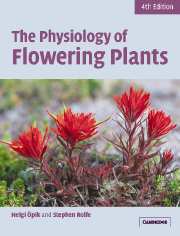
This latest edition of The Physiology of Flowering Plants has been completely updated to cover the explosion of interest in plant biology. A whole-plant approach has been used to produce an integrated view of plant function, covering both the fundamentals of whole plant physiology and the latest developments in molecular biology. New developments in molecular techniques are explained within practical applications such as genetically modified plants. The book further examines:photosynthesis, respiration, plant growth and developmentnutrition, water relations, photomorphogenesis and stress physiologyfunction, with particular attention to adaptations to different habitats. Each chapter is fully referenced with suggestions for complementary reading including references to original research papers. The Physiology of Flowering Plants is an ideal textbook for undergraduate and postgraduate courses in plant biology.
Conservation by Clive Hambler is the latest addition to the popular Studies in Biology series of undergraduate textbooks. The book gives an overview of all aspects of this rapidly changing and controversial field. With the decline of species and our encroachment of natural habitats, conservation is becoming increasingly in the public eye. Maintaining the diversity of life on this planet and using our natural resources in a sustainable manner is important to protect the options of future generations. An understanding of conservation biology is essential to debates and action on the environment. As with all books in the series, Conservation will act as an aid to learning, and to field work. It is meant to be used as an introductory text and as a study aid for examinations.
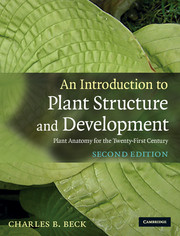
A plant anatomy textbook unlike any other on the market today. Carol A. Peterson described the first edition as 'the best book on the subject of plant anatomy since the texts of Esau'. Traditional plant anatomy texts include primarily descriptive aspects of structure, this book not only provides a comprehensive coverage of plant structure, but also introduces aspects of the mechanisms of development, especially the genetic and hormonal controls, and the roles of plasmodesmata and the cytoskeleton. The evolution of plant structure and the relationship between structure and function are also discussed throughout. Includes extensive bibliographies at the end of each chapter. It provides students with an introduction to many of the exciting, contemporary areas at the forefront of research in the development of plant structure and prepares them for future roles in teaching and research in plant anatomy.
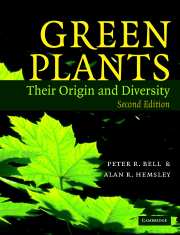
The central theme of Green Plants, first published in 2000, is the astonishing diversity of forms found in the plant kingdom, from the simplicity of prokaryotic algae to the myriad complexities of flowering plants. The book is arranged according to generally accepted classification schemes, beginning with algae (prokaryotic and eukaryotic) and moving through mosses, liverworts, fern allies, ferns and gymnosperms to flowering plants. Copiously illustrated throughout, it provides a concise account of all algae and land plants, with information on topics from cellular structure to life cycles and reproduction. The authors maintain a refreshingly cautious approach in discussions of possible phylogenetic relationships and include newly emerging information on features of plants known only as fossils. This edition has been completely updated to reflect current views on the origin of the major groups of plants, providing a resource for students of botany, and for researchers needing a comprehensive reference to the plant kingdom.
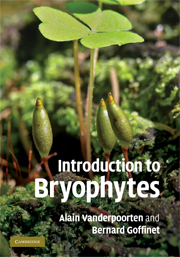
Bryophytes were a pivotal step in land plant evolution, and their significance in the regulation of ecosystems and the conservation of biodiversity is becoming increasingly acknowledged. This introductory textbook assumes no prior knowledge of bryophyte biology, making it ideal for advanced undergraduate and graduate students, as well as amateur botanists. The authors expertly summarise the diversity of bryophytes and outline recent advances in our understanding of their evolutionary history, their ecological roles and preferences, their distribution patterns and conservation needs. The text is highly illustrated throughout, with boxed summaries of topics of current relevance in bryophyte biology, and a glossary of technical terms.
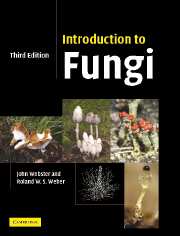
This new edition of the universally acclaimed and widely-used textbook on fungal biology has been completely re-written, drawing directly on the authors' research and teaching experience. The text takes account of the rapid and exciting progress that has been made in the taxonomy, cell and molecular biology, biochemistry, pathology and ecology of the fungi. Features of taxonomic relevance are integrated with natural functions, including their relevance to human affairs. Special emphasis is placed on the biology and control of human and plant pathogens, providing a vital link between fundamental and applied mycology. The book is richly illustrated throughout with specially prepared drawings and photographs, based on living material. Illustrated life-cycles are provided, and technical terms are clearly explained. Extensive reference is made to recent literature and developments, and the emphasis throughout is on whole-organism biology from an integrated, multidisciplinary perspective.
The authors present a basic and accessible introduction to the world of microbiology. In three sections, this book provides both a foundation and overview of the subject. In the first section, 'Microbial Structure and Mode of Life', the structure and functioning of fungi, bacteria and viruses are discussed (with particular attention being paid to their description and discussion of their reproduction and nutrition). The second section, 'Handling Microbes' introduces the methods used to culture, control and study these organisms in the laboratory. The final section covers the 'Isolation, Classification and Identification of Microbes'. This book is essential reading for anyone becoming interested in this subject, whether it be 6th form students, their teachers, or undergraduates.
Biotechnology will undoubtedly be the major technology of the twenty-first century. It concerns the practical application of biological organisms or their various components to the benefit of humankind, and spans a multitude of modern and traditional industries. The rise of genetic engineering, genomics, proteomics and the creation of transgenic crops and animals has revolutionised activities as varied as brewing beer, the treatment of sewage and wastewater, to drug development and agriculture. In this expanded fourth edition of his popular textbook, John Smith once again demystifies biotechnology, and especially genetic manipulation, clearly and accessibly explaining the history, techniques, and applications of modern biotechnology for students and the general reader. All aspects of biotechnology are covered and a positive stance is taken concerning the potential benefits to human society. In this edition, greater emphasis is given to the public perception of biotechnology and the ethical and safety questions raised.