To save content items to your account,
please confirm that you agree to abide by our usage policies.
If this is the first time you use this feature, you will be asked to authorise Cambridge Core to connect with your account.
Find out more about saving content to .
To save content items to your Kindle, first ensure no-reply@cambridge.org
is added to your Approved Personal Document E-mail List under your Personal Document Settings
on the Manage Your Content and Devices page of your Amazon account. Then enter the ‘name’ part
of your Kindle email address below.
Find out more about saving to your Kindle.
Note you can select to save to either the @free.kindle.com or @kindle.com variations.
‘@free.kindle.com’ emails are free but can only be saved to your device when it is connected to wi-fi.
‘@kindle.com’ emails can be delivered even when you are not connected to wi-fi, but note that service fees apply.
As human activities are increasingly domesticating the Earth's ecosystems, new selection pressures are acting to produce winners and losers amongst our wildlife. With particular emphasis on plants, Briggs examines the implications of human influences on micro-evolutionary processes in different groups of organisms, including wild, weedy, invasive, feral, and endangered species. Using case studies from around the world, he argues that Darwinian evolution is ongoing. He considers how far it is possible to conserve endangered species and threatened ecosystems through management, and questions the extent to which damaged landscapes and their plant and animal communities can be precisely recreated or restored. Many of Darwin's ideas are highlighted, including his insights into natural selection, speciation, the vulnerability of rare organisms, the impact of invasive species, and the effects of climate change on organisms. An important text for students and researchers of evolution, conservation, climate change and sustainable use of resources.
English physician William George Maton (1774–1835) was a polymath who had a special interest in botany: a shell and a parrot were among species named in his honour. His writings on natural history included a catalogue of the plant and animal life around Salisbury, Wiltshire, which was published posthumously in 1843 and is reissued as the second part of this composite work. The first part contains a sketch of Maton's life and work by fellow physician and writer John Ayrton Paris (c. 1785–1856), first presented to the Royal College of Physicians, and subsequently published in 1838. Paris discusses Maton's early life, his contributions to the growing field of botany, his other scientific and antiquarian interests, and his distinguished medical career, during which he was appointed physician-extraordinary to Queen Charlotte, wife of George III, and later physician-in-ordinary to the duchess of Kent and the young Princess (later Queen) Victoria.
Phycology is the study of algae, the primary photosynthetic organisms in freshwater and marine food chains. As a food source for zooplankton and filter-feeding shellfish, the algae are an extremely important group. Since the publication of the first edition in 1981, this textbook has established itself as a classic resource on phycology. This revised edition maintains the format of previous editions, whilst incorporating more recent information from nucleic acid sequencing studies. Detailed life-history drawings of algae are presented alongside information on the cytology, ecology, biochemistry, and economic importance of selected genera. Phycology is suitable for upper-level undergraduate and graduate students following courses in phycology, limnology or biological oceanography. Emphasis is placed on those algae that are commonly covered in phycology courses, and encountered by students in marine and freshwater habitats.
An understanding of the physiology and function of nerve and muscle is fundamental to our knowledge of how the human body and the bodies of other animals function. In the third edition of this highly readable and concise introductory textbook, the authors begin with a discussion of the nature of nerve impulses as electrical events. They go on to consider communication between nerve cells via synaptic transmission, and finally discuss the nature of muscular contraction, relating muscle cellular structure to contractile function. This is a subject that continues to generate exciting discoveries and this edition includes new material that reflects this, including some of the experimental evidence. The reader will find up-to-date detail of the molecular structure of ion channels and the molecular basis of muscular contraction. Nerve and Muscle is essential reading for all students taking university courses in neurobiology, physiology, cell biology and preclinical medicine.
Microbes play an important role in our everyday lives. As agents of infectious disease they cause untold human misery, yet their beneficial activities are manifold, ranging from the natural cycling of chemical elements through to the production of food, beverages and pharmaceuticals. In this introductory level text the authors provide a clear and accessible account of the interactions between microbes, their environment and other organisms, using examples of both beneficial and adverse activities. The book begins by considering beneficial activities, focusing on environmental microbiology and manufacturing, and then moves on to consider some of the more adverse aspects, particularly the myriad of diseases to which we are susceptible and the treatments currently in use. This book is the companion to Introductory Microbiology, also published in this series, and is essential reading for biological science and medical undergraduates, as well as being of interest to sixth form students and their teachers.
Plants are so much part of our environment that we often take them for granted, yet beautiful, fascinating and useful plants are everywhere, from isolated moss colonies on stone walls to vast complex communities within tropical rainforests. How did this array of form and habitat come about, and how do we humans interact with the plant kingdom? This unique new textbook provides a refreshing and stimulating consideration of these questions and throws light in a new way on the complexity, ecology, evolution and development of plants and our relationship with them. Illustrated throughout with numerous line diagrams and beautiful colour photographs, the book provides a comprehensive introduction to the fascinating lives that plants lead and the way in which our lives are inextricably linked to theirs. It will be particularly useful to students seeking a more ecological and process-oriented approach than is available in other plant science textbooks.
From their ability to use energy from sunlight to make their own food, to combating attacks from diseases and predators, plants have evolved an amazing range of life-sustaining strategies. Written with the non-specialist in mind, John King's lively natural history explains how plants function, from how they gain energy and nutrition to how they grow, develop and ultimately die. New to this edition is a section devoted to plants and the environment, exploring how problems created by human activities, such as global warming, pollution of land, water and air, and increasing ocean acidity, are impacting on the lives of plants. King's narrative provides a simple, highly readable introduction, with boxes in each chapter offering additional or more advanced material for readers seeking more detail. He concludes that despite the challenges posed by growing environmental perils, plants will continue to dominate our planet.
Plant community ecology has traditionally taken a taxonomical approach based on population dynamics. This book contrasts such an approach with a trait-based approach. After reviewing these two approaches, it then explains how models based on the Maximum Entropy Formalism can be used to predict the relative abundance of different species from a potential species pool. Following this it shows how the trait constraints, upon which the model is based, are necessary consequences of natural selection and population dynamics. The final sections of the book extend the discussion to macroecological patterns of species abundance and concludes with some outstanding unresolved questions. Written for advanced undergraduates, graduates and researchers in plant ecology, Bill Shipley demonstrates how a trait-based approach, can explain how the principle of natural selection and quantitative genetics can be combined with maximum entropy methods to explain and predict the structure of plant communities.
A challenge of our generation is the creation of an efficient system providing sustainable food and fuel from the land whilst also preserving biodiversity and ecosystems. We must feed a human population that is expected to grow to more than nine billion by mid-century. Agricultural biotechnology is one tool that holds potential promise to alleviate hunger and poverty. However, there are complex and interrelated scientific, social, political and ethical questions regarding the widespread use of biotechnology in the food supply. This edited volume discusses diverse perspectives on sustainable food production systems in terms of challenges, opportunities, success stories, barriers and risks associated with agricultural and food biotechnology. The effects of biotechnology on the environment, ethical and moral issues, potential changes to government policies and economics, and social implications are summarised. This book will interest students, professionals and researchers from the areas of bioengineering, agriculture and ecosystem science to economics and political science.
This much revised and expanded edition provides a valuable and detailed summary of the many uses of diatoms in a wide range of applications in the environmental and earth sciences. Particular emphasis is placed on the use of diatoms in analysing ecological problems related to climate change, acidification, eutrophication, and other pollution issues. The chapters are divided into sections for easy reference, with separate sections covering indicators in different aquatic environments. A final section explores diatom use in other fields of study such as forensics, oil and gas exploration, nanotechnology, and archaeology. Sixteen new chapters have been added since the first edition, including introductory chapters on diatom biology and the numerical approaches used by diatomists. The extensive glossary has also been expanded and now includes over 1,000 detailed entries, which will help non-specialists to use the book effectively.
Des Nicholl presents here a new, fully revised, and expanded edition of his popular undergraduate-level textbook. Many of the features of the original edition have been retained; the book still offers a concise technical introduction to the subject of genetic engineering. However, the book is now divided into three main sections: the first introduces students to basic molecular biology, the second section explains the methods used to manipulate genes, and the third deals with modern applications of genetic engineering. A whole chapter is now devoted to the polymerase chain reaction. Applications covered in the book include genomics, protein engineering, gene therapy, cloning, and transgenic animals and plants. A final chapter discusses the ethical questions surrounding genetic engineering in general. An Introduction to Genetic Engineering is essential reading for undergraduate students of biotechnology, genetics, molecular biology and biochemistry.
Bryophyte Biology provides a comprehensive yet succinct overview of the morphology, systematics, ecology, and evolution of hornworts, liverworts, and mosses. A distinguished set of contributors provide state-of-the-art summaries of the most recent advances in bryology, with rich citation of the current literature. Revised classifications for the liverworts and mosses are presented that depart significantly from previous arrangements. These novel classifications reflect the results of recent phylogenetic analyses and include exhaustive lists of accepted genera with their familial placements. Accessible and well-illustrated overviews of morphology are provided for each group, with subsequent contributions focusing on current areas of active research, including developmental biology, molecular genetics, ecology, and microevolution. In addition to reviews of the most current literature, the chapters provide abundant reference to classical studies in bryology that will help those new to the topic to develop an historical perspective within which recent developments can be viewed.
Fossils document the existence of trees and wood-associated organisms from almost 400 million years ago, and today there are between 400,000 and 1 million wood-inhabiting species in the world. This is the first book to synthesise the natural history and conservation needs of wood-inhabiting organisms. Presenting a thorough introduction to biodiversity in decaying wood, the book studies the rich diversity of fungi, insects and vertebrates that depend upon dead wood. It describes the functional diversity of these organisms and their specific habitat requirements in terms of host trees, decay phases, tree dimensions, microhabitats and the surrounding environment. Recognising the threats posed by timber extraction and forest management, the authors also present management options for protecting and maintaining the diversity of these species in forests as well as in agricultural landscapes and urban parks.
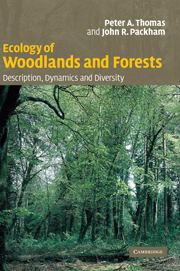
Taking a functional rather than an ecosystem or a utilitarian approach, Thomas and Packham provide a concise account of the structure of woodlands and forests. Using examples from around the world - from polar treelines to savannahs to tropical rain forests - the authors explain the structure of the soil and the hidden world of the roots; how the main groups of organisms which live within them interact both positively and negatively. There is particular emphasis on woodland and forest processes, especially those involving the flow and cycling of nutrients, as well as the dynamics of wooded areas, considering how and why they have changed through geological time and continue to do so. This clear, non-technical, 2007 text will be of interest to undergraduates, foresters, ecologists and land managers.
Fungi are a diverse group of organisms, studied widely because of their commercial importance in biotechnology, agriculture and medicine, and because they provide simple model systems for illuminating the eukaryotic mode of life. The development of the techniques of molecular biology has opened up new areas of mycological research, with profound consequences such as the sequencing of the first entire eukaryotic genome. This book focuses on the application of molecular and cell biology to mycology and presents examples of how these approaches are elucidating long-held problems in areas as diverse as animal and plant pathology, protein expression and evolution. Aimed at advanced undergraduates taking courses in mycology, applied biology, biotechnology, fungal biology and fungal genetics, this textbook will also serve postgraduates needing an introduction to modern fungal research.
An Introduction to Plant Structure and Development incorporates basic knowledge of plant anatomy with contemporary information and ideas about the development of structure and form. This textbook has been designed for undergraduates with a background in introductory botany or biology and basic knowledge of plant systematics and evolution. Descriptions of plant structure and development are integrated with discussions of the results from some of the most significant research on plant development. Topics include the integrative significance of plasmodesmata and the concept of the symplast, the concept of multicellularity, the role of cytoskeleton in development, signal transduction and the genetic control of development. Brief sections on evolution and function are also included. The book is profusely illustrated with line drawings and photographs, closely integrated with the text, which will enhance students' understanding, as will the comprehensive glossary. Extensive bibliographies provide the basis for in-depth study in major areas by students and researchers.
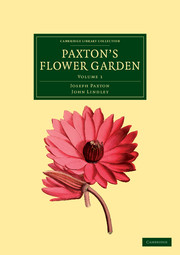
Best remembered today for his technically innovative design for the Crystal Palace of 1851, Joseph Paxton (1803–65) was head gardener to the Duke of Devonshire at Chatsworth by the age of twenty-three, and remained involved in gardening throughout his life. Tapping in to the burgeoning interest in gardening amongst the Victorians, in 1841 he founded the periodical The Gardener's Chronicle with the botanist John Lindley (1799–1865), with whom he had worked on a Government report on Kew Gardens. Paxton's Flower Garden appeared between 1850 and 1853, following a series of plant-collecting expeditions. Only three of the planned ten volumes were published, but with hand-coloured plates (which can be viewed online alongside this reissue) and over 500 woodcuts, the work is lavish. Volume 1 includes colour plates of orchids, Lindley's speciality, along with a pitcher plant and Moutan peony, both still unusual and exotic at the time of publication.
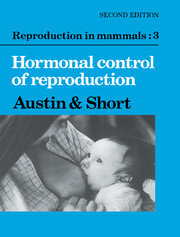
In this, our Second Edition of Reproduction in Mammals, we are responding to numerous requests for a more up-to-date and rather more detailed treatment of the subject. The First Edition was accorded an excellent reception, but the first five books were written ten years ago and inevitably there have been advances on many fronts since then. As before, the manner of presentation is intended to make the subject matter interesting to read and readily comprehensible to undergraduates in the biological sciences, and yet with sufficient depth to provide a valued source of information to graduates engaged in both teaching and research. Our authors have been selected from among the best known in their respective fields. This volume discusses the manifold ways in which hormones control the reproductive processes in male and female mammals. The hypothalamus regulates both the anterior and posterior pituitary glands, whilst the pineal can exert a modulating influence on the hypothalamus. The pituitary gonadotrophins regulate the endocrine and gametogenic activities of the gonads, and there are important local feedback effects of hormones within the gonads themselves. Non-pregnant females display many different types of oestrous or menstrual cycles, and there are likewise great species differences in the endocrinology of pregnancy. But the hallmark of mammals is lactation, and this also exerts a major control on subsequent reproductive activity.
Ferns are an integral part of the world's flora, appreciated for their beauty as ornamentals, problematic as invaders and endangered by human interference. They often dominate forest understories but also colonize open areas, invade waterways and survive in nutrient-poor wastelands and eroded pastures. Presented here is the first comprehensive summary of fern ecology, with worldwide examples from Siberia to the islands of Hawaii. Topics include a brief history of the ecological study of ferns, a global survey of fern biogeography, fern population dynamics, the role of ferns in ecosystem nutrient cycles, their adaptations to xeric environments and future directions in fern ecology. Fully illustrated concepts and processes provide a framework for future research and utilization of ferns for graduate students and professionals in ecology, conservation and land management.
This world-famous work was begun by Sir William Jackson Hooker (1785–1865) in 1837, and the ten volumes reissued here were produced under his authorship until 1854, at which point his son, Joseph Dalton Hooker (1817–1911) continued the work of publication. Hooker's own herbarium, or collection of preserved plant specimens, was so extensive that at one point he stored it in one house and lived in another; it was left to the nation on his death. Each volume contains 100 line drawings of plants, and each is accompanied by a full Latin description, with notes in English on habitat and significant features. The order of the plants in each volume is not systematic, but two 'indexes' at the beginning provide plant lists, in alphabetical order and 'arranged according to the natural orders'.