To save content items to your account,
please confirm that you agree to abide by our usage policies.
If this is the first time you use this feature, you will be asked to authorise Cambridge Core to connect with your account.
Find out more about saving content to .
To save content items to your Kindle, first ensure no-reply@cambridge.org
is added to your Approved Personal Document E-mail List under your Personal Document Settings
on the Manage Your Content and Devices page of your Amazon account. Then enter the ‘name’ part
of your Kindle email address below.
Find out more about saving to your Kindle.
Note you can select to save to either the @free.kindle.com or @kindle.com variations.
‘@free.kindle.com’ emails are free but can only be saved to your device when it is connected to wi-fi.
‘@kindle.com’ emails can be delivered even when you are not connected to wi-fi, but note that service fees apply.
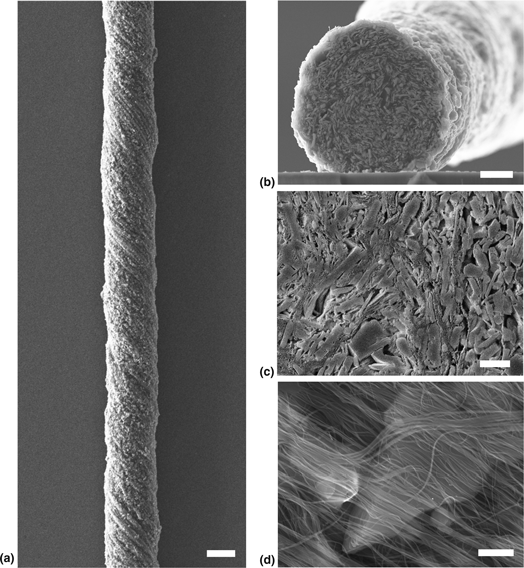
Yarn-type supercapacitors should have high energy density in small given spaces, and the one attempt among many is to comprise the electrodes asymmetrically. However, the low capacitance of conventional materials causes the widened operating voltage useless. In this study, we have utilized a novel material MXene with carbon nanotubes (CNTs) to make highly loaded MXene/CNT yarn electrodes, which exhibited a remarkable areal capacitance. With MnO2/CNT biscrolled cathode and PVA/LiCl gel electrolyte, the plied asymmetric yarn supercapacitor had energy density of 100 µWh/cm2. The yarn supercapacitor could operate under mechanical deformations without performance degradation.
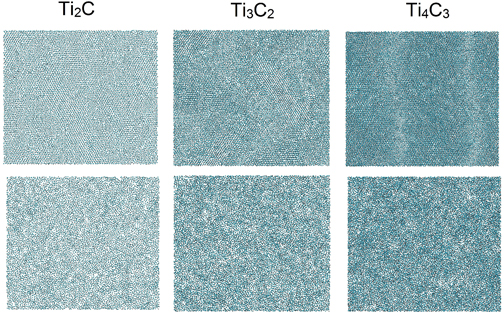
We report the classical molecular dynamics (MD) study of thermal stability of three two-dimensional (2D) titanium carbides Ti2C, Ti3C2, and Ti4C3 (MXenes). Thermal properties of 2D nanomaterials are of fundamental importance and raise particular interest due to their potential applications in nanoelectronics. To investigate the behavior of Tin+1Cn MXenes during heating, structural parameters such as Lindemann indexes, radial distribution functions, and atomistic configurations were calculated. The analysis of MD data allowed us to obtain approximate values of MXene degradation temperatures that are 1050, 1500, and 1700 K for Ti2C, Ti3C2, and Ti3C4 MXenes, respectively.
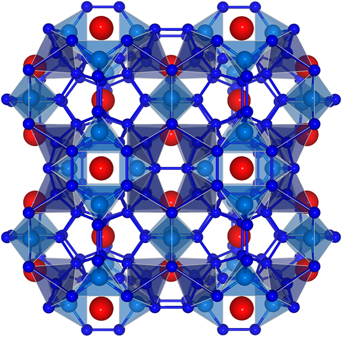
Clathrates based on Si and Ge have very low lattice thermal conductivity (~1 W/m-K). This value can potentially be further reduced by alloying and nano-structuring. In this work, the thermal conductivity of Si and Ge clathrates alloy have been investigated using model based on the relaxation time approximation. By including alloy scattering, we find that the lattice thermal conductivity of Ba8Cu6Si40 is reduced by 50% from 1.64 to 0.80 W/m-K in Ba8Cu6Si40(1−x)Ge40x alloy. Further ~90% reduction of the thermal conductivity is possible for nanowire clathrate alloys. The ultra-low thermal conductivity in the nanowire will be very suitable for the thermoelectric application.
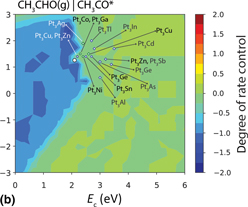
Ab initio microkinetic modeling was performed to study ethanol conversion to acetaldehyde on Pt-based bimetallic alloys in a non-oxidative environment. Alloying Pt with Au, Ag, Cu, Co, Ni, Zn, Cd, Al, Ga, In, Tl, Ge, Sn, Pb, As, and Sb showed an increase in product turnover by at least an order of magnitude compared with Pt at 423 K. This was correlated to the increased stabilization of CH3CHO species over these alloys. Among the alloy candidates; Pt3Cu, Pt3Zn, Pt3Ga, Pt3Ge, Pt3Sb, and Pt3Pb were found to be more active than Pt.
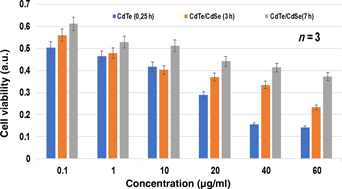
LM-8 is a murine osteosarcoma cell line associated with bone tumor in young adult and children. It contains the nuclear factor-κB which make this cell high resistance to irradiation thus limiting its treatment only to chemotherapy and surgery which has become a source of concerned for cancer therapy. In addressing this problem, we herein report the synthesis of CdTe/CdSe core/shell quantum dots (QDs) via a simple, reproducible method and its cytotoxic action against the LM-8 cell line. The cell viability study shows that the as-synthesized QDs are toxic to the LM-8 cell line in a concentration- and time-dependent manner.
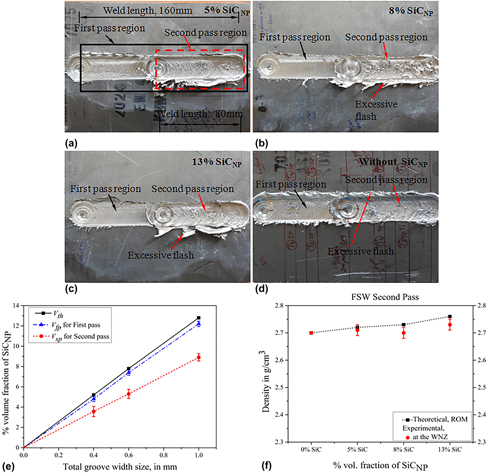
Effects of varying volume fractions of SiC nanoparticle (SiCNP) reinforcement on microstructure and mechanical properties of dissimilar AA2024-T351 and AA7075-T651 joints by friction stir welding (FSW) have been investigated experimentally. A rectangular section edge groove was prepared at the adjoining surfaces of the two plates with the butt configuration before FSW. Initially, four fractional volumes with 0, 5, 8, and 13% of SiCNP are reinforced into the grooves of width, 0, 0.2, 0.3, and 0.5 mm and the FSW was performed with the first and second pass to obtain metal matrix nanocomposite (MMNC) at the weld nugget zone (WNZ). The characterization of microstructure specimens was investigated using optical microscopy (OM), scanning electron microscopy (SEM) and X-ray diffraction technique (XRD). The FSW joint specimen produced with 5 vol% fraction of SiCNP for second pass processing observes a defect-free, homogeneous distribution of SiCNP with a mean grain size of about 2–3 µm at the WNZ and weld joints higher in tensile strength, 411 MPa, yield strength, 252 MPa, and percentage elongation, 14.3. The result shows that varying volume fractions (5, 8, 13%) of the SiCNP after the FSW second pass led to significant grain refinement at the WNZ and higher mechanical properties compared with FSW specimens prepared without SiCNP. Higher hardness of 150 Hv was observed in the WNZ for specimen produced with 13 vol% fraction SiCNP.
M3:2 high-speed steel (HSS) billets with or without Nb addition were prepared by spray deposition. The effects of Nb and post-thermal-mechanical processing (decomposition treatment and hot forging), as well as heat treatment, on the microstructure and properties of M3:2 HSS were investigated. The microstructure of the as-deposited M3:2 HSS consisted of equiaxed grains with a mean size of approximately 25 μm and discontinuous plate-like M2C and irregular MC carbides distributed along grain boundaries. 0.5% Nb addition can refine the M2C plates and spheroidize MC carbides. With 2% Nb addition, the refined grains with a mean size of approximately 12 μm and continuous net of M6C and a uniform distribution of NbC carbides were obtained. The decomposition of metastable M2C carbides can be accelerated with 0.5% Nb addition due to the refined size and lower thermodynamic stability of M2C plates. With the increased degree of decomposition of M2C carbide, the M6C and MC carbides became refined and more uniformly distributed after optimal thermal-mechanical processing and heat treatment, which leads to a significant increase in bend strength and toughness.
As rarely large flake graphite (9 mesh) was recently exploited in China, it was innovatively developed as the raw material to prepare a novel wound dressing based on large expanded graphite (EG) in this work. The EG worms were prepared in an easy oxidative intercalation and thermal expansion method. Afterward, chitosan was grafted onto the surface of EG by chemical modification, forming CS-EG worms. CS-EG sponge dressings were then obtained by pressing a number of CS-EG worms together by external force. Due to the porous structure and large specific surface area, the produced CS-EG sponges exhibited outstanding adsorption capacity for wound exudate. They could also promote blood coagulation by adsorbing the blood cells and proteins quickly and effectively, showing excellent hemostatic performance. The eminent performances and the simple preparation process ensure the great application potential of CS-EG as a dressing material. This is also the first time to report the application of the traditional carbon material, EG, to act as a dressing material after chemical modification.
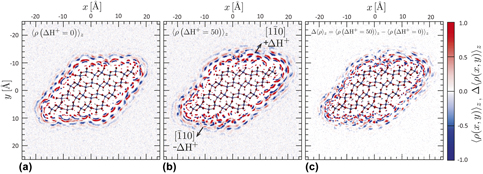
When a metal oxide surface is immersed in aqueous solution, it has the ability to bind, orient, and order interfacial water, affecting both chemical and physical interactions with the surface. Structured interfacial water thus possesses time-averaged, spatially varying polarization charge and potential that are comparable to those arising due to ion accumulation. It is well established that interfacial water structure propagates from the surface into bulk solution. Here, we show that interfacial water structure also propagates laterally, with important consequences. The constant pH molecular dynamics was used to impose a pH difference between opposite faces of a model goethite (α-FeOOH) nanoparticle and quantify water polarization charge on intervening faces. We find that the structure of water on one face is strongly affected by the structure on nearby surfaces, revealing the importance of long-range lateral hydrogen bonding networks with implications for particle aggregation, oriented attachment, and processes such as dissolution and growth.
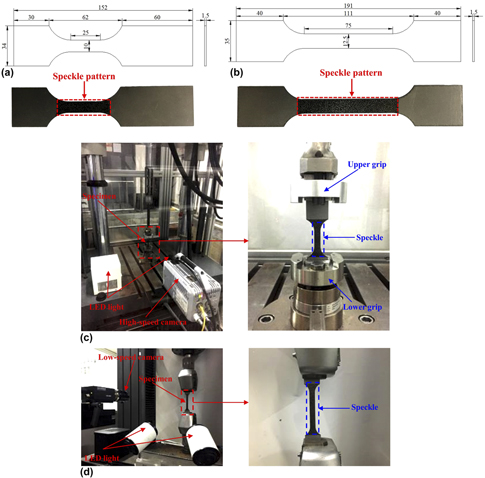
In this paper, the influence of strain rate on the mechanical behavior of high-strength low-alloy (HC420LA) steel were studied. Quasi-static and dynamic tensile experiments were performed with strain rates ranging from 0.001 to 500 s−1 at room temperature. The digital image correlation technique was used to obtain the full-field strain. The experimental results showed that HC420LA steel exhibited positive strain rate sensitivity. Based on experimental results, the modified Johnson–Cook (J–C) model was used to model the constitutive behavior of HC420LA steel. Predictions of the standard and modified J–C models were compared using standard statistical parameters. The modified J–C model showed better agreement with the experimental data. Then, numerical simulation of the representative tensile test at a strain rate of 100 s−1 was performed using the finite element code LS-DYNA. Good correlation between the experimental and numerical simulation results was achieved.
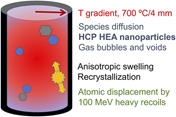
We assess the validity of criteria based on size mismatch and thermodynamics in predicting the stability of the rare class of high-entropy alloys (HEAs) that form in the hexagonal close-packed crystal structure. We focus on nanocrystalline HEA particles composed predominantly of Mo, Tc, Ru, Rh, and Pd along with Ag, Cd, and Te, which are produced in uranium dioxide fuel under the extreme conditions of nuclear reactor operation. The constituent elements are fission products that aggregate under the combined effects of irradiation and elevated temperature as high as 1200 °C. We present the recent results on alloy nanoparticle formation in irradiated ceria, which was selected as a surrogate for uranium dioxide, to show that radiation-enhanced diffusion plays an important role in the process. This work sheds light on the initial stages of alloy nanoparticle formation from a uniform dispersion of individual metals. The remarkable chemical durability of such multiple principal element alloys presents a solution, namely, an alloy waste form, to the challenge of immobilizing Tc.
Hierarchical nanostructure of TiO2 nanoparticles/nanorod arrays (TiO2 NPs/NRs) is synthesized and applied in dye-sensitized solar cells (DSSCs) comparing with the TiO2 nanorod (TiO2 NR) arrays and the TiO2 nanoparticles (TiO2 NPs). The TiO2 NP/NR surface morphology is revealed by X-ray diffraction, field emission scanning, and transmission electron microscopy. The power conversion efficiency of NP/NR-based DSSCs (length 3 μm) is improved to 3.47%, which is 2.2 times higher than the NR-based DSSCs (length 3 μm), and rivals the NP-based DSSC (length 5 μm). The high photovoltaic performance was attributed to that the TiO2 NP/NR photoanode has large surface area and exhibits excellent light scattering, allowing for fast interfacial charge transfer and less charge recombination, which are characterized using the UV-vis absorbance spectra, Brunauer–Emmett–Teller (BET) surface area, electrochemical impedance spectroscopy (EIS) measurements, and photoluminescence (PL) spectroscopy. However, further work is needed to overcome the limitations of TiO2 NP/NR and improve the performance of TiO2 NP/NR-based DSSC.
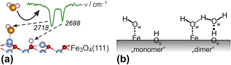
The interaction between water and oxide surfaces plays an important role in many technological applications and environmental processes. However, gaining fundamental understanding of processes at oxide–water interfaces is challenging because of the complexity of the systems. To this end, results of experimental and computational studies utilizing well-defined oxide surfaces help to gain molecular-scale insights into the properties and reactivity of water on oxide surfaces. This is a necessary basis for the understanding of oxide surface chemistry in more complex environments. This review highlights recent advances in the fundamental understanding of oxide–water interaction using surface science experiments. In particular, we will discuss the results on crystalline and well-defined supported thin film oxide samples of the alkaline earth oxides (MgO and CaO), silica (SiO2), and magnetite (Fe3O4). Several aspects of water–oxide interactions such as adsorption modes (molecular versus dissociative), formation of long-range ordered structures, and dissolution processes will be discussed.
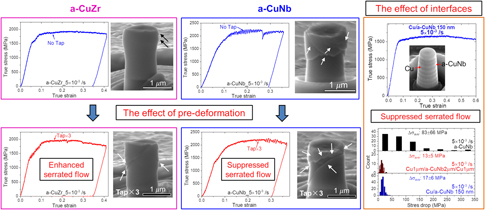
Serrated flow is one important characteristic of shear bands through which metallic glasses (MGs) accommodate plastic deformation. Serrated flow can be affected by intrinsic properties such as elastic modulus or extrinsic variables such as strain rate. However, the influences of pre-deformation and interfaces on serrated flow are less well understood. In this study, by using in situ micropillar compression inside a scanning electron microscope, we show that pre-deformation (consisting of cyclic loading/unloading below the nominal elastic limit) suppresses serrated flows in amorphous-CuNb but enhances serrated flows in amorphous-CuZr at both high and low strain rates. Moreover, layer interfaces in Cu/amorphous-CuNb multilayers mitigate serrated flows, and the average stress drop and strain duration associated with shear banding process can be tailored. Strain accommodation and energy dissipation via shear banding have clear impact on serrated flows. This study provides new perspectives on tailoring serrated flows and enhancing plastic deformation of MGs.
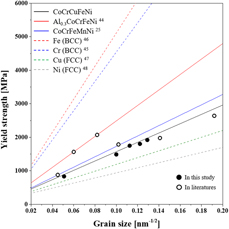
Nanocrystalline (NC) and ultrafine-grained (UFG) CoCrCuFeNi high-entropy alloy (HEA) with grain size ranging between 59 and 386 nm was produced via powder metallurgy and heat treatment. The as-sintered HEA exhibited two face-centered cubic (FCC) phases (CoCrFeNi-rich and Cu-rich phases) and a small grain size (59 nm), whereas the alloy after heat treatment at 1000 °C exhibited a CoCuFeNi-rich phase with FCC structure and relatively larger grain size (386 nm). Moreover, the yield strength decreased from 1930 to 883 MPa, and plastic strain to failure increased by 8–32%. In terms of microstructural evolution, grain boundary strengthening coupled with lattice distortion was the dominant strengthening mechanism for NC HEAs. Furthermore, the coefficient for boundary strengthening was higher in the HEAs than in the corresponding pure elemental metals with FCC structure, possibly because of significant lattice distortion. The UFG HEAs exhibited high strength and good ductility because of the activation of dislocation.
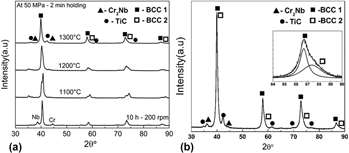
In the present study, the phase evolution and microstructure of CrMoNbTiW, a new equi-atomic refractory high-entropy alloy, are studied. The alloy was synthesized through mechanical alloying (MA) followed by consolidation using spark plasma sintering. After MA, a major BCC solid solution along with residual Cr and Nb were observed. However, secondary phases such as Laves and carbides were also observed in addition to the major BCC solid solution after sintering. Unsolicited contamination from the milling media is found to be one of the reasons for the formation of secondary phases. The high hardness of 8.9 GPa after sintering was attributed to the presence of secondary phases along with the nanocrystalline nature of the alloy. To understand the phase evolution, calculation of phase diagram was carried out using CALPHAD. Further, binary phase diagram inspection and simple empirical parameters were also used to assess their effectiveness in predicting phases.
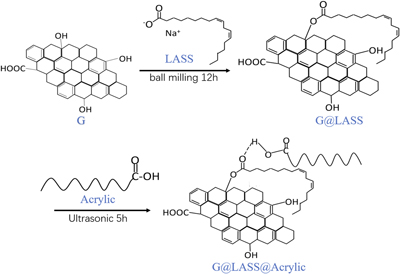
Graphene (G) has attracted great interest because of its excellent chemical and electrical properties. However, the aggregation of graphene restricts its application. Herein, linoleic acid sodium salt (LASS), a low-cost and environmentally friendly material, was used to improve the dispersion of graphene through covalent interaction. Then, the mixture (G@LASS) was integrated with acrylic resin matrix via hydrogen bond between the carboxyl and ester groups. The excellent interfacial compatibility between G@LASS and acrylic matrix, as well as good dispersibility of G@LASS, was demonstrated by Fourier-transform infrared spectroscopy, X-ray photoelectron spectroscopy, Raman, and scanning electron microscopy tests. Compared with acrylic matrix, the surface hydrophobicity of G@LASS@Acrylic increased considerably because of its compact structure. G@LASS@Acrylic composites meet the requirement of antistatic materials when the content of G was only about 0.5 wt%. The results showed that conductive pathways were established successfully through this method.