To save content items to your account,
please confirm that you agree to abide by our usage policies.
If this is the first time you use this feature, you will be asked to authorise Cambridge Core to connect with your account.
Find out more about saving content to .
To save content items to your Kindle, first ensure no-reply@cambridge.org
is added to your Approved Personal Document E-mail List under your Personal Document Settings
on the Manage Your Content and Devices page of your Amazon account. Then enter the ‘name’ part
of your Kindle email address below.
Find out more about saving to your Kindle.
Note you can select to save to either the @free.kindle.com or @kindle.com variations.
‘@free.kindle.com’ emails are free but can only be saved to your device when it is connected to wi-fi.
‘@kindle.com’ emails can be delivered even when you are not connected to wi-fi, but note that service fees apply.
The room-temperature crystal structure of levothyroxine sodium pentahydrate has been refined using synchrotron powder diffraction data. The compound crystallizes in space group P1 (#1) with a = 8.2489(4), b = 9.4868(5), c = 15.8298(6) Å, α = 84.1387(4), β = 83.1560(3), γ = 85.0482(3) deg, V = 1220.071(9) Å3, and Z = 2. Hydrogen atoms (missing from the previously-reported structure) were included.
The crystal structure of salmeterol xinafoate has been solved and refined using synchrotron X-ray powder diffraction data, and optimized using density functional techniques. Salmeterol xinafoate crystallizes in space group P−1 (#2) with a = 9.173 89(13), b = 9.483 79(14), c = 21.3666(4) Å, α = 82.2646(13), β = 85.2531(12), γ = 62.1565(11)°, V = 1628.37(5) Å3, and Z = 2. Key to the structure solution was linking the two fragments by a Li atom along the expected N–H···O hydrogen bond. The salmeterol cation and xinafoate anion are linked by N–H···O and O–H···O hydrogen bonds, interactions which cause the salmeterol to adjust its conformation. The hydrogen bonds result in complex chains along the b-axis. The powder pattern is included in the Powder Diffraction File™ as entry 00-065-1430.
In the past decade, the research in designing fast oxygen conducting materials for electrochemical applications has largely shifted to microstructural features, in contrast to material-bulk. In particular, understanding oxygen energetics in heterointerface materials is currently at the forefront, where interfacial tensile strain is being considered as the key parameter in lowering oxygen migration barriers. Nanocrystalline materials with high densities of grain boundaries have also gathered interest that could possibly allow leverage over excess volume at grain boundaries, providing fast oxygen diffusion channels similar to those previously observed in metals. In addition, near-interface phase transformations and misfit dislocations are other microstructural phenomenon/features that are being explored to provide faster diffusion. In this review, the current understanding on oxygen energetics, i.e., thermodynamics and kinetics, originating from these microstructural features is discussed. Experimental observations, theoretical predictions and novel atomistic mechanisms relevant to oxygen transport are highlighted. In addition, the interaction of dopants with oxygen vacancies in the presence of these new microstructural features, and their future role in the design of future fast-ion conductors, is outlined.
Nominal compositions of In2Ti1−xTmxO5−δ, (0.0 ≤ x ≤ 0.2 and Tm = Fe3+ and Cr3+) were synthesized by ceramic route and characterized by relevant techniques. In2Ti1−xFexO5−δ samples were single phased isomorphic with In2TiO5 phase while Cr substitution has resulted in mixed phased compositions. Dynamic light scattering experiments showed the increase in proportion of smaller sized particles with the increase in extent of Fe substitution. Mössbauer spectra revealed that Fe exists in +3 oxidation state in substituted oxides. The band gap decreased from 3.2 (In2TiO5) to 2.1 eV (In2Ti0.8Fe0.2Ox−δ) and to 1.9 eV in case of Cr substitution (In2Ti0.8Cr0.2O5−δ) attributed to participation of Fe 3d/Cr 3d levels. Photocatalytic H2 generation was evaluated over the substituted oxides from water–methanol mixtures under UV–visible irradiation. The decreasing order of photocatalytic activity is as follows: 20% Fe (mol%) > 10% Fe > indium titanate ≈ 20% Cr > 10% Cr. The loading of Pt as cocatalyst on surface of most active photocatalyst, In2Ti0.8Fe0.2Ox−δ further enhanced the photocatlytic H2 yield.
The enhanced photoresponse of commercial TiO2 (C-TiO2) nanoparticles in quantum dot (QD) sensitized solar cells, when doped with neodymium (Nd), is explored for graphene oxide–copper sulphide (GO–CuS) composite material as counter electrode. The modification of C-TiO2 and the preparation of GO–CuS were done by solid state and sonication methods respectively. The same were characterized by spectroscopy, microscopy, and cyclic voltammetry techniques. Results clearly indicate an enhanced conversion efficiency of ∼1.6 times over the undoped C-TiO2. UV and reflectance spectroscopy reveal that the dopants/defects/oxygen vacancies create midbands causing favorable surface electron states which act as electron traps suppressing recombination and the same is later detrapped leading to an efficient electron transfer. The retention of anatase phase, increase in particle size and decrease in band gap energy to visible range together with high surface area imparted by the GO to CuS in counter electrode facilitate good light harvesting and rapid enhanced electron transfer to redox system on doping. These findings make Nd–TiO2 a good photoanode material and GO–CuS a good counter electrode in QD solar cells.
We report on a kerfless exfoliation approach to further reduce the costs of crystalline silicon photovoltaics making use of evaporated Al as a double functional layer. The Al serves as the stress inducing element to drive the exfoliation process and can be maintained as a rear contacting layer in the solar cell after exfoliation. The 50–70 µm thick exfoliated Si layers show effective minority carrier lifetimes around 180 µs with diffusion lengths of 10 times the layer thickness. We analyze the thermo-mechanical properties of the Al layer by x-ray diffraction analysis and investigate its influence on the exfoliation process. We evaluate the approach for the implementation into solar cell production by determining processing limits and estimating cost advantages of a possible solar cell design route. The Al–Si bilayers are mechanically stable under processing conditions and exhibit a moderate cost savings potential of 3–36% compared to other c-Si cell concepts.
The mechanical properties and internal friction (damping capacity) of Mg–Zn–Y alloys with a long-period stacking ordered (LPSO) structure at different Y/Zn atomic ratios (2/1, 3/2 or 4/3) in cast and extrusion were investigated. It was found that the as-cast Mg–Zn–Y alloys with different Y/Zn atomic ratios possess a single LPSO phase with the same stable 18R-type structure. Among the three alloys, the alloy with 3/2 atomic ratio yields the highest damping capacity in low- and high-strain amplitude stages. Two damping peaks particularly P1 and P2 are detected in the Mg–Zn–Y alloy with 3/2 atomic ratio at approximately 108 and 220 °C, respectively. These results may be attributed to few solute atoms in Mg matrix and grain boundaries. In addition, the studied alloy with 3/2 atomic ratio exhibits excellent comprehensive properties in as-cast and as-extruded states; this alloy yields an ultimate tensile strength of 346 MPa and maintains a certain damping capacity (Q−1 > 0.01) in extrusion.
Carbon nanodots (CDs) have generated enormous excitement because of their superiority in water solubility, chemical inertness, low toxicity, ease of functionalization and resistance to photobleaching. Here we report a facile thermal pyrolysis route to prepare CDs with high quantum yield (QY) using citric acid as the carbon source and ethylene diamine derivatives (EDAs) including triethylenetetramine (TETA), tetraethylenepentamine (TEPA) and polyene polyamine (PEPA) as the passivation agents. We find that the CDs prepared from EDAs, such as TETA, TEPA and PEPA, show relatively high photoluminescence (PL) QY (11.4, 10.6, and 9.8%, respectively) at λex of 465 nm. The cytotoxicity of the CDs has been investigated through in vitro and in vivo bio-imaging studies. The results indicate that these CDs possess low toxicity and good biocompatibility. The unique properties such as the high PL QY at large excitation wave length and the low toxicity of the resulting CDs make them promising fluorescent nanoprobes for applications in optical bio-imaging and biosensing.
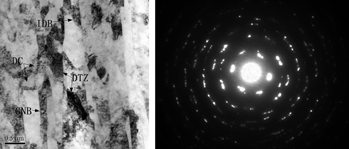
Microstructural and property evolution of 1050 commercial pure aluminum subjected to high-strain-rate deformation (1.2–2.3 × 10³ s−1) by split Hopkinson pressure bar (SHPB) and subsequent annealing treatment were investigated. The as-deformed and their annealed samples at 373–523 K were characterized by transmission electron microscopy (TEM) and microhardness tests. TEM observations reveal that the as-deformed sample is mainly composed of a lamellar structure, whose transverse/longitudinal average subgrain/cell sizes are 293 and 694 nm, respectively. The initial coarse grains are refined significantly. The initial lamellar grain structures are subdivided into pancake-shaped subgrains due to a gradual transition by triple junction motion at 473 K, and then a dramatic microstructural coarsening is observed at 523 K. It is suggested that annealing behavior of this dynamic loading structure is better considered as a continuous process of grain coarsening or continuous recovery.
Nanoporous carbon monoliths with different pore structures were obtained by carbonizing cured phenol–formaldehyde (PF) resin/poly(methyl methacrylate) (PMMA) blends. The effect of the molecular weight of PMMA, reaction activity of PF, and content ratio of compositions on the pore structure of carbon monoliths was systematically investigated, with emphasis on controlling the morphology of the nanostructure and pore size distribution. Nanostructures were an important factor in determining the compressive strength of porous carbon monoliths. The relationship between the nanoporous structure of carbon monoliths and compressive strength was revealed. Co-continuous pores provided escape channels for those volatile gases produced in the carbonization process to escape, reducing inner stress of the carbon materials. During compressive loading, co-continuous pores could also help to scatter and absorb the stress and energy. Porous carbon monoliths with a compressive strength of 34 MPa were obtained, and the compressive strength increased by 580% compared with that of carbon monoliths obtained from pure PF.
Copper–silver core–shell nanowires were synthesized using a combination of two methods: electrodeposition in a polycarbonate membrane as a template for the synthesis of a copper core and a galvanic replacement reaction for the elaboration of a silver shell. A comparative study between aqueous and ionic liquid media was performed for the silver shell elaboration. The kinetics of the reaction in both media was monitored by using energy dispersive x-ray spectroscopy. The shape and size of the nanowires were observed by both scanning electron microscopy and transmission electron microscopy. The core–shell structure was determined by electron energy loss spectroscopy analyses for the Cu90Ag10 composition. A homogenous silver shell was formed in aqueous media. Whereas in ionic solvent, well defined silver crystals were obtained at the surface of the nanowires but without a total formation of a silver shell structure.
Between the fourth century B.C. and second century A.D., changes in climate, culture and commerce converged to extend networks of influence and intensify social stratification in communities situated along the Silk Road. The horse-riding nomads and agro-pastoralists of what is now Southeastern Kazakhstan were important actors in the unfolding of these events. The settlements and kurgan burials of the Saka and Wusun could be found dotting the alluvial fans north of the Tien Shan Mountains just a short time before Alexander the Great founded outposts in the Ferghana Valley and Chinese emissaries formalized relations with their periphery. In other words, the appearance of Iron Age Saka-Wusun sites anticipated the formation of the Silk Road’s northern branch and subsequently helped mediate long-distance relationships connecting East and West. Historical accounts appear to confirm the presence of the Saka and Wusun in this role, but there is much that remains unknown regarding relationships both within and across their communities. Typological variability in their material culture has fed speculation concerning their position within trade networks, but there has been very little in the way of materials analysis to test the validity of these assumptions.
The ceramics recovered at Tuzusai near Almaty provide an excellent opportunity for examination of the impacts and implications of extended regional contacts throughout the region. Although no Persian or Chinese ceramic imports were identified, an extensive vocabulary of pot forms was locally produced. However, the pottery, particularly pitchers, drinking cups and bowls, and, especially with bright red surface decoration, is found in elaborate burial kurgans. The pottery is coarse, perhaps better called a “rock body” than a clay body, as very little clay is present. The frequency of sherds from the excavation (over 1000) and from surface survey is very low (e.g. 3 surface sherds for one-half days effort) compared with excavations in Southwest Asia or China. Rims are unusually worn. Thus, we suggest pottery was precious and high status, but difficult to make. A local survey of clay resources produced meager results. Tests showed that the finest sediments had perhaps 3% clay-sized particles. Among the adobe houses at Tuzusai is evidence of courtyard work areas for pottery production with fired remains of a possible firing pit or kiln and bone potting tools. Other courtyards were areas for dairying and spinning and some copper alloy and iron metal working. Our aim was to establish the life history, production sequences, status and uses of the pottery. Given our current understanding of local production resources and the technical difficulty associated with the production of thin walled forms using these materials, we suggest that these ceramics were high-status goods, many used in feasting activities, and valued not solely for their function in feasting activities, but for the labor and skill required to produce them. Study of the ceramics, clay sources, production methods, and decoration suggests greater social permeability of Saka-Wusun communities than was previously proposed and allows us to understand the formative dynamics of village along the Silk Road.
Microalloying refers to the addition of a small concentration of an alloying element to tune the properties of the parent alloy. Microalloying technology enables to control the glass formation and the mechanical properties of bulk metallic glasses (BMGs). This manuscript presents a comprehensive review on recent developments and breakthroughs in the field of microalloying for tuning the properties of BMGs and composites with focus on the results. The ability of multiple element co-addition to optimize the glass formation and the importance of future alloy developments have been highlighted. Proper microalloying can be used to tailor not only the mechanical properties of the amorphous phase but also those of the crystalline phase, which opens up the possibility for tuning the mechanical performance at different length scales. The effectiveness in controlling the mechanical performance through microalloying was shown to greatly depend on the alloy composition and closeness to the critical amorphous diameter. A tentative outlook commenting the potential and challenges of this exciting field of research is also presented.
Oliver Heaviside (1850–1925), the self-taught physicist and electrical engineer, began his career as an operator on the newly laid Anglo-Danish telegraph cable in 1868. The most advanced electrical technology of the time, the cable system inspired several of his early mathematical papers. This monograph, first published as a paper in the Philosophical Magazine in 1888, then as a book in 1889, draws on his established work on telegraphic propagation and self-inductance, and on Maxwell's field theory. In a fascinating insight into the contemporary scientific community, he complains that these subjects are still often misunderstood, and explains his formulae afresh from several angles. Also covered - and frequently questioned - are contemporary theories of permittivity, the speed of electromagnetic waves, and the dielectric properties of conductors. Heaviside's Electrical Papers (2 volumes, 1892) and his Electromagnetic Theory (3 volumes, 1893–1912) have also been reissued in this series.