To save content items to your account,
please confirm that you agree to abide by our usage policies.
If this is the first time you use this feature, you will be asked to authorise Cambridge Core to connect with your account.
Find out more about saving content to .
To save content items to your Kindle, first ensure no-reply@cambridge.org
is added to your Approved Personal Document E-mail List under your Personal Document Settings
on the Manage Your Content and Devices page of your Amazon account. Then enter the ‘name’ part
of your Kindle email address below.
Find out more about saving to your Kindle.
Note you can select to save to either the @free.kindle.com or @kindle.com variations.
‘@free.kindle.com’ emails are free but can only be saved to your device when it is connected to wi-fi.
‘@kindle.com’ emails can be delivered even when you are not connected to wi-fi, but note that service fees apply.
Quantitative characterization of interface adhesion and fracture properties of thin film materials is of fundamental and technological interests in modern technologies. Sandwich beam specimens used in fracture mechanics techniques, such as four-point bending and double-cantilever beam have been widely adopted, including the semiconductor industry. In this work, we highlight some of the challenges that these techniques are facing in characterizing ever thinner films and tough interfaces, and propose a simple strategy to address these challenges by engineering the stack structure of the specimen. We show that crack propagation in a multilayer stack can be controlled using a super-layer (SL) structure, and the dependence of the cracking behavior on the thickness and mechanical properties of the SL is studied. The effectiveness of the SL strategy is demonstrated for a range of technologically important material systems used in the on-chip interconnects of modern microprocessors, which represents one promising path to extend the industry-standard techniques to meet future characterization needs.
Nanocrystalline diamond films have been deposited by pulsed electron beam ablation from a single target and on different substrates at room temperature and under argon background gas at 0.5 Pa. The films have been deposited from a highly ordered pyrolytic graphite target on four different substrate materials, which include silicon, stainless steel, sapphire, and cubic boron nitride. Based on experimental measurement data, obtained from various analytical techniques, it has been observed that sp3 bonded carbon content, grain size, film roughness, and nanocrystalline fraction of the films do not seem to be much affected by the type of substrate material used. The thickness of the films, in the range of ∼70–90 nm, seems to be relatively the same irrespective of the substrate material. Hardness measurements have shown that film hardness, ranging between 18.5 and 19.5 GPa, is not remarkably influenced by the type of substrate material.
M-type barium hexaferrite powders were synthesized using modified Pechini sol gel auto combustion method. The powder samples were heat treated at 900 °C for 5 h and were subjected to the structural, thermal, dielectric, magnetic, and optical studies. X-ray powder diffraction patterns show the formation of pure phase of M-type hexaferrite. Thermal analysis reveals that the weight loss of precursor becomes constant after 680 °C. The presence of two prominent peaks near 430 and 580 cm−1 in Fourier transform infrared spectroscopy spectra indicates the formation of M-type hexaferrites. The M–H curve has been used to study the magnetic behavior. The maximum value of coercivity is found for x = 0.41, which is higher than that of the pure barium hexaferrite. The band gap dependency on composition was studied using UV–Vis NIR spectroscopy. It was found that the dielectric constant is high at low frequency and decreases with an increase in frequency. Hexagonal structure of hexaferrite is visualized in transmission electron images.
The nonisothermal crystallization kinetics, fragility, and thermodynamics of Ti20Zr20Cu20Ni20Be20 high entropy bulk metallic glass (HE-BMG) have been investigated by differential scanning calorimetry. The activation energies for the glass transition and crystallization events were determined by Kissinger and Ozawa methods. The value of local Avrami exponent is less than 1.5 in most cases for all the three crystallization events, indicating that the major crystallization mechanism is diffusion-controlled growth of pre-existing nuclei. The local activation energy is stable during the whole crystallization process and this further confirms that the crystallization occurs through a single mechanism. Ti20Zr20Cu20Ni20Be20 alloy can be classified into “strong glass formers” according to the estimated fragility index and also shows a relatively low value of Gibbs free energy difference. However, compared with Zr41.2Ti13.8Cu12.5Ni10Be22.5 BMG, the glass-forming ability of Ti20Zr20Cu20Ni20Be20 HE-BMG is much lower and the related reasons have been discussed.
The development of synthetic scaffolds with a desirable combination of properties, such as bioactivity, the ability to locally deliver antibacterial agents and high osteogenic capacity, is a challenging but promising approach in bone tissue engineering. In this study, scaffolds of a borosilicate bioactive glass (composition: 6Na2O, 8K2O, 8MgO, 22CaO, 36B2O3, 18SiO2, 2P2O5; mol%) with controllable antibacterial activity were developed by doping the parent glass with varying amounts of Ag2O (0.05, 0.5, and 1.0 wt%). The addition of the Ag2O lowered the compressive strength and degradation of the bioactive glass scaffolds but it did not affect the formation of hydroxyapatite on the surface of the glass as determined by energy dispersive x-ray analysis, x-ray diffraction, and Fourier transform infrared analysis. The Ag2O-doped scaffolds showed a sustained release of Ag ions over more than 8 weeks in simulated body fluid and resistance against colonization by the bacterial strains Escherichia coli and Staphylococcus aureus. In vitro cell culture showed better adhesion, proliferation, and alkaline phosphatase activity of murine osteoblastic MC3T3-E1 cells on the Ag2O-doped bioactive glass scaffolds than on the undoped scaffolds. The results indicate that these Ag-doped borosilicate bioactive glass scaffolds may have potential in repairing bone coupled with providing a lower risk of bacterial infection.
The separation of oil–water mixtures is a widely utilized unit operation, used for handling a wide variety of mixtures from industry including: petroleum drilling and refining, fracking, waste-water treatment, mining, metal fabrication and machining, textile and leather processing, and rendering. Membrane-based methods have become increasingly attractive for the separation of oil–water mixtures because they are relatively energy-efficient, can be readily used to separate a variety of industrial feed streams, and provide consistent permeate quality. In this perspective, we discuss the design strategies for membranes with selective wettability i.e., membranes that are either selectively wet by, or prevent wetting by, the oil or water phase. The design strategies include the parameterization of two important physical characteristics: the surface porosity and the breakthrough pressure. We also discuss how they are related for membranes with a periodic geometry. On the basis of this understanding, we explore principles that allow for the systematic design of membranes with selective wettability. A review of the current literature on the separation of oil–water mixtures using membranes with differing wettabilities is also presented. Finally, we conclude by discussing the current challenges and outlook for the future of the field.
In situ curvature measurements were used to compare the stress evolution of GaN films grown directly on 6H-SiC via a two-step temperature growth to films grown with an AlN buffer layer. The two-step temperature growth consisted of an initial low-temperature and a main high-temperature GaN layer. In the case of GaN grown directly on 6H-SiC, the high-temperature layer initiated growth under compressive stress which transitioned to tensile stress. Films grown directly on 6H-SiC exhibited a reduction in the threading dislocation (TD) density and an improvement in the surface roughness compared to growth on the AlN buffer layer. Furthermore, transmission electron microscopy of the GaN grown directly on 6H-SiC revealed predominant (a + c)-type TD along with basal plane stacking faults and $\left\{ {11\bar 20} \right\}$ prismatic stacking faults. Channeling cracks were observed in the GaN film when the AlN buffer layer was not utilized. This was attributed to tensile stress induced from the thermal expansion coefficient mismatch.
The effect of surface preparation—grinding, polishing, and electrochemical etching—on the duplex stainless steel passive film conductivity was investigated by in situ current sensing atomic force microscopy. The current maps show that the current in the passive film on three prepared surfaces is different, especially for the ferrite and austenite phase surface. The current on the austenite and ferrite is similar on either mechanical ground or polished surfaces, but the current on the austenite surface is much higher than current on the ferrite surface after electrochemical etching. The difference in the passive film conductivity originates from the changes in the chemical composition and thickness of the passive film and the change in topographical properties induced by the preparation procedures. This is confirmed by AFM, x-ray photoelectron spectroscopy, and auger electron spectroscopy measurements.
A CoCrFeNiMn high-entropy alloy (HEA), in the form of a face-centered cubic (fcc) solid solution, was processed by high-pressure torsion (HPT) to produce a nanocrystalline (nc) HEA. Significant grain refinement was achieved from the very early stage of HPT through 1/4 turn and an nc structure with an average grain size of ∼40 nm was successfully attained after 2 turns. The feasibility of significant microstructural changes was attributed to the occurrence of accelerated atomic diffusivity under the torsional stress during HPT. Nanoindentation experiments showed that the hardness increased significantly in the nc HEA during HPT processing and this was associated with additional grain refinement. The estimated values of the strain-rate sensitivity were maintained reasonably constant from the as-cast condition to the nc alloy after HPT through 2 turns, thereby demonstrating a preservation of plasticity in the HEA. In addition, a calculation of the activation volume suggested that the grain boundaries play an important role in the plastic deformation of the nc HEA where the flow mechanism is consistent with other nc metals. Transmission electron microscopy showed that, unlike conventional fcc nc metals, the nc HEA exhibits excellent microstructural stability under severe stress conditions.
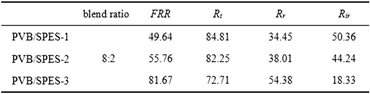
In the present study, we investigated the effects of different degree of sulfonation (DS) on the performance of the poly (vinyl butyral)/sulfonated polyethersulfone (PVB/SPES) blend membranes. The compatibility of the PVB/SPES blending system was characterized by shear viscosity and Fourier transform infrared attenuated total reflection, respectively. Results stated that all PVB/SPES blending systems were partially compatible. Contact angle, equilibrium water content, and x-ray photoelectron spectroscopy measurements were carried out to investigate the hydrophilicity of the PVB/SPES blend membranes. With increasing DS, the blend membranes became more hydrophilic. The pure water flux of the blend membranes increased with DS, while the rejection decreased due to microstructures of the PVB/SPES membranes. The mechanical properties of the PVB/SPES blend membranes increased slightly with DS. Fouling resistances of blend membranes evaluated by bovine serum albumin solution filtration revealed the PVB/SPES blend membranes with DS = 27% exhibited the superior antifouling properties.
The structural color films with enough brilliant color have attracted a special attention because of the great advantages in some practical application, which has currently become a research hot-spot. But their simple fabrication is still a great challenge. This study presents brilliant polymer opal structural color films (PSCFs) from polystyrene spheres under natural light by using a simple preparation and assembly strategy. In this strategy, the black organic dye water solution was used as the dispersion medium for polystyrene spheres, and then polystyrene spheres were rapidly fabricated to one ordered structures by the thermal assistance self-assembly method, which is cheap and commonly available. Contrast to other many structural color films irradiated by external light source under black background, the PSCFs exhibit brilliant and tunable structural colors under natural light even in a white environment, which is significant for the potential application of PSCFs in paint, photonic paper, external decoration of architectures, display, and bioassay.
The character of optical excitations in nanoscale and atomic-scale materials is often strongly mixed, having contributions from both single-particle transitions and collective, plasmon-like response. This complicates the quantum description of these excitations, because there is no clear way to define their quantization. To move toward a quantum theory for these optical excitations, they must first be characterized so that single-particle-like and collective, plasmon-like excitations can be identified. We show that time-dependent density functional theory can be used to make that characterization if both the charge densities induced by the excitation and the transitions that make up the excitation are analyzed. Density functional theory predicts that single-particle-like and collective excitations can coexist. Exact calculations for small nanosystems predict that single-particle excitations evolve into collective excitations as the electron–electron interaction is turned on with no indication that they coexist. These different predictions present a challenge that must be resolved to develop an understanding for quantum excitations in nanoplasmonic materials.
Adhesion between soft matter is a universal mechanical problem in bio-engineering and bio-integration. The Johnson–Kendall–Roberts (JKR) method is widely used to measure the work of adhesion and work of separation between soft materials. In this study, the JKR theory is recaptured and three complementary dimensionless parameters are summarized to help design adhesion measurement experiments compatible with the JKR theory. The work of adhesion/separation between two commonly used soft elastomers, polydimethylsiloxane (PDMS, Sylgard® 184) and Ecoflex® 0300, is measured by the JKR method using a dynamical mechanical analyzer. Effects of base polymer to curing agent mixing ratio and solvent extraction are examined. A unified adhesion mechanism is proposed to explain the different adhesion behaviors. It is concluded that chain–matrix interaction is the most effective adhesion mechanism compared with chain–chain or matrix–matrix interactions. Chain–chain interaction obstructs chain–matrix interaction as it either blocks or entangles with surface chains which could have interacted with the matrix.
The aim of the present investigation is to identify the wear mechanisms of multilayer coated carbide tool under different machining conditions during turning of hardened AISI 4340 steel. The chemical vapor deposited multilayer coated (TiN/MT TiC,N/Al2O3) carbide tool was used. The worn surfaces of the cutting tools were examined under digital optical microscope, scanning electron microscope, and elemental analysis. The investigation results showed a strong correlation between the cutting conditions and tool wear. The cutting speed and feed rate ensure the dominant effects on the tool wear followed by the depth of cut and also the progress of tool wear were verified under different intervals of time. The flank and rake faces of the cutting tool were severely gouged by the hard particles of workpiece material exhibited abrasive wear phenomenon. Intermittently, chipping at cutting edge, notching and catastrophic failure modes were observed in continuous machining.
A crystal plasticity finite element constitutive model combined with Bassani and Wu hardening law has been developed to investigate the effects of grain/phase boundary (GB/PB) on mechanical properties and microtexture evolution of Cu bicrystals and Cu–Al bicrystals during nanoindentation process. The simulated load–displacement curve for the Cu single crystal with Goss initial orientation has been analyzed and compared with the result from the experiment to validate the parameters. The numerical results indicate that the effects of GB/PB on load–displacement curves, indentation Young's moduli, Mises stresses, pile-up patterns are insignificant for Cu bicrystals while they are significant for Cu–Al bicrystals. The main reason is that PB works as a very effective barrier to resist the plastic slip propagation of the deformed material. The effects from different misorientations of GBs/PBs are insignificant for both Cu bicrystals and Cu–Al bicrystals. The effects of GB/PB on lattice rotation angles for both Cu bicrystals and Cu–Al bicrystals are significant.
The crystal structure of nilotinib has been solved and refined using synchrotron X-ray powder diffraction data, and optimized using density functional techniques. Nilotinib crystallizes in space group P1 (#1) with a = 4.518 14(3), b = 10.638 01(5), c = 13.703 77(8) Å, α = 68.8607(4), β = 82.1486(5), γ = 84.1978(5)°, V = 607.62(1) Å3, and Z = 1. The most prominent feature of the structure is two strong hydrogen bonds. These form chains with a graph set C1,1(13); the chains run along [111]. Several weak C–H···O hydrogen bonds also contribute to the packing. The powder pattern has been submitted to ICDD for inclusion in future releases of the Powder Diffraction File™.
The initial microscale mechanisms and materials interfacial process responsible for hydration of calcium silicates are poorly understood even in model systems. The lack of a measured microscale chemical signature has confounded understanding of growth mechanisms and kinetics for microreaction volumes. Here, we use Raman and optical spectroscopies to quantify hydration and environmental carbonation of tricalcium silicates across length and time scales. We show via spatially resolved chemical analysis that carbonate formation during the initial byproduct in microscale reaction volumes is significant, even for subambient CO2 levels. We propose that the competition between carbonation and hydration is enhanced strongly in microscale reaction volumes by increased surface-to-volume ratio relative to macroscale volumes, and by increased concentration of dissolved Ca2+ ions under poor hydration conditions that promote evaporation. This in situ analysis provides the first direct correlation between microscale interfacial hydration and carbonation environments and chemically defined reaction products in cementitious materials.
We present the results of a mixed-space approach, based on first-principles calculations, to investigate phonon dispersions and thermal properties of Mg2Si and Mg2Sn, including the bulk modulus, Grüneisen parameter, heat capacity, and Debye temperature. It is shown that good agreements are obtained between the calculated results and available experimental data for both phonon dispersions and thermal properties. The phonon dispersions are accurately calculated compared with experimental data due to the high-quality description of LO–TO splitting and transverse acoustic branches along the Γ-K-X symmetry line. We also calculate the heat capacity CP and Debye temperature of Mg2Si1−xSnx alloys (x = 0.375, 0.5, 0.625, 0.875). The CP values at high temperature range from 0.5 to 0.7 J/g/K and ΘD values at room temperature from 332 to 384 K as the Sn content decreases from 0.875 to 0.375.
X-ray powder diffraction data for 1-(4-Nitrophenyl)-2-piperidinone, C11H12N2O3, are reported [a = 9.514(3) Å, b = 12.308(6) Å, c = 9.175(1) Å, α = 90°, β = 91.811(2)°, γ = 90°, V = 1073.94 Å3, Z = 4, ρcal = 1.362 g cm−3 and space group P21/n]. All measured lines were indexed and are consistent with the P21/n space group. No detectable impurities were observed.
Experimental X-ray powder diffraction data, unit-cell parameters, and space group for niclosamide, C13H8N2O4Cl2, are reported [a = 13.571(1) Å, b = 7.181(8) Å, c = 13.742(3) Å, β = 97.984(7)°, unit-cell volume V = 1326.40 Å3, Z = 4, and space group P21/c]. All measured lines were indexed and are consistent with the P21/c space group. No detectable impurity was observed.