Refine search
Actions for selected content:
9084 results in Discrete Mathematics, Information Theory and Coding
Homogeneous Ordered Graphs, Metrically Homogeneous Graphs, and Beyond
-
- Published online:
- 25 June 2022
- Print publication:
- 07 July 2022
Complete subgraphs in a multipartite graph
- Part of
-
- Journal:
- Combinatorics, Probability and Computing / Volume 31 / Issue 6 / November 2022
- Published online by Cambridge University Press:
- 13 June 2022, pp. 1092-1101
-
- Article
-
- You have access
- Open access
- HTML
- Export citation
-
In 1975 Bollobás, Erdős, and Szemerédi asked the following question: given positive integers $n, t, r$ with $2\le t\le r-1$, what is the largest minimum degree $\delta (G)$ among all $r$-partite graphs $G$ with parts of size $n$ and which do not contain a copy of $K_{t+1}$? The $r=t+1$ case has attracted a lot of attention and was fully resolved by Haxell and Szabó, and Szabó and Tardos in 2006. In this article, we investigate the $r\gt t+1$ case of the problem, which has remained dormant for over 40 years. We resolve the problem exactly in the case when $r \equiv -1 \pmod{t}$, and up to an additive constant for many other cases, including when $r \geq (3t-1)(t-1)$. Our approach utilizes a connection to the related problem of determining the maximum of the minimum degrees among the family of balanced $r$-partite $rn$-vertex graphs of chromatic number at most $t$.
$t$.


Hypergraphs without non-trivial intersecting subgraphs
- Part of
-
- Journal:
- Combinatorics, Probability and Computing / Volume 31 / Issue 6 / November 2022
- Published online by Cambridge University Press:
- 09 June 2022, pp. 1076-1091
-
- Article
- Export citation
-
A hypergraph $\mathcal{F}$ is non-trivial intersecting if every pair of edges in it have a nonempty intersection, but no vertex is contained in all edges of $\mathcal{F}$. Mubayi and Verstraëte showed that for every $k \ge d+1 \ge 3$ and $n \ge (d+1)k/d$ every $k$-graph $\mathcal{H}$ on $n$ vertices without a non-trivial intersecting subgraph of size $d+1$ contains at most $\binom{n-1}{k-1}$ edges. They conjectured that the same conclusion holds for all $d \ge k \ge 4$ and sufficiently large $n$. We confirm their conjecture by proving a stronger statement.
They also conjectured that for $m \ge 4$ and sufficiently large $n$ the maximum size of a $3$-graph on $n$ vertices without a non-trivial intersecting subgraph of size $3m+1$ is achieved by certain Steiner triple systems. We give a construction with more edges showing that their conjecture is not true in general.


Preface
-
- Book:
- Surveys in Combinatorics 2022
- Published online:
- 13 May 2022
- Print publication:
- 09 June 2022, pp vii-viii
-
- Chapter
- Export citation
Fair Partitions
-
- Book:
- Surveys in Combinatorics 2022
- Published online:
- 13 May 2022
- Print publication:
- 09 June 2022, pp 1-20
-
- Chapter
- Export citation
Convex and Combinatorial Tropical Geometry
-
- Book:
- Surveys in Combinatorics 2022
- Published online:
- 13 May 2022
- Print publication:
- 09 June 2022, pp 237-248
-
- Chapter
- Export citation
Circuit Imbalance Measures and Linear Programming
-
- Book:
- Surveys in Combinatorics 2022
- Published online:
- 13 May 2022
- Print publication:
- 09 June 2022, pp 64-114
-
- Chapter
- Export citation
Explicit Bounds for Graph Minors
-
- Book:
- Surveys in Combinatorics 2022
- Published online:
- 13 May 2022
- Print publication:
- 09 June 2022, pp 215-236
-
- Chapter
- Export citation
Frontmatter
-
- Book:
- Surveys in Combinatorics 2022
- Published online:
- 13 May 2022
- Print publication:
- 09 June 2022, pp i-iv
-
- Chapter
- Export citation
Contents
-
- Book:
- Surveys in Combinatorics 2022
- Published online:
- 13 May 2022
- Print publication:
- 09 June 2022, pp v-vi
-
- Chapter
- Export citation
Intersection Problems in Extremal Combinatorics: Theorems, Techniques and Questions Old and New
-
- Book:
- Surveys in Combinatorics 2022
- Published online:
- 13 May 2022
- Print publication:
- 09 June 2022, pp 115-173
-
- Chapter
- Export citation
On the peel number and the leaf-height of Galton–Watson trees
- Part of
-
- Journal:
- Combinatorics, Probability and Computing / Volume 32 / Issue 1 / January 2023
- Published online by Cambridge University Press:
- 09 June 2022, pp. 68-90
-
- Article
- Export citation
-
We study several parameters of a random Bienaymé–Galton–Watson tree $T_n$ of size $n$ defined in terms of an offspring distribution $\xi$ with mean $1$ and nonzero finite variance $\sigma ^2$. Let $f(s)=\mathbb{E}\{s^\xi \}$ be the generating function of the random variable $\xi$. We show that the independence number is in probability asymptotic to $qn$, where $q$ is the unique solution to $q = f(1-q)$. One of the many algorithms for finding the largest independent set of nodes uses a notion of repeated peeling away of all leaves and their parents. The number of rounds of peeling is shown to be in probability asymptotic to $\log n/\log (1/f'(1-q))$. Finally, we study a related parameter which we call the leaf-height. Also sometimes called the protection number, this is the maximal shortest path length between any node and a leaf in its subtree. If $p_1 = \mathbb{P}\{\xi =1\}\gt 0$, then we show that the maximum leaf-height over all nodes in $T_n$ is in probability asymptotic to $\log n/\log (1/p_1)$. If $p_1 = 0$ and $\kappa$ is the first integer $i\gt 1$ with $\mathbb{P}\{\xi =i\}\gt 0$, then the leaf-height is in probability asymptotic to $\log _\kappa \log n$.


Rainbow Subgraphs and their Applications
-
- Book:
- Surveys in Combinatorics 2022
- Published online:
- 13 May 2022
- Print publication:
- 09 June 2022, pp 191-214
-
- Chapter
- Export citation
Hypergraph Turán Problems in l2-Norm
-
- Book:
- Surveys in Combinatorics 2022
- Published online:
- 13 May 2022
- Print publication:
- 09 June 2022, pp 21-63
-
- Chapter
- Export citation
Finite Geometry and Extremal Graph Theory
-
- Book:
- Surveys in Combinatorics 2022
- Published online:
- 13 May 2022
- Print publication:
- 09 June 2022, pp 174-190
-
- Chapter
- Export citation
Colouring graphs with forbidden bipartite subgraphs
- Part of
-
- Journal:
- Combinatorics, Probability and Computing / Volume 32 / Issue 1 / January 2023
- Published online by Cambridge University Press:
- 08 June 2022, pp. 45-67
-
- Article
-
- You have access
- Open access
- HTML
- Export citation
-
A conjecture of Alon, Krivelevich and Sudakov states that, for any graph $F$, there is a constant $c_F \gt 0$ such that if $G$ is an $F$-free graph of maximum degree $\Delta$, then $\chi\!(G) \leqslant c_F \Delta/ \log\!\Delta$. Alon, Krivelevich and Sudakov verified this conjecture for a class of graphs $F$ that includes all bipartite graphs. Moreover, it follows from recent work by Davies, Kang, Pirot and Sereni that if $G$ is $K_{t,t}$-free, then $\chi\!(G) \leqslant (t + o(1)) \Delta/ \log\!\Delta$ as $\Delta \to \infty$. We improve this bound to $(1+o(1)) \Delta/\log\!\Delta$, making the constant factor independent of $t$. We further extend our result to the DP-colouring setting (also known as correspondence colouring), introduced by Dvořák and Postle.


Sandwiching biregular random graphs
- Part of
-
- Journal:
- Combinatorics, Probability and Computing / Volume 32 / Issue 1 / January 2023
- Published online by Cambridge University Press:
- 06 June 2022, pp. 1-44
-
- Article
-
- You have access
- Open access
- HTML
- Export citation
-
Let ${\mathbb{G}(n_1,n_2,m)}$ be a uniformly random m-edge subgraph of the complete bipartite graph ${K_{n_1,n_2}}$ with bipartition $(V_1, V_2)$, where $n_i = |V_i|$, $i=1,2$. Given a real number $p \in [0,1]$ such that $d_1 \,{:\!=}\, pn_2$ and $d_2 \,{:\!=}\, pn_1$ are integers, let $\mathbb{R}(n_1,n_2,p)$ be a random subgraph of ${K_{n_1,n_2}}$ with every vertex $v \in V_i$ of degree $d_i$, $i = 1, 2$. In this paper we determine sufficient conditions on $n_1,n_2,p$ and m under which one can embed ${\mathbb{G}(n_1,n_2,m)}$ into $\mathbb{R}(n_1,n_2,p)$ and vice versa with probability tending to 1. In particular, in the balanced case $n_1=n_2$, we show that if $p\gg\log n/n$ and $1 - p \gg \left(\log n/n \right)^{1/4}$, then for some $m\sim pn^2$, asymptotically almost surely one can embed ${\mathbb{G}(n_1,n_2,m)}$ into $\mathbb{R}(n_1,n_2,p)$, while for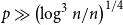 $p\gg\left(\log^{3} n/n\right)^{1/4}$ and $1-p\gg\log n/n$ the opposite embedding holds. As an extension, we confirm the Kim–Vu Sandwich Conjecture for degrees growing faster than $(n \log n)^{3/4}$.


Community detection and percolation of information in a geometric setting
- Part of
-
- Journal:
- Combinatorics, Probability and Computing / Volume 31 / Issue 6 / November 2022
- Published online by Cambridge University Press:
- 31 May 2022, pp. 1048-1069
-
- Article
-
- You have access
- Open access
- HTML
- Export citation
Improved lower bound for the list chromatic number of graphs with no Kt minor
- Part of
-
- Journal:
- Combinatorics, Probability and Computing / Volume 31 / Issue 6 / November 2022
- Published online by Cambridge University Press:
- 30 May 2022, pp. 1070-1075
-
- Article
-
- You have access
- Open access
- HTML
- Export citation
-
Hadwiger’s conjecture asserts that every graph without a $K_t$-minor is $(t-1)$-colourable. It is known that the exact version of Hadwiger’s conjecture does not extend to list colouring, but it has been conjectured by Kawarabayashi and Mohar (2007) that there exists a constant $c$ such that every graph with no $K_t$-minor has list chromatic number at most $ct$. More specifically, they also conjectured that this holds for $c=\frac{3}{2}$.
Refuting the latter conjecture, we show that the maximum list chromatic number of graphs with no $K_t$-minor is at least $(2-o(1))t$, and hence $c \ge 2$ in the above conjecture is necessary. This improves the previous best lower bound by Barát, Joret and Wood (2011), who proved that $c \ge \frac{4}{3}$. Our lower-bound examples are obtained via the probabilistic method.


Transversal Ck-factors in subgraphs of the balanced blow-up of Ck
- Part of
-
- Journal:
- Combinatorics, Probability and Computing / Volume 31 / Issue 6 / November 2022
- Published online by Cambridge University Press:
- 30 May 2022, pp. 1031-1047
-
- Article
- Export citation
-
For a subgraph $G$ of the blow-up of a graph $F$, we let $\delta ^*(G)$ be the smallest minimum degree over all of the bipartite subgraphs of $G$ induced by pairs of parts that correspond to edges of $F$. Johansson proved that if $G$ is a spanning subgraph of the blow-up of $C_3$ with parts of size $n$ and $\delta ^*(G) \ge \frac{2}{3}n + \sqrt{n}$, then $G$ contains $n$ vertex disjoint triangles, and presented the following conjecture of Häggkvist. If $G$ is a spanning subgraph of the blow-up of $C_k$ with parts of size $n$ and $\delta ^*(G) \ge \left(1 + \frac 1k\right)\frac n2 + 1$, then $G$ contains $n$ vertex disjoint copies of $C_k$ such that each $C_k$ intersects each of the $k$ parts exactly once. A similar conjecture was also made by Fischer and the case $k=3$ was proved for large $n$ by Magyar and Martin.
In this paper, we prove the conjecture of Häggkvist asymptotically. We also pose a conjecture which generalises this result by allowing the minimum degree conditions in each bipartite subgraph induced by pairs of parts of $G$ to vary. We support this new conjecture by proving the triangle case. This result generalises Johannson’s result asymptotically.


