To save content items to your account,
please confirm that you agree to abide by our usage policies.
If this is the first time you use this feature, you will be asked to authorise Cambridge Core to connect with your account.
Find out more about saving content to .
To save content items to your Kindle, first ensure no-reply@cambridge.org
is added to your Approved Personal Document E-mail List under your Personal Document Settings
on the Manage Your Content and Devices page of your Amazon account. Then enter the ‘name’ part
of your Kindle email address below.
Find out more about saving to your Kindle.
Note you can select to save to either the @free.kindle.com or @kindle.com variations.
‘@free.kindle.com’ emails are free but can only be saved to your device when it is connected to wi-fi.
‘@kindle.com’ emails can be delivered even when you are not connected to wi-fi, but note that service fees apply.
A biophysical model describing long-range cell-to-cell communication by a diffusiblesignal mediated by autocrine loops in developing epithelia in the presence of amorphogenetic pre-pattern is introduced. Under a number of approximations, the modelreduces to a particular kind of bistable reaction-diffusion equation with strongheterogeneity. In the case of the heterogeneity in the form of a long strip a detailedanalysis of signal propagation is possible, using a variational approach. It is shown thatunder a number of assumptions which can be easily verified for particular sets of modelparameters, the equation admits a unique (up to translations) variational traveling wavesolution. A global bifurcation structure of these solutions is investigated in a number ofparticular cases. It is demonstrated that the considered setting may provide a robustdevelopmental regulatory mechanism for delivering chemical signals across large distancesin developing epithelia.
In this article a novel model framework to simulate cells and their internal structure is described. The model is agent-based and suitable to simulate single cells with a detailed internal structure as well as multi-cellular compounds. Cells are simulated as a set of many interacting particles, with neighborhood relations defined via a Delaunay triangulation. The interacting sub-particles of a cell can assume specific roles – i.e., membrane sub-particle, internal sub-particle, organelles, etc –, distinguished by specific interaction potentials and, eventually, also by the use of modified interaction criteria. For example, membrane sub-particles may interact only on a two-dimensional surface embedded on three-dimensional space, described via a restricted Delaunay triangulation. The model can be used not only to study cell shape and movement, but also has the potential to investigate the coupling between internal space-resolved movement of molecules and determined cell behaviors.
An optimal control problem is studied for a predator-prey system of PDE, with a logisticgrowth rate of the prey and a general functional response of the predator. The controlfunction has two components. The purpose is to maximize a mean density of the two speciesin their habitat. The existence of the optimal solution is analyzed and some necessaryoptimality conditions are established. The form of the optimal control is found in someparticular cases.
This is the second of three volumes containing edited versions of papers and commentaries presented in invited symposium sessions of the Eighth World Congress of the Econometric Society. The papers summarize and interpret key developments and discuss future directions in a wide range of topics in economics and econometrics. The papers cover both theory and applications. Written by leading specialists in their fields, these volumes provide a unique survey of progress in the discipline.
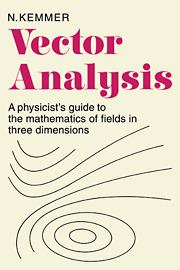
Vector analysis provides the language that is needed for a precise quantitative statement of the general laws and relationships governing such branches of physics as electromagnetism and fluid dynamics. The account of the subject is aimed principally at physicists but the presentation is equally appropriate for engineers. The justification for adding to the available textbooks on vector analysis stems from Professor Kemmer's novel presentation of the subject developed through many years of teaching, and in relating the mathematics to physical models. While maintaining mathematical precision, the methodology of presentation relies greatly on the visual, geometric aspects of the subject and is supported throughout the text by many beautiful illustrations that are more than just schematic. A unification of the whole body of results developed in the book - from the simple ideas of differentiation and integration of vector fields to the theory of orthogonal curvilinear coordinates and to the treatment of time-dependent integrals over fields - is achieved by the introduction from the outset of a method of general parametrisation of curves and surfaces.
Both the porous medium equation and the system of isentropic Euler equations can be considered as steepest descents on suitable manifolds of probability measures in the framework of optimal transport theory. By discretizing these variational characterizations instead of the partial differential equations themselves, we obtain new schemes with remarkable stability properties. We show that they capture successfully the nonlinear features of the flows, such as shocks and rarefaction waves for the isentropic Euler equations. We also show how to design higher order methods for these problems in the optimal transport setting using backward differentiation formula (BDF) multi-step methods or diagonally implicit Runge-Kutta methods.
The finite element approximation of optimal control problems forsemilinear elliptic partial differential equation is considered,where the control belongs to a finite-dimensional set and stateconstraints are given in finitely many points of the domain. Underthe standard linear independency condition on the active gradientsand a strong second-order sufficient optimality condition, optimalerror estimates are derived for locally optimal controls.
We consider a class of discrete convex functionals which satisfy a (generalized) coarea formula. These functionals, based on submodular interactions, arise in discrete optimization and are known as a large class of problems which can be solved in polynomial time. In particular, some of them can be solved very efficiently by maximal flow algorithms and are quite popular in the image processing community. We study the limit in the continuum of these functionals, show that they always converge to some “crystalline” perimeter/total variation, and provide an almost explicit formula for the limiting functional.
The modelling and the numerical resolution of the electrical charging of aspacecraft in interaction with the Earth magnetosphere is considered. It involves the Vlasov-Poisson system, endowed with non standard boundary conditions. We discuss the pros and cons of several numerical methods for solving this system, using as benchmark a simple 1D model which exhibits the main difficulties of the original models.
A discontinuous Galerkin finite element method for an optimalcontrol problem related to semilinear parabolic PDE's is examined.The schemes under consideration are discontinuous in time butconforming in space. Convergence of discrete schemes of arbitraryorder is proven. In addition, the convergence of discontinuousGalerkin approximations of the associated optimality system to thesolutions of the continuous optimality system is shown. The proofis based on stability estimates at arbitrary time points underminimal regularity assumptions, and a discrete compactnessargument for discontinuous Galerkin schemes (see Walkington[SINUM (June 2008) (submitted), preprint available at http://www.math.cmu.edu/~noelw], Sects. 3, 4).
Some of the greatest scientists including Poisson, Faraday, Maxwell, Rayleigh, and Einstein have contributed to the theory of composite materials. Mathematically, it is the study of partial differential equations with rapid oscillations in their coefficients. Although extensively studied for more than a hundred years, an explosion of ideas in the last five decades (and particularly in the last three decades) has dramatically increased our understanding of the relationship between the properties of the constituent materials, the underlying microstructure of a composite, and the overall effective (electrical, thermal, elastic) moduli which govern the macroscopic behavior. This renaissance has been fueled by the technological need for improving our knowledge base of composites, by the advance of the underlying mathematical theory of homogenization, by the discovery of new variational principles, by the recognition of how important the subject is to solving structural optimization problems, and by the realization of the connection with the mathematical problem of quasiconvexification. This 2002 book surveys these exciting developments at the frontier of mathematics.
The chemostat is a basic piece of laboratory apparatus, yet it has occupied an increasingly central role in ecological studies. The ecological environment created by a chemostat is one of the few completely controlled experimental systems for testing microbial growth and competition. As a tool in biotechnology, the chemostat plays an important role in bioprocessing. This book presents the theory of the chemostat as a model for larger ecological problems such as food chains, competition along a gradient, competition in the presence of an inhibitor, and the effects of time varying inputs. Models which take account of size structure, variable yields, and diffusion are also considered. The basic phenomena are modelled and analysed using the dynamical systems approach. Directions for research and open problems are discussed. Six appendices provide an elementary description of the necessary mathematical tools. Teachers, researchers, and students in applied mathematics, chemical engineering and ecology will find this book a welcome resource.
Fragmentation and coagulation are two natural phenomena that can be observed in many sciences and at a great variety of scales - from, for example, DNA fragmentation to formation of planets by accretion. This book, by the author of the acclaimed Lévy Processes, is the first comprehensive theoretical account of mathematical models for situations where either phenomenon occurs randomly and repeatedly as time passes. This self-contained treatment develops the models in a way that makes recent developments in the field accessible. Each chapter ends with a comments section in which important aspects not discussed in the main part of the text (often because the discussion would have been too technical and/or lengthy) are addressed and precise references are given. Written for readers with a solid background in probability, its careful exposition allows graduate students, as well as working mathematicians, to approach the material with confidence.
Reflected Brownian motion is used in areas such as physiology, electrochemistry and nuclear magnetic resonance. We study the first-passage-time problem of this process which is relevant in applications; specifically, we find a Volterra integral equation for the distribution of the first time that a reflected Brownian motion reaches a nondecreasing barrier. Additionally, we note how a numerical procedure can be used to solve the integral equation.
The aim of this paper is to find a concrete bound for the error involved when approximating the nth Hermite function (in the oscillating range) by an asymptotic formula due to D. Dominici. This bound is then used to study the accuracy of certain approximations to Hermite expansions and to Fourier transforms. A way of estimating an unknown probability density is proposed.
We present a new valuation formula for a generic, multi-period binary option in a multi-asset Black–Scholes economy. The payoff of this so-called M-binary is the most general possible, subject to the condition that a simple analytic expression exists for the present value. Portfolios of M-binaries can be used to statically replicate many European exotics for which there exist closed-form Black–Scholes prices.
The successive over-relaxation (SOR) iteration method for solving linear systems of equations depends upon a relaxation parameter. A well-known theory for determining this parameter was given by Young for consistently ordered matrices. In this paper, for the three-dimensional Laplacian, we introduce several compact difference schemes and analyse the block-SOR method for the resulting linear systems. Their optimum relaxation parameters are given for the first time. Analysis shows that the value of the optimum relaxation parameter of block-SOR iteration is very sensitive for compact stencils when solving the three-dimensional Laplacian. This paper provides a theoretical solution for determining the optimum relaxation parameter in real applications.
We study the H–1-norm of the function 1 on tubular neighbourhoods of curves in ${\mathbb R}^{2}$. We take the limit of small thickness ε, and we prove two different asymptotic results. The first is an asymptotic development for a fixed curve in the limit ε → 0, containing contributions from the length of the curve (at order ε3), the ends (ε4), and the curvature (ε5). The second result is a Γ-convergence result, in which the central curve may vary along the sequence ε → 0. We prove that a rescaled version of the H–1-norm, which focuses on the ε5 curvature term, Γ-converges to the L2-norm of curvature. In addition, sequences along which the rescaled norm is bounded are compact in the W1,2-topology. Our main tools are the maximum principle for elliptic equations and the use of appropriate trial functions in the variational characterisation of the H–1-norm. For the Γ-convergence result we use the theory of systems of curves without transverse crossings to handle potential intersections in the limit.