To save content items to your account,
please confirm that you agree to abide by our usage policies.
If this is the first time you use this feature, you will be asked to authorise Cambridge Core to connect with your account.
Find out more about saving content to .
To save content items to your Kindle, first ensure no-reply@cambridge.org
is added to your Approved Personal Document E-mail List under your Personal Document Settings
on the Manage Your Content and Devices page of your Amazon account. Then enter the ‘name’ part
of your Kindle email address below.
Find out more about saving to your Kindle.
Note you can select to save to either the @free.kindle.com or @kindle.com variations.
‘@free.kindle.com’ emails are free but can only be saved to your device when it is connected to wi-fi.
‘@kindle.com’ emails can be delivered even when you are not connected to wi-fi, but note that service fees apply.
In the last few years, Algorithms for Convex Optimization have revolutionized algorithm design, both for discrete and continuous optimization problems. For problems like maximum flow, maximum matching, and submodular function minimization, the fastest algorithms involve essential methods such as gradient descent, mirror descent, interior point methods, and ellipsoid methods. The goal of this self-contained book is to enable researchers and professionals in computer science, data science, and machine learning to gain an in-depth understanding of these algorithms. The text emphasizes how to derive key algorithms for convex optimization from first principles and how to establish precise running time bounds. This modern text explains the success of these algorithms in problems of discrete optimization, as well as how these methods have significantly pushed the state of the art of convex optimization itself.
We investigate the interaction between a singular surface and a strong shock in the self-gravitating interstellar gas clouds with the assumption of spherical symmetry. Using the method of the Lie group of transformations, a particular solution of the flow variables and the cooling–heating function for an infinitely strong shock is obtained. This paper explores an application of the singular surface theory in the evolution of an acceleration wave front propagating through an unperturbed medium. We discuss the formation of an acceleration, considering the cases of compression and expansion waves. The influence of the cooling–heating function on a shock formation is explained. The results of a collision between a strong shock and an acceleration wave are discussed using the Lax evolutionary conditions.
The classical model for studying one-phase Hele-Shaw flows is based on a highly nonlinear moving boundary problem with the fluid velocity related to pressure gradients via a Darcy-type law. In a standard configuration with the Hele-Shaw cell made up of two flat stationary plates, the pressure is harmonic. Therefore, conformal mapping techniques and boundary integral methods can be readily applied to study the key interfacial dynamics, including the Saffman–Taylor instability and viscous fingering patterns. As well as providing a brief review of these key issues, we present a flexible numerical scheme for studying both the standard and nonstandard Hele-Shaw flows. Our method consists of using a modified finite-difference stencil in conjunction with the level-set method to solve the governing equation for pressure on complicated domains and track the location of the moving boundary. Simulations show that our method is capable of reproducing the distinctive morphological features of the Saffman–Taylor instability on a uniform computational grid. By making straightforward adjustments, we show how our scheme can easily be adapted to solve for a wide variety of nonstandard configurations, including cases where the gap between the plates is linearly tapered, the plates are separated in time, and the entire Hele-Shaw cell is rotated at a given angular velocity.
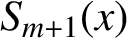
We study some properties of integro splines. Using these properties, we design an algorithm to construct splines $S_{m+1}(x)$ of neighbouring degrees to the given spline $S_m(x)$ with degree m. A local integro-sextic spline is constructed with the proposed algorithm. The local integro splines work efficiently, that is, they have low computational complexity, and they are effective for use in real time. The construction of nonlocal integro splines usually leads to solving a system of linear equations with band matrices, which yields high computational costs.
We study the static maximization of long-term averaged profit, when optimal preset thresholds are determined to describe a pairs trading strategy in a general one-dimensional ergodic diffusion model of a stochastic spread process. An explicit formula for the expected value of a certain first passage time is given, which is used to derive a simple equation for determining the optimal thresholds. Asymptotic arbitrage in the long run of the threshold strategy is observed.
Now in its second edition, this popular textbook on game theory is unrivalled in the breadth of its coverage, the thoroughness of technical explanations and the number of worked examples included. Covering non-cooperative and cooperative games, this introduction to game theory includes advanced chapters on auctions, games with incomplete information, games with vector payoffs, stable matchings and the bargaining set. This edition contains new material on stochastic games, rationalizability, and the continuity of the set of equilibrium points with respect to the data of the game. The material is presented clearly and every concept is illustrated with concrete examples from a range of disciplines. With numerous exercises, and the addition of a solution manual for instructors with this edition, the book is an extensive guide to game theory for undergraduate through graduate courses in economics, mathematics, computer science, engineering and life sciences, and will also serve as useful reference for researchers.
We derive an analytical approximation for the price of a credit default swap (CDS) contract under a regime-switching Black–Scholes model. To achieve this, we first derive a general formula for the CDS price, and establish the relationship between the unknown no-default probability and the price of a down-and-out binary option written on the same reference asset. Then we present a two-step procedure: the first step assumes that all the future information of the Markov chain is known at the current time and presents an approximation for the conditional price under a time-dependent Black–Scholes model, based on which the second step derives the target option pricing formula written in a Fourier cosine series. The efficiency and accuracy of the newly derived formula are demonstrated through numerical experiments.
We propose a Legendre–Laguerre spectral approximation to price the European and double barrier options in the time-fractional framework. By choosing an appropriate basis function, the spectral discretization is used for the approximation of the spatial derivatives of the time-fractional Black–Scholes equation. For the time discretization, we consider the popular $L1$ finite difference approximation, which converges with order $\mathcal {O}((\Delta \tau )^{2-\alpha })$ for functions which are twice continuously differentiable. However, when using the $L1$ scheme for problems with nonsmooth initial data, only the first-order accuracy in time is achieved. This low-order accuracy is also observed when solving the time-fractional Black–Scholes European and barrier option pricing problems for which the payoffs are all nonsmooth. To increase the temporal convergence rate, we therefore consider a Richardson extrapolation method, which when combined with the spectral approximation in space, exhibits higher order convergence such that high accuracies over the whole discretization grid are obtained. Compared with the traditional finite difference scheme, numerical examples clearly indicate that the spectral approximation converges exponentially over a small number of grid points. Also, as demonstrated, such high accuracies can be achieved in much fewer time steps using the extrapolation approach.
We present an analytical option pricing formula for the European options, in which the price dynamics of a risky asset follows a mean-reverting process with a time-dependent parameter. The process can be adapted to describe a seasonal variation in price such as in agricultural commodity markets. An analytical solution is derived based on the solution of a partial differential equation, which shows that a European option price can be decomposed into two terms: the payoff of the option at the initial time and the time-integral over the lifetime of the option driven by a time-dependent parameter. Finally, results obtained from the formula have been compared with Monte Carlo simulations and a Black–Scholes-type formula under various kinds of long-run mean functions, and some examples of option price behaviours have been provided.
We study the pricing of timer options in a class of stochastic volatility models, where the volatility is driven by two diffusions—one fast mean-reverting and the other slowly varying. Employing singular and regular perturbation techniques, full second-order asymptotics of the option price are established. In addition, we investigate an implied volatility in terms of effective maturity for the timer options, and derive its second-order expansion based on our pricing asymptotics. A numerical experiment shows that the price approximation formula has a high level of accuracy, and the implied volatility in terms of its effective maturity is illustrated.
We study finite maturity American-style stock loans under a two-state regime-switching economy. We present a thorough semi-analytic discussion of the optimal redeeming prices, the values and the fair service fees of the stock loans, under the assumption that the volatility of the underlying is in a state of uncertainty. Numerical experiments are carried out to show the effects of the volatility regimes and other loan parameters.
Closed-form explicit formulas for implied Black–Scholes volatilities provide a rapid evaluation method for European options under the popular stochastic alpha–beta–rho (SABR) model. However, it is well known that computed prices using the implied volatilities are only accurate for short-term maturities, but, for longer maturities, a more accurate method is required. This work addresses this accuracy problem for long-term maturities by numerically solving the no-arbitrage partial differential equation with an absorbing boundary condition at zero. Localized radial basis functions in a finite-difference mode are employed for the development of a computational method for solving the resulting two-dimensional pricing equation. The proposed method can use either multiquadrics or inverse multiquadrics, which are shown to have comparable performances. Numerical results illustrate the accuracy of the proposed method and, more importantly, that the computed risk-neutral probability densities are nonnegative. These two key properties indicate that the method of solution using localized meshless methods is a viable and efficient means for price computations under SABR dynamics.
We investigate the European call option pricing problem under the fractional stochastic volatility model. The stochastic volatility model is driven by both fractional Brownian motion and standard Brownian motion. We obtain an analytical solution of the European option price via the Itô’s formula for fractional Brownian motion, Malliavin calculus, derivative replication and the fundamental solution method. Some numerical simulations are given to illustrate the impact of parameters on option prices, and the results of comparison with other models are presented.