To save content items to your account,
please confirm that you agree to abide by our usage policies.
If this is the first time you use this feature, you will be asked to authorise Cambridge Core to connect with your account.
Find out more about saving content to .
To save content items to your Kindle, first ensure no-reply@cambridge.org
is added to your Approved Personal Document E-mail List under your Personal Document Settings
on the Manage Your Content and Devices page of your Amazon account. Then enter the ‘name’ part
of your Kindle email address below.
Find out more about saving to your Kindle.
Note you can select to save to either the @free.kindle.com or @kindle.com variations.
‘@free.kindle.com’ emails are free but can only be saved to your device when it is connected to wi-fi.
‘@kindle.com’ emails can be delivered even when you are not connected to wi-fi, but note that service fees apply.
Since the discovery of high Tc superconductivity, the role of electron correlation on superconductivity has been an important issue in condensed matter physics. Here the role of electron correlation in metals is explained in detail on the basis of the Fermi liquid theory. The book, originally published in 2004, discusses the following issues: enhancements of electronic specific heat and magnetic susceptibility, effects of electron correlation on transport phenomena such as electric resistivity and Hall coefficient, magnetism, Mott transition and unconventional superconductivity. These originate commonly from the Coulomb repulsion between electrons. In particular, superconductivity in strongly correlated electron systems is discussed with a unified point of view. This book is written to explain interesting physics in metals for undergraduate and graduate students and researchers in condensed matter physics.
This 1998 book describes the physics of superconductivity and superfluidity, macroscopic quantum phenomena found in many conductors at low temperatures and in liquid helium 4 and helium 3. In the first part of the book the author presents the mean field theory of generalized pair condensation. This is followed by a description of the properties of ordinary superconductors using BCS theory. The book then proceeds with expositions of strong coupling theory and the Ginzberg-Landau theory. The remarkable properties of superfluid helium 3 are then described, as an example of a superfluid with internal degrees of freedom. The topics covered are dealt with in a coherent manner, with all necessary theoretical background given. Recent topics in the field, such as the copper-oxide high temperature superconductors and exotic superconductivity of heavy fermion systems are discussed in the final chapter. This book will be of interest to graduate students and researchers in condensed matter physics, especially those working in superconductivity and superfluidity.
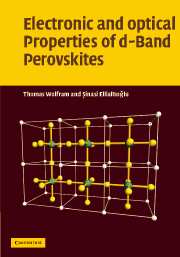
The perovskite family of oxides includes a vast array of insulators, metals, and semiconductors. Current intense scientific interest stems from the large number of diverse phenomena exhibited by these materials including pseudo two-dimensional electronic energy bands, high temperature superconductivity, metal-insulator transitions, piezoelectricity, magnetism, photochromic, and catalytic activity. This book is the first text devoted to a comprehensive theory of the solid-state properties of these fascinating materials. The text includes complete descriptions of the important energy bands, photoemission, surface states, and the chapter on high-temperature superconductors explores the electronic states in typical copper-oxide materials. Theoretical results are compared to experiment and discussed throughout the book. With problem sets included, this is a unified, logical treatment of fundamental perovskite solid-state chemistry which will appeal to graduate students and researchers alike.
This book brings together two of the most exciting and widely studied subjects in modern physics: namely fractals and surfaces. To the community interested in the study of surfaces and interfaces, it brings the concept of fractals. To the community interested in the exciting field of fractals and their application, it demonstrates how these concepts may be used in the study of surfaces. The authors cover, in simple terms, the various methods and theories developed over the past ten years to study surface growth. They describe how one can use fractal concepts successfully to describe and predict the morphology resulting from various growth processes. Consequently, this book will appeal to physicists working in condensed matter physics and statistical mechanics, with an interest in fractals and their application. The first chapter of this important new text is available on the Cambridge Worldwide Web server: http://www.cup.cam.ac.uk/onlinepubs/Textbooks/textbookstop.html
This book deals with the effect of crystal symmetry in determining the tensor properties of crystals. Although this is a well-established subject, the author provides a new approach using group theory and, in particular, the method of symmetry coordinates, which has not been used in any previous book. Using this approach, all tensors of a given rank and type can be handled together, even when they involve very different physical phenomena. Applications to technologically important phenomena as diverse as the electro-optic, piezoelectric, photoelastic, piezomagnetic, and piezoresistance effects, as well as magnetothermoelectric power and third-order elastic constants, are presented. Attention is also given to 'special magnetic properties', that is those that require the concepts of time reversal and magnetic symmetry, an important subject not always covered in other books in this area. This book will be of interest to researchers in solid-state physics and materials science, and will also be suitable as a text for graduate students in physics and engineering taking courses in solid-state physics.
The second edition of this textbook, popular amongst students and faculty alike, investigates the various causes of thermodynamic instability in metallic microstructures. Materials theoretically well designed for a particular application may prove inefficient or even useless unless stable under normal working conditions. The authors examine current experimental and theoretical understanding of the kinetics behind structural change in metals. The entire text has been updated in this new edition, and a completely new chapter on highly metastable alloys has been added. The degree to which kinetic stability of the material outweighs its thermodynamic instability is very important, and dictates the useful working life of the material. If the structure is initially produced to an optimum, such changes will degrade the properties of the material. This comprehensive and well-illustrated text, accompanied by ample references, will allow final year undergraduates, graduate students and research workers to investigate in detail the stability of microstructure in metallic systems.
This book reviews one-dimensional reactions, dynamics, diffusion and adsorption. In studies of complex systems in biology, chemistry and physics, understanding can be gained by analytical and numerical analyses of simple models. This book presents review articles at an advanced research level, describing results for one-dimensional models of dynamical processes such as chemical reactions and catalysis, kinetic ising models, phase separation and cluster growth, monolayer and multilayer adsorption with added relaxation, surface and hard-core particle dynamics, diffusional transport, random systems and experimental results. It also covers experimental results for systems ranging from chemical reactions to adsorption and reactions on polymer chains, steps on crystalline surfaces, and DNA. All chapters are written by leading scientists in the field. They present a self-contained review of this subject that will guide a reader from basic concepts, ideas, methods and models to the forefront of research.
This is the first book to give a complete overview of the properties of deep-level, localized defects in semiconductors. Such comparatively long-lived (or metastable) defects exhibit complex interactions with the surrounding material, and can significantly affect the performance and stability of certain semiconductor devices. After an introductory discussion of metastable defects, the properties of DX and EL2 centres in III–V compounds are presented. Additional crystalline materials are also dealt with, before a detailed description is given of the properties and kinetics of photo-induced defects in amorphous semiconductors. The book closes with an examination of the effects of photo-induced defects in a range of practical applications. Throughout, unifying concepts and models are stressed, and the book will be of great use to graduate students and researchers interested in the physics and materials science of semiconductors.
This is the first book devoted to Bose–Einstein condensation (BEC) as an interdisciplinary subject, covering atomic and molecular physics, laser physics, low temperature physics and astrophysics. It contains 18 authoritative review articles on experimental and theoretical research in BEC and associated phenomena. Bose–Einstein condensation is a phase transition in which a macroscopic number of particles all go into the same quantum state. It has been known for some time that this phenomenon gives rise to superfluidity in liquid helium but recent research has focused on the search for BEC in other condensed matter systems, such as excitons, spin-polarised hydrogen, laser-cooled atoms, high-temperature superconductors and subatomic matter. This unique book gives an in-depth report on progress in this field and suggests promising research topics for the future. It will be of interest to graduate students and research workers in condensed matter, low temperature, atomic and laser physics.
A unifying element that links the apparently diverse phenomena observed in optical processes is the dielectric dispersion of matter. It describes the response of matter to incoming electromagnetic waves and charged particles, and thus predicts their behavior in the self-induced field of matter, known as polariton and polaron effects. The energies of phonon, exciton and plasmon, quanta of collective motions of charged particles constituting the matter, are also governed by dielectric dispersion. Since the latter is a functional of the former, one can derive useful relations for their self-consistency. Nonlinear response to laser light inclusive of multiphoton processes, and excitation of atomic inner shells by synchrotron radiation, are also described. Within the configuration coordinate model, photo-induced lattice relaxation and chemical reaction are described equally to both ground and relaxed excited states, to provide a novel and global perspective on structural phase transitions and the nature of interatomic bonds. This book was first published in 2003.
This book addresses the issue of designing the microstructure of fiber composite materials in order to obtain optimum performance. Besides the systematic treatment of conventional continuous and discontinuous fiber composites, the book also presents the state-of-the-art of the development of textile structural composites as well as the nonlinear elastic finite deformation theory of flexible composites. The author's experience during twenty years of research and teaching on composite materials is reflected in the broad spectrum of topics covered, including laminated composites, statistical strength theories of continuous fiber composites, short fiber composites, hybrid composites, two- and three-dimensional textile structural composites and flexible composites. This book provides the first comprehensive analysis and modeling of the thermo-mechanical behavior of fiber composites with these distinct microstructures. Overall, the inter-relationships among the processing, microstructures and properties of these materials are emphasized throughout the book. The book is intended as a text for graduate or advanced undergraduate students, but will also be an excellent reference for all materials scientists and engineers who are researching or working with these materials.
This book, first published in 2000, is based on the modern conceptual understanding of crystal fields. It provides readers with clear instructions and a set of computer programs for the phenomenological analysis of energy spectra of magnetic ions in solids. The text clarifies several issues that have historically produced confusion in this area, particularly the effects of covalency and ligand polarization on the energy spectra of magnetic ions. Readers are shown how to employ a hierarchy of parametrized models to extract as much information as possible from observed lanthanide and actinide spectra. This book of crystal field theory describes all of the available phenomenological models, together with the conceptual and computational tools necessary for their use. It will be of particular interest to graduate students and researchers working in the development of opto-electronic systems and magnetic materials.
This book was first published in 2007. When electrons are confined to two dimensions, cooled to near absolute zero temperature, and subjected to a strong magnetic field, they form an exotic new collective state of matter. Investigations into this began with the observations of integral and fractional quantum Hall effects, which are among the most important discoveries in condensed matter physics. The fractional quantum Hall effect and a stream of other unexpected findings are explained by a new class of particles: composite fermions. This textbook is a self-contained, pedagogical introduction to the physics and experimental manifestations of composite fermions. Ideal for graduate students and academic researchers, it contains numerous exercises to reinforce the concepts presented. The topics covered include the integral and fractional quantum Hall effects, the composite-fermion Fermi sea, various kinds of excitations, the role of spin, edge state transport, electron solid, bilayer physics, fractional braiding statistics and fractional local charge.
The Jahn-Teller effect is one of the most fascinating phenomena in modern physics and chemistry, providing a general approach to understanding the properties of molecules and crystals and their origins. The effect inspired one of the most important recent scientific discoveries, the concept of high-temperature superconductivity. This comprehensive volume presents the background of the theory and its main applications in physics and chemistry, along with more recent achievements. Full descriptions are presented alongside thorough references to original material. The 2006 book contains over 200 figures to aid visual explanation and avoids bulky mathematical deductions and overly technical language. It is intended for graduate students and academic researchers working in solid state physics, quantum chemistry, crystallography, spectroscopy, and materials science.
This book presents a novel approach to the teaching of dynamic aspects of the operation of semiconductor and opto-electronic devices. Such dynamic aspects often determine the steady state conditions. Also, the dynamical operation of such devices is of increasing importance as modern methods of communicating data and information require electronic devices that switch electrical or optical signals at ever faster rates. The author discusses the rates at which electrons and holes can reach equilibrium, the rates at which transistors and diodes can switch, and the rates at which electrons and holes can interact with photons, and with protons. He also applies the rate equations in a unified way to models of light-emitting diodes, injection lasers and photodiodes. Finally, the author discusses more-advanced topics on the photon statistics of injection lasers, mode-locking and the application of rate equations and Maxwell's equations to opto-electronic devices.
This unique publication summarises fifty years of Russian research on shock compression of condensed matter using chemical and nuclear explosions. This information, and the equations of state derived from it, have important applications in physics, materials science and engineering. An introductory chapter describes the importance of Russian experiments in a global context. The second chapter describes the experimental devices used. Following chapters summarise the results of experiments on pure metals, metal alloys and compounds, minerals, rocks, organic solids and liquids. The book covers experiments with pressures ranging from 2.5 GPa to 1 TPa using chemical explosives in laboratory conditions and to 10 TPa in underground nuclear tests. Attention is given to theoretical aspects, experimental problems, and data analysis. The data in this book are quite unique as, with the cessation of large scale underground nuclear tests, it will be some time before similar pressures can be generated by alternative means. This book will be of interest to condensed matter physicists, material scientists, earth scientists and astrophysicists.
This book provides an introduction to the general principles of nuclear magnetic resonance and relaxation, concentrating on simple models and their application. The concepts of relaxation and the time domain are particularly emphasised. Some relatively advanced topics are treated, but the approach is graduated and all points of potential difficulty are carefully explained. An introductory classical discussion of relaxation is followed by a quantum-mechanical treatment. Only when the the principles of relaxation are firmly established is the density operator approach introduced; and then its power becomes apparent. A selection of case studies is considered in depth, providing applications of the ideas developed in the text. There are a number of appendices, including one on random functions. This treatment of one of the most important experimental techniques in modern science will be of great value to final-year undergraduates, graduate students and researchers using nuclear magnetic resonance, particularly physicists, and especially those involved in the study of condensed matter physics.
This book provides a multidisciplinary introduction to the subject of Langmuir–Blodgett films. These films are the focus of intense current worldwide interest, as the ability to deposit organic films of nanometre thicknesses has many implications in materials science, and in the development of new electronic and opto-electronic devices. Beginning with the application of simple thermodynamics to the common bulk phases of matter, the book outlines the nature of the phases associated with floating monolayer films. The Langmuir–Blodgett deposition process itself is described in some detail and contrasted with other thin film techniques. Monolayer-forming materials and the structural, electrical and optical properties of Langmuir–Blodgett films are discussed separately. Each chapter is comprehensive, easy to understand and generously illustrated. Appendices are provided for the reader wishing to delve deeper into the physics and chemistry background.
This text is a beginning graduate-level introduction to neural networks, focussing on current theoretical models, examining what these models can reveal about how the brain functions, and discussing the ramifications for psychology, artificial intelligence and the construction of a new generation of intelligent computers. The book is divided into four parts. The first part gives an account of the anatomy of the central nervous system, followed by a brief introduction to neurophysiology. The second part is devoted to the dynamics of neuronal states, and demonstrates how very simple models may stimulate associative memory. The third part of the book discusses models of learning, including detailed discussions on the limits of memory storage, methods of learning and their associated models, associativity, and error correction. The final part reviews possible applications of neural networks in artificial intelligence, expert systems, optimization problems, and the construction of actual neuronal supercomputers, with the potential for one-hundred-fold increase in speed over contemporary serial machines.
Theoretical and experimental advances in the techniques available for solving crystal structures have led to the development of several powerful techniques for solving complex structures, including those of proteins. In this 1995 book, Michael Woolfson and Fan Hai-Fu describe all the available methods and how they are used. In addition to traditional methods such as the use of the Patterson function and isomorphous replacement, and the direct methods, the authors include methods that use anomalous scattering and observations from multiple-beam scattering. The fundamental physics and mathematical analyses are fully explained. Practical aspects of applying the methods are emphasised.