To save content items to your account,
please confirm that you agree to abide by our usage policies.
If this is the first time you use this feature, you will be asked to authorise Cambridge Core to connect with your account.
Find out more about saving content to .
To save content items to your Kindle, first ensure no-reply@cambridge.org
is added to your Approved Personal Document E-mail List under your Personal Document Settings
on the Manage Your Content and Devices page of your Amazon account. Then enter the ‘name’ part
of your Kindle email address below.
Find out more about saving to your Kindle.
Note you can select to save to either the @free.kindle.com or @kindle.com variations.
‘@free.kindle.com’ emails are free but can only be saved to your device when it is connected to wi-fi.
‘@kindle.com’ emails can be delivered even when you are not connected to wi-fi, but note that service fees apply.
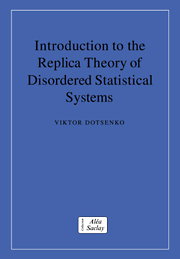
This book describes the statistical mechanics of classical spin systems with quenched disorder. The first part of the book covers the physics of spin-glass states using results obtained within the framework of the mean field theory of spin glasses. The technique of replica symmetry breaking is explained in detail, along with a discussion of the underlying physics. The second part is devoted to the theory of critical phenomena in the presence of weak quenched disorder. This includes a systematic derivation of the traditional renormalization group theory, which is then used to obtain a new 'random' critical regime in disordered vector ferromagnets and in the two-dimensional Ising model. The third part of the book describes other types of disordered systems, relating to new results at the frontiers of modern research. The book is suitable for graduate students and researchers in the field of statistical mechanics of disordered systems.
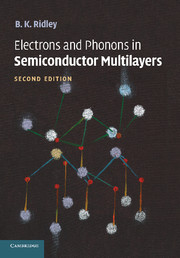
Advances in nanotechnology have generated semiconductor structures that are only a few molecular layers thick, and this has important consequences for the physics of electrons and phonons in such structures. This book describes in detail how confinement of electrons and phonons in quantum wells and wires affects the physical properties of the semiconductor. This second edition contains four new chapters on spin relaxation, based on recent theoretical research; the hexagonal wurtzite lattice; nitride structures, whose novel properties stem from their spontaneous electric polarization; and terahertz sources, which includes an account of the controversies that surrounded the concepts of Bloch oscillations and Wannier-Stark states. The book is unique in describing the microscopic theory of optical phonons, the radical change in their nature due to confinement, and how they interact with electrons. It will interest graduate students and researchers working in semiconductor physics.
This is a clear account of the application of electron-based microscopies to the study of high-Tc superconductors. Written by leading experts, this compilation provides a comprehensive review of scanning electron microscopy, transmission electron microscopy and scanning transmission electron microscopy, together with details of each technique and its applications. Introductory chapters cover the basics of high-resolution transmission electron microscopy, including a chapter devoted to specimen preparation techniques, and microanalysis by scanning transmission electron microscopy. Ensuing chapters examine identification of superconducting compounds, imaging of superconducting properties by low-temperature scanning electron microscopy, imaging of vortices by electron holography and electronic structure determination by electron energy loss spectroscopy. The use of scanning tunnelling microscopy for exploring surface morphology, growth processes and the mapping of superconducting carrier distributions is discussed. Final chapters consider applications of electron microscopy to the analysis of grain boundaries, thin films and device structures. Detailed references are included.
When the temperature is raised above absolute zero, the amplitudes of both the weak-localization, universal conductance fluctuations and the Aharonov–Bohm oscillations are reduced below the nominal value e2/h. In fact, the amplitude of nearly all quantum phase interference phenomena is likewise weakened. There is a variety of reasons for this. One reason, perhaps the simplest to understand, is that the coherence length is reduced, but this can arise as a consequence of either a reduction in the coherence time or a reduction in the diffusion coefficient. In fact, both of these effects occur. In Chapter 2, we discussed the temperature dependence of the mobility in high-mobility modulation-doped GaAs/AlGaAs heterostructures. The decay of the mobility couples to an equivalent decay in the diffusion constant, where d is the dimensionality of the system, through both a small temperature dependence of the Fermi velocity and a much larger temperature dependence of the elastic scattering rate. The temperature dependence of the phase coherence time is less well understood but generally is thought to be limited by electron–electron scattering, particularly at low temperatures. At higher temperatures, of course, phonon scattering can introduce phase breaking.
Another interaction, though, is treated by the introduction of another characteristic length, the thermal diffusion length. The source for this lies in the thermal spreading of the energy levels or, more precisely, in thermal excitation and motion on the part of the carriers.
In this chapter we discuss a variety of issues related to the phenomenon of one-dimensional conductance quantization, probably one of the most important phenomena exhibited by mesoscopic conductors. The quantization is observed in one of the simplest of structures, namely the quantum point contact (QPC) that can be straightforwardly realized by means of the split-gate technique. The QPC is essentially a nanoscale constriction, connected at either end to macroscopic reservoirs, through which electrons may travel ballistically at low temperatures. In this chapter, we discuss how the strong lateral confinement that electrons experience as they pass through the QPC quantizes their energy into a series of discrete one-dimensional subbands. Through a simple analysis, based on a noninteracting model of transport that assumes linear response, we show that the conductance associated with these subbands takes the universal value 2e2/h, independent of the subband index. This results in the observation of a universal staircase structure in the conductance of QPCs, as their gate voltage is used to change the number of occupied subbands one at a time. An important requirement for the observation of this effect is that electron transport through the QPC should be ballistic, and we will see how this typically limits its observation to low temperatures (≤ 4.2 K). The conductance quantization provides a striking demonstration of the validity of the Landauer approach to electrical conduction, and in this chapter we also extend the discussion to consider the influence of scattering and non-vanishing source–drain bias on the conductance.
The original edition of this book grew out of our somewhat disorganized attempts to teach the physics and electronics of mesoscopic devices over the past decade. Fortunately, these evolved into a more consistent approach, and the book tried to balance experiments and theory in the current, at that time, understanding of mesoscopic physics. Whenever possible, we attempted to first introduce the important experimental results in this field followed by the relevant theoretical approaches. The focus of the book was on electronic transport in nanostructure systems, and therefore by necessity we omitted many important aspects of nanostructures such as their optical properties, or details of nanostructure fabrication. Due to length considerations, many germane topics related to transport itself did not receive full coverage, or were referred to only by reference. Also, due to the enormity of the literature related to this field, we did not include an exhaustive bibliography of nanostructure transport. Rather, we tried to refer the interested reader to comprehensive review articles and book chapters when possible.
The decision to do a second edition of this book was reached only after long and hard consideration and discussion among the authors. While the first edition was very successful, the world has changed significantly since its publication. The second edition would have to be revised extensively and considerable new material added. A decision to go ahead was made only after welcoming Jon Bird to the author's team.
As discussed in the previous chapter, there are two issues that distinguish transport in nanostructure systems from that in bulk systems. One is the granular or discrete nature of electronic charge, which evidences itself in single-electron charging phenomena (see Chapter 6). The second involves the preservation of phase coherence of the electron wave over short dimensions. Artificially confined structures are now routinely realized through advanced epitaxial growth and lithography techniques in which the relevant dimensions are smaller than the phase coherence length of charge carriers. We can distinguish two principal effects on the electronic motion depending on whether the carrier energy is less than or greater than the confining potential energy due to the artificial structure. In the former case, the electrons are generally described as bound in the direction normal to the confining potentials, which gives rise to quantization of the particle momentum and energy as discussed in Section 2.2. For such states, the envelope function of the carriers (within the effective mass approximation) is localized within the space defined by the classical turning points, and then decays away. Such decaying states are referred to as evanescent states and play a role in tunneling as discussed in Chapter 3. The time-dependent solution of the Schrodinger equation corresponds to oscillatory motion within the domain of the confining potential.
Nanostructures are generally regarded as ideal systems for the study of electronic transport. What does this simple statement mean?
First, consider transport in large, macroscopic systems. In bulk materials and devices, transport has been well described via the Boltzmann transport equation or similar kinetic equation approaches. The validity of this approach is based on the following set of assumptions: (i) scattering processes are local and occur at a single point in space; (ii) the scattering is instantaneous (local) in time; (iii) the scattering is very weak and the fields are low, such that these two quantities form separate perturbations on the equilibrium system; (iv) the time scale is such that only events that are slow compared to the mean free time between collisions are of interest. In short, one is dealing with structures in which the potentials vary slowly on both the spatial scale of the electron thermal wavelength (to be defined below) and the temporal scale of the scattering processes.
Since the late 1960s and early 1970s, researchers have observed quantum effects due to confinement of carriers at surfaces and interfaces, for example along the Si/SiO2 interface, or in heterostructure systems formed between lattice-matched semiconductors. In such systems, it is still possible to separate the motion of carriers parallel to the surface or interface, from the quantized motion perpendicular, and describe motion semiclassically in the unconstrained directions.
In the preceding chapters, and indeed in the subsequent chapters, most of the discussion is on semiconductors in which the Bloch theory of extended states prevails. There is another class of semiconductors that has received considerable attention over the past several decades, and that is disordered (or amorphous) semiconductors. Here, in the realm of nanostructures, we really do not want to discuss the entire field of amorphous semiconductors, and would generally ignore strongly disordered materials as well. However, recent experiments have shown the presence of a metal–insulator transition in quasi-two-dimensional systems. Consequently, one needs to understand the difference between localized (disordered) systems, weakly disordered systems, and the normal Bloch band picture of conductance.
Generally, in disordered (or, strongly localized) systems, the Boltzmann equation fails to describe transport adequately except under very special circumstances. Disordered materials can stem from several sources, ranging from amorphous materials to relatively good single crystals with very high doping concentrations. In particular, the latter exhibit a form of impurity-induced disorder when the concentration of the impurity reaches a significant fraction of the atomic concentration of the host lattice. This, in turns connects to weak localization which can also arise from impurity-induced coherence effects even when the concentration is not too high.
The focus of this chapter is a discussion of transport in quantum dots, which are quasi-zero-dimensional nanostructure systems whose electronic states are completely quantized. The confinement of carrier motion in these structures is imposed in all three spatial directions, resulting in a discrete spectrum of energy levels much the same as in an atom or molecule. We can therefore think of quantum dots as artificial atoms, which in principle can be engineered to have a particular energy level spectrum. As in atomic systems, the electronic states in quantum dots are sensitive to the presence of multiple electrons due to the Coulomb interaction between electrons. Rich transport phenomena are therefore observed in these structures, not only because of quantum confinement and the resonant structure associated with this confinement, but also due to the granular nature of electric charge.
In contrast to quantum wells and wires, quantum dots can be sufficiently small that the introduction of even a single electron is sufficient to dramatically change the transport properties due to the charging energy associated with this extra electron. One of the main consequences of this charging energy is to give rise to a Coulomb blockade of transport, where conductance oscillations are observed with the addition or subtraction of a single electron from a quantum dot, which we discuss in detail in Sections 6.1 and 6.2.
The discovery in 1980, by Klaus von Klitzing and his colleagues, of the integer quantum Hall effect (IQHE) may have done more than any other single event to stimulate experimental and theoretical interest in the electrical properties of low-dimensional systems. This phenomenon has now been observed in a variety of different material systems, and is manifest as the appearance of wide and precisely quantized plateaus in the Hall resistance (RH, or Hall resistivity ρxy), which therefore deviates strongly from the linear dependence on magnetic field that is expected classically. It is now understood that this high-magnetic-field phenomenon is associated with the formation of strongly quantized Landau levels in a two-dimensional electron gas (2DEG), under which conditions current flow is carried by ballistic edge states that are the quantum analog of classical skipping orbits (recallSection 2.5). Thus, the quantum Hall effect represents a remarkable manifestation of one-dimensional transport in a macroscopic system.
In this chapter, we begin by discussing the basic phenomenology of the (integer) quantum Hall effect, which, due to the extreme accuracy of its quantization, has now been adopted as an international standard for the definition of the ohm. We present an interpretation of this effect due to Büttiker, which begins from the concepts of the Landauer formula (Section 3.3) and explains the quantization by considering that edge states propagate ballistically, without dissipation, over the entire sample length.
The technological means now exists for approaching the fundamental limiting scales of solid-state electronics in which a single electron can, in principle, represent a single bit in an information flow through a device or circuit. The burgeoning field of single-electron tunneling (SET) effects, although currently operating at very low temperatures, has brought this consideration into the forefront. Indeed, the recent observations of SET effects in poly-Si structures at room temperature by a variety of authors has grabbed the attention of the semiconductor industry. While there remains considerable debate over whether the latter observations are really single-electron effects, the resulting behavior has important implications for future semiconductor electronics, regardless of the final interpretation of the physics involved. Indeed, the semiconductor industry is rapidly carrying out its own advance, with transistor gate lengths in the 20 nm range in production in 2009 (the so-called 35 nm node).
We pointed out in Chapter 1 that the semiconductor industry is following a linear scaling law that is expected to be fairly rigorous. With dimensions approaching 10 nm within another decade, there is a rapid search for possible new technologies that can supplement Si with the offer of improved performance. However, it is clear from a variety of considerations that the devices themselves may well not be the limitation on continued growth in device density within the integrated circuit chip.
In Chapter 2, we introduced the idea of low-dimensional systems arising from quantum confinement. Such confinement may be due to a heterojunction, an oxide–semiconductor interface, or simply a semiconductor–air interface (for example, in an etched quantum wire structure). When we look at transport parallel to such barriers, such as along the channel of an HEMT or MOSFET, or along the axis of a quantum wire, to a large extent we can employ the usual kinetic equation formalisms for transport and ignore the phase information of the particles. Quantum effects enter only through the description of the basis states arising from the confinement, and the quantum mechanical transition rates between these states are due to the scattering potential. This is not to say that quantum interference effects do not play a role in parallel transport. As we will see in the later chapters, several effects manifest themselves in parallel transport studies such as weak localization and universal conductance fluctuations, which at their origin have effects due to the coherent interaction of electrons.
In contrast to transport parallel to barriers, when particles traverse regions in which the medium is changing on length scales comparable to the phase coherence length of the particles, quantum interference is expected to be important. By “quantum interference” we mean the superposition of incident and reflected waves, which, in analogy to the electromagnetic case, leads to constructive and destructive interference.
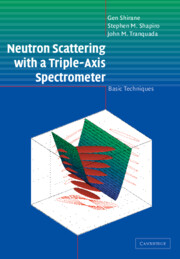
Neutron scattering is an extremely powerful tool in the study of elemental excitations in condensed matter. This book provides a practical guide to basic techniques using a triple-axis spectrometer. Introductory chapters summarize useful scattering formulas and describe the components of a spectrometer, followed by a comprehensive discussion of the resolution function and focusing effects. Later sections include simple examples of phonon and magnon measurements, and an analysis of spurious effects in both inelastic and elastic measurements, and how to avoid them. Finally, polarization analysis techniques and their applications are covered. This guide will allow graduate students and experienced researchers new to neutron scattering to make the most efficient use of their experimental time.
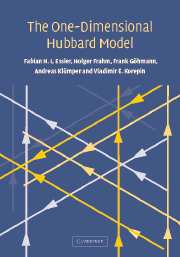
The description of solids at a microscopic level is complex, involving the interaction of a huge number of its constituents, such as ions or electrons. It is impossible to solve the corresponding many-body problems analytically or numerically, although much insight can be gained from the analysis of simplified models. An important example is the Hubbard model, which describes interacting electrons in narrow energy bands, and which has been applied to problems as diverse as high-Tc superconductivity, band magnetism, and the metal-insulator transition. This book presents a coherent, self-contained account of the exact solution of the Hubbard model in one dimension. The early chapters will be accessible to beginning graduate students with a basic knowledge of quantum mechanics and statistical mechanics. The later chapters address more advanced topics, and are intended as a guide for researchers to some of the more topical results in the field of integrable models.
Valence bond theory is one of two commonly used methods in molecular quantum mechanics, the other is molecular orbital theory. This book focuses on the first of these methods, ab initio valence bond theory. The book is split into two parts. Part I gives simple examples of two-electron calculations and the necessary theory to extend these to larger systems. Part II gives a set of case studies of related molecule sets designed to show the nature of the valence bond description of molecular structure. It also highlights the stability of this description to varying basis sets. There are references to the CRUNCH computer program for molecular structure calculations which is currently available in the public domain. The book will be of primary interest to researchers and students working on electronic theory and computation in chemistry and chemical physics.