Refine search
Actions for selected content:
238492 results in Physics and Astronomy

How boundary layer flows influence cavitation bubble-driven particle jumps from rigid walls
-
- Journal:
- Journal of Fluid Mechanics / Volume 1025 / 25 December 2025
- Published online by Cambridge University Press:
- 23 December 2025, A64
-
- Article
- Export citation
The Parkes observatory pulsar data archive
-
- Journal:
- Publications of the Astronomical Society of Australia / Volume 42 / 2025
- Published online by Cambridge University Press:
- 23 December 2025, e169
-
- Article
-
- You have access
- Open access
- HTML
- Export citation
Discovery of the redback millisecond pulsar PSR J1728–4608 with ASKAP
-
- Journal:
- Publications of the Astronomical Society of Australia / Volume 43 / 2026
- Published online by Cambridge University Press:
- 23 December 2025, e007
-
- Article
-
- You have access
- Open access
- HTML
- Export citation
-
We present the discovery of PSR J1728 $-$4608, a new redback spider pulsar identified in images from the Australian SKA Pathfinder telescope. PSR J1728 $-$4608 is a millisecond pulsar with a spin period of 2.86 ms, in a 5.05 h orbit with a companion star. The pulsar exhibits a radio spectrum of the form $S_{\nu} \propto \nu^\alpha$, with a measured spectral index of $\alpha = -1.8(3)$. It is eclipsed for 42% of its orbit at 888 MHz, and multi-frequency image–domain observations show that the egress duration scales with frequency as a power law with index $n = -1.74$, where longer duration eclipses are seen at lower frequencies. An optical counterpart is detected in archival Gaia data within $0.5''$ of the radio position. It has a mean G-band magnitude of 18.8 mag, and its light curve displays characteristics consistent with a combination of ellipsoidal modulation and irradiation effects. We also report the nearest Fermi $\gamma$-ray source, located 2′ away from our source, as a possible association. A radio timing study constrains the intrinsic and orbital properties of the system, revealing orbital period variations that we attribute to changes in the gravitational quadrupole moment of the companion star. At the eclipse boundary, we measure a maximum dispersion measure excess of $2.0 \pm 1.2 \ \mathrm{pc\ cm^{-3}}$, corresponding to an electron column density of $5.9 \pm 3.6 \times10^{18} \ \mathrm{cm^{-2}}$. Modelling of the eclipse mechanism suggests that synchrotron absorption is the dominant cause of the eclipses observed at radio wavelengths. The discovery and characterisation of systems like PSR J1728 $-$4608 provide valuable insights into pulsar recycling, binary evolution, the nature of companion-driven eclipses, and the interplay between compact objects and their plasma environments.


Three-dimensional curved shock theory based on orthogonal frame of shock surface and its applications
-
- Journal:
- Journal of Fluid Mechanics / Volume 1025 / 25 December 2025
- Published online by Cambridge University Press:
- 22 December 2025, A50
-
- Article
-
- You have access
- Open access
- HTML
- Export citation

Spatially localised doubly diffusive convection in an axisymmetric spherical shell
-
- Journal:
- Journal of Fluid Mechanics / Volume 1025 / 25 December 2025
- Published online by Cambridge University Press:
- 22 December 2025, A55
-
- Article
-
- You have access
- Open access
- HTML
- Export citation

Symbolic regression-enhanced dynamic wake meandering: fast and physically consistent wind turbine wake modelling
-
- Journal:
- Journal of Fluid Mechanics / Volume 1025 / 25 December 2025
- Published online by Cambridge University Press:
- 22 December 2025, A56
-
- Article
-
- You have access
- Open access
- HTML
- Export citation

Levitation of spheres by thin viscous films
-
- Journal:
- Journal of Fluid Mechanics / Volume 1025 / 25 December 2025
- Published online by Cambridge University Press:
- 22 December 2025, A61
-
- Article
-
- You have access
- Open access
- HTML
- Export citation

Transition reversal over a blunt plate at Mach 5. Part 2. The role of free-stream-disturbance form
-
- Journal:
- Journal of Fluid Mechanics / Volume 1025 / 25 December 2025
- Published online by Cambridge University Press:
- 22 December 2025, A54
-
- Article
-
- You have access
- Open access
- HTML
- Export citation

Electrically driven relaminarisation of particle-laden turbulent channel flow
-
- Journal:
- Journal of Fluid Mechanics / Volume 1025 / 25 December 2025
- Published online by Cambridge University Press:
- 22 December 2025, A53
-
- Article
- Export citation
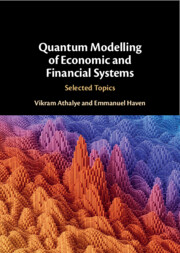
Quantum Modelling of Economic and Financial Systems
- Selected Topics
-
- Published online:
- 19 December 2025
- Print publication:
- 22 January 2026

Weakly nonlinear analysis of particle-laden Rayleigh–Bénard convection
-
- Journal:
- Journal of Fluid Mechanics / Volume 1025 / 25 December 2025
- Published online by Cambridge University Press:
- 19 December 2025, A40
-
- Article
-
- You have access
- Open access
- HTML
- Export citation
PSP volume 180 issue 1 Cover and Back matter
-
- Journal:
- Mathematical Proceedings of the Cambridge Philosophical Society / Volume 180 / Issue 1 / January 2026
- Published online by Cambridge University Press:
- 19 December 2025, pp. b1-b2
- Print publication:
- January 2026
-
- Article
-
- You have access
- Export citation

Instabilities in the flow over a spinning disk at angle of attack
-
- Journal:
- Journal of Fluid Mechanics / Volume 1025 / 25 December 2025
- Published online by Cambridge University Press:
- 19 December 2025, A48
-
- Article
-
- You have access
- Open access
- HTML
- Export citation
-
Three-dimensional laminar flow over an inclined spinning disk is investigated at a Reynolds number of ${\textit{Re}} = 500$ and an angle of attack of $\alpha = 25^\circ$, for tip-speed ratios up to 3. Numerical simulations are performed to investigate the effect of spin on the aerodynamics and characterise the instabilities that occur. Increasing tip-speed ratio significantly increases both lift and drag monotonically. Several distinct wake regimes are observed, including vortex shedding in the non-spinning case, vortex-shedding suppression at moderate tip-speed ratios and a distinct corkscrew-like short-wavelength instability in the advancing tip vortex at higher tip-speed ratios. Vorticity generated by the spinning disk strengthens the advancing tip vortex, inducing a spanwise stretching in the trailing-edge vortex sheet. This helps to dissipate the vorticity, which in turn prevents roll up and suppresses vortex shedding. The short-wavelength instability shows qualitative and quantitative matches to the $(-2,0,1)$ principal mode of the elliptic instabilities seen in pairs of counter-rotating Batchelor vortices. The addition of vorticity from the disk rotation significantly alters the circulation and axial velocity in the tip vortices, giving rise to elliptic instability despite its absence in the non-spinning case. In select cases, lock-in between the frequency of the elliptic instability and twice the spin frequency is observed, indicating that disk rotation acts as an additional forcing for the elliptic instability. Additional simulations at different Reynolds numbers and angle of attacks are considered to examine the robustness of observed phenomena across different parameter combinations.


Mean velocity profile in stably stratified turbulent channel flow
-
- Journal:
- Journal of Fluid Mechanics / Volume 1025 / 25 December 2025
- Published online by Cambridge University Press:
- 19 December 2025, A44
-
- Article
-
- You have access
- Open access
- HTML
- Export citation
-
The Monin–Obukhov similarity theory (MOST) is a cornerstone of atmospheric science for describing turbulence in stable boundary layers. Extending MOST to stably stratified turbulent channel flows, however, is non-trivial due to confinement by solid walls. In this study, we investigate the applicability of MOST in closed channels and identify where and to what extent the theory remains valid. A key finding is that the ratio of the half-channel height to the Obukhov length serves as a governing parameter for identifying distinct flow regions and determining their corresponding mean velocity scaling. Hence, we propose a relation to estimate this ratio directly from the governing input parameters: the friction Reynolds and friction Richardson numbers ( $\textit{Re}_{\tau }$ and $Ri_{\tau }$). The framework is tested against a series of direct numerical simulations across a range of $\textit{Re}_{\tau }$ and $Ri_{\tau }$. The reconstructed velocity profiles enable accurate prediction of the skin-friction coefficient crucial for quantifying pressure losses in stratified flows in engineering applications.


Orbit dynamics of Janus drop in shear flow
-
- Journal:
- Journal of Fluid Mechanics / Volume 1025 / 25 December 2025
- Published online by Cambridge University Press:
- 19 December 2025, A32
-
- Article
- Export citation
-
In this paper, we numerically investigate the orbit dynamics of three-dimensional symmetric Janus drops in shear flow using an improved ternary-fluids phase field method, focusing on how drop deformation and initial orientation affect the orbit drift of two configurations of Janus drops: dumbbell-shaped and near-spherical. We find that the motion of dumbbell-shaped drops eventually evolves into tumbling, while near-spherical drops attain stable spinning. We attribute this bifurcation in orbit drift to contrasting deformation dynamics and shape-dependent hydrodynamics of the two configurations. Specifically, the drift bifurcation is closely related to the aspect ratio of Janus drops at equilibrium, giving rise to two distinct mechanisms: (1) coupling between outer interface deformation and the surrounding flow field; and (2) interplay between inner interface deformation and vortices enclosed within the drop. In addition, we observe that for the dumbbell-shaped Janus drops with different aspect ratios, their tumbling dynamics resembles ellipsoids in shear flow. Moreover, the trajectories of the dumbbell-shaped Janus drops during orbit drift collapse onto a universal curve, independent of their initial orientations, and significant deformation and inertia accelerate the orbit transition. To quantitatively evaluate the effect of drop deformation on the orbit drift of the dumbbell-shaped Janus drops, we propose an effective aspect ratio model based on the drop shapes at equilibrium and at the maximum elongation. By incorporating the effective aspect ratio into Jeffery’s theory for solid particles, we accurately predict the rotation period and angular velocity of Janus drops in the tumbling regime and during the orbit drift, especially for drops with linear deformation. Moreover, the orbit parameter $C$ is found to vary exponentially with time for drops with linear deformation, while the time variation of $C$ transits from one exponential function to another for drops with nonlinear deformation.


Interfacial heat transfer during drop impact on a moving substrate
-
- Journal:
- Journal of Fluid Mechanics / Volume 1025 / 25 December 2025
- Published online by Cambridge University Press:
- 19 December 2025, A51
-
- Article
-
- You have access
- Open access
- HTML
- Export citation

Dynamics of poro-viscoelastic wetting with large swelling
-
- Journal:
- Journal of Fluid Mechanics / Volume 1025 / 25 December 2025
- Published online by Cambridge University Press:
- 19 December 2025, A58
-
- Article
-
- You have access
- Open access
- HTML
- Export citation

Evolution of perturbed long nonlinear plane, ring, and hybrid surface waves
-
- Journal:
- Journal of Fluid Mechanics / Volume 1025 / 25 December 2025
- Published online by Cambridge University Press:
- 19 December 2025, A37
-
- Article
-
- You have access
- Open access
- HTML
- Export citation
-
The two-dimensional (2-D) evolution of perturbed long weakly nonlinear surface plane, ring and hybrid waves, consisting, to leading order, of a part of a ring and two tangent plane waves, is modelled numerically within the scope of the 2-D Boussinesq–Peregrine system. Numerical runs are initiated and interpreted using the reduced 2-D cylindrical Korteweg–de Vries (cKdV)-type and Kadomtsev–Petviashvili II (KPII) equations. The cKdV-type equation leads to two different models, the KdV $\theta$, where $\theta$ stands for a polar angle, and cKdV equations, depending on whether we use the general or singular (i.e. the envelope of the general) solution of the associated nonlinear first-order differential equation. The KdV $\theta$ equation is also derived directly from the 2-D Boussinesq–Peregrine system and used to analytically describe the intermediate 2-D asymptotics of line solitons subject to sufficiently long transverse perturbations of finite strength, while the cKdV equation is used to initiate outward- and inward-propagating ring waves with localised and periodic perturbations. Both of these equations, together with the KPII equation, are used to model the evolution of hybrid waves, where we show, in particular, that large localised waves (lumps) can appear as transient (emerging and then disappearing) states in the evolution of inward-propagating waves, contributing to the possible mechanisms for the generation of rogue waves. Detailed comparisons are made between the key features of the non-stationary 2-D modelling and relevant predictions of the reduced equations.


PSP volume 180 issue 1 Cover and Front matter
-
- Journal:
- Mathematical Proceedings of the Cambridge Philosophical Society / Volume 180 / Issue 1 / January 2026
- Published online by Cambridge University Press:
- 19 December 2025, pp. f1-f2
- Print publication:
- January 2026
-
- Article
-
- You have access
- Export citation

The egalitarianism of dual bubbles ripening on heterogeneous substrate with constant contact radius
-
- Journal:
- Journal of Fluid Mechanics / Volume 1025 / 25 December 2025
- Published online by Cambridge University Press:
- 19 December 2025, A57
-
- Article
- Export citation
-
In this work, we study the reaction-controlled dual bubbles ripening on a heterogeneous substrate with high surface wettability hysteresis, where the bubbles evolve with constant contact radius but varied contact angle. We first theoretically derived the governing kinetic equation of bubble curvature radius $R_B$, based on which we surprisingly found three possible ripening processes under six different conditions, i.e. the classical Ostwald ripening (the bubble with the larger curvature radius $R_B$ exhibits an increase in $R_B$, while the bubble with the smaller curvature radius $R_B$ experiences a decrease in $R_B$), the reversed ripening (converse to Ostwald ripening), and the consistent ripening ( $R_B$ of both bubbles increases or reduces consistently). Further analyses from the aspects of chemical potential and free energy lead to an interesting finding that the $R_B$ of two bubbles finally reach egalitarianism, independently of different ripening processes. Numerical results obtained from two-phase lattice Boltzmann modelling demonstrate excellent agreement with theoretical predictions, specifically concerning the kinetic equation, the various ripening processes, and the egalitarianism of bubble radii $R_B$ after ripening completion.


