To save content items to your account,
please confirm that you agree to abide by our usage policies.
If this is the first time you use this feature, you will be asked to authorise Cambridge Core to connect with your account.
Find out more about saving content to .
To save content items to your Kindle, first ensure no-reply@cambridge.org
is added to your Approved Personal Document E-mail List under your Personal Document Settings
on the Manage Your Content and Devices page of your Amazon account. Then enter the ‘name’ part
of your Kindle email address below.
Find out more about saving to your Kindle.
Note you can select to save to either the @free.kindle.com or @kindle.com variations.
‘@free.kindle.com’ emails are free but can only be saved to your device when it is connected to wi-fi.
‘@kindle.com’ emails can be delivered even when you are not connected to wi-fi, but note that service fees apply.
Sleep medicine and dream science have long been dominated by empirical approaches. Volume 1 of this handbook underscores the critical importance of models and theories of sleep and dreams, which provide the conceptual frameworks needed to interpret empirical findings – spanning biological, psychological, and philosophical perspectives. Featuring contributions from leading experts, chapters examine mechanisms of sleep regulation, functions of sleep and dreaming, and present diverse frameworks side by side, outlining core assumptions, mechanisms, and implications before addressing deeper complexities. Designed for students, researchers, and clinicians across sleep science, neuroscience, psychology, biology, and medicine, the handbook invites critical engagement with models and reflection on how they shape contemporary understanding and research.
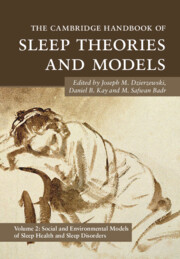
Sleep medicine and dream science have long been dominated by empirical approaches. Volume 2 of this handbook highlights emerging theories of sleep disorders and the role of social and environmental factors in sleep health, showing how conceptual models guide effective application of empirical work. Featuring contributions from leading experts, chapters examine mechanisms of sleep regulation, functions of sleep and dreaming, and present diverse frameworks side by side, outlining core assumptions, mechanisms, and implications before addressing deeper complexities. Designed for students, researchers, and clinicians across sleep science, neuroscience, psychology, biology, and medicine, the handbook invites critical engagement with models and reflection on how they shape contemporary understanding and research.
How does brain activity give rise to sleep, dreams, learning, memory, and language? Do drugs like cocaine and heroin tap into the same neurochemical systems that evolved for life's natural rewards? What are the powerful new tools of molecular biology that are revolutionizing neuroscience? This second edition undergraduate text explores the relationship between brain, mind, and behavior. It clears away the extraneous detail that so often impedes learning, and describes critical concepts step by step, in straightforward language. Rich illustrations and thought-provoking review questions further illuminate the relationship between biological, behavioral, and mental phenomena. With focused, engaged writing, even the more challenging topics of neurotransmission and neuroplasticity become enjoyable to learn. This streamlined text includes all key information, allowing readers to remain focused and enjoy the feeling of mastery that comes from a grounded understanding of a topic, from its fundamentals to its implications.
This textbook offers a foundational overview of cognitive psychology, balancing accessible writing, practical applications, and research. By incorporating biological perspectives throughout, the authors provide a concise introduction to human cognition and its evolution over time as a means of adapting to our environment. Chapters cover key topics including cognitive neuroscience, attention and consciousness, perception, memory, knowledge representation, language, problem-solving and creativity, decision-making and reasoning, cognitive development, and intelligence. This seventh edition also introduces new content on human intelligence, consolidated into a final chapter. With its 'from lab to life' approach, the authors provide thorough coverage of theory, lab, and field research, while continually highlighting real-world applications to everyday life.
Black girls face a mental-health crisis. Acting as a call to action, this book examines the long history of overlooking Black girls' pain and analyzes how expectations of resilience place harmful pressure on them, contributing to anxiety, depression, and delayed self-care. Chapters trace the trauma Black girls have shouldered since enslavement and pair this history with first-hand accounts from contemporary Black girls who describe the pressures they face today and the limited emotional support they receive in educational and social settings. By amplifying these voices, the text challenges the 'Strong Black Girl' image and calls for expanded mental-health resources to ensure Black girls' well-being is prioritized. With current policies failing to meet Black girls' needs, In Plain Sight makes their pain visible and offers concrete steps that equip parents, schools, community members, health providers, and policymakers with tools to take meaningful action to support and protect Black girls.
Why do people support or resist climate solutions? And what actually moves societies from concern to action? This book brings together leading scholars in psychology to answer these urgent questions. Spanning cognition, emotion, values, misinformation, social norms, identity, culture, decision-making, and collective action, it offers the most comprehensive synthesis to date of the psychological forces shaping climate outcomes. Moving beyond abstract debates, the volume focuses explicitly on solutions: how to increase public support for effective policy, counter polarization and conspiracy beliefs, leverage social norms, mobilize social movements, and design interventions that bridge individual behaviors and systemic change. Each chapter combines rigorous scientific evidence with clear implications for practice, culminating in a policy-oriented summary for practitioners. Accessible yet authoritative, this work is an essential resource for anyone seeking a science-based roadmap to advancing effective and equitable climate action. This title is also available as open access on Cambridge Core.
As global challenges continue to intensify, the need for psychology to meaningfully engage with today's most serious problems has never been clearer. This book demonstrates how the discipline can answer this call to action. Written by leading scholars, it offers a clear and comprehensive presentation of the theories and research that contribute to solving our most serious everyday world issues. Chapters explore extremism, polarization, and conflict; environmental and economic deterioration; systemic obstacles to adaptation; football disorder; the influence of AI on young people; weaknesses in STEM education; and the collapse of effective communication and dialogue. Together, these contributions provide both depth and breadth, showing how psychological science can illuminate and address the most pressing global concerns. Unifying these diverse topics into a coherent whole, the volume is an indispensable resource for students, academics, and professionals committed to applying psychology where it matters most.
In a world of constant change, where new challenges demand novel solutions, understanding creativity has never been more essential. How do we create? How did we become so creative? Given that ideas adapt and build on one another, in what sense does culture evolve? Synthesizing research from psychology, cognitive science, anthropology, archaeology, computational models, evolutionary theory, and first-person accounts, this book reveals how creativity sparks innovation, heals inner turmoil, connects minds, and fuels cultural change. It advances an ambitious, original theory of how the creative process works, and a theory of cultural evolution that can account for difficult-to-explain features, such as cross-domain transfer, and our highly cooperative nature. The text traces the lifespan of ideas from conception, to gestation, to birth, to their release into the world, where they acquire new forms, adapting to the new minds in which they take up residence.
During the Second World War, psychiatrists, psychologists, and other experts confronted unprecedented numbers of patients, including distressed servicemen, bombed civilians, unaccompanied children, returning veterans, displaced persons, and Holocaust survivors. In the first comprehensive analysis of treatment during and after the war, Elizabeth Roberts-Pedersen examines how British and American experts interpreted and responded to these diverse patient populations. Looking at both combatants and civilians together, she demonstrates that wartime psychiatry was less concerned with individual suffering than with managing mental distress at scale, revealing profound tensions in psychiatric thought over the causes of wartime mental disorder and its treatment. Perhaps most significantly, Human Salvage shows how the Second World War brought mass violence into the clinical realm, transforming psychiatric theory and practice for decades to come.
The third of three volumes, the four sections of this book cover a variety of issues important to analyzing data to produce high-quality, accurate conclusions from already-collected data. First, leading scholars from around the world provide a step-by-step guide to using several popular quantitative and qualitative statistical programs used throughout the social and behavioral sciences. The next section focused on several important considerations for preparing data for analysis. Many of these directly affect the quality of the data and the resulting conclusions, In the remainder of chapters, the various authors focus on various advanced statistical techniques. In section three, the focus is on those related to quantitative analysis. Section four then focuses on analyzing qualitative data. Throughout the book, examples and real-world research efforts from dozens of different disciplines are discussed. In addition, authors often provide example data and analytical code to facilitate learning of and application of each concept.
What does it mean to know, act, and be in the world? This book explores the embodied nature of human knowledge. Drawing on phenomenology and cognitive science, it shows how bodily experience shapes the self, social understanding, and practical knowledge. Philosopher and psychologist Shogo Tanaka examines motor learning, body schema, and lived experience to shed light on this subject with chapters exploring intercorporeal sociality, social cognition, narrative identity, and cultural meaning. By reflecting on the methods and limits of studying embodied knowledge, the text reveals how habits, skilled action, and even contemplative practices disclose the body as a medium of insight. This book is also available Open Access on Cambridge Core.
As a psychiatrist, you may be the only medically qualified person available to manage the physical healthcare of a patient in a mental health setting. Do you know how to: Recognise sepsis? Diagnose headache disorders? Manage Type 1 Diabetes? Written by leading experts in medicine, surgery, pharmacy, physiotherapy, primary care, disease prevention and the law, this book contains a wealth of information specifically for psychiatrists about physical healthcare. With full-colour illustrations, there is information about the management of acute illness, infectious diseases, cardiac, respiratory and neurological emergencies, and long-term conditions e.g., endocrine, renal and gastrointestinal disorders. Whether you are an experienced psychiatrist or a trainee or GP, you will find practical guidance about making the 'first response', delivery of routine physical healthcare and referral to colleagues. This book is essential reading to help update your knowledge, help you to make the right decisions, and avoid traps for the unwary.
The relation of mind and body is a longstanding puzzle in philosophy. This book explores how mind-body problems show up in contemporary biomedicine and psychiatry through dualistic models and metaphors that shape clinical practice. It discusses how the resultant tensions and contradictions that plague healthcare can be resolved. This begins with disentangling the knots that constitute the mind-body problem and applying ideas from systems biology, cognitive science, and anthropology to understand mind, consciousness, and agency as processes that emerge from embodied engagements with a social world. The text takes the reader on a journey across diverse clinical situations to consider: the power of multilevel systems theory; problems of knowledge, truth, and explanation in psychiatry; the mechanisms of placebo effects and hypnotic suggestion; the role of stories in constructing the self; the power and limits of imagination; and the prospects for an integrative view of the person in health and illness.
While intergroup relations research has expanded globally, few resources offer a comprehensive grounding in its major theories. This book bridges that gap by providing critical assessments of the major theories of intergroup relations, their applied implications, and the empirical research that tests them. It traces the development of the field by examining major theories of intergroup behavior – from identity-based, materialist, and irrationalist perspectives to theories centered on justice, conflict, evolution, and system justification – and also critically assesses assimilation, multiculturalism, omniculturalism, and intergroup contact. The book concludes by showing how integrating existing theories with feminist frameworks, allyship, and intersectionality can help build more powerful and coherent models for understanding intergroup relations. By systematically analyzing these approaches and their practical applications, Theories of Intergroup Relations deepens our understanding of intergroup dynamics and supports the development of strategies for fostering more harmonious relations among diverse groups.
Research in the Cloud reimagines how students learn behavioral research methods by focusing on active, project-based learning. This innovative textbook is built around 'CLABs' (Classroom-Laboratory hybrids) that integrate theoretical concepts with hands-on projects, allowing students to learn by doing. It provides dozens of research activities using real data collected from over 2,500 online participants, with all materials, datasets, and analysis instructions available on the Open Science Framework. The book guides students through a four-step progression, from understanding concepts to analyzing real data, engaging in guided research, and creating their own original studies. It incorporates the latest technology, including AI tools for tasks like creating measurement scales, and modern challenges like data quality in online research. This approach helps students to develop a comprehensive portfolio of skills, from statistical analysis to conducting randomized experiments and writing up their research findings. This book is also available as Open Access on Cambridge Core.
This comprehensive and integrative guide to the evolution of human culture offers a unified introduction to one of today's most dynamic interdisciplinary fields. Drawing on research from the Stockholm School of Cultural Evolution, it explains how complex human cultures arise from simple learning mechanisms and social interactions. Across eleven accessible chapters, leading scholars trace the deep origins of culture in animal behavior, explore the evolution of language and technology, model the spread of ideas and norms, and examine how large-scale cultural systems emerge and transform. Bridging biology, psychology, archaeology, linguistics, intellectual history, and complex-systems science, this volume demonstrates how minimalist, domain-general principles can account for the extraordinary diversity of human cultures. Written for students and researchers across the social sciences, humanities, and natural sciences, it provides a coherent, up-to-date framework for understanding what culture is and how it changes.
We are living in an increasingly polarized political world. Partisans routinely view members of opposing political parties as out-of-touch, stupid, crazy, or even evil. This book calls for the creation of a more collaborative democracy to bridge these divides. It does so by noting that modern democracy is based primarily on adversarial practices – we seek to solve political problems through debating, campaigning, and voting. Drawing on an 18-month study, Michael F. Mascolo shows how individuals with opposing beliefs were able to use the principles and practices of conflict resolution to address three contentious socio-political issues: school dress codes, capital punishment, and race relations involving the police. Their success illustrates how collaborative problem-solving can generate genuine, shared solutions to seemingly intractable problems, offering insights for scholars and practitioners seeking to reduce polarization and strengthen democratic life. An essential read for researchers, politicians, and policy makers interested in resolving political polarization.