To save content items to your account,
please confirm that you agree to abide by our usage policies.
If this is the first time you use this feature, you will be asked to authorise Cambridge Core to connect with your account.
Find out more about saving content to .
To save content items to your Kindle, first ensure no-reply@cambridge.org
is added to your Approved Personal Document E-mail List under your Personal Document Settings
on the Manage Your Content and Devices page of your Amazon account. Then enter the ‘name’ part
of your Kindle email address below.
Find out more about saving to your Kindle.
Note you can select to save to either the @free.kindle.com or @kindle.com variations.
‘@free.kindle.com’ emails are free but can only be saved to your device when it is connected to wi-fi.
‘@kindle.com’ emails can be delivered even when you are not connected to wi-fi, but note that service fees apply.
Many theologians and philosophers have ignored or dismissed the crucial distinction between theodicies and defenses. The distinction was and is of theological and philosophical importance not only to avoid conflating crucial issues in accounts dealing with the goodness and power of God and the reality of evil, but also to getting the challenges of evil to belief in God rightly located. This article revisits the distinction I discussed more than forty years ago in “The Use and Abuse of Theodicy.” The present article analyzes problems in the rhetoric and logic of recent works and their concerns with structural and cultural (social) evil. It focuses on major titles in philosophical theology: Marilyn McCord Adams, Christ and Horrors; Ross McCullough, Freedom and Sin; and Karen Kilby, God, Evil and the Limits of Theology. Along the way, it seeks to clarify some issues I have taken up, especially in The Evils of Theodicy.
Step outside laboratory, and into the world of nature. The books on cannon law can be left behind as well, for Ibn ʿArabī (d. 1240) believed there is one Sharia for humans and another for minerals. This Element rethinks what it means to be an alchemist and Muslim, by shifting its focus to the religious practices of sentient minerals, as described in Ibn ʿArabī's oeuvre and the Qur'an. Common stones and metals undergo their spiritual feats with the single goal in mind: to gain proximity to the Divine by turning themselves into gold. Alchemists sought to facilitate this process through elixirs and sorcery. Setting allegories and metaphors aside, this Element examines ontological principles governing the struggles of iron to become gold, and the human strivings to better the world of nature.
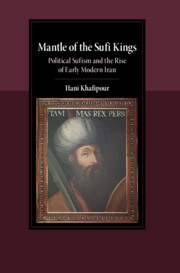
The rise and establishment of Safavid rule in Iran is a clear and momentous event in the wider history of the Middle East and Islamic world. In this study, Hani Khafipour explores how loyalty, social cohesion, and power dynamics found in Sufi thought underpinned the Safavid community's sources of social power and determination. Once in power, the Safavid state's patronage of art, literature, and architecture, turned Iran into a flourishing empire of culture, influencing neighboring empires including the Ottomans and Mughals. Examining the origin and evolution of the Safavid order, Mantle of the Sufi Kings offers fresh insights into how religious and sociopolitical forces merged to create a powerful Shi'i empire, with Iran remaining the only Shi'i nation in the world today. This study provides a bold new interpretation of Iran's early modern history, with important implications for the contemporary religio-political discourse in the Middle East.
Chapter 4 turns to legal maxims, the second core element of Ibn ʿAbd al-Salām’s legal philosophy. Beginning with a survey of the evolution of maxim terminology in Shāfiʿī law from the third/ninth to the fifth/eleventh century, I show that Ibn ʿAbd al-Salām was influenced by maxim-based legal reasoning in the works of prominent Khurasani Shāfiʿī jurists. He applied their analytic method to develop his own maxims, which he extracted from substantive law and then used them to analyze the purposes and values of the law discursively. Within Ibn ʿAbd al-Salām’s legal philosophy, maxims constitute a bridge between the established body of legal precedents and the abstract discourse about the telos of the law as the realization of human well-being.
The present essay considers what, if any, metaphysical perspective can be discerned in the thought of René Girard. Aware of the fact that Girard has little to say about metaphysics and that what he does say harbours the same reservations and misgivings as his postmodern confreres, I argue that the rudiments of a metaphysics can nevertheless be identified. This metaphysics is not one of violence that Girard, following Martin Heidegger, associates with the violence of Heraclitean logos. Rather, it is one predicated upon the dynamic interplay between identity and difference realised concretely within the incarnate Christ. My claim is that ‘metaphysics’, much like what occurred to the notion of ‘sacrifice’ in Girard’s thinking, requires further development and even redemption. This essay takes an initial step in that direction.
Chapter 3 focuses on Ibn ʿAbd al-Salām’s theorization of maṣlaḥa, one of the two core features of his legal philosophy. I first sketch the evolution of maṣlaḥa in the Shāfiʿī school in the centuries before Ibn ʿAbd al-Salām and then analyze his own theory of maṣlaḥa, its underlying moral philosophy, its legal normativity, and its debt to Ibn ʿAbd al-Salām’s Khurasani Shāfiʿī predecessors. The chapter also considers the challenges to the law’s rationality and morality in the Damascene milieu that likely motivated Ibn ʿAbd al-Salām’s development of his theory of maṣlaḥa.
The introduction explores the idea of an Islamic legal philosophy within the broader history and historiography of Islamic thought. It situates Ibn ʿAbd al-Salām’s career and reputation in historical and contemporary sources and situates his contribution in the fields and debates of Islamic intellectual and legal history. It explains the importance of the study and the key contributions it makes. Finally, it presents an overview of the sources used in the study and an outline of each of the book’s chapters.
The conclusion examines how elements of Ibn ʿAbd al-Salām’s legal philosophy were advanced, reconstituted, or sidelined in the centuries after his death until the present day. It argues that the compilations of maxims, distinctions, and ashbāh spawned by Ibn ʿAbd al-Salām’s project share inextricable connections and are, together, functionally constitutive of Islamic legal philosophy as a single discipline; and therefore, that none of them can be meaningfully studied in isolation. It also reconstructs how interest in Ibn ʿAbd al-Salām’s project was rekindled and his legacy contested amidst debates about Islamic legal reform in the twentieth century.