Contents
Research Article
On a loss storage network with finite capacity
-
- Published online by Cambridge University Press:
- 10 July 2025, pp. 1-29
-
- Article
-
- You have access
- Open access
- HTML
- Export citation
Extremes for systemic expected shortfall and marginal expected shortfall in a multivariate continuous-time risk model
- Part of:
-
- Published online by Cambridge University Press:
- 22 July 2025, pp. 30-62
-
- Article
-
- You have access
- Open access
- HTML
- Export citation
Generalized equilibrium distributions
- Part of:
-
- Published online by Cambridge University Press:
- 31 July 2025, pp. 63-89
-
- Article
-
- You have access
- Open access
- HTML
- Export citation
-
We define the generalized equilibrium distribution, that is the equilibrium distribution of a random variable with support in $\mathbb{R}$. This concept allows us to prove a new probabilistic generalization of Taylor’s theorem. Then, the generalized equilibrium distribution of two ordered random variables is considered and a probabilistic analog of the mean value theorem is proved. Results regarding distortion-based models and mean-median-mode relations are illustrated as well. Conditions for the unimodality of such distributions are obtained. We show that various stochastic orders and aging classes are preserved through the proposed equilibrium transformations. Further applications are provided in actuarial science, aiming to employ the new unimodal equilibrium distributions for some risk measures, such as Value-at-Risk and Conditional Tail Expectation.

Hitting probabilities of constrained random walks representing tandem networks
-
- Published online by Cambridge University Press:
- 13 August 2025, pp. 90-145
-
- Article
-
- You have access
- Open access
- HTML
- Export citation
-
We develop anapproximation for the buffer overflow probability of a stable tandem network in dimensions three or more. The overflow event in terms of the constrained random walk representing the network is the following: the sum of the components of the process hits n before hitting 0. This is one of the most commonly studied rare events in the context of queueing systems and the constrained processes representing them. The approximation is valid for almost all initial points of the process and its relative error decays exponentially in n. The analysis is based on an affine transformation of the process and the problem; as $n\rightarrow \infty$ the transformed process converges to an unstable constrained random walk. The approximation formula consists of the probability of the limit unstable process hitting a limit boundary in finite time. We give an explicit formula for this probability in terms of the utilization rates of the nodes of the network.
The time until a random walk exceeds a square root and other barriers
-
- Published online by Cambridge University Press:
- 03 September 2025, pp. 146-153
-
- Article
-
- You have access
- Open access
- HTML
- Export citation
-
This paper investigates the time N until a random walk first exceeds some specified barrier. Letting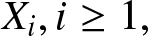 $X_i, i \geq 1,$ be a sequence of independent, identically distributed random variables with a log-concave density or probability mass function, we derive both lower and upper bounds on the probability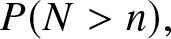 $P(N \gt n),$ as well as bounds on the expected value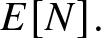 $E[N].$ On barriers of the form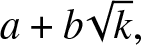 $a + b \sqrt{k},$ where a is nonnegative, b is positive, and k is the number of steps, we provide additional bounds on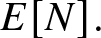 $E[N].$
