Book contents
- Frontmatter
- Contents
- List of Illustrations
- Preface
- Acknowledgements
- List of Abbreviations
- List of Cathedral Organists
- 1 Origins
- 2 A Fortuitous and Friendly Proposal
- 3 A Numerous Appearance of Gentry
- 4 ‘The Musick of my Admiration Handel’
- 5 The Gentlemen and the Players
- 6 Avoiding Shipwreck
- 7 Prima voce
- 8 Favourites and Flops
- 9 Sacred and Profane
- 10 Froissart
- 11 The Unreasonable Man
- 12 The Dream
- 13 Beyond these Voices
- 14 An Essentially English Institution
- 15 The Elgar Festivals
- 16 Dona nobis pacem
- 17 Recovery
- 18 Association
- 19 A New Epoch
- 20 Jubilee
- 21 Theme with Variations
- 22 Houses of the Mind
- 23 ‘A Gold-Plated Orchestra’
- 24 A New Millennium
- 25 Reorganisation
- 26 An Invitation to the Palace
- Appendix Three Choirs Festival Timeline
- Select Bibliography
- Index
- Plate section
18 - Association
Published online by Cambridge University Press: 11 August 2017

Book contents
- Frontmatter
- Contents
- List of Illustrations
- Preface
- Acknowledgements
- List of Abbreviations
- List of Cathedral Organists
- 1 Origins
- 2 A Fortuitous and Friendly Proposal
- 3 A Numerous Appearance of Gentry
- 4 ‘The Musick of my Admiration Handel’
- 5 The Gentlemen and the Players
- 6 Avoiding Shipwreck
- 7 Prima voce
- 8 Favourites and Flops
- 9 Sacred and Profane
- 10 Froissart
- 11 The Unreasonable Man
- 12 The Dream
- 13 Beyond these Voices
- 14 An Essentially English Institution
- 15 The Elgar Festivals
- 16 Dona nobis pacem
- 17 Recovery
- 18 Association
- 19 A New Epoch
- 20 Jubilee
- 21 Theme with Variations
- 22 Houses of the Mind
- 23 ‘A Gold-Plated Orchestra’
- 24 A New Millennium
- 25 Reorganisation
- 26 An Invitation to the Palace
- Appendix Three Choirs Festival Timeline
- Select Bibliography
- Index
- Plate section
Summary
ALTHOUGH the committees of the Gloucester, Hereford and Worcester Festivals had met together from time to time, usually to discuss financial problems, no satisfactory arrangements had been made for regular meetings and cooperation until 1946. On 14 March in that year, representatives from the three cities met at the deanery in Hereford to discuss a proposition made by the Dean of Gloucester, Dr H. Costley-White. There was, he said, a real need for a central body to advise and assist, financially and otherwise, the diocese holding the Festival. That need became particularly apparent at Hereford in 1946 when a decision had to be made on whether or not to revive the Festival. A new joint advisory body was formed and continued to meet for the next ten years – and financial problems continued to dominate the agenda.
Alarm bells began to ring following Hereford's small deficit in 1952. Then, in 1953, the LSO put the Festival on notice that its charges would be increased by one fifth. Doubts were expressed about the ability of Worcester and Hereford to continue to hold the Festival unless Gloucester was able to provide a subsidy. The Gloucester balance sheet showed a total surplus of L2,870 at the beginning of 1954 (collections for the charity amounted to L1,292 of this) but the total surplus was down L730 on 1950. Worcester had been obliged to make alterations in the programme of the 1954 Festival in the interests of economy, and Hereford was anticipating a loss of as much as L1,000 in 1955.
Under these circumstances the Joint Standing Committee agreed that a reserve fund was essential, and at Gloucester it was recommended that a quarter of the 1953 Festival profits should be placed to a general reserve subject to the other two Festivals agreeing to do the same in their turns.
Information
- Type
- Chapter
- Information
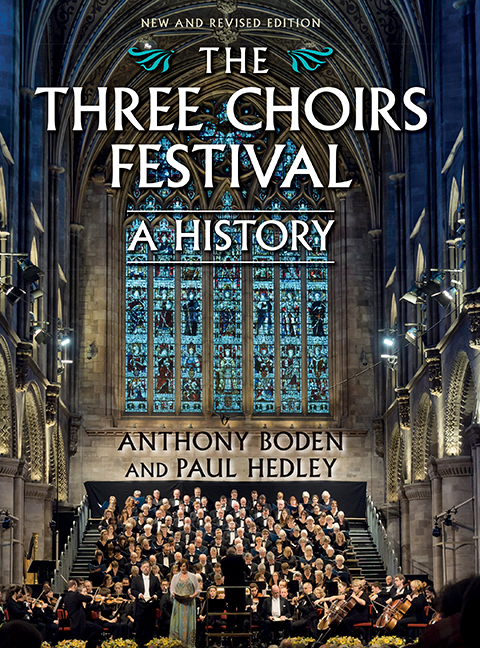
- The Three Choirs Festival: A HistoryNew and Revised Edition, pp. 243 - 253Publisher: Boydell & BrewerPrint publication year: 2017
Accessibility standard: Unknown
Why this information is here
This section outlines the accessibility features of this content - including support for screen readers, full keyboard navigation and high-contrast display options. This may not be relevant for you.Accessibility Information
Accessibility compliance for the PDF of this chapter is currently unknown
and may be updated in the future.