To save content items to your account,
please confirm that you agree to abide by our usage policies.
If this is the first time you use this feature, you will be asked to authorise Cambridge Core to connect with your account.
Find out more about saving content to .
To save content items to your Kindle, first ensure no-reply@cambridge.org
is added to your Approved Personal Document E-mail List under your Personal Document Settings
on the Manage Your Content and Devices page of your Amazon account. Then enter the ‘name’ part
of your Kindle email address below.
Find out more about saving to your Kindle.
Note you can select to save to either the @free.kindle.com or @kindle.com variations.
‘@free.kindle.com’ emails are free but can only be saved to your device when it is connected to wi-fi.
‘@kindle.com’ emails can be delivered even when you are not connected to wi-fi, but note that service fees apply.
Clergy formed a distinct and privileged group in later medieval society as regarded violent crime. Church law was intended to protect them from it, induce them to avoid it, and exempt them from secular justice following it. But in practice, were the clergy so separate from the violent culture around them and different from the laymen who dominated it? In the first full-length study of this subject in the later medieval period, Peter Clarke shows that clergy accused of violent and other crimes increasingly submitted to secular justice like laymen, seeking clerical immunity only as a last resort. It reveals that church authorities, in providing legal redress for clerical victims of lay violence, sought to heal divisions between laity and clergy, not to deepen them. Additionally, it explores the motives and contexts behind clerical involvement in violent crime, both as perpetrators and victims, revealing that clergy often acted similarly to laymen.
The Cambridge Handbook of Behavioural Data Science offers an essential exploration of how behavioural science and data science converge to study, predict, and explain human, algorithmic, and systemic behaviours. Bringing together scholars from psychology, economics, computer science, engineering, and philosophy, the Handbook presents interdisciplinary perspectives on emerging methods, ethical dilemmas, and real-world applications. Organised into modular parts-Human Behaviour, Algorithmic Behaviour, Systems and Culture, and Applications—it provides readers with a comprehensive, flexible map of the field. Covering topics from cognitive modelling to explainable AI, and from social network analysis to ethics of large language models, the Handbook reflects on both technical innovations and the societal impact of behavioural data, and reinforces concepts in online supplementary materials and videos. The book is an indispensable resource for researchers, students, practitioners, and policymakers who seek to engage critically and constructively with behavioural data in an increasingly digital and algorithmically mediated world.
Traditionally, Christians have viewed unbelief as resulting from moral and/or cognitive shortcomings. However, a recent proposal such as John Schellenberg's 'divine hiddenness argument' for atheism has supported the idea that there is no-fault unbelief. In this Element, the author draws on important insights from medieval Christian thought to argue that both believers and non-believers should stop blaming each other based on mere evidence. Believers may recognise that no-fault unbelief can, in a sense, apply to them, too. They may find it perplexing that they neither believe nor achieve communion with God as much as they would like. Proponents of no-fault unbelief might focus on achieving communion with God rather than solely worrying about absolving themselves of blame. Ultimately, believers and non-believers alike might promote spiritual progress by setting aside the primacy of evidence and committing themselves to God and the good.
Drawing together decades of research, Steve Smith explores the survival and adaptation of folk beliefs in Mao's China in the face of seismic social change and growing political repression. Bringing an oftenneglected aspect of modern Chinese history to the fore, he shows how folk religion maintained a vital presence in everyday life. In myriad ways, through Buddhism, Daoism, and Confucianism, spirit mediums and spirit healing, divination, geomancy, and the reform of traditional marriage and funeral rites, rituals, and beliefs provided resources for adaptation and resistance to the regime. Nevertheless the survival of folk religion must be set against the secularizing forces that the regime unleashed. This unique history gives readers a vivid sense of life under Mao Zedong as vibrant, contentious, and resilient – a far cry from stereotypes of a secular, regimented, and monochrome society.
Drawing on methods from the history of emotions to study enslaved people's lives, Beth R. Wilson exposes the social, cultural and political role that emotion played in the US South. Exploring both individual and collective emotions, Wilson shows how enslaved people resisted white people's attempts to restrict their feelings and expressions by developing their own emotional ideals and expectations. Moving through case studies that examine a range of underexplored forms of testimony, the book introduces readers to slave narratives, letters, written interviews and recorded testimony to show that emotion was central to how enslaved people resisted, survived and remembered the system of slavery. Enslaved people's descriptions of their individual experiences of love, pain, grief and joy are woven throughout this study, which provides a framework that historians can use to paint a nuanced, detailed and empathetic picture of the complex emotional impact of slavery.
Since Korean cultural products and entertainers have gained global popularity – the so-called Korean Wave – many studies have regarded the Korean Wave as Korea's soft power. However, the concept of soft power remains contested in the political science literature, particularly because it is difficult to clearly distinguish it from hard power. This Element, therefore, examines whether the Korean Wave can be considered Korea's soft power within the debate surrounding the concept. The findings indicate that the Korean Wave has enhanced Korea's national image and increased trade and international interest in the country. As Korea is not a superpower, this case suggests that soft power can be real without hard power support and that the Korean Wave is Korea's soft power. Nevertheless, due to the limited evidence that the Korean Wave leads to policy changes in other countries, the term “soft power” should be used with caution.
Opera Remixed critically examines operatic hybridity and considers the opportunities and challenges of disrupting traditional paradigms of classical singing. Accounts of crossover forms like 'popera' and musical theatre explore alternative approaches to operatic vocality, examining how entrenched genre ideologies are challenged by creative agents, practices, and technologies at work near opera's borders. To illustrate these dynamics, the second half of the Element presents a case study of operatic arias reimagined for TikTok as one possible blueprint for how opera might embrace innovation and 'remix' itself for a contemporary audience. Opera Remixed concludes with a critique of the elitist traditions that hinder opera's capacity for renewal, arguing that the art form will only be able to embrace a truly inclusive future by relinquishing constraints of canonical purity.
Why do self-described gender egalitarians support the state's draconian birth restriction? Following China's universal relaxation of its one-child policy in 2016, this Element excavates an under-theorized and distinctly political dimension of the gendered work-family conflict: the incompatibility of rights. I demonstrate that young urban Chinese women have experienced the expansion of their civil right to mother-through birth quota relaxation-as intensifying labor market gender discriminations and undermining their civil right to equal employment. To cope, these women turned to various individualistic strategies of rights-trading, such as promising to limit childbearing when seeking to secure employment. In this process, young Chinese women have further come to perceive employment and motherhood as two incompatible moral claims of entitlement. This Element highlights how women's quotidian work-family encounters present a fruitful yet underexplored site for understanding their political ideations and citizenship struggles. This title is also available as Open Access on Cambridge Core.
The digital age has afforded the governments new technologies of control, allowing them to co-opt, pre-empt and repress dissent. But, what if they lack the technical capacity to access digital tools of control? In what ways have digital technologies altered the way governments conduct statecraft? Based on an analysis of more than 3,000 public procurement documents, and a dozen elite interviews with various stakeholders, we found that the Chinese state has outsourced various functions of online surveillance to private and for-profit arms of state-owned corporations. We found that outsourcing surveillance is intended to augment state technical capacity to moderate and fine-tune the conduct of digital repression. Outsourcing digital repression opens a Pandora's box of state-business collaborations. This Element contributes to the literature on outsourcing repression, state‒business relations, and conduct of digital statecraft.
At the turn of the twentieth century, operatic singing in the German-speaking world remained deeply influenced by the Italian tradition, which implied a lyrical vocal style that prioritised technical precision, tonal beauty, and expressive clarity. From the 1910s onward, composers increasingly and systematically explored vocal techniques that blurred the boundary between speech and song, referred to here as the 'hybrid voice'. These approaches emerged from a complex interplay of symbolic, aesthetic, political, and philosophical influences and reflect a search for more diverse and individualised modes of vocal expression. This Element examines the hybrid voice in four seminal works of German modernism: Alban Berg's Wozzeck, Kurt Weill's Aufstieg und Fall der Stadt Mahagonny, Bernd Alois Zimmermann's Die Soldaten, and Adriana Hölszky's Bremer Freiheit. By situating each work within its historical and stylistic context, it traces a broader musical trajectory in German opera from expressionism and new objectivity to the postwar avant-garde.
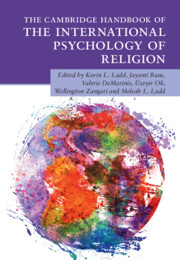
This handbook offers a comprehensive resource for exploring core elements of the psychology of religion. Utilizing a systematic template to describe the state of the field across thirty-two regions of the globe, it charts the subject's historical background and current research trends. The chapters also highlight common pitfalls and suggest collaborative topics for future research. By leveraging the Ingelhart-Welzel Cultural Values Framework, the text introduces key questions emerging from non-Western contexts, challenges culturally laden assumptions and promotes collaborative, international perspectives. Featuring contributions from researchers around the world on the psychology of religion within their respective geographical and cultural contexts, the work brings new voices into the conversation and offers fresh avenues of exploration for scholars and graduate students studying the psychology of religion, social psychology, religion, and theology.
Fashion has shaped literary study in often under-recognized ways. As this book shows, fashion has been a long-standing subject, material resource, and system influencing literary scholarship. In tracing those dynamics, the book defines and advances the field of fashion and literature as it cuts across conventional historical and linguistic research areas. Featuring eighteen chapters by leading scholars, it describes the state of the field and introduces new topics and questions. The chapters focus on the medieval period to the present and include accounts of how new fashions shaped new literary genres; how fashion influenced conceptions of history; and how fashion and literature together produced ideas of gender, sexuality, race, personhood, modernity, and freedom. They also examine the role that literary representations of garments have played in colonial and national histories and in artistic and political movements, including feminist, anticolonial, and abolitionist struggles.
This engaging Cambridge Companion introduces readers to the richness, complexity and diversity of one of the most important periods in Chinese history: the Song dynasty, 960–1279 CE. Bringing together leading scholars from Asia, Europe, and the United States, it provides an overview of key institutions, political, economic and military history, while also delving into the everyday lived experience of medieval China. Together, the authors create a vividly detailed and intimate portrayal of people, places, ideas, and material culture at both the 'centre' and 'margins' of Song society. They explore the lives of people and groups from diverse backgrounds, as well as places and things from the Yellow River to the publication of Buddhist prints and medical formularies. This volume highlights the brilliant accomplishments of Song scholarship in recent decades and provides an inspirational introduction for future researchers.
How did British literature develop in the wake of the radical 1790s and during the years of war, reaction, and uncertain renewal that constituted the nineteenth century's first decade? The essays in this volume examine the literary forms and cultural formations that emerged during this paradoxical era of aftermath and new beginnings. They reexamine a period within the Romantic period, and within the larger context of the nineteenth century, exploring the historical self-consciousness of this post-revolutionary era and highlighting the emergence of ideas of temporality and historicity that lead us to reconsider the past as comprised of decadal units, of centuries, and of things like 'the age of revolutions' and the spirits that animate them. Using fresh approaches and methodologies, the essays in this book examine the beginnings of the nineteenth century and its literature according to the critical, theoretical, and archival possibilities of the twenty-first.
This book examines the neglected role of religion in the British Army in an era of rapid and far-reaching change. Covering the Cold War, the end of empire, seismic shifts in Britain's cultural and religious landscape, and the dramatic shrinkage of the armed forces, Michael Snape reveals religion's abiding importance at an institutional, individual and operational level. He explores the religious contexts of the Army's warfighting, counterinsurgency and peacekeeping operations, including the Korean, Falklands and Gulf Wars; the 'Emergencies' in Malaya, Kenya and Cyprus; the Northern Ireland conflict; UN and NATO operations in the Balkans; and Iraq and Afghanistan after 9/11. He also charts the religious responses of British soldiers to allies, adversaries and civilian populations. This is a unique and significant contribution to our understanding of the secularisation of British society, the social and cultural history of the British Army, and religion and war in the contemporary world.
Written against the backdrop of ten years of visits and studies in 220 Gothic cathedrals, Gothic iconic local churches, and neo-Gothic cathedrals, this Element examines the idea of historical religious structures as 'hybrid media spaces' using grounded theory and communication and media approaches to capture the processes of communicating and erasing Christian processes of excommunicating in contemporary secular society. They show that at the current pace of societal conditions, cathedrals and iconic churches labeled as Gothic style are becoming the new platform for religious hybrid media practices and connections between religious and non-religious approaches.
Higher education faculty often differ in age from the students in their courses, and these age differences may relate to social and cultural differences. As an aspect of culture, different social groups adopt different slang vocabularies. For these reasons, an understanding of generational differences in slang is relevant to university-level teaching. We explore the nature and characteristics of slang in comparison to other types of language variation as well as the multiple functions that slang serves, both linguistic and social. Next, we examine the concept of generations and education-relevant characteristics that are associated with recent generations. We then connect slang to the concept of code-switching, followed by an examination of slang associated with Generation Z and Generation Alpha. Finally, we consider the implications of generational slang for university level teaching and learning. Generational slang is not just a challenge for university faculty, but also an opportunity.
How does one let the infinite expanses of the heavens into the puny orb of a human eye? Anna Letitia Barbauld’s ‘A Summer Evening’s Meditation’ envisions a form of filiation between sentient flesh and celestial light, a form of intimate and mutual recognition between the body and the spheres. This chapter confronts Barbauld’s poetic meditation to later poems by William Wordsworth, and Percy Shelley which also endeavoured to force the infinite into the circle of the eye. As physiological optics laid bare the anatomical workings of sensation, the cultural representation of sight implied the irruption of darkness within light inside the obscure integuments of the eye. The central darkness at the heart of the human eye allows one to experience, through the configuration of one’s own flesh, the bottomless depths of the universe, while astronomy initiates a revolution in the perception of temporality.
Social network ties represent an important and complex confluence of sundry social processes and their consequences. It is an enduring fact of life that the more socially connected a person is, the better off they are. This goes for well-being, for health, for social stature, for popularity and prestige, for social mobility, and for access to material resources. Social connections give people power. They plug people into a switchboard of opportunities and resources, making them part of a resource-rich social system. Social connections liberate people from the stringencies of what might otherwise be stultifying conditions of everyday life. They create trust and produce the capacity for collective action to deal with local and regional social problems. They help people live longer lives. And social connections generally make life morefun, and richer, in every sense of those terms. It is a bundle of benefits that cannot be unwound. This introductory chapter lays out the primary motivation behind this book, which is an attempt to understand whether everyone has equal access to these valuable social resources, and whether they are so potent as to substitute for other valuable resources, such as wealth and prestige, in shaping people’s life chances.