To save content items to your account,
please confirm that you agree to abide by our usage policies.
If this is the first time you use this feature, you will be asked to authorise Cambridge Core to connect with your account.
Find out more about saving content to .
To save content items to your Kindle, first ensure no-reply@cambridge.org
is added to your Approved Personal Document E-mail List under your Personal Document Settings
on the Manage Your Content and Devices page of your Amazon account. Then enter the ‘name’ part
of your Kindle email address below.
Find out more about saving to your Kindle.
Note you can select to save to either the @free.kindle.com or @kindle.com variations.
‘@free.kindle.com’ emails are free but can only be saved to your device when it is connected to wi-fi.
‘@kindle.com’ emails can be delivered even when you are not connected to wi-fi, but note that service fees apply.
By synthesising findings from both clinical and preclinical research, this review aims to provide an understanding of the interplay between 5-HT2A receptor psychedelics and the immune system and considers how their immunomodulatory effects associate with neuronal and behavioural changes.
Methods:
A PubMed literature search covering the past 30 years was conducted using keywords such as ‘5-HT2A receptor’, ‘psychedelics’, ‘immune system’, and ‘HPA axis’. Studies were included if they addressed the effects of 5-HT2AR psychedelics on immune function, neuroimmune interactions, or HPA axis involvement. This narrative review synthesises evidence highlighting the bi-directional effects of 5-HT2AR psychedelics between the immune and nervous systems, identified through this search process.
Results:
Preclinical and clinical studies report that 5-HT2AR psychedelics have some direct immunomodulatory properties with downregulation of gene regulators like NF-κB, and reduced cytokine expression such as TNF-α, IL-6, and IL-1β at a central and peripheral level, accompanied by modulation of corticotrophin releasing hormone (CRH), adrenocorticotrophic hormone (ACTH), and cortisol. Direct immunomodulatory effects are mediated by pathways involving serotonin receptors, the Sigma-1 receptor, and the TrkB receptor. Immunomodulation is further mediated indirectly via the HPA axis.
Conclusion:
Further studies will determine the molecular and cellular mechanisms underlying these immunomodulatory effects. There is growing interest in the potential of 5-HT2AR psychedelics for treating a range of mental health and brain disorders. In keeping with their immunomodulatory actions, the likely modulation of brain glia and glial-neuronal interaction remains to be determined, representing a promising direction of further research on the therapeutic potential of 5-HT2AR psychedelics.
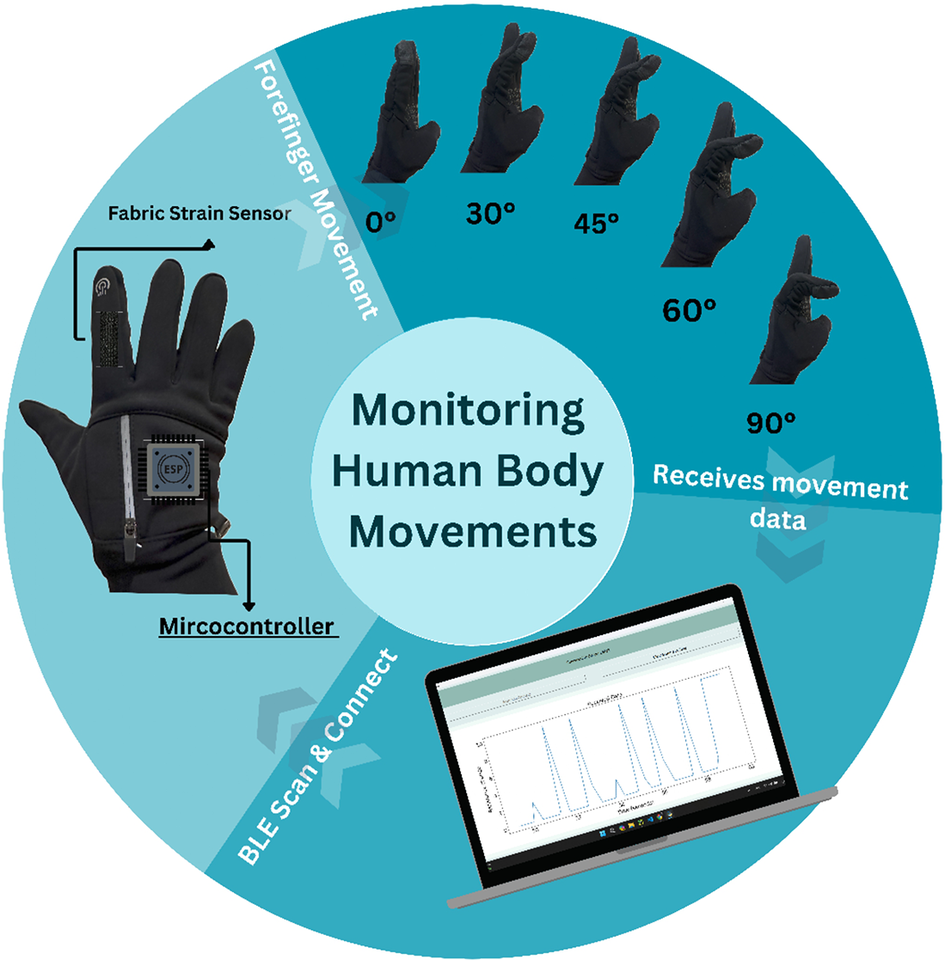
We present a flexible, multilayer fabric strain sensor composed of a carbon fabric layer sandwiched between elastic bands. The sensor achieved a gauge factor of 3.4 and maintained its durability up to 635% strain. Its uniform graphite layer enabled reliable fabrication and easy integration into wearable formats. Performing well on commercial gloves and bands, the sensor effectively captured strain variations during body movement and enabled wireless transmission for real-time monitoring. Distinct resistance patterns were recorded for various body motions such as walking, jogging, jumping, and knee bending with a clear separation between high- and low-intensity activities. The overall design supports scalable fabrication and practical integration into wearable systems.
Schizophrenia is a severe and disabling psychiatric illness that profoundly affects a person’s ability to think clearly, perceive reality, manage emotions, and engage in daily activities. While antipsychotic medications have long been the cornerstone of treatment, debates persist around their long-term use and potential impacts on brain structure and function. In our review, we examine whether antipsychotic medications improve or worsen long-term outcomes in schizophrenia, particularly when treatment is refused or discontinued. Drawing from randomized controlled trials, large-scale observational studies, forensic outcome data, international guidelines, and neuroimaging research, the findings demonstrate that sustained antipsychotic treatment significantly reduces relapse, improves functional outcomes, and may protect against neurobiological deterioration. In contrast, untreated or inconsistently treated psychosis is associated with higher relapse rates, treatment resistance, cognitive decline, and progressive brain changes. While treatment must be personalized and compassionate, the cumulative evidence supports the critical role of early and continuous antipsychotic use in preserving health, autonomy, and long-term recovery for individuals living with schizophrenia.
Fall from height is common in all age groups. In 2020 alone, over 6000 people in Canada died from fall-related injuries. Most of the published literature investigating fall-related injuries are often focused on fracture patterns, survival and recovery. Fatal falls are not well studied. The objective of this study is to characterize the demographics and craniocerebral and vertebrospinal injury patterns related to fatal falls within Southwestern Ontario.
Methods:
A retrospective case review was conducted at the Department of Pathology, London Health Sciences Centre, for deaths attributed to falls from 2000 to 2020. Only cases with complete autopsy and detailed neuropathology reports were included. Demographic data, comorbidity profiles and craniocerebral and vertebrospinal injuries, along with scene details, were collected and analyzed.
Results:
45 cases were included, with a male sex predominance and a mean age of 60.3 ± 18.1 years. The most common head injuries were hematoma, cerebral contusions and skull base fractures. Falls from stairs were the most common. Low fall (<3 m) was associated with subfalcine herniation and was more commonly seen in older individuals (>65 years). Younger individuals were more prone to falls from a high height (>3 m), with frontotemporal lobe contusions as the most common finding.
Discussion:
This study provides a detailed depiction of craniocerebral and vertebrospinal injury patterns of the fatal falls in Southwestern Ontario. Our findings show low falls are a more common cause of fatalities in individuals 65 years and older, and age is a significant predictor of frontal contusions and subdural hematomas.
This research note examines the evolving nature of political parties in the contemporary era, with a particular focus on the trend of movementization, defined as the process by which political parties adopt organizational, strategic, and discursive elements of social movements to revitalize their declining structures and reconnect with society. While early studies on this phenomenon primarily focused on movement parties—challenger actors that positioned themselves at the intersection of institutional and contentious politics, blending conventional and unconventional repertoires of action—recent developments suggest that movementization is no longer confined to movement-parties only. Instead, it is becoming a broader trend affecting both challenger and mainstream parties across the entire ideological spectrum. This research note aims to review and critically assess the existing literature on movementization, identifying key theoretical and empirical contributions while highlighting unresolved questions and methodological gaps. Although substantial work has been done on individual case studies, the field remains fragmented and lacks systematic comparative analysis. To advance the study of movementization, this note calls for a shift from case-centric approaches toward comparative frameworks, integrating quantitative indicators and cross-national perspectives to better assess the prevalence, drivers, and consequences of this transformation. By doing so, it seeks to contribute to a more structured and generalizable understanding of how movementization is reshaping contemporary party politics.
This book began with a set of propositions about how the ancient Greek religious system worked, particularly in relation to divine manifestation. I set out to explore how technology featured and functioned with(in) those propositions which mediated between human and supernatural realms. Including the mechanical in the discourse on divine epiphany and religious experience is not intuitive. Karel Čapek’s satiric vision of a machine that creates practically free energy but spurts out a numinous by-product known as the Absolute is both very relevant and utterly alien to the ancient context. It is alien in that Čapek’s novel is focalised through (relatively) modern preconceptions of technology and religion as antithetical. The protagonist’s invention is strictly a machine of science fiction. That a sense of the numinous might be created by mechanical technology is entertained in the story as imaginatively (and metaphorically) compelling but remains impossible in practical terms.
This article argues that allegorical exegesis is important for understanding the writings of William of Malmesbury, both in his exegesis and beyond. In the mid-1130s, William penned a commentary on Lamentations in part to explain the causes and aftermath of the Norman Conquest. His allegorical exegesis decried exploitation and mismanagement of ecclesiastical lands by episcopal appointees from the continent, including his own bishop, Roger of Salisbury. In William’s sometimes veiled yet unmistakable critiques, Roger appears as an invading tyrant whose tenure as abbot of Malmesbury amounts to a period of Babylonian captivity for the monks of that house.
Four Palaearctic species of Staphylininae (Coleoptera: Staphylinidae) are reported from North America for the first time: Heterothops cognatus Sharp, H. praevius (Erichson), Philonthus chujoi Dvořák, and Quedius (Raphirus) maurorufus (Gravenhorst). We suspect that these species are part of a more recent cohort of accidental introductions to North America. Notably, two of them are native to the East Palaearctic, an unusual source of adventive staphylinids in North America because nearly all others are native to Central Europe. We suggest that the East Palaearctic is an underrecognised and increasingly important source for recently adventive soil invertebrates and that increased taxonomic focus on this fauna is important to North American biosecurity. The detection of trans-Palaearctic H. praevius resulted in the recognition of H. praevius Erichson (= H. marmotae Smetana syn. nov.). We also newly report the Nearctic species Heterothops conformis Smetana and H. sordidus Smetana from eastern North America. Philonthus debilis, a close relative of P. chujoi, is reported from the Yukon Territory, representing the northernmost locality known for this long-established adventive species. Illustrations of diagnostic features, barcode data, and distribution maps are provided for all four species. Updated or new identification keys are provided to aid in the recognition of these species in eastern North America.
The present article stresses the unmatched quality of late-medieval English manorial documents, both in quantity and quality, and their importance for both economic and environmental history. The corpus of manorial documents is used here as a case study to reinvigorate interest in late-medieval agricultural history of England. To do so, the paper suggests to integrate manorial documents with methods and data from other palaeo-scientific disciplines: palaeoclimatology, palaeoecology, aDNA analysis, stable isotope analysis, palaeo-epigenetics, and molecular analysis of parchments. The paper argues that involving scientists from these fields in collaborative work and integrating the novel analysis of manorial documents and palaeo-scientific data will both help resolve various outstanding controversies and reshape the discipline. But beyond that, such interdisciplinary interdisciplinary framework has a strong potential to ask and answer new questions, create new data knowledge, and take our knowledge to new heights.
Despite the burgeoning literature on historical humanitarianism and transnational history, little work has sought to explain the humanitarian intervention in the ‘first battleground’ of the Cold War, namely the Greek Civil War (1945–9). This paper casts light on the intricate relationship between civilians’ forced displacement and humanitarian aid during the late phases of this conflict. It also questions the extent to which humanitarianism was embedded into liberal and conservative politics of the early Cold War.
From 1941, multiple humanitarian organisations distributed aid to famine-stricken Greek areas, while the United Nations Relief and Rehabilitation Administration (UNRRA) intervened in Greece in 1943. As the civil strife intensified, more than 700,000 civilians were displaced during the royalist counterinsurgency operations against the communist rebels, while humanitarian groups received the mandate by the royalist government to feed, accommodate and rehabilitate these populations. Most of these relief workers had grappled with wartime famine and relied on the restoration of the pre-war political system to solidify their presence in Greece.
Drawing on archival material from UNRRA and the personal records of humanitarian workers Charles Schermerhorn and Ewan John Christian Hare, I scrutinise how humanitarian logistics became embedded into the conflict, and how the distribution or withholding, of aid determined the forced displacement of civilians. On a second level, I focus on the antagonism between the aid distributed by ‘purely’ humanitarian organisations, such as UNRRA, the NEF and the United Nations Children’s Fund (UNICEF), and the so-called ‘development’ aid, as institutionalised by the European Recovery Program in 1948.
Nakamura and Tsuji recently obtained an integral inequality involving a Laplace transform of even functions that implies, at the limit, the Blaschke-Santaló inequality in its functional form. Inspired by their method, based on the Fokker-Planck semi-group, we extend the inequality to non-even functions. We consider a well-chosen centering procedure by studying the infimum over translations in a double Laplace transform. This requires a new look on the existing methods and leads to several observations of independent interest on the geometry of the Laplace transform. Application to reverse hypercontractivity is also given.
The integration of computational methods into psychiatry presents profound ethical challenges that extend beyond existing guidelines for AI and healthcare. While precision medicine and digital mental health tools offer transformative potential, they also raise concerns about privacy, algorithmic bias, transparency, and the erosion of clinical judgment. This article introduces the Integrated Ethical Approach for Computational Psychiatry (IEACP) framework, developed through a conceptual synthesis of 83 studies. The framework comprises five procedural stages – Identification, Analysis, Decision-making, Implementation, and Review – each informed by six core ethical values – beneficence, autonomy, justice, privacy, transparency, and scientific integrity. By systematically addressing ethical dilemmas inherent in computational psychiatry, the IEACP provides clinicians, researchers, and policymakers with structured decision-making processes that support patient-centered, culturally sensitive, and equitable AI implementation. Through case studies, we demonstrate framework adaptability to real-world applications, underscoring the necessity of ethical innovation alongside technological progress in psychiatric care.
Contact tracing is an effective public health policy to put the fast-spreading epidemic under control. The government tracks the contacts of confirmed SARS-CoV-2 cases, recommends testing, encourages self-quarantine, and monitors symptoms of contacts. In developing and less-developed countries with limited resources for widespread SARS-CoV-2 testing, it remains essential to identify and quarantine positive contacts to control outbreaks. Therefore, analysing recall and precision when implementing testing policies for these contacts is necessary. We analysed a contact tracing dataset from a cohort of 827 index patients infected with SARS-CoV-2 and their 14814 close contacts from Jan 2020 to July 2020 in a province in eastern China. We constructed a network from the data and used a Graph Convolutional Network to predict each contact’s infection status. To the best of our knowledge, this is the first method to use population-based contact tracing data for predicting the infection status using graph neural networks. Despite limited information, our model achieves competitive Area Under the Receiver Operating Characteristic Curve (ROC AUC) compared to hospital-onset scenarios. Based on the risk scores, we propose several contact testing policy adaptations that balance resource efficiency and effective pandemic control.
In journalism education, the First Amendment’s guarantee of press freedom is typically taught as a cornerstone of American democracy. Yet this approach too often fails to grapple with the historical and ongoing realities of racial inequality and the experiences of marginalized communities, particularly Black Americans, in relation to press freedom. The traditional emphasis on teaching journalists to be strictly “objective” often leads the press to report in ways that perpetuate the status quo and fail to hold those in power accountable.
In this chapter, I argue for a critical reexamination of how the First Amendment and press freedom are taught in journalism classrooms. I draw on historical analysis, legal case studies, and contemporary examples to advocate for a “reparative journalism” approach. By centering the voices and experiences of those who have been systematically excluded from the full protections of the First Amendment and by interrogating the complex relationship between race, power, and the press, this approach seeks to develop a more inclusive, historically grounded, and forward-looking vision of journalism’s role in society.
Chapter 5 explores how technical ingenuity featured in the act of religious dedication in ancient Greek religion. Two epigrams (describing the Bes rhyton and the Lykon thēsauros) are taken alongside descriptions of pneumatic inventions in Philo of Byzantium and Hero of Alexandria’s technical manuals. Though not typically read together, Hellenistic epigram, and Philo and Hero’s texts all describe pneumatically enhanced dedications, and demonstrate, within the confines of their genres, how religious awe and technological capabilities were co-constructed and mutually reinforcing. The chapter then turns to the material record, examining traces of technically enhanced dedications in practice. Two examples are explored: wheeled tripods and articulated figurines. Both categories of votive objects show different ways in which the mechanical, human, and divine were configured. Both also stretch further back chronologically than the discussion of preceding chapters, allowing for discussion of texts including Iliad 18 on Hephaistos’ tripods, and Prometheus Bound, to think about the (mythic) prehistory of the phenomenon at hand.