To save content items to your account,
please confirm that you agree to abide by our usage policies.
If this is the first time you use this feature, you will be asked to authorise Cambridge Core to connect with your account.
Find out more about saving content to .
To save content items to your Kindle, first ensure no-reply@cambridge.org
is added to your Approved Personal Document E-mail List under your Personal Document Settings
on the Manage Your Content and Devices page of your Amazon account. Then enter the ‘name’ part
of your Kindle email address below.
Find out more about saving to your Kindle.
Note you can select to save to either the @free.kindle.com or @kindle.com variations.
‘@free.kindle.com’ emails are free but can only be saved to your device when it is connected to wi-fi.
‘@kindle.com’ emails can be delivered even when you are not connected to wi-fi, but note that service fees apply.
Menopause marks a significant physiological transition in a woman’s life, often accompanied by various health challenges. Understanding the impact of physical activity on postural abilities in menopausal women is crucial for promoting their overall well-being during this transformative stage.
Objectives
The aim of our study was to investigate the effect of a physical activity program on postural abilities, psychological well-being, and the quality of life of menopausal women.
Methods
Nineteen menopausal women, averaging 56±3 years of age, participated in a 12-week Zumba-style physical training program, consisting of three 50-minute sessions per week. The exercise regimen incorporated aerobic workouts, muscle conditioning, balance exercises, and flexibility training, predominantly inspired by Latin dances. Postural balance was evaluated using a stabilometric force platform, measuring the average velocity of the center of pressure (COPvm) under open eyes (OE) and closed eyes (CE) conditions on both firm and soft surfaces. Quality of life and mood were assessed using the SF-36 questionnaire (Short Form Survey-36) and the BMIS score (Brief Mood Introspection Scale). Assessments were conducted before (pre-test) and after (post-test) the 12-week training period.
Results
The findings revealed a significant decrease in COPvm values in the post-test for both conditions (on a firm surface: OE p=0.05, CE p=0.01; on a soft surface: OE p=0.001, CE p=0.05). Additionally, improvements in mood (p=0.05) and quality of life (p=0.05) were observed compared to baseline values.
Conclusions
This study underscores the positive impact of Zumba-style physical training on postural abilities, mood, and quality of life among menopausal women. These results suggest that such exercise programs hold promise in reducing the risk and incidence of falls associated with menopause
In recents years, the number of social exclusion patients who go to the emergency room for psychiatric evaluation, has increased significantly. This fact may be due to the circumstances associated with migration: economic problems, house searching, moving away from the family origin,… These situations can cause stress before, during and after adaptation, which is a risk factor for presenting psychotic symptoms.
Objectives
The objective of this study is present another alternative treatment for adults with social exclusion with psychotic symptoms or Psychotic Disorder. Presenting through a case of Acute Inpatient Mental Health Unit.
Methods
A 25 year old men was referred to the emergency deparment due to an episode of agitation. As relevant psychiatric history, a previous admission to psychiatry’s hospitalitation with a diagnosis of Schizophrenia. Upon discharge, the patient has not been followed up in Mental Health, although he has gone to the emergency room on several ocassions where ir is reflected that no psychotic decompensation has been observed. He emigrated to Spain two years ago, since then he has been homeless, working intermittenly in agriculture.
At our assessment, after having ruled out consumption of toxic substances, the patient presented a neglected and cachetic appearance. He says that he is worried because some people can not see him and others can.
We admit the patient for study and treatment. Involuntary admission.
Results
During the hospitalitation, a join approach was carried out with Social Work and it was decided to start depot treatment in order to promote therapeutic adherence. In this case, it was decided to apply paliperidone depot every sin month. For this, an induction regimen was followed: fisrt, monthly paliperdione 100mg depot was administered, 4 days later, monthly paliperidone 150mg depot and 4 days later, the biannual injection.
Other depot treatment alternatives would have been aripripazole or risperidone. However, the duration of the depot treatment is shorter than in the case of paliperidone, since today the presentation formulas are monthly and quarterly, respectively.
Conclusions
Long-acting antipsychotics are an effective alternative for the treatment of patients with Schizophrenia, especially for those in whom we can not ensure good therapeutic adherence. In addition, the induction regimen allows treatment to be administered more quickly than that carried out in Mental Health outpatient programs, thus reducing the average hospital stay.
In recent years, great advances have been made in the treatment of psychotic symptoms thanks to depot drugs, which allows for numerous effective alternatives for the treatment of these patients. The figure of the Social Worker for the evaluation of the patient and subsequent follow-up is essential in this case.
Sexuality and sexual experiences in forensic mental health patients are intricate issues at the crossroads of mental health, legal contexts, and societal perceptions. Forensic mental health patients, situated within the criminal justice system, require psychiatric treatment due to offenses committed. Understanding their sexual behaviors, experiences, and attitudes towards sexuality is pivotal for effective therapeutic interventions and rehabilitation. Various factors influence the sexuality of forensic mental health patients. Mental health disorders impact an individual’s sexual expression, and medications used to treat these conditions may affect libido, sexual functioning, and arousal patterns, posing challenges in their sexual experiences.
Objectives
Addressing the sexual needs and experiences of these individuals requires a comprehensive approach. Mental health professionals must create safe and non-judgmental spaces for patients to openly discuss their sexual concerns. Therapeutic interventions should focus on facilitating healthy sexual expression and providing education on consent, healthy relationships, and understanding boundaries. Forensic mental health professionals often receive specialized training to address the complex intersection of sexuality and mental health within legal contexts. Navigating ethical and legal boundaries while providing support to these individuals is crucial, ensuring that interventions align with legal regulations and ethical standards. Rehabilitation programs in forensic mental health facilities should integrate sex education and relationship-building skills to help patients develop a healthy understanding of sexuality. These programs aim to reduce reoffending and support the reintegration of individuals into society by promoting responsible and respectful sexual behaviors.
Methods
This study conducts a systematic literature review to comprehend the intricate nature of sexuality and sexual experiences among forensic mental health patients.
Results
Research in this area faces limitations and ethical challenges due to the sensitivity of the topic. Ethical considerations, such as confidentiality and consent, must be meticulously addressed in studies and while providing care to this population.
Conclusions
Understanding the sexuality and sexual experiences of forensic mental health patients is integral to their treatment and rehabilitation. It requires a multifaceted approach that acknowledges the complexities these individuals face due to mental health conditions, personal histories, and the nature of their care environment. Tailored and comprehensive support can promote healthier sexual behaviors, relationships, and overall well-being among this population.
Healthcare workers are at increased risk of Burnout due to the stressful demands of their job.
Objectives
The aim of this study was to assess the prevalence and the related factors of burnout in healthcare workers at the Sahloul University Hospital, Tunisia
Methods
Data were collected from a cross sectional study using a questionnaire exploring socio-demographic and professional data, lifestyle habits and pathological history. Burnout was assessed using the French version of the Maslash Burnout Inventory (MBI).
Results
Our study included 135 healthcare workers. The average age was 41.7 ± 9.15 years. 81.5% of the sample was female. Nurses accounted for 60% of staff. More than half (51.1%) worked shifts, with night work in 32.6%. A pathological history was noted in 17.8% of healthcare workers, and a history of work-related accidents in 40.7%. The prevalence of burnout in our study population was 42.6%, with a high emotional exhaustion score in 47.4%, a high depersonalization score in 23.7% and a low personal accomplishment score in 73.3%. Burnout was significantly associated with alcoholism (p=0.016), shift work (p=0.037) and the presence of stress at work (p=0.048).
Conclusions
The prevalence of burnout was high in our study population, hence the importance of setting up a burnout prevention strategy in hospitals.
Inflammatory joint diseases (IJD), including rheumatoid arthritis (RA), psoriatic arthritis (PsA), ankylosing spondylitis/spondyloarthropathies (AS), and juvenile idiopathic arthritis (JIA), are more common in patients with depression. However, it remains unclear whether the strength of this association varies with the severity or level of treatment resistance of the depressive episode.
Objectives
To assess the risk for IJD in patients with severe depression and TRD compared to population comparators and patients with non-severe and non-treatment resistant depression.
Methods
We conducted parallel cohort studies among 600,404 patients with a depressive episode identified in Swedish nationwide administrative registers. The prospective risk for IJD, both overall and per IJD condition, in patients with depression of any severity was compared to matched population comparators. Additionally, we assessed the same associations comparing patients with depression to those with severe or treatment-resistant depression. Analyses were adjusted for comorbidities and sociodemographic covariates.
Results
Overall, patients with depression were at increased risk for later IJD compared to population comparators (adjusted hazard ratio (aHR) for any IJD 1.34 [95% CI 1.30-1.39]; RA 1.27 [1.15-1.41]; PsA 1.45 [1.29-1.63]; AS 1.32 [1.15-1.52]). The associations were not significantly different for patients with severe depression or TRD.
Conclusions
Patients with severe and treatment resistant depression are at higher risk for inflammatory joint disease than population comparators. This association does not seem to be stronger than for patients with non-severe or non-resistant depression. Severity and treatment resistance of a depressive episode as identified in register data may not be valid depressive phenotypes for predicting risk for inflammatory joint disease.
Disclosure of Interest
P. Brenner Grant / Research support from: Affiliated with/employed at the center for Pharmacoepidemiology, Karolinska Institutet, which receives grants from several entities (pharmaceutical companies, regulatory authorities, contract research organizations) for the performance of drug safety and drug utilization studies., J. Askling Grant / Research support from: Karolinska Institutet has entered into agreements with the following companies, with JA as PI: Abbvie, BMS, Eli Lilly, Galapagos, Janssen, Pfizer, Roche, Samsung Bioepis and Sanofi., D. Hägg Grant / Research support from: Affiliated employed at the center for Pharmacoepidemiology, Karolinska Institutet, which receives grants from several entities (pharmaceutical companies, regulatory authorities, contract research organizations) for the performance of drug safety and drug utilization studies., L. Brandt Grant / Research support from: Affiliated with/employed at the center for Pharmacoepidemiology, Karolinska Institutet, which receives grants from several entities (pharmaceutical companies, regulatory authorities, contract research organizations) for the performance of drug safety and drug utilization studies., P. Stang Employee of: Former employee of Janssen Research & Development, LLC. The work on this study was part of the employment., J. Reutfors Grant / Research support from: employed at the center for Pharmacoepidemiology, Karolinska Institutet, which receives grants from several entities (pharmaceutical companies, regulatory authorities, contract research organizations) for the performance of drug safety and drug utilization studies.
Anorexia nervosa (AN) is a debilitating illness with rapidly increasing incidence. The longer it lasts the more difficult is to cure. Although in the majority of the cases the main treatment is psychotherapy severe cases require inpatient admission for life saving support. The presentation expounds the combined therapeutic approach that anorexia nervosa patients of Semmelweis University Psychiatry and Psychotherapy Department provided with.
Currently the backbone of psychotherapy for AN is cognitive behavioral therapy (CBT), schema therapy and katathym imaginative psychotherapy (KIP) combined with psychodrama.
Objectives
One of the aims of our research is to identify the most relevant focus of psychotherapy by identification of specific personality traits in patients with AN, who will be compared with healthy controls. Furthermore, two subgroups of patients will be compared with each other: the milder version of AN (BMI above 16) with the more severe form of AN who are required inpatient admission.
Methods
Women with AN (age:18-45) have been compared to age-matched controls on MINI and SCID-5-AMPD interview variables and on the scales of online questionnaires, such as EDI-I., MZQ, DIS-Q, SCL-90, PHQ-9, STAI, CTQ and YPI.
Results
Clinical care highlighted important underlying psychological causes such as inadequate mirroring, absence of the father, or on the contrary, overly intimate relationship with the father, and relentless inner voice as a consequence of unintegrated inner aspects.
The SCID-5-AMPD pointed out affected areas of personality such as Identity, Self-directedness, Negative affectivity, Intimacy, Alienation. Importantly, neither trauma scales (measured by CTQ), nor dissociation (measured by DIS-Q) differed significantly between patients and healthy controls.
Conclusions
Planning psychotherapy could benefit from the identified foci. Anti-depressive medication must be considered in order to improve outcome of inpatient admission. The CTQ probably does not measure the subtle but chronic inadequacy of attachment and mirroring that apparently are typical in AN. The reliable identification of the typical dissociative inner voice that often seen in anorexia nervosa may need another questionnaire apart from DIS-Q.
The research is supported by bilateral science and technology (S&T) cooperation project 2019-2.1.11-TÉT-2020-00242
Suicide attempts (SA) leading to highly lethal consequences have been associated with heightened suicide planning (Barker et al., 2022), along with deficits in social cognition (Levi-Belz et al., 2022). Hypomentalizing, characterized by excessive uncertainty regarding mental states, may contribute to heightened social withdrawal and an increased risk of SA (Nestor & Sutherland, 2022). Although certain studies have identified a connection between hypomentalizing profiles and self-harm (Badoud et al., 2015), research into the lethality of SA remains limited.
Objectives
This study aimed to explore the association between hypomentalizing and SA lethality.
Methods
Our study encompassed a cohort of 1,371 patients who committed a SA. We conducted assessments of mentalizing using the RFQ-8 instrument, and evaluations of suicidal ideation and behavior employing the CSRSS questionnaire. Demographic and clinical characteristics were compared using the T-student and Chi-square tests. To investigate the relationship between hypomentalizing and the SA lethality, we employed logistic regression models.
Results
Descriptive date are presented in Table 1. Our results show that hypomentalizing do not predict a higher SA lethality. Additionally, hypomentalizing increased the risk of SA planning (p≤0.001, B=-0.182), and SA planning predicted a higher SA lethality (see Table 2).Table 1.
Means Comparison for low and high lethality (N=1371)
Low lethality N=539
High lethality N=832
p value
Effect size
Age, mean (SD)
38.65 (15.65)
41.91 (15.37)
≤0.001
-0.209a
Female sex, N (%)
392 (72.7)
571 (68.6)
0.116
0.044b
Educational years, mean (SD)
12.45 (2.99)
12.43 (3.41)
0.890
0.0076a
Employed, N (%)
220 (41.2)
332 (40)
0.692
0.012b
Suicide Ideation, N (%)
475 (88.1)
742 (89.2)
0.541
0.016b
Suicide Planning, N (%)
159 (39.2)
400 (58.1)
≤0.001
0.183b
Number of attempts, mean (SD)
3.28 (5.48)
3.63 (5.74)
0.269
-0.169a
RFQ, mean (SD)
4.68 (1.27)
4.56 (1.32)
0.087
0.095a
Table 2.
Logistic regression analyses for high SA lethality (N=1371).
Univariate analysis
Multivariate analysis
OR
p value
OR
p value
Age
1.014 (1.007-1.021)
≤0.001
1.014 (1.005-1.022)
0.001
Female sex
0.820 (0.646-1.042)
0.105
Educational years
0.998 (0.965-1.031)
0.890
Employed
0.952 (0.763-1.187)
0.660
Suicide ideation
1.111 (0.790-1.562)
0.545
Suicide planning
2.150 (1.674-2.761)
≤0.001
2.183 (1.697-2.808)
≤0.001
Number SA
1.012 (0.990-1.034)
0.277
RFQ
0.929 (0.854-1.011)
0.088
Conclusions
While the association between hypomentalizing and high SA lethality was not significant, a discernible trend toward such relationship can be noted. Further studies examining the moderating effects of planning in the association between hypomentalizing and SA lethality are required.
A growing body of research have devoted into suicide and deliberate self-harm in immigrant population, but no study has examined how reason for immigrating to the host country differentiates the risks.
Objectives
To gain firm insight into suicide and deliberate self-harm among peopel with immigrant background.
Methods
Norwegian registers were interlinked to identify all individuals who died by suicide in 1992-2018 and who received emergency treatment for non-fatal deliberate self-harm (DSH) in 2008-2018, and to construct the respective databases via a nested case-control design. Rates and relative risks of suicide and DSH were assessed according to immigrant background, country of birth and reasons of immigration, and in the context of personal socioeconomic status.
Results
People with an immigrant background accounted for 11.6% of all suicides in 1992-2018 and 17.9% of all DSH incidents treated in hospital emergency departments in 2008-2018. The rates of both suicide and DSH were highest in people born abroad with two Norway-born parents (mean rate: 19.4/100 000 for suicide and 280.9/100 000 for DSH) and lowest in the second-generation immigrants. Compared with the native Norwegians, suicide risk was significantly higher for those foreign-born with two Norway-born parents (HR=1.50) and those born in Norway with 1 one foreign-born parent (HR=1.20), but was significantly lower for the first- and second-generation immigrants. The associated risks remained almost unchanged when the data were adjusted for personal differences in education, marital status, income and place of residence in Norway. The analyses on deliberate self-harm exhibited similar patterns of results as for suicide, although the estimated reduced risks in the first- and second-generation immigrant is somewhat smaller. Evidently, the risks for suicide and DSH varied significantly by reason of immigration and country of origin. Immigrants coming for education had the lowest risk for suicide and self-harm, and those coming for work the second lowest. The risks for immigrants coming for family unity were lower than the natives, but significantly higher than counterparts coming for job or education from the same country. Among immigrants coming to Norway as a refugee or asylum seeker, the risk of suicide was comparably high as those coming for work, but the relative risk for self-harm was significantly higher. The increased risks associated with the mixed immigration background tended to be slightly higher in females than in males, and were likely confined to adoptee population.
Conclusions
Risks for suicide and deliberate self-harm in people with an immigrant background differs significantly by reason of immigration and country of origin. The findings should be taken into account in efforts of mental healthcare and suicide prevention targeting immigrant population.
Chronic alcoholism can result in severe liver conditions such as fatty liver disease and cirrhosis, potentially leading to life-threatening complications and premature death.
Objectives
This study investigated the age-sex distribution of patients with alcohol addiction and aimed to identify differences in clinic department preferences based on their principal and additional diagnoses in Taiwan, in 2022.
Methods
We conducted a comprehensive analysis of the diagnostic patterns of 334 patients with alcohol addiction from the Taoyuan General Hospital, Ministry of Health and Welfare.
Results
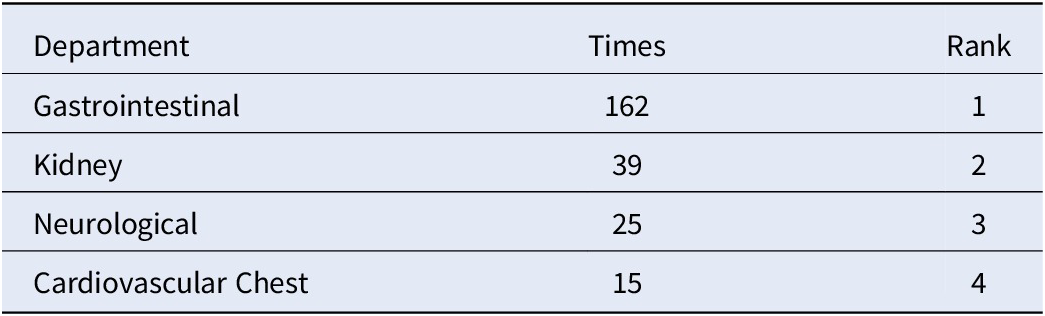
Figure 1 depicts patient demographics, highlighting 297 male and 37 female patients with alcohol-related disorders. Males aged 41-60 years were particularly dominant, as shown in Figure 2. Principal diagnoses, including alcoholic liver disease and acute pancreatitis, are detailed in Table 1. Additional diagnoses, such as chronic pancreatitis and esophageal varices, are presented in Table 2. For departmental preferences, Table 3 reveals the Gastrointestinal (GI) department as the top choice, followed by Kidney, Neurological, and Cardiovascular/Chest.Table 1.
Top 5 Principal Diagnoses of Alcohol Addiction Patients.
ICD-10-CM
Principle diagnosis
Times
Rank
K70
Alcoholic liver disease
43
1
K85
Acute pancreatitis
27
2
F10
Alcohol related disorders
18
3
A41
Other sepsis
14
4
K86
Other chronic pancreatits
11
5
Table 2.
Top 5 Additional Diagnoses of Alcohol Addiction Patients.
ICD-10-CM
Additional diagnosis
Times
Rank
F10
Alcohol related disorders
40
1
K86
Other chronic pancreatits
18
2
I85
Esophageal varices
16
3
K70
Other sepsis
16
E87
Other disorders of fluid, electrolyte and acid-base balance
15
4
R65
Symptoms and signs specifically associated with systemic inflammation and infection
10
5
Table 3.
Top 5 Departments for Alcoholism Patient Presentation.
Department
Times
Rank
Gastrointestinal
162
1
Kidney
39
2
Neurological
25
3
Cardiovascular Chest
15
4
Image:
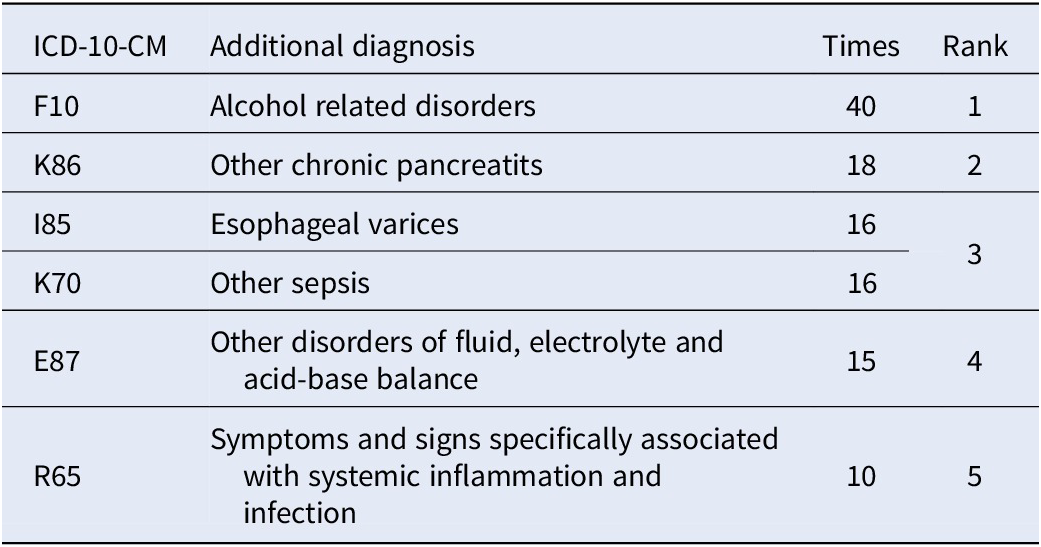
Image 2:
Conclusions
The study revealed that patients with alcohol addiction often delay seeking psychiatric help instead of presenting for medical care only after liver or gastrointestinal complications occur. This underscores the crucial need for better health education regarding the relationship between alcohol addiction and liver disease. Prompt recognition and early intervention for substance addiction can significantly reduce these risks and improve patient outcomes.
Lithium is one of the main drugs used in Bipolar Affective Disorder. However, it has a narrow therapeutic window, which requires close monitoring and progressive dose adjustment, according to serum levels, clinical response and the appearance of side effects. The term ‘SILENT’ explains descriptively persistent neurological sequelae related to lithium salt intoxication when symptoms persist for more than 2 months after stopping treatment. SILENT Syndrome is more common in females, at ages ranging from 21 to 77 years and is characterized mainly by avermian-type cerebellar disorder, persistent extrapyramidal syndrome, brainstem dysfunction and dementia of varying severity. It can also result in apraxia of the body, changes in the coordination and balance, dysarthria, as well as intentional and kinetic cerebellar tremor, involuntary movements of orofacial dyskinesias or resting tremor.
Objectives
The authors intend to review the relevant and current literature in order to extend the knowledge about this condition and find the best conducts for clinical practice.
Methods
Non-systematic literature review.
Results
Complications from the use of lithium known in the medical literature include mainly nephrotoxicity, endocrine alterations and neurotoxicity. The neurotoxic effects of lithium usually occur at high serum concentrations. However, they can also occur with lithium in the therapeutic range, and memory, attention and ataxia impairment may be some of the permanent sequelae. The etiopathogenesis is unclear, but demyelination has been detected in multiple brain regions, mainly in the cerebellum. The mechanism of lithium-induced cerebellar injury is believed to be mediated by the entry of calcium into the cells of this organ. The main factors that predispose to greater side effects and risk of toxicity are patients with decreased renal function, advanced age, use of diuretics, dementia, pregnancy, low sodium intake and physical illness with vomiting and/or diarrhea.
Conclusions
Lithium is a drug used mostly in affective disorders and given the narrow therapeutic window, it requires close monitoring in order to avoid side effects that can be permanent. In this way, it is important to review the factors that increase the lithium toxicity and make recommendations about it.
War represents one of the major traumatic events for humans and comes with enormous consequences for individuals and society over a long period of time. War causes acute psychological trauma, but also results in subacute, chronic psychiatric disorders for all those experiencing or witnessing direct war trauma and to those experiencing indirect war trauma resulting from losing the safety of home and financial income, to losing family members and close ones. Therefore, acute reaction to trauma may result in maladaptive disorders and PTSD within days of experiencing trauma and with chronic posttraumatic stress conditions even years after the traumatic experience. Chronic PTSD is associated with higher morbidity of somatic conditions, including hypertension, hyperlipidemia, metabolic syndrome, all resulting in cardiovascular and cerebrovascular disorders. Additionally, according to reports from World Health Organisation (WHO), it has been projected that in emergencies, on average, the percentage of people with a severe mental disorder increases by 1 per cent over and above an estimated baseline of 2–3 per cent. In addition, the percentage of people with mild or moderate mental disorders, including mood and anxiety disorders (including PTSD), may increase by 5–10 per cent above an estimated baseline of 10 per cent. Furthermore, research indicate the possibility of a transgenerational effect of trauma, via maternal psychosocial stress and socioeconomic disadvantage during pregnancy but also through adverse parenting practices, as parenting style may change when exposed to war traumas.
As war affects mental health of different population groups dramatically and long-term, establishment of long term and coordinated mental health care is necessary. In the presentation, examples of practices from Croatia will be discussed.
The Northern Territory (NT) has Australia’s highest mental health burden. It has a diverse and transient population, including Aboriginal and Torres Strait Islander people and various multicultural communities. While peer support has been widely used nationwide, in the NT, peer support is poorly implemented in psychosocial support activities.
Objectives
The NT Lived Experience Network (NTLEN), in allyship with a team of researchers from Flinders University, has secured multiple fundings aimed to develop, implement, and evaluate a peer education and recovery program called Recovery Together (RT) for individuals with mental health and alcohol and drug use issues and related challenges.
Methods
The suitable evaluation approach was co-designed with live experience representatives from NTLEN and other local key stakeholders. It applied a mixed-method approach, including pre and post-program surveys (n=64) and individual interviews with program participants and the program delivery team (n=32). The evaluation findings were also informed by data collected by NTLEN via feedback forms n=38). We also used a co-design approach to develop survey instruments to ensure they were strengths-based and recovery-oriented.
Results
Participants reported poor and fair self-perceived health, high stress levels, dissatisfaction with their relationships and relatively low recovery scores, which showed improvements at post-program completion. They discussed their journeys in the interviews and shared their experiences with local mental health services and the Recovery Together program. Many expressed that mental health professionals are not necessarily the care providers they feel comfortable engaging with. However, they described their experience with the peer program as highly positive, empowering, safe, non-judgmental, and beneficial, satisfying their support needs. The program gave them hope and tools to manage their mental health challenges and opportunities to gain insight into non-clinical aspects of recovery. Participants conceptualised personal recovery in their own words and described the facilitators and barriers to their recovery. They emphasised that recovery is being empowered, strong within themselves and the leader of their journey, living their best possible life, understanding themselves, having the necessary knowledge about mental health, and looking forward in a hopeful way.
Conclusions
Our findings highlighted the demand and need for ongoing delivery of the RT program in the NT, which was highly effective in supporting personal recovery, addressing the service delivery gap and complementing the available clinical and mental health practices. They also showed the importance of providing recovery-oriented and trauma-informed education for medical and mental health professionals.
Burnout, marked by persistent workplace stress without effective management, is particularly pertinent for psychiatry nurses, considering the nature of their work environment and its potential impact on the quality of care they deliver.
Objectives
To assess the prevalence of burnout among psychiatric nurses and to identify the socio-demographic and clinical factors associated with it.
Methods
Cross-sectional, descriptive, and analytical study conducted over the course of one month from October 11th to November 8th 2023. Participants included were psychiatric nurses working in Razi Hospital, Tunisia. We collected data using pre-established questionnaire which included socio-demographic and clinical data of the participants. The assessment of Burnout was conducted using the Maslach Burnout Inventory (MBI), validated in Arabic. Statistical analysis was performed using the Statistical Package for Social Sciences (SPSS) in its 25th version.
Results
We collected data from 55 nurses working in Razi psychiatry hospital during the time of the study. Among them, 80% (n=44) were female. Their median age was 35 (Min=25, Max=62). Most of participants were married (81.8%, n=45) and 70.9 (n=39) had kids. In our sample, 5.5% (n=3) and 23.6% (n=13) had respectively personal psychiatric and somatic history. Some addictive behaviors were identified among our participants, especially smoking (14.5%, n=379) and alcohol use (3.6%, n=2).
Regarding working conditions, 81.8% (n=45) were assigned shift work. They worked in the men’s ward (43.6%, n=24), the women’s ward (34.5%, n=19), or in both (21.8%, n=12). Furthermore, 45.5% (n=25) reported witnessing a suicide attempt during their work, and 74.5% (n=41) were victims of aggression, primarily by patients (82.5%, n=33). Sixty percent (n=33) said expressed a desire to transfer.
According to the MBI, 49.1% (n=27) had high emotional exhaustion, 27.3% (n=15) had high depersonalization and 67.3% (n=37) had low personal accomplishment.
A significant association was found between low personal accomplishment and the desire to transfer to another department (p=0.026). No further links were found with other clinical data.
Conclusions
Our findings provide a thorough examination of burnout among psychiatric nursing professionals, underscoring the critical need for specific interventions tailored to their unique challenges.
Phenomenology is one of the fundamental tools in the clinical practice of psychiatrists, constituting one of the touchstones regarding the diagnostic framework in which clinicians navigate.
For Husserl, Phenomenology provided access to the structure of pure consciousness, experience and existence. These are conditions of possibility for the object of Psychiatry, ontologically prior to it. Thus, clarification of the object and method of Phenomenology is preliminary to understanding the object of Psychiatry.
Phenomenology, being a direct tributary of Philosophy, evolves dialectically, constantly dialoguing with its predecessors. While it is taken as a philosophical current, it is also considered a method. It is precisely as a method that we can see how the methodology changes in different phenomenological traditions.
Objectives
To compare how the main phenomenological traditions operate.
Methods
Comparative analysis between the phenomenological reductions in key figures of the phenomenological tradition, resorting to the corpus of the Husserliana, Being and Time, Phenomenology of Perception and General Psychopathology. Additionally, a non-systematic literature review of papers on the database Philpapers, using the keywords “critical phenomenology”, “eidetic reduction”, “phenomenological reduction”.
Results
While there is a multiplicity of ways of taxonomizing phenomenological currents, we divide it in: pure, existential, embodied, jasperian, psychopathological, and critical.
Husserl’s pure phenomenology uses the free variation in phantasy and epoché as operators, starting from the natural attitude.
Heidegger’s existential phenomenology makes no reference to a reduction of any kind. For him, it is necessary to take a step back, to a more primordial mode of being through which we can access Being, where the world is given and constituted.
Embodied phenomenology, of Merleaupontinian provenance, recognizes the reduction, but cannot be fully achieve it.
Jasperian phenomenology uses empathy and co-experience as its operators, through which it gains access to the subjective states of the other, with the aim of systematizing and taxonomizing subjective phenomena.
Phenomenological psychopathology tentatively uses Husserlian reductions to identify the a priori structures of the human, be it Biswanger’s forms of manifestation of failed human existence or Blakenburg’s anthropological disproportions.
Critical phenomenology uses a historical-transcendental analysis of experience as its operator, through which it accesses transcendental intersubjectivity.
Conclusions
At a time when the DSM and ICD are increasingly seen as inadequate, limited and dogmatic, the resurgence of interest in Phenomenology is evident. It is important to avoid falling back on new presuppositions without constant revision and questioning, at the risk of simply mutating dogmas and missing the original legacy of pure phenomenology, the suspension of presuppositions.
There is a national movement to reduce restrictive interventions due to the harm and distress they can cause which has been reflected in NHS trust policies and practices. NHS trust policies state that all in-patients who may require restrictive interventions must have a Positive Behaviour Support Plan (PBSP) based on a functional analysis of what drives and triggers their behaviour. A PBSP is intended to facilitate understanding and help manage behaviours that challenge by teaching new skills and ways to communicate a person’s needs. Previous research on the use of PBSPs on adult acute mental health wards is limited but research on PICU wards has shown PBSPs have not been implemented into mental health care as intended.
Objectives
Trust policies identify that PBSPs should be implemented to reduce the use of restrictive interventions. However, it is unknown whether PBSPs are being used as part of routine practice on the acute mental health ward. The degree to which staff are aware of patients PBSPs and how they use them to guide their practice is unclear. The service evaluation aims to understand the perspectives, attitudes, and experiences of staff who are responsible for using and implementing PBSPs on the ward. The evaluation aims to investigate how PBSP informs practice and to identify the barriers and facilitators to implementing PBSPs on the ward.
Methods
A volunteer sample of clinical staff members (including Doctors, Nurses, Psychotherapists, Occupational Therapists, and Clinical Support Workers) who are responsible for implementing PBSPs on an acute mental health ward in the East of England took part in a focus group which lasted up to an hour. There were four focus groups with between two and four participants per group. A total of thirteen staff members participated in the focus groups. The focus groups lasted up to one hour and were guided by a topic guide. Two members of the project team facilitated the group. Focus groups were audio recorded.
Results
Thematic synthesis will be the overarching approach used to synthesise the qualitative data from the focus groups. The audio recordings will be transcribed. Analysis will be conducted on a within-case basis prior to cross-case analysis aimed to identify common themes. Two evaluators will work together to code, analyse, and synthesise the extracted data.
Conclusions
Based on the results, training may be developed to improve the understanding and implementation of the PBSPs on the ward. The findings may also result in changes to the way PBSPs are used. The results will be presented to the trust chief executives and used to inform how to best support individuals who may be at risk of requiring restrictive interventions.
The mental health of the people who featured in Pornographic Productions (PP) is underexamined. However, PP frequently involve unsimulated violent acts mostly experienced by women. Furthermore, some women participating in PP also report being coerced into unwanted sexual acts. Therefore, featuring in a PP could be experienced as a traumatic event, and could be associated with negative mental health disorders.
Objectives
Our study examines mental health indicators among Women who have participated in at least one PP (WPP), and who consulted clinical psychologists, after referral by WPP support groups.
Methods
Thirty-six women were recruited by two clinical psychologists during an individual consultation. Participants completed the French versions of the post-traumatic stress disorder (PTSD) Checklist for DSM-5 (PCL-5), the Dissociative Experiences Scale (DES), as well as the 13-item Beck Depression Inventory (BDI-13). Data on socio-demographic characteristics, lifetime experience of sexual violence prior to participating in a PP, as well as the perceived effect of participating in a PP were also measured.
Results
The mean age of participants was 31.2 (std=7), and the average age at first participation in a PP was 23.4 (std=6). The majority (78%) of participants reported lifetime experience of sexual violence prior to participation in a PP. Thirty women (83%) had a PCL5 score over 33 indicative of probable PTSD, and 28 women (78%) had a DES score of 30 or more indicating high levels of dissociation. Further, 16 participants (44%) reported a BDI-13 score over 16 indicating severe depression.
Conclusions
This study highlights the high prevalence of PTSD, dissociative experiences, and depressive symptoms in a clinical population of women who featured in at least one PP. Further studies are needed to better understand the scale of the problem and optimize care interventions.
Defined by the World Health Organization (WHO) as the inability to conceive after a year of unprotected sexual intercourse, infertility remains a current and compelling topic of interest for both scientists and the general public.
Over the past few decades, the prevalence of infertility, regardless of its cause, has significantly increased. Furthermore, it affects approximatively 15% of tunisian couples. However, previous studies have primarily assessed the psychological impact on women, leaving a gap in understanding gender differences.
Objectives
Our study aims to compare the psychological impact of infertility between genders in a Tunisian sample.
Methods
We conducted a cross-sectional study in a public hospital specializing in Assisted Reproductive Technology (ART) from August 30th to December 1st, 2022, involving sexually active infertile couples who had been under observation for at least one year. The participants provided information related to socio-demographic data. Additionally, we used the Hospital Anxiety Depression Scale (HADS) to assess anxiety and depression, and the Fertility Quality of Life (FertiQol) questionnaire to evaluate the quality of life. These questionnaires were administered in the Tunisian dialect.
Results
A sample of 60 infertile couples were recruited to this study. Primary infertility was present in 97% of cases and male infertility was the most common cause, accounting for 35%. Our findings revealed that women experienced higher rates of depression (35%) and anxiety (52%) compared to men (15% and 28%), with a statistically significant difference (p ≤ 0.001).
Furthermore, women reported a significantly compromised overall quality of life, particularly in the context of treatment-related aspects (p=0.03).
Notably, anxiety was identified as a significant risk factor for reduced quality of life among women (B = -5.27). In contrast, lower socioeconomic status was associated with diminished overall quality of life in men (B = -7.09).
Conclusions
It is important to consider gender differences in the management of infertility in order to guide and target psychological interventions and to improve the quality of life of infertile couples.
Hydroxychloroquine, an antimalarial drug, is an important therapeutic tool in the management of rheumatic diseases such as Systemic Lupus Erythematosus (SLE) due to its anti-inflammatory action. SLE is a chronic autoimmune inflammatory disease that affects the connective tissue of multiple organs. Neuropsychiatric disturbances in SLE are common; however, lupus psychosis is rare, occurring in 2 to 11% of patients. The literature has described the emergence of neuropsychiatric symptoms as an adverse effect of hydroxychloroquine use, with some patients experiencing clinical depression, anxiety, suicidal ideation, and psychotic symptoms.
Objectives
The aim of this work is to review the available evidence regarding neuropsychiatric symptoms secondary to the use of hydroxychloroquine.
Methods
The case of a 50-year-old woman diagnosed with SLE, with no other relevant medical history, has been evaluated. She was brought to the emergency department due to paranoid and persecutory ideas, as well as self-referentiality, coinciding with the introduction of hydroxychloroquine in her treatment. She was admitted to the University Hospital of Gran Canaria Doctor Negrín with a diagnostic orientation of a first psychotic episode.
Results
The presence of neuropsychiatric symptoms in patients diagnosed with SLE is so common that they constitute a diagnostic criterion for the disease. On the other hand, the medications used for therapeutic management of this disease can lead to the emergence of new neuropsychiatric symptoms or exacerbate preexisting neuropsychiatric clinical manifestations.
Conclusions
The study of this case highlights the challenges in establishing a differential diagnosis between primary SLE symptoms that require an increase in hydroxychloroquine and those caused by its own treatment. It underscores the need for further studies to explore the risk of psychiatric symptoms associated with the use of hydroxychloroquine, as well as its impact on the course of underlying mental disorders.
Family caregivers of patients suffering from severe psychiatric disorders may present with health problems, lower quality of life, and painful emotions, which can seriously compromise their well-being when they do not receive appropriate professional support.
Objectives
The aims of this study were to assess the level of burden and resilience in family caregivers of patients with severe mental disorders and to determine associated factors.
Methods
We conducted a descriptive and analytical cross-sectional study among family caregivers of patients followed at the psychiatry outpatient clinic of the Hedi Chaker University Hospital in Sfax, during the period from February 2022 to July 2022.
We used the Connor–Davidson Resilience Scale (CD-RISC) to assess resilience and the Zarit Burden Inventory to assess the level of burden. Higher scores indicate higher resilience and greater burden.
Results
The sample included 90 family caregivers of patients with severe mental disorders. The average age was 50.68. They were the parents of patients in 40% of cases. Professionally active caregivers accounted for 57.8% of cases. Thirty family caregivers had a somatic disorder history (33.3%).
The median age of patients was 42 years. Ten patients (11.1%) were financially independent. The diagnosis was schizophrenia in 68.9% of cases. The mean duration of illness was 16.23 years. Irregular follow-up was noted in 10 patients (11.1%).
The mean scores of the Zarit Burden scale and the CD-RISC were 41.86± 10.33 and 58.46± 9.18 respectively.
Unemployed caregivers and parents experienced a higher burden (p=0.001, p=0.03 respectively). The level of burden was higher in caregivers taking care of financially dependent patients (p=0.03), with a duration of the disease greater than 15 years (p=0.04), and with irregular follow-up (p=0.008).
A low level of resilience in caregivers was correlated with spousal relationship (p=0.001), cohabitation with the patient (p=0.05), widowhood (p=0.01), low level of education (p=0.02), the presence of a somatic disorder history in the caregivers (p=0.04).
A negative correlation was observed between CD-RISC and Zarit scores (p=0.04; r=-0.21).
Conclusions
Family caregivers of mentally ill patients experienced a significant level of caregiver burden, and it was lower in caregivers with higher levels of resilience. Psycho-educational programs directed toward family caregivers are highly recommended.
Negative symptoms of schizophrenia are linked with poor functioning and quality of life. Therefore, appropriate measurement tools to assess negative symptoms are needed. The NIMH-MATRICS Consensus defined five domains for negative symptoms. We used the COSMIN guidelines for systematic reviews to evaluate the quality of psychometric data of negative symptom scales as Clinician-Rated Outcome Measure (ClinROM). COSMIN assesses risk of bias, so called updated criteria of measurement properties, a modified GRADE approach and a final judgement on the rating scale. In the lecture the process will be described using the Brief Negative Symptom Scale and the Clinical Assessment Interview for Negative Symptoms (CAINS) as examples.
