To save content items to your account,
please confirm that you agree to abide by our usage policies.
If this is the first time you use this feature, you will be asked to authorise Cambridge Core to connect with your account.
Find out more about saving content to .
To save content items to your Kindle, first ensure no-reply@cambridge.org
is added to your Approved Personal Document E-mail List under your Personal Document Settings
on the Manage Your Content and Devices page of your Amazon account. Then enter the ‘name’ part
of your Kindle email address below.
Find out more about saving to your Kindle.
Note you can select to save to either the @free.kindle.com or @kindle.com variations.
‘@free.kindle.com’ emails are free but can only be saved to your device when it is connected to wi-fi.
‘@kindle.com’ emails can be delivered even when you are not connected to wi-fi, but note that service fees apply.
To discuss novel approaches in the development early detection, response and interventions of drug overdoses.
Rationale
There is an urgent need to research and develop novel strategies to rapidly and accurately detect, respond, and treat them with the ultimate goal of reducing drug deaths secondary to fatal drug overdose incidents. This should be additional to supporting communities and networks able to intervene utilizing novel public health approaches.
Methods
We will describe technologies and associated systems that are able to accelerate detection and result in a timely response to potential overdose with effective and timely intervention to these occurrences using digital technologies and therapeutics. This will be contextualised around novel public health approaches.
Results
We will describe 11 protypes as part of a £5 million UK inititiative. The themes will include:
– Use of discrete digital technology for easy use by people who use drugs in clinical and non-clinical settings
– Simple alert / responder pathways that created effective responses to potentially fatal overdose events
– Enhance innovative therapeutics as antidotes to overdose episodes
– Novel public health approaches
Conclusion
The use of remote monitoring devices like wearables and smartphone applications, paired with artificial intelligence and innovative therapeutics is an emerging field of research. This needs to be balanced around novel public health approaches.
Autism spectrum disorders (ASD) and schizophrenia (SCZ) have a strong historic connection. At the beginning of the 20th century when referring to schizophrenic patients Eugen Bleuler used the term autism to describe the apparent withdrawal from the outside world. Other authors also emphasized the association between this two entities. In fact, only in DSM-III were these disorders placed in different diagnostic categories. Today, even though this nosological vision still prevails, a growing number of studies have shown significant overlaps between the two disorders. Patients with the diagnosis of ASD often experience psychotic symptoms and similarly schizophrenic patients have a high prevalence of autistic traits.
Objectives
To clarify the distinction between ASD and psychotic disorders, namely to help the clinical and phenomenological distinction between patients with a primary psychotic disorder versus patients with the diagnosis of an autism spectrum disorder that might also experience psychotic symptoms.
Methods
Research on UpToDate using the terms “Autism Spectrum Disorders”; “Schizophrenia” and “psychosis”.
Results
Delusional beliefs and paranoid ideation are common findings in autistic individuals in the same way that they constitute one of the main features of schizophrenia spectrum disorders. However, in ASD individuals one must be vigilant of its distinction with “childish fantasies”. Both disorders (ASD and SCZ spectrum disorders) share Theory of Mind (ToM) impairments that contribute to the development of paranoia.
Sensory anomalies are common in ASD and might be confused with hallucinations. However, anomalous perceptual experiences can and do often happen in ASD and are clinically overlapping with hallucinatory phenomena. In the case of a neurodevelopment disorder, however, they could probably be better understood as a part of it more than the signal of a co-ocurring psychotic disorder. Attenuated psychotic symptoms pose an even more complex subject because of the overlap between autistic symptoms and subclinical psychotic symptoms. Another area that poses diagnostic difficulties has to do with the distinction between negative symptoms seen in schizophrenia and autistic symptoms. Lack of emotional reciprocity in ASD can be confused with “blunted” affect in schizophrenia.
Other overlapping features between these two entities can be identified.
Conclusions
The diagnostic boundaries between ASD and SCZ are not always clear. Their overlapping characteristics and potential co-occurrence might pose important diagnostic challenges in clinical practice. The clinical course of both diseases frequently represents a key element for the differential diagnosis between autism and psychosis. The profound knowledge of these two entities is of extreme importance contributing to the implementation of more targeted and effective management strategies.
Endometriosis is a gynaecological pathology characterized by endometrial tissue similar to stroma and endometrium in extra endometrial and myometrial sites. This condition affects women’s mental health and quality of life and can elicit shame feelings.
Objectives
To explore the role of quality of life in endometriosis, chronic illness-related shame, self-compassion, and psychological flexibility in depressive symptoms.
Methods
260 people diagnosed with endometriosis, aged 18 years or older, were recruited through patients’ associations. Participants completed an online sociodemographic and clinical questionnaire and the following self-report instruments: Anxiety, Depression, and Stress Scales (DASS-21), Endometrioses Health Profile (EHP-5), Chronic Illness-Related Shame Scale (CISS), Compassionate Engagement and Action Scales (EEAC-SC), and the Psy-Flex Scale.
Results
Regression analyses showed that years of education, endometriosis-related quality of life (pain, control, emotional well-being, social support, and self-image), chronic illness-related shame, and psychological flexibility were the significant predictors of depressive symptoms. On the other hand, endometriosis-related quality of life (work life, relationship with children, sexual life, relationship with healthcare professionals, treatment, and infertility) and self-compassion were not significantly associated with depressive symptoms.
Conclusions
The identification of chronic illness-related shame and quality of life related to endometriosis as relevant variables regarding the presence of symptoms of depression points to the relevance of early detection of these phenomena to prevent the development of depressive symptoms. Moreover, interventions targeting the development of psychological flexibility may contribute to the amelioration and prevention of depressive symptoms.
Mortality from cardiovascular disease is increased in people with mental health disorders in general and schizophrenia in particular. The causes are multifactorial, but it is known that antipsychotic medication can cause cardiac side-effects beyond the traditional coronary risk factors. Schizophrenia itself is a contributor to an increased risk of cardiovascular mortality via cardiac autonomic dysfunction and a higher prevalence of metabolic syndrome, both contributing to a reduced life expectancy.
Overall, management of cardiovascular risk within this population group must be multifaceted and nuanced to allow the most effective treatment of serious mental illness to be conducted within acceptable parameters of cardiovascular risk; some practical measures are presented for the clinical cardiologist.
Insecure attachment is considered a general risk factor for eating disorders (ED). Emotion dysregulation has been proposed as one of the possible mechanisms by which attachment insecurity may affect ED psychopathology.
Objectives
Aim of the present study was to investigate whether difficulties in acceptance of emotions or emotional clarity may mediate the connection between insecure attachment and ED psychopathology.
Methods
One hundred and twenty patients participated and completed the Italian version of Eating Disorder Inventory‐2 (EDI-2), Experience in Close Relationship questionnaire (ECR) and Difficulties in Emotion Regulation Scale (DERS). A mediator path model was performed, in which insecure attachment dimensions were set as independent variables, ED specific psychopathology measures as dependent variables, and non‐acceptance of emotion and lack of emotional clarity as mediators.
Results
The association between both attachment avoidance and anxiety and ED specific symptoms was mediated by emotional non‐acceptance, but not by emotional clarity.
Conclusions
This study showed the importance to address emotion regulation in individuals with ED, focussing on improving emotional acceptance. Exploring early developmental processes which lead to non‐acceptance of emotions could improve this psychological trait in people with ED.
In patients affected by Schizophrenia and Bipolar Disorder disorders the use of antipsychotic drugs is essential in preventing the exacerbation of symptoms. The use of long-acting injectable (LAI) antipsychotics is considered an important treatment option. The aim of this study was to evaluate the incidence and predictors of relapse during antipsychotic treatment with LAIs in a sample of psychiatric outpatients up to a year after the start of long-acting therapy.
Objectives
The study included 103 adult patients admitted to the psychiatric unit of Sant’Andrea University Hospital in Rome.
Methods
We evaluated duration of untreated illness, previous treatments, substance abuse, suicidal status, LAI dose, and use of other medicines for association with new episodes of illness or of symptomatic worsening as well as hospitalization, using bivariate and multivariate analyses.
Results
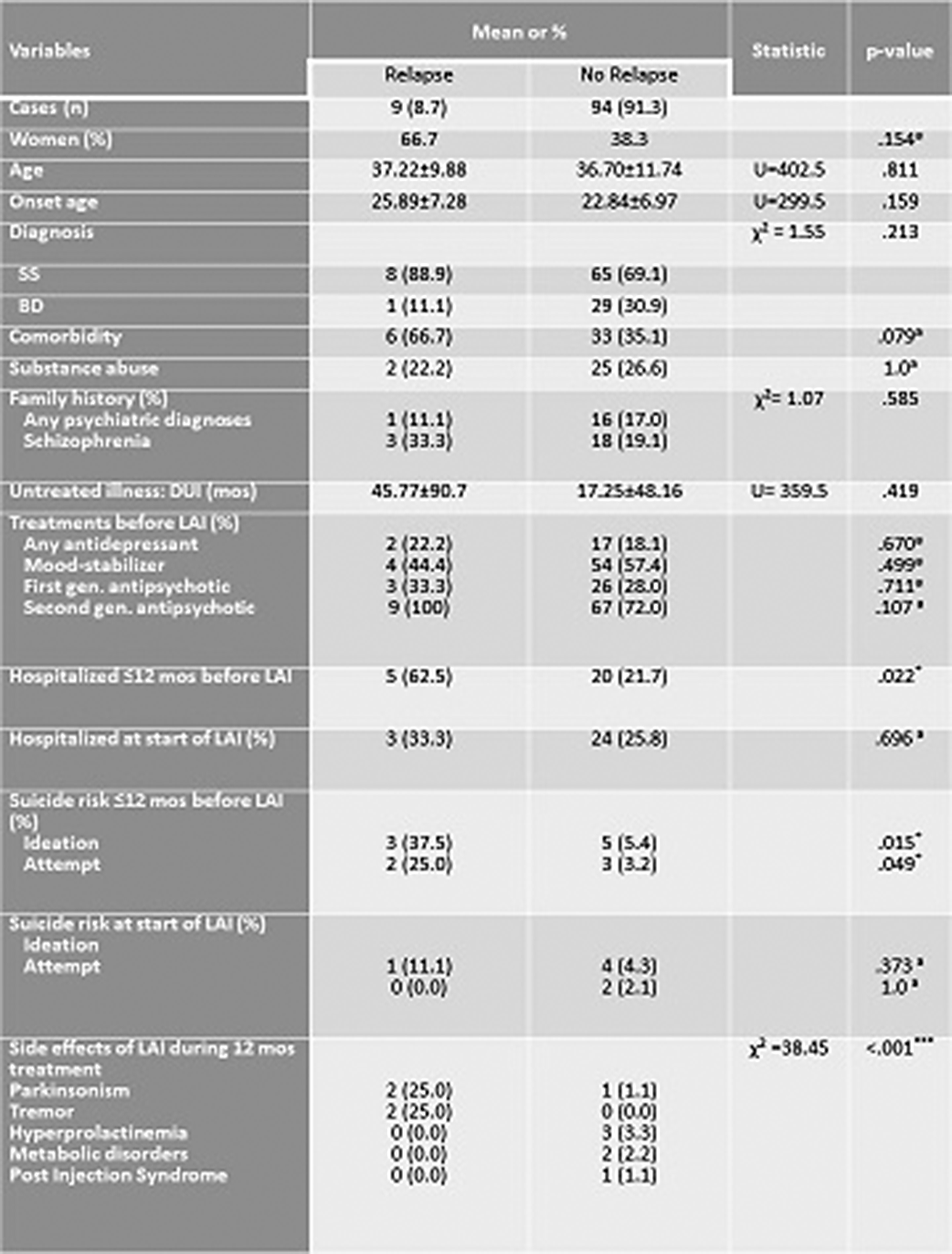
Seventy-three patients were diagnosed with schizophrenia spectrum and 30 with bipolar disorders. Age at study entry averaged 36.7 years (SD= 11.55). 40.8% of patients were women. The mean age at onset were 23.11 (SD= 7.0). All the other information were reported in Table 1. On 103 patients undergoing with LAI treatment for a year only 9 (8.7%) patients had a relapse during the study period. The two groups differed according to the presence of hospitalization during the 12 months before the LAI treatment (p = .022), in particular patients with relapse were more hospitalized than patients with no relapse (62.5% vs. 21.7%). Moreover, group with relapse were more at risk of suicide during the 12 months before the LAI treatment than the other group, for both suicidal ideation (11.1% vs. 4.3%; p= .015) and attempt (25.0% vs. 3.2%; p= .049). Finally, the two groups differed according to the side effects reported during the year of LAI treatment (χ² =38.48; p< .001). Specifically, patients’ group with relapse reported more side effects caused by parkinsonism (25.0% vs. 1.1%) and tremor (25.0% vs. 0%). No differences were found for the other variables (See table 1).
Image:
Conclusions
In conclusion, our observations confirm the importance of LAI therapy in real word. However, our results indicate that these drugs might not prevent subsequent exacerbations for a proportion of individuals whose illness is stabilised on continuous antipsychotic treatment. Extra pyramidal symptoms in particular might have pathophysiological implications for relapse.
In studies of the socio-psychological consequences of the COVID-19 pandemic, models focused on the negative aspects of stressors, dysfunctions, anxiety We present the attempt to expand the context and include in the field positive personal resources for psychological well-being and even post traumatic personality growth after disasters. Sometimes separation from family and friends, lack of medicines and medical resources, loss of income, social isolation to humanity, do not automatically assume that a person is capable and responsible for effectively coping with life difficulties.
Objectives
397 (students and patients of clinic average age 26, 2/3 are female
Methods
Peritraumatic Distress Index (CPDI) (Feng, 2020); Impact of Event Scale (Horowitz, 1979), Coping Self-efficacy Scale (Chespeu et al, 2006); Posttraumatic Growth Inventory (Tedeschi& Calhoun, 1996), MMI (Nuttin, 1986) – adapted by M. Magomed-Eminov.
Results
Significant negative correlation between coping self-efficacy and intensity of the impact of stressful events (IES) (rS = - 0,140, p < 0,05) was predictable.
CPDI and PTG showed significant correlation (Pearson’s r= 0.23, p<0.01) between Peritraumatic Distress Index and Post-Traumatic Growth indicators only in the group of respondents who have had COVID-19. The data is confirmed by the content analysis of incomplete sentences of the subjects of COVID group. The correlation between these indicators in the Non-Covid group was insignificant.
Moreover additional information we got from narratives of infected patients: the data has been split into 3 groups of narratives in the context of cultural-historical activity theory which shows the triadic outcome of survivor after trauma : a) suffering, b) adaptation, coping, resilience, c) personal growth.
Conclusions
To interpret the data the authors propose the meaning-activity approach and personality work with negative life experience (Magomed-Eminov, 1998, 2007, 2009, 2021). Authors suggest that further research on the positive consequences of stressful events beside coping styles and mechanisms that would expand the repertoire of tools predicted the ability of a modern person to cope with adversity and use experience for deeper involvement of human resources with the help of personality work with personal experience.
Dementia is one of the greatest health challenges worldwide. According to the World Health Organisation (WHO) factsheet, currently more than 55 million people worldwide have dementia, with over 60% living in low- and middle-income countries. Every year, there are nearly 10 million new cases of dementia. WHO Global Status Report 2021 estimated growth of 139 million people with dementia by 2050. The estimated total global cost of dementia is likely to surpass US$ 2.8 trillion by 2030. As one grows older, the risk of developing dementia, particularly Alzheimer’s Disease, progressively increases. The Lancet Commission Reports 2017 and 2020 on dementia prevention, intervention, and care identified 12 modifiable risk factors, including physical inactivity, obesity, midlife hypertension, and diabetes. Addressing these lifestyle factors may significantly reduce the risk of dementia and its progression. While no curative or disease-modifying treatment is available for dementia at his stage, addressing modifiable risk factors may have a preventive role in reducing the risk of dementia.
Objectives
The objective of the literature review is to explore current evidence on Physical Activity (PA) in reducing the risk of developing dementia and its progression. The focus is also to see the association of different forms and intensities of PA and their intensities, including aerobic, strength-based, and leisure, with the risk and progression of dementia.
Methods
Narrative review
Results
Results from the reviewed studies showed that PA was found to be associated with a reduced risk of dementia, particularly Alzheimer’s Disease. Studies comparing different intensities of PA indicate though all levels of PA decrease the risk of dementia, there is a linear relationship between the higher intensity PA and the increased beneficial effect in terms of reduced risk of dementia. Leisure-time PA also has a protective role against dementia in longitudinal studies. There is more consistent evidence in favour of aerobic PA; however, it has a ceiling effect. The combination of aerobic and strength-based experience provides optimum beneficial effects. The elderly population who started physical activity in their 80s experienced the beneficial effects of PA in reducing the risk of dementia. There is mixed evidence of the protective effect of PA on the population who have already developed cognitive impairment or have genetic vulnerabilities. The author will also include the results of any relevant study published by 31 March 2024.
Conclusions
The details of the literature results and conclusions will be discussed at the conference.
Disclosure of Interest
I. Singh Consultant of: The author declare that the review was conducted in the absence of any commercial or financial relationships that could be construed as a potential conflict of interest., R. Chandra: None Declared
Lithium nephropathy can occur in long-term lithium-treated bipolar disorder patients. Key risk factors include duration of lithium exposure, cumulative dose, acute intoxication episodes, advanced age, and comorbidities such as hypertension, diabetes mellitus, hyperparathyroidism, and hyperuricemia, along with concurrent use of antipsychotics. The clinical presentation is gradual, with mild proteinuria, often accompanied by arginine vasopressin resistance. Histological studies show a correlation between interstitial fibrosis and cumulative lithium duration. Approximately 15 to 25 per cent of exposed patients may experience a gradual decline in glomerular filtration rate. The outcome after lithium discontinuation varies.
Objectives
This case study aims to analyze and document the clinical presentation, diagnosis, and management of lithium nephropathy in a patient with Bipolar Disorder.
Methods
We gathered data on the medical history, lab results, and treatment approach for a patient with Bipolar Disorder.
Results
The patient, a 50-year-old woman, had been under the care of Psychiatry since 2008 due to a diagnosis of Bipolar Disorder Type I. During this time, she had experienced depressive and manic episodes but had not presented significant symptom decompensation for the past 14 years, successfully managed with lithium at a current dose of 600 mg per day. However, on this occasion, the patient sought hospitalization due to recent behavioural disturbances, including restlessness, disinhibition, abrupt changes in behaviour, pressured speech, sleep problems, agitation, and aggression. The patient also reported an increased sense of polyuria and polydipsia. Evaluation in the emergency department revealed elevated lithium levels of 1.47 mmol/L and hypokalemia, that justified lithium withdrawal. After lithium levels decreased, an estimated glomerular filtration rate remained low. She was diagnosed with lithium nephropathy, an adverse effect of long-term lithium therapy. Treatment with lithium changed to sodium valproate. Treatment with asenapine started and sustained for two months. Over the following two years, the patient experienced four additional hospital admissions in Psychiatry due to manic episodes.
Conclusions
Long-term lithium therapy can lead to lithium nephropathy with symptoms such as polyuria, polydipsia, and acute kidney failure. Consistent monitoring of patients receiving lithium is crucial to detect potential adverse effects.This case highlights the challenges in managing bipolar patients, as discontinuing lithium exacerbated symptoms despite switching to sodium valproate for nephropathy prevention. Long-term lithium treatment, while effective for bipolar disorder, poses significant renal risks. We emphasize continuous renal function monitoring and assessing the risk-benefit of lithium treatment while actively researching lithium nephropathy and its impact on glomerular function.
Suicide has a complex relationship with several factors, and it is known that identifying high-risk groups of suicide and managing crisis in advance can help prevent suicide. Moreover in a previous study, it showed that people with chronic diseases often suffer from psychological difficulties such as depression and anxiety, which can influence one to commit suicide. Based on many studies about the relationship between diabetes and depression, 10% of diabetic patients experience major depression, and diabetic patients experience twice as much depression as the general population. But, there are few studies examining the relationship between diabetes and suicide risk, and most of them were targeted for type 1 diabetes only.
Objectives
The objectives of this study were to investigate the suicide risk in diabetic patients, and evaluate the suicide risk varies by the duration of diabetes, using a large population sample in South Korea
Methods
Using the 2019 Korea National Health and Nutrition Examination Survey data, 6,296 adults (aged 19 years or older) were included. Suicidal ideation, suicidal plan, and suicidal behavior of diabetic patients were compared with the general population. After classifying the patients into ≤ 1 year, 2 to 9 years, and 10 years ≤ for the duration of diabetes, we evaluated the relationship between the duration of diabetes and the risk of suicide.
Results
Diabetic patients had higher prevalence of suicidal ideation (9.1%, P<0.001) and suicidal plan (3.6%, P<0.001) than general population. After adjusting for potential confounding factors, suicidal plan (aOR = 3.011, 95% CI = 1.392-6.512) was significantly associated with diabetes. In the 2 to 9 year group of diabetes, we found an increase in risk of suicidal ideation (aOR=2.068, 95% CI=1.219-3.510), suicidal plan (aOR=3.640, 95% CI=1.592-8.320), and suicidal behavior (aOR=6.222, 95% CI=1.759-22.008) after adjusting covariates. However, increase in suicide risk was not observed in the ≤1 year and 10 years ≤ groups after diagnosis of diabetes.
Conclusions
In adults, diabetes is associated with increase in suicide risk. Suicide risk in diabetic patients shows an ‘inverted U-shaped’ depending on the duration of diabetes.
Harmful alcohol consumption has significant cost on health and is associated with lower quality of life (e.g., Lu et al. BMC Public Health 2022; 22:789). In Singapore, a significant proportion of the adult population exhibit alcohol misuse behaviours (e.g., Lim et al. BMC Public Health 2013; 13:992). Many patients admitted into general hospitals have excessive alcohol consumption and related problems. These admissions can be an opportunity for intervention due to accessibility to the individuals and their time (Saitz et al. Ann Intern Med 2007; 146 167-176). Some studies have suggested that brief alcohol interventions (BAI) delivered in general hospitals can be effective in reducing alcohol use. However, there has been less support for the benefits of BAI on wellbeing.
Objectives
This study investigated the effectiveness of BAI in improving perceived sense of wellbeing among male alcohol users admitted to a general hospital in Singapore.
Methods
108 male inpatients in various medical wards received BAI by the hospital’s addiction counsellors and completed the Personal Wellbeing Index (PWI) questionnaire. At a one-year follow-up via telephone, the PWI was again administered.
Results
Average PWI scores were higher at follow-up (M = 7.83, SD = 1.16) than during baseline admission (M = 7.60, SD = 1.12), p < 0.01. Further analyses found that scores improved significantly on PWI items related to standard of living (M = 7.36, SD = 1.41 vs M = 7.09, SD = 1.65; p < 0.05), health (M = 7.42, SD = 1.74 vs M = 6.62, SD = 1.87; p < 0.01) and achievement (M = 7.43, SD = 1.44 vs M = 6.98, SD = 1.64; p < 0.01). There were no significant differences in scores on the other PWI items between baseline and follow-up.
Conclusions
Conclusions: The results suggest that BAI can be beneficial in improving patients’ sense of wellbeing.
Raging wildfires are rising in diverse areas, leading to significant environmental and psychological repercussions that are drawing growing concern.
Objectives
This study seeks to assess the prevalence of likely Generalized Anxiety Disorder (GAD) and investigate the factors contributing to its occurrence amidst the wildfires in Alberta and Nova Scotia.
Methods
Data were collected online through a cross-sectional survey from May 14 to June 23, 2023. Alberta and Nova Scotia participants self-subscribe to the program by texting ‘HopeAB’ or ‘HopeNS’ to a designated short code, respectively. The GAD-7 validated scale assessed likely GAD symptoms among the participants.
Results
There were 298 respondents in this study, with a majority residing in Alberta/Nova Scotia areas affected by recent wildfires (62.3%). Among the respondents, 41.9% were likely to experience Generalized Anxiety Disorder (GAD) symptoms. Those living in regions recently impacted by wildfires in Alberta/Nova Scotia were found to be twice as likely to have GAD symptoms, with an odds ratio of 2.4 and a confidence interval of 95% ranging from 1.3 to 4.3.
Conclusions
The study’s findings highlight a relationship between living in areas affected by wildfires and the likelihood of experiencing generalized anxiety disorder (GAD). Exploring potential predictors through additional research could aid in developing strategies to alleviate the mental health impact of natural disasters.
Major depressive disorder (MDD) is twice as common in women than men and is more frequently reported during their reproductive years (Shi et al. Front. Psychiatr 2021; 12 589687). MDD affects up to 12.7% of pregnant women and can significantly impact foetal and maternal health. Hence, clinical practice guidelines recommend focused screening and expedited management of MDD in women (Guo et al. Obstet. Gynecol 2018; 131(4) 671-679). Despite this, drug labelling or dosing recommendations rarely account for gender or physiological differences between sexes, even though sex steroid level variations can impact drug absorption, distribution, metabolism, and activity both pharmacokinetically and pharmacodynamically (Soldin et al. Clin Pharmacokinet. 2009; 48(3): 143–157). Sertraline, an SSRI approved for the treatment of MDD, is one of the safer agents which can be given to childbearing or breastfeeding women (Cuomo et al. Expert Opin Drug Saf 2018; 17(7) 719-725). However, studies on the efficacy of sertraline for the treatment of MDD among women of childbearing age are limited.
Objectives
This post-hoc pooled analysis evaluated the efficacy of sertraline in women with MDD, with a particular focus on women of reproductive age.
Methods
A pooled data analysis of 8 short-term clinical studies of sertraline in persons with MDD (comprising 1600 participants from North America and Europe, of whom 947 were females; with moderate to severe MDD [mean±SD baseline HAM-D17 score was 23.73±3.58 for sertraline and 23.37± 3.47 for placebo]; sertraline dose, 50-200 mg) was performed. HAM-D17 total score was used to assess the efficacy of sertraline compared with placebo. The study period was 8 weeks. An MMRM method was used to analyse changes over time and ANCOVA to evaluate the change from baseline at week 8 with LOCF employed to manage missing data.
Results
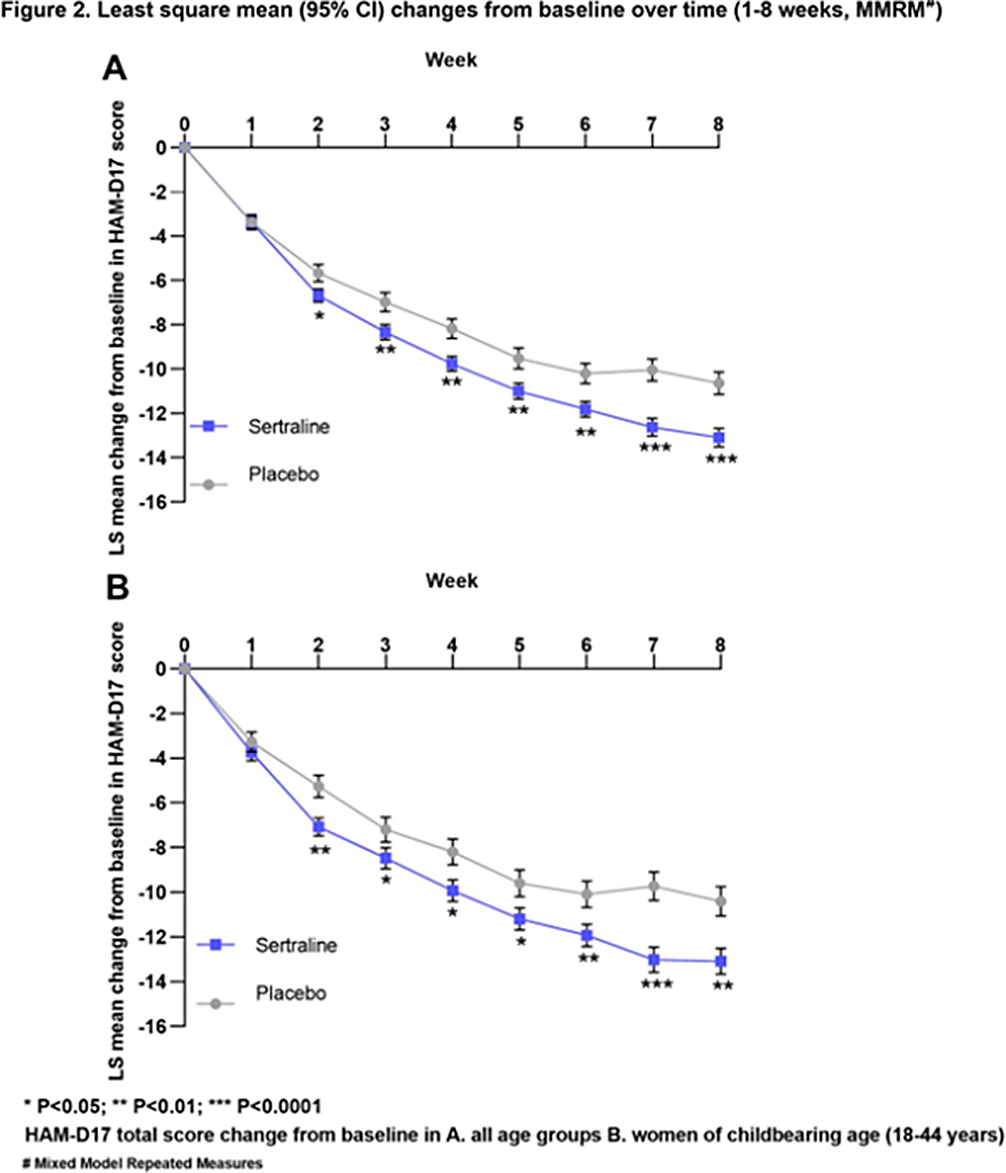
The analysis set consisted of 947 women (sertraline, 612; placebo, 335). The change from baseline in HAM-D17 total score was significantly higher for sertraline than for placebo at the end of 8 weeks (LS mean difference, 95% CI: -1.81 [-3.01, -0.62], p=0.0029, Figure 1A). This change from baseline was statistically significant starting from week 2 and increased over time (Week 2-8; Figure 2A).
The analysis set for women of child-bearing age consisted of 572 participants aged 18-44 (sertraline, 359; placebo, 213) from 7 clinical studies. The change from baseline in HAM-D17 total score was significantly higher for sertraline than for placebo at the end of 8 weeks (LS mean difference, 95% CI: -2.08 [-3.52, -0.64], p=0.0047, Figure 1B). This change from baseline was statistically significant starting from week 2 (Figure 2B).
Image:
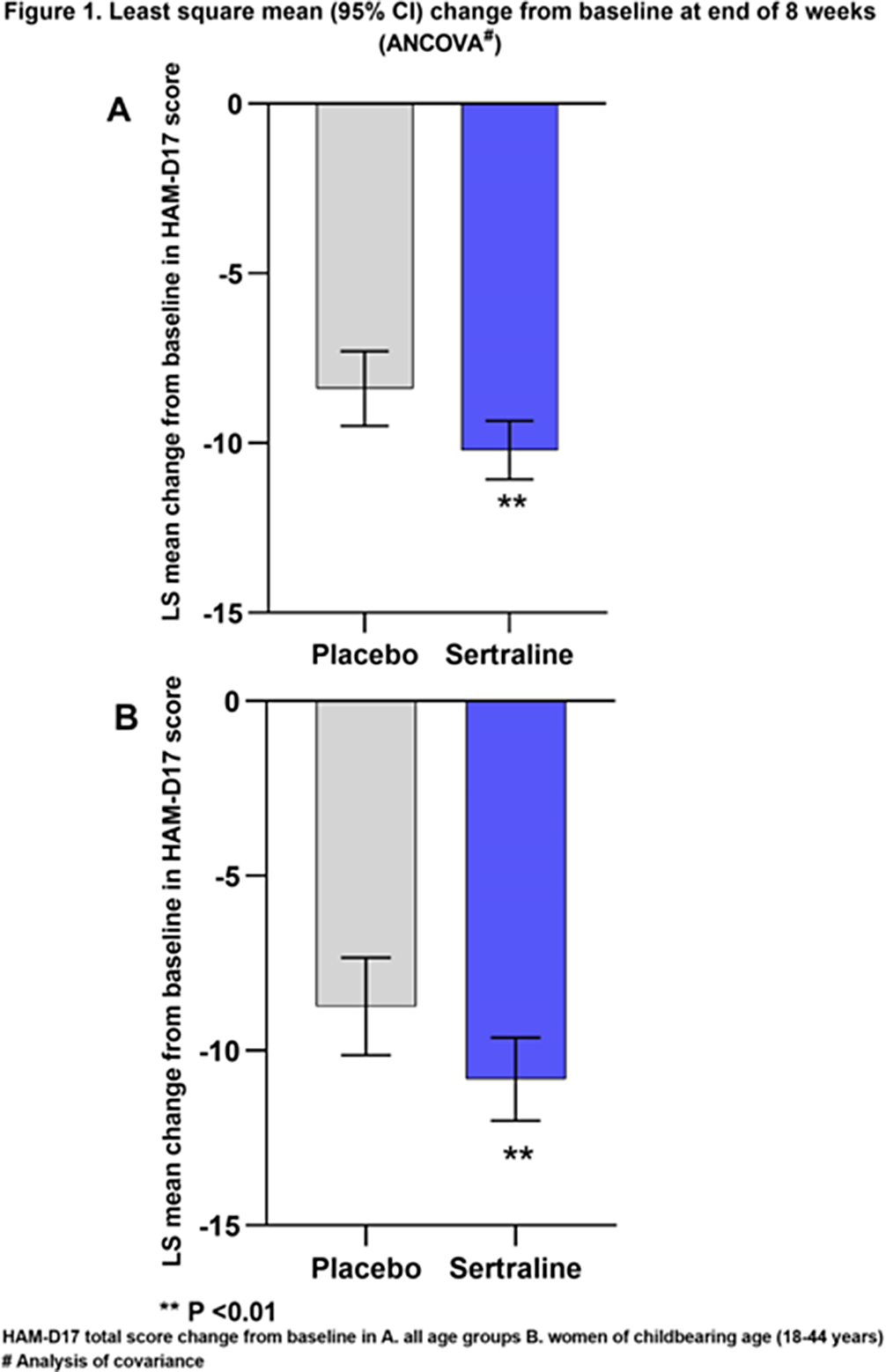
Image 2:
Conclusions
Significant improvement in HAM-D17 scores was observed in the analysis, suggesting that sertraline is efficacious in treating women with MDD, including those in the childbearing age.
Disclosure of Interest
A. Fagiolini Grant / Research support from: Angelini, Boheringer Ingelheim, Janssen, Consultant of: Angelini, Biogen, Boheringer Ingelheim, Lundbeck, Janssen, Mylan, Neuraxpharm, Otsuka, Pfizer, Recordati, Rovi, Sanofi Aventis, Viatris, Speakers bureau of: Angelini, Apsen, Biogen, Boheringer Ingelheim, Glaxo Smith Kline, Lundbeck, Janssen, Mylan, Neuraxpharm, Otsuka, Pfizer, Recordati, Rovi, Sanofi Aventis, Viatris, Vifor, M. Mariano Consultant of: Johnson & Johnson, Otsuka Pharmaceutical Inc., Speakers bureau of: Viatris Pharmaceuticals, Inc. Otsuka (Philippines) Pharmaceutical, Inc. H. Lundbeck A/S, Johnson & Johnson Philippines, Inc., E. Biesheuvel Employee of: Viatris Inc. Netherlands, P. Purushottamahanti Employee of: Viatris Inc. India
Problematic smartphone use is twice as common among teenagers as it is among adults. Smartphone addiction is associated with anxiety, depression, attention deficit disorder, impulsivity, and sleep problems, among other issues.
Objectives
To assess whether interpersonal relationship problems mediate the relationship between smartphone addiction and depression among adolescents (ages 12-17) currently enrolled in middle and high school.
Methods
A cross-sectional study was conducted among 653 middle and high school students living in Wonju, South Korea between September 1 and November 30, 2019. Depression was measured by Center for Epidemiologic Studies Depression Scale (CES-D). In order to evaluate smartphone addiction, the Smartphone Addiction Scale Short Form Version (SAS-SV) was used. To examine interpersonal problems, the Korea Inventory of Interpersonal Problems Circumplex scale (KIIP-SC) was employed. We used the dplyr package to check for skew, kurtosis, and create density plots. Scatterplots and Pearson correlation analysis were used to examine the relationships between the main variables. For the mediation analysis, we used the 8 sub-scales of KIIP-SC (Domineering, Vindictive, Cold, Socially avoidant, Nonassertive, Exploitable, Overly Nurturant, Intrusive) as mediators and conducted a mediation analysis with 10,000 bootstrap samples using the lavaan package in R, version 4.2.2. Each analysis was evaluated based on a 95% confidence interval to determine significance.
Results
Depression, interpersonal problems, and smartphone addiction exhibited significant positive correlations with each other. The direct effect of smartphone addiction was found to be significant. The association between depression and smartphone addiction was mediated by the KIIP-HI (Nonassertive), the KIIP-JK (Exploitable) and the KIIP-NO (Intrusive).
Conclusions
Interpersonal problems mediate the relationship between depression and smartphone addiction. Identifying the high-risk group is essential for treatment strategy development.
Lithium was the first mood stabilizer and today continues to be a first-line treatment in the treatment of bipolar disorder despite its adverse effects, which make it important to monitor blood levels and control kidney function.
Objectives
Presentation of a case of litium withdrawal and relapse in bipolar disorder. Literature review relating to the risk of relapse when lithium treatment is interrupted.
Methods
We present a clinical case of a patient who suffers a deterioration in renal function that requires the withdrawal of lithium and who consequently suffers a relapse. We conducted a bibliographic research of articles in Pubmed on this topic.
Results
A 49-year-old male, with a history of multiple admissions to UHB since the age of 18 with a diagnosis of bipolar disorder and treatment with lithium. Decompensations towards the manic pole have always been related to interruptions in lithium treatment. On several occasions when the patient was feeling well emotionally, he believed himself to be “cured” and abandoned the treatment, triggering a manic episode, showing verbal aggression, increased self-esteem and delusional ideation of harm. Remission was usually achieved with the reintroduction of lithium and the addition of high-dose quetiapine. Between episodes, constant overvalued ideas of economic scarcity seemed to persist, which were accentuated in the form of delusional ideas of ruin in depressive decompensations. After 7 years of stability, control analysis showed blood litemia of 2.2 mEq/L with deterioration of kidney function and generalized tremor was observed, without improvement after serum therapy. He was admitted for dialysis and lithium was suspended. Treatment with valproate was started and a consultation scheduled in a week to adjust the dose. The patient did not attend that consultation and was admitted three days later to Psychiatry Hospitalization showing a challenging attitude, evident dysphoric mood, accelerated speech, with derailments and echolalia. Delusional ideation of harm with auditory hallucinations. Insomnia and hyporexia. Chronic renal failure persisted.
Conclusions
Lithium is a very effective drug but with a narrow therapeutic range that requires adequate monitoring due to the possible consequences of its use at different organs and systems of the body. when lithium is found in the blood at toxic levels with deterioration of kidney function and glomerular filtration fails to recover, lithium treatment should be suspended. Sudden withdrawal of lithium significantly increases the risk of relapse due to rebound effect. More than 50% of patients experience a recurrence within 10 weeks of withdrawal.
Insight is a field of interest in psychosis, due to its influence on the course and prognosis of the desease and as well as adherence to treatment.
Objectives
The present work aims to evaluate the influence of cognitive and psychopathological variables on awareness of illness in first psychotic episodes.
Methods
It is a cross-sectional study of a sample of 26 patients with diagnosis of a first psychotic episode admitted in a Brief Hospitalization Unit, who have been evaluated using the Positive and Negative Symptom Scale (PANSS), the Screening for Cognitive Impairment (SCIP) and the Scale of Non-awareness of Mental Disorder (SUMD).
Results
A positive correlation was found between SUMD and negative PANSS (the worse insight, the greater negative psychopathology) and between the level of cognitive performance and the awareness of having negative symptoms (affective blunting, anhedonia and associability) and their attribution to the desease.
Conclusions
This findings suggest the importance of addressing awareness of negative symptoms from the first episodes in psychoeducational family therapy and rehabilitation programs, taking into account that this process is hindered by the cognitive dysfunctions.
Suicidality and depression awareness still remains a concern in Hungary. This programme, based on the principles of the European Union Against Depression, implemented its five steps, such as: 1. improving family doctors’ readiness to diagnose and treat depression, 2. increasing public awareness, 3. training stakeholders and community facilitators, 4. offering special help for risk groups, 5. facilitating self-help by the online tool “ifightdepression” in five of seven districts of Heves county from November 2014 until May 2016.
Objectives
We aimed to look at some clinical outcome measures of the programme, like diagnosis density of depression in primary care before and after the intervention; diagnosis density of depression in outpatient services; suicide attempts in specialised care; and completed suicide rates.
Methods
We extracted patient turnover data from the joint database of the National Healthcare Fund and the National Directorate-General for Hospitals. Raw patient turnover data were divided by the total patient turnover in order to obtain diagnosis density. For the diagnosis of depression, we used the sum of the ICD-10 diagnoses of F32 (depressive episode) to F33 (recurrent depression) plus F4120 (mixed anxiety-depressive disorder), as family doctors tend to use these diagnoses interchangeably. For suicide attempts, we used the diagnoses X60 to X84, plus Y8700. For completed suicides we used the same diagnoses with the “deceased” flag. Diagnosis densities were compared with concurrent national data and were standardised to the long-term average. In the case of outpatient services, we only could retrieve monthly data, which we smoothed out with threemonthly moving averages.
Results
Baseline diagnosis density of depression in primary care was already 44% above the national average when the program started and after the kickoff, it shortly went up to 53,3% and remained over the baseline for as long as until 2019. Also, the recognition rates of depression with no comorbidities in primary care increased by 6%, and steadily remained over the national average until 2019. For outpatient psychiatry, there was an 8% increase in depression turnover throughout the duration of the programme. As regards to suicide attempts treated in hospital, the rates went 20% below the national averages for the duration of the programme, and mostly remained there until 2020. Fatal suicidal events accounted for five to seven deaths a year per county, therefore, simple statistical methods could not uncover significant differences.
Conclusions
These early results indicate that the programme may have been effective in terms of reinforcing the diagnostic and treatment capacities of primary care for recognising a treating depression adequately, thereby eliminating suicide risk. Further statistical exploration of the data is still needed to confirm the magnitude and the validity of these results.
Forensic psychiatric services serve a dual purpose: treatment of mental disorders and prevention of associated violent reoffending. Progression along the secure care pathway is often impeded by impaired insight, mainly as a result of treatment-resistant psychoses.
Objectives
We assessed levels of insight among patients in Ireland’s National Forensic Mental Health Service before and after its relocation from the historic 1850 campus in Dundrum to a modern facility in Portrane, Dublin.
Methods
The VAGUS insight scale was used in this repeated measures study before and after the relocation at two time points 42 months apart. All inpatients were invited to participate in completing the self-report (VAGUS-SR) and clinician-rated (VAGUS-CR) versions on both occasions. Total scores of both versions were averaged to obtain a combined VAGUS insight score. Corresponding Positive and Negative Syndrome Scale (PANSS) scores were used to ascertain correlations between the insight and symptomatology scales. This study is part of the Dundrum Forensic Redevelopment Evaluation Study (D-FOREST)
Results
40 pairs of observations were available for legal capacity to consent to medication, combined VAGUS-CR and VAGUS-SR assessments of insight (Cronbach’s alpha=0.927), and PANSS. VAGUS-CR insight and PANSS scores were progressively better from admission and high dependency wards through medium-term medium secure wards to rehabilitation and pre-discharge wards. Mean scores did not change significantly over this time interval. Those legally certified fit to give or withhold consent by their treating consultant psychiatrists scored significantly better on the VAGUS combined insight scale: 8.3 (SD 1.7) v 5.3 (2.2) at baseline, paired t=25.9, p<0.001; and also 42 months later: 8.2 (1.4) v 5.7 (3.9), paired t=5.2, p=0.022. PANSS subscales were all significantly better for those assessed as being capacitous. Change in combined VAGUS score correlated with change in all PANSS subscales. Binary logistic regression with legal capacity as the dependent variable yielded a model in which combined VAGUS score and PANSS positive symptom score were independent determinants of assessed capacity status. Receiver operating characteristic area under the curve was 0.873, 95% CI 0.760-0.986, at baseline and 0.856, 95% CI 0.720-0.991, at 42 months. A score of 7.3 yielded a sensitivity of 0.8 and a specificity of 0.8.
Conclusions
The combined VAGUS score is a reliable and valid measure of insight relevant to functional mental capacity to consent to treatment with sensitivity and specificity sufficient to guide but not bind clinical decision-making. It measures a quality that varies with symptom severity but is also partly independent of symptom severity; the constructive inclusion of self-reported insight is notable.
When faced with perilous transmittable infections, individuals defend themselves or welcome them, such as the Samos Syndrome, a pathophilia (people attracted by illnesses). As borderline personality disorder (BPD), found in Samos Syndrome, becomes more common, so will people who reject primary protection from transmittable diseases and health behaviour as their choices. Pandemics would sinisterly draw pathophilies and persons with borderline personality disorder who migh surf pandemics risk as a parasuicidal behaviour.
Objectives
To investigate why pandemics (HIV, COVID-19) cannot be stopped. We have conducted a long-term assessment of HIV-discordant couples where a female partner, HIV-negative, voluntarily chooses to decline any prevention during stable and consensual relationships with HIV+ve partners. We also explored sociodemographic data that could explain health behaviours and condom use in HIV serodiscordant couples at risk of pandemic diffusion, those where one of the partners, usually male, already has a transmissible disease.
Methods
We used a mix of naturalistic and ethnographic approaches to understand the dynamics of Samos Syndrome. We also utilised a questionnaire to extract salient points in the sexual prevention of HIV infection. We assessed 475 HIV-serodiscordant couples.
Results
Pathophilia is defined as an excessive, abnormal desire to be sick, also known as nosophilia, from the Greek word ‘pathos’ indicating illness and ‘philia’, meaning attraction. Women diagnosed with BPD can become high diffusers during pandemics of transmissible diseases as suffering from pathophila, a form of parasuicidal behaviour. In the couples assessed, when the HIV-negative woman comes from a socially disadvantaged family, the couple uses condoms in 87% of cases (p<0.001); when she comes from a middle-high class, the couple uses condoms in 59% (p<0.001) of sexual relationships. Suppose the HIV-negative female partner has conflicting relationships with their parents. In that case, condom use is only in 40% (p<0.001) of cases, compared to 83% (p<0.001) of instances where she has a good relationship with parents. If the female partner with BPD has a higher level of education than the HIV+ve partner the frequency of use if 90% (p<0.001) of cases compared to 60% (p<0.001) of instances where she has the same level of education as the male partner.
Conclusions
The current study confirms that female persons diagnosed with BPD are at high risk of becoming high diffusers during transmissible diseases and pandemics. Parasuicidal behaviours and self-harm in BPD could increase the risk of entering into relationships with persons who are already infected by sexually communicable diseases or are at risk of diffusing viral infections (HIV and COVID-19).
Assessing the medical fitness of workers with mood disorders remains a topical issue, because of its organizational, socioeconomic and professional impact.
Objectives
To assess the medical and occupational characteristics of workers with mood disorders.
To evaluate the impact of these psychiatric disorders on the medical decision of fitness for work.
Methods
Descriptive and retrospective study, over six years (January 1, 2018 to August 30, 2023) including all medical records of workers with mood disorders (bipolar disorder, anxiety disorder, and depression), referred to the occupational department of the Charles-Nicolle Hospital in Tunis for a medical fitness for work.
Results
The study included 101 patients, mostly female (sex ratio = 0.4), with a mean age of 43.3 ± 9.2 years. The most represented sector of activity was health care. The participants were mainly nurses (25%), followed by technicians (22%) and workers (21%). The mean job seniority was 16.5 ± 9.3 years. A pathological history was found in 74.3% of cases, of which 47.5% were psychiatric disorders. Mood disorders identified in our population were: bipolar disorder (53.5%), anxiety disorder (43.5%), and depression (3%). After medical examination and the decision of treating physician, 39% of the patients (N=39) were declared fit for work, and 31.4% (N=32) were fit with ergonomic adjustments. These accomodations consisted mainly of night shift exemptions in 75% of cases. Temporary unfitness was declared in 24 patients (23.6%). Job mutation was recommended for four patients. Early retirement due to invalidity was proposed for two patients.
Conclusions
The decision on the medical fitness of workers with psychiatric disorders remains a delicate issue that requires the attention of both legislators and occupational health practitioners.
