To save content items to your account,
please confirm that you agree to abide by our usage policies.
If this is the first time you use this feature, you will be asked to authorise Cambridge Core to connect with your account.
Find out more about saving content to .
To save content items to your Kindle, first ensure no-reply@cambridge.org
is added to your Approved Personal Document E-mail List under your Personal Document Settings
on the Manage Your Content and Devices page of your Amazon account. Then enter the ‘name’ part
of your Kindle email address below.
Find out more about saving to your Kindle.
Note you can select to save to either the @free.kindle.com or @kindle.com variations.
‘@free.kindle.com’ emails are free but can only be saved to your device when it is connected to wi-fi.
‘@kindle.com’ emails can be delivered even when you are not connected to wi-fi, but note that service fees apply.
fibromyalgia is a modern disease, with growing investigation concerning its etiology and treatment. It has become a very prevalent diagnosis and total remission of symptoms is the exception which is dramatic considering the socio-occupational impact of this highly debilitating disease.
Objectives
to review the updates in the pathophysiology and treatment of fibromyalgia, especially when it is refractory to treatment. The authors also intend to better understand where fibromyalgia belongs, is it in psychiatry as a functional disorder or in rheumatology as an auto-immune disease?
Methods
bibliographical search in PubMed database, using the key-words “fibromyalgia” and “psychiatry”, limited to works published in the last 10 years.
Results
from our search resulted 158 articles, from reading of abstracts 30 were chosen for further reading.
Conclusions
concerning the etiology of this disease, on the one hand psychological factors cannot be neglected since there are several studies finding a positive correlation between stressors like history of physical abuse and fibromyalgia in adulthood, on the other hand investigation and meta-analysis have found that the immune-inflammatory response system might be altered with dysregulation of pro and anti-inflammatory cytokines and cell-mediated immunity. Regarding treatment, symptom relief is often unsatisfactory with classical treatment and so adjunct treatment such as electrical neuromodulation and aerobic exercise might, respectively, be effective in reducing pain and depressive symptoms, thereby improving quality of life, and in improving fatigue and in a lesser degree sleep.
Studies of differences in the incidence and severity of physical and social anhedonia between women and men diagnosed with schizophrenia spectrum disorder (SSD) are often inconsistent, and gender differences in treatment response have not been well studied. Hormonal factors, such as those related to the menstrual cycle, pregnancy or menopause, as well as social and cultural patterns and roles, may influence treatment response. The incidence of affective or stress-related psychiatric comorbidities may be gender-specific, which could also complicate the treatment of anhedonia and other negative symptoms of SSD. Finally, there is no evidence of sufficient quality on gender differences in the effects of rTMS, but the results are intriguing and point to the need for further research.
Objectives
To investigate gender differences in the effect of rTMS with the H7-coil on physical and social anhedonia in patients diagnosed with SSD with dominant negative symptoms.
Methods
We conducted a randomized, sham-controlled trial during 2000-2023 in the population of patients diagnosed with SSD with primary negative symptoms defined as PANSS negative symptoms subscale score > 24, and PANSS positive symptoms subscale score < 20. The intervention was HF rTMS H7 coil (Brainsway Ltd. Jerusalem, Israel) once daily for 20 days applied to the prefrontal cortex (mPFC and ACC) at 100% motor threshold with a frequency of 18 Hz, and total of 39600 pulses. The outcomes were Physical and Social Anhedonia Scales (PAS, and SAS). We controlled for the large number of relevant covariates.
Results
We randomized 49 men and 29 women of similar age. The effect on physical anhedonia was statistically significant in women (b = 9.04; p = 0.016), but not in men (b = 2.87; p = 0.272). The effect on social anhedonia was similar, but the difference was smaller (for men b = 3.71; p = 0.082; for women b = 5.42; p = 0.043). However, the Wald test showed no statistically significant differences between the beta coefficients for women and men.
Conclusions
Based on this study, it is not possible to make valid and reliable conclusions about the existence of gender differences in the effects of rTMS treatment of anhedonia with the H7 coil. However, it is possible to claim that the treatment of anhedonia with this protocol is effective in women.
Autobiographical memory is known to be disturbed in schizophrenia. In addition, a leading theory of auditory hallucinations (AVH) is that they are intrusive – typically negative – autobiographical memories that are misinterpreted as perceptions.
Objectives
The aim of this study was to examine the brain functional correlates of recall of negatively emotionally valanced autobiographical memories in patients with schizophrenia, with a longer term aim of comparing patients with and without AVH.
Methods
11 patients meeting DSM-5 criteria for schizophrenia or schizoaffective disorder and 10 age, sex and estimated premorbid IQ-matched healthy controls have so far taken part.
Participants underwent functional MRI in a 3T scanner while performing a task requiring them to recall autobiographical memories in response to individually tailored pairs of cue words. The cue words were based on autobiographical memories previously elicited in an interview with each patient and were designed to evoke the same memory. The cue words were presented in 10 20-second blocks interspersed with blocks where the subjects viewed cue words that did not evoke autobiographical memories. Brain activations were examined in three contrasts of interest: memory evoking words vs baseline, neutral words vs baseline and memory evoking vs neutral words.
Pre-processing and analysis were carried out with the FEAT module included in the FSL software. Statistical analysis was performed by means of a General Linear Model (GLM) approach.
Results
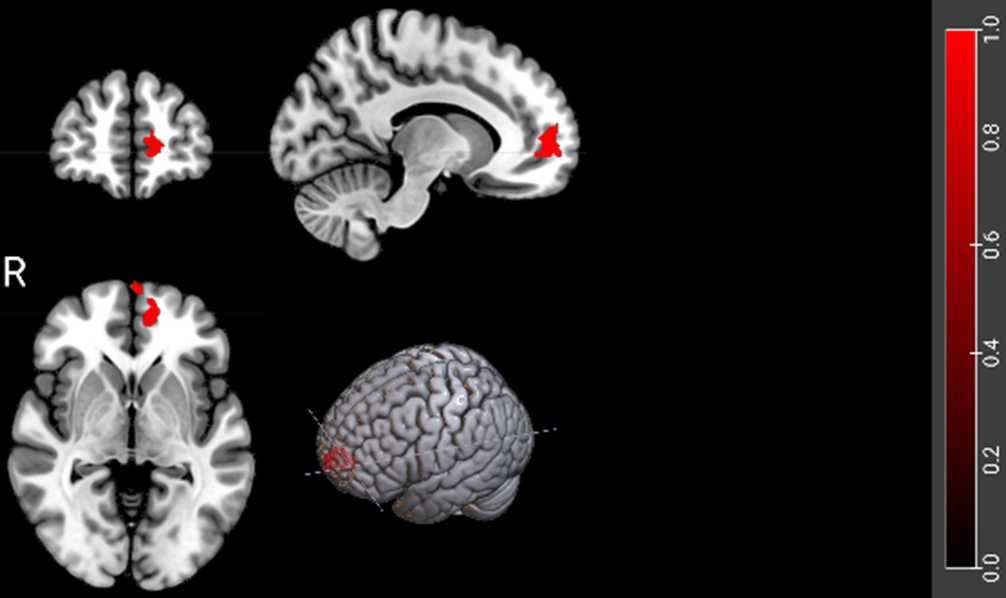
In the memory evoking vs baseline contrast the patients showed hypoactivation in the medial frontal cortex compared to the healthy controls (Figure 1). There were no differences in activation between the patients and the controls comparing the memory evoking and neutral cues.
Image:
Conclusions
The finding of hypoactivation in the medial frontal cortex compared to low level baseline in patients with schizophrenia suggests dysfunction in the default mode network, which is known to activate during recall of autobiographical memories.
These preliminary results suggest that recall of negative autobiographical memories in patients with schizophrenia is associated with reduced activity in the default mode network. A planned larger sample of patients and controls will be used to examine activations in patients with and without AVH.
Mental health professionals pay particular attention to adolescents, as many psychiatric disorders begin at this age, and the mental state of adolescents has been deteriorating worldwide in the last decade. Based on previous international research, the ability to regulate negative emotions and mentalizing - that is, the ability to identify the thoughts and emotions behind one’s own and others’ behaviour - mediate the negative effects of attachment difficulties experienced in close relationships on the quality of life. This relationship has not yet been investigated among Hungarian adolescents. Adolescent events can have a long-term effect on a person’s mental health, so it is very important to examine the factors that influence the quality of life.
Objectives
This research aimed to examine the relationship between attachment, mentalizing, emotion regulation and quality of life among adolescents between 14 and 18 years of age.
Methods
In our non-clinical cross-sectional research, 141 adolescents filled out the Experiences in Close Relationships questionnaire, the Difficulties in Emotion Regulation Scale, the Reflective Functioning Questionnaire and the Quality of Life Scale after informed consent. We tested two mediator models, in which emotion regulation and mentalizing were the mediating variables in the relationship between attachment difficulty and quality of life.
Results
In our analyses, attachment difficulties (c’ = -1,87, p < .001, β = -0.41) and emotion regulation problems (b = -0.08, p < .001, β = -0.39) also predicted a reduced quality of life. Attachment problems also reduce the quality of life of young people through emotional regulation difficulties (∑ab = -0,81 [-1,21 – -0,45], β = -0.17). However, mentalizing was not significantly related to the adolescents’ quality of life (b = -0,05, p = .10, β = -0,11). Mentalizing also did not mediate the relationship between attachment and quality of life (∑ab = -0.09 [-0.27 – -0.02], β = -0.02).
Conclusions
Our results suggest that adolescents’ emotion regulation has a prominent role in their quality of life in addition to attachment styles. To improve the quality of life among adolescents, we recommend using techniques that develop emotion regulation.
With increasing urbanization, more people are exposed to mental health risk factors stemming from the urban social or physical environment. However, research on urbanization and depression is not clear.
Objectives
This study aimed to explore environmental and social factors with depression symptoms in view of a network theory of mental health disorders.
Methods
The study was conducted among a representative sample of 3,296 habitants of Metropolis GZM (63% of women)– the most urbanized region in Poland. The measurements used were PHQ-9, UCLA, Neighbourhood Cohesion (Neighbourhood Belonging and Social Cohesion), REAT 2.0 (Quality of architecture in neighborhood area), distance and frequency use of green public areas, Self-Rated Health, Physical Activity, size of place of residence per person.
Results
The prevalence of depression risk in villages (N=713), towns under 20,000 (N=219), towns (under 99,000; N=823), and cities (under 300,000; N=1541) was 44.2%, 44.7%, 39.2%, and 34.9% respectively.
The depression nodes with the highest centrality degree and expected influence were PHQ9 (suicidal thoughts), PHQ2 (feeling depressed), and neighborhood belonging. Living in a more urbanized area (UA) had a smaller centrality degree in the network. Edges between PHQ9 and environmental factors were mediated by loneliness (UCLA). Poor architectural conditions (REAT) were linked positively with neighborhood belonging and adversely with social cohesion. Living in UA was negatively related to PHQ9, PHQ5 (eating control), and PHQ2, social cohesion, and green area distance, while positively to PHQ7 (problems with being focused), poor physical health, REAT, and neighborhood belonging (Figure 1).
Conclusions
Living in a city is negatively related to the most central depression symptoms. Even though social cohesion is negatively linked to UA, neighborhood belonging is higher in more urbanized areas.
The balance between detrimental environmental factors and those that protect mental health requires a better understanding of the interaction between urban living and depression.
Gestational Loss represents a set of abrupt and unexpected losses throughout pregnancy or after childbirth. Every year, around two million babies die after 28 weeks of gestation, with between 14% and 20% of all pregnancies ending in loss. In most situations, pregnancy loss occurs in a pregnancy without signs of risk or irregularities, something that increases the shock and suffering felt by parents.
Objectives
The present study aims to understand the relationship between pregnancy loss and parents’ grief experiences after spontaneous abortion, stillbirth or neonatal death with qualitative evidence.
Methods
This review followed the principles of PRISMA, and the search was carried out in the Web of Science and Scopus databases, aiming to find relevant articles about parental grief experiences resulting from pregnancy loss, published between 2012 and 2022. After research and analysis Of the studies, 15 qualitative studies were included.
Results
The pain and sadness when experiencing the loss of a child was a common point in all the studies found. In this review, the majority of men revealed a duality in wanting to protect, physically and emotionally, their partner, while experiencing their own grief, something that led to the internalization of their emotions and the minimization of their pain. Grieving fathers and mothers report experiencing this process alone, describing the difficulty in expressing what they feel due to the lack of recognition of the loss. It was found that confrontation with other pregnant women leads bereaved parents to reveal jealousy and shame, as well as feelings of guilt. The farewell rituals, the process of writing and talking about their experience helped the women to not feel so alone and to find a purpose: to transform their pain and help other grieving mothers. Fathers and mothers who experienced pregnancy loss stated that the death of their child provided change and growth.
Conclusions
After Pregnancy Loss, adapting to the new reality is extremely painful, despite the work of mourning being necessary and crucial. This process is a search to integrate and accept the reality of the loss of the baby in a way that has meaning for the mother and father, it is the adaptation to a world without the lost child and to a relationship that had been built during the gestation period, which was violently broken. It is necessary for health professionals to be present and available to address these parents’ fears, provide advice and support.
Suicide is a major public health concern, ranking among the leading causes of death worldwide.
Objectives
This study investigated the epidemiological features of collective suicide incidents in Morocco.
Methods
We performed a retrospective analysis of suicidal poisoning cases recorded by the Moroccan Poison Control Center (MPCC) over a 35-year period.
Results
During the study’s duration, the MPCC recorded 168 suicide cases. The mean age of those involved in these incidents was 23.9 years, with a female-to-male ratio of 1.57. The majority of those affected were adolescents and young adults, specifically between 15 and 34 years of age. Pesticides and drugs were the most commonly used methods of suicide and accounted for 31.1% and 20.1% of the cases, respectively. The majority of incidents occurred in the home environment and were primarily caused by oral exposure. The symptoms of poisoning varied according to the consumed substance, amount ingested, and elapsed time until medical treatment. The symptoms included disturbances in the neurological, gastrointestinal, respiratory, and cardiovascular systems. Of the 100 cases with known outcomes, one person died due to poisoning, whereas the remaining cases survived, although some enduring complications.
Conclusions
Suicide accounted for 1.3% of global mortality, ranking as the 17th most common cause of death in 2019, according to data from the World Health Organization (WHO). This trend emphasizes the urgent need for continuous efforts at all levels to address and mitigate this rapidly growing issue.
Prolonged exposure to stress can adversely affect mental health and lead to mental illness, which can adversely affect the provision of medical care. It has been determined that sleep disturbances affect physical and mental health and negatively affect daily activities. Therefore, we conducted this study with the assumption that it is an opportunity to improve health care by examining the prevalence of stress in the medical profession and identifying its causes.
Objectives
To study the prevalence of stress and sleep disorders among doctors and medical professionals in Selenge Province General Hospital2. Identify some factors affecting stress and sleep disorders and their relationship
Methods
Using SRQ20, PHQ9, GAD7, and sleep disturbance questionnaires issued by WHO for doctors of primary health care institutions, according to the analytical research model, the ethics committee with the informed consent form, and the research was conducted.
Results
Doctors and medical professionals aged 23-65 participated in the study, the average life expectancy was 37.05 years. 44.44% are stressed. 8% of stressed people had severe stress, 18.89% had no sleep disorder and 81.11% had a sleep disorder. 46.67% of those with sleep disturbances had mild sleep disturbances. But 34.44% had sleep disorders. 30% had a non-organic sleep disorder, 5.56% had lucid dreaming disorder, and 3.33% had non-organic insomnia. According to the correlation analysis, the SRQ20 stress score GAD7 anxiety score is r=0.76, the PHQ9 score is r=0.74, the sleep disturbance score is r=0.68, the satisfaction score is r=-0.44, the sleep disturbance score GAD7 score r=0.75, a moderate positive correlation with the PHQ9 depression score r=0.45, and a weak inverse correlation with the satisfaction score r=-0.24 was related. In the composite linear regression analysis, the stress score increased by 116.2% when the stress problem score increased by one, the anxiety problem score increased by 44.34%, the body shape problem screening questionnaire increased by 82.86%, and the depression problem score increased by one. 73.18% per increase of one, and 7.18% per increase of PHQ9 depression score was statistically significant. On the other hand, the sleep disorder score increases by 127.05% when the stress problem score increases by one, the anxiety problem score increases by 120.79% and the body shape problem detection questionnaire score increases by one.
Conclusions
Doctors and medical professionals need to increase their coping skills, psychiatric examination and diagnosis, and psychological counseling. Also, by implementing the right lifestyle habits, most of the sleep disorders of doctors and medical professionals can be normalized by themselves. Stress is associated with depression, anxiety, sleep disturbances, years of work, relationship satisfaction, psychological problems, and depression.
Schizophrenia is a complex psychiatric disorder in which biological sex differences, have been extensively documented and researched. What is less well described, is what motivates these differences. Of the various proposed and explored reasons, estrogen appears to be one that has maintained some interest and promise. An increase in symptoms of schizophrenia has been observed to correspond with decreasing levels of estrogen in menopausal women, this, allied to the later symptom onset, culminated in the interest in this hormone and its role in psychotic illness.
Objectives
The authors aim to briefly explore the current evidence on the association between estrogen and schizophrenia. Its relevance in symptom onset, protective status and eventual therapeutic applications will also be discussed.
Methods
The authors conducted a brief non-structured narrative literature review using articles published in the Medline/Pubmed, ScienceDirect and Google Scholar databases. The keywords used during the research, alone or in combination, included: sex hormones, estrogen, schizophrenia and psychiatry.The studies consulted in this work included: cross-sectional studies, cohort studies, literature reviews and clinical case reports.
Results
The literature exploring the relationship between the sex hormone, estrogen, and schizophrenia is extensive. Various studies confirm that during periods of estrogen withdrawal, women appear more susceptible to psychotic episodes. Results also demonstred that those with low estrogen, respond poorly to anti-psychotic drugs, whereas estrogen increased the efficiency of antipsychotics. In regards to symptoms, estrogen has been demonstrated to reduce the positive and cognitive symptoms of schizophrenia in the short term, thus being proposed as an eventual complementary treatment in those suffering from the disorder. It is known that estrogen regulates important pathophysiological pathways in schizophrenia, including dopamine activity, mitochondrial function, and the stress system.One of the explanations for this beneficial effect has been proposed to be action on cerebral blood flow and glucoce metabilism, as well as sensitizing postsynaptic dopamine receptors, thus serving as a protective agent against schizophrenia.
Conclusions
The research appears to be pointing in the direction that estrogen appears to have an effect on psychosis in women, serving as a protective factor in these conditions as well as playing a significant part of the pathophysiology in schizophrenia. This influence on the pathophysiology, promises clinical pertinence, not only in a possible application so to attenuate positive and cognitive symptoms but also as a method to influence antipsychotic efficacy. Continued study in regards to the effects of sex hormones on the psychotic disorders is merited so as to further expand the tools in the mental health professional’s repertoire in the treatment of these serious mental illnesses.
Lymphocytes are dysfunctional during long-term ethanol consumption and may contribute the progression from healthy to problem drinking. GABAA receptors are molecular targets of ethanol on lymphocytes, potentiating the effects of alcohol.
Objectives
We first demonstrated that original compound ortho-fluoro-benzonal, artificial GABA receptor ligand, has immunostimulating properties and is able to restored long-term alcoholized mice lymphocytes activity in vitro through GABAA receptors. Based on the previous results we investigated effects of the ex vivo ortho-fluoro-benzonal modulated lymphocytes in recipients with experimental alcoholism.
Methods
Male (CBAxC57Bl/6)F1 mice with 6-month 10% ethanol exposure were undergoing the transplantation of syngeneic long-term alcoholized mice lymphocytes, pretreated in vitro with ortho-fluoro-benzonal. Recipient’s ethanol consumption, parameters of the nervous and immune systems functional activities were estimated.
Results
It was shown that lymphocytes modulated ex vivo with ortho-fluoro-benzonal after intravenous injection caused in syngeneic long-term alcoholized recipients ethanol consumption decrease and stimulation of behavioral activity in the “open field” test against the background of changes in the level of a number of cytokines in pathogenetically significant brain structures. Stimulation of humoral immune response, estimated by the relative number of antibody-forming spleen cells was also detected in recipients after lymphocytes transplantation. The injected immune cells were recorded in the parenchyma of the spleen and brain of recipients, which suggests, in particular, their direct influence on these functions.
Conclusions
Results demonstrated that transplantation of ortho-fluoro-benzonal-modulated lymphocytes caused positive psychoneuroimmunomodulating effect in long-term alcoholized recipients, which makes it possible to consider adoptive immunotherapy as a promising method in the treatment of alcoholism.
Climate change and its impact on mental health is a growing area of research. Several studies have explored the relationship between climate change and mental health, highlighting the various ways in which climate change can affect individuals’ psychological well-being. Incorporating mental health indicators into climate change and health vulnerability and adaptation assessments is another important aspect of research in this area (Hayes & Poland, 2018). The study suggests that standardized methods to measure and predict the psychosocial outcomes of climate change should be implemented to better understand the mental health impacts. While the physical health consequences of climate change have received more attention, the mental health impacts are often overlooked (Nicholas et al., 2020).
Objectives
This study was planned to examine the impact of climate change the impact of climate change on mental health
Methods
This descriptive and cross-sectional study was conducted with individuals who willing to participate the study and above 18 years age. Individuals who saw the online advertisement and click on the study’s link were be brought to the study’s home page on Online Surveys. Should they wish to proceed, they will be brought to an information page detailing the purpose of the study, how their confidentiality and anonymity will be preserved and how their data will be treated.
Socio-Demographic Data Form, Climate Change Worry Scale, Eysenck Personality Questionnaire Revised- Abbreviated, general health questioner and Depression, Anxiety, Stress scale were used for collecting data. Data analyses was planned to run via Statistical Package for the Social Sciences version, 27.0.
Results
The analysis of the data is still ongoing in detail by the researchers. The findings and relational implications of the study will be presented.
Conclusions
In conclusion, this study highlight the importance of understanding the mental health impacts of climate change and developing strategies to address them. Climate change can have direct and indirect consequences on mental health, and vulnerable populations such as children and adolescents may be particularly at risk. Reducing psychological distance and incorporating mental health indicators into assessments can help in understanding and addressing the mental health consequences of climate change.
Long-term leave for psychiatric illness is the most frequently prescribed reason for leave, and appears to be on the increase in recent years.
Objectives
To draw up a sociodemographic, occupational and clinical profile of workers who have taken long-term sick leave for psychiatric illness
Methods
Retrospective descriptive study involving the medical files of workers from both the public and private sectors, having benefited from long-term sick leave over a period going from August 17, 2022 to September 12, 2023, referred to the occupational medicine and pathology department of Charles Nicolle Hospital in Tunis for medical fitness-for-work assessment. Data collection was based on a pre-established synoptic form.
Results
During the study period, we identified 639 long-term sick leave prescribed for psychiatric illnesses. Our study population was predominantly female, with a sex ratio of 0.29 and a mean age of 46.82 ± 25.06 years. Sixty percent of employees were married. The most represented occupational category was nurses (33%). Average job seniority was 17.21±10.41 years. Depressive syndrome was the most common psychiatric pathology in our population (80.3%), followed by bipolar disorder (6.4%) and anxiety disorder (5%). Long-term sick leave was prescribed by a psychiatrist working in the private sector in 90.3% of cases. The average duration of leave was 63.70±31.58 days. The triggering factor was work-related and social in 33.6% and 30.1% of cases respectively. The agents returned to work after the long-term sick leave in 92% of cases.
Conclusions
Long-term sick leave for psychiatric reasons is a handicap to productivity in society. Non-occupational factors are thought to be responsible for these mental health disorders. Setting up and improving social structures in the workplace would reduce the number of cases of long-term sick leave
A thorough pre-electroconvulsive therapy (ECT) assessment is a integral to ECT preparation. Usually, the assessment encompasses elements such as medical history, cognitive assessment, laboratory tests, imaging diagnostics, and consultation with an anesthesiologist. However, there is currently no universally standardized minimal or optimal pre-ECT evaluation at the international level. Recent results show a high variability of the pre-ECT evaluation practice across Europe. Establishing a standardized approach to pre-ECT evaluation would be of great interest for both patients and practitioners.
Adjustment disorder is characterized by an emotional or behavioral response to a stressful event or change in life. This condition can impact a student’s academic performance, social life, and overall well-being. Adjustment disorder with the stressor is a psychological response to identifiable stressors that result in the development of emotional or behavioral symptoms. These symptoms cause significant impairment in various areas of functioning, such as social, occupational, or academic performance.
Students with adjustment disorder may experience a range of symptoms, including feelings of sadness, anxiety, hopelessness, and a lack of concentration. They may also have trouble sleeping, feel overwhelmed, and struggle to cope with daily responsibilities. These symptoms can be triggered by various factors such as academic pressure, relationships, family issues, or cultural adjustments.
Objectives
This study aims to determine the prevalence of adjustment disorder among undergraduate students and investigate the potential risk factors of stress that can lead to adjustment difficulties.
Recognize the signs of adjustment disorder, how to access support, and how to create a supportive environment, therefore, students can effectively manage this condition and thrive in their academic and personal lives.
To prioritize mental health and provide the necessary resources for students to navigate the challenges of adjustment disorder effectively.
Methods
Adjustment Disorder‑New Model 20 (ADNM‑20) was used to assess prevalence of adjustment disorder among undergraduate students. It is a diagnostic tool used to assess adjustment disorder in individuals experiencing significant life stressors. The ADNM 20 is specifically designed to capture the nuanced manifestations of adjustment disorder with the stressor, enabling clinicians to make accurate assessments and develop targeted treatment plans.
Results
Adjustment disorder is a real and impactful challenge and a common mental health condition among undergraduate students at Prince Mohammad Bin Fahd University, Al Khobar, Saudi Arabia.
Conclusions
Adjustment disorder can significantly affect a student’s academic performance. The inability to focus, persistent feelings of distress, and a lack of motivation can lead to a decline in grades and overall achievement. By recognizing the signs, accessing support, and creating a supportive environment, students can effectively manage this condition and thrive in their academic and personal lives. It’s crucial to prioritize mental health and provide the necessary resources for students to navigate the challenges of adjustment disorder effectively.
The advent of artificial intelligence (AI) and machine learning has sparked interest in its applicability in the mental health domain, offering potential improvements in the efficiency and personalization of psychiatric services.
Objectives
To characterize the methodological and technical approaches in studies utilizing machine learning and natural language processing (NLP) within mental health, to evaluate their potential and impact in psychiatric clinical practice, and to address the associated ethical concerns.
Methods
A systematic review, adhering to the PRISMA guidelines, was conducted across four primary medical databases. Emphasis was placed on studies that applied machine learning and NLP techniques to psychiatric contexts, extracting data from sources such as medical records and social media.
Results
From 327 identified articles, 58 were considered relevant. Major themes included symptom extraction, illness severity classification, therapy effectiveness comparison, and psychopathological insight derivation. Notably, most studies focused on specific populations like social media users, emergency room attendees, or those within medical databases. Methodological findings showcased a preference for efficient classifiers and Python as the primary platform.
Conclusions
Machine learning and NLP offer a promising new avenue for psychiatric research and clinical practice, enabling the extraction of previously inaccessible patient information and supporting the decision-making process. However, the field must address inherent limitations, ethical considerations, and ensure that the tools augment, rather than replace, clinical judgment.
During cannabis use, some individuals may experience psychotic symptoms, such as unusual perceptions or irrational thoughts, including mild hallucinations or temporary paranoia. Anxiety is also common, characterized by excessive worry or intense fear. The occurrence of these symptoms varies based on cannabis quantity, individual sensitivity, and surroundings. Although not all users experience these effects, the link between cannabis and psychotic or anxiety symptoms highlights the need for a thorough risk assessment.
Objectives
Our goal is to analyze trends in cannabis use, as well as the psychotic and anxiety symptoms experienced by users, and to examine whether cannabis use is associated with other substances consumption.
Methods
We collected demographic and substance consumption data from two groups: 29 individuals aged 18 to 28 who had tried cannabis at least once and 19 regular consumers through a structured questionnaire.
Results
Regular cannabis consumers had a higher proportion of males than those who had tried it once (X²(1)=4.81; p=0.028). There were no significant differences in age, alcohol or tobacco consumption between the groups. Notably, regular cannabis consumers had a history of using other illegal drugs, both in the past and within the last month (X²(1)=8.53; p=0.003). Regarding cannabis effects, regular users more frequently reported sensations like euphoria, relaxation, altered time perception, tachycardia, motor coordination difficulties, and impaired clear thinking compared to one-time users (X²(1)=10.12; p=0.001). Regarding anxiety symptoms during cannabis consumption, both groups experienced a similar frequency. Finally, regular cannabis consumers reported strange ideas or perceptions more often than one-time users (X²(1)=0.743; p=0.019). However, the associated discomfort level was similar in both groups.
Conclusions
This study highlights that regular cannabis use is associated with a greater likelihood of using other substances and experiencing more pronounced effects, including psychotic symptoms. However, it doesn’t necessarily lead to increased anxiety symptoms compared to one-time users. It’s important to acknowledge that the relationship between cannabis and psychosis is intricate and influenced by factors like consumption quantity and individual sensitivity. These findings stress the importance of understanding cannabis’s impact on mental health and its connection to the use of other substances.
Commencing in 2019, the onset of the COVID-19 pandemic prompted an upsurge in online engagement, drawing attention to the advantages and perils associated with the use of social media. Existing research emphasizes that elevated symptom levels of attention deficit/hyperactivity disorder (ADHD) are linked not to the extent (time) of usage but to its addictive nature. However, scant research has explored its relationship with sleep quality.
Objectives
In this study, we scrutinized the correlation between problematic social media usage, sleep quality, and ADHD symptoms in a non-clinical sample of young individuals during the third wave of the pandemic.
Methods
We administered an online survey to 139 participants (mean age: 21.37 years, standard deviation: 2.68 years, range: 15-27). The survey encompassed various assessments, including the Bergen Social Media Addiction Scale (BSMAS), the Athens Insomnia Scale (AIS), and the self-report version of the SWAN scale (Strengths and Weaknesses of ADHD Symptoms and Normal Behavior). Participants also reported on the extent of their social media use.
Results
Significant distinctions emerged in the extent of social media usage between online (M=3.12; SD=1.08) and in-person educational settings (M=2.47; SD=0.78) (t(73)=6.01; p<0.001; d=0.70). While ADHD symptom levels exhibited no correlation with the extent of social media engagement, they did exhibit a significant positive correlation with problematic usage (r=0.32; p<0.001). Likewise, the extent of social media usage displayed no correlation with sleep quality; however, problematic usage was linked to poorer sleep quality (r=0.27; p=0.002). In our mediation analysis, problematic usage correlated both directly (c’=-0.61; p=0.02) and indirectly (ab=-0.36; 95% CI: -0.60 - -0.10) with heightened ADHD symptoms through diminished sleep quality (F(1,120)=21.94; p<0.001; R2=0.27).
Conclusions
Our findings affirm that it is not the extent but rather the problematic nature of social media usage that assumes significance. Moreover, our results propose that problematic usage may exacerbate ADHD symptoms, not only directly but also by influencing sleep quality.
Suicidal ideation is often an indicator of suicidal risk. However, suicidality is one of the most stigmatized themes thus suicidal ideation can be difficult to diagnose using direct questions. So, it’s impotent to look for psychological traits those may be linked to suicidal ideation. This can be useful for the diagnostic of suicidal risk and prevention of suicidal behavior. The identification of copings that correlate with suicidal ideation and do not depend on mental health allows finding universal ways to reduce suicidal risk.
Objectives
The aim of the study is to find “copings” which have universal impact on suicidal ideation in men.
Methods
The data were obtained using the study of 193 men (clinical group: 67 men with F20, F31, F33 diagnosis aged 17 to 34 (mean age 21,1±4,25); control group: 126 men aged 18 to 63 (mean age 40,04±14,71) who never asked for psychiatric assistance. 3 questions about suicidal ideation (estimate of frequency of last week with Likert’ scale from 0 - “not at all” to 4 -“extremely”), COPE (Carver, 1989). Correlation analysis (Spearman) were used.
Results
The table consists correlation that are statistically significant for both groups.
Control group
question
Denial
Behavioral disengagement
Mental disengagement/self-distraction
Substance use
Venting
Feeling hopeless about the future
,218*
,177*
,237**
,208*
,304**
Thoughts of ending your life
,189*
,217*
,240**
,189*
---
Thoughts of death or dying
,117
---
,290**
,215*
,301**
Clinical group
Feeling hopeless about the future
,494**
,177*
,478**
,208*
,375**
Thoughts of ending your life
,347**
,217*
,363**
,342**
---
Thoughts of death or dying
,353**
---
,302*
,323**
,249*
* - p≤0,05; ** p ≤0,01
Conclusions
Our results demonstrate that avoidant copings (Denial, Behavioral disengagement, Mental disengagement /self-distraction) link to suicidal ideation in all men regardless of their mental state. This can be explained by general pathological effect of avoidant copings of people lives: its hinder an identification and settlement of the everyday problems and its contribute to worsening of the situation. This underlines the importance of promotion more active copings as part of prevention antisuicidal work. The “Substance use” coping comforts for a while and anyway helps to formation suicidal ideation through worsening a mental and physical states, increase impulsivity. All this shows that work aimed the substance use prevention constitutes a suicidal ideation prevention work. Increased frequency of use of a Venting coping can leave men in emotional storm state that carries risk of suicide. This points to the importance of wide popularization of affordable ways to the calm, reduce of the power of emotion.
Understanding coronophobia, or the heightened fear and anxiety related to the COVID-19 pandemic, involves assessing physiological, cognitive, and behavioral measures.
Objectives
We aimed to develop a Greek version of the Coronavirus Anxiety Scale (CAS), the Obsession with COVID-19 Scale (OCS), and the Coronavirus Reassurance-Seeking Behaviors Scale (CRBS), to identify groups that appear vulnerable to this form of pandemic-related anxiety.
Methods
We conducted a cross-sectional online study from February to April 2021 in Greek-speaking people living in Cyprus. Participants completed sociodemographic questions and questions related to COVID-19, the CAS, OCS, and the CRBS. All three scales are rated on a 5-point scale, from 0 (not at all) to 4 (nearly every day). For CAS, a score ≥ 9 indicates probable dysfunctional coronavirus-related anxiety, for OCS a ≥ 7 score indicates probable dysfunctional thinking about COVID-19, and for CRBS score ≥ 12 suggests above-average reassurance-seeking activity.
Results
A total of 405 adults (66.4% women) from Cyprus participated in this study. The results of this study demonstrate that these Greek adapted measures have adequate reliability (Cronbach’s alphas >0.70) and factor structure (exploratory and confirmatory factor analysis support). However, only the CAS demonstrated both convergent and divergent validity. Education personnel, housekeepers, and older adults were also found to have higher coronavirus anxiety relative to their counterparts.
Conclusions
The findings of this research support the use of these coronaphobia scales in Cyprus and other Greek-speaking populations. Assessing the potential for fear-driven behaviors may be of great benefit to both clinicians and researchers, helping to identify individuals at risk, adapt interventions, and improve our understanding of the psychological consequences of surviving a public health emergency.
We aim to describe the psychosocial features, including Stanford Integrated Psychosocial Assessment for transplantation (SIPAT) scores of individuals undergoing assessment for heart transplantation in Ireland.
Objectives
All potential heart transplant candidates undergo assessment of psychosocial criteria to enhance selection and improve transplant outcomes. The Mater Hospital Consultation Liaison Psychiatry (CLP) department provides this national service in Ireland. All potential heart transplant candidates should receive a biopsychosocial assessment and screening via SIPAT tool as per international best practice. The SIPAT is a psychosocial evaluation and risk assessment tool which can help to determine suitability for organ transplant and identify modifiable risk factors to optimise a patient for transplant. Lower scores represent higher rates of suitability with a score < 21 representing an acceptable candidate and ≥21 minimally acceptable.
Methods
We retrospectively examined the clinical files of all individuals referred to the national centre for heart transplant assessment over a five-year study period between January 2014 and December 2019.
Results
One-hundred and fifty four individuals were referred for heart transplant assessment with 79% (n=122/154) listed for a heart transplant. The most common indication for heart transplant assessment was non-ischaemic cardiomyopathy (48%, n=74/154). Of those listed for transplant, 74% (n=90/122) went on to receive a heart transplant. Of those undergoing assessment for heart transplant, 92% (142/154) were assessed by CLP and 94% (144/154) received social work assessment.
SIPAT scores were available for 64/154 individuals with 22% (14/64) deemed excellent candidates for transplant, 59% (38/64) deemed good candidates, 14% (9/64) minimally acceptable candidate and 5% (3/64) deemed high risk. The SIPAT domain breakdown was as follows: patient readiness (mean 3.9, SD 3.4); social support system (mean 2.9, SD 4.2); psychological stability (mean 5.1, SD 4.9); and substance use (mean 3.8, SD2.4), with an average total score of 16 (SD 12.4).
Post-transplant, 26% (23/90) were referred and seen by CLP, 53% (48/90) were referred to social work and 32% (29/90) required psychology services. Seventeen individuals (19%, 17/90) received a psychiatric diagnosis and 27% (24/90) were prescribed psychotropic medication in the post-transplant period.
Conclusions
This study describes for the first time the psychosocial factors and SIPAT scores of a national cohort of individuals referred for heart transplant. Psychiatric morbidity is high and this has implication for transplant suitability and post-operative course. This highlights the need for services to proactively identify and treat psychosocial factors in potential transplant recipients.
