To save content items to your account,
please confirm that you agree to abide by our usage policies.
If this is the first time you use this feature, you will be asked to authorise Cambridge Core to connect with your account.
Find out more about saving content to .
To save content items to your Kindle, first ensure no-reply@cambridge.org
is added to your Approved Personal Document E-mail List under your Personal Document Settings
on the Manage Your Content and Devices page of your Amazon account. Then enter the ‘name’ part
of your Kindle email address below.
Find out more about saving to your Kindle.
Note you can select to save to either the @free.kindle.com or @kindle.com variations.
‘@free.kindle.com’ emails are free but can only be saved to your device when it is connected to wi-fi.
‘@kindle.com’ emails can be delivered even when you are not connected to wi-fi, but note that service fees apply.
Addictive disorder, characterized by the tendency to abuse an illicit substance or manifest a repeated risky behavior, is a fairly common phenomenon occurring in the last 50 years, predominantly in middle and high income countries. While psychotherapy has an evident positive impact in the treatment of the disorder, data has shown that it is often not sufficient to achieve full remission and have optimal positive impact in the quality of life compared to simultaneous use of psychotherapy, pharmacotherapy and psychosocial rehabilitation.
Objectives
The aim of the study is to highlight different specifics of the inpatient treatment of “Mr. E”, living in a post-war middle-income country with rapid social and cultural transition.
Methods
Subject of this case study is “Mr. E” a 17 year old student with a history of family trauma with a long history of abuse and ambulatory psychiatric treatment. Data has been analyzed from the medical history of the patient treated in 2023, in the substance abuse unit of the Department of Psychiatry, University Clinical Center of Kosova. Semi structured interviews, daily abstinence symptoms evaluation and self - report measures were used to gather qualitative data throughout the treatment process. Treatment protocol consisted on: detoxification, pharmacotherapy and simultaneous supportive individual and group psychotherapy, with the goal to evaluate, treat and reintegrate “Mr. E” into the society free of illicit substance abuse. Comorbidities are correlated with underlying causes, while a healthy lifestyles are promoted through the work on behavior changes that will support optimal social reintegration in a rapid changing social and cultural environment.
Results
The findings revealed several significant therapeutic objectives such as: Enhanced self – awareness; Reduced ruminations and increased self-control; Enhanced quality of life; and Decreased substance abuse. Detoxification protocol in the treatment of addictive disorder in inpatient psychiatric treatment was essential for abstinence symptom management during crisis. Strengthening the body parallel to healing the mind was found as an important stepping stone.
Conclusions
Combined, detoxification, psychopharmacological, and psychotherapeutic approach was essential for successful treatment of a young adult in a post-war middle income country with rapid social and cultural transition.
The purpose of this study is to investigate the potential relationship between stressful events experienced in childhood and subsequent toxic substance consumption among university students majoring in Social Education at a Spanish university during the academic year 2022-2023.
Objectives
The primary objective is to analyze whether an association exists between stressful life events in childhood and patterns of substance consumption among university students.
Methods
A cross-sectional, observational, and analytical design was employed. The target population encompassed 258 students enrolled in the Social Education program in 2023. The final sample consisted of 161 students. A questionnaire incorporating the Childhood Trauma Questionnaire - Short Form (CTQ-SF) and the Severity of Dependence Scale (SDS) was administered to assess trauma history and substance consumption.
Results
A high percentage (95.03%) of students reported having consumed toxic substances at some point in their lives. The most common substances were alcohol (95.03%) and cannabis (52.8%). A statistically significant correlation was observed between childhood emotional abuse and increased alcohol consumption currently (p = 0.015). Furthermore, a significant relationship was identified between childhood sexual abuse and heightened alcohol consumption (p = 0.015). Moreover, positive correlations were found between sexual abuse and the consumption of specific drugs, such as cocaine and psychopharmaceuticals (p < 0.05).
No statistically significant differences were observed in drug consumption with regard to other forms of childhood maltreatment, such as emotional or physical neglect.
Conclusions
The results underscore the connection between childhood stress experiences and substance consumption among university students. Emotional and sexual abuse in childhood are linked to higher alcohol consumption and, in some cases, specific drugs like cocaine and psychopharmaceuticals. These findings emphasize the importance of considering traumatic experiences when addressing prevention and treatment strategies for substance consumption among young student populations.
Telepsychiatry has emerged as a transformative force in the field of mental health care, addressing disparities in service delivery and increasing access to care. This exploration focuses on the role of telepsychiatry in achieving equitable mental health care for individuals with intellectual disabilities (ID). Intellectual disabilities affect millions globally, posing significant public health challenges. This vulnerable population encounters numerous barriers in accessing quality mental health care, including geographical isolation, limited transportation options, and a shortage of specialized providers. Telepsychiatry offers a promising solution, leveraging technology to overcome these challenges. The presentation reviews the current landscape of mental health care for individuals with intellectual disabilities and the specific barriers they encounter. It highlights the potential benefits of telepsychiatry, including increased availability of specialized care, reduced geographical barriers, and enhanced caregiver support. Ethical considerations and best practices associated with implementing telepsychiatry in the context of intellectual disabilities are discussed. Case studies and success stories illustrate how telepsychiatry positively impacts individuals with intellectual disabilities and their families. In conclusion, telepsychiatry plays a promising role in promoting equitable mental health care for individuals with intellectual disabilities. Embracing technology and adopting best practices pave the way for a more inclusive and accessible mental health care system, leaving no one behind.
Obsessive-compulsive disorder (OCD) is a prevalent and disabling condition characterized by a wide variety of phenotypic expressions. Several studies have reinforced the hypothesis of OCD heterogeneity by proposing subtypes based on predominant symptomatology (Mataix-Cols et al., 2005), course (Tukel et al., 2007), and comorbidities (Mahasuar et al., 2011). Early-onset OCD could be considered a neurodevelopmental subtype of OCD, with evidence of distinct neurocircuits supporting disease progression (Park et al., 2022).
Objectives
The aim of the present study is to evaluate the sociodemographic and clinical differences between the early-onset and late-onset subtypes in a large patient cohort.
Methods
Two hundred and eighty patients diagnosed with OCD were consecutively recruited from the OCD Tertiary Clinic at Luigi Sacco University Hospital in Milan. Sociodemographic and clinical variables were analyzed for the entire sample and compared between the two subgroups (EO: early-onset, age <18 years [40%]; LO: late-onset, age ≥ 18 years [60%]).
Results
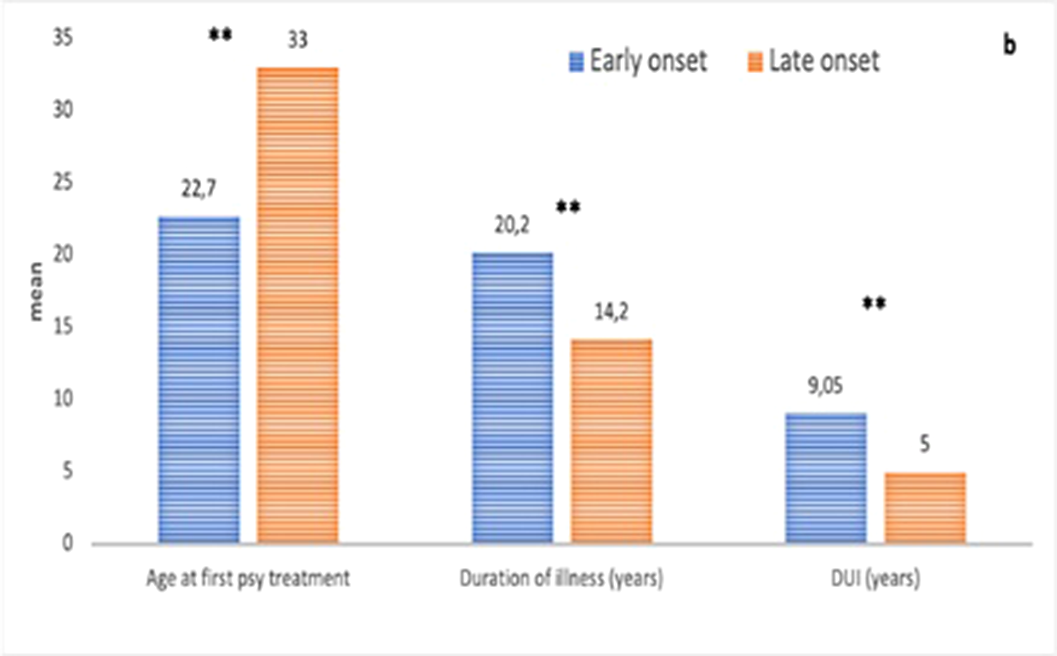
The EO group showed a higher frequency of male gender (65.5% vs 34.5%, p< .001, see Figure 1a), a higher presence of lifetime psychiatric comorbidities (75.7% vs 24.3%, p =.025), and higher rates of Tic and Tourette disorders (7.2% vs 0%, p=.006) compared to the LO group. Additionally, in the EO subgroup, a longer duration of untreated illness was observed (9.05 ± 10.0 vs 5 ± 7.17; p<.001, see Figure 1b), along with a lower presence of insight (33.3% vs. 66.7%, p =.024). No significant differences emerged in the Yale-Brown Obsessive-Compulsive Scale scores between the groups.
Image:
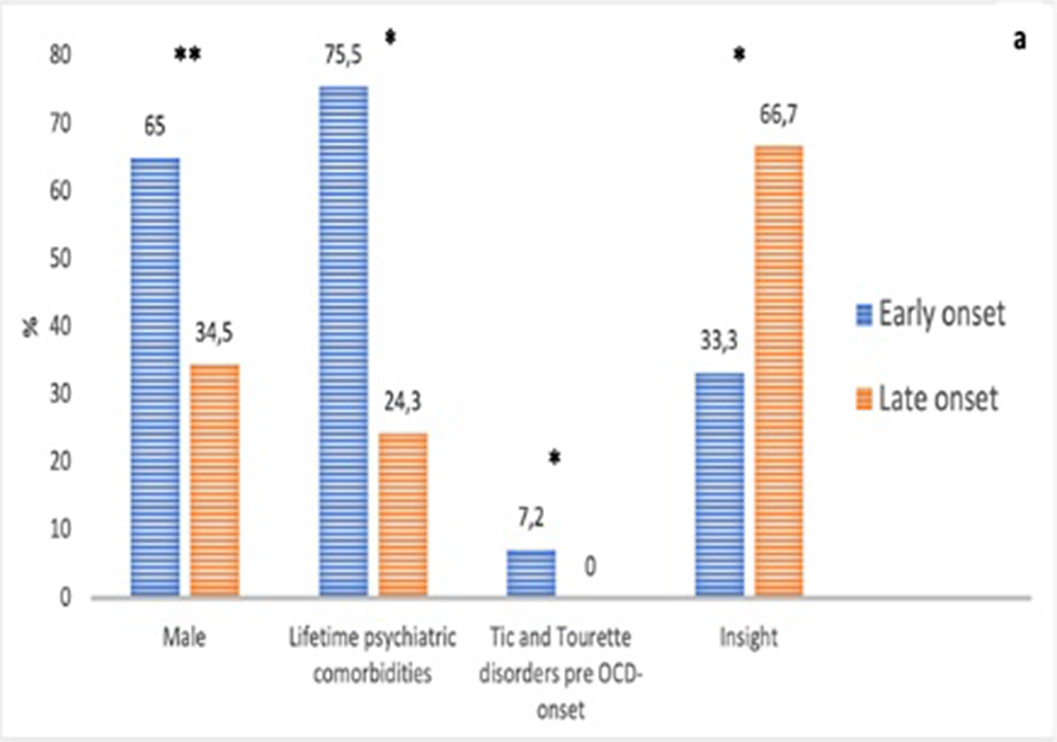
Image 2:
Conclusions
The early-onset OCD subtype highlights a more severe psychopathological profile compared to the late-onset group. Exploring distinct manifestations and developmental trajectories of OCD can contribute to a better definition of homogeneous subtypes, useful for studying risk factors and defining targeted therapeutic strategies for treatment.
Disclosure of Interest
B. Benatti Speakers bureau of: Angelini, Lundbeck, Janssen, Rovi, N. Girone: None Declared, M. Vismara: None Declared, C. Bucca: None Declared, B. Dell’Osso Grant / Research support from: Angelini, Lundbeck, Janssen, Pfizer, Otzuka, Neuraxpharm, and Livanova, Speakers bureau of: Angelini, Lundbeck, Janssen, Pfizer, Otzuka, Neuraxpharm, and Livanova.
The mechanism of craving is not yet fully understood. It implies numerous factors contributing to the decisions an individual has to ponder when faced with a stimulus that has resemblance with the previous experiences related to it. Neural pathways implying the reward mechanism play a significant role in the interpretation of visual, auditory, olfactive stimuli, polarizing the perception towards positive or negative experiences with that substance of abuse.
Objectives
In this study we focus on the cravings related to alcohol use, in a sample of patients admitted in hospital due to alcohol use disorder pathologies, providing the fact that Romania has the 2nd highest prevalence of heavy episodic drinking at least once a month (35% of adults, in a statistic published by Eurostat in 2019).
Methods
We included 30 patients with alcohol use disorder. The PACS (Penn Alcohol Craving Scale) was used to assess the severity of craving in the week prior to the hospital admission.Before visualising any alcohol related cues using VRET, patients will have a half hour of group therapy to lower levels of anxiety. Cortisol and blood sugar will be measured after this half hour to set a baseline . Afterwards, using VRET, subjects will be asked to watch a number of visual stimuli that will include cues to alcohol consumption and different types of beverages. Half hour after visualising cues of alcohol, the craving will be assessed by measuring blood sugar and salivary cortisol levels once again. Completing these measurement, patients will be asked to complete the PACS scale one more time to corelate the patients craving with the biological findings. Blood sugar levels will be measured with a blood glucose meter with test strips. Cortisol levels will be measured using salivary levels of cortisol. We choose measuring the salivary levels of cortisol, due to the fact that using this method, the biological active, free cortisol. Measurements of the serum cortisol indicate the total quantity, but not the biologically effective cortisol.
Results
Visual stimuli of alcohol, with the help of VRET modifies the autonomous glucocorticoid secretion, and provide objective information complimentary to the each individual’s craving assessment
Conclusions
There are a great number of strong ties between alcoholic craving in patients and endogenous shifts in cortisol secretion. We aimed towards a better understanding on craving in patients hospitalised for AUD. Other directions for future research are to find out if it possible to consider craving a form of stress or if we could limit craving, by limiting stress.
ASCL1 (Achaete-scute homolog 1) is a neuron-specific transcription factor involved in CNS maturation in the mammalian brain. It has been shown to be associated with schizophrenia (SZ), Parkinson’s disease, and the development of brain tumors. ASCL1 is expressed in the neuroblastoma cell line SH-SY5Y, which is a widely used model for the study of neurodevelopmental diseases, including SZ.
Objectives
The aim of this work was to study the effect of functional ASCL1 knockout on the transcriptional landscape of SH-SY5Y cells in undifferentiated and neuron-like phenotypes.
Methods
For ASCL1 deletion, SH-SY5Y was sequentially transduced with two lentiviral vectors. One pLV-rtTA-Cas9-(nls)-pCMV-eGFP-PuroR-T2A-rTetR (derived from pCW-Cas9 and pEGFP-Puro) construct encoded Cas9. Stably transduced lines were selected for 3-5 days on puromycin (2 g/L). The inducibility of Cas9 expression was checked after adding the inducer oxytetracycline to the culture medium. The second construct (based on pLK05-tagRFP) encoded, a pair of guide RNAs targeting the start and end of the ASCL1 gene. The sgRNA construct was transduced into the SH-SY5Y-Cas9 cell line in parallel with a nontemplate control (NTC gRNA) as a negative control. Cas9 expression was induced with oxytetracycline for 2 days. Individual clones were obtained by serial dilutions. ASCL1 partial deletion in the clones was confirmed by PCR followed by Sanger sequencing. Disruption of ASCL1 protein synthesis was confirmed by western blot analysis. SH-SY5Y differentiation was induced by retinoic acid (RA). The transcriptomes of mutant clones and NTC controls before and after RA-induced differentiation were sequenced using Illumina technology.
Results
RNAseq data show that a wide range of genes are differentially expressed between control NTC gRNA and wild-type SH-SY5Y. This can be explained by insertional mutagenesis of lentiviral vectors and/or cellular response to the presence of lentiviral constructs. Therefore, we compared the transcriptomes of the ASCL1-del line with NTC control. Differentially expressed genes (DEGs) are predominantly associated with the pathogenesis of SZ, bipolar and depressive disorders. DEGs in ASCL1-del are involved in cell mitosis, neuronal projection, neuropeptide signaling, and formation of intercellular contacts including the synapse. During RA-induced differentiation, ASCL1 activity is restricted to the regulation of a small subset of genes involved in neuroplasticity.
Conclusions
We have established a valid cellular model to study ASCL1-mediated mechanisms associated with SZ. ASCL1 dysfunction promotes SZ development predominantly before neuronal differentiation begins, slowing cell proliferation and preventing the formation of neuronal signatures.
Given the recurrence of mood episodes, with their negative repercussions such as high suicidal risk, significant cognitive decline and the persistence of residual signs with a negative impact on the patient’s family, social and professional functioning, Bipolar Disorder is a mental disorder with a significant social stigma.
Objectives
Identify the socio-demographic and clinical factors that may influence the experience of stigma in bipolar disorder type I
Methods
We conducted a cross-sectional, comparative study over a six-month period at the aftercare unit of Razi Hospital’s psychiatric ward “A”, including patients treated for TB I according to DSM 5 criteria and stable on treatment.
The study was conducted in two stages: first, sociodemographic and clinical characteristics were collected using a pre-established form. The DISCUS scale, validated in Arabic, was then administered.
Results
We included 100 patients (60 men and 40 women) with a mean age of 43.55 years.
The median DISCUS stigma score was 6 (0-19).
The mean value of the DISCUS scale was high for patients of urban origin (p=0.042), with a low socioeconomic level (p=0.001), and poor family dynamics (p<0.001).
The presence of a comorbid personality disorder was significantly associated with stigma (p=0.006). The DISCUS scale was positively associated with the number of years of follow-up, the number of hospitalizations, the number of manic episodes, the number of depressive episodes and the number of episodes with psychotic or melancholic features.
Conclusions
This stigma can have a negative impact on patients’ quality of life in a whole range of ways, including limiting their opportunities for education, employment and housing.
Intensive therapeutic interventions should be considered for vulnerable patients to limit the consequences.
Schizophrenia, as one of the most common disorders from the psychotic spectrum is most commonly detected in the phase of first psychosis and may pose a diagnostic challenge, as commonly comprise a heterogeneous group of schizophrenias, with distinct clinical presentations. If it detected in its prodromal phase without clearly developed psychotic symptoms, the diagnosis is even more unreliable, as the transition to full blown psychosis in the next two years happens in 15-40% of more, depending probably on a variety of cumulative environmental risk factors (including childhood trauma, the use of high-potency cannabis, urbanicity, season of birth). Moreover, the first episode psychosis may underlie for example the first manic episode, brief intermittent psychotic symptoms in persons with borderline personality disorders, acute reaction to trauma, the use of cannabis and psychostimulants and different organics causes, such as endocrinologic disorders and autoimmune encephalitis. Therefore, in everyday clinical practice, the diagnosis of first episode psychosis always requires an assessment of possible causes of psychosis, and also factors that may influence prognosis and treatment. Usual assessment include detailed anamnestic and heteroanamnestic data, physical examination, standard blood laboratory findings, drugs in urine/ blood, EEG and CT/MR scan. The absence of typical risk factors for schizophrenia, as well as the absence of premorbid symptoms and developmental course typical for schizophrenia, abrupt course of psychotic symptoms, symptoms such as disorientation, catatonia, speech disturbances, alteration of consciousness, neurologic signs, autonomic dysfunction and laboratory aberrations may be especially indicative for organic cause and possibly encephalitis and require further confirmation with the analysis of cerebrospinal liquor with antineuronal antibodies.
The nature of psychiatry as a specialty dealing with mental health and emotional well-being may contribute to the perceived stigma. These misconceptions and biases can impact the way psychiatry residents perceive their profession, their own self-esteem, job satisfaction, and overall well-being.
Objectives
Our goal was to evaluate the experience of stigma among psychiatry residents.
Methods
A descriptive cross-sectional online survey was conducted in January 2022 among psychiatry residents at Hedi Chaker University Hospital in Sfax, Tunisia.
The Clinician Associative Stigma Scale (CASS) was used to assess stigmatization experiences.
Results
A total of 34 residents participated in this survey. Their average age was 27.94 years ± 2.43, with 91.2% being female. Of the participants, 61.8% were adult psychiatry residents, and 39.2% were child psychiatry residents. Additionally, the choice of adult psychiatry or child psychiatry specialty was self-determined in 91.2% of cases. The participants had an average of 2 years of experience in psychiatry. They reported a personal medical or surgical history, a personal psychiatric history, and a family history of psychiatric disorders in 32.4%, 8.8%, and 50%, respectively. The average CASS score was 47.09 ± 8.32.
The mean scores for the “discomfort with disclosure” factor, the “stereotypes about mental health professionals” factor, the “negative stereotypes about individuals with serious mental illness” factor, and the “negative stereotypes about effectiveness” factor were respectively 8 ± 3, 9.44 ± 2.57, 15.62 ± 5.7, and 11.35 ± 3.33.
Conclusions
Our study highlighted that residents in psychiatry suffered stigma. Special attention should be given to reducing this phenomenon in this population.
Osteoporosis (OP) is characterized by low bone mass and microarchitectural deterioration of bone tissue. Recent studies have suggested that sleep may significantly influence the pathophysiology of OP.
Objectives
In the present study, we aimed to determine sleep disorders among women with post-menopausal OP.
Methods
A cross-sectional study was conducted between January and June 2023. Patients with post-menopausal OP who visited the rheumatology department in a university hospital in Tunisia were interviewed. The Pittsburgh Sleep Quality Index (PSQI). It is a seven-component scale, including: sleep quality (C1), sleep latency (C2), sleep duration (C3), sleep efficiency (C4), sleep disturbances (C5), sleep medication use (C6), and daytime dysfunction (C7).PSQI ≤ 7 indicated normal sleep quality, and PSQI > 7 indicated poor sleep quality.
Results
Ninety-three women diagnosed with post-menopausal OP were interviewed. the number of complete questionnaires was 72. The valid rate was 77.4%. All were women. The mean age was 72.5 (±1.08). The median duration of menopause was 23 years (IIQ= [10.5-28.5]). Forty-five women were diagnosed with bone fractures (62%). Thirty-three patients (45.8%) were obese (IMC>30). The median PSQI score was 16 (IIQ = [6-18]). Forty-seven participants (65.3%) had poor sleep quality (PSQI > 7). According to the items of PSQI: the median score of sleep duration, sleep Efficiency and sleep disturbances was 1 (IIQ= [1 -2]) for each item. The median score of sleep latency was 3 (IIQ=[2-3]). For daytime dysfunction, the median score was 2 (IIQ=[0-3]).
Study analytics revealed a significant association between daytime dysfunction and the presence of bone fractures (p=10-3), the same was with sleep disturbances and bone fractures (p=10-3). Body mass index (BMI) was significantly and inversely associated with sleep quality (r= -0.313; p= 0.007). Sleep latency was significantly associated with physical activity (p<10-3).
Conclusions
In conclusion, our results suggest that sleep quality is associated with physical activity and BMI. This is consistent with the most recent evidence in the literature. These findings support expanding the scope of wellness programs to promote healthy sleep among osteoporotic women.
Orthorexia nervosa is defined as an unhealthy obsession with eating healthy food. Recent studies currently demonstrated that students in health-oriented academic programs, highly focused on nutrition and physical exercise, are more prone to develop orthorexia nervosa than students in other educational areas.
Objectives
Determine the prevalence of orthorexia nervosa in medical students and identify associated factors.
Methods
We conducted a cross-sectional, descriptive, and analytical study in the faculty of medicine of Sfax in Tunisia, between February and April 2023. We used ORTO-15 for the assessment of orthorexia.
Results
The research has enrolled 220 students. Their mean age was 21.40±1.68 years, with female predominance (70%). The mean Body mass index (BMI) was 22.46±4.15 kg/m2. The prevalence of overweight (BMI≥25 kg/m2) and obesity (BMI≥30 kg/m2) were respectively 19.5% and 3.6%. Over a third of students (34.1%) were using means of weight control, of which the diet represented 62.66% of cases. The participants had consulted a nutritionist in 11.4% of cases. The ORTO-15 mean total score was 36.88±6.76, with a mean score of 12.95±2.69 for cognitive dimension, 13.31±2.70 for clinical dimension, and 10.61±2.52 for emotional dimension. A total of 60% of participants had a score under the threshold.
Orthorexia was significantly associated with female gender (p<10-3), overweight or obesity (p=0.037), the use of weight control methods (p<10-3), following a diet (p<10-3), and consulting a nutritionist (p=0.009).
Conclusions
In our study, orthorexia seems to be quite widespread among medical students, particularly females, who are overweight or obese, and who use weight control methods.
The coronavirus infection emerging in 2019 caused a plethora of physical and mental health problems around the world. Recent studies showed a persistent psychological distress even after few months of the infection.
Objectives
To determine the prevalence of depressive symptoms, insomnia and dyspnea among covid-19 survivors.
Methods
We conducted a prospective cohort study including 121 Tunisian COVID-19 inpatients who had been discharged alive from hospital. Each enrolled patient was asked about the period before the hospital stay, and the 6-9 month-period after hospital discharge. Patient Health Questionnaire-9 (PHQ-9) was used to assess depressive symptoms. We assessed insomnia via the insomnia severity index (ISI) and dyspnea through the mMRC (modified British Medical Research Council).
Results
The median age of participants was 59 years. The prevalence of depressive symptoms and insomnia increased significantly after the pandemic (5.7% vs 57.9%, p=0.038, r=0.189; and 4.9% vs 26.4%; p<0.0001, r=0.349 respectively). Younger patients presented more depressive symptoms (p<0.0001). females were more likely to suffer from depressive symptoms (p<0.0001). Dyspnea was more prevalent among survivors with depressive symptoms (p=0.001). Patients with depressive symptoms exhibited more insomnia (p<0.0001).
Conclusions
The pandemic of covid19 emerged a wide range of physical and mental health problems with complex physiopathology. The early detection of these disorders improves the quality of life of these patients.
The somatization problem has been one of the most acute in mental health for half a century (Kirmayer, L., 2000). Patients with somatic complaints turn to specialists in various fields but rarely to psychologists and psychiatrists, although the connection between bodily suffering and psychological difficulties sometimes lies on the surface (Molchanova E., 2016). In the last twenty years, the mechanisms of somatization have been considered by several disciplines, one of which is cultural psychiatry, which has become relevant.
Unfortunately, most of the research focuses on the cultural characteristics of migrants living in the United States (Groleau, D. and Kirmayer, L. 2004). There needs to be more research on the cultural features of somatization in Kyrgyz culture.
Objectives
The goal of the study is to discover the distinctive features of the process of somatization in Kyrgyz culture
The objectives are:
To create a vocabulary of somatic phrases and idioms used to represent somatic problems to find the most commonly used somatic idioms for emotional complaints by native speakers of the Kyrgyz language.
To describe the mechanism of transformation of the emotional symptom into a specifically located and presented somatic complaint.
Methods
The research used a mixed, qualitative, and quantitative design.
The first stage is qualitative, including ten semi-structured interviews with linguists, culturologists, historians, and specialists in folk art.
The second stage included four focus groups (12 people in each group) with a follow-up analysis. The recruitment of respondents was carried out through social networks, announcements, and the snowball method.
The third stage was quantitative. With the help of the dictionary compiled at the first stage, 250 participants ranked the frequency of somatic idioms, which were used to express the emotional problems
Results
There have been found more than 200 somatic idioms, which are used to present emotional problems. The most frequent ones describe the heart, liver, and joints. Heart metaphors are associated with despair and anxiety, joints - with depression, and liver metaphors - with some personality characteristics, such as conformity and kindness. The created map of somatic representation of emotional problems shows the most frequent localization of somatic symptoms in disorders featuring somatic symptoms in native Kyrgyz speakers.
Conclusions
There is a culturally shaped specifics of somatic representations of emotional problems among native Kyrgyz speakers. More research needs to be conducted to interpret the nature of people’s emotional problems represented by somatic symptoms.
Stigma describes prejudicial attitudes, negative stereotypes, and discrimination targeting a subgroup. Various forms of stigma have been identified in the literature, including self-stigma. Self-stigma or internalized stigma occurs when stigmatized individuals become aware of the negative stereotypes and apply these to themselves. Self-stigma may be a barrier to career development and employment in individuals with Autism Spectrum Disorder (ASD). However, there are few data available on the presence of self-stigma among young adults with ASD in Chile to inform local interventions and policies.
Objectives
To analyze self-stigma and its relation with career development and employment in young adults with ASD in Chile.
Methods
A mixed-method observational study was conducted to analyze self-stigma and its association with career development and employment among young adults with ASD in two regions of Chile. For the quantitative analysis, self-stigma was assessed using the Internalized Stigma of Mental Illness (ISMI) scale, and employment information was collected. For the qualitative analysis, in-depth interviews were conducted. Data from the interviews were digitalized and transcribed, and the analysis was conducted using ATLAs.ti following the principles of Glaser and Strauss’s Grounded Theory. All participants provided written informed consent, and the study was approved by the local Institutional Review Board.
Results
Overall, 356 participants were included in the quantitative analysis (mean age: 27.8 [SD 6.2] years, 44.7% women, 14.8% with regular employment). The mean ISMI for the total sample was 2.34 (SD = 0.62). By triangulating this information with the qualitative analysis (n=27), it was observed that young adults with ASD frequently experience self-stigma attitudes. Through the in-depth interviews, we identified barriers and facilitators for the development of self-stigma. Also, we identified that negative self-perceptions among young adults with ASD may be a barrier to seeking career development opportunities and employment in this population.
Conclusions
The current study shows self-stigma is present in young adults with ASD in Chile, and this may impact negatively their career development and employment.
Postpartum insomnia is a significant and often overlooked mental health concern affecting mothers during the postnatal period. Sleep disturbances during this critical time can have far-reaching implications for maternal well-being and the quality of care provided to newborns.
Objectives
The primary objective of this review is to analyze recent clinical literature on postpartum insomnia to gain a deeper understanding of its epidemiology, clinical features, and management approaches. By synthesizing the latest research findings, this review aims to inform healthcare professionals and policymakers about the significance of postpartum insomnia and promote early recognition and intervention.
Methods
A case report of a 43-year-old woman in the fifth month postpartum after a twin birth who comes to the emergency department accompanied by her partner with thoughts of death and impulse phobias due to insomnia of months of evolution. Also a systematic search of the PubMed database was conducted using the keyword “Postpartum insomnia,” and articles published between 2013 and 2023 were included. A total of 20 clinical articles meeting the inclusion criteria were analyzed to provide a comprehensive overview of postpartum insomnia.
Results
The review reveals that postpartum insomnia is a prevalent and often underdiagnosed condition, affecting a significant proportion of new mothers. Risk factors such as maternal age, parity, social support, and hormonal fluctuations have been identified. Diagnostic challenges arise due to the overlap of symptoms with postpartum mood disorders, necessitating a comprehensive clinical assessment. Recent research emphasizes the importance of non-pharmacological interventions, including sleep hygiene education, cognitive-behavioral therapy for insomnia (CBT-I), and mindfulness-based approaches, as the first-line treatment options. However, pharmacotherapy may be considered in severe cases. Untreated postpartum insomnia has been associated with adverse maternal and infant outcomes, including impaired bonding, increased risk of postpartum depression, and developmental delays in infants.
Conclusions
In conclusion, postpartum insomnia is a prevalent yet often underrecognized mental health concern with multifaceted clinical implications. This review highlights the importance of early detection and intervention to mitigate its impact on maternal well-being and infant development. The integration of non-pharmacological interventions, particularly CBT-I and mindfulness-based strategies, into routine postpartum care holds promise in improving sleep quality and overall postnatal mental health. Healthcare providers should be vigilant in assessing and addressing postpartum insomnia to optimize the well-being of both mothers and infants
A growing body of evidence has shown the association between autoimmune thyroiditis and mental illness (Rege et al. AUS N J S Psychiatry 2013; 300 141-154). Identifying the neuropsychiatric features associated with thyroid antibody positivity could have significant implications for diagnostic and therapeutic strategies. However, the link between anti-thyroid antibodies and precise underlying pathophysiology requires future research.
Objectives
The aim of the present study was to conduct a retrospective evolution in patients diagnosed with schizophrenia spectrum disorder and affective disorder who were screened for anti-thyroid antibodies at the time of their hospitalization and to investigate neuropsychiatric features of anti-thyroid antibody-positive patients.
Methods
A total of 143 inpatients diagnosed with schizophrenia spectrum disorders and affective disorders between 2021 and 2023 were screened for anti-thyroid antibodies such as thyroid peroxidase (TPO) and thyroglobulin (TG). All patients were women. In order to elucidate the subsequent neuropsychiatric clinical features of individuals with positive anti-thyroid antibodies, the retrospective examination was conducted based on Neuropsychiatric Invetory-Q (NPI-Q) and DSM-V diagnostic criteria utilized at the time of hospitalization.
Results
The main age of the patients was 48.2 (SD 10.4). A total of 143 inpatients with schizophrenia spectrum disorders and affective disorders were screened for anti-thyroid antibodies at the time of their hospitalizations. %23.1 (n=33) tested positive for at least one of the anti-TG or anti-TPO. All patients were euthyroid. The neuropsychiatric diagnoses are shown in Table 1. The most common neuropsychiatric features assessed by NPI-Q are shown in Table 2. 12.1% (n=4) of all patients were treated with IV steroid Pulse therapy.Table 1.
Neuropsychiatric syndrom-level diagnostic patterns according to DSM-V
Patients with positive thyroid autoantibodies(n=33)
Manic syndrome
10 (30.3%)
Psychotic Syndrome
19 ( 57.6%)
Depression syndrome
5 (15.2%)
Catatonia
10 (30.3%)
Exited
6 (18.2%)
Stuporus
2 (6.1%)
Fluctuating
2 (6.1%)
Table 2.
The most common clusters of Neuropsychiatric features
NPI-Q
Positive Thyroid Autoantibodies(n=33)
Delusion
15 (45.4%)
Agitation/Aggression
14 (42.4%)
Irrıtability
14 (42.4%)
Motor abnormality
14 (42.4%)
Sleep disorder
15 (45.4%)
Appetite/Eating
14 (42.4%)
Conclusions
In particular, in a subset of schizophrenia spectrum disorder or affective disorder patients with positive anti-thyroid antibodies may indicate autoimmunity, especially in cases where catatonic symptoms dominate the clinical presentation.
This review explores the benefits of incorporating personal experience(s) with non-ordinary states of consciousness as a core component of Psychedelic-Assisted Therapy (PaT) training.
The program incorporates an optional experiential training component. We collaborate with professionals affiliated with a Canadian non-profit organization specializing in PaT experiential training. As do other stakeholders in this field– including program developers, educators, and researchers–we navigate a rapidly evolving and often ambiguous landscape, where infrastructure and regulations are lagging scientific data and best practices. Given the potential for differing perspectives, the authors acknowledge that their personal experiences could be a potential source of bias, influencing objectivity.
Objectives
Conversely, these lived experiences could be seen as valuable contributions, enriching perspectives on the role of experiential training. In that context, our intention is to provide a comprehensive review, presenting arguments both in favour of and against the integration of experiential training in PaT.
Methods
There is an urgent need for establishing legal training and practice options, bridging the underground with best practices, with all practitioners operating within a regulated and ethically accountable framework. Such a proactive strategy would mitigate the risks associated with unregulated training in a field with relatively few guidelines on how to develop competency.
Results
An in-training PaT experience supports personal comfort, self-assuredness, and confidence supporting others in non-ordinary states of consciousness, with contemporary researchers/experts highlighting the specific challenges among therapists who lack lived experience. These might include holding unrealistic expectations, being unaware of the impacts of set and setting, and misunderstanding
Conclusions
Whether or not therapists engage in experiential training - serving a dual in one’s own healing process, it is imperative that they maintain their own wellness practices. This proactive/primary prevention strategy would improve well-being and resilience, reducing secondary mental health consequences for patients and providers. Cultivating a culture of self-care within the mental health field should be an overarching priority for training programs and professional organizations, without which we are left with broken people in support of broken people. Current rates of burnout, absenteeism and early retirement suggest that we are already on that trajectory and should serve as a call to action.
Valproic acid (VPA) has been used in clinical practice since the 60’s, with a relatively favourable safety and efficacy profile. Pancreatitis, hepatotoxicity and teratogenicity are the most significant adverse drug reactions. VPA is also known for causing hyperammonemia, which may be asymptomatic or can present with encephalopathy. VPA-induced hyperammonemic encephalopathy (VHE) is a serious but reversible condition, which requires high clinical suspicion for diagnosis. It may occur acutely or after chronic use of VPA.
Objectives
Review how frequent is for valproic acid to cause hyperammonemic encephalopathy, signs to watch out for and how it can be treated.
Methods
Presentation of a patient’s case and review of existing literature, in regards to encephalopathy caused by valproic acid as a result of ammonia elevation.
Results
In the case displayed here, the patient is diagnosed of hyperammonemic encephalopathy after being treated with valproic acid as treatment for borderline personality disorder.
Reviewing literature, cases of hyperammonemia are rarely reported as VPA-induced, probably because this increased level of ammonia in blood can vary between asymptomatic, and clinically relevant levels. Symptomatology due to VPA-induced hyperammonemia include: lethargy, impaired consciousness, focal neurological signs and symptoms and increased seizure frequency. More rare described symptoms are: aggression, ataxia, asterixis, vomiting and coma.
There are multiple treatment modalities for patients diagnosed with VHE, the primary treatment being the discontinuation of VPA. Other treatments frequently used are Lactulose and Carnitine.
Conclusions
VHE is a rare occurrence, however can have fatal outcomes if not recognized and managed in time. Physicians should be vigilant while initiating Valproate therapy to patients. Clinicians should consider the possibility of VHE in patients with unexplained altered mental status, regardless of the duration of VPA therapy. A timely diagnosis is essential to prompt effective treatment, thus ensuring the patient’s safety and decreasing the length of hospitalisation and the cost of care in hospitals.
There has been a recent shift in the conceptualisation of personality disorders in diagnostic systems such as DSM-5 or ICD-11, from a categorical approach towards a dimensional approach reflecting severity in general or severity of dysfunction and related pathological traits. In addition, several psychotherapeutic approaches work with their own model of personality pathology, which similarly capture symptoms of personality disorders and their underlying processes in a more subtle way from multiple aspects, and along different constructs.
Objectives
The aim of our study was to investigate similarities and differences between conceptualisations of personality disorder and instruments used for evaluation based on the BNO-11 Personality Disorders Severity Questionnaire (PDS-ICD-11), Module I. of the Structured Diagnostic Interview for the DSM-5 Alternative Personality Model (SCID-5-AMPD) measuring level of personality function, and the Young Schema Questionnaire assessing early maladaptive schemas.
Methods
Hospitalized borderline patients were assessed using the Young Schema Questionnaire, the PDS-ICD-11, and Module I. of the SCID-5-AMPD assessing personality function level. Data are analysed using correlation and linear regression models.
Results
Only part of the results are shown. The PDS-ICD-11 Severity Index and Self-function Index showed significant (p<0.05) and strong correlations with the Abandonment (r=0.98, r=0.94), Vulnerability to harm and illness (r=0. 92, r=0.98), Insufficient Self-Control (r=0.91, r=0.88) and Negativism/Pessimism (r=0.95, r=0.90) schemas. The mean score and all domains of the SCID-5-AMPD Module I (level of personality function) showed significant strong correlations with the Vulnerability to harm and illness schema (AMPD-Average r=0.87; AMPD-Identity r=0.86, AMPD-Objectivity r=0.81, AMPD-Empathy r=0. 77, AMPD-Intimacy r=0.80, p<0.05); moreover, a strong significant correlation was found between the Abandonment schema and AMPD-Average (r=0.81, p<0.05), AMPD-Identity (r=0.98, p<0.05), and AMPD-Intimacy domains (r=0.77, p<0.05).
Conclusions
The main indicators of measures that operationalise a dimensional approach to personality disorders show distinct patterns of strong overlap with some of the maladaptive schemas but cover only a part of the schema domains. For a careful diagnosis and psychotherapeutic plan, the combined use of these measures can provide in-depth and multifaceted information.
Emotion regulation is the conscious or automatic control of emotions to adapt, cope, and maintain well-being. Effective emotion regulation is central to mental health, impacting work, and relationships. University students, facing academic pressures and social transitions, represent a unique demographic where emotion regulation challenges are particularly relevant.
Objectives
This study aimed to explore the emotion regulation difficulties in university students.
Methods
A descriptive study was led from August to September 2023. An online questionnaire was distributed to a population of Tunisian university students. We administered a socio-demographic questionnaire and the Arabic version of the difficulties in emotion regulation scale short form (DRES-SF), a self-report measure developed to assess clinically relevant difficulties in emotion regulation.
Results
Participants in this study consisted of 307 undergraduate students, with 78.1% being women and 21.9% men, representing various academic disciplines at Tunis el Manar University in Tunisia. The mean age of the participants was 22 years, with a standard deviation of 2.84.In the assessment of emotional regulation difficulties, participants reported a mean total score of 42.47 ± 12.68. Participants who repeated years in college had more difficulties in emotional regulation (p<0.05). Limited access to emotion regulation strategies had a mean score of 7.64 ± 3.0, while nonacceptance of emotional responses was rated at 7.40 ± 3.17. Additionally, impulse control difficulties were reported with a mean score of 6.46 ± 3.31, and difficulties in engaging in goal-directed behavior were observed with a mean score of 9.44 ± 3.18. Moreover, participants expressed a lack of emotional awareness, which was quantified with a mean score of 8.45 ± 2.69, and a lack of emotional clarity, which yielded a mean score of 7.12 ± 2.69. Additionally, a significant association was noted between gender (p < 0.05), age (p < 0.05), and the lack of emotional awareness, suggesting potential gender and age-related variations in emotional regulation difficulties within this university sample.
Conclusions
Overall, these findings suggest the necessity of emotion regulation training in the university setting. Further studies are important to understand the impact of emotional regulation difficulties.
