To save content items to your account,
please confirm that you agree to abide by our usage policies.
If this is the first time you use this feature, you will be asked to authorise Cambridge Core to connect with your account.
Find out more about saving content to .
To save content items to your Kindle, first ensure no-reply@cambridge.org
is added to your Approved Personal Document E-mail List under your Personal Document Settings
on the Manage Your Content and Devices page of your Amazon account. Then enter the ‘name’ part
of your Kindle email address below.
Find out more about saving to your Kindle.
Note you can select to save to either the @free.kindle.com or @kindle.com variations.
‘@free.kindle.com’ emails are free but can only be saved to your device when it is connected to wi-fi.
‘@kindle.com’ emails can be delivered even when you are not connected to wi-fi, but note that service fees apply.
Violence in psychiatric settings poses significant challenges for healthcare professionals, particularly nurses. This study examines psychiatric nurses’ perceptions of violence and its impact on the quality of care they provide.
Objectives
The primary objective is to assess the influence of violence on the quality of care in psychiatric settings, with a focus on the experiences and perspectives of nurses.
Methods
We employed a questionnaire-based survey administered to 30 psychiatric nurses working in both inpatient and outpatient psychiatric units of the Razi hospital Manouba. The survey gathered information on the prevalence of violence, types of violence encountered, and the impact on nursing practice.
Results
Of the 30 respondents, 75% identified as female and 25% identified as male. Most of them had more than five years of experience. The primary results revealed that all the psychiatric nurses reported experiencing at least one incident of violence during their psychiatric nursing careers. Regarding exposure to verbal violence, the results indicated that 52% encountered it sometimes, 22% often, 17% very often. Regarding physical violence, 30% experienced it rarely, 26% sometimes, 13% often, and 13% very often. For sexual violence, 56% reported never experiencing it, 8% rarely, 26% sometimes, and 8% very often. These incidents had varying effects on nurses’ emotional well-being, job satisfaction, and the quality of care they were able to provide. 53% of nurses reported experiencing emotional distress and feelings of anxiety as a result of violence, 13% felt anger and frustration. One nurse declared he was not affected emotionally. Most of the respondents (75%) indicated that their job satisfaction had been negatively affected by violent incidents. 40% of respondents stated that violence has a negative impact on their relationship with patients, but they make efforts to maintain care quality. Whereas, 20% found ways to strengthen connections despite challenging experiences.The most commonly endorsed strategies to cope with violence included attempting to master their emotions by remaining calm and patient (78% of respondents), seeking assistance or the presence of other healthcare team members (65%), and maintaining a safe distance from patients (69%). Fewer participants reported raising their voice and adopting a position of authority (30%), while a minority indicated engaging in additional training on the management of violent situations (20%). These results illustrate the diverse range of personal coping strategies.
Conclusions
Violence in psychiatric settings has a multifaceted impact on psychiatric nurses, affecting both their emotional well-being and the quality of care they provide. Strategies for managing and preventing violence, as well as supporting nurses in coping with these challenges, are essential for maintaining high-quality psychiatric care.
Shakespeare wrote that “We are such stuff as dreams are made on; and our little life is rounded with a sleep.” Sleep is a fundamental part of our being, so much so, humans tend to spend one third of their lives in this immobile and vulnerable state. Disorders of sleep have been the target of much scientific curiosity and investigation, with inumerous articles, reports and books dedicated to the theme. The bidirectional relationship between psychiatric disorders and those of sleep is also well described. Schizophrenia is a heterogenous psychiatric disorder which is often associated with sleep disturbances of various kinds.
Objectives
The authors aim to briefly explore the relationship between schizophrenia and sleep disturbances. Potential underlying mechanisms and risk factors, as well as therapeutic interventions will be addressed.
Methods
The authors conducted a brief non-structured narrative literature review using articles published in the Medline/Pubmed, ScienceDirect and Google Scholar databases. The keywords used during the research, alone or in combination, included: sleep disturbance, sleep disorder and schizophrenia.The studies consulted in this work included: cross-sectional studies, cohort studies, literature reviews and clinical case reports. Works that were included, were written in the English language and deemed as pertinent to the explored theme.
Results
Although sleep disturbances do not make up part of the criteria formal diagnosis of schizophrenia, they are present in approximately 80% of those with the condition and have been identified as a common symptom in prodromic clinical pictures. The problems in sleep are as heterogenous as the presentations in schizophrenia, ranging from insomnia, restless legs syndrome, obstructuve sleep apnea, circadian rhythm disfunctions to hypersomnia. Sleep has been identified as fundamental for the reparation and restoration of various bodily systems, it is no surprise that sleep irregularities, especially in schizophrenia, can significantly reduce quality of life and promote deterioration. Some studies have stated the role that D2 receptors have in the classic symptoms of schizophrenia as well as on sleep disturbances. Second-generations antipsychotics have not only demonstrated much promise on psychotic symptoms, but they appear to aid in sleep regulation and quality.
Conclusions
Sleep is fundamental for mental health. Various sleep disturbances have been identified in those suffering with schizophrenia. Slepe disturbances have been associated with worse outcomes, more florid clinical pictures and significant deterioration. Thus, bettering sleep quality in these patients, would permit better health outcomes which are fundamental in those who live with schizophrenia.
People with psychiatric disorders are particularly vulnerable to SARS-CoV-2 infection and its associated complications. However, current literature show that not all psychiatric disorders are equally vulnerable to COVID-19.
Objectives
This study aimed to assess whether individuals with distinct psychiatric disorders exhibit different risk of SARS-CoV-2 infection, COVID-19 hospitalization, and mortality.
Methods
We conducted a case-control study using data of electronic health records from Catalonia. Cases included adults with a hospital admission between 2017 and 2019 for non-affective psychosis, bipolar disorder, depressive disorder, stress-related disorders, neurotic/somatoform disorders, and substance misuse. These were matched to patients without a diagnosis by sex, 5-year age band, and living area. Outcomes included SARS-CoV-2 infection, hospitalization, and COVID-19-related death up to December 2021. Logistic regression analysis were employed to test the association between the six groups of psychiatric disorders and COVID-19 outcomes, controlling for age, sex, smoking, being in a nursing home, and physical comorbidities.
Results
785,378 subjects were included. Preliminary findings showed that patients diagnosed with psychosis and bipolar disorder had lower risk of infection [OR: 0.85 (95% CI: 0.79-0.92), p<0.001; OR: 0.84 (95% CI: 0.76-0.92), p<0.001], whereas individuals with stress-related and neurotic/somatoform disorders had higher risk of infection [OR: 1.08 (95% CI: 1.04-1.14), p<0.001; OR: 1.06 (95% CI: 1.03-1.10), p<0.001]. People with depressive, stress-related, and neurotic/somatoform disorders had lower risk of COVID-19 hospitalization [OR: 0.87 (95% CI: 0.78-0.97), p = 0.01; OR: 0.71 (95% CI: 0.61-0.84), p<0.001; OR: 0.67 (95% CI: 0.60-0.76), p<0.001]. In line with these results, individuals with stress-related disorders also experienced lower mortality [0.49 (95% CI: 0.33-0.70), p<0.001]. Conversely, people with psychosis, bipolar disorder, and substance misuse exhibited higher risk of COVID-19-related death [OR: 2.9 (95% CI: 1.68-3.1), p<0.001; OR: 1.95 (95% CI: 1.30-2.81), p<0.001; OR: 1.82 (95% CI: 1.49-2.20), p<0.001].
Conclusions
We found different risks of SARS-CoV-2 infection, COVID-19 hospitalization, and COVID-19 mortality for psychiatric disorder groups. Differences in vulnerability to COVID-19 among people with psychiatric disorders might be explained by factors such as shared living facilities, physical comorbidities, psychotropic medications, and difficulties in accessing high-intensity medical care. Special attention should be directed towards individuals with psychosis, bipolar disorder, and substance misuse.
Important goals of substitution therapy include: reducing the desire to use opioids - methadone enters the brain with a minimal euphoric effect, reduce the desire to use opioids, allowing to avoid the risk of overdose and control their addiction; prevention of withdrawal syndrome; improving the quality of life - can contribute to the restoration of patients, allowing them to return to a normal life, improve their social, professional and family situation; reducing the risk of transmission of infections HIV and hepatitis; reducing crime - control addiction can reduce related crime and to illicitly obtain opioids; psychosocial support helps patients develop coping strategies and increases their chances of long-term recovery.
The goal of substitution therapy is not to completely get rid of addiction, but it can help stabilize the patient’s life and facilitate the recovery process.
Objectives
Many patients receiving MT also have mental disorders such as cognitive decline, depression, anxiety, PTSD, or even bipolar disorder. These conditions can greatly affect the course and results of treatment.They may also have problems with employment, housing, family conflicts, and legal issues.
Methods
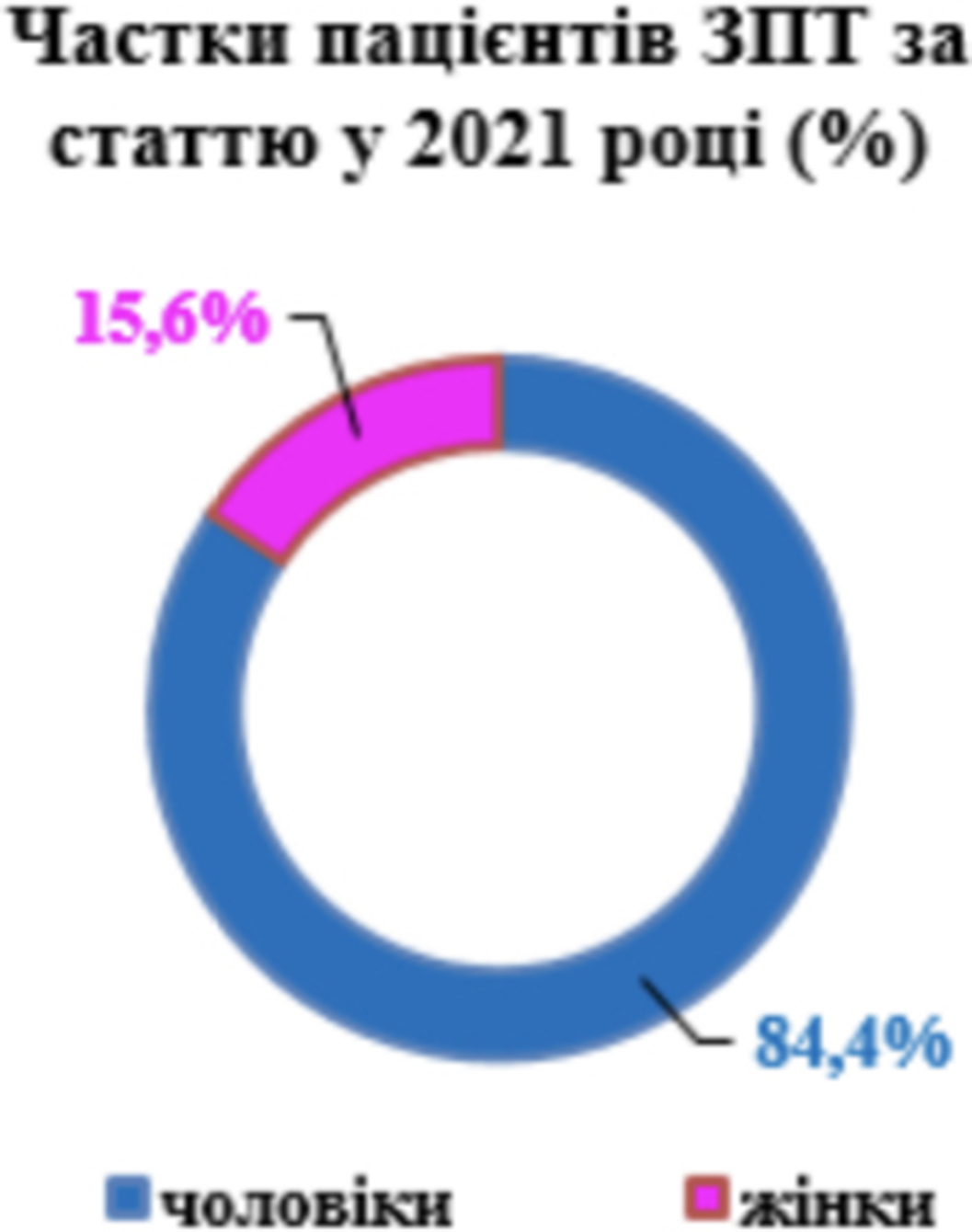
In the course of the study, 134 patients aged 26 to 64 years (105 men and 29 women) with a diagnosis of opioid addiction and receiving methadone therapy were examined. Of them, 48 patients had a period of stay at MT of up to three years and 86 – more than three years. The Montreal Cognitive Scale (MoCA) was used to assess comorbid cognitive impairments. The WHOQOL-BREF questionnaire was used to assess the quality of life.
Results
The range of indicators of cognitive functions varied from 21 to 29 points (average - 25.3). 61 patients (46%) showed a result of 26 and above, indicating the absence of cognitive impairment, 51 patients (38%) received from 24 to 21, indicating moderate cognitive impairment. 22 patients (16%) had borderline indicators.
When assessing the level of quality of life, indicators of physical and psychological components varied from 12 to 31; self-perception in the range from 10 to 27 points; microsocial support from 3 to 14 points; social well-being from 11 to 36. In general, the level of satisfaction with the quality of life was in the range of 38-83%.
Image:
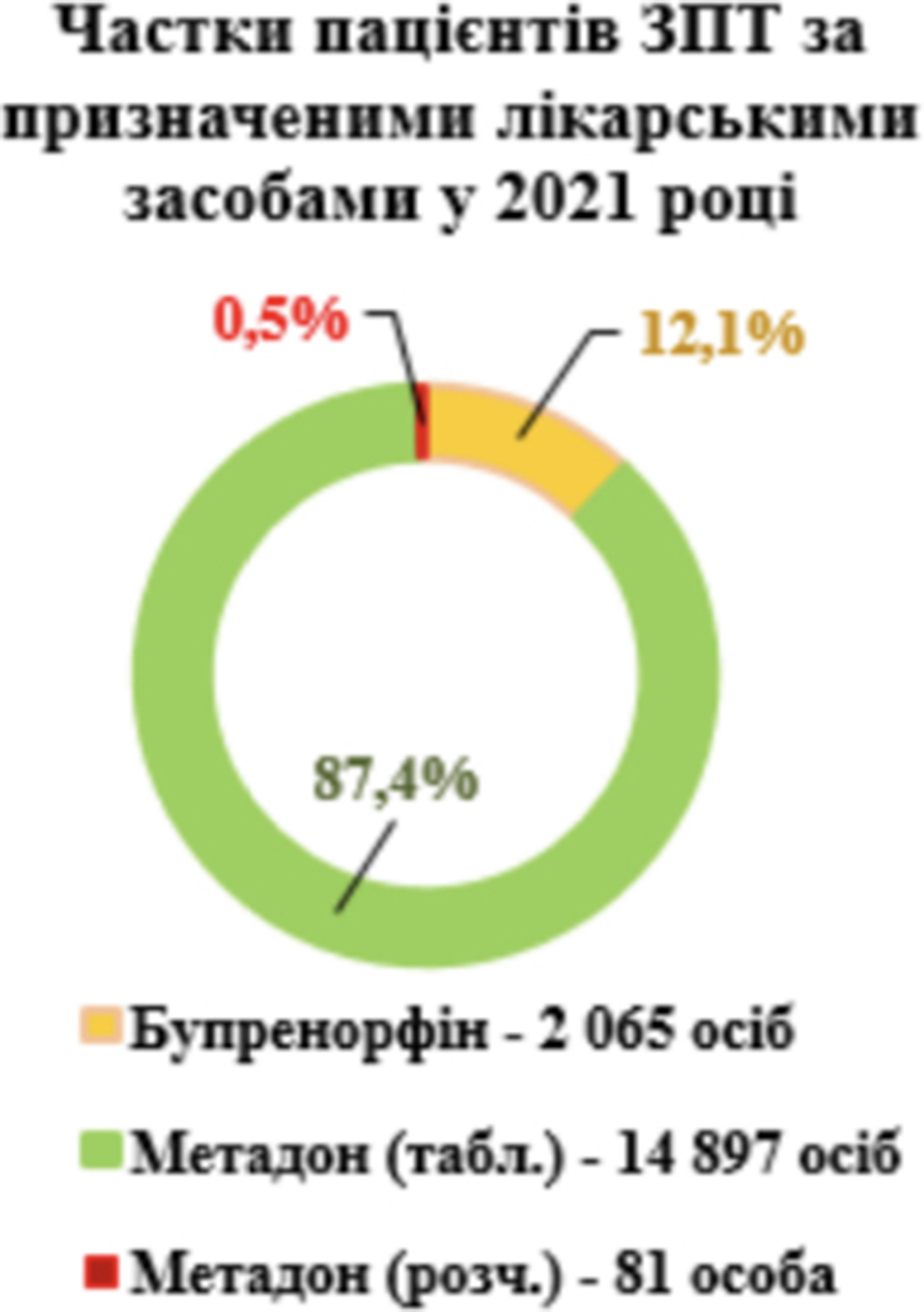
Image 2:
Conclusions
Opioid addiction therapy should be consist of an assessment of physical and psychological status, comorbid disorders, quality of life, etc. We can see, MT does not significantly affect the cognitive functions. The differences in the assessment of the quality of life were noted in the components of microsocial support and social well-being, which indicates the vulnerability of patients in these areas. Duration of opioid dependence, availability of psychosocial support, presence of comorbid conditions affect the quality of life. It is important that treatment is tailored to individual needs of patients.
Parkinson’s disease (PD) is a neurodegenerative condition that is predominantly characterised by its motor symptoms. Nevertheless, it is important to note that non-motor symptoms, particularly depression often occur concurrently, exerting a substantial influence on the progression of the disease and the overall well-being of individuals affected by it.
Objectives
The objective of this study is to examine the influence of depression on the advancement of Parkinson’s disease (PD) from a psychiatric perspective. This analysis will involve an assessment of the common neurobiological pathways involved and the potential implications for clinical treatment and care.
Methods
A comprehensive assessment of the literature was conducted, focusing on clinical observations, neurochemical interactions, and neuroimaging investigations that provide insight into the concurrent presence of depression and Parkinson’s disease (PD). This study aimed to investigate the potential impact of depression on the severity of Parkinson’s disease symptoms, the course of the disease, and the responsiveness to treatment.
Results
Depression in Parkinson’s disease (PD) is not only a reactive occurrence, but rather it may be attributed to common pathophysiological mechanisms, such as changes in dopamine and serotonin pathways. The coexistence of depression among individuals with Parkinson’s disease (PD) has been linked to heightened severity of motor and cognitive symptoms, accelerated development of the disease, and diminished effectiveness of therapy interventions. Furthermore, the presence of depression in individuals with Parkinson’s disease intensifies the psychosocial difficulties experienced by both patients and their carers.
Conclusions
The recognition and management of depression in individuals with Parkinson’s disease (PD) is of utmost importance in order to enhance treatment approaches and enhance the overall well-being of patients. The establishment of interdisciplinary collaboration between neurologists and psychiatrists is necessary in order to guarantee a holistic approach to patient care.
Suicide is a significant global public health issue that has a severe impact on children and adolescents.
Objectives
This study examined the epidemiological features of self-poisoning events among these groups in Morocco.
Methods
In this retrospective study, data on intentional poisoning cases among children under 15 years of age and adolescents aged 15-19 years were analyzed. The Moroccan Poison Control Center has reported these cases over a period of 34 years.
Results
During the study period, 7,111 deliberate self-poisoning cases were documented among children and adolescents, representing 30% of all reported self-poisoning cases (out of a total of 23,711 cases with known ages). The vast majority of the cases (80.8%) involved females, indicating a significant female-to-male ratio of 4.2. The patients had a mean age of 16.05 ± 2.10 years. Notably, drugs were the predominant method of self-poisoning, comprising 51.7% of the cases, followed by pesticides at 31.3%. The symptoms of poisoning manifested with significant variation, contingent on the type of toxin involved, the amount ingested, and the time passed before medical care was administered. Of the 4,711 cases with known outcomes, 144 (3.06%) were fatal. Nonetheless, the outcomes were favorable for the remaining cases, with or without lasting sequelae.
Conclusions
The ongoing prevalence of suicide and suicide attempts among children and adolescents is a prominent issue in public health. Our research emphasizes the crucial necessity to address suicide, as it remains one of the primary causes of mortality in young individuals.
The use of long-acting treatments is a common clinical practice in psychiatry. No disease insight and the risk of treatment discontinuation in a significant portion of our patients, increase the demand for psychiatric emergency and hospital admissions. Treatment adherence must be facilitated, taking into account possible side effects and patient´s subjective satisfaction.
Objectives
-Evaluate the type of long-acting intramuscular treatment in selected patients. -Evaluate the differences in treatment satisfaction between different types of long-acting intramuscular treatments as well as frequency of psychiatric emergency and hospital admissions in the last year.
Methods
We select patients with different severe mental disorders who stay in a Medium Stay Unit, Sociosanitary Community Residence, Supervise house and Residence for the elderly in Albacete (Spain); all of them, with intramuscular neuroleptic treatment (zuclopenthixol dihydrochloride, aripiprazole long acting, palmitate paliperidone monthly, 3-monthly and 6-monthly) at least 1 year.
We evaluate their sociodemographic characteristics, the satisfaction questionnaire with the treatment (TSQM-9) and the rate of psychiatric emergencies and admissions after current intramuscular treatment in last year.
Results
We have selected 57 patients with an average age of 45.86. 78.94% with a diagnosis of schizophrenia, 12.28% with schizoaffective disorder, 5.26% bipolar disorder and 3.5% unspecified psychotic disorder.
We can see in the graphics below that the longer duration of the intramuscular treatment, the greater satisfaction in all the items of the TSQM-9 questionnaire.
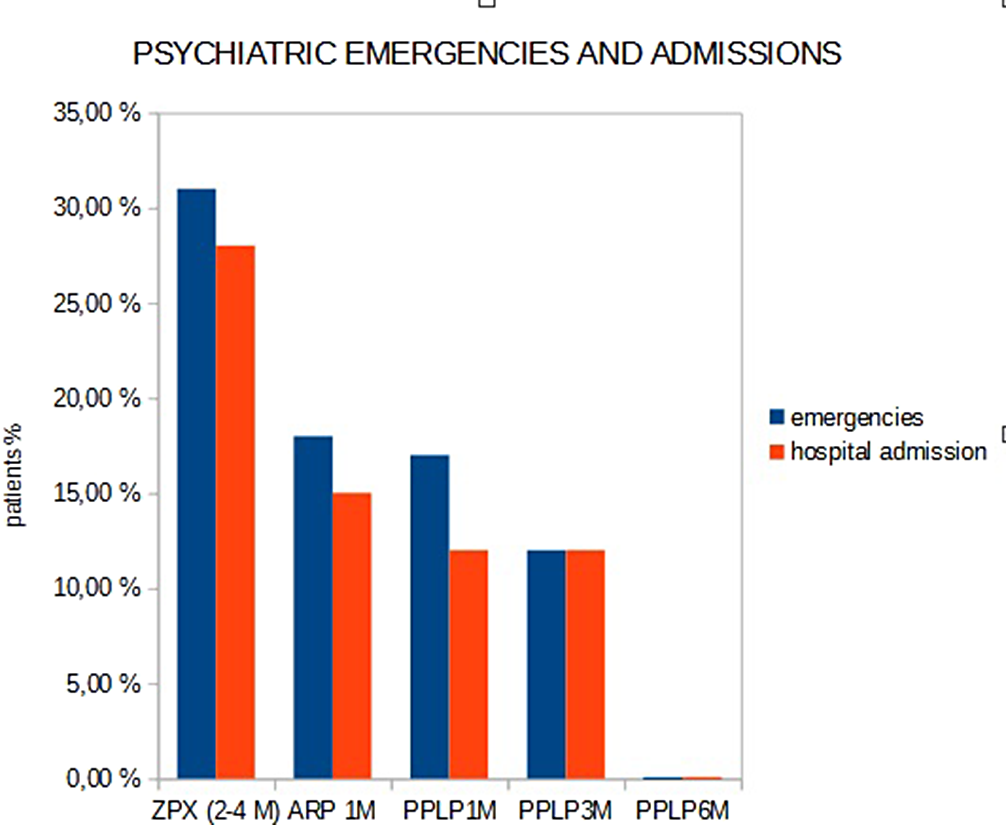
31% of the patients with zuclopenthixol dihydrochloride treatment, have gone to psychiatric emergencies and 28% of psychiatric admissions in the last year.18% of the patients with aripiprazole long acting, 17% with paliperidone palmitate long acting-monthly and 12% de 3-monthly have gone to psychiatric emergencies and 15%, 12% and 12% needed psychiatric admissions respectively. Patients with palmitate long acting-monthly have not emergencies or psychiatric admissions in the last year.
Image:
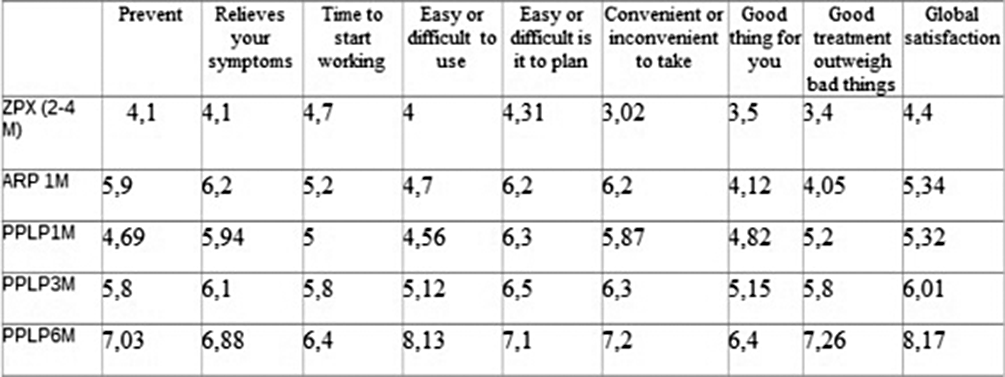
Image 2:
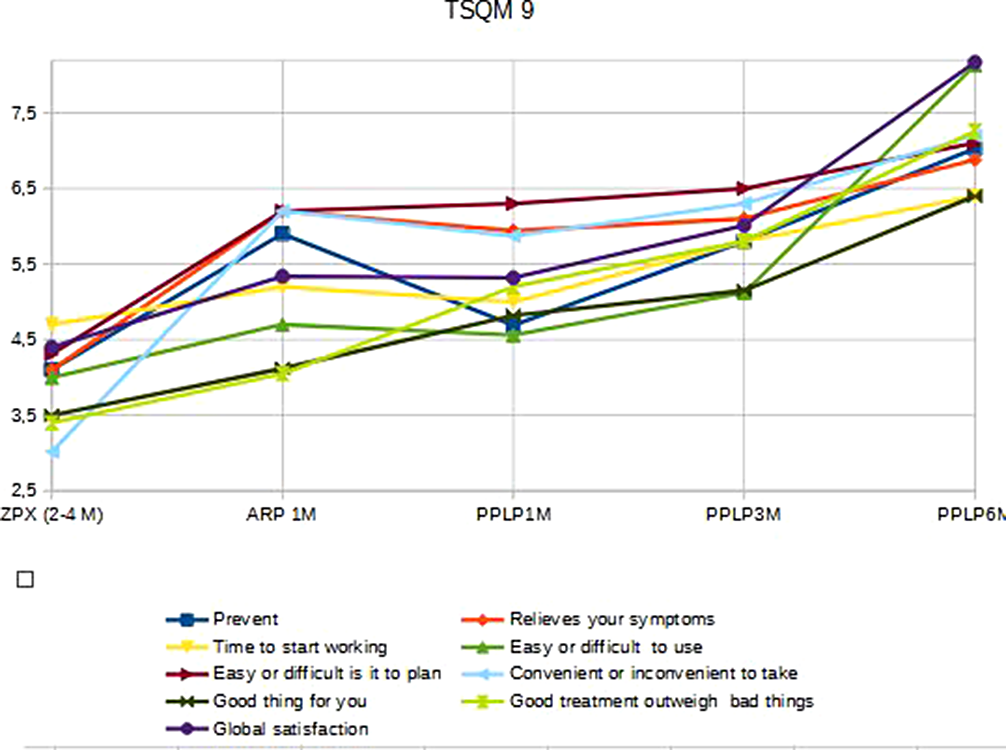
Image 3:
Conclusions
- The longer long acting of the intramuscular treatments, the better patient satisfaction.
- With the longer duration treatment (Palmitate paliperidone LD 6 month), we have lower psychiatric emergencies and hospital admissions.
Manic episodes have a multifactorial etiology, with frequent association with genetic factors, comorbidities such as systemic diseases or secondary to infectious diseases, and environmental exposure factors. The prevalence of bipolar disorder is markedly higher in patients with autoimmune disease. The risk of developing bipolar disorder in some studies has been seen to be higher among patients with rheumatoid arthritis, therefore chronic inflammation would be a potential mechanism and could be a modifiable risk factor for bipolar disorder. Growing evidence indicates that Sars-CoV-2 may also trigger the acute onset of mood disorders or psychotic symptoms.
Objectives
We present the case of a patient who presents symptoms compatible with an acute manic episode after an outbreak of rheumatoid arthritis and comorbid COVID infection.
Methods
52-year-old patient. She went to the hospital emergency room presenting affective symptoms compatible with a manic episode and psychomotor agitation. Personal medical history: rheumatoid arthritis, antiphospholipid syndrome. Psychiatric personal history: Depressive disorder under follow-up by a private psychiatrist under treatment with antidepressants. During the interview, the patient presented accelerated speech, with great emotional incontinence. Saltigrade thought and tachypsychia. She verbalizes delusional ideas of megalomaniacal and mystical and religious characteristics. She verbalizes that she is the reincarnation of the holy spirit, that God has taken her body and speaks through her. In the emergency room, a Sars-CoV-2 infection that the patient was unaware of was diagnosed. She is admitted to the hospital in the mental health unit, in the first interviews the patient maintains speech with delusional ideas “I notice the stigmata of Christ on my body”.
Results
The patient recovers after treatment for the COVID infection, remaining asymptomatic. It was decided to start lithium to stabilize mood and the patient presented good tolerance and treatment with antipsychotics. The patient presented a favorable response, remitting the psychotic symptoms of which she was critical and stabilizing the affective symptoms. The patient is diagnosed with Severe Manic Episode with Psychotic Symptoms, as the main diagnosis and we could conclude the diagnosis of Bipolar Disorder since she has presented 2 depressive episodes in the past that have required treatment and follow-up by psychiatry.
Conclusions
Manic episodes have a multifactorial etiology and require an individualized approach, and comorbid medical conditions must always be assessed in order to establish a therapeutic plan with patients.
It may appear odd to write a review article focused on two books that are fundamentally different in intention and scope. The first is a self-conscious attempt by a moral theologian of conservative inclinations to contribute a Christian ethical perspective to the culture wars currently raging on both sides of the Atlantic on empire, race, and slavery. Its author, Nigel Biggar, is the Emeritus Professor of Moral and Pastoral Theology at the University of Oxford. The second book is a collection of papers by imperial and mission historians given at a workshop at the Victoria University of Wellington, New Zealand, in July 2018. Its brief is more limited, namely to explore the professed commitment of nineteenth-century Christian missions to bringing a gospel of peace into contexts that were frequently sites of violence, not least between indigenous peoples and European settlers and other colonial actors. Its geographical remit is limited to Africa and the Pacific. Biggar's book has provoked a predictable storm of criticism, both within the historical academy and beyond it. The Journal of Imperial and Commonwealth History, for example, rapidly published a 15,000–word rebuttal of Biggar's arguments by Alan Lester, Professor of Historical Geography at the University of Sussex, together with an almost equally lengthy reply by Biggar.1 In contrast, Geoffrey Troughton's edited volume, extremely valuable though it undoubtedly is, seems unlikely to attract notice beyond the limited constituencies of professional historians and scholars of mission studies. Although obviously differing in character, these two books, when set in juxtaposition, bring into focus some of the most pertinent issues raised for Christianity by the imperial past and the ambiguous role played within it by Christian missions.
Glucose-6-phosphate dehydrogenase (G6PD) deficiency is an X-linked genetic enzymopathy that impacts 4.9% of the population, with greater prevalence among Mediterranean, East Asian, and African populations. G6PD deficiency results in levels of nicotinamide-adenine dinucleotide phosphate (NADPH) and glutathione (GSH) that are insufficient for maintaining the balance of oxidation-reduction in the body. This results in elevated production of reactive oxygen species (ROS), oxidative stress on proteins and lipids, damage to DNA, and potential activation of chemokine and cytokine pathways by astrocytes and microglia. We propose that these direct and indirect effects of G6PD deficiency are associated with development of ADHD.
Objectives
This study investigated the association between G6PD deficiency and Attention Deficit/Hyperactivity Disorder (ADHD).
Methods
The study involved 7,473 G6PD-deficient patients and 29,892 matched case-controls (selected at a 1:4 ratio) from a cohort of 1,031,354 within the Leumit Health Services database. Clinical characteristics were analyzed using Fisher’s Exact Tests for categorical variables and Mann-Whitney U tests for continuous variables.
Results
The average age of patients was 29.2 ± 22.3 years, with 68.7% being male. The mean follow-up duration was 14.3 ± 6.2 years. Individuals with G6PD deficiency showed a significant 16% higher risk of being diagnosed with ADHD (Odds Ratio (OR) = 1.16 [95% CI, 1.08-1.25], p < 0.001) on follow up. Furthermore, G6PD deficiency was associated with a 30% greater likelihood of seeking care from adult neurologists (OR = 1.30 [95% CI, 1.22-1.38], p < 0.001) and a 12% higher probability of consulting adult psychiatrists (OR = 1.12 [95% CI, 1.01-1.24], p = 0.048). The use of stimulant medications among G6PD deficient individuals was 17% higher for methylphenidate class drugs (OR = 1.17 [95% CI, 1.08, 1.27], p < 0.001), and use of amphetamines elevated by 16% (OR = 1.16 [95% CI, 1.03, 1.37], p = 0.047).
Conclusions
This study establishes a significant association between G6PD deficiency and an increased risk of ADHD diagnoses. These findings suggest potential opportunities for the development of culturally sensitive interventions.
Disclosure of Interest
B. Krone Consultant of: HIPPO T&C, Signant Health, J. Newcorn: None Declared, I. Manor: None Declared, E. Merzon: None Declared
Posttraumatic stress disorder (PTSD) and borderline personality disorder (BPD) often co-occur. There is growing motivation among clinicians to offer trauma-focused treatments, such as Eye Movement Desensitization and Reprocessing (EMDR), to patients with PTSD and comorbid BPD. However, a large subgroup of these patients does not sufficiently respond to trauma-focused treatment and is more likely to be excluded or dropout from treatment. Dialectical Behaviour Therapy (DBT) for BPD is well established and although there is some evidence that DBT combined with prolonged exposure is twice as effective in reducing PTSD symptoms than DBT alone, the comparative efficacy of trauma-focused treatment with and without concurrent PD treatment has not been investigated yet.
Objectives
The current study will therefore evaluate the comparative clinical efficacy of EMDR with and without concurrent DBT in patients with PTSD and comorbid BPD.
Methods
Adult patients were randomly assigned to EMDR with (n = 63) or without concurrent DBT (n = 63). A wide range of clinician-administered and self-report assessments were conducted before, during and up to six months after treatment. The longitudinal change in PTSD severity as the primary outcome was measured using multilevel mixed regression in SPSS. The present study is part of the overarching Prediction and Outcome Study in comorbid PTSD and Personality Disorders (PROSPER), which consists of a second RCT comparing trauma-focused treatment with and without concurrent PD treatment in patients with PTSD and cluster C PD.
Results
Results, available in January 2024, will reveal which treatment works best for this difficult-to-treat group of patients.
Conclusions
This is the first study to compare the clinical efficacy of EMDR with and without concurrent DBT in patients with PTSD and comorbid BPD. Results will reveal which treatment works best for this difficult-to-treat group of patients.
The incorporation of artificial intelligence (AI) in healthcare, especially in mental health services, offers potential advancements in efficiency and personalization. As AI technologies like machine learning and natural language processing (NLP) continue to evolve, it’s vital to evaluate their applications in psychiatry comprehensively.
Objectives
This review aims to summarize and characterize studies that used AI, particularly machine learning and NLP, in mental health. Additionally, it endeavors to understand how these technologies may enhance diagnostic tools, symptom monitoring, and delivery of personalized treatment in psychiatry.
Methods
Adhering to PRISMA guidelines, a systematic search was executed across multiple medical databases, including PubMed, Scopus, ScienceDirect, and PsycINFO. Keywords encompassed machine learning, data mining, psychiatry, and mental health. Exclusion criteria included non-English papers, anonymization process descriptions, case studies, conference papers, and other reviews. Data from various segments in the provided information were synthesized to capture the broader picture of AI’s application in psychiatry.
Results
From the 327 articles initially identified, 58 were chosen for detailed review. Studies predominantly revolved around three main populations: patients in medical databases, emergency room visitors, and social media users. The primary applications of AI entailed symptom extraction, illness severity classification, therapy effectiveness comparison, and psychopathological insights derivation. Data sources mainly included medical records and social media, with Python emerging as the preferred platform for most studies.
Conclusions
While AI shows immense promise in revolutionizing mental health care, its current applications largely confirm existing clinical hypotheses. Ethical concerns, such as patient privacy and data biases, remain paramount. Future work should delve deeper into these challenges while further exploring AI’s potential in clinical psychiatry practice.
Autism Spectrum Disorder (ASD) is a condition with varying degrees of social, emotional and behavioural disability. These children require focused and individualised learning plan to facilitate social integration. Robots have been used for this purpose but are not routinely available in several parts of the world. Effective, point of care (POC) digital therapies that can be used anywhere by anyone is the need of the day.
Objectives
To evaluate the effectiveness of Artificial Intelligence (AI) driven individualised learning plans delivered through POC digital platform (CognitiveBotics) for children with ASD.
Methods
After Ethical approval and parental consent, children diagnosed with ASD (Childhood Autism Rating Scale CARS 2) aged 2 years and above were screened for study inclusion and exclusion criteria and enrolled. AI driven individualised learning plan was administered through CognitiveBotics software that could be used on either computer or a tablet. Initially, interactive questions were administered to parents by the AI tool to understand child’s functioning. Based on these, an individualised learning plan was assigned. Each task is delivered using either interactive videos, chatbot and/or animated/AI games. The child’s progress is captured for attention (attempted questions, retries and timeouts) and retention (first time corrects and corrects) continuously. The initial interactive questions administered to parents were repeated to assess child’s progress in real life. Paired ‘t’ test using SPSS version 26 was used to compare initial and final data.
Results
Out of 85 registered children, 41 regularly used the AI tool. Mean age was 43.93 months (range 26 to 72 months). 37 (90.24%) were boys. The baseline mean scores (ranges), were CARS 33.48 (30-39.5); Social quotient 53.4 (27.25-80.32), Developmental quotient 71.35 (45.90-93.33) and IQ 62.34 (36.58-86.83). The base line mean score of parents assessed child function was 115.24 (range 58 to 215). A mean of 15.54 tasks were given (range 5 to 48). At the time of analysis with a mean follow up of 3 months (range 2 to 5 months) the children completed a mean of 10.10 tasks (range 0 to 42). There was significant improvement in child’s learning captured by the AI software based on attention and retention parameters (p = <0.00001). This improvement was also reflected in parent assessed child function (mean 147.15, (59 to 231)) (p = <0.00001). The percentage of improvement in both software captured and parent assessed child function was directly related to the amount of time spent by the child on the software.
Conclusions
AI driven individualised learning approach is effective in teaching skills and promote social integration for children with ASD. Such technology can capture the child’s progress on a day-to-day basis and deliver personalised training.
Besides the role played by environmental factors and their epigenetic influences, scientific researchers showed that the susceptibility to develop an eating disorder among bipolar people is due to genetic factors.
Objectives
To review the genetic factors behind eating disorders, highlight the role of genetics and epigenetics in the comorbidity of bipolar and eating disorders.
Methods
To delineate the role of genetics and epigenetics in eating disorders and bipolar disorders as two related mental illness, we comprehensively reviewed the scientific literature using GWAS (genome wide association studies) catalog databases to find genome-wide association studies carried out on patients with bipolar disorder EFO_0005203 and eating disorder comorbid condition (anorexia nervosa, binge eating, bulimia nervosa) EFO_0005203.
Results
GWAS of eating disorders were found in 33 studies with 324 associations whereas those of bipolar disorder were found in 114 studies with 1469 associations. GWAS of eating disorders within bipolar disorders revealed 182 and 134 associations, as well as 10 and 8 publications respectively. Only anorexia nervosa and binge eating were studied in association with bipolar disorders. The genetic variants were protein coding genes (CUBN, FAM228B, FXR1, etc.), non-coding RNA genes (SOX2-OT, MMADHC-DT, etc.), and pseudo-genes (RNU1-23P, CACYBPP2, etc.).
Conclusions
About 300 genetic variants are associated with eating disorder as a comorbid condition of bipolar disorders. These variants may play a crucial role in the causes and mechanisms of eating disorders and should be more investigated towards more precise clinical and genetic entities.
Sexual dysfunction (SD) is common in psychotic illness including schizophrenia, occurring in 30-82% of patients. It negatively impacts wellbeing and antipsychotic compliance, resulting in higher risk of relapse and hospitalisation. Due to over-reliance on spontaneous reports from patients, SD is typically under-identified which prevents investigation and treatment.
Objectives
To establish whether SD is under-identified in patients with psychosis in a general adult community mental health team; to elicit whether the Arizona Sexual Experience Scale (ASEX) improves identification; to investigate and manage identified cases of SD; to make recommendations about identification and monitoring of SD in this patient population.
Methods
A 12-month retrospective audit of patients with psychosis prescribed a long-acting injectable (LAI) antipsychotic (n=36) to identify sexual symptoms was completed. The ASEX was subsequently issued to screen for SD.
Results
Audit: 3/36 (8%) patients had documented sexual symptoms. Of the 18/36 patients that completed the ASEX: 10 (56%) exhibited SD. 4 consented to further investigation. 5 patients experienced significant difficulties with the language used in the ASEX. At the end of the project we revised the ASEX with simpler, colloquial language.
Conclusions
Implementation of the ASEX results in clear improvements in identification and monitoring of SD. Maudsley Practice Guidelines can inform investigation and management of SD. We suggest a review of NICE guidance to incorporate the above into clinical practice. Further work is needed to establish whether the revised ASEX can be developed and validated.
We aimed to study predictive factors for burnout (BO) among healthcare workers in a tertiary hospital in Singapore.
Objectives
We hypothesized that burnout would be assoiciated with singles, females, and foreign born staff recently moved into this country, unaccompanied by family members.
We further hypothesised that BO would be associated with those scoring less on resilience. Recognising that social support mitigated against stress and burnout, we hypothesized that those who perceived less support would be more prone to BO.
Methods
The study questionnaire was sent via corporate email to all staff with email access. We stressed that data would be fully anonymised. No financial rewards were given for participation which was carried out on a voluntary basis.
The following instruments were used, viz. F-SozU K-6, a brief form of the perceived social support questionnaire; Connor Davidson Resilience Scale; Oldenburg Burnout Inventory; Patient Health Questionnaire-4 item; Demand Control Support Questionnaire and Leisure Time Satisfaction Scale. Ethics approval for the study was sought from the SingHealth Centralised Institutional Review Board, which granted exemption of participant consent.
Analyses were performed using Stata version 17.0 (StataCorp. 2021), with statistical significance set as 2-sided 5% (p<0.05). The reliability and internal consistency of the scales used were assessed using Cronbach Alphas and Confirmatory Factor Analysis (CFA).
Results
Neither males nor females were more at risk for BO. And contrary to what we hypothesised those who recently moved to this nation were not at greater risk for BO (p>0.05). Multivariate analyses showed that younger workers displayed higher burnout scores (p < 0.001).The psychological demand sub-score was positively associated with burnout [ 0.61 (95% CI 0.45 to 0.77), p < 0.001)]. Conversely, decision latitude [-0.33 (95% CI -0.44 to -0.21), p < 0.001)] and support [-0.47 (95% CI -0.60 to -0.35), p < 0.001] were negatively associated with BO.
Those who experienced anxiety or depressive symptoms were respectively more likely to experience burnout [0.30 (95% CI 0.02 to 0.58), p = 0.035 and 0.72 (95% CI 0.41 to 1.02), p < 0.001], with a clear association between higher PHQ-4 scores and risk for burnout (r = 0.619).
Moreover, satisfaction with utilisation of leisure time was inversely related to BO [-0.55 (95% CI -0.68 to –0.41; p < 0.001)]. We could not find any association between number of years worked, profession, marital status and perceived social support and BO, on multivariate anbalysis (p>0.05).
Conclusions
Strress reduction interventions should be made available for all staff, especially addressing those at highest risk for burnout.
Acute dystonia, an adverse effect of neuroleptics, is linked to D2 neuronal receptor hypersensitivity or neurotoxicity due to oxidative stress mechanisms. Pisa syndrome (PS) or Pleurothotonus, a relatively uncommon condition, manifests as dystonia of the trunk and is potentially reversible with early intervention.
Objectives
To describe PS following haloperidol decanoate injection in a treatment-resistant schizophrenia (TRS) patient, identify associated risk factors, and present therapeutic options.
Methods
We provide a comprehensive case description and perform a PubMed database search using the following keywords: “Pisa syndrome,” “dystonia,” “schizophrenia,” and “antipsychotic”.
Results
A 54-year-old man with TRS, previously treated with 100 mg of haloperidol decanoate and 10 mg of olanzapine due to clozapine-induced myocarditis, exhibited hallucinatory delusional syndrome and behavioral disturbances. Neurological examination, lab tests, and brain imaging confirmed a psychotic relapse. Haloperidol decanoate dosage was increased to 150 mg. Four days later, the patient developed a trunk tilt that resolved after receiving anticholinergic treatment.Despite PS being more common in females and associated with brain conditions, this patient presented multiple risk factors, including prolonged typical antipsychotic treatment, advanced age, and an increase in antipsychotic doses. Discontinuing the causative antipsychotic or adding synthetic anticholinergics led to symptom reversibility.
Conclusions
PS is a rare occurrence. Understanding associated risk factors and frequently implicated medications is crucial for elucidating the phenomenon and managing the disorder
Experience of chronic stress among professionals is a risk factor for poor mental and physical well-being. There is limited knowledge regarding the kinds of interventions, and outcomes achieved using different modalities to address stress and burnout among teachers.
Objectives
To undertake a scoping review of recent literature to determine psychological interventions and reported outcomes related to stress and burnout among teachers.
Methods
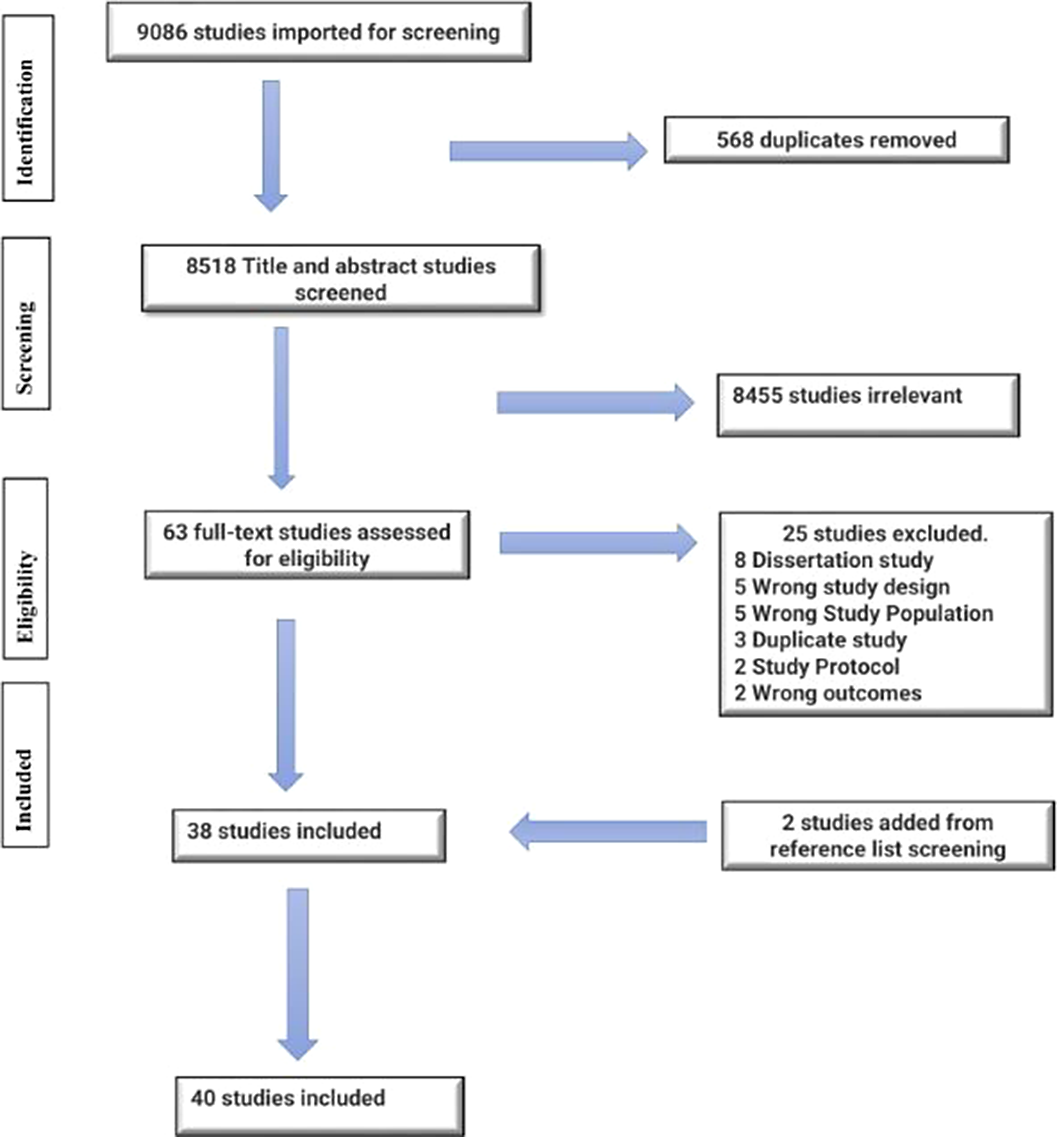
The PRISMA-ScR (Preferred Reporting Items for Systematic Reviews and Meta-Analyses extension for Scoping Reviews was followed. Relevant search terms were used to determine different interventions adopted to reduce teachers’ stress and burnout. Articles published between 2018 and 2022 were identified using five bibliographic databases. Relevant articles were extracted, reviewed, collated, and thematically analyzed, and findings s were summarized.
Results
Forty studies conducted in Asia, North America, Oceania, Europe, and Africa, met the inclusion criteria. Sixteen kinds of burnout and stress-reduction interventions were identified. The most popularly studied intervention were Mindfulness-Based Interventions alone or in combination with yoga or Cognitive Behavioural Therapy (CBT), followed by Rational Emotive Behavioral Therapy (REBT). Mindfulness-Based Interventions led to decreased overall Teacher Stress Inventory (TSI) and emotional exhaustion subscale scores. REBT, primarily used with special education teachers, especially in Africa, has also shown positive results. Other interventions reporting positive outcomes include Inquiry-Based Stress Reduction (IBSR), the Stress Management and Resiliency Training Program (SMART), Cyclic Meditation, Group Sandplay, Progressive Muscle Relaxation, Autogenic Training, Sport-Based Physical Activity, Emotional Intelligence Ability Models and Christian Prayer and Prayer-Reflection
Image:
Conclusions
Stress and burnout can have a negative impact on teachers and, very often, on the students they teach. Implementing suitable school-based interventions are necessary to improve teachers’ stress-coping ability, reduce the likelihood of burnout and improve general well-being. Policymakers, governments, school boards and administrators should prioritize the implementation of school-based awareness and intervention programs to mitigate teacher stress and burnout.
Nomophobia, a neologism derived from the combination of “no mobile,” “phone” and “phobia,” represents one of the syndromes of today’s digital and virtual society. By this term, we refer to the discomfort, anxiety, nervousness, and distress generated by the individual’s loss of connection to his or her cell phone or other technological medium that allows connection to the Internet. No study has attempted to evaluate the impact of disconnection syndrome on a clinical sample of patients with Severe Mental Illness (SMI).
Objectives
Our study has the objective of characterizing subject affected by SMI with nomophobia.
Methods
Our study is conducted on inpatients (>16 years) referred to our Psychiatric ward in Ancona (Università Politecnica delle Marche, Italy). The following rating scales were administered to these subjects: Nomophobia Questionnaire (NMP-Q), Smartphone Addiction Scale - Short Version (SAS-SV), Multidimendional State Boredom Scale (MSBS), Intolerance of Uncertainty Scale (IUS), Temperament Evaluation in Memphis, Pisa and San Diego (TEMPS-M), Coping Orientation to the Problems Experiences-new Italian version (COPE-NVI).
Results
Most of the subjects included in the study tested positive for nomophobia (99%; n=97). The mean score scored on the NMPQ is 69.2±27.9, while the mean score obtained at SAS-SV is 25.1±12.7. Gender has no influence on the scores obtained at the NMPQ (p=0.823), as well as the type of SMI (p=0.376). Those not in a relationship scored a higher mean score than who has a relationship (p=0.02). Patients who suffer from insomnia scored higher mean score on the NMPQ (p=0.21). A linear univariate regression between SAS-SV and NMPQ was observed (R2=0.575, F=129.731, p<0.001). A multivariate linear regression was observed between the NMPQ (R=0.556, R2=0.2830, F=12.057, p<0.001) and the IUS (B=1.343, p<0.001), the irritable temperament subscale of the TEMPS (B=1.293, p=0.003) and the inattention subscale of the MSBS (B=-1.029, p=0.033). In the men-only sample, a multivariate linear regression was observed between the NMPQ (R2=0.437, F=9.847, p<0.001) and the IUS (B=1.361, p<0.001), the anxious temperament subscale of the TEMPS (B=1.687, p=0.005) and the inattention subscale of the MSBS (B=-1.465, p=0.002).
Conclusions
Patients with higher intolerance to uncertainty, irritable temperament and lower inattention have higher risk to develop nomophobia. In men with SMI, nomophobia is associated with higher intolerance to uncertainty, anxious temperament, and lower inattention. Further study have to be conducted to expand data and results.
Anticipation is the most valuable component of the regulatory side of human behavior. Adolescence is a sensitive period in relation to the formation of an anticipatory and prognostic system, which in turn provides an opportunity to assess causal relationships and evaluate the consequences of actions taken.
Objectives
Study of the anticipatory viability of adolescents with long-term disorders in the prevention of deviations.
Methods
The study involved 46 adolescents aged 11-15 studying at a specialized boarding school for children with disabilities. The observational method was used as well as the author’s methodology “Studying the anticipatory solvency of adolescents” Akhmetzyanova A.I., Artemyeva T.V.; “Diagnostic questionnaire for identifying propensity to various forms of deviant behavior for students of educational institutions” developed by the Department of Psychiatry of the Military Medical Academy named after S.M. Kirov.
Results
The subjects had difficulty predicting the passage of time, with its adequate and rational distribution, including planning their own activities. Adolescents with musculoskeletal disorders had difficulty making a pragmatic and realistic forecast of possible events in communication with other people, as well as predicting the emotional states of interaction participants. Adolescents with movement disorders were characterized by an inadequate assessment of themselves as a subject of professional activity, fixation on the movement disorder, and high levels of anxiety and neuroticism. The subjects showed a tendency to suicidal behavior due to risk factors such as high levels of anxiety associated with self-esteem and anxiety in interpersonal relationships, high affectivity and demonstrativeness, social pessimism and negative prediction of the future. During the correlation analysis, the relationship between spatio-temporal and speech-communicative anticipatory consistency with indicators of deviant behavior - delinquent behavior and deviant behavior was revealed.
Conclusions
The data obtained in the study will allow specialists to timely identify and prevent the development of deviant behavior, as well as build a route for correctional classes with each child.. This paper has been supported by the Kazan Federal University Strategic Academic Leadership Program.
