To save content items to your account,
please confirm that you agree to abide by our usage policies.
If this is the first time you use this feature, you will be asked to authorise Cambridge Core to connect with your account.
Find out more about saving content to .
To save content items to your Kindle, first ensure no-reply@cambridge.org
is added to your Approved Personal Document E-mail List under your Personal Document Settings
on the Manage Your Content and Devices page of your Amazon account. Then enter the ‘name’ part
of your Kindle email address below.
Find out more about saving to your Kindle.
Note you can select to save to either the @free.kindle.com or @kindle.com variations.
‘@free.kindle.com’ emails are free but can only be saved to your device when it is connected to wi-fi.
‘@kindle.com’ emails can be delivered even when you are not connected to wi-fi, but note that service fees apply.
While research on drug use motives has primarily focused on widely used substances like alcohol, tobacco, and cannabis, understanding the motivations behind MDMA use is crucial for developing targeted therapeutic, preventive, and harm reduction strategies.
Objectives
The objective of this study is to present the findings of an online survey that evaluates the motives behind the use of 3,4-methylenedioxymethamphetamine (MDMA) and draws comparisons between these motives and those for alcohol and cannabis consumption.
Methods
Data were collected through an online survey, available in both English and French, with 99 participants. The survey included five sections, including a substance abuse screening test (ASSIST) and the Pahnke-Richards Mystical Experience Questionnaire. The primary focus was on motives for MDMA use, assessed using an adapted version of the Marijuana Motives Measure (MMM), comparing them with alcohol and cannabis motives.
Results
The most reported motive for MDMA use was enhancement, followed by expansion motives. Social motives were the third most common, while coping motives ranked fourth, and conformity was the least common motive. Comparisons with alcohol and cannabis use motives revealed differences in motives for each substance. MDMA showed a unique pattern of motives.
Conclusions
Enhancement emerged as the most prevalent motive for MDMA use, consistent with previous research on MDMA motive use. Expansion motives, which involve altering perceptions and increasing self-awareness, ranked second, reflecting the growing interest in MDMA-assisted therapy for conditions like PTSD. Surprisingly, social motives were less common for MDMA compared to alcohol and cannabis, suggesting unique social dynamics associated with MDMA use. Conformity motives were also less significant for MDMA users, possibly due to the age of initiation and user maturity.
Understanding the motives behind MDMA use is essential for designing effective interventions and harm reduction strategies. The distinct motives for MDMA, as compared to alcohol and cannabis, highlight the need for tailored approaches to address its use. Further research should explore the complex interplay of motives, age of initiation, social context, and cultural factors to inform comprehensive strategies related to MDMA use.
Weight gain, QT interval prolongation, and dyslipidemias associated with the chronic use of some antipsychotic medications can explain a higher prevalence of cardiovascular risk in these psychiatric population. The D’Agostino Index include some factors such as age, total cholesterol, high-density lipoproteins, systolic blood pressure increased, antihypertensive treatment, smoking, and diabetes, to estimate an individual’s risk (low, moderate or severe) of developing a cardiovascular event through a period of 10 years or throughout the patient’s lifetime.
Objectives
To compare the degree of cardiovascular risk using the D’Agostino Index, among different antipsychotic medications.
Methods
An estimation of cardiovascular risk (low, moderate, or high) was performed with the D´Agostino index in a sample of 144 patients (82 men and 62 women) mean age 45,2 +/- 10.13. All patients were treated for at least one year at a therapeutic dose and adhered to their treatment regimen correctly. Subjects with some relevant pre-existing unstable heart disease were excluded. All patients previously provided informed consent and were of legal age. Clinical data on medical history, concomitant medications, and risk factors were collected. A completed physical exam, waist circumference, lab sample, a lifestyle scale, and an evaluation of vital signs in accordance with European Society of Hypertension were evaluated. Statistical analysis was carried out using the statistical software SPSS version 26.0. A significance level α=0.05 was considered throughout the study.
Results
The four most consumed antipsychotics were risperidone 9.72% (n=14), paliperidone 25.7% (n=37), olanzapine 14.6% (n=21), and aripiprazole 34.7% (n=50). Descriptively, it was observed that the drugs most associated with moderate or high risks were paliperidone (37.8%) and olanzapine (33.3%), risperidone (28.6 %). Aripiprazol (22%) was the less associated compound with moderate/high cardiovascular risk.
Conclusions
Subjects treated with olanzapine and paliperidone showed a higher association with cardiovascular risk. Predicting cardiovascular risk could provide individual benefits by enabling lifestyle modifications, pharmacological treatment changes, or closer monitoring to reduce cardiovascular risk.
Disclosure of Interest
A. Montejo Grant / Research support from: This study has been funded by the Instituto de Salud Carlos III (ISCIII) through the project PI19/1596 and co-funded by the European Union., C. Bermejo: None Declared, J. Matías: None Declared, T. Martín: None Declared, J. Matías-Polo: None Declared, Y. Santana: None Declared, J. López-López: None Declared, R. de Alarcón: None Declared, J. Acosta: None Declared
Symptoms of anxiety can worsen cognitive decline in people with dementia, and symptoms of dementia and fears of further cognitive decline can cause anxiety. Advanced dementia is not necessarily associated with a loss of emotion, which means that people may still experience anxiety, but their ability to cope in a healthy way is reduced. The problem is exacerbated by the fact that hospital care alone can contribute to the severity of anxiety symptoms due to change in routine of daily activities, unfamiliar surroundings, uncertainty about health status, prognosis and various medical procedures. There are differences between women and men in the prevalence, course and manifestation of both dementia and anxiety disorders.
Objectives
To examine whether there are differences between women and men in the association of hospital anxiety with eight symptoms of dementia: difficulties with memory, orientation, judgement, problem solving, fulfilling social obligations, daily activities at home and with hobbies, or personal care, in patients with mild to moderate dementia.
Methods
A cross-sectional study was conducted at Sveti Ivan Psychiatric Clinic in Zagreb in June 2023. The target population were hospitalised patients diagnosed with dementia, both genderes, aged 60-90 years, without psychotic disorder. Anxiety during hospitalisation was measured using the anxiety subscale of the Hospital Anxiety and Depression Scale (HADS-A), and the severity of dementia symptoms was measured using the Dementia Assessment Instrument (CDR). The hypothesis was tested using Wald test of differences between women and men in unstandardised linear regression coefficients of the HADS-A on individual dementia symptoms, after adjustment for age, education, presence of a married or stable non-marital partner and duration of current hospitalisation.
Results
We enrolled 65 women and 35 men of comparable age. There were significant gender-related differences in the association between hospital anxiety and difficulties with judgement (P = 0.01), fulfilling social obligations (P < 0.001), difficulties with home and hobbies (P = 0.02), and personal care (P = 0.00). In women, more pronounced difficulties with judgement and with home and hobbies were associated with higher anxiety, and in men the presence of these two symptoms of dementia was associated with lower anxiety. Difficulties with fulfilling social obligations are associated with lower anxiety in women and higher anxiety in men. Difficulties with personal care were associated with lower anxiety in both genders, but this effect was stronger in men.
Conclusions
There are differences between women and men in the association between anxiety during hospital treatment and the severity of individual dementia symptoms. These differences are present in difficulties with judgement, fulfilling social obligations, home, hobbies and personal care.
The world community is only at the beginning of awareness of the peculiarities of the formation, course and outcome of the psychopathological consequences of the impact of the SARS-CoV-2 pandemic.
Objectives
To investigate the clinical and anamnestic features and their influence on the formation of psychopathological consequences in patients with first diagnosed mental disorders who have experienced COVID-19 and were exposed to the stressors of the SARS-CoV-2 pandemic.
Methods
97 patients with first diagnosed mental disorders who have experienced COVID-19 and were exposed to the stressors of the SARS-CoV-2 pandemic were examined (F 32.0-32.2 – 34 patients, F 40-45 – 32 patients, F 06.3-06.6 – 31 patients). Clinical-psychopathological, clinical-amnestic methods, including information about the experienced coronavirus disease COVID-19, the impact of the stressors of the SARS-COV-2 pandemic, and methods of statistical analysis were applied.
Results
The conducted research made it possible to identify the phenomenological structure of mental disorders that develop after the coronavirus disease COVID-19. This structure includes depressive disorders (35.05%), neurotic, stress-related and somatoform disorders (32.99%), as well as mental disorders of organic genesis (31.96%). An important result of the study was the determination of the heterogeneity of mental pathology in the context of the influence of stressogenic factors of the pandemic and other psychogenies. In this aspect, all mental and behavioral disorders must be divided into 3 variants of pathology, which differ in the mechanisms of formation: caused by the pathoplastic factors of COVID-19 and the patient’s personal reactions to the disease; related to the psychogenic effects of the stressors of the SARS-COV-2 pandemic; with a combined mechanism of influence of pathoplastic and psychogenic factors. Certain diagnostic and phenomenological regularities characteristic of each of the options are defined. The influence of pathoplastic factors and personal reactions to the disease is associated with the formation of depressive disorders. Pandemic stressors most often cause the development of neurotic, stress-related and somatoform disorders. Under the influence of combined factors, disorders of organic genesis are formed to a greater extent. The initial manifestations of pathology also differ with different formation mechanisms: when pathoplastic factors predominate, asthenia, depression and sleep disturbances prevail; with leading psychogenic influences – anxiety and tension; when the above factors are combined - asthenia, stress and cognitive disorders.
Conclusions
The significance of the obtained data lies in the possibility of studying the role of the psychopathological consequences of COVID-19 in the genesis of mental disorders.
Inflammation has emerged as a critical factor in the pathophysiology of both depression and chronic heart failure (HF). Chronic heart failure, a complex clinical syndrome, is often accompanied by a state of heightened inflammation, with elevated levels of proinflammatory markers. Likewise, depression, a prevalent comorbidity in HF patients, has been intricately linked to inflammation, with evidence suggesting a bidirectional relationship.
Objectives
This study aimed to evaluate the effect of antidepressant treatment on plasma fibronectin levels in patients with comorbid depression and chronic heart failure.
Methods
We enrolled a total of 113 patients with HF, all of whom had comorbid depression. The patients were divided into two groups based on the antidepressant treatment they received: Group 1 (n = 78) received vortioxetine, and Group 2 (n = 35) received sertraline. Before initiating treatment and after 6 months, we measured fibronectin levels in the patients’ plasma.
Results
The study revealed a significant difference in the effects of the two antidepressants on fibronectin levels. Patients treated with vortioxetine demonstrated a substantial reduction in fibronectin levels post-treatment, with an approximate threefold decrease compared to the pre-treatment levels (pre-treatment value ± standard deviation) μg/ml to (post-treatment value ± standard deviation) μg/ml, (p<0.05). Conversely, patients treated with sertraline experienced a comparatively lesser reduction in fibronectin levels, with a change from (pre-treatment value ± standard deviation) μg/ml to (post-treatment value ± standard deviation) μg/ml (p<0.05).
Conclusions
This study highlights the considerable impact of vortioxetine on fibronectin levels in patients with comorbid depression and chronic heart failure, resulting in a significant reduction. In contrast, sertraline’s effect on fibronectin levels, while present, is notably less pronounced. The study emphasizes the potential therapeutic benefit of vortioxetine in cardiac remodeling associated with depression in patients with chronic heart failure, underscoring the need for further research and exploration.
Psychiatric disorders are common in patients with learning disabilities. There are also patients with the triad of autism, schizophrenia and learning disability. Patients with this background can be admitted to general hospitals for psychiatric or non-psychiatric reasons.
We are presenting a case who had a very complicated clinical course and her discharge planning was challenging.
Objectives
The objective of this work was to show the challenges in the investigation, medical management, and discharge planning of the patients with concomitant learning disability, schizophrenia and autism.
Methods
We scrutinized the patient’s casenotes, including blood results and all relevant imaging. We paid a particular attention to all the entries from the psychiatry team, general medical doctors, oncologists, learning disability team and discharge planners.
Results
The lady had a protracted 4-month inpatient admission throughout which she was physically and verbally aggressive to hospital staff. She was deemed to lack capacity for hospital admission and treated in her best interests under Mental Capacity Act (MCA), frequently requiring sedation with Haloperidol and Lorazepam. Following consultation with the local Psychiatrist her medications were altered to: Risperidone 2 mg BD, Diazepam 5 mg OM, 5 mg afternoon and 10 mg evening, Procyclidine 5 mg BD, Chlorpromazine 25 mg BD, Promethazine 25 mg OD PRN, and Midazolam 10 mg buccal PRN.
A change in her clinical condition was noted by the Psychiatry team; increased agitation, confusion and dysarthria. A repeat blood test was advised, due to patient refusal this took weeks to achieve despite the use of buccal Midazolam following Anaesthesiologist advice. Although blood tests were not significantly deranged, she was treated for presumed urinary tract infection with a course of antibiotics. A urine sample was unobtainable.
She reported right breast pain and underwent a mammogram. This showed a hypoechoic lesion 8x7x9 mm. Following consultation with a Breast Surgeon and Oncologist, Letrozole was replaced with Tamoxifen. The Psychiatric team concluded that the clinical deterioration with dysarthria was related to anxiety, associated with Autistic patients. The movement disorder was deemed secondary to antipsychotics exacerbated by stress and anxiety.
The patient’s discharge planning was complex. She was declined by numerous care homes. At time of writing, she remains an inpatient.
Conclusions
The management of patients with a triad of Learning Disability, Schizophrenia and Autism is extremely difficult, particularly within an acute medical setting. Physical deterioration could be related to medication adverse effects or change in environment. Anxiety and stress are linked to these conditions. The challenging behaviour that these patients often have will make discharge planning very difficult as specialised care homes to accommodate these unique patients are very limite
Given that child and adolescent mental health has been affected by several factors in recent years, such as the distance between home and specialized centers that provide psychological care to children, the lack of care resources, or the lockdown caused by the COVID-19 pandemic, online psychological treatments are becoming increasingly common among the child and adolescent population, although it is necessary to develop this type of treatment for children at psychosocial risk, since these have been developed mostly for the general population. To this aim, the Online Emotional Self-Regulation Improvement program (Mejora de la Auto-regulación para Menores, Online MAM@) was developed.
Objectives
To assess the acceptability of the Online Emotional Self-Regulation Improvement program, by the adolescent.
Methods
The intervention program was applied to a total of n = 32 children (n = 17 girls) between 11 and 15 years of age. The program consists of 7 target emotions to be worked on, and the acceptance, usability, usefulness, enjoyment of each module and barriers to use by the children were assessed with an adaptation of the Venkatesh and Davis scale. These measures were taken post-test, once the intervention module was completed. The program was applied online for five weeks by the children, and their regular therapists contacted them to provide them with weekly access codes and reminders in case they were not completing the modules.
Results
It was observed that the best rated module was the anger module, the most useful module was the sadness module, the module considered to have the highest usability was the fear module, and the most enjoyed module was the sadness module, although all the modules had very high scores above the average and no significant differences were found in the rating of the modules between sexes. As for the most common barriers to use among the children, problems were found with the completion of the intervention, since they often forgot to access the web, and these did not apply what they had learned outside the intervention program.
Conclusions
The Online Emotional Self-Regulation Improvement program is the first program developed in Spanish language for adolescents at psychosocial risk, and may represent a breakthrough to consolidate these programs in the national scene and bring the therapeutic possibilities for adolescents to the same level as in other parts of the world. Focusing on future versions of the program, it would be advisable to reduce its length and incorporate activities outside the treatment program to guarantee a generalization of what is learned in the intervention program in everyday life situations.
Asset managers have assumed a position of unprecedented power and influence in the control of essential infrastructures of social life, with broadly negative ramifications. But as the commentaries assembled here all insist, it did not – and does not – have to be this way. In this reply, I discuss the potential, as I see it, for the world to be otherwise, offering a rather pessimistic prognosis.
Major depressive disorder (MDD) is a common multifactorial disorder, but the exact pathophysiology is still unknown. in vivo and post-mortem studies document volumetric and cellular changes in the hippocampus of depressed patients. Chemical synapses are key functional units of the central nervous system and earlier studies found reduced number of synapses in the prefrontal cortex of depressed patients (Kang HJ et al. Nature Medicine 2012;18(9):1413-1417). Mitochondria are intracellular powerhouses generating chemical energy for cellular biochemical reactions. Recent findings suggest that individuals with impaired mitochondrial function may be vulnerable to develop psychopathologies.
Objectives
We investigated synapses and mitochondria in post-mortem hippocampal samples from psychiatric patients.
Methods
The three study groups were: 1) MDD patients (n=11); 2) patients with alcohol dependence (n=8) and 3) controls (n=10). Controls were individuals who accidentally deceased and had no neuropsychiatric disorders. Three sub-regions of the hippocampus (dentate gyrus, CA3 and CA1 areas were investigated. Ultrathin sections were examined, and photomicrographs were taken for further analysis using a JEOL JEM 1400 FLASH transmission electron microscope. Systematic quantitative analysis was conducted with the Neurolucida system using unbiased counting principles.
Results
We could not detect any differences in synapse and mitochondria densities between the patients and controls subjects.
Conclusions
Our preliminary data suggest that despite our expectations hippocampal synapse and mitochondrial densities are rather constant parameters which are not easily affected by psychopathology or alcohol consumption. Potential methodical limitations may also explain this negative finding.
FUNDING:
This research was founded by the Hungarian Brain Research Program 3 and by the TKP2021-EGA-16 project. A.S.T. was supported by the ÚNKP-23-3-I New National Excellence program of the Ministry for Culture and Innovation from the source of the National Research, Development and Innovation Fund.
Bipolar disorder (BD) is a chronic and recurrent disease characterized by acute mood episodes alternated with periods of euthymia. The available literature postulates that a biphasic dysregulation of mitochondrial bioenergetics might be observed in BD.
Objectives
We aimed to explore differences in in vivo mitochondrial respiration (1) intra-individually: longitudinally within patients during an acute mood episode of BD and after clinical remission, and (2) inter-individually: between patients with BD on depressive or manic episodes and healthy controls (HC).
Methods
Patients admitted to our acute psychiatric ward with a manic episode or bipolar depression were recruited. Different mitochondrial oxygen consumption rates (OCRs) were assessed during the acute episode (T0) and after clinical remission (T1) in one million of peripheral blood mononuclear cells (PBMC): Routine, Leak, ETC and Rox. They were measured as picomoles of oxygen per million cells (pmol O2/million). This experiment was also conducted in HC. High-resolution respirometry was performed at 37°C by polarographic oxygen sensors in a two-chamber Oxygraph-2k system. Manic and depressive symptoms were assessed using standardized psychometric scales. Oxygen consumption capacity was compared (1) intra-individually, during acute episodes and after clinical remission, and (2) inter-individually, during acute manic and depressive episodes, and in HC. Statistical analyses were performed with SPSS, GraphPad and R Statistics.
Results
20 patients with BD (15 manic, 5 depressed) and 10 HC were included. A significant increase in the maximal oxygen consumption capacity (ETC) was observed in clinical remission (27.4 ± 17.4) compared to the acute episodes (21.1 ± 11.7, p = 0.001), which remained significant after subtracting Rox from the other rates (p = 0.001). At T1, patients admitted with a manic episode tended to show higher mean ETC (31.2 ± 18.7) compared with T0 (24.1 ± 12.0, p = 0.074); the tendency persisted after Rox subtraction (p = 0.076). Patients admitted with a depressive episode also showed higher ETC means in T1 (16.3 ± 3.8) compared to T0 (12.1 ± 3.4), but there were not significant differences (p = 0.231). When HC, manic and depressive patients at T0 were compared between them, significant differences were observed in ETC (H =8.5; p =0.014) and Rox (H =13.8; p = 0.001). After Rox deduction, differences in ETC remained (H =11.7; p = 0.003). Individuals with bipolar depression showed lower ETC rates (12.1 ± 3.4) than those with a manic episode (24.1 ± 12.0; t = -3.5, p = 0.003), which was also found after Rox deduction (p = 0.001).
Conclusions
In both manic and depressive episodes in BD, mitochondrial respiration might be reduced and increase after clinical remission. Further studies with larger samples will allow to confirm these results and also to identify potential mitochondrial state-dependent biomarkers.
Disclosure of Interest
A. Giménez-Palomo Grant / Research support from: AGP is supported by a Rio Hortega 2021 grant (CM21/00094) from the Spanish Ministry of Health financed by ISCIII and cofinanced by Fondo Social Europeo Plus (FSE+)., M. Guitart-Mampel: None Declared, A. Meseguer: None Declared, M. Valentí: None Declared, L. Bracco: None Declared, H. Andreu: None Declared, E. Vieta: None Declared, G. Garrabou: None Declared, I. Pacchiarotti: None Declared
Anxiety is one of the most common Mental Health diagnosis in underage population. We decided to study if there was any variable that would lead us to a specific diagnosis, using the MASC questionnaire (Multidimensional Anxiety Scale for Children).
Objectives
1. Describe the prevalence of the different anxiety disorders and the differences in its prevalence according to sex. 2. Examine possible differences and associtions between MASC questionnaire scores and a specific anxiety diagnosis.
Methods
This is a descriptive, observational, retrospective, quantitative study with data from patients between June 2016 and 2023. Inclusion criteria: 3-18 year-old-spanish-speakers who met criteria for a ICD-11 disorder. Exclusion criteria: absence of legal representatives, intellectual disability. Variables: sex, ICD-11 diagnosis, MASC’s subscales (Physical Symptoms, Harm Avoidance, Social Anxiety and Separation Anxiety) and CGI. Statistical analyzes were performed with STATA-15 program, using as independent variables MASC questionnaire and dependent one Anxiety Diagnosis.
Results
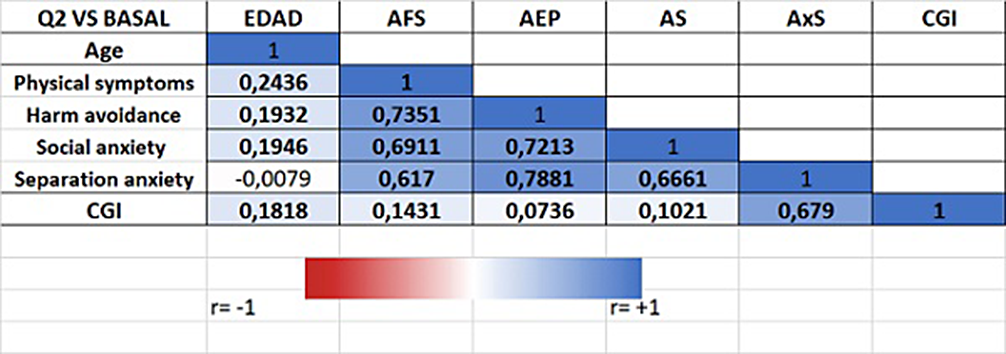
The sample contains 1024 patients. Figure 1 shows the distribution of Anxiety Disorders: Unspecified Anxiety Disorder (47%), Separation Anxiety Disorder (23%), Simple Phobias (9%) and Social Anxiety Disorder (7%). Figure 2 represents the distribution by sex, with the differences being statistically significant (p<0.05) for all anxiety disorders, meaning that girls have higher prevalence of all anxiety disorders. Figure 3 shows how age correlates significantly and directly with all the subscales, meaning the older the patients are the higher the scores. We also found that boys have lower scores and a lower percentage of alteration in all subscales. CGI scale also correlates positively with all the subscales, specially with Physical Symptoms. All these data have been adjusted.
Image:
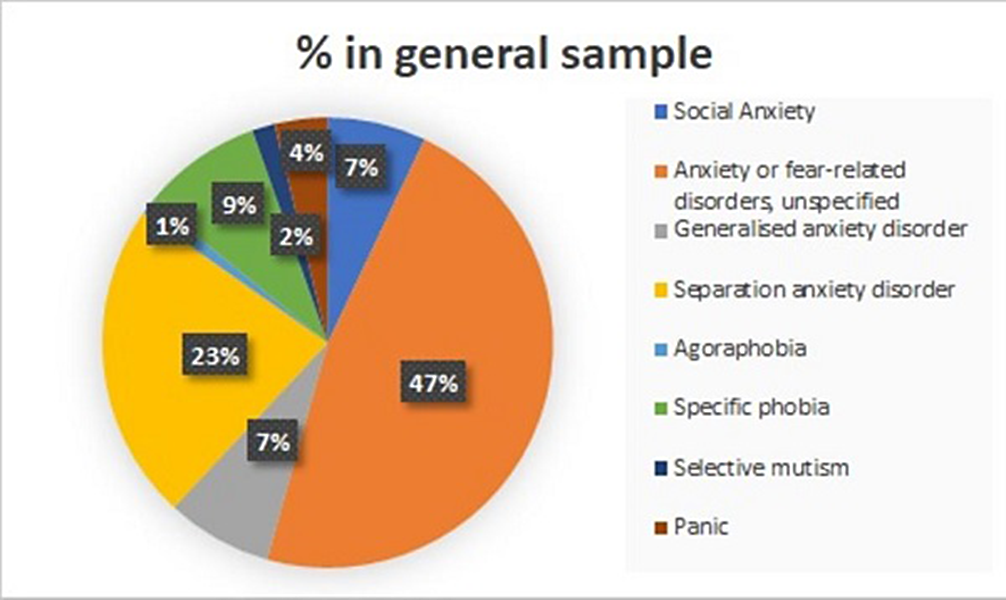
Image 2:
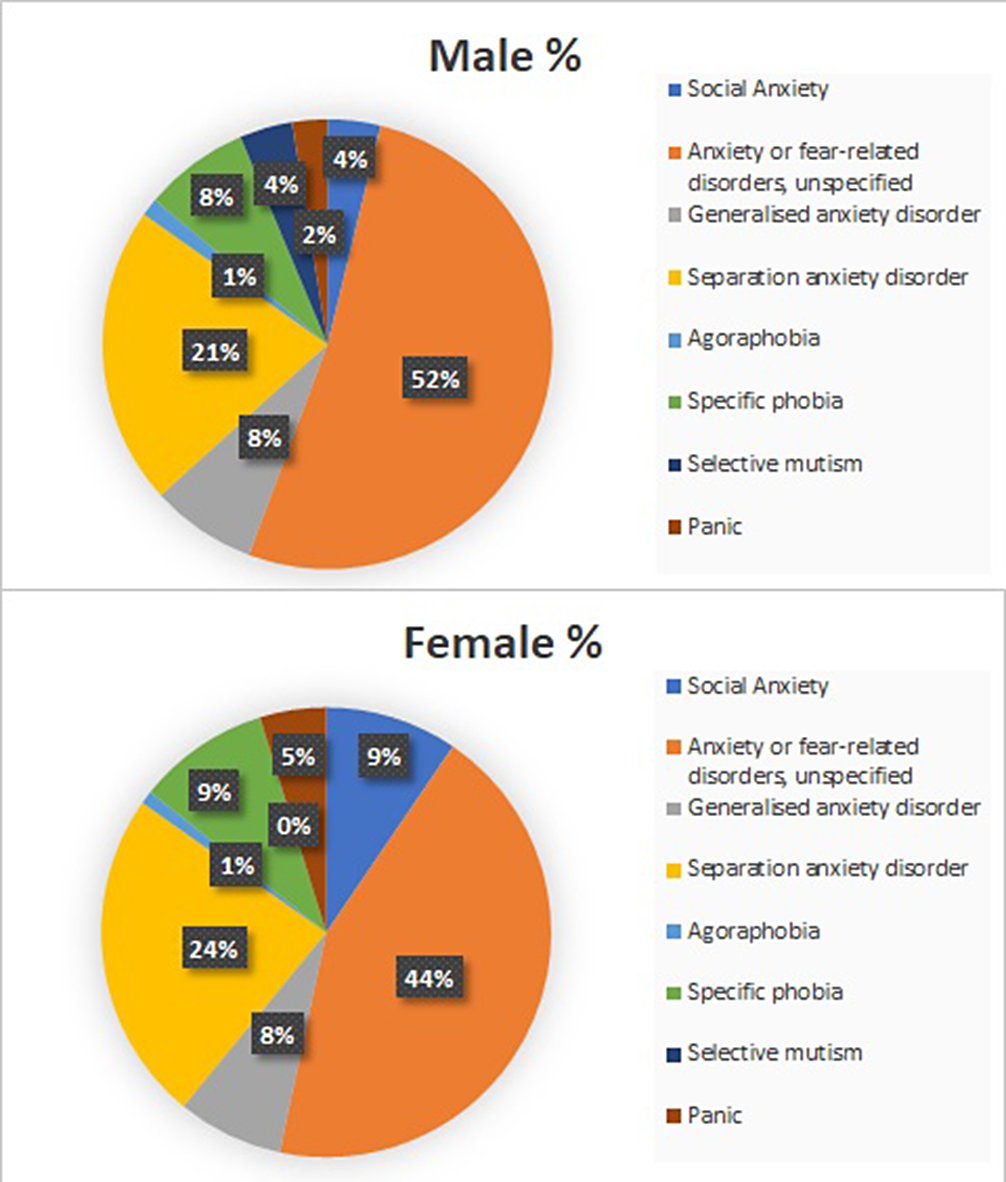
Image 3:
Conclusions
Anxiety disorders are the most common form of Mental Disorder in young people (lobal prevalence of 6.5%, Rapee et al.2023). Prevalence for specific Anxiety Disorders in underage population are less reliable, because of the unequal age of samples (Rapee et al.2023). Separation Anxiety disorder is the most prevalent among children (La Maison et al., 2018), while Social Anxiety disorder is among adolescents (Lawrence et al.2015). We did not categorized our sample, being Separation Anxiety disorder the most frequent followed by Social Anxiety. We observed a correlation between some subscales and a specific diagnosis: the risk of presenting a Social Anxiety disorder is multiplied by 1.08 for each point of increase in that subscale and the risk of presenting a Separation Anxiety disorder is multiplied by 1.05 for each increase of 1 point in Separation Anxiety subscale. However, the diagnosis of Simple Phobia decreases with the increase in scores in all subscales, maybe due to the fact that there are not many items that specifically evaluate fears.
Anxiety is the most prevalent disease in the world. Symptoms of anxiety disorders affect everyone. The symptoms are worse after a long period of time and more severe disease than normal. A study was conducted to support the assumption that it is an opportunity to improve healthcare services.
Objectives
1. Anxiety disorders of doctors and medical specialists of Selenge Province General Hospital
2. Determine the relationship between certain factors and certain factors of anxiety disorders
Methods
The GAD7, SRQ20, and PHQ9, sleep system detection questionnaire methods issued by WHO for doctors of primary health care institutions were analyzed by analytical research snapshot model from 03.15 to 04.05, 2023.03.22. /1/01 was obtained and the survey was conducted.
Results
In the study, 23-65-year-olds received medical care, and the average life expectancy was 37.05 years. 30% (27) of the respondents did not have anxiety disorders, 36.67% (33) had mild anxiety disorders, 18.89% (17) had moderate anxiety disorders, and 14.44% (13) had severe health problems. 6.67% (6) of the respondents had no depression, 10% (9) had very mild depression and could cope on their own, 24.44% (22) had moderate depression and could cope, and 27.78% (25) with healthy depression. 24.44% (22) had major depressive disorder and 6.67% (6) had major depressive disorder. According to correlation analysis, GAD7 score with SRQ20 stress score r=0.76 and PHQ9 mood score with r=0. the inverse association was statistically significant at p=0.00. PHQ9 depression score had a strong effect on SRQ20 stress score r=0.74, p=0.00, and GAD7 score r =0.46, p=0.0000. r=-0.40, p=0.00 had a moderate inverse relationship with age, and r=-0.24, p=0.00 had a weak inverse relationship with age. In linear regression analysis, the GAD7 anxiety disorder score increased by 48.8% (p=0.00) when fixed at one, which was statistically significant. In logistic regression analysis, PHQ9 depression score increased by 35.08% (p=0.01) per entry. In composite logistic regression analysis, the PHQ9 depression score was statistically significant OR=4.07 (p=0.01) multiplied by one.
Conclusions
Doctors and medical professionals include psychological health research, testing, treatment, psychological counseling, and health care. Anxiety disorders are related to stress, depression, satisfaction, and age, while depressive disorders are anxiety disorders.
Supervision is an essentail tool in medical training and especially in psychiatry and psychotherapy. It emcopasses two distinct aspects namely: coaching in the workplace aimed at developping competences (pyramid of Miller) and on the other side a safe place to reflect on ones personal development as a professional. This mentoring should be distinguised from the personal training psychotherapy. The mentoring supervisor will take the doctor’s pledge as a starting point of professional development. But will also encourage the resident to become aware of elements of transference and counter transference in his/her clinical work, helping to foster empathy “maximal understanding with respect for professional distance. This, not only for the benefit of the patient and his/her security, but also in order to take care of one’s own health and developing a sound balance between work and private life.
Too often supervision is taken for granted once the resident has become a consultant. Along with examples of the techniques and the pitfalls of supervison, the presenters will plea for training and intervision as part of the development of the supervisor!
Objectives
Raise awareness for the competences needed to become a valuable supervisor and the place supervision in its two aspects (coaching and place of reflection) should take in the training of medical doctors and especially psychiatrists
Methods
- an inventory of the place of supervision in training in psychiatry throughout Europe
- looking into competences needed in order to develop a sound professional attitude
- looking into the competencies needed to become a valuable supervisor
Results
- supervision is differently defined and given in training in psychiatry throughout Europe
- the competences needed in order to develop a sound professional attitude are defined in the Doctor’s Pledge (World Medical Association 2017) but should be refined according to the specialty with special attention to aspects of psychiatry alien to other specialities
- along with Teaching the Teachers - special trainings are available to become a supervisor
Conclusions
Supervision is an essential tool in medical/psychiatric training, but it needs to be taken seriously in terms of developing the competences needed but also maintaining them in intervision with the colleagues of the training staff
Suicidality is a common concern in psychiatric patients and one of the leading causes of death in adolescents and young adults. (Adolescent health. (2019, November 26) WHO). Some mental health professionals engage in a no-suicide contract with their patients. In this type of intervention, the patient usually agrees to not harm or kill himself/herself. There is an increasing body of evidence to support brief interventions, such as group of safety planning-type interventions (SPTIs) (McCabe et al. MC Psychiatry, 2018, May 3; 18(1)). Safety planning is derived from cognitive therapy and cognitive behavioral therapy used for suicide prevention.
Objectives
Our objective was to summarize and critically analyze current evidence of effectiveness of SPTIs and no-suicide contracts in suicide prevention.
Methods
We conducted a literature review to compare no-suicide contract to safety-planning interventions in suicide prevention.
Results
Although no-suicide contracts may work for some individuals, there is not enough quantitative evidence to support such contracts as clinically effective tools. A recent meta-analysis has shown that SPTIs were associated with reductions in suicidal behaviors although no effect was identified with frequency of suicidal thoughts (Nuij et al. (2021, April 30). The British Journal of Psychiatry, 219 (2), 419–426).
Conclusions
Based on the evidence and straightforward implementation of SPTIs in different clinical settings it may to be a more effective alternative to no-suicide contracts.
Clozapine is an atypical antipsychotic medication which is mainly used in cases of treatment-resistant schizophrenia. Although it has several advantages over other typical and atypical antipsychotic medication, such as fewer relapses and lowering the risk of tardive dyskinesia and suicide it also has a range of adverse effects which makes compliance an issue for many patients.
Pyoderma gangrenosum (PG) is a rare neutrophilic dermatosis clinically characterized by painful pustules or nodules that rapidly evolve in ulcers with violaceous, undermined borders and raised periphery. The etiopathogenesis of the disease remains unclear, however PG is usually manifested in the setting of an underlying immune-mediated disease, more commonly inflammatory bowel disease, rheumatoid arthritis and haematological malignancies.
Objectives
Nevertheless, in the literature there are scarce reports of drug-induced PG.
Methods
We present the case of a 56-year-old woman with a diagnosis of refractory schizophrenia on clozapine treatment for 4 months, who was admitted to the emergency department for a skin eruption localized on the trunk, genital area and extremities. The clinical examination revealed numerous, discrete erythematous macules, papules and plaques with central necrosis, and multiple, sharply marginated ulcers with undermined, red to purple border. Further physical examination disclosed no systemic findings and laboratory analyses and skin biopsy were performed.
Results
On work-up, white blood cell count and C-reactive protein (CRP) were elevated, while blood and pustule cultures were negative. Histologic examination revealed dermal necrosis and inflammation, features consistent with the diagnosis of PG. The pathergy test was positive.
Image:
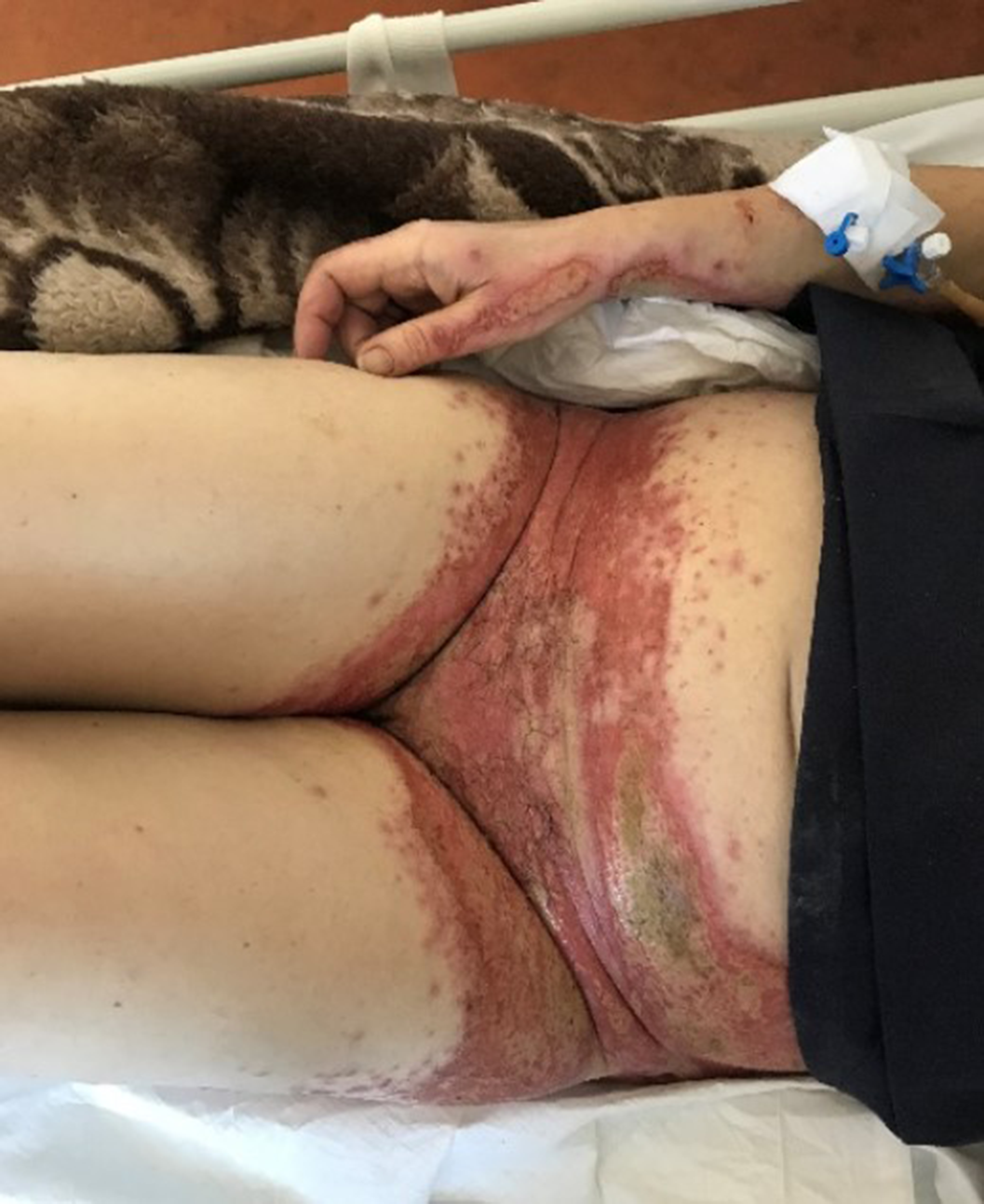
Image 2:

Image 3:
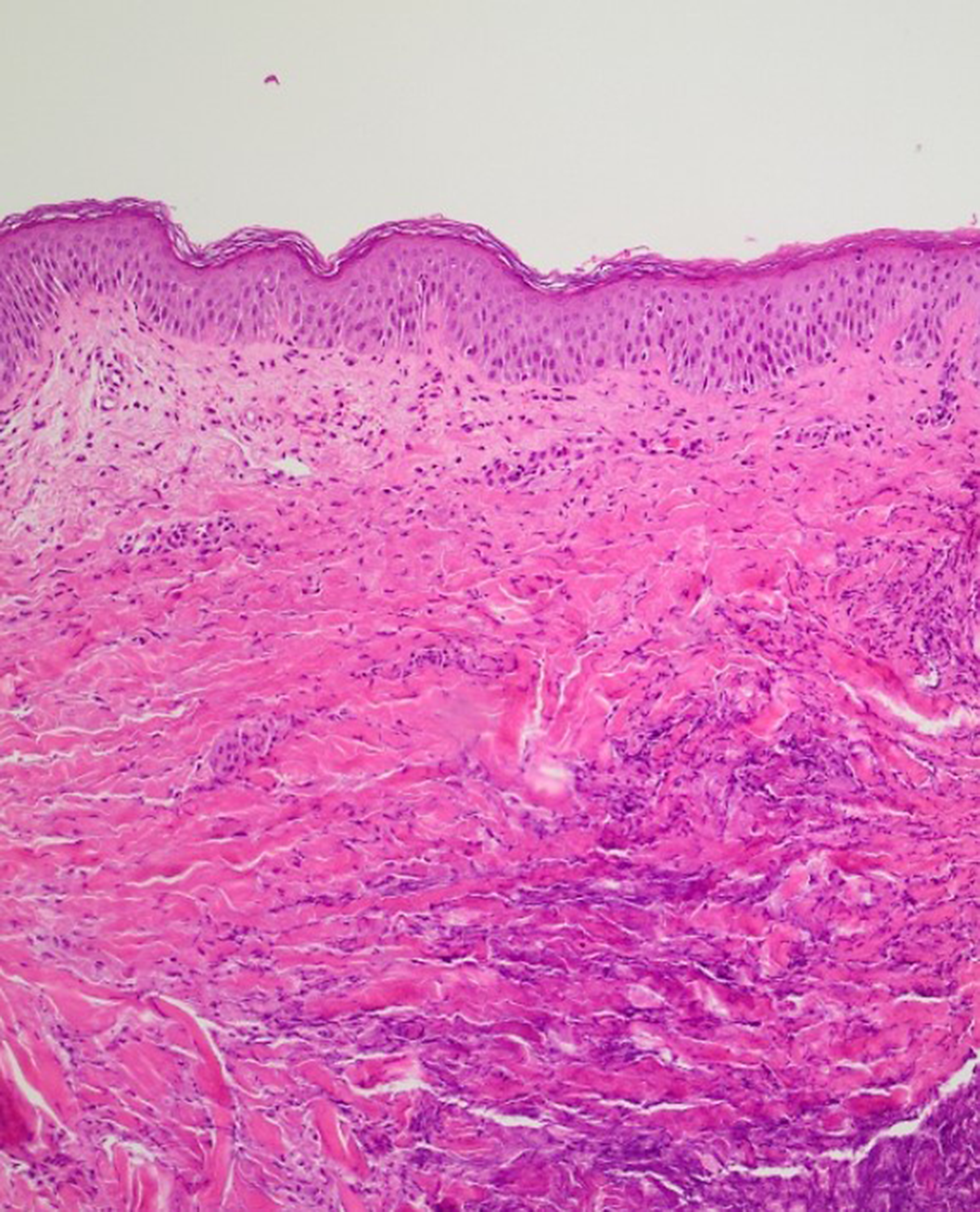
Conclusions
Pyoderma gangrenosum is a rare autoinflammatory skin disorder of unknown etiology. The pathogenesis of the disease is not well understood, but drug-induced PG is considered to result from neutrophil dysfunction and dysregulation of the inflammatory response. Cases of drug-induced PG are rare and attributed to certain drugs. Clozapine is an antipsychotic medication for the treatment of refractory schizophrenia. It is suggested that clozapine alters plasma TNF-α levels and thus can modulate the inflammatory response. To date, a variety of adverse skin reactions (Stevens- Johnson syndrome, DRESS syndrome etc) have been previously described in the literature. However, to the best of our knowledge, this is the first case which strongly indicates the likely association between clozapine and drug-induced PG.
Depersonalization/derealization encompasses a series of symptoms that are difficult to describe by the patient, as well as complex to diagnose by the professional, and can go through multiple diagnoses prior to the diagnosis of certainty.
Objectives
It is proposed, through a clinical case, to know the characteristics of this disorder, evolution, differential diagnosis and therapeutic possibilities
Methods
62-year-old male, history of harmful alcohol consumption and a previous admission to a psychiatric short hospitalization unit for self-injury (superficial cuts in the context of severe mental illness of his wife) post-transplantation who is required by ideas of death, anhedonia and lack of collaboration in patient, The day before the evaluation, refusal to take oral treatment, selective mutism. Pre-transplant evaluation where no psychopathological alteration was observed.
Results
What is initially assessed and treated as a confusional episode of inactive type, through a correct psychopathological examination and with subsequent continuous interviews, with mood fluctuations throughout the admission, is subsequently oriented as an acute stress disorder, adaptive reaction with an anxious-depressive component and finally concluding that we are facing a dissociative disorder, highlighting the depersonalization/derealization on a dysfunctional personality base.
Conclusions
Characteristic of depersonalization is the great difficulty in describing symptoms, the feeling of being disconnected from one’s own body, emotions and reality. The latest studies on etiopathogenesis with MRI show an inhibitory response on the limbic system by hyperactivation of the ventrolateral prefrontal cortex as well as a decrease in the autonomic response, the initial result being the attenuation of the processing of emotions. Among the differential diagnoses: post-anxiety illness disorder, major depressive episode, other dissociative disorders, panic disorder, psychotic disorder, substance-induced disorder There are several partially effective treatments, although the results so far are poor. SSRIs, quetiapine and naltrexone have been tried. Partial efficacy with lamotrigine together with SSRIs and, if high levels of anxiety coexist, SSRIs together with clonazepam. There are studies where psychodynamic psychotherapy, behavioral therapy and hypnosis have obtained partially effective results.
ADP-ribosyltransferases of the PARP family encompass a group of enzymes with variegated regulatory functions in cells, ranging from DNA damage repair to the control of cell-cycle progression and immune response. Over the years, this knowledge has led to the use of PARP1/2 inhibitors as mainstay pharmaceutical strategies for the treatment of ovarian, pancreatic, prostate and breast cancers, holding mutations in genes encoding for proteins involved in the DNA repair mechanisms (synthetic lethality). Meanwhile, the last decade has witnessed significant progress in comprehending cellular pathways regulated by mono-ADP-ribosylation, with a huge effort in the development of novel selective compounds to inhibit those PARPs endowed with mono-ADP-ribosylation activity. This review focuses on the progress achieved in the cancer field, delving into most recent findings regarding the role of a subset of enzymes – the interferon-stimulated PARPs – in cancer progression.
Among many polypharmacy term definitions, the most common definition refers to the concurrent use of five or more medications. Multiple medication administration is highly prevalent in older populations with multimorbidity. Apart from polypharmacy impacts on physical health, it might be detrimental to mental health.
Objectives
The present study aims to evaluate the association between depression and poor adherence in multimorbidity Iraqi older population using five or more medications.
Methods
This cross-sectional study was conducted in Iraq during July and August 2023, involving a sample of 196 older adults recruited from private clinics and hospital clinical medicine wards, all of whom had polypharmacy regimens. The questionnaire includes age, gender, medication regimen adherence and Patient Health Questionnaire-8 (PHQ-8) using a cutoff score of 10. Chi-square and binary logistic regression were performed to determine the association between poor adherence and the presence of depressive symptoms.
Results
A total of 196 respondents, mean age = (61±11.4), 49 (25%) male and 147 (75%) female, 178 (90.8%) good adherence and 18 (9.2%) poor compliance, 81 (41.3%) participants have PHQ-8 score was equal or less than ten while 115 (58.7%) have PHQ-8 score was more than 10. Depressive symptoms and patient adherence showed a significant association (p = 0.02). Moreover, poor adherence polypharmacy participants were more likely to have depression odd ratio (OR) = 3.9, 95% confidence interval (CI = 1.09 – 13.9; p = 0.036).
Conclusions
Our findings suggest that depressive symptoms are associated with poor adherence polypharmacy older adults and, highlighting the importance of addressing medication management and mental health in this population.
Somatic symptoms disorders are usually comorbid with depressive disorders despite that there is little evidence for effective treatment for it. Repetitive transcranial magnetic stimulation (rTMS) have been approved by FDA for mildly resistance depression. From this point we hypothesized that rTMS delivered over the prefrontal cortex (PFC) may be useful in somatic symptoms disorder. Therefore, in our case report we want to shed light on the potential effectiveness of rTMS in somatic symptoms disorder.
Objectives
case report
Methods
case report
Results
Case Report:
A 65-year-old Omani female with multiple medical comorbidities on multiple medications. She presented complaining of multiple somatic complains in the last 2 years after visiting multiple clinics and underwent several specialists’ examinations, investigations and procedure for somatic treatments, all of them where normal.
Then patient was seen by different psychiatric clinic multiple anti-depressant and adjuvant anti-psychotic medication were try, patient still not improve.
Patient get admitted to hospital for observation and management. Initially she was preoccupying by her somatic complain kept on Fluoxetine and Olanzapine along with that topiramate was added, but still with minimal improvement. Then rTMS was added to her management plan following Intermittent theta burst (iTBS) rTMS protocol. After complete all sessions of rTMS patient was recovering from her all symptoms, no complain report from her.
Conclusions
Conclusion: our case highlights the important of investigated more thoroughly in rTMS as treatment option for Persistent Somatic symptoms Disorder.
Since its beginning in the 1970s in Wisconsin, Assertive Community Treatment (ACT), has been adopted by numerous hospitals worldwide. It improves outcomes for people who are most at-risk of psychiatric hospitalization. The main goal is to provide a global attention with a focus on promoting maximum autonomy and facilitating integration into society. In 2012, the Health Care Complex of Zamora, Spain, adopted this pioneering approach to Mental Health. The main efforts were focused on creating a community network for individuals with severe mental disorders. It embraced a biopsychosocial model of intervention aimed at facilitating patient recovery, giving them tools to create a new life project based on their own autonomy.
Objectives
The primary objective of this study was to assess the progress of the Assertive Community Treatment (ACT) since its introduction at the Health Care Complex of Zamora, with a specific focus on analyzing the number of hospitalizations as the dependent variable.
Methods
A quantitative analysis about psychiatry number of hospitalizations was conducted using the database of the Zamora’s Psychiatry Hospitalization Unit. SPSS Statistics for Windows was used to calculate statistical values related to number of hospitalization. The dataset covers de period from 2010 to 2017.
Results
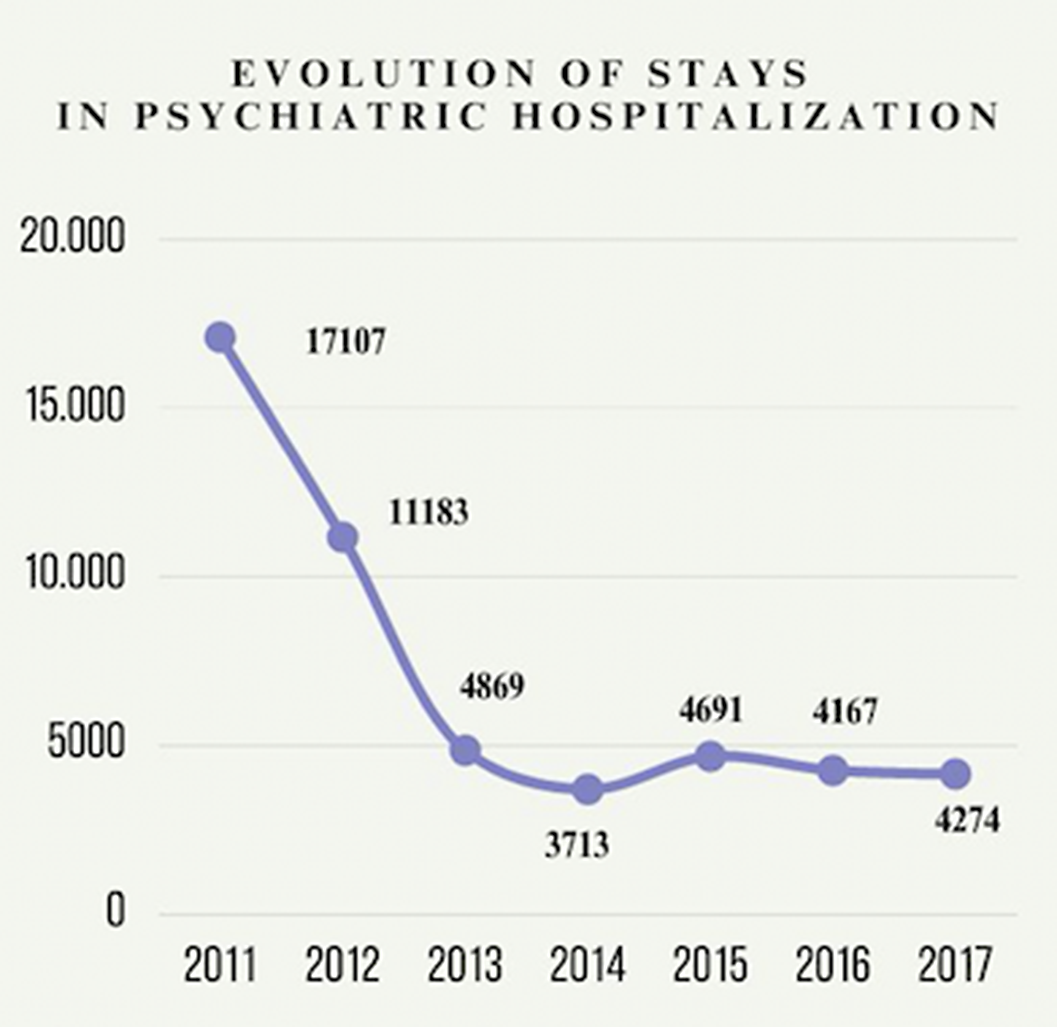
The implementation of ACT has resulted in a significant reduction in hospitalizations reaching up to 75% in the Psychiatry Service of Zamora. It has been revealed a decrease from 17107 hospitalizations registered in 2011 to a total reduction to 4869 stances in 2013. A consistent trend in the reduction of hospitalizations has been observed (figure 1).A restructuration of the Hospitalization Unit was performed in order to implement de community model and reduce hospitalizations. Removal of more than 50% of the beds was developed.Besides, there has been implemented a community subunit with the objective of regaining their autonomy after a psychiatric exacerbation.
Image:
Conclusions
Getting hospitalized in a Psychiatry Unit can have many different socio-laboral consequences. The ACT model has demonstrated a significative reduction in hospitalizations and it has evolved into a support network dedicated the integration of individuals that are usually left behind by society. Moreover, it presents itself as a positive cost-benefit intervention.ACT allows us to envision a future with fewer hospitalization and greater integration of mental health patients into modern society.
It is important to emphasize that the city of Zamora possesses unique characteristics that have facilitated the adaptation of this model. Not only are the rental prices for housing usually affordable, but the city’s small size, which easy walking, allows for easy access to Community Mental Health resources and services.
