To save content items to your account,
please confirm that you agree to abide by our usage policies.
If this is the first time you use this feature, you will be asked to authorise Cambridge Core to connect with your account.
Find out more about saving content to .
To save content items to your Kindle, first ensure no-reply@cambridge.org
is added to your Approved Personal Document E-mail List under your Personal Document Settings
on the Manage Your Content and Devices page of your Amazon account. Then enter the ‘name’ part
of your Kindle email address below.
Find out more about saving to your Kindle.
Note you can select to save to either the @free.kindle.com or @kindle.com variations.
‘@free.kindle.com’ emails are free but can only be saved to your device when it is connected to wi-fi.
‘@kindle.com’ emails can be delivered even when you are not connected to wi-fi, but note that service fees apply.
Depersonalization/derealization encompasses a series of symptoms that are difficult to describe by the patient, as well as complex to diagnose by the professional, and can go through multiple diagnoses prior to the diagnosis of certainty.
Objectives
It is proposed, through a clinical case, to know the characteristics of this disorder, evolution, differential diagnosis and therapeutic possibilities
Methods
62-year-old male, history of harmful alcohol consumption and a previous admission to a psychiatric short hospitalization unit for self-injury (superficial cuts in the context of severe mental illness of his wife) post-transplantation who is required by ideas of death, anhedonia and lack of collaboration in patient, The day before the evaluation, refusal to take oral treatment, selective mutism. Pre-transplant evaluation where no psychopathological alteration was observed.
Results
What is initially assessed and treated as a confusional episode of inactive type, through a correct psychopathological examination and with subsequent continuous interviews, with mood fluctuations throughout the admission, is subsequently oriented as an acute stress disorder, adaptive reaction with an anxious-depressive component and finally concluding that we are facing a dissociative disorder, highlighting the depersonalization/derealization on a dysfunctional personality base.
Conclusions
Characteristic of depersonalization is the great difficulty in describing symptoms, the feeling of being disconnected from one’s own body, emotions and reality. The latest studies on etiopathogenesis with MRI show an inhibitory response on the limbic system by hyperactivation of the ventrolateral prefrontal cortex as well as a decrease in the autonomic response, the initial result being the attenuation of the processing of emotions. Among the differential diagnoses: post-anxiety illness disorder, major depressive episode, other dissociative disorders, panic disorder, psychotic disorder, substance-induced disorder There are several partially effective treatments, although the results so far are poor. SSRIs, quetiapine and naltrexone have been tried. Partial efficacy with lamotrigine together with SSRIs and, if high levels of anxiety coexist, SSRIs together with clonazepam. There are studies where psychodynamic psychotherapy, behavioral therapy and hypnosis have obtained partially effective results.
ADP-ribosyltransferases of the PARP family encompass a group of enzymes with variegated regulatory functions in cells, ranging from DNA damage repair to the control of cell-cycle progression and immune response. Over the years, this knowledge has led to the use of PARP1/2 inhibitors as mainstay pharmaceutical strategies for the treatment of ovarian, pancreatic, prostate and breast cancers, holding mutations in genes encoding for proteins involved in the DNA repair mechanisms (synthetic lethality). Meanwhile, the last decade has witnessed significant progress in comprehending cellular pathways regulated by mono-ADP-ribosylation, with a huge effort in the development of novel selective compounds to inhibit those PARPs endowed with mono-ADP-ribosylation activity. This review focuses on the progress achieved in the cancer field, delving into most recent findings regarding the role of a subset of enzymes – the interferon-stimulated PARPs – in cancer progression.
Among many polypharmacy term definitions, the most common definition refers to the concurrent use of five or more medications. Multiple medication administration is highly prevalent in older populations with multimorbidity. Apart from polypharmacy impacts on physical health, it might be detrimental to mental health.
Objectives
The present study aims to evaluate the association between depression and poor adherence in multimorbidity Iraqi older population using five or more medications.
Methods
This cross-sectional study was conducted in Iraq during July and August 2023, involving a sample of 196 older adults recruited from private clinics and hospital clinical medicine wards, all of whom had polypharmacy regimens. The questionnaire includes age, gender, medication regimen adherence and Patient Health Questionnaire-8 (PHQ-8) using a cutoff score of 10. Chi-square and binary logistic regression were performed to determine the association between poor adherence and the presence of depressive symptoms.
Results
A total of 196 respondents, mean age = (61±11.4), 49 (25%) male and 147 (75%) female, 178 (90.8%) good adherence and 18 (9.2%) poor compliance, 81 (41.3%) participants have PHQ-8 score was equal or less than ten while 115 (58.7%) have PHQ-8 score was more than 10. Depressive symptoms and patient adherence showed a significant association (p = 0.02). Moreover, poor adherence polypharmacy participants were more likely to have depression odd ratio (OR) = 3.9, 95% confidence interval (CI = 1.09 – 13.9; p = 0.036).
Conclusions
Our findings suggest that depressive symptoms are associated with poor adherence polypharmacy older adults and, highlighting the importance of addressing medication management and mental health in this population.
Somatic symptoms disorders are usually comorbid with depressive disorders despite that there is little evidence for effective treatment for it. Repetitive transcranial magnetic stimulation (rTMS) have been approved by FDA for mildly resistance depression. From this point we hypothesized that rTMS delivered over the prefrontal cortex (PFC) may be useful in somatic symptoms disorder. Therefore, in our case report we want to shed light on the potential effectiveness of rTMS in somatic symptoms disorder.
Objectives
case report
Methods
case report
Results
Case Report:
A 65-year-old Omani female with multiple medical comorbidities on multiple medications. She presented complaining of multiple somatic complains in the last 2 years after visiting multiple clinics and underwent several specialists’ examinations, investigations and procedure for somatic treatments, all of them where normal.
Then patient was seen by different psychiatric clinic multiple anti-depressant and adjuvant anti-psychotic medication were try, patient still not improve.
Patient get admitted to hospital for observation and management. Initially she was preoccupying by her somatic complain kept on Fluoxetine and Olanzapine along with that topiramate was added, but still with minimal improvement. Then rTMS was added to her management plan following Intermittent theta burst (iTBS) rTMS protocol. After complete all sessions of rTMS patient was recovering from her all symptoms, no complain report from her.
Conclusions
Conclusion: our case highlights the important of investigated more thoroughly in rTMS as treatment option for Persistent Somatic symptoms Disorder.
Since its beginning in the 1970s in Wisconsin, Assertive Community Treatment (ACT), has been adopted by numerous hospitals worldwide. It improves outcomes for people who are most at-risk of psychiatric hospitalization. The main goal is to provide a global attention with a focus on promoting maximum autonomy and facilitating integration into society. In 2012, the Health Care Complex of Zamora, Spain, adopted this pioneering approach to Mental Health. The main efforts were focused on creating a community network for individuals with severe mental disorders. It embraced a biopsychosocial model of intervention aimed at facilitating patient recovery, giving them tools to create a new life project based on their own autonomy.
Objectives
The primary objective of this study was to assess the progress of the Assertive Community Treatment (ACT) since its introduction at the Health Care Complex of Zamora, with a specific focus on analyzing the number of hospitalizations as the dependent variable.
Methods
A quantitative analysis about psychiatry number of hospitalizations was conducted using the database of the Zamora’s Psychiatry Hospitalization Unit. SPSS Statistics for Windows was used to calculate statistical values related to number of hospitalization. The dataset covers de period from 2010 to 2017.
Results
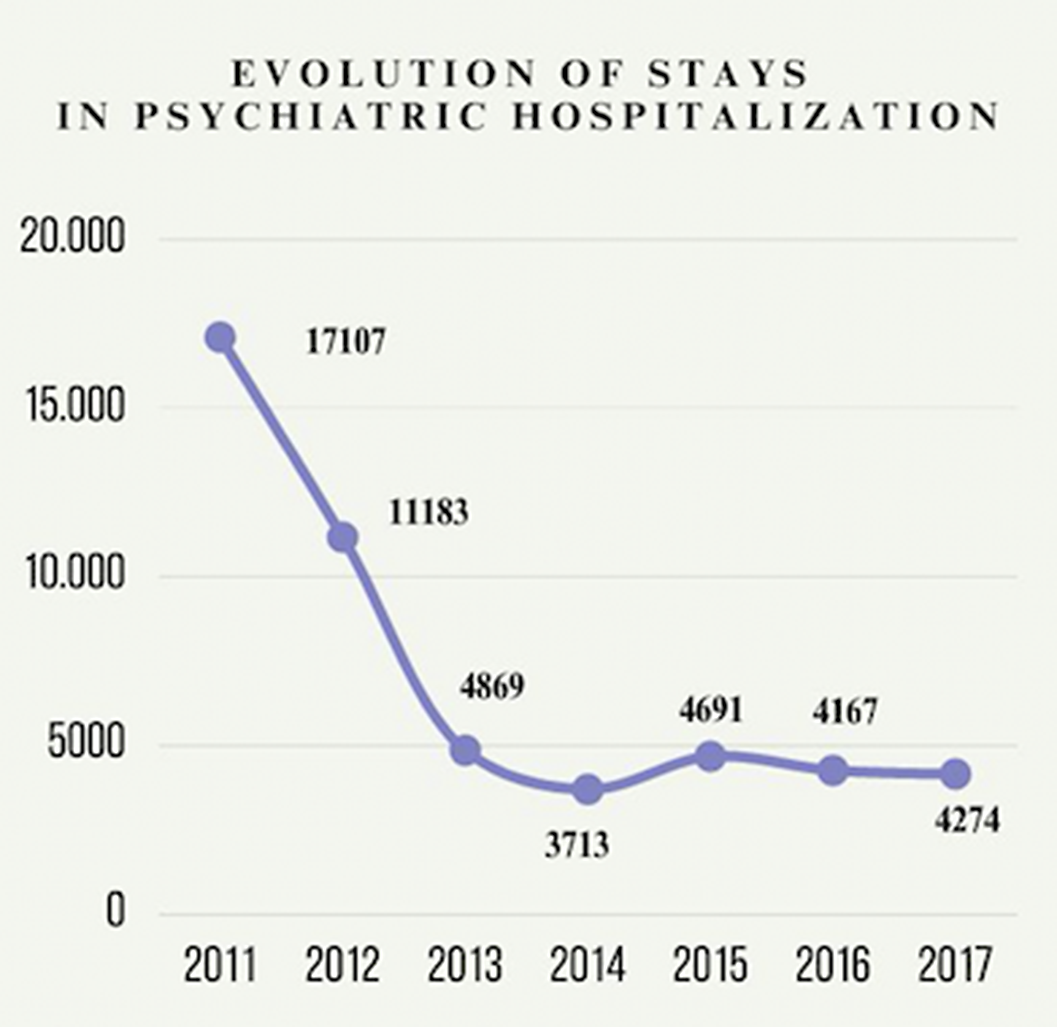
The implementation of ACT has resulted in a significant reduction in hospitalizations reaching up to 75% in the Psychiatry Service of Zamora. It has been revealed a decrease from 17107 hospitalizations registered in 2011 to a total reduction to 4869 stances in 2013. A consistent trend in the reduction of hospitalizations has been observed (figure 1).A restructuration of the Hospitalization Unit was performed in order to implement de community model and reduce hospitalizations. Removal of more than 50% of the beds was developed.Besides, there has been implemented a community subunit with the objective of regaining their autonomy after a psychiatric exacerbation.
Image:
Conclusions
Getting hospitalized in a Psychiatry Unit can have many different socio-laboral consequences. The ACT model has demonstrated a significative reduction in hospitalizations and it has evolved into a support network dedicated the integration of individuals that are usually left behind by society. Moreover, it presents itself as a positive cost-benefit intervention.ACT allows us to envision a future with fewer hospitalization and greater integration of mental health patients into modern society.
It is important to emphasize that the city of Zamora possesses unique characteristics that have facilitated the adaptation of this model. Not only are the rental prices for housing usually affordable, but the city’s small size, which easy walking, allows for easy access to Community Mental Health resources and services.
Prioritarianism is a family of views comparing distributions of well-being. What unites prioritarians is the thought that when deciding whether a distribution is overall better than another, the worse off have priority. There are different ways of making this idea more precise. However, some of these views have extreme aggregative implications and others have extreme anti-aggregative implications. This raises the question: can prioritarians accommodate partial aggregation (aggregating in some but not all cases) and avoid both extremes? In this paper, I explore and focus on a neglected anti-aggregation condition. I identify a family of views I call ‘bounded prioritarianism’ that meet this condition by placing an upper bound on the moral significance of benefits. I argue that anyone sympathetic to partial aggregation ought to opt for a version of bounded prioritarianism.
Psychopathy encompasses the sub-dimensions of interpersonal manipulation, callous affect, erratic lifestyle, and criminal tendencies. Most studies investigating this trait have traditionally utilized a variable-centered approach. However, in the current study, we have adopted a person-centered approach.
Objectives
Our objective was to analyze distinct homogeneous subgroups of individuals characterized by specific psychopathy profiles and examine their relationship with risk-taking behavior.
Methods
Our sample consisted of 371 participants (26.4% men, aged 18 to 59 years), who completed the 34-item Self-Report Psychopathy Scale-III to assess psychopathy and Risk-taking behaviors were assessed using the Domain-Specific Risk-Taking Scale (DOSPERT-30).
Results
Through cluster analysis, we identified four distinct groups: Low psychopathy, Low criminal tendencies, High erratic lifestyle, and High psychopathy group. The primary findings revealed that the High psychopathy group, characterized by elevated scores in all sub-dimensions, exhibited higher levels of Risk-Taking Behaviors and a lower Perception of Risk compared to the other groups. Furthermore, the Low criminal tendencies group, marked by high scores in all dimensions and low scores in criminal tendencies, demonstrated greater risk-taking behavior compared to the Low psychopathy and High erratic lifestyle groups.
Conclusions
These results stimulate the debate about whether it is appropriate to incorporate the dimension of criminal tendencies within the concept of psychopathy. Certain clinical implications emerge from this study that are deserving of a comprehensive and thoughtful discussion.
According to Bisquerra Alzina (2003),competencies are defined as a set of knowledge, capabilities, skills and attitudes, necessary to understand, express and regulate emotional phenomena appropriately and which are fundamental in the teaching profesion since they are closely related to students´performance and mental health.
Objectives
compare socio-emotional skills in two groups of participants: female and male
Methods
A non-experimental,cross-sectional design was proposed for this study. The scope of this research is descriptive, in the sense,that it seeks to establish measures in regard to specific variables. Sample (100 female and 100 male).
Results
Results revealed that the evaluated teachers show average level of socio-emotional competencies, (Table 1).The highest scores were encountered in relation to the optimism competence. It suggests that teachers have the ability to obtain favorable balances from adverse situations presented in their daily lives.Table 1:
Distribution of socio-emotional competency levels in the professionals evaluated
LOW %
MEDIUM %
HIGHT %
EMOTIONAL AWARENESS
19
80
1
SELF EFFICACY
32
66
2
EMOTIONAL REGULATION
17
81
2
EMOTIONAL EXPRESSION
6
85
9
PROSOCIALITY
6
85
9
ASSERTIVENESS
6
82
12
OPTIMISM
0
21
79
EMOTIONAL AUTONOMY
25
71
4
EMPATHY
8
85
7
Findings showed that there exists a statiscally significative difference (P=0,000) in the empathy and self-efficacy dimensions. Women obtained higher scores in these two abilities in regard to men. (Table 2). No differences were observed in the rest of the competences evaluated.Table 2:
Differences according to men and women
FEMALE
MALE
SELF EFFICACY
1,78
1,61
EMPATHY
2,02
1,96
Conclusions
Although teachers´s socio-emotional competences were classified in medium levels, it is necessary to implement an intervention design that allows to streghten those dimensions since they could improve not only the relationships with their students but also teachers´ mental health.
Sodium oxybate, an effective treatment for narcolepsy-associated daytime sleepiness and cataplexy, has been extensively. Despite its therapeutic benefits, sodium oxybate is not without its risks, and adverse psychiatric effects have been documented. This case report highlights a rare manifestation of sodium oxybate-related secondary mania with psychotic symptoms in a patient with narcolepsy, emphasizing the importance of recognizing and managing such adverse events. Additionally, we provide a brief review of similar cases reported in the literature.
Objectives
This report aims to describe the presentation, evaluation, and management of sodium oxybate-induced secondary mania with psychotic symptoms in a patient with narcolepsy. We also discuss the potential mechanisms underlying this adverse reaction and its clinical implications. Furthermore, we summarize findings from previous studies that have reported cases of secondary mania associated with sodium oxybate use.
Methods
We present the case of Mr. X, a 48-year-old male diagnosed with “Narcolepsy with cataplexy,” who had been receiving sodium oxybate treatment for 11 years. He was admitted to the hospital following a mild head injury and the emergence of a manic episode with psychotic features. Comprehensive clinical evaluation, including medical history, toxicology screening, and neuroimaging, was conducted.
Results
Upon evaluation, Mr. X exhibited hyperactivity, restlessnes, grandiose delusions, paranoid delusions related to hospital staff, and decreased need for sleep. Notably, he had been consuming sodium oxybate excessively. Sodium oxybate was discontinued, and low-dose olanzapine was initiated. Within 24 hours, his manic and psychotic symptoms resolved. He admitted to overusing his medication, and his family reported a recent increase in his activity level. A review of the literature revealed similar cases of sodium oxybate-induced secondary mania with psychotic symptoms.
Conclusions
This case underscores the importance of vigilance for psychiatric side effects of sodium oxybate, particularly in patients with a history of substance abuse or potential overuse. Secondary mania associated with medications is a rare but significant clinical entity. Prompt recognition and intervention are crucial for patient safety and well-being. Further research is needed to elucidate the mechanisms underlying such reactions and to establish guidelines for their prevention and management.
The coronavirus pandemic has led to sudden changes in the lives of people around the world. The health threat, earthquakes and epidemiological measures caused certain psychological reactions in everyone. Psychiatric patients are particularly vulnerable to stress, so we were interested in how the changes at the beginning of the pandemic affected their psychological functioning.
Objectives
To check changes in some areas of psychological functioning of outpatient psychiatric patients after the “lockdown” in 2020 and to examine their connection with some sociodemographic and treatment variables.
Methods
Patients of the University Psychiatric Hospital Sveti Ivan filled out a survey questionnaire designed for the purpose of research, which consisted of sociodemographic data and items examining different areas of psychological functioning, when they arrived for an outpatient check-up.
Results
Variables were formed that examine: changes in unpleasant emotions, lack of support, lack of social interaction, changes in performing daily duties, changes in self-help behaviors and health concerns. Statistical analysis showed a significant increase in all variables, with the largest occurring in lack of social interaction, health concerns, and unpleasant emotions. The predictors of changes in psychological functioning were female gender, younger age in combination with cohabitation with parents, and the number of hospitalizations.
Conclusions
After the “lockdown” in 2020, psychiatric patients report a deterioration in psychological functioning.
In Cue-Exposure-Therapy (CET), clients are exposed to triggers through objects, people and environments that arouse craving (Sinha et al. Neuropsychopharmacol. 2009;34 1198–1208). Virtual Reality Exposure therapy (VRET) is used to experience these triggers in a realistic, safe, and personalized way. VR has been used successfully in the treatment of psychiatric disorders. It has not yet been developed and sufficiently tested as an adjuvant in the clinical post-detoxification phase of treatment of alcohol use disorders (AUD) (e.g. Bordnick et al. Addict.Behav 2008;33 743-756; Hone-Blanchet et al. Front.Hum.Neurosci. 2014; 8(844) 1-15). Additionally, these treatment methods have been tested for effect, but not for effectiveness around different VR technologies (Ghita & Gutierrez-Maldonado. Addict.Behav 2018; 81 1-11; ). This study focuses on VRET-Recovry to examine to what extent VR worlds could be personalized in an effective manner to help treat AUD as well as clarifying on the ways in which the VR worlds could be optimized to achieve its goal.
Objectives
The primary objectives of this study are to assess the necessity of personalization in VR environments for AUD treatment, identify the critical elements for personalization, and examine their impact on craving in AUD patients.
Methods
The study included 10 AUD patients diagnosed according to DSM-V criteria, aged between 18 and 65, who were in the final week of clinical detoxification at a large addiction clinic in The Netherlands. A controlled experiment was conducted using the Recovry 1.0 VR system on Samsung Gear VR and Samsung Galaxy S9. The experiment involved exposure to various VR scenes (CG and 360o), including a neutral setting, a bar scene, and a home situation, with the duration and sequence controlled by a therapist. Data collection consisted of pre- and post-exposure questionnaires, heart rate and blood pressure measurements, and interviews.
Results
Craving was remarkably low in the VR bar scene, primarily due to its unsociable context, limited alcohol visibility, and absence of peer pressure. Technical limitations, such as suboptimal resolution, also affected the feeling of presence. Positive results were shown that craving was predominantly stimulated in the apartment scene, driven by the presence of alcohol-related visual cues and social elements, resembling relaxed drinking with others.
Conclusions
This study underscores that some degree of personalization is needed on all craving dimensions with clear preference was given to CG or 360°. The environments were dependent on the personal history and associations they represent to different levels of alcohol visibility (messy or clean), and types of drink (based on past drinking behavior), and different emotional contexts are needed (positive and negative).
While most research on suicidal ideation (SI) in veterans adopts a variable-oriented perspective, this approach often fails to capture the complex interplay of symptoms and comorbid disorders. We hypothesised that a person-centred approach can identify distinct subpopulations of veterans with varying profiles of SI, PTSD symptoms, depression, and agitation.
Objectives
To examine whether distinct subpopulations of veterans exists, characterized by different profiles of PTSD severity, depression and agitation, and intensity of SI.
Methods
We conducted a cross-sectional study in one big University Hospital Centre in Croatia on the sample of men, war veterans aged 30-65 years, undergoing treatment for chronic PTSD. Latent profiles indicators included the Clinician-Administered PTSD Scale (CAPS), Beck Scale for Suicide Ideation (SSI), Hamilton Depression Rating Scale-17 (HDRS-17) and Corrigan Agitated Behaviour Scale (CABS).
Results
We included 203 male participants with a median age of 47 (IQR 43-45) years. The optimal model, allowing variances of indicators to vary between profiles while constraining covariances to zero, yielded five distinct latent profiles. Notably, the highest SI was found in a subpopulation with elevated CABS scores, but moderate PTSD and depression symptoms (13% of participants). Next in SI intensity were 11% of veterans with severe symptoms across all assessed disorders. Next in SI severity were 21% of veterans with low levels of agitation but high levels of depression. The last two profiles, one with mild symptoms of all assessed disorders (43%) and the other with high agitation (12%), have low SI severity.
Conclusions
Our findings affirm the utility of a person-centred approach in identifying nuanced subpopulations of veterans with diverse symptom profiles related to SI. This stratification can inform targeted interventions, thereby enhancing the efficacy of suicide prevention strategies.
The effects of thermal convection on turbulence in accretion discs, and particularly its interplay with the magnetorotational instability (MRI), are of significant astrophysical interest. Despite extensive theoretical and numerical studies, such an interplay has not been explored experimentally. We conduct linear analysis of the azimuthal version of MRI (AMRI) in the presence of thermal convection and compare the results with our experimental data published before. We show that the critical Hartmann number ($Ha$) for the onset of AMRI is reduced by convection. Importantly, convection breaks symmetry between $m = \pm 1$ instability modes ($m$ is the azimuthal wavenumber). This preference for one mode over the other makes the AMRI wave appear as a ‘one-winged butterfly’.
Suicide is a serious and complex public health issue that affects millions of people worldwide. Among the most vulnerable populations are homeless individuals (HIs), whose suicide rate is significantly higher than that of the general population.
Objectives
The aim of this study was to analyze mortality and suicidal behavior in a cohort of HIs during a seven-year follow-up. Additionally, the study sought to identify variables linked to mortality in this population.
Methods
The study was conducted in the province of Girona, Spain, and included 154 HIs who were literally experiencing homelessness. Self-report questionnaires were used to gather sociodemographic data, assess suicide risk, and measure the severity of substance dependence. The follow-up was carried out between 2015 and 2022, collecting data on mortality, suicide attempts, episodes of overdose, and violence experienced from public health services (psychiatric and primary health care services).
Results
During the seven-year follow-up, 23 individuals (14.3% of the sample) passed away, with an average age at the time of death of 52.6 years. The main causes of death were cancer, suicide (excluding overdose), and accidental overdose. Methods used for suicide included drug overdose, jumping, and vein slashing. All deceased individuals had scores above the threshold on the Plutchik Suicide Risk Scale and had reported previous suicide attempts.
Individuals who experienced violence during the follow-up period exhibited more severe suicidal ideation, more suicide attempts, and more non-lethal overdose episodes. Substance dependence, particularly cocaine dependence and dual pathology, was significantly associated with higher mortality.
Conclusions
This study reveals a high mortality rate among HIs, especially due to suicide and accidental overdose. The most significant variables related to mortality were suicidal ideation, the number of previous non-lethal overdoses, and substance use disorders, with cocaine dependence being prominent. The results underscore the need for specific prevention and treatment programs to address suicide risk factors and improve the mental health of homeless individuals. The importance of conducting interventions in specialized centers that detect and address suicide risk in this vulnerable population is also emphasized.
As evidence has converged on the feasibility and effectiveness of focused, non-specialized, manualized interventions for treating mental distress in humanitarian settings, challenges persist in how to promote implementation fidelity and rigorously evaluate interventions designed to be more preventive or promotive in addressing risk and protective factors for poor mental health. One such intervention, Baby Friendly Spaces (BFS), is a psychosocial support program implemented for Rohingya mothers and their malnourished children living in refugee camps of Cox’s Bazar, Bangladesh. That follows a place-based intervention model in which various activities may be offered either individually or in groups with no specified sequence.
Objectives
This presentation describes the process of establishing standards for implementing optimal mental health and psychosocial support (MHPSS) interventions, training BFS workers, and building monitoring and supervision systems to promote implementation fidelity within this flexible support program.
Methods
As BFS services were already being offered as part of Action Against Hunger programming, we first conducted an audit of current services, determining that there was limited current standardization or support for implementation. Therefore, a manualized protocol was designed and covered the program curricula and self-care using didactic and practice-based learning. A series of online training sessions were conducted for 13 psychosocial workers and psychologists at centers delivering the enhanced intervention. Following the training, a baseline evaluation of attitudes, confidence, and knowledge for delivering BFS services was administered. We also collaboratively designed a systematic supervision process to meet the staff’s needs with a focus on capacity building and self-care.
Results
Following the initial training, BFS workers receiving the re-training showed similar levels of knowledge, but greater confidence (p=0.01) than MHPSS workers proceeding as usual. Participants reported that the training was useful for their field of work and for improving the quality of their work, and acknowledged they would be able to integrate the new learnings into their work and daily life. The follow-up with the supervision process confirmed their capacity to deliver the services and highlighted the need for workspace improvements, the lack of continuous motivation, their ability to identify specific issues for which they requested additional trainings.
Conclusions
There is a particular need for careful attention to implementation supports and supervision when offering flexible, place-based mental health and psychosocial support interventions. In that process, ensuring a continuity between the training and the supervision is essential for the quality of both the program and the research project.
Oxytocin (OXT) is a neuropeptide associated with social behavior and the modulation of neural circuits related to social cognition and emotion regulation. Schizophrenia is a mental disorder that causes impairment in different areas of social cognition, including empathy. A systematic review of the literature showed positive effects of exogenous administration of this hormone on the empathy of individuals without psychopathology, especially in the affective domain. Studies on the effect of OXT on empathy in patients with schizophrenia are very limited, being restricted to the cognitive domain.ations must be overcome in future studies. The effects associated with chronic use of the hormone should be the subject of future studies.
Objectives
to evaluate the effect of a single dose of intranasal OXT (24UI) on affective empathy in individuals with refractory schizophrenia and healthy controls.
Methods
a double-blind, randomized, placebo-controlled clinical trial was conducted. A convenience sample of 51 adult men (mean age 34.4 ± 7.6, >10 years of education) was recruited, 20 of whom were diagnosed with refractory schizophrenia according to the DSM-5 (exclusively using clozapine or clozapine + mood stabilizer and/or benzodiazepine) and 31 healthy controls. They were randomized into four groups and received OXT or placebo (PLA – vehicle: SCH-OXT (N=11), SHC-PLA (N=9), HC-OXT (N=15), HC-PLA (N= 16)). Before and after 50 minutes of administering the substance, they performed an affective empathy task (Multifaceted Emphaty Test – MET).
Results
the baseline levels of affective empathy of patients with schizophrenia were lower compared to healthy controls when faced with negative stimuli (p=0.003), but not positive ones (p=0.39). After the administration of OXT and PLA (post-pre), a small increase in empathy levels was observed in all groups, which did not reach statistical significance (positive stimuli: ΔSCH-OXT = 0.16±1.08; ΔSHC-PLA= 0.53±1.44, ΔHC-OXT= 0.02±0.67, ΔHC-PLA= 0.24±0.45, p=0.85; negative stimuli: ΔSCH-OXT = 0.20±1.31; ΔSHC-PLA= 1.16±0.79, ΔHC-OXT= 0.12±0.99, ΔHC-PLA= 0.31±0.57, p=0.11).
Conclusions
the acute effects of intranasal OXT did not favor improvements in the levels of affective empathy, either in patients with schizophrenia or in healthy controls, contrary to the hypotheses of this study. The limited sample size and context-dependent aspects of OXT may explain these findings. These methodological limitations must be overcome in future studies. The effects associated with chronic use of the hormone should be the subject of future studies.
Somatic disorders in patients suffering from psychiatric disorders have become an important issue in the overall care of these patients
Comorbidity studies show that 30 to 60% of patients consulted or hospitalized in psychiatry present an associated organic pathology
However, the detection of somatic conditions in psychiatric patients remains too late and this exposes them to sometimes lethal somatic complications
Objectives
To evaluate the prevalence of somatic disorders in patients followed for a psychiatric disorder at Ar Razi hospital in Salé – Morocco, and to determine the associated factors
Methods
We carried out a cross-sectional study with 80 patients followed for a psychiatric disorder at Ar Razi hospital in Salé presenting clinical signs in favor of an organic pathology and transferred for specialized advice to the medical-surgical services, in the period from September 1st, 2022 until August 31st, 2023.
Results
Most of our patients were male (65%) with ages ranging from 18 to 65 years. Addictive behaviors were found in more than half of our patients.
The most frequent reasons for requests for advice from medical-surgical services was the suspicion of an organic cause of psychiatric symptoms in 25% of cases or the presence of an organic warning sign in 30% of cases.
The comorbidity of somatic illness and psychiatric disorder was noted in 35% of cases.
Somatic comorbidities were essentially: infections and cardiovascular diseases.
Side effects of psychotropic drugs were predominantly neurological in 40 % of cases
Conclusions
Somatic comorbidities in patients hospitalized or in consultation in psychiatric hospitals are very common, often unrecognized, hence the need for early screening in order to improve care.
Schizophrenia is a chronic neuropsychiatric disorder that often requires long-term pharmacotherapy to manage symptoms and prevent relapse. There are important clinical differences between early-stage versus late-stage schizophrenia, like the predominant symptomatology. In later stages, negative, cognitive, and anxiety/depressive symptoms dominate the clinical picture, with relapses further potentiating the emergence of positive symptoms. Therefore, it is crucial to establish the efficacy of an antipsychotic medication in the later stages of schizophrenia as well. Cariprazine is a novel dopamine D3-preferring D3/D2 receptor partial agonist that has shown efficacy in treating schizophrenia across the symptom spectrum.
Objectives
The aim of this poster is to present the findings of cariprazine’s efficacy in treating late-stage schizophrenia, especially in symptoms that are more commonly occurring in this phase of the disorder.
Methods
This poster reports the results of a post-hoc pooled analysis of three 6-week, double-blind, placebo-controlled trials (NCT01104766, NCT01104779, NCT00694707) that assessed the efficacy of cariprazine in schizophrenia. The primary outcome was the change in Positive and Negative Syndrome Scale (PANSS) Total Scores from baseline to endpoint. The analysis focused on patients with late-stage schizophrenia (defined as having an illness-duration of more than 15 years) who received cariprazine at doses between 1.5 mg/day to 6.0 mg/day. The changes in PANSS-derived Marder Factor Scores for Negative, Disorganised Thought (i.e., Cognitive) and Anxiety/Depression symptoms were further examined. The least square mean differences (LSMDs) between cariprazine and placebo groups were calculated using mixed-models for repeated measures (MMRM).
Results
Altogether, 128 placebo-, and 286 cariprazine-treated patients were identified as having schizophrenia for more than 15 years. The mean age of patients was about 45 years, while the mean illness-duration was about 24 years. The mean baseline PANSS scores were the same between the two groups. In the late-stage schizophrenia population, at Week 6, cariprazine yielded statistically significantly greater reductions on the PANSS Total Score (LSMD -6.7, p<0.01). Cariprazine further showed superiority over placebo in reducing negative (LSMD -1.4, p<0.05), disorganised thought (LSMD -1.3, p<0.01), and anxiety/depression (LSMD -0.9, p<0.05) symptoms.
Conclusions
Cariprazine showed efficacy in treating patients with late-stage schizophrenia. It improved overall schizophrenia symptoms, as well as the negative, cognitive and anxiety/depression symptoms that are more prevalent in this phase of the disorder.
Disclosure of Interest
P. Falkai Consultant of: Janssen-Cilag, AstraZeneca, Lilly, and Lundbeck, Speakers bureau of: AstraZeneca, Bristol Myers Squibb, Lilly, Essex, GE Healthcare, GlaxoSmithKline, Gedeon Richter, Janssen Cilag, Lundbeck, Otsuka, Pfizer, Servier, and Takeda, R. Csehi Employee of: Gedeon Richter Plc, K. Acsai Employee of: Gedeon Richter Plc, G. Németh Employee of: Gedeon Richter Plc
The World Health Organization estimates that more than 700,000 people worldwide die by suicide every year. Suicide is a complex issue, and occupation can be considered one of the risk factors. Data from the USA indicates that the suicide rate among doctors is higher compared to the general population. Among different specialties, general practitioners face the highest risk, followed by internal medicine, and then psychiatry. Apart from Anglo-Saxon countries, available data regarding physician suicide is limited; in some countries, the topic is considered taboo.
Objectives
The goal of this pilot study was to explore whether psychiatrists in different countries have access to suicide databases that include occupational information and to determine what prevention strategies and interventions are currently in use.
Methods
We distributed a short questionnaire to a group of psychiatrists (n=25) to assess the existing methods in their respective countries for collecting suicide data and implementing suicide prevention measures. The survey included both developed and less developed countries. Out of the 20 participating countries, 12 returned our questionnaire by the deadline. The final participating countries were Croatia, Czech Republic, Ethiopia, France, Germany, Hungary, Kazakhstan, Mexico, Qatar, Serbia, Sweden, and the UK.
Results
Based on our colleagues’ reports, none of the responding countries have publicly available data on the number of physicians who committed suicide in the last three years. The risk of suicide and substance abuse among doctors is not systematically assessed or published in any of the participating countries. Kazakhstan is the only country where burnout, anxiety, and depression among doctors are regularly assessed. Ethiopia is the only participating country without a hotline for individuals in a suicide crisis. Mexico, Qatar, and Kazakhstan are the only countries with dedicated hotlines for health workers. Regarding preventive strategies, colleagues from Hungary, Serbia, Sweden, and Ethiopia did not report any strategies specifically aimed at preventing physician suicides. Germany and the UK were the two countries with more than one prevention strategy, both providing a free toolkit to identify and support at-risk populations. There are significant differences in the amount of mental health support that doctors receive in each country.
Conclusions
Psychiatrists are not aware of physician suicide data and the utilization of preventive strategies vary widely among the participating countries. There is no standard practice for screening doctors for suicide risk, burnout, anxiety, depression, substance abuse, or adequate data collection on suicide. Based on these findings, it would be necessary to include more countries in the sample and conduct a more detailed examination of the issue in the future.
Koro, also known in Cantonese as Shook Yang, which literally translates to “shrinking penis”, has its roots in a cultural belief that a mythological figure would steal the penis of his victims. Predominantly reported in Southeast Asia, it involves an acute fear of genital retraction, often accompanied by the belief that this retraction may lead to death. Over the last two centuries, Koro has undergone several attempts to establish its definition and classification, without a true consensus having been reached.
Objectives
This study aims to explore the cultural nuances surrounding Koro and reflect on the various conceptualizations that modulated its definition and nosological classification, from Ancient China until the present.
Methods
A non-systematic literature review with the keywords “koro” and “culture” was conducted.
Results
Koro was only introduced to the Western world during colonial expansion, drawing the attention of several psychiatrists who, in Asian territory, reported numerous cases in natives, making the very first attempts at a nosological classification, whether as an anxiety neurosis, or as an obsessive-compulsive disorder. The literature reveals significant cultural variations in the manifestation of Koro, challenging the traditional psychiatric understanding rooted in Western diagnostic categories. Cultural factors, including societal beliefs, religious practices, and regional variations, emerged as influential contributors to the prevalence and presentation of Koro. Additionally, the study identified instances of Koro evolving in response to cultural shifts and globalization, emphasizing the dynamic nature of this syndrome.
Conclusions
This review underscores the need for a comprehensive understanding of Koro that acknowledges its diverse conceptualizations across cultures. Its occurrence, not only in multiple parts of the world, but also in close relation with various comorbidities, has contributed to the dissolution of its primary identity as a culture-bound syndrome, turning Koro into a moving target.