To save content items to your account,
please confirm that you agree to abide by our usage policies.
If this is the first time you use this feature, you will be asked to authorise Cambridge Core to connect with your account.
Find out more about saving content to .
To save content items to your Kindle, first ensure no-reply@cambridge.org
is added to your Approved Personal Document E-mail List under your Personal Document Settings
on the Manage Your Content and Devices page of your Amazon account. Then enter the ‘name’ part
of your Kindle email address below.
Find out more about saving to your Kindle.
Note you can select to save to either the @free.kindle.com or @kindle.com variations.
‘@free.kindle.com’ emails are free but can only be saved to your device when it is connected to wi-fi.
‘@kindle.com’ emails can be delivered even when you are not connected to wi-fi, but note that service fees apply.
White matter hyperintensities (WMH) is common among the elderly. WMH are associated with accelerated cognitive dysfunction and increased risk for Alzheimer`s disease (AD). Although WMHs play a key role in lowering the threshold for the clinical expression of dementia in AD-related pathology, the clinical significance of their location is not fully understood.
Objectives
The aim of this study was twofold: 1) To investigate the quantitative association between WMH and cognitive function in AD; 2) To investigate whether there is any difference in the association between subclassified WMH and cognitive function in AD.
Methods
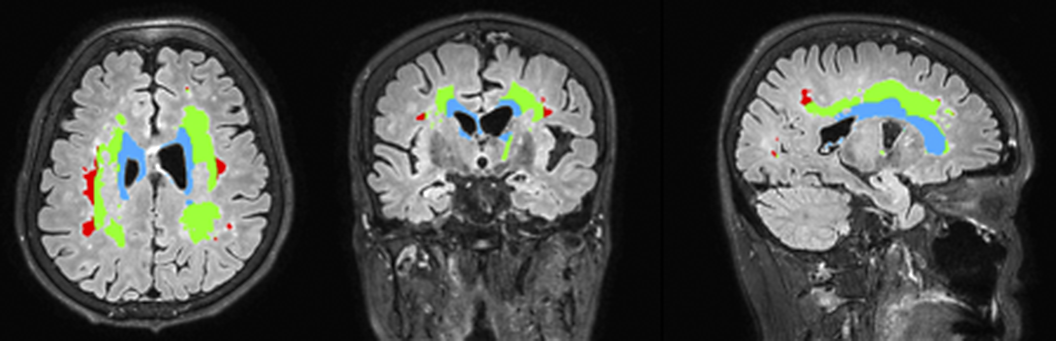
A total of 171 patients with AD underwent clinical evaluations including volumetric brain MRI study and neuropsychological tests using the CERAD-K neuropsychological assessment battery. WMH volume was calculated using automated quantification method with SPM and MATLAB image processing software. According to the distance from the lateral ventricular surface, WMH within 3 mm, WMH within 3-13 mm, and WMH over 13 mm were classified as juxtaventricular WMH (JVWMH), periventricular WMH (PVWMH) and deep WMH (DWMH), respectively. WMH volume data was logarithmically transformed because it was right-skewed.
Results
WMH volume in AD was 20.7 ± 18.2 ml. Total WMH volume was associated with poor performance in categorical verbal fluency test (p = 0.008) and word list memory test (p = 0.023). JVWMH volume was associated with poor performances on categorical verbal fluency test (p = 0.013) and forward digit span test (p = 0.037). PVWMH volume was associated with poor performances on categorical verbal fluency test (p = 0.011) and word list memory test (p = 0.021), whereas DWMH volume showed no association with cognitive tests. Total WMH and PVWMH volume were also related to Clinical Dementia Rating scale sum of boxes score (p=0.022).
Image:
Conclusions
Greater JVWMH and PVWMH are related with concurrent impairments in semantic memory and frontal function independent of the hippocampal volume. However, DWMH volume is not associated with any cognitive function. Only PVWMH among subclassified WMH are related to the severity of AD.
Borderline Personality Disorder (BPD) is the most common personality disorder in psychiatric care. BPD often co-occurs with Major Depressive Disorder (MDD). Both BPD and MDD are associated with various impairments of social functioning. Among these, mentalizing disturbances are the most extensively studied.
Objectives
The Movie for the Assessment of Social Cognition (MASC) is an ecologically valid video-based test, which is suitable for measuring both hypermentalization and implicit mentalization. Based on the literature, it is sensitive enough to detect mild deficits in mentalization capacities. In this study, we investigated mentalization deficits with a special focus on implicit mentalization and hypermentalization in patients with MDD and MDD+BPD with a set of well-established mentalization tests including MASC.
Methods
We examined patients with MDD (n=43) during the depressive episode. A subgroup of these patients was also diagnosed with BPD (MDD+BPD group; n=23), the other group had no comorbid personality disorder (MDD group; n=20). We assessed the patients’ mentalization abilities using the Hungarian version of the Reading the Mind in the Eyes test, the Faux Pas test, and the MASC test. Additionally, symptom scales (measuring the severity of anxiety, and depression), WAIS (Wechsler Adult Intelligence Scale), the Childhood Trauma Scale, as well as scales measuring affect regulation and attachment were used during the assessment.
Results
There were no differences between the two groups in terms of age, IQ, or the severity of depression and anxiety. The MDD+BPD group exhibited significantly poorer performance in the MASC total mentalization score (MW U=118, df=1,41, p< 0,001), as well as in the hypermentalization score (MW U=98,5, df=1,41, p< 0,001). The MDD+BPD group achieved significantly lower results on the emotion recognition and mentalization measures in the RMET test (t=2,883, df=1,41, p< 0,001). The MDD+BPD group performed significantly worse on the Faux Pas test measuring mentalization (MW U=144,5, df=1,41, p< 0,001). In the whole sample, MASC performance correlated with overall IQ.
Conclusions
The MASC, RMET, and Faux Pas tests show a consistent trend and indicate significant differences between the mentalization abilities of MDD+BPD and MDD patients. Our findings are in line with data in the literature: BPD patients’ implicit mentalization with a predominance of hypermentalization is impaired. This impairment is detectable when we compare their performance with MDD patients without BPD. In the future, a larger sample size, additional tests, and the inclusion of a control group are needed to further investigate MDD and MDD+BPD patients’ mentalizing deficits. However, our results emphasize the significance of mentalization-based therapies in the therapy of patients with BPD and depression.
The Personality Inventory for DSM-5 (PID-5) is an instrument that aims to assess pathological personality traits according to the alternative model proposed by the DSM-5. To validate the comparison of an instrument’s scores between different groups, it is necessary that the measure’s invariance be attested, in order to guarantee that the same underlying constructions are being evaluated between the groups. Differences between sex in relation to the predominance of adaptive personality traits were portrayed in previous studies, a fact that seems to be related to culture.
Objectives
This study aims to assess whether the PID-5 presents structural equivalence between sex (sex measuremet invariance) and whether there are differences between pathological personality traits in Brazilian men and women.
Methods
A community sample of 1110 subjects was assessed (71.2% women, mean age 34.6 (±15.8) years, 68.8% higher education). They were recruited through advertisements in different media and by the “snowball” method. Participants responded to the PID-5 in person. The cross-culturally adapted version into Brazilian Portuguese was used
Results
The PID-5 showed that its structure was invariant for sex at the configural level (CFI= 1.000; TLI=1.007; RMSEA<0.001), metric (ΔCFI=0.01; ΔTLI= 0.02; ΔRMSEA=0.02) and scalar (ΔCFI=0.006) ; ΔTLI= 0.006; ΔRMSEA=0.004), allowing comparisons. Regarding the domains evaluated by the PID-5, men showed more traits of Distancing, Antagonism, Disinhibition and Psychoticism (p<0.002), while for Negative Affectivity there were no differences between genders (p=0.06). In terms of facets, women showed higher indicators of lability, anxiety and impulsivity (p<0.01), while men showed perseverance, withdrawal, restricted affectivity, manipulation, dishonesty, grandiosity, attention seeking, insensitivity, irresponsibility, exposure to risks, unusual beliefs and eccentricity (p<0.04).
Conclusions
The findings reinforce the validity evidence of the DSM-5 trait model, which, through the PID-5, similarly evaluates such aspects between sex. Differences between genders were observed in relation to pathological personality traits, which bear similarities with differences observed in terms of adaptive personality traits. Specificities are observed at the cultural level, when, for example, the findings are compared with a Japanese university sample, reinforcing the role of culture at this level
Childhood trauma and depression are both associated with increased risk of metabolic disorders, but their joint effects and underlying mechanisms are not well understood. This talk will present recent findings from large-scale epidemiological and biobank studies that explore the metabolic signature of childhood trauma, depression, and their interplay. For example, using longitudinal data from the NESDA cohort, we investigated the association of childhood trauma with metabolic syndrome in ˜3000 adults, including patients with depression and/or anxiety and healthy controls, over 9 years of follow-up. The talk will also describe preliminary results from an individual patient data meta-analysis pooling >160,000 subjects from the Early Cause European Consortium. In this study, we examined the differences in markers of obesity and dyslipidemia across individuals with neither childhood trauma nor depression (controls), those with childhood maltreatment, those with depression, those reporting both of these conditions. The findings described in the talk shed light on the complex interplay between early life stress, mood disorders, and metabolic health.
Thanks to Paul Schrader, transcendental cinema was distinguished from the slow cinema trend. What distinguishes it from it are the precise psychological portraits of the characters and the aptly reproduced world of internal experiences. Transcendental cinema draws from the philosophy of existentialism, presenting the assumptions of the human psyche. In D. Lynch’s cinematography, we can find faithful representations of mental disorders, such as dissociative fugue, depersonalization, mania or psychosis. Based on the “Lost Highway” (1997), we will prove that D. Lynch, with his cinematography, not only provides knowledge about mental disorders, but also gives patients humanity and dignity. The series also resembles a meditation session in the style of mindfulness, which, when practiced, helps a person affected by mental illness in his recovery process.
Objectives
The aim of this work is to indicate the accurate record of the inner characters’ experiences in D. Lynch’s cinematography, which provides us with knowledge about mental disorders of an individual. By creating a visual image that affects many senses, transcendental cinema sensitizes us and makes us aware of the suffering of a patient affected by mental disorders. The session, while drawing on the philosophy of mindfulness, becomes a meditative session, therapeutic for both us and the protagonist.
Methods
In this research we use the approach proposed by Paul Schrader and David Lynch to analyze analyze transcendental cinema as an art that combines philosophy, cinematography and psychiatry. As a representation of the experiences of a person outgoing the therapy basen on psychoanalysis.
Results
Many studies indicate the positive impact of mindfulness meditation on physical and mental health. Through long scenes, transcendental cinema draws attention to individual stimuli reaching our body, non-judgmental noticing them, focusing on one thought and one sensation, draws from the philosophy of mindfulness, becoming a meditative session in itself. Therefore, a film screening provides us with knowledge about the internal experiences of a psychiatric patient, indicates the form of therapy and at the same time leads us through a therapeutic meditation session.
Conclusions
We believe that the transcendental cinema represented by David Lynch can be treated not only as a representation of mental disorders and the suffering associated with them, but also as a meditative, healing and liberating session. Not only for the person affected by the disorder, but also for us as viewers.
Schizophrenia is a major mental disorder that affects approximately 1% of the population worldwide. Social cognition impairments and negative symptoms such as blunted affect or emotional withdrawal strongly contribute to the psychosocial functioning deficits and long-term disability in schizophrenia. The state-like and trait-like components of social cognition are impaired in schizophrenia
Objectives
Treatment effects of conventional approaches with antipsychotics or psychosocial interventions are limited when it comes to reducing negative and cognitive symptoms in schizophrenia. While there is emerging clinical evidence that new, augmented protocols based on theta-burst stimulation can increase rTMS efficacy dramatically in depression, data on similar augmented therapies are very limited in schizophrenia. The different patterns of network impairments in subjects may underlie that some but not all patients responded to given stimulation locations.
Methods
Therefore, we propose an augmented theta-burst stimulation protocol in schizophrenia by stimulating both locations connected to negative symptoms, namely the vermis of the cerebellum and the left Dorsolateral Prefrontal Cortex (DLPFC). Ninety subjects with schizophrenia presenting negative symptoms and aging between 18-50 years will be randomized to active and sham stimulation in a 1:1 ratio. The TBS parameters we adopted follow the standard TBS protocols, with 3-pulse 50-Hz bursts given every 200 ms (at 5 Hz) and an intensity of 100% active motor threshold. We plan to deliver 1800 stimuli to the vermis and 1800 stimuli to the left DLPFC daily in two 9.5-minute blocks for four weeks.
Results
The primary endpoint is the change in negative symptom severity measured by the Positive and Negative Syndrome Scale (PANSS). Secondary efficacy endpoints are the change in cognitive flexibility measured by the Wisconsin Card Sorting Test and the change in social cognition assessed by the ‘Reading the Mind in the Eyes’, facial emotion recognition, and the ‘Faux pas’ tests. The safety outcome is the number serious adverse events.
Conclusions
In conlucion the aim of our study is to proove the safety and efficacy of theta burst stimulation for treating negativ sympotoms of schizophrenia.
Much ink has been spilled on the scientist–practitioner gap, that is, the apparent divide between knowledge published in academic peer-reviewed journals and the actual business practices employed in modern organizations. Most prior papers have advanced meaningful theories on why the gap exists, ranging from poor communication skills on the part of academics to paywalls and other obstacles preventing the public from accessing research in industrial-organizational psychology (I-O). However, very few papers on the scientist–practitioner gap have taken an empirical approach to better understand why the gap exists and what can be done about it. In our focal article, we specifically discuss the gap as it pertains to small businesses and present empirical data on the topic. Drawing from our experiences working with and in small businesses before entering a PhD program, we suggest that a primary reason for the existence of this gap is the differences between large and small businesses, and we advance two theory-driven reasons for why this is the case. Next, we compiled abstracts and practical implications sections from articles published in top I-O journals in the past 5 years, then we collected ratings and open-ended text responses from subject matter experts (i.e., small business owners and managers) in reaction to reading these sections. We close by recommending several potential perspectives, both for and against our arguments, that peer commentators can take in their responses to our focal article.
Schizophrenia is a chronic condition that leads to major socio-professional disintegration and personal suffering. In addition to the classic clinical symptoms, these patients also suffer from poor insight.
Objectives
To assess insight in a population followed up for schizophrenia
Methods
We conducted a cross-sectional and descriptive which concerned the patients followed in the unit of outpatient post-cure consultations of psychiatry ‘A’ at the CHU Hedi Chaker of Sfax. We included 72 stabilized patients diagnosed with schizophrenia according to the DSM criteria 5. For the collection of sociodemographic and clinical data, we used a pre-established sheet. We used the schedule for the Assessment of Insight–Expanded Version(SAI-E) scale to assess clinical insight
Results
The mean age of the patients in our study was 46.83 ± 11.6 years, with a sex ratio (M/F) of 2.
They were single in 48.5%, and unemployed in 69.4%. Their level of education did not exceed primary school at 44.4% and their socio-economic level was low at 63.9%.
In our study, 72.2% of patients had no somatic history and 36.1% had a history of attempted suicide.
Using the SAI-E scale, the mean score was 20.1 with a minimum of 5 and a maximum of 28.
Conclusions
At the end of this evaluation, it is important to emphasize that insight seems to be an important prognostic factor.
Autism Spectrum Disorders (ASD) is diagnosed when an individual displays irregularity in three key domains: social development, communication, and repetitive behavior/obsessive interests.
The theory of mind-blindness in ASD suggests that individuals on the autism spectrum exhibit deficiencies in the typical empathic process, relative to their mental age.
Empathy comprises two primary components: firstly, the capacity to attribute mental states to both oneself and others, and secondly, experiencing an emotional response that aligns with the mental state of the other person.
Objectives
This study aimed to synthetase the latest evidence about the neuropsychiatric basis of empathy in ASD.
Methods
A review was conducted, drawing on reputable sources (PubMed and Web of Science databases).
Results
A neural basis of empathy has built on a model first proposed by Brothers. It was suggested that social intelligence was a function of three regions: the amygdala, the orbitofrontal and medial frontal cortex, and the superior temporal sulcus and gyrus - the “social brain”. Abnormalities in autism have been found in the amygdala, the orbito and the medial frontal cortex.
Amygdala has been implicated primarily in fear perception of facial expressions, as well as in the recognition of other emotions such as sadness and “social” emotions. In addition to fear perception, the amygdala has also been implicated in related processes including eye gaze, affective memory, olfactory learning, and social judgment.
To date, findings on amygdala structure in autism have been mixed, with studies indicating reduced and increased volumes, as well as nonsignificant differences.
Conclusions
ASD is one of the most heterogeneous neurodevelopmental disorders, and cognitive theories as well as structural findings have linked likely frontal lobe abnormalities to the social and cognitive profiles of autism.
Future studies may elucidate existing data by taking advantage of new and infrequently used data acquisition technologies such as Transcranial Magnetic Stimulation.
Numerous studies have explored the symptoms and course of depression and anxiety in breast cancer patients and identified various clinical, sociodemographic, and genetic factors associated with their evolution. Nevertheless, these studies have been limited in duration and have focused on specific time points during chemotherapy or post-treatment follow-up. Furthermore, these studies included patients receiving different treatment regimens and used different tools to assess symptoms.
Objectives
To assess the prospective evolution of depression in breast cancer patients over eight consecutive chemotherapy cycles, taking into account sociodemographic, clinical, biological, and genetic factors.
Methods
A prospective longitudinal study was conducted on 69 breast cancer patients treated with intravenous chemotherapy at the oncology outpatient unit of the Hôtel-Dieu de France hospital (2017-2019; Ethics: CEHDF1016). The Hospital Anxiety and Depression Scale (HADS) was used to evaluate anxiety and depression in patients. Genotyping was performed for several genes (ABCB1, COMT, DRD2, OPRM1, CLOCK, CRY2, PER2) using the Lightcycler® 2.0 (Roche).
Results
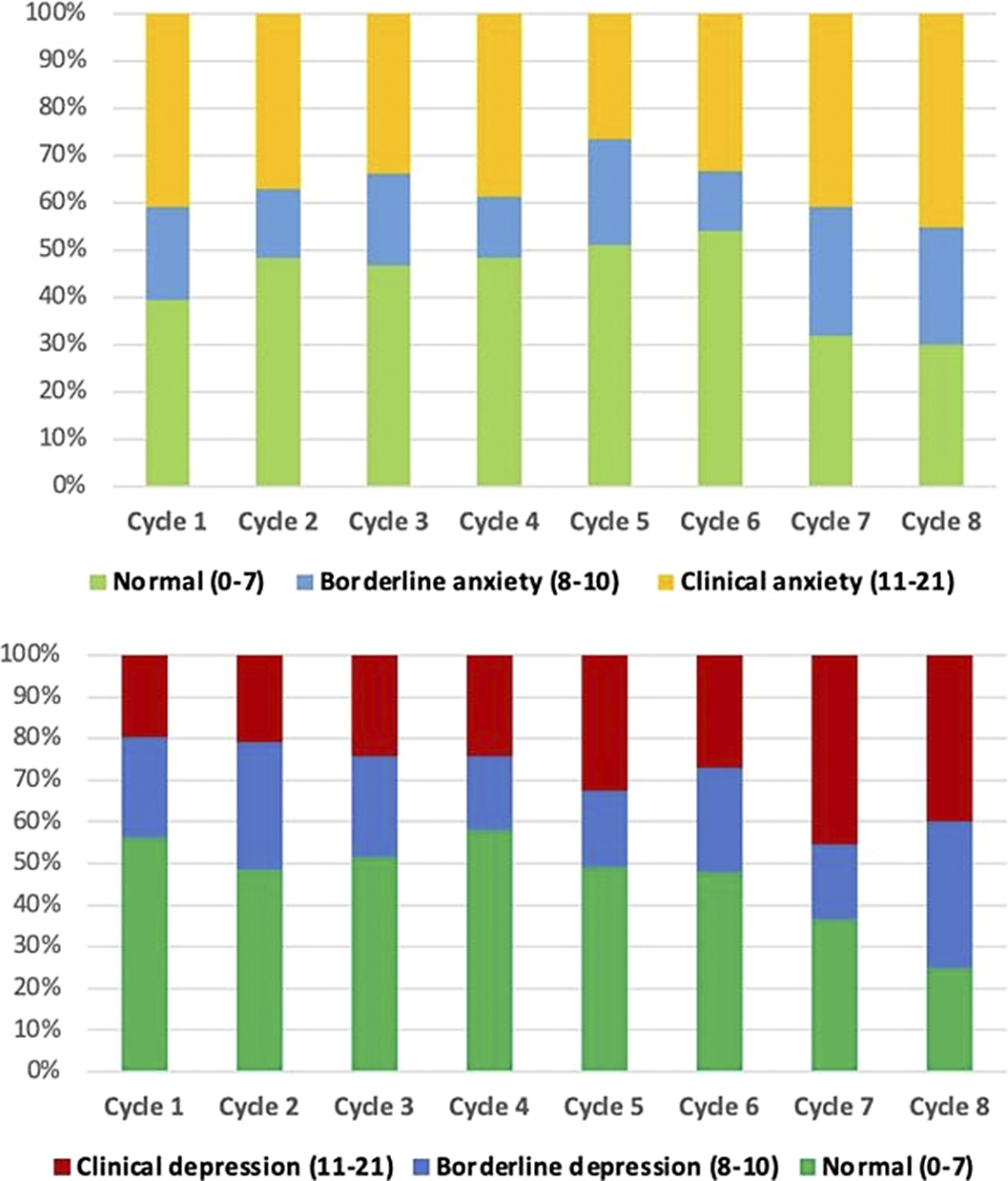
Univariate repeated measures analysis showed differences in the evolution of depression and anxiety over time. For depression, a polynomial linear contrast for HADS-D scores was noted from cycle 1 to cycle 8, with a significant increase in depression at cycles 7 and 8 compared with cycle 1 (p-valuecycle7=0.004 and p-valuecycle8=0.009; Figures 1 & 2). Repeated measures analysis for anxiety showed a decrease in anxiety scores between cycles 1 and 6 of chemotherapy, followed by an increase starting cycle 6 (a polynomial trend for contrasts) (p-valuecycle6 versus 1=0.038; Figures 1 & 2). Multivariable analysis showed that higher anxiety and depression scores at baseline were both associated with higher depression and anxiety scores over time. Other clinical and genetic factors, including polymorphisms in the OPRM1, PER2, and COMT genes, were also significantly associated with higher depression and anxiety scores.
Image:
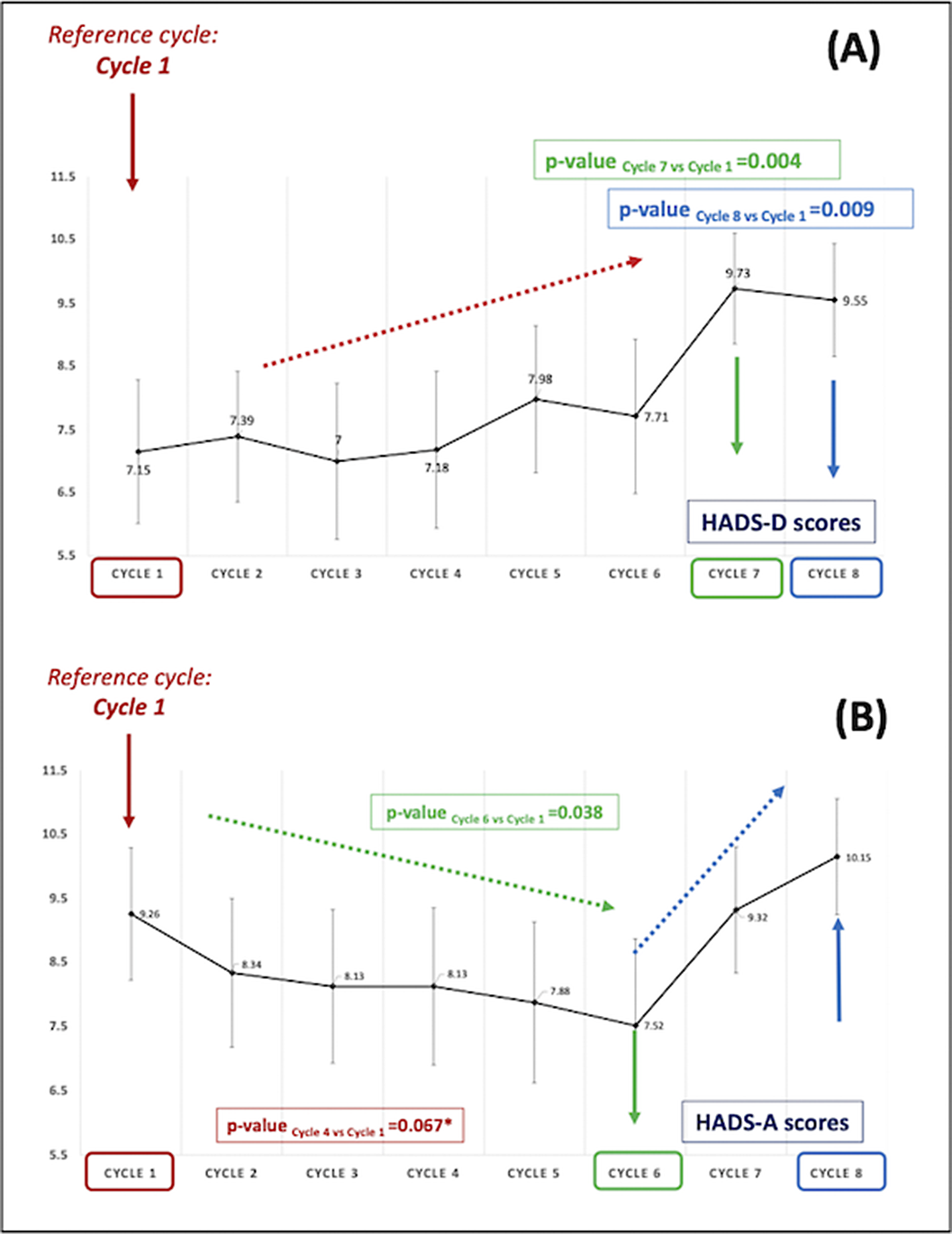
Image 2:
Conclusions
Our findings highlight the importance of understanding the trajectories of depression and anxiety over time in women with breast cancer and identifying the triggering factors. Such personalized approaches would improve patient quality of life.
Despite promising research there is still hesitation in implementing peer support work in some hospitals. Especially in forensic hospitals reservations are held against peer support workers.
Objectives
We aim to give an overview of reviews about the effects of peer support work in psychiatric settings and its implementation. Special emphasis on implications for forensic psychiatric settings shall be given.
Methods
Five electronic databases and archives of four relevant journals were searched in December 2019 and updated in April 2022. In addition, references of articles were searched and relevant authors were contacted for unpublished data. Results of reviews were clustered by one author and checked by another.
Results
22 reviews were identified of which 15 reported on effects of peer support work and six on factors influencing its implementation and one review on both. Several effects of peer support work on clinical, psychosocial, organizational and other outcomes (e.g., cost savings) were described. Psychosocial outcomes were the most promising ones whereas no effects were described in most reviews for clinical, organizational and other outcomes. Factors influencing the implementation of peer support work were described during preparation, recruitment, early employment and further development of the peer support worker’s roles. Most factors, beneficial and challenging, were described for the preparation stage of the implementation process.
Conclusions
The authors of the reviews often reported concerns about the low quality of the included studies. Therefore, the present results have to be considered as preliminary. Nevertheless, it is clear that peer support has a positive influence on psychosocial factors and thus complements classic therapeutic approaches. To achieve the best possible effect, the implementation of peer support needs to be carefully planned. Further studies are necessary in order to be able to consider the effect of recovery support in a more differentiated way.
This survey challenges conventional perceptions of colonial suburbs in the early modern Indian Ocean world in general, and those under the rule of the Dutch East India Company (VOC) in particular. Recent urban research advocates re-evaluating suburbs as intricate and diverse spaces, yet this shift has had limited impact on historical studies of early modern colonialism. The survey highlights the importance of recognizing suburban regions in eighteenth-century settlements such as Cape Town, Cochin, Colombo or Batavia, where significant population growth resulted from inter-Asian and internal migration. These areas fostered ethnic and cultural diversity, disrupting normative ideas of segregation. By shifting the analytical focus from the core to the periphery and exploring colonial histories from an outside-in perspective, the contribution emphasizes the potential of a more horizontal approach to sub/urbanity for understanding early modern colonial societies, encouraging scholars to delve into the intersection of ‘the imperial’ and ‘the urban’.
Depression in the elderly represents a multifaceted and critical area of study within the realm of geriatric mental health. As the global population continues to age, the prevalence and impact of depression among older adults have garnered increased attention from researchers and clinicians.
Objectives
This abstract delves into the comprehensive exploration of the clinical and psychometric characteristics of depression in the elderly population. This study aims to contribute to a deeper understanding of depression’s manifestation in the third age, providing invaluable insights that can inform tailored interventions, improve diagnostic accuracy, and enhance the overall quality of life for older adults.
Methods
A cross-sectional study was conducted that gathered 80 patients. Their common characteristics were the signing of the consent, their admission to the Psychiatry Clinic in Timișoara and their main diagnosis with one of the ICD-10 codes F32.x, F33.x or F06.8.
This selection resulted in three groups: patients younger than 65 years old, patients older than 65 years in whom depression began before this age, and patients older than 65 years in whom depression began after 65 years of age. Anamnestic data, paraclinical, socio-demographic data, psychometric scales that measured the level of depression as well as personality scales were collected. The data that was obtained was compared and examined to find significant correlations between the 3 batches.
Results
The results show that there are no significant differences between patients with depression from rural or urban areas, showing the universality of the occurrence of this disorder among the population, regardless their environment. Depression in the third age is most often found in the elderly who have only finished secondary school, education levels playing a role in depression prevalence suggest the significance of socio-economic factors, warranting targeted outreach and education efforts in vulnerable populations. Correlations were also found between the level of depression and certain blood parameters. The integration of these findings for an understanding of the etiology of depression can pave the way for new therapeutic approaches. Certain personality traits were correlated more with certain items on the scales that evaluated depression, thus in those with a neurotic personality it is very strongly correlated with the appearance of guilt as a symptom, agreeableness with psychomotor slowness, paranoid with insomnia, and anankastic and dependent personalities were correlated much more with social isolation.
Conclusions
By recognizing the distinct clinical features and implications of depression in older adults, we can pave the way for improved mental health care and better quality of life for this growing population. This study reinforces the importance of continuous research and collaboration in the field of geriatric mental health.
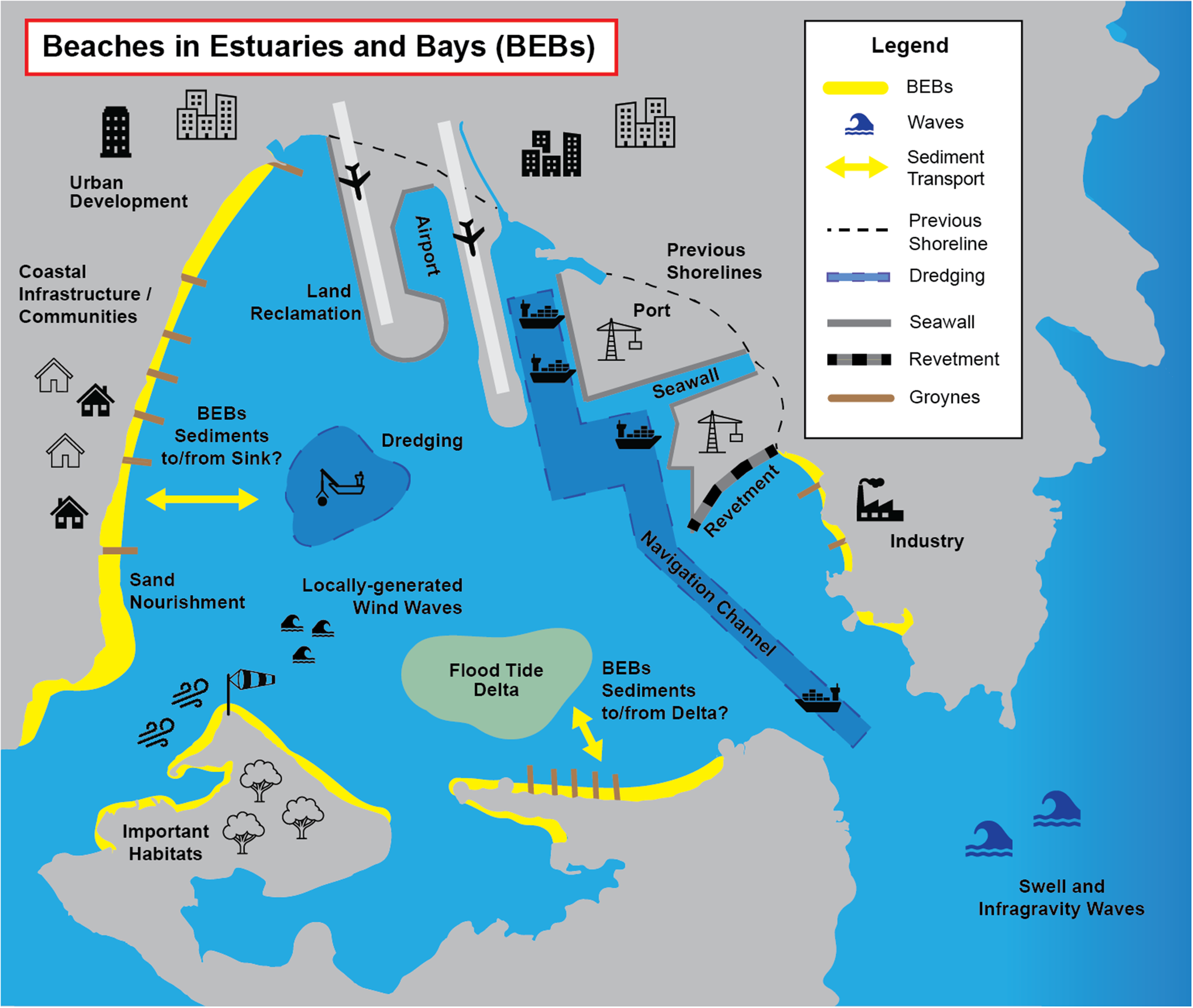
There is a relative lack of research, targeted models and tools to manage beaches in estuaries and bays (BEBs). Many estuaries and bays have been highly modified and urbanised, for example port developments and coastal revetments. This paper outlines the complications and opportunities for conserving and managing BEBs in modified estuaries. To do this, we focus on eight diverse case studies from North and South America, Asia, Europe, Africa and Australia combined with the broader global literature. Our key findings are as follows: (1) BEBs are diverse and exist under a great variety of tide and wave conditions that differentiate them from open-coast beaches; (2) BEBs often lack statutory protection and many have already been sacrificed to development; (3) BEBs lack specific management tools and are often managed using tools developed for open-coast beaches; and (4) BEBs have the potential to become important in “nature-based” management solutions. We set the future research agenda for BEBs, which should include broadening research to include greater diversity of BEBs than in the past, standardising monitoring techniques, including the development of global databases using citizen science and developing specific management tools for BEBs. We must recognise BEBs as unique coastal features and develop the required fundamental knowledge and tools to effectively manage them, so they can continue providing their unique ecosystem services.
Attention-Deficit/Hyperactivity Disorder (ADHD) is commonly associated with childhood, yet its prevalence and impact extend into adulthood. The diagnosis of ADHD in adults poses unique challenges due to the subtlety of symptoms and the presence of comorbidities.
The workshop aims to provide early career psychiatrists with a comprehensive understanding of the unique challenges associated with adult ADHD, emphasizing evidence-based approaches to diagnosis and effective management.
The management of adult ADHD involves a multimodal approach encompassing psychoeducation, pharmacotherapy, and psychosocial interventions. The integration of cognitive-behavioral therapy (CBT) and coaching strategies proves beneficial in addressing executive function deficits and enhancing adaptive skills.
Pharmacological interventions are a key component in the management of ADHD. These interventions aim to alleviate symptoms, improve cognitive functioning, and enhance overall functioning. The two main classes of medications commonly used for ADHD treatment are stimulants and non-stimulants.
Speaking prospectively we use the concept of “at risk mental state” (ARMS) to describe the state in which a person has a heightened risk of developing a psychotic disorder. Young people who are experiencing ARMS can be more precisely defined as being at ultra-high-risk of psychosis using a specific set of criteria known as the UHR criteria.
Objectives
To clarify the concept of ultra-high-risk individuals and to characterize the clinical and functional characteristics and general psychopathology of those individuals that do not transition to psychosis during the follow-up period.
Methods
Research on UpToDate using the terms “Ultra-High-Risk”; “psychosis”, “transition”.
Results
Recent literature has suggested that less than 30% of those who meet established criteria for being at Clinical-High-Risk of psychosis (CHR-P) go on to develop a psychotic illness. It is therefore of crucial importance and relevance to assess and clarify what happens to high-risk individuals who do not transition to psychosis, who make up the vast majority.
One of the most recent studies (NAPLS-2) that encompassed 764 of CHR-P individuals who were followed for 2 years, concluded that 278 did not transition to psychosis during the follow-up period. Three clinical outcomes were recorded: 1 group had experienced a psychopathological remission (39.57%); the other kept symptomatic but not currently meeting criteria for a prodromal risk syndrome (33.45%); the third group had a prodromal progression (26.98%). The study concluded among others that although the remission group had improved social functioning at 2 years compared with the other groups, they were still functioning below the healthy control group.
Another meta-analysis that included a total of 2756 CHR-P individuals with a mean duration of follow-up of 30.7 months evaluated several clinical outcomes in CHR-P that didn’t transitioned to psychosis and between CHR-P non-transitioning versus those transitioning to psychosis. It concluded that CHR-P that do not transition to psychosis have an overall improvement of symptoms (APS, negative, depressive) and functioning at follow-up compared to baseline.
Conclusions
The occurrence of a first psychotic episode is often devastating for the patient and their family, especially given its usual onset in adolescence and early adulthood. This is a critical period in the individual’s development as a person, and disorders at this stage can threaten the potential for a productive and inclusive adult life. Studies have suggested that less than 30% of individuals classified as UHR actually develop a psychotic disorder.
However, little is known about the individuals belonging to this group who do not transition to psychosis. We therefore consider it is relevant to clarify the clinical and functional outcomes of this group of individuals.
Achieving successful stabilization in patients with mental disorders often requires the administration of multiple antipsychotic medications, with the increasing prevalence of clozapine in cases resistant to other treatments. Constipation emerges as a particularly troublesome side effect, gradually progressing into a chronic state of gastrointestinal dysfunction, often accompanied by recurrent episodes of paralytic ileus of varying severity. Prucalopride, a 5-HT4 agonist, selectively targets receptors within the intestinal system.This interaction induces muscular contractions and promotes chloride secretion. Literature suggest its potential efficacy in managing constipation induced by clozapine. In light of these observations, we designed and will conduct a randomized controlled trial to evaluate the effectiveness of prucalopride in alleviating constipation in patients who had shown limited responsiveness to conventional laxatives or other conservative treatments
Objectives
The primary objective of this article is to present the methodology of a randomized control trial assessing the efficacy of prucalopride in the treatment of constipation among patients with mental disorders
Methods
The study will enroll 60 adult patients with mental disorders who will require more than two antipsychotic medications, including clozapine, for stabilization, and who will be experiencing constipation as a side effect
To ensure the validity of the study, the following additional inclusion criteria will be applied:
- Patients will have no severe acute medical conditions
- Patients will have no history of malignancy
- Patients will have no severe respiratory or cardiac diseases
- Patients will have negative results from an endoscopic evaluation of the large bowel, ruling out conditions such as irritable bowel syndrome, ischemic colitis, inflammatory bowel disease, or malignant neoplastic disease
Following the screening process, the patients will be randomly assigned to one of two treatment groups:
Prucalopride Group: Patients in this group will receive prucalopride for the treatment of refractory constipation
Conservative Treatment Group: Patients in this group will continue with conservative treatments.The treatment’s success will be determined based on specific endpoints:
- Normalization of bowel movements, characterized by having more than five bowel movements per week
- Resolution of symptoms related to gastrointestinal dysfunction, including pain, bloating, defecation difficulties, and paralytic ileus
Results
Following the conclusion of the study, data from both groups will be meticulously collected and subjected to rigorous statistical analysis to identify differences in treatment outcomes between these two therapeutic approachs
Conclusions
The detailed findings will be presented in a forthcoming article
Threatened preterm labour (TPL) is associated with long-lasting neurodevelopmental challenges, independent of prematurity. For instance, it is known that infants born a TPL show delayed communication and socio-individual skills, regardless of the gestational age at birth. Furthermore, TPL constitutes an adverse prenatal event that can induce maternal anxiety or depression, even during postpartum period, which can produce a deleterious effect of the prognosis of infant’s psychomotor development.
Objectives
This study aimed to explore the influence of maternal psychopathology as well as other peripartum variables on the course of psychomotor development in children born after a TPL between the ages of 2 and 6.
Methods
In this prospective cohort study, 117 mother–child pairs who experienced TPL were recruited. Psychomotor development was assessed using the Ages & Stages Questionnaires-Third edition at age 2 and 6. A regression model was carried out, including gestational age at birth, maternal anxiety trait, maternal history of psychological traumas, prenatal and postnatal maternal depression, anxiety, and cortisol as well as parenting stress as predictors.
Results
Low gestational week at birth emerged as the most relevant factor in the course of increased communication delay (p < 0.001). However, parental psychopathology during prenatal or postnatal stages was not a relevant factor in the prognosis of Communication skills or Socio-Individual development.
Conclusions
Gestation age at birth rather than parental psychopathology during peripartum period was the most relevant predictor of the course of psychomotor development between 2 to 6 years of age. Further studies should examine other potential modifiable predictors to moderate the impact of gestational age on psychomotor development.
There are several arguments supporting the inflammatory hypothesis in schizophrenia (SCZ). Among the inflammatory markers, beta-2- microglobulin (β2M) is associated with abnormalities in neurogenesis and cognitive impairment described in (SCZ).
Objectives
The objectives of our study were to evaluate the level of β2M in a group of patients compared with a control group and to investigate the sociodemographic, clinical, and environmental factors associated with elevated β2M levels
Methods
We conducted a cross-sectional in outpatients with SCZ. We collected patients sociodemographic, environmental, and clinical data. We assessed psychopathology with the PANSS. We measured serum β2M concentration.
Results
We included 30 patients with SCZ compared with 20 controls. Patients mean age was 40,23±10,66. The mean level of β2M was 1,98 ± 0.42 mg/L for patients and 1.65±0.56 mg/L for control group. The difference was significant between the patient group and the control group (p<10-3). No environmental or clinical factors have been associated with β2M levels other than smoking status (p=0.046).
Conclusions
Further research with larger samples investigating the different stages of SCZ especially early psychosis would be needed to confirm the relevance of this biomarker in SCZ.
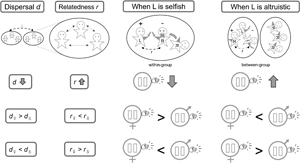
The frequency of left-handedness in humans is ~10% worldwide and slightly higher in males than females. Twin and family studies estimate the heritability of human handedness at around 25%. The low but substantial frequency of left-handedness has been suggested to imply negative frequency-dependent selection, e.g. owing to a ‘surprise’ advantage of left-handers in combat against opponents more used to fighting right-handers. Because such game-theoretic hypotheses involve social interaction, here we perform an analysis of the evolution of handedness based on kin-selection, which is understood to play a major role in the evolution of social behaviour generally. We show that: (1) relatedness modulates the balance of right-handedness vs. left-handedness, according to whether left-handedness is marginally selfish vs. marginally altruistic; (2) sex differences in relatedness to social partners may drive sex differences in handedness; (3) differential relatedness of parents and offspring may generate parent–offspring conflict and sexual conflict leading to the evolution of maternal and paternal genetic effects in relation to handedness; and (4) differential relatedness of maternal-origin vs. paternal-origin genes may generate intragenomic conflict leading to the evolution of parent-of-origin-specific gene effects – such as ‘genomic imprinting’ – and associated maladaptation.