To save content items to your account,
please confirm that you agree to abide by our usage policies.
If this is the first time you use this feature, you will be asked to authorise Cambridge Core to connect with your account.
Find out more about saving content to .
To save content items to your Kindle, first ensure no-reply@cambridge.org
is added to your Approved Personal Document E-mail List under your Personal Document Settings
on the Manage Your Content and Devices page of your Amazon account. Then enter the ‘name’ part
of your Kindle email address below.
Find out more about saving to your Kindle.
Note you can select to save to either the @free.kindle.com or @kindle.com variations.
‘@free.kindle.com’ emails are free but can only be saved to your device when it is connected to wi-fi.
‘@kindle.com’ emails can be delivered even when you are not connected to wi-fi, but note that service fees apply.
First published in 1959, Walford's Guide to Reference Material" achieved international recognition as a leading bibliographic tool across all subject areas. The "New Walford (TNW) Volume 2: The Social Sciences" is the second volume of the successful new, radically different Guide, which is already receiving critical acclaim. Published in a three-volume cycle, TNW points you to an expertly chosen selection of key, quality resources - accessible electronically and in print - in each subject field. Compiled by leading subject specialists from internationally renowned organizations, "Volume 2" covers 15 broad subject groupings: social sciences (generic)
Information users and usability constitute the main building blocks of today's electronic information world. This important new text is the first to give a holistic overview of all of the necessary issues relating to information users and the usability of information services in the digital world, including user-centred design, and the characteristics and behaviour of information users. This book helps readers understand why information users and the usability of information services are important and equips them to play a proper role in designing user-centred information systems and services and to properly exploit information services for the maximum benefit of users. It covers all of the major issues, the current situation and what the various research studies from around the world show. It includes chapters, covering: information users; human information behaviour; usability of information systems and services; usability: internet and web information services; usability: digital libraries and information services; barriers to information access and usability; the digital divide and social inclusion; the digital divide and usability of digital information services: the global perspectives; and, current issues and trends. It is an essential reading for researchers and practitioners interested in the design and evaluation of digital information systems and services, as well as for students on library, information, and digital library courses.
This new edition of Nick Moore's highly successful "How to do Research" offers an accessible guide to the complete research process. It focuses on the day-to-day requirements of project, managing a piece of research right through from the formulation of the initial idea, to the development of a research proposal and then to the writing up and disseminating of results. Updated throughout, it also contains new and expanded sections on in-house research.
This landmark textbook takes a whole subject approach to Information Science as a discipline. Introduced by leading international scholars and offering a global perspective on the discipline, this is designed to be the standard text for students worldwide. The authors' expert narrative guides you through each of the essential building blocks of information science offering a concise introduction and expertly chosen further reading and resources.
This edited collection is drawn from the seventh Libraries Without Walls Conference, held in 2007. From their beginnings in 1995, the Libraries Without Walls conferences have mapped a major change in the practice of librarianship. While libraries are still concerned to provide users with physical access to their buildings, electronic access - often from remote locations - is becoming ever more dominant, and library services are increasingly being integrated into virtual learning, research and personal environments. In 2007, CERLIM wished to encourage the widest possible range of papers to reflect the diverse current developments in library service delivery. These cover: new kinds of service, especially those that open up new paradigms of 'library' - perhaps the library equivalent of YouTube or MySpace; the library's role within new models of scholarly publishing, including development of services based on institutional or other repositories, and the responsibility of the library for digital curation; service delivery in challenging environments, especially where the infrastructure may be sub-optimal, as in some developing countries, or where the user group represents particular challenges; new technological solutions and the impact on users of the improved services they make possible; and, delivery and assessment of information skills and literacies, especially where this is achieved through electronic environments. These state-of-the-art papers are designed to increase understanding of the role and importance of information in the learning process, and to enable information professionals and course developers to keep abreast of the latest developments in this vital area.
The last decade has seen profound changes in how library collections are developed and managed, driven by a rapidly evolving market place, more sophisticated user-expectations and fast-moving changes in technology. Digital resources are increasingly central to collections and this has changed the very concept of collection development and the role of the information professional. This topical edited collection is cross-sectoral and international in scope, drawing together the perspectives of practitioners and academics at the forefront of modern collection development. They explore how practitioners can take an active role influencing strategy in this new environment, draw on case studies that illustrate the key changes in context, and consider how collection development might evolve in the future. The collection is divided into four sections looking at the key themes: the conceptual framework including a review of the literature; trends in library supply such as outsourcing and managing suppliers; trends in electronic resources including the open access movement and e-books; and, making and keeping your collection effectively including engaging with the user-community and developing commercial skills. This will appeal to all LIS professionals but is essential reading for library and information students and all practitioners involved in collection development and management in academic, school and public libraries. It's also indispensable for those working in commercial and other special library sectors.
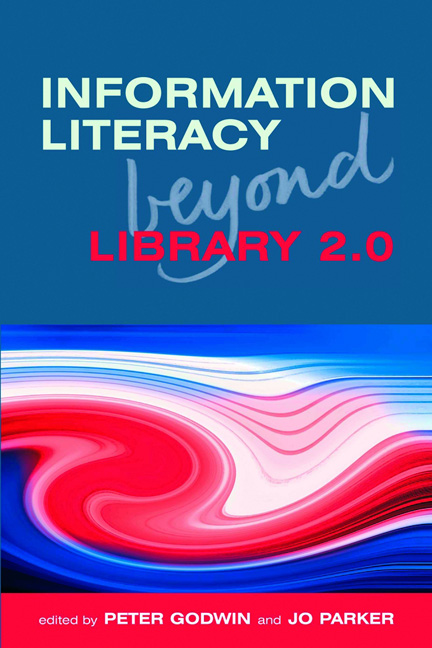
This new book picks up where the best-selling Information Literacy" meets "Library 2.0" left off. In the last three years the information environment has changed dramatically, becoming increasingly dominated by the social and the mobile. This new book asks where we are now, what is the same and what has changed, and, most crucially, how do we as information professionals respond to the new information literacy and become a central part of the revolution itself? Divided into three distinct sections, Part I explores the most recent trends in technology, consumption and literacy, while Part II is a resource bank of international case studies that demonstrate the key trends and their effect on information literacy and offer innovative ideas to put into practice. Part III assesses the impact of these changes on librarians and what skills and knowledge they must acquire to evolve alongside their users. This is essential reading offering practical strategies for all library and information practitioners and policy makers with responsibility for developing and delivering information literacy programmes to their users. It will also be of great interest to students of library and information studies particularly for modules relating to literacy, information behaviour and digital technologies."
A practical guide to using web metrics to measure impact and demonstrate value. The web provides an opportunity to collect a host of different metrics, from those associated with social media accounts and websites to more traditional research outputs. This book is a clear guide for library and information professionals as to what web metrics are available and how to assess and use them to make informed decisions and demonstrate value. As individuals and organizations increasingly use the web in addition to traditional publishing avenues and formats, this book provides the tools to unlock web metrics and evaluate the impact of this content.
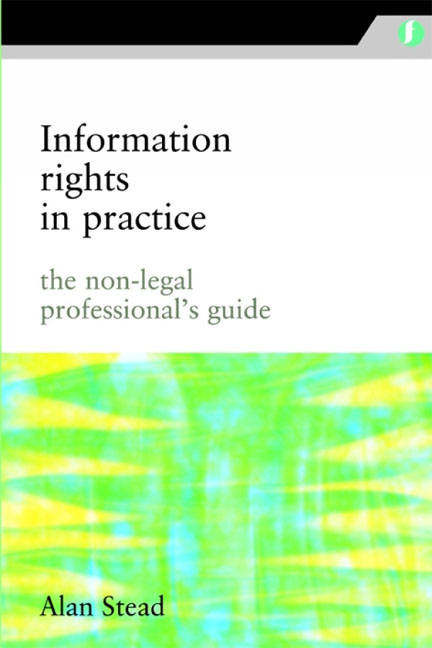
Overstretched professionals in every public authority are grappling with the chalk face implications of a raft of legislation relating to information use. This is the first book to offer a single point of reference and advice, which can be understood by the non-legal professional. The requirements of the relevant legislation are set out together with examples, flow-charts, and diagrams to illustrate and clarify how to apply the law in practice. This indispensable guide is a one-stop shop for all you need to know about information rights law, using relevant case studies to clarify and illuminate these tricky issues. Contents include: Data Protection Act 1998 - definitions of personal data; scope of the Act; the principles; access to personal data and data sharing; and, Freedom of Information Act 2000 and the Environmental Information Regulations 2004 - scope of the Acts; applications of exemptions/exceptions; public interest tests, publication schemes; and, disclosure logs and records management. It also includes: Regulation of Investigatory Powers Act 2000; Human Rights Act 1998; Re-use of Public Sector Information Regulations 2005; other non-information rights-related legislation; interaction of legislation; and, requests for information. A must-have for anyone working with information rights in public authorities and the private sector, this book is also a useful reference point for legal advisers, academics and students of information rights, as well as media professionals wanting to learn and understand how public authorities approach requests for information and the surrounding procedures.
Many information professionals working in small units today fail to find the published tools for subject-based organization that are appropriate to their local needs, whether they are archivists, special librarians, information officers, or knowledge or content managers. Large established standards for document description and organization are too unwieldy, unnecessarily detailed, or too expensive to install and maintain. In other cases the available systems are insufficient for a specialist environment, or don't bring things together in a helpful way. A purpose built, in-house system would seem to be the answer, but too often the skills necessary to create one are lacking. This practical text examines the criteria relevant to the selection of a subject-management system, describes the characteristics of some common types of subject tool, and takes the novice step by step through the process of creating a system for a specialist environment. The methodology employed is a standard technique for the building of a thesaurus that incidentally creates a compatible classification or taxonomy, both of which may be used in a variety of ways for document or information management. Key areas covered are: What is a thesaurus? Tools for subject access and retrieval; what a thesaurus is used for? Why use a thesaurus? Examples of thesauri; the structure of a thesaurus; thesaural relationships; practical thesaurus construction; the vocabulary of the thesaurus; building the systematic structure; conversion to alphabetic format; forms of entry in the thesaurus; maintaining the thesaurus; thesaurus software; and; the wider environment. Essential for the practising information professional, this guide is also valuable for students of library and information science.
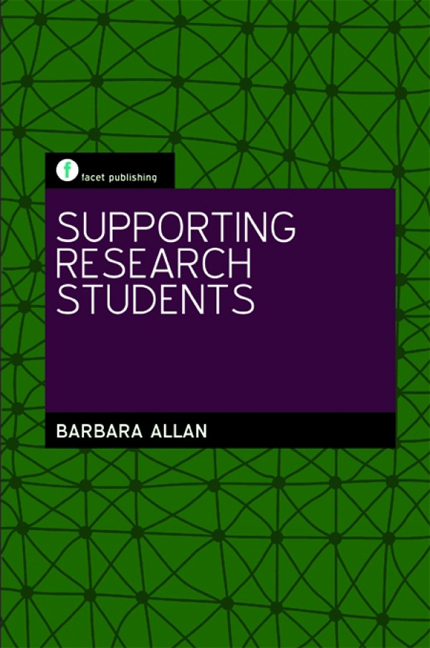
The importance of supporting the needs of research students has recently risen higher up the academic agenda around the world. Numbers of postgraduate students have expanded, and the traditional PhD has now been joined by a new range of doctoral qualifications including professional doctorates such as the Doctor in Business Administration (DBA). These developments have led to a more diverse student body which now includes senior professional practitioners. This shift has seen an acknowledgement that support services within universities must cater more for the needs of research students. While the library and information profession is a graduate one, a relatively small number of LIS professionals have a research degree. This means that, though they are likely to have experience of carrying out smaller scale research projects, they will not have experienced and internalized the distinct learning processes involved in gaining a doctorate. This timely book offers guidance to enable them to support the specialist needs of research students effectively. Individual chapters are designed to be read and worked through in any order. The key areas covered are: research and the research process; the research student's experience; research skills training; supporting research students in academic libraries and information services; virtual graduate schools; introduction to research communities; and, professional development. This is an essential text for all library and information professionals in higher education institutions globally that cater for the needs of research students. It will also be valuable reading for LIS students.
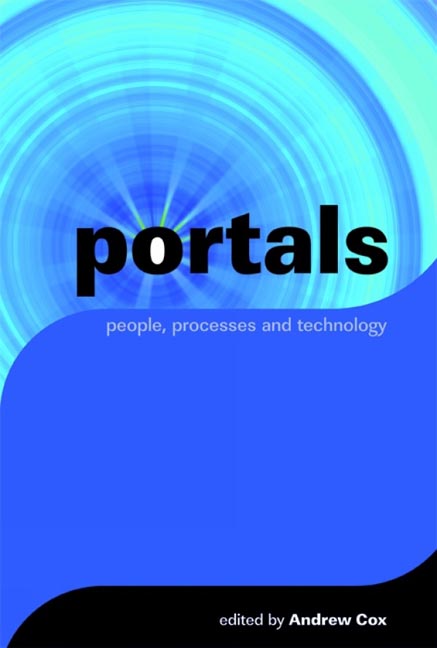
First applied to internet gateways such as Yahoo, the concept of the portal" has evolved in a bewildering number of directions. Different themes of personalization, aggregation or integration seem to have dominated our understanding of what a portal should be at different times. Many organizations and institutions have borrowed the idea from the net to address local problems of integrating and presenting information sources to users - yet they have developed the concept in different ways. Meanwhile new models seem to be constantly emerging from the internet. Tracking this evolving concept is clearly of particular concern for information services. How can they best take advantage of internet portals to improve access to resources? What are the requirements for delivery of diverse content through a local portal? And how do portals run by libraries relate to wider organizational initiatives? This edited collection seeks answers to these questions, providing the library and broader information community with an overview of how portals are currently being used.
Data management has become an essential requirement for information professionals in the last decade, particularly for the higher education research community, as more and more digital information is created and stored. As budgets shrink and funders of research increasingly demand evidence of value for money and demonstrable benefits for society, there is increasing pressure to provide plans of sustainable management of data. Ensuring that important information remains discoverable, accessible and intelligible and is shared as part of a larger web of data will mean research has a life beyond its initial purpose and can offer real utility to the wider institution and beyond. This edited collection, bringing together leading figures in the field from the UK and around the world, provides an introduction to all the key data issues facing the HE and information management communities. Using the authors' expertise and relevant international case studies, it defines what is required to achieve a culture of effective data management offering practical advice on the skills required, legal and contractual obligations, strategies and management plans and the data management infrastructure of specialists and services. Each chapter covers a critical element of data management including: the meaning of data management; the lifecycle of data management; the policy environment; an organisational approach to achieving digital sustainability; data management plans and planning; roles and responsibilities for libraries and librarians; the challenge to university information services; an analysis of the New World approach; and resources and sources of support to data management. This is essential reading for librarians and information professionals working in the higher education sector, the research community, policy makers and university managers. It will also be a useful introduction for students taking courses in information management, archivists and national library services.
A brand new and fully updated edition of this seminal work on archival preservation. Access to archival material - the documentary heritage of people all over the world that gives them their identity and ensures their rights - is dependent on the survival of fragile materials: paper, parchment, photographic materials, audiovisual materials and, most recently, magnetic and optical formats. The primary importance of such survival is widely acknowledged but sometimes overlooked in a rush to provide ever better means of access. But without the basic material, no services can be offered. Preservation is the heart of archival activity. Archivists in all types of organizations face questions of how to plan a preservation strategy in less than perfect circumstances, or deal with a sudden emergency. This book considers the causes of threats to the basic material, outlines the preservation options available and offers flexible solutions applicable in a variety of situations. It offers a wide range of case studies and examples from international specialists. This revised edition also includes a new chapter on the management and training of volunteers, reflecting a key concern for many archival institutions. This is a vital handbook for professional archivists, but also for the many librarians, curators and enthusiasts, trained and untrained, in museums, local studies centres and voluntary societies in need of good clear advice
Practical Ontologies for Information Professionals provides an accessible introduction and exploration of ontologies and demonstrates their value to information professionals. More data and information is being created than ever before. Ontologies, formal representations of knowledge with rich semantic relationships, have become increasingly important in the context of today's information overload and data deluge. The publishing and sharing of explicit explanations for a wide variety of conceptualizations, in a machine readable format, has the power to both improve information retrieval and discover new knowledge. Information professionals are key contributors to the development of new, and increasingly useful, ontologies.
Media librarians - information workers employed by media organizations such as broadcasters and publishers of newspapers, magazines and websites - often seem to have a low profile in both the information profession and among their employers. Academic, legal and public librarians are often intrigued to discover that some of their peers work for the same people who provide their television programmes and daily newspaper. Yet, media companies, producing vast quantities of content in an increasing variety of formats, need people both to help them fill up column inches, pages or hours, and to organize this content afterwards so that it can be found again. Although unlikely to be called 'librarian' - 'researcher', 'media manager' or 'information manager' are more likely titles - information professionals continue to carry this task out for media organizations throughout the world. This practical handbook, the only one of its kind, explores the issues of central importance facing media librarians, archivists, cataloguers and researchers in their working lives. With chapters contributed by frontline practitioners who have experienced the problems for themselves, it covers: media libraries in the 21st century; managing intranets; picture libraries and librarianship; cataloguing television programmes; managing online subscriptions; legal issues for news databases and archives; regional libraries: a survivor's guide; and, swimming upstream in a media library. Media librarians often have little time for professional development activities. Questions like 'What resource should I buy?', 'Shall I let this user borrow this item?', 'Is it ethical for me to answer that question?' and 'How can I describe this footage?' set policy and precedent every day. This book condenses and synthesises this invaluable knowledge to equip media librarians to face the challenges of today's information world. It will also be essential reading for students of librarianship and information studies, and on other media-related courses.
In an age of internet resource guides, which suffer from the malaise of being outdated before they are published, this much-needed publication addresses the information chain in its entirety, offering a timeless method of understanding healthcare information resources. The author takes a holistic approach in her consideration of healthcare information, with the aim of building an overall understanding of it within the information society. The text analyses the domain of healthcare information, its organizational structures and history, and the nature of its resources and the drivers for change affecting them. It looks at examples of healthcare information resources from the perspective of different user groups, including healthcare professionals and consumers, and goes on to highlight areas of research into healthcare information, including evaluation studies, user and impact studies, bibliometrics, metadata and Web 2.0. The key areas covered are: the healthcare information domain; the history of healthcare and its information environment; producers and users of healthcare information; healthcare information organization; healthcare information sources, services and retrieval; and, healthcare information and knowledge management. This book is written primarily for students of library and information science (LIS), studying either at masters or advanced undergraduate level, and also for practising information professionals and specialists who want to develop their knowledge and bring their skills up to date. It will also be of interest to anyone working in the field of library and information science wishing to understand healthcare information, especially public librarians, who are increasingly called on to advise on health resources, as well as anyone interested in 'healthcare literacy'. The companion blog to this book is at our associated website, and provides updates and commentaries on new aspects of healthcare information as they arise.
This book explores the analysis and interpretation, discovery and retrieval of a variety of non-textual objects, including image, music and moving image. Bringing together chapters written by leading experts in the field, this book provides an overview of the theoretical and academic aspects of digital cultural documentation and considers both technical and strategic issues relating to cultural heritage projects, digital asset management and sustainability. Managing Digital Cultural Objects: Analysis, discovery and retrieval draws from disciplines including information retrieval, library and information science (LIS), digital preservation, digital humanities, cultural theory, digital media studies and art history. It's argued that this multidisciplinary and interdisciplinary approach is both necessary and useful in the age of the ubiquitous and mobile Web.
This book offers innovative tips and tried-and-tested best practice to enable library and knowledge workers to take control of professional development regardless of the budget and time available to them. Continuing professional development (CPD) is a key component of a successful and satisfying career. Part of the Practical Tips for Library and Information Professionals series, this book offer a wide range of ideas and methods for all library and information professionals to manage the development of those who work for and with them.
Many organizations do not yet have a formal programme of records management, but increasingly they are recognizing the benefits of well managed records and the serious consequences of inadequate records systems. Establishing records management and maintaining an effective programme requires specialist expertise. This essential manual of practice provides a detailed guide to the concepts, skills and techniques of records management for organizational staff who have a responsibility for setting up, maintaining or restructuring a records management programme. It offers invaluable advice on the management of records in both electronic and traditional paper media, and focuses on the following areas: understanding records management; analysing the context for records management; classifying records and documenting their context; creating and capturing records; managing appraisal, retention and disposition; maintaining records and assuring their integrity; providing access; implementing records management. The appendices provide a wealth of additional information including a list of standards for records management, an annotated bibliography and sources of further information, and details of professional and advisory bodies. This much needed manual is an indispensable purchase for organizations wishing to introduce better practices for managing their records. The book is intended to be of value to experienced records managers as well as LIS practitioners and newcomers to the field. It should be on the desk of every manager and every information professional with responsibility for records management.