To save content items to your account,
please confirm that you agree to abide by our usage policies.
If this is the first time you use this feature, you will be asked to authorise Cambridge Core to connect with your account.
Find out more about saving content to .
To save content items to your Kindle, first ensure no-reply@cambridge.org
is added to your Approved Personal Document E-mail List under your Personal Document Settings
on the Manage Your Content and Devices page of your Amazon account. Then enter the ‘name’ part
of your Kindle email address below.
Find out more about saving to your Kindle.
Note you can select to save to either the @free.kindle.com or @kindle.com variations.
‘@free.kindle.com’ emails are free but can only be saved to your device when it is connected to wi-fi.
‘@kindle.com’ emails can be delivered even when you are not connected to wi-fi, but note that service fees apply.
The book analyses modern tendencies in the development of regional economic cooperation in East Asia which is considered by regional countries as their response to growing challenges of globalization. Trying to protect their national interests by collective efforts they are promoting regional commercial, investment, and financial cooperation as measures aimed at improving the efficiency of their economies. These steps however are not regarded as a counterweight to globalization but merely directed against most negative manifestations of the latter and in fact are realized as one of the forms of globalization at the regional level.
Three of the four chapters in this book deal with consequences of the income-tax treatment of contributions to and withdrawals from the CPF. They discuss the effects on the borrowing costs of the Government of Singapore, and on the effective rates of return accruing to the citizens as members of the Central Provident Fund. The last chapter presents estimates of the probable decline in the retirement incomes of Singaporeans arising from the 1986 reduction in employer contributions.
This book contains a collection of papers on various aspects of Indonesia's economic and its industrial development. It discusses the early independence period in the 1950s; the Soeharto era (1966-1998); and the ensuing two economic crises, namely the Asian Financial Crisis of 1997/98 and the Global Financial Crisis of 2008.
This book analyses the process of modernization of health and healing practices, and documents in detail the current trend among people who use both traditional and modern medicine. It has two unique and important features. One is the focus - five nations in Asia (China, Japan, Hong Kong, Singapore and Thailand) which are at different stages of social and economic development, are studied and compared, providing a current and detailed picture of the combination of traditional and modern ways of healing. The second unique feature is that each chapter is written by scholars who not only have the advantage of firsthand knowledge of the situation in their respective countries but also bring into their analyses their extensive research experience in the areas of medical sociology and medical history. Moreover, as a book written in English, it offers valuable up-to-date information on the Chinese, Japanese and Thai health care systems, which is usually not accessible to readers unfamiliar with these languages.
Contents include Television and the Issue of Identity; Types of Programmes; Languages of Programmes; Imported Programmes; Serialization in the Singapore context.
Ethnic/racial relations have been a perennial theme in Southeast Asian studies. Current events have highlighted the tensions among ethnic groups and the need to maintain ethnic/racial harmony for national unity. This book analyses ethnic/race relations in Singapore, Malaysia, and Indonesia, with special reference to the roles of ethnic Chinese in nation-building. It brings together a group of established Southeast Asian scholars to critically examine some of the important issues such as ethnic politics, nation-building, state policies, and conflict resolution. These scholars of different ethnic origins present their own ethnic perspectives and hence make the book unique. This is the most up-to-date book on ethnic/racial relations with special reference to the ethnic Chinese in three Southeast Asian countries.
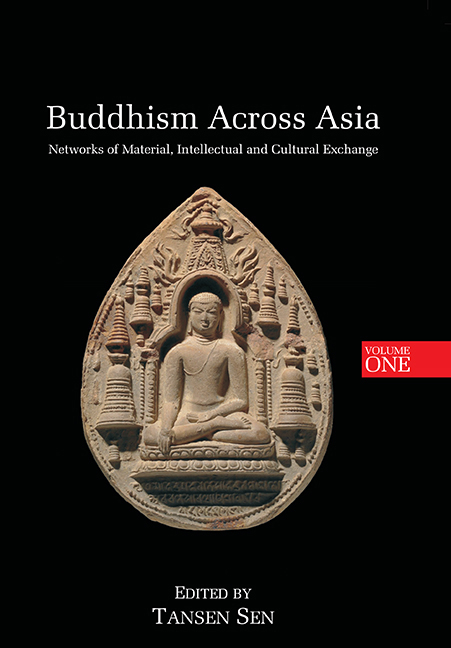
Buddhism across Asia is a must-read for anyone interested in the history and spread of Buddhism in Asia. It comprises a rich collection of articles written by leading experts in their fields. Together, the contributions provide an in-depth analysis of Buddhist history and transmission in Asia over a period of more than 2000 years. Aspects examined include material culture, politics, economy, languages and texts, religious institutions, practices and rituals, conceptualisations, and philosophy, while the geographic scope of the studies extends from India to Southeast Asia and East Asia. Readers' knowledge of Buddhism is constantly challenged by the studies presented, incorporating new materials and interpretations. Rejecting the concept of a reified monolithic and timeless 'Buddhism', this publication reflects the entangled 'dynamic and multi-dimensional' history of Buddhism in Asia over extended periods of 'integration', 'development of multiple centres', and 'European expansion', which shaped the religion's regional and trans-regional identities.' -- Max Deeg, Cardiff University'Buddhism Across Asia presents new research on Buddhism in comprehensive spatial and temporal terms. From studies on transmission networks to exegesis on doctrinal matters, linguistics, rituals and practices, institutions, Buddhist libraries, and the religion's interactions with political and cultural spheres as well as the society at large, the volume presents an assemblage of essays of breathtaking breadth and depth. The goal is to demonstrate how the transmission of Buddhist ideas serves as a cultural force, a lynchpin that had connected the societies of Asia from past to present. The volume manifests the vitality and maturity of the field of Buddhist studies, and for that we thank the editor and the erudite authors.' -- Dorothy C. Wong, University of Virginia
In November 2008, Center for Asia-Pacific Area Studies (CAPAS), Academia Sinica, Taiwan, the ASEAN Studies Centre (ASC), Institute of Southeast Asian Studies (ISEAS), Singapore, and the Taiwan Institute of Economic Research (TIER) organized a symposium in Taipei on ASEAN-Taiwan economic relations. The symposium concluded that while a free trade agreement between Taiwan and ASEAN was not, for political reasons, possible at the moment, Taiwan businesses could take part in the ASEAN regional integration process. Involvement in ASEAN's production chain would give Taiwanese enterprises access to other markets - Australia, New Zealand, India, Japan, etc. The symposium also concluded that to strengthen ASEAN-Taiwan relations, a Taiwan-ASEAN business council could be formed among Taiwanese companies doing business in ASEAN. However, ASEAN needed to provide the appropriate environment including schools and medical facilities for Taiwanese investors and managers. Information on ASEAN countries and doing business in them should be readily available, especially in Chinese, as many Taiwanese investors had limited grasp of the English language.
This book incorporates a selection of fourteen revised papers presented to the International Conference on "China's Regional Economic Development: Cooperation, Challenges and Opportunities for Singapore", organized jointly by the Saw Centre for Financial Studies, NUS Business School, and the East Asian Institute, National University of Singapore, in May 2008. The fourteen chapters discuss in considerable detail the recent shift adopted by the Chinese Government towards the regional development of the country in order to achieve a more balanced economy for the whole country. The economic challenges and opportunities in the various parts of the region are examined in the context of this new policy. The book, with contributors from experts in the topics covered, will be invaluable to businessmen, analysts, academics, students, and policy-makers.
Southeast Asia, until the Asian economic crisis of 1997-2000, was a high economic growth area. However, despite the neo-liberal and globalizing logic of capitalism, local conditions and cultures determine that capitalism will spread in ways not entirely consonant with its Western origins. Capitalism is not a free-floating entity -- it is a socially embodied phenomenon that needs to function in various cultural contexts. Consequently, the tension between the universal status that some claim capitalism now occupies in the post-Cold War world and the particularities of the local cultures it enters should be of great concern.
During the 13th ASEAN Summit in November 2007, ASEAN Leaders endorsed the ASEAN Economic Community (AEC) Blueprint, which laid the foundation of creating a “single market and production base” among the ten Southeast Asian economies. Soon after that, ASEAN faced great uncertainties in the light of the 2008 global financial crisis and continues to remain cautious in the face of the ongoing global economic weakness. Despite this, the region is forging ahead with its commitment to carry out economic liberalization and cooperation as stipulated in the AEC Blueprint. The official AEC scorecard, published in March 2012, stated that ASEAN had achieved 68.2 per cent of its targets for the 2008–11 period.The official AEC scorecard is expected to track the implementation of measures and the achievement of milestones committed in the AEC Strategic Schedule. However, the scorecard, in its current form, is too brief and general to be useful for the ASEAN citizens. This book attempts to fill this gap and evaluates the current status of and the progress towards the milestones of the AEC Blueprint. The overall message of the book is that even though ASEAN may miss some of its integration goals by 31 December 2015, it will certainly deliver some of the key initiatives — tariff elimination, establishing the ASEAN Single Window, laying the foundation of the regional investment initiative, advancing tourism services, moving ahead with ASEAN connectivity and the realization of ASEAN +1 free trade agreements. AEC’s goal of forming an equitable and competitive regional economy will continue to be a work in progress. AEC 2015 is going to be a historic milestone that will raise ASEAN’s profile and will help the region to maintain its centrality in the international community.
The formation of the ASEAN Free Trade Area (AFTA), agreed upon at the Fourth ASEAN Summit in January 1992, reflects both developments within ASEAN and the changing international economic and political environment. Rapid industrialization in all the ASEAN countries has given rise to greater intra-ASEAN trade. Such trade has also become more complementary than competitive. In the international sphere, the emergence of regional trading blocs such as the Single European Market (SEM) and the recently concluded North American Free Trade Agreement (NAFTA) have also had a major impact on ASEAN's perceptions of a global trading system. Fears of trade and investment diversion, coupled with increasing competition for foreign direct investments, have forced ASEAN to forge closer economic ties amongst its members. This timely volume focuses on the issues concerning the practical aspects of implementation of AFTA, and the ways and means of bringing AFTA to fruition within the 15 year frame. In addition, broader global and regional issues are analysed to provide a more comprehensive discussion of the prospects and problems of AFTA.
"Where in the world is the Philippines? is a question that has been deftly and consistently dodged by our politicians at the expense of clearly defining the Philippines' territorial and maritime jurisdictions. Severino's scholarly work lays out what has happened in the past and what must be done in the future - and does so just as newly elected President Benigno S. Aquino begins his term in office. With the help of this timely and comprehensive study, it is imperative that Aquino and the Congress confront and resolve territorial issues once and for all." - Roberto R. Romulo, former Secretary of Foreign Affairs of the Philippines
This conference report provides a unique overview of the development of local currency bond markets in the Asia-Pacific region and cross-border investment and issuance in these markets. It brings together insights of the region's leading capital market regulators, private sector market players, finance and central bank officials and experts from academe and international development organizations, who have gathered together to assess the extent to which the region's bond markets have developed, and map out a regional strategy based on public-private sector partnership that promises to address key policy reform and capacity-building issues.This report concludes that a few emerging markets in the region have made significant advances, but many others need to undertake fundamental reforms to achieve adequate market depth and liquidity and develop an enabling regulatory framework. Successfully undertaking these reforms requires intensive regional cooperation to help address obstacles in individual economies and facilitate greater cross-border activity in the region's bond markets. Coordination is also needed to ensure the consistency of parallel initiatives being undertaken within various regional bodies, particularly APEC, ASEAN Plus Three and EMEAP, to develop a regional bond market.
Since it began in 2008, the dispute over the temple of Preah Vihear and its adjacent area has envenomed Thai-Cambodian relations. Puangthong R. Pawakapan argues that initially Thai-Cambodian cooperation on the temple had begun within the framework of Thailand's strategy to become a regional economic centre and leader. It was the first time in Southeast Asia that two formerly antagonistic states were employing cultural methods to settle a territorial dispute and turned it into a symbol of friendship and cooperation between the two countries. But the ultra-nationalist movement derailed this essay in cooperation. Instead, the temple became a symbol of hatred between the two countries. The ultra- nationalists' success has to be attributed to the support it enjoyed from various civic groups and institutions.
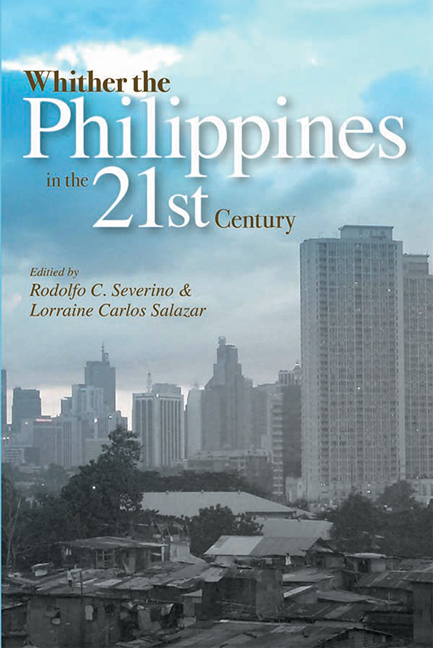
Philippine observers are often baffled by the economic and political turmoil that dominates headlines about the country. Yet, at the same time, the Philippines continues to hold the potential for successfully combining political freedoms with sustained economic growth and, thus, improving the lives of its people. In this book, a team of distinguished scholars examines these seemingly contradictory trends in order to gain a sense of the country's prospects. Reassessing the fascinating and puzzling 'Philippines conundrum' from various angles, the analyses contribute sharp and fresh insights into a variety of areas including: the presidency and political parties; constitutional change and federalism; the roles of the military, religion, and the media in politics; the conflict in Mindanao; the communist insurgency; macroeconomic developments, issues, and trends; the investment climate and business opportunities; poverty, unemployment, and income inequality; migration and remittances; and the Philippine development record in comparative perspective. While the analyses offered in this volume do not arrive at a consensus, they provide a deeper perspective and a more balanced appreciation of events in the country and a glimpse of the prospects and challenges that it faces.
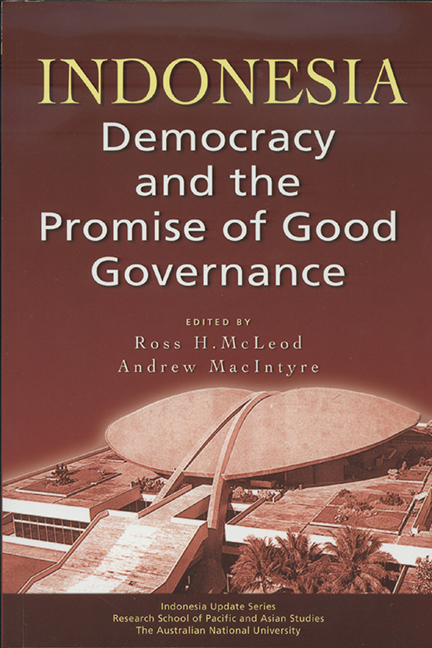
The success or failure of democratic reform in Indonesia is a key question for Indonesia itself and for the surrounding region. Although Indonesia's transition to democracy holds out the promise of good governance, this cannot be taken for granted - as the recent military takeover in Thailand shows. This book is about the challenge of making democracy work in Asia's third-largest nation.
The region comprising the countries around and in the proximity of the Bay of Bengal has remained relatively unexplored for energy. Following a few major discoveries of oil and natural gas, it is now becoming promising even as the energy requirements of a combined population exceeding 1.5 billion are growing exponentially. Here, the opportunities for regional cooperation are immense in a number of fields—production of oil and gas, their transportation, trading in energy, and production facilities for renewable energy. New initiatives are necessary to fully tap their potential. This region is indeed a new energy frontier which has only recently been discovered. No doubt major challenges will need to be overcome. Common stakes and growing interdependence should, however, make it possible for the countries of the region to cooperate in the plans and programmes on energy.
Nationalism and globalization are two major contradicting forces in the world today. The roles that these two forces play and the impact of globalization on countries differ. Both Western and Asian "nation-states" have faced the challenge of globalization in recent decades, and the challenge has become more intense since the 1990s. The decline of communism and socialism as ideologies, and the decreasing importance of national boundaries for capital, companies and even labour, have had profound implications for national identity. Thus, the impact of globalization on "nation-states" is not identical. How have "nation-states" coped with globalization? Has it led to stronger nationalism or national disintegration? What has happened to national identity? Is the concept of "nation" still relevant in the era of globalization? To answer these questions, twelve countries -- six from the West (France, UK, USA, Yugoslavia, Australia, and Russia) and six from Asia (Indonesia, Malaysia, Singapore, Japan, China, and India) have been selected for study. These countries represent a wide range of national experiences - from "old" states to "new" states, from mono-ethnic nations to multi-ethnic ones, and from surviving nation-states to decaying ones. Apart from the individual country studies, the last chapter summarizes and compares the findings of these country studies, throwing light on the various types of nationalism, and the gains and losses of these countries in the process of globalization.
Indonesia is experiencing an historic and dramatic shift in political and economic power from the centre to the local level. The collapse of the highly centralised Soeharto regime allowed long-repressed local aspirations to come to the fore. The new Indonesian Government then began one of the world's most radical decentralisation programmes, under which extensive powers are being devolved to the district level. In every region and province, diverse popular movements and local claimants to state power are challenging the central authorities. This book is the first comprehensive coverage on decentralisation in Indonesia. It contains contributions from leading academics and policy-makers on a wide range of topics relating to democratisation, devolution and the blossoming of local-level politics.