To save content items to your account,
please confirm that you agree to abide by our usage policies.
If this is the first time you use this feature, you will be asked to authorise Cambridge Core to connect with your account.
Find out more about saving content to .
To save content items to your Kindle, first ensure no-reply@cambridge.org
is added to your Approved Personal Document E-mail List under your Personal Document Settings
on the Manage Your Content and Devices page of your Amazon account. Then enter the ‘name’ part
of your Kindle email address below.
Find out more about saving to your Kindle.
Note you can select to save to either the @free.kindle.com or @kindle.com variations.
‘@free.kindle.com’ emails are free but can only be saved to your device when it is connected to wi-fi.
‘@kindle.com’ emails can be delivered even when you are not connected to wi-fi, but note that service fees apply.
“Different under God is the first substantial, comprehensive and scientific analysis of Christianity in Singapore, covering religious, social and political attitudes. This survey by Terence Chong and Hui Yew-Foong will be enthusiastically welcomed by today’s sociologists and historians in the future. An important and timely contribution to the sociology of religion and to the study of Singapore.”—Bryan S. Turner, Presidential Professor of Sociology, the Graduate Centre, the City, University of New York, USA“This is a landmark study of Christianity in Singapore that is sorely needed today, not only to confirm many scholarly guesses, but also to dispel public stereotypes of Christians as homogeneously sheep-like or militant. Scholars and Singaporeans beware, Terence and Yew-Foong have started a fire that will enliven public discourse on religion and society for years to come.”—Daniel P.S. Goh, Assistant Professor of Sociology, National University of Singapore“Analysing individual and discussion-group responses from churchgoers in both mainline denominations and independent churches, this study grapples with a number of highly-relevant, even sensitive issues in contemporary Christianity: issues of moral values and attitudes (including those on sexuality and sexual orientation), money and giving, organizational belonging, governance, and others. While some of the findings and conclusions may reinforce broad perceptions of Christianity and churches in Singapore, others were quite eye-opening. Also useful for researchers, the study contains important data on respondents’ socio-economic backgrounds. All in all it is a most welcome scholarly contribution, and I expect that it will be a well-cited resource for future scholarship.” —Robbie B.H. Goh, Professor of English Literature, National University of Singapore
In a nation pledged to Unity in Diversity, few industries could be more important than interisland shipping. Yet, since independence, problems plaguing interisland shipping have continued, despite the rehabilitation and modernization under the New Order Government. This book tries to understand the problems in terms of the conflict between market forces and government regulation. In the process it sheds light not only upon the industry but also upon an important aspect of modern Indonesian history, upon the nature of the business firm in Indonesia, and upon the formulation and implementation of government policy.
A bomb attack on a hotel. A bomb in a taxi. Or a bus. Like the London 7 July 2005 bomb attacks. Or if a plot to bomb an MRT station succeeds. How would we react? Would Singaporeans stay calm? And united? Or would ethnic fault lines crack? Building networks of trust in good times is crucial. Building social resilience is important in keeping Singapore united in a crisis. That is what the Community Engagement Programme, or CEP, sets out to do. This book describes the Singapore experience in reaching out to hearts and minds. As we fortify our hearts of resilience, the CEP is a book that continues to be written.
This collection of essays has been prepared as a tribute to Clive S. Kessler, Professor of Sociology at the University of New South Wales for over twenty years and a member of staff of the London School of Economics and Political Science, University of London, and the Barnard College, Columbia University, New York. Written by colleagues and graduate students, the essays are divided into three sections: Islam, Society and Politics. They focus on Professor Kessler's analyses of Malaysia. Each essay draws on aspects of his published research, taking his insights as points of departure for new studies. Professor Kessler's ideas and observations are thus extended, complemented and updated in ways which emphasize the depth and extent of his influence on contemporary research on Malaysia.
The book presents a unique combination of the study of contemporary and historical practices between Asia and Europe and brings forth some of the latest thinking on the subject. Recent debates have centered primarily on contemporary aspects of the Europe-Asia partnership in terms of international relations and economic linkages. The present volume complements this political and economic interest in Europe-Asia relationship by focusing on the academic, social and cultural connections between the two regions. The contributions in this volume have a contemporary focus but contextualize the themes within a historical perspective. They deal with academic discourses on the region, on modernity and entrepreneurship; they discuss the long-term exchange of knowledge in specific scientific fields; and they focus on the cultural interconnections in the area of film, literature and migration. The originality of this book lies in its interdisciplinary approach to the question of Asia-Europe and in its emphasis on the multifaceted complexity of the relationship between these two regions. It brings together the diversity of local histories, ideas, and agencies in both Europe and Asia into a universal project of knowledge formation in order to reveal their contribution to the making of the world we are in.Contributors:Syed Farid Alatas, Gregory Clancey, John Kleinen, Van Nguyen-Marshall, Henk Schulte Nordholt, Paravin J. Patel, Maurizio Peleggi, Satish Saberwal, Vineeta Sinha
This book is a rich selection of speeches and writings of Professor Widjojo Nitisastro of the University of Indonesia, who has radically changed the command economy under Soekarno into development planning using economic analysis under Soeharto. He is one of the most respected and influential economists of the twentieth century. He is also the first Indonesian demographer. This background has contributed to his wide focus on development issues such as poverty, food security, education, health, and family planning. This book provides invaluable insight for all who are interested in Indonesia's economic development. It is divided into six parts: Indonesia's Development Plan; Implementation of Indonesian Development; Facing Economic Crises; Foreign Debt Management; Equity and Development; and Indonesia and the World.
This collection of essays focuses on law and the diaspora Chinese. They show us a variety of answers to such questions as: what are the laws of China outside China; what are the laws of the Chinese in Southeast Asia; what were/are the laws for the Chinese in Southeast Asia; and is there a "Confucian Chinese"? The answers in some cases are reasonably certain but in others they are tentative and debatable. The legal material raises these issues in a way which is fundamental to diaspora studies.
For the purpose of this study, countries in ASEAN and South Asia are categorized as one region. The analysis in most instances will concentrate on major commodities such as cocoa, coconut oil, coffee, cotton, jute, palm oil, rice, natural rubber, tea and timber. This does not, however, preclude the application of many of the generalizations given here to the minor commodities whose export earnings from these export earnings are generally less than those of the other commodities such as sugar, tapioca, pepper, coconut, maize, fruits and vegetables, etc. Further, this study will not cover fuels, minerals and metals, animal products and fishery products as their trading patterns may differ from agricultural commodities based on trees and plants. Moreover, steps which individual countries could initiate independently for the development of their primary commodity trade have been left out as they comprise a separate area of study.
This book provides valuable insight on the history of India from ancient times to 1600 CE for Indians and non-Indians, and for the Indian Diaspora, which is estimated to be over 25 million, spreading across no less than 110 countries.The chapters cover many important aspects of history, from the ancient urban culture of the Indus Valley Civilization; Vedic Age's lasting legacy, Hinduism associated with the two great epics, the Ramayana and Mahabharata; and the founding of Buddhism and Jainism; to the Muslim conquests and the resultant Indo-Islamic and Mughal heritage.Indian influence travelled beyond its shores to Southeast Asia, China, Korea and Japan. The Angkor Wat, Borobudur and Prambanan temples reflect the cultural impact of the early Indian Diaspora. The famous Chinese monk Xuanzang who journeyed to Nalanda to study at that great University wrote extensively about India.This book will kindle interest in research on tracing the origins of the Indian Diaspora and the ancient ties that linked India to the rest of the world.
APEC is an experimental multilateralism, relying not on a large bureaucracy but rather upon national government agencies, semi-autonomous inter-governmental committees and "virtual" associations. Organized around the principles of consensus, voluntarism and unilateralism, APEC has eschewed binding agreements enforced through monitoring and robust compliance mechanisms. This volume assesses the strengths and weaknesses of APEC's "soft" institutionalism, and its capstone policy report, "Remaking APEC", identifies reforms that would close the credibility gap between APEC's promises and accomplishments. Chapters by leading scholars at APEC Study Centres investigate APEC's core agenda -- trade and investment liberalization and capacity-building -- delve into the inner workings of APEC's bureaucracy, and explore APEC's interactions with civil society, including the private sector and NGOs. This volume contains both the policy report and in-depth specialized studies. It is the product of the APEC International Assessment Network (APIAN), a collaborative, independent project among participating APEC Study Centres. APIAN's first major study, Assessing APEC's Progress: Trade, Ecotech and Institutions was also published by ISEAS (2001).
Language policies in Southeast Asia have been shaped by the process of nation-building on the one hand and by political and economic considerations on the other. The early years of nation-building in Southeast Asia generated intensive language conflicts precisely because state policies privileged the idea of a monolingual nation and thus endeavoured to co-opt or even do away with troublesome ethnic identities. In recent years, language policies are increasingly influenced by pragmatic considerations, especially globalization and the awareness of a linkage between language and economic development, such that Southeast Asian states in varying degrees have become less insistent on promoting monolingual nationalism. This book evaluates the successes and drawbacks of language policies in Indonesia, Malaysia, Singapore, the Philippines, Thailand, Vietnam and Myanmar, especially the ways in which these policies have often been resisted or contested. It is an invaluable primer on this linguistically complex region and a resource for scholars, policy-makers, civil society activists and NGOs in various parts of the world facing equally challenging ethnic/language issues.
Despite unprecedented levels of global interconnectedness, little academic attention has been paid to how governments actively deal with the challenges globalization poses for national identity. This book investigates the Singapore Government's approach to the construction of national identity and the shifting ways in which Singapore has been imagined in official discourses.The hallmarks of Singapore's nation-building project have been the state's efforts to manage ethnic differences and ensure the economic well-being of its citizenry. Unlike other global cities which are embedded in a larger nation-state, Singapore is both a global city and a nation-state. Singapore embodies a curious contradiction: while global cities are often theorized as transient spaces, contradictorily, the nation-state needs to be bounded in order to remain viable.This book focuses on the global/national nexus: the tensions between the necessity to embrace the global to ensure economic survival, yet needing a committed population to support the perpetuation of the nation-state and its economic success. It critically explores how the government has been responding to the challenges of globalization through policy initiatives and official rhetoric to create a "space" for affective identification with the Singaporean nation-state and how Singaporeans relate to and articulate their sense of identity and belonging to Singapore within the context of globalization.
Southeast Asia witnessed a wide array of policy actions at the regional and international levels to unravel the ripple effects of the global economic downturn and to set a stage for a long-term recovery. Yet the quest for regional and global solutions has been hampered critically by the complication of individual economies and the diverse levels of economic development. The objective of this book is to examine in-depth region-specific research on how macroeconomic tools are at work in the Southeast Asian economies.
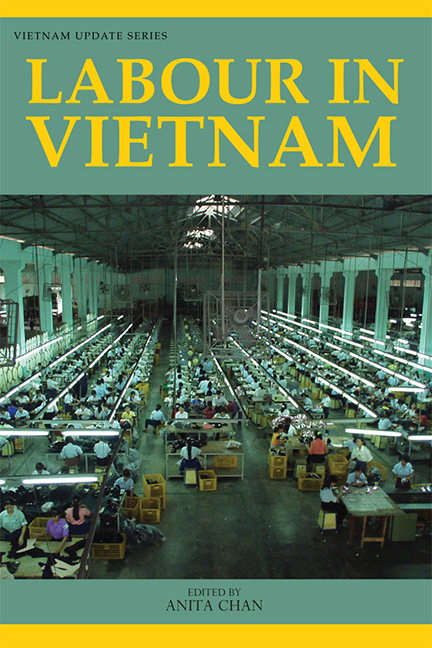
Two decades after Vietnam introduced a programme of economic renovation commonly known in Doi Moi, the country today allows market competition in industry, and a new working class has been created. This is the first book to focus on the role and conditions of workers in the new economic regime. The authors of the book trace Vietnam's labour history, explore the impact of the socialist legacy and examine the reasons for the large number of recent strikes. The book provides insights into the workforce of one of Asia's most rapidly developing industrial economies.
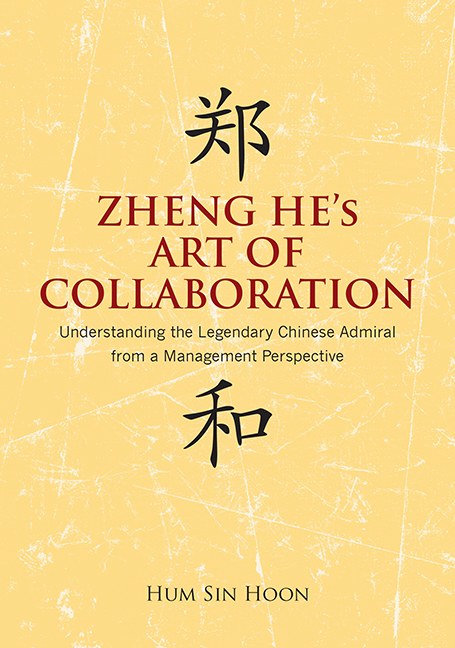
"Know your enemies, know yourself", advised Sun Zi in his famous Art of War (AoW). In contrast, the legendary Admiral Zheng He would have said, "Know your collaborators, know yourself", and this would be the essence of his Art of Collaboration (AoC). This book offers a fresh new approach to doing business and providing leadership in the twenty-first century, where Zheng He's peaceful and win-win collaborative paradigm present in his AoC provides an alternative to the aggressive and antagonistic mindset inherent in Sun Zi's AoW. The author has culled from the existing literature on the historical, cultural, diplomatic, and maritime-oriented Zheng He, connected the dots of his discovery of a managerial Zheng He, and wrote this book to present both the big message of Zheng He's Art of Collaboration as well as an understanding of Zheng He's specific work as a leader and manager.
The world is undergoing dramatic transformations in the wake of the crumbling of the Cold War order, and the ebbs and flows of these changes are not passing unnoticed in Southeast Asia. Indeed, the region is witnessing its own mini-versions of glasnot and perestroika, as countries like Vietnam, Cambodia, Laos, and Myanmar, for instance, seek their niches in the emerging opportunities and constraints that characterize the international economic and political scene. This, coupled with the dynamism of the member states of ASEAN, makes Southeast Asia a particularly promising and exciting area -- at a turning point in world history and human affairs. Cast in a formal style that is unencumbered by lengthy analyses or commentaries, Regional Outlook provides succinct yet substantive and easily readable overviews and insights into the current geo-political and economic situations in the individual countries and the region as a whole, together with the likely trends over the next year or so. The review will serve as a useful and handy guide to the region's aspirations and prospects each year, in addition to casting a look ahead.
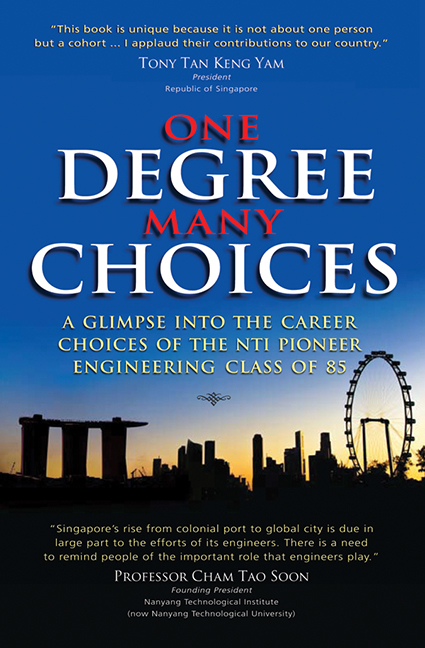
An early crossroad in life is choosing a field of study at the university. That will lay the foundation for the rest of our lives. This book recorded the career choices of the first batch of 557 engineering graduates from the Nanyang Technological Institute (NTI) as NTU was known in 1985. Engineering was then the only discipline offered. The passage of 25 years yielded deep insights as these pioneers reflected on the impact of their engineering education on their careers.Demonstrating the reach and significance of engineering will arouse the curiousity and imagination of the young, especially those good at maths and science. Our lIfe stories showcase the options open to an engineering graduate. If this book inspires some to take up an engineering education in general and at NTU in particular, it will have achieved its purpose.
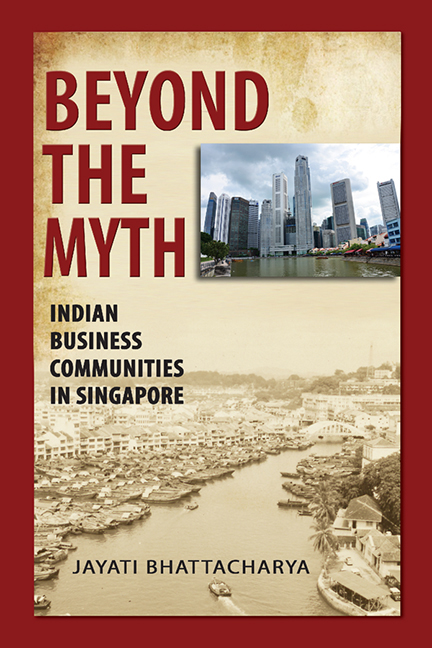
This book is a macro-study of Indian business communities in Singapore through different phases of their growth since colonial times. It goes beyond the conventional labour-history approach to study Indian immigrants to Southeast Asia, both in terms of themselves and their connections with the peoples' movements. It looks at how Indian business communities negotiated with others in the environments in which they found themselves and adapted to them in novel ways. It especially brings into focus the patterns and integration of the Indian networks in the large-scale transnational flows of capital, one of the least-studied aspects of the diaspora history in this part of the world. The complexities and overlapping interests of different groups of traders and businessmen form an interesting study of various aspects of these trading bodies, their methods of operation and their trade links, both within and outside Singapore. The book also charts their mobility and progress, in terms of both business and social status. The research aims to construct linear threads of linkages through generations and situate them in the larger framework and broader paradigms of business networks in Singapore. In shedding light on aspects of Indian connectivities to Southeast Asia, the narrative is particularly relevant in the context of India's economic rise. This study raises economic, social and cultural issues regarding the transition.
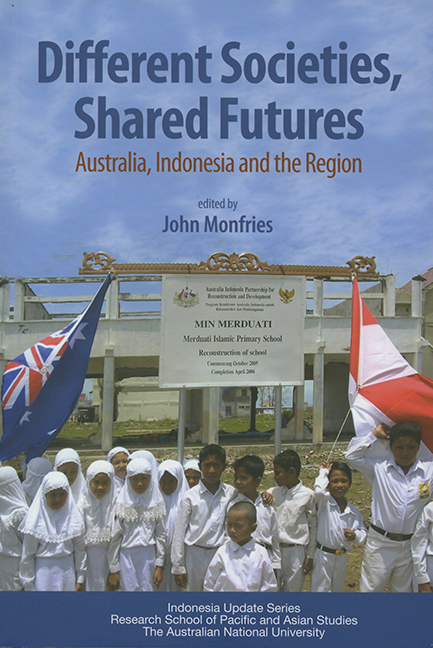
Australia's relationship with Indonesia is one of its most important and contentious bilateral relationships, characterized by sharply differing social and cultural mores and by periodic crises and mutual distrust, but also by significant person-to-person contacts in many fields.Recent developments, including the tsunami tragedy, the policies of a new Indonesian president and the Corby affair, have demonstrated both the best and the worst in the relationship. The Corby affair revealed high levels of ignorance and prejudice about Indonesia in some quarters in Australia. On the other hand, the tsunami that wrecked Indonesia's Aceh province led to an outpouring of sympathy and support from Australia. Following President Yudhoyono's visit to Australia in early 2005, official relations, though fragile, were better than they had been for many years.Australia's management of its most important regional relationship also has implications for its relations with other countries in the region, through issues such as Australia's presence and role in regional organizations, and policy responses to the rise of China.This book examines the wide range of factors and approaches that are involved in meeting the bilateral and regional challenges, including government links, public images and mutual perceptions, regional organizations, the role of Islam, the aid relationship, security and counterterrorism, economic and business relations, and the student market. The articles by the authors in this book reflect a complex, many-sided relationship that is not susceptible to simplistic formulas or stereotypes.Contributors include former Australian ambassador to Indonesia Richard Woolcott; former Indonesian ambassador to Australia S. Wiryono; Noke Kiroyan, president of the Indonesia–Australia Business Council; K. Kesavapany, director of the Institute of Southeast Asian Studies; Paul Kelly of The Australian newspaper; Scott Dawson of the Australia–Indonesia Partnership for Reconstruction and Development; Hugh White and Jamie Mackie of the Australian National University; and David Reeve of the University of New South Wales.
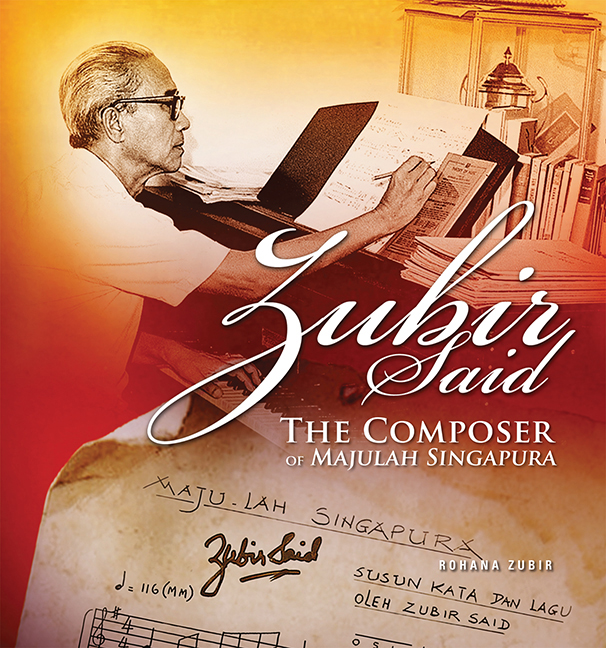
Zubir Said is best known as the composer of Majulah Singapura, the national anthem of Singapore; Semoga Bahagia, the Singapore school anthem; and Melayu Raya. Born into a humble and religious family in Sumatra where music was considered haram, at 21 he set out to seek his fortune in Singapore, attracted initially by the glittering lights and the availability of butter and kopi susu, but soon by the opportunities it offered him to pursue his dreams. Armed with his first musical instrument, a bamboo flute he had carved himself, and a basic knowledge of music number notations, Zubir taught himself to read, write and compose music. Despite the many challenges he faced, he became a musical icon of the 1950s and 1960s on both sides of the Straits of Johor, at a time when Independence was the clarion call and nationalist fervour was running high.The nationalist sentiments nurtured in Zubir's youth during the Dutch and Japanese occupations of Indonesia were channelled into his numerous compositions of national songs. Highly acclaimed at the time, some of the compositions later became a source of discontent and a platform for political debate. During a period in the wilderness, he immersed himself in the world of films, composing songs and background or "mood" music, and pioneering voice dubbing. The advent of recorded music in films, however, led to a third career. During the lean post-war years, he had mastered the art of photography and became a busy freelance photographer. He developed a unique method of teaching music, the SOLMISASI system of number notations, to nurture talent and a love of music among young children.This book, which includes numerous photographs, documents, musical scores and articles, as well as a CD of a selection of Zubir Said's compositions, vividly reveals one of Singapore's leading composers as family man, friend, composer and mentor. It also accords Zubir Said his rightful place in the history of Singapore.