To save content items to your account,
please confirm that you agree to abide by our usage policies.
If this is the first time you use this feature, you will be asked to authorise Cambridge Core to connect with your account.
Find out more about saving content to .
To save content items to your Kindle, first ensure no-reply@cambridge.org
is added to your Approved Personal Document E-mail List under your Personal Document Settings
on the Manage Your Content and Devices page of your Amazon account. Then enter the ‘name’ part
of your Kindle email address below.
Find out more about saving to your Kindle.
Note you can select to save to either the @free.kindle.com or @kindle.com variations.
‘@free.kindle.com’ emails are free but can only be saved to your device when it is connected to wi-fi.
‘@kindle.com’ emails can be delivered even when you are not connected to wi-fi, but note that service fees apply.
This book provides insight into Indonesia's system of government and elections. It focuses on the roles of the 1945 Constitution, the Pancasila, the DPR (Legislative Assembly) and the MPR (People's Consultative Assembly) - and the ways they have functioned during elections since Independence. The development of democracy and the roles of Islam and the military through the presidencies of Sukarno, Soeharto, Habibie, Abdurrahman Wahid, and Megawati are examined. The book includes a most comprehensive and detailed listing of the results of the 1999 general election, considered Indonesia's first free and democratic election for over thirty years.
Democratization in Indonesia has altered the political decision-making processes in many ways. It has also brought about tremendous change to the role of the Indonesian parliament in the country's political system. Once characterized as a powerless rubber stamp, the parliament has developed into a comprehensive and more representative body able to fulfil its functions more adequately. In the literature on democratic transition, the impact of parliaments on regime changes and on the democratic reorganization of the most important state institutions and regulations is usually neglected. In the Indonesian case, however, the national parliament was one of the most decisive actors and is therefore the focus of this book. The author analyses the parliament's contribution towards the process of democratization. Thus, this book contributes not only to research on the Indonesian democratization process, but also to the comparative research on parliaments in transition processes in general.
Most scholarly works conducted within the period of post-New Order Indonesia have underlined the fact that Indonesian Islamists reject the notion of democracy; no adequate explanation nonetheless has been attempted thus far as to how and to what extent democracy is being rejected. This book is dedicated to filling the gap by examining the complex reality behind the Islamists' rejection of democracy. It focuses its analysis on two streams of Islamism: the two Islamist groups that seek 'extra-parliamentary' means to achieve their goals, that is, MMI and HTI, and the PKS Islamists who choose the existing political party system as a means of their power struggle. As this book has demonstrated, there are times when the two streams of Islamism share a common platform of understanding and interpretation as well as an intersection where they are in conflict with one another. The interplay between contested meanings over particular theological matters on normative grounds and power contests among the Islamists proves to be critical in shaping this complexity.
The growth performance of East Asia's market economics over the two-and-half decades has been one of unparalleled success. In this regional comparative study of country experiences, the author demonstrates the considerable scope for complementarity between economic growth and poverty alleviation in the development process. Government policies are shown to have been a major determinant of the development path for the East Asian countries, including the outcomes in income growth and distribution. The study sheds light on the types of policies conducive to both economic growth and poverty reduction, and provides important lessons for the other developing countries.
Southeast Asia 'State of the Nation' Monograph Series: This study seeks to evaluate the most significant events in the country during the last two decades in order to understand better the structures and forces underpinning the process of change and continuity in three interlinked historical periods: the struggle against the authoritarian rule of Marcos; the Aquino presidency; and the first three years of the Ramos administration. The monograph also seeks to identify the important trends and developments that help shape events and conjunctures in the future.
The challenges facing an independent East Timor are particularly acute. It is not only one of the poorest nations on earth but the terrible events of 1999 have also destroyed much of the country's buildings and infrastructure, as well as the nation's bureaucratic and commercial capacity. The decisions and the policy framework adopted in the early years by the leaders of this new nation will be critical.This book is an original work written by experts and well-known specialists in the field. It assembles all the latest information about the economy, assesses future policy options, and draws on lessons of international experience for this new nation. It is perhaps the only book about East Timor with this coverage and will be invaluable to those who are interested in developments in the region.
This book briefly recounts the history of the establishment and expansion of Christianity in Southeast Asia from the colonial times onwards. With the exception of the Philippines, Christianity has been a minor religion in much of Southeast Asia, albeit one whose followers have sometimes had a disproportionate impact on education and other sectors of society. The author focuses on the current expansion of aggressive evangelical Christian groups in particular, and their prospects for increasing their following in various countries in the region and what the possible implications could be.
As ASEAN Vision 2020 proclaims, the members of ASEAN have achieved remarkable success in economic growth, stability and poverty reduction, over the past decades. There are, however, still diverse debates as to the factors which contributed to the success, with no conclusive assessment. This volume reviews the domestic reforms effectively introduced by ASEAN members after the 1997 financial crisis and what could be done to accelerate such reforms. With the entry of the 4 new members into ASEAN, possible measures to strengthen both intra- and extra-ASEAN regional cooperation frameworks are sought so that the 10 ASEAN members can make a smooth economic and social transformation to tackle globalization and accommodate the two highly competitive giant economies, China and India. The study also seeks to identify what could be the role of Japan in promoting its economic relations with the ASEAN-10 under the ongoing framework of the WTO and the ASEAN-Plus-Three in the light of the current trend towards greater regionalism in Europe and the Americas.
Since its inception in 1974, Southeast Asian Affairs (SEAA) has been an indispensable annual reference for generations of policy-makers, scholars, analysts, journalists, and others.Succinctly written by regional and international experts, SEAA illuminates significant issues and events of the previous year in each of the Southeast Asian nations and the region as a whole.Southeast Asian Affairs 2008 provides an informed and readable analysis of the events and developments in the region in 2007. In the regional section, the first two articles provide the political and economic overview of Southeast Asia. They are followed by an article on India's geopolitics and Southeast Asia, and two articles on ASEAN. Eleven country reviews as well as four country-specific thematic chapters follow, delving into domestic political, economic, security, and social developments during 2007 and their implications for countries in the region and beyond.
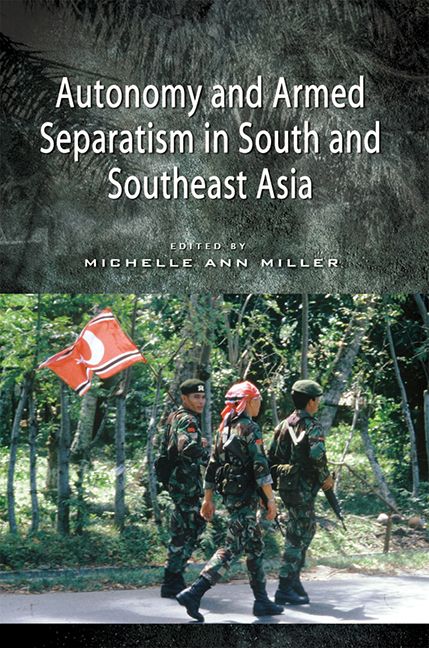
Armed separatist insurgencies have created a real dilemma for many national governments of how much freedom to grant aggrieved minorities without releasing territorial sovereignty over the nation-state. This book examines different approaches that have been taken by seven states in South and Southeast Asia to try and resolve this dilemma through various offers of autonomy. Providing new insights into the conditions under which autonomy arrangements exacerbate or alleviate the problem of armed separatism, this comprehensive book includes in-depth analysis of the circumstances that lead men and women to take up arms in an effort to remove themselves from the state’s borders by creating their own independent polity.
"This is the first comprehensive study of the tensions for ASEANs security community concept arising from Myanmar's membership of ASEAN. Too much commentary about Myanmar is agenda-driven; this study is objective, meticulously researched, and finely balanced. Being an 'outsider', Christopher Roberts recognizes the dynamics that characterize these complex relationships, and analyses them with care and insight." - Trevor Wilson, former Australian Ambassador to Myanmar (2000-03); Visiting Fellow, Australian National University, Canberra
The Chinese in Indonesia have played an important role in Indonesian society before and after the fall of Soeharto. This book provides comprehensive and up-to-date information by examining them in detail during that era with special reference to the post-Soeharto period. The contributors to this volume consist of both older- and younger-generation scholars writing on Indonesian Chinese. They offer new information and fresh perspectives on the issues of government policies, legal position, ethnic politics, race relations, religion, education and prospects of the Chinese Indonesians.
The proposal for an Asia-Pacific-wide free trade agreement is one of the oldest ideas for promoting mutually beneficial regional cooperation dating back to the mid-1960s. In more recent times, the idea has found new support for two main reasons: as a plan B to the stumbling Doha Development Agenda (DDA) round of WTO negotiations; and as a solution to the noodle bowl of bilateral agreements in the region.This report assesses the political feasibility of the Free Trade Area of the Asia-Pacific (FTAAP) proposal and looks at alternative modalities for achieving free trade and investment in the Asia-Pacific. The report includes trade policy perspectives from the three largest economies of the region: the United States, China and Japan, lessons from similar proposals such as the Free Trade Area of the Americas (FTAA), possible convergence among the many preferential trade agreements (PTAs) in the region, and alternative approaches to regional economic integration.
The fundamental premise of this study is that the Buddhist sangha and Buddhist teachings play a key symbolic role in legitimating the exercise of secular power in Thailand. The author argues that a clear appreciation of the political legitimatory function of Buddhism provides the key to understanding the major theoretical and administrative changes that have taken place within Thai Buddhism in this century.
Since its founding in 1967, the Association of Southeast Asian Nations has been an increasingly large part of the life of Southeast Asia, although most people in the region know very little about it. ASEAN has helped bring peace and stability to the region. It has successfully engaged the world's major powers, in East Asia and beyond. ASEAN has taken steps to integrate the regional economy as an important means of cooperatively improving the region's competitiveness, attracting investments, generating jobs, raising incomes, and lowering costs and prices. ASEAN has also formed networks for dealing with regional problems like communicable diseases, environmental degradation, and transnational crime. An essential part of the Southeast Asia Background Series, this book seeks to shed some light on what ASEAN is all about.
Founded in 1974, Southeast Asian Affairs provides, without fear or favour, informed and in-depth annual analyses of this vibrant region and its component countries. It is the only publication which does this and is in its own class without peers. It is a mandatory reference and read for those seriously interested in knowing Southeast Asia. –Professor A.B. Shamsul, Director, Institute of the Malay World & Civilization, Universiti Kebangsaan Malaysia"Now in its 37th edition, Southeast Asian Affairs offers an indispensable guide to this fascinating region. Lively, analytical, authoritative, and accessible, there is nothing comparable in quality or range to this series. It is a must read for academics, government officials, the business community, the media, and anybody with an interest in contemporary Southeast Asia. Drawing on its unparalleled network of researchers and commentators, ISEAS is to be congratulated for producing this major contribution to our understanding of this diverse and fast-changing region, to a consistently high standard and in a timely manner."–Hal Hill, H.W. Arndt Professor of Southeast Asian Economies, Australian National University
In 1989, the Institute of Southeast Asian Studies (ISEAS) published the milestone volume Management of Success: The Moulding of Modern Singapore, edited by Kernial Singh Sandhu and Paul Wheatley, which delved into a wide variety of issues that were integral to the growth of modern Singapore. The world that Singapore faced in 1989 has changed irrevocably. Meanwhile, within Singapore, the city-state has seen two prime ministerial transitions and the installation of third generation leaders who have articulated their vision for the twenty-first century. This new volume serves to update and review public policies from the early 1990s onwards. It gathers prominent thinkers and scholars on Singapore to examine issues of leadership and policy; economic restructuring; societal transformation; foreign relations and national identity. It seeks to outline the impending challenges of the twenty-first century, and to demonstrate a clear trajectory of intellectual analysis of contemporary Singapore for students and scholars alike.
Asia will redraw the map of economic progress over the next twenty-five years. Growth is necessary to solve economic and social problems, but harder to achieve as the age of plenty gives way to the age of scarcities. The challenge opens the doors for an Asian economic model based on shifting of productivity for the individual to groups, ecological productivity instead of economic productivity, and a reversal to traditional Asian values - less materialistic than Western values. A new paradigm for economic thinking emerges to replace the one launched in the West 200 years ago.
In Taiwan's 18 March 2000 presidential election, the Kuomintang (KMT) government was defeated, for the first time after fifty-five years in power, by the pro-independence Democratic Progressive Party (DPP). Chen Shui-bian's election victory has significantly changed and further complicated the political and strategic scenarios across the Taiwan Strait. This book is the first major study to investigate what led to this change, how it has affected cross-strait relations and how China will deal with the new government in Taiwan. The author also provides a detailed reading of U.S. military, economic and political involvement in the region and its strategy for Asia and China. Indications of strategic change under the Bush Administration and the possible impact of 11 September on U.S.-China relations are also examined.
The story of Dr Baey Lian Peck should be well known, but it is not. Not even among Singaporeans, and especially not among the young. This tells us a lot about a Singapore caught in pathological haste and prone towards ignoring values that do not add to the financial bottom line. The innovativeness of Dr Baey did not only make him a very wealthy man before he was forty, it also made him an indispensable actor in the implementation of urgently constructed national policies. Political leaders such as Dr Toh Chin Chye, Lim Kim San, Chua Sian Chin and Dr Goh Keng Swee picked him to solve pressing problems such as skyrocketing inflation in the early 1970s, the crisis in prisoner ward in the late 1970s, and the drug addiction epidemic in that same latter period. His one condition for taking on public positions was that he should not be paid. It was exactly this independent trait that made him so highly effective. This book tells his amazing life story, taking us into a surprising world where the qualities that make a good entrepreneur are exactly what make a good public servant, as long as he remains unbound by the bureaucracy. "Dr Baey Lian Peck put on hold a growing and profitable family business and decided to serve the nation in community and social service. He wore many and different hats and did remarkably well in all the challenging fields he undertook. His contribution to the treatment and rehabilitation of drug addicts was the most significant." – K.V. Veloo, pioneer in Probation and Aftercare who set up SANA(Aftercare) Counselling Service, and Prison Welfare Service.