To save content items to your account,
please confirm that you agree to abide by our usage policies.
If this is the first time you use this feature, you will be asked to authorise Cambridge Core to connect with your account.
Find out more about saving content to .
To save content items to your Kindle, first ensure no-reply@cambridge.org
is added to your Approved Personal Document E-mail List under your Personal Document Settings
on the Manage Your Content and Devices page of your Amazon account. Then enter the ‘name’ part
of your Kindle email address below.
Find out more about saving to your Kindle.
Note you can select to save to either the @free.kindle.com or @kindle.com variations.
‘@free.kindle.com’ emails are free but can only be saved to your device when it is connected to wi-fi.
‘@kindle.com’ emails can be delivered even when you are not connected to wi-fi, but note that service fees apply.
Written in a format and style that is easily readable, Regional Outlook provides succinct yet substantive overviews and insights into the current geopolitical and economic situations in the individual countries as well as the region, together with the likely trends over the next year or so. This year's issue also includes an expanded overview of the Asia-Pacific setting with a special focus on the 1997 transition in Hong Kong. Regional Outlook serves as a useful and handy guide to the region's aspirations and prospects each year, in addition to casting a look ahead.
"A welcome and timely volume that realistically considers the challenges that the rapid increase in older persons pose for the family, community and society at large in the context of Southeast Asia. Most importantly, it shifts the focus from viewing older persons simply as liabilities to one that recognizes their value as an asset that can be enhanced through appropriate actions at each of these levels, especially ones that take into account the rapidly changing socio-economic and technological environment in which population ageing is taking place." - Professor John Knodel, Research Professor Emeritus, Population Studies Center and Professor Emeritus, Sociology, University of Michigan
The large market size and abundant resources of the Greater Mekong Subregion (GMS), including a large, motivated and cheap workforce, a rich agricultural base, extensive timber and fisheries resources, considerable potential mineral resources, and vast energy resources have seen the subregion increasingly recognized as a new frontier of Southeast Asian economic strength. This book aims to assess the recent economic, social and political developments in the GMS and identify emerging opportunities and challenges facing the successful transition towards a market-driven economy. The countries of the GMS are at a critical juncture where subregional efforts and cooperation must be made to fully address the rapidly evolving issues that are vital to appropriate policy formation, yet which remain widely debatable. The deliberations here shed light on the development stages and offer policy recommendations for pushing forward subregional cooperation.
This book documents the trends and challenges that are taking place in the more important sectors of Malaysia. The chapters, written by specialists with an intimate knowledge of the country, cover major topics such as population trends and patterns, Islam Hadhari, Bangsa Malaysia, politics and the 2004 general election, civil service reforms, corporate governance, educational reforms, the impact of globalisation on the economy, and Malaysia's relations with Singapore. Recent developments in these areas are likely to have a profound bearing on Malaysia and its neighbours in the years ahead. The book provides readers with a greater appreciation and a deeper understanding of Malaysia, which is undergoing significant changes and challenges.
This volume focuses on the theme of Human Security - a phenomenon increasingly in the news in Asia. The issues revolve around the security of the individual as opposed to the security of the state. They encompass some of the latest developments affecting or having implications for the well-being of the Asian individual since January 2010. Among them are Japan's triple calamity; Wikileaks; the Arab uprisings; and the death of Osama bin Laden. Issues discussed range from climate change and natural disasters; energy security; health, food, and water security to issues of internal challenges such as governance, politics and identity. The role of diplomacy in non-traditional security, as the larger conceptual framework within which human security resides, is also covered. This is the third volume of Strategic Currents, which publishes essays and commentaries first written for RSIS Commentaries by scholars, academics and associates of the S. Rajaratnam School of International Studies (RSIS), Nanyang Technological University.
This book incorporates a selection of eight revised papers presented to the Conference on "Managing Economic Crisis in East Asia", organized jointly by the Saw Centre for Financial Studies, NUS Business School, and the East Asian Institute, National University of Singapore, in November 2009. The chapters present a detailed analysis of the impact of the 2008–09 economic crisis in China, Hong Kong, Taiwan, Korea and Japan, and the stimulus packages that were swiftly put in place by the governments to mitigate the economic recession and to pave the way for a quick recovery. The success of the monetary and fiscal policy measures in engendering a strong economic recovery in these countries is also discussed in considerable depth. The book, with contributions from experts on the topics covered, will be extremely valuable to businessmen, analysts, academics, students, policy-makers and the general public interested in seeking a greater understanding of the global economic crisis.
The fall of President Soeharto in May 1998 and the introduction of multi-party democracy by President BJ Habibie have unleashed religious parties (both Islamic and Christian) in Indonesian politics. This study shows that the Islamist agenda of the Islamist parties is overshadowed by their political pragmatism. This book is a must-read account on the rise and failure of the Islamist struggle in Indonesia's emerging democracy. Platzdasch's work is without a doubt a significant and timely contribution to a better understanding of Islamic politics in contemporary Indonesia. - Professor Azyumardi Azra, Professor of History & Director, Graduate School, Syarif Hidayatullah State Islamic University, Jakarta, Indonesia.
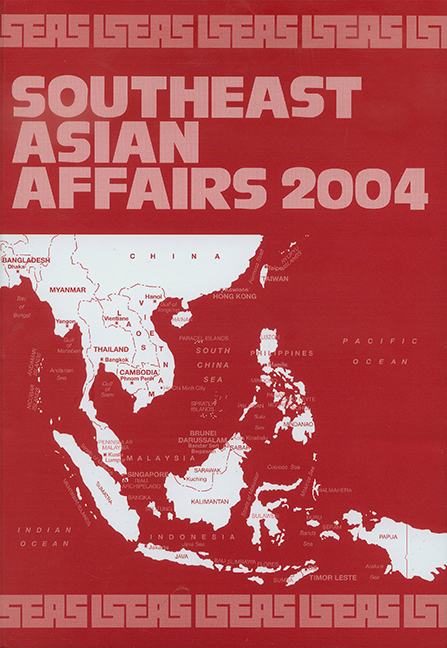
Southeast Asian Affairs, of which there are now thirty-one in the series, is an annual review of significant developments and trends in the region. Though the emphasis is on ASEAN countries, developments in the broader Asia-Pacific region are not ignored. Readable and easily understood analyses are offered of major political, economic, social, and strategic developments within Southeast Asia.The contributions can be divided into two broad categories. There are those which provide an analysis of major developments during 2003 in individual Southeast Asian countries and in the region generally. Then there are the theme articles of a more specialised nature which deal with topical problems of concern.The volume contains twenty articles dealing with such major themes as international conflict and co-operation, political stability, and economic growth and development.
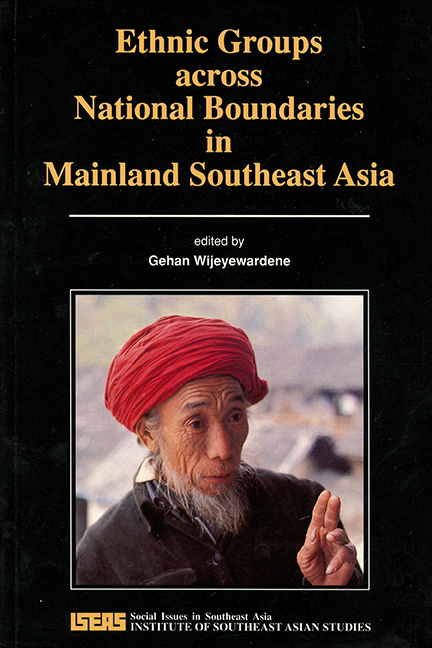
The six essays on specific ethnic groups are written by five anthropologists and a linguist, all of whom have had long experience in the region. They cover a range of data and problems which should be of interest to all scholars of Southeast Asia, as well as those interested in ethnic identity and contemporary social and political processes. The essays sample groups according to a conventional division of the peoples of Southeast Asia – those that live in the plains (the Thai and the Mon), the middle slopes (the Lua and the Karen), and the high mountains (the Hmong and the Yao). This gives adequate coverage of the field, but the essays also help break down the confinement of such categories. The concluding essay looks at the data presented in the book in the framework of contemporary anthropological theory.
Intellectual interest in the growth and study of democracy is not a post-Cold War phenomenon, but its intensified interest is. Recently new questions have been asked, such as whether the widespread democratization process will yeild similar end-products in different parts of the world which are endowed with vastly different heritages and history, or whether we will see the emergence of variants in democratic models. In the same way, the growth of the capilatist system and practice of a free market in some situations lead the state to play a role not anticipated in the traditional free market observed to be distinct form those in the industrialized West, and most certainly different from that of the United States. It has been the growing concern of many academics and policy-makers that in the post-Cold War era these differing perspective and practices of democracy and the free market could become the substance of th new ideological debate in the coming decade between countries in East Asia and the West, led by United States. The four essays published in this volume were presented as keynote papers defining the major themes of the Conference "Asian and American Perspectives on Capitalism and Democracy" organized by the Asia Society, the Institute of Policy Studies, the Singapore International Foundation, and the Institute of Southeast Asian Studies held in Singapore, 28-30 January 1993. The essays serve as useful contributions to the current rigorous and ongoing debate .
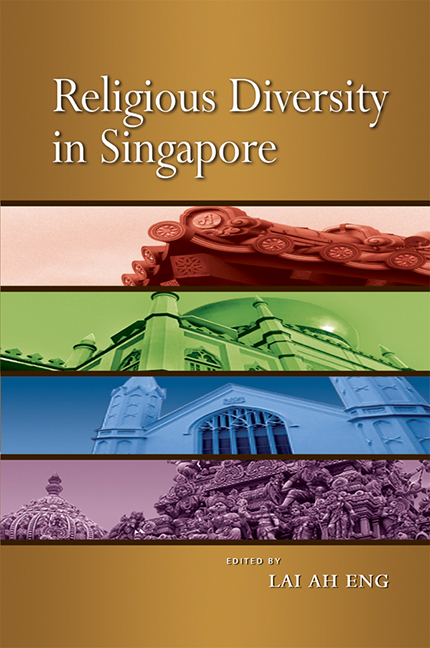
Religious and ethno-religious issues are inherent in many multiethnic and multi-religious societies. Singapore society is no exception. It has long been multiethnic, multicultural and multi-religious, being at the crossroads of many major and minor civilizations, cultures and traditions, and its religious diversity continues to develop in the current contexts of growing religiosity, religious change and conflict often in the name of religion. Despite this background, there is lack of in-depth knowledge, nuanced understanding and regular dialogue about religions and the meanings of living in a multi-religious world.This volume covering major themes of Singapore's religious landscape, religion in schools and among the young, religion in the media, religious involvement in social services, and interfaith issues and interaction fills important gaps in the knowledge and understanding of Singapore's religious diversity and complexity. A collective effort of researchers and practitioners, it is a timely and useful reference for scholars, decision-makers, leaders and practitioners as well as for concerned citizens and followers.
This book, a project of Malaysia Study Programme of ISEAS, covers the whole of Malaysia since its formation in 1963, using statistics collected in the four pan-Malaysia Population Censuses held in 1970, 1980, 1991, and 2000, and data from other sources up to 2005 wherever possible. The book is by far the most up-to-date and comprehensive study of the multiracial population of the country, with painstaking effort and skill of the author in interpreting the vast array of information at his disposal. The strength of the book lies in the author's deep familiarity with the country where he was educated up to secondary level, and even taught for some years in the University of Malaya, Kuala Lumpur, in the sixties.
In the first edition, the themes of hope, optimism, and progress of neoliberalism were examined in Asia and America. The second edition, Globalization: Power, Authority, and Legitimacy in Late Modernity, analyses the new pessimism that has descended on the globalized world. The America that was once the bastion of hope, optimism and progress is now showing clear signs of a superpower in decline. The first sign of the American decline since 1941 in Pearl Harbor was the destruction of the World Trade Center in New York City on 11 September 2001. The other signs are the Vietnamization of Iraq, a nuclear stand-off with North Korea, increasing trade imbalances with China and India, a stalemate with terrorists in Afghanistan, the challenge of European protectionism, a belligerent politics in the Middle East, overt American dependence on fossil fuels, and the mushrooming of various subprime crises into an escalating global recession. This second edition incorporates the latest developments in terms of culture, wealth and terrorism around the world and provides possible solutions to salvage the American Dream.
India's emergence of a great power has sensitized its regional neighbours to its growing role as a key security actor in an increasingly interdependent world. Both Australia and ASEAN now view India as a major player in the formulation and application of their own broad security agendas. This emerging trilateral compendium is particularly evident in such policy areas as maritime security, climate change, energy security, law enforcement, "good governance" and the politics of security institutions or "architectures". This book represents one of the first systematic efforts to consolidate these diverse but important concerns into an overarching framework for ascertaining and cross-comparing how these three entities are approaching these policy challenges, individually and collectively. It argues that the dynamics underlying their intensifying security relations are sufficiently important to conceptualize them as a distinct analytical framework that needs to be understood in the larger context of Asia-Pacific security politics.
This study discusses the emerging trends in industrial relations systems in the ASEAN countries, and inter-country variations in the systems practised in these countries.
This book discusses and identifies the modernizing trends, which have changed Southeast Asian countries in varying ways. After an overview of current concepts of modernity, the following chapters introduce issues of education, citizenship and ethnicity, religion, the emergence of the middle class, and mass consumption in Southeast Asia. This book concludes by profiling the characteristics of Southeast Asian modernity.
This admirable book contains fascinating autobiographical accounts, by some of Southeast Asia's most eminent scholars, concerning their struggle to find their own voices in interpreting the region to which they belong. The book should be indispensable to anyone interested in thinking about knowledge production and its politics in a postcolonial world. In the views of these scholarly Southeast Asians, we are made to see, in very personal terms, the link between the global crisis in the social sciences and the need to find remedies for it that are neither Eurocentric nor parochially anti-Western.-Professor Alexander WoodsideProfessor of Chinese and Southeast Asian HistoryUniversity of British Columbia, Vancouver, Canada. This book marks the shift of the centre of Southeast Asian Studies from the West to Southeast Asia. The insights provided by the authors are not simply explanations of colonial and postcolonial experiences of major Southeast Asian scholars. Rather, the book provides a unique set of intellectual genealogies that show that distinctions between humanities and social sciences are less important than the development of distinctive local and regional traditions and practices of scholarship. Goh Beng-Lan's introduction frames the collection through her subtle deconstruction of international discourses on Southeast Asia. This introduction then allows the reader to view the different generations of Southeast Asian scholars in their social, political, and academic contexts. The end result is a combined view of the state of the art of Southeast Asian Studies, a view that is greater than the sum of its national parts. - Professor Adrian VickersChair of Southeast Asian StudiesUniversity of SydneyandDirector, Australian Centre for Asian Art and Archaeology The collection represents a coming of age of scholars from Southeast Asia. What we hear is not bluster that comes from a wounded pride or doctrinal certainties, but a quiet confidence that acknowledges the multiple currents in which their scholarship has been formed, and a willingness to engage the perspective of the 'other', both within and without. The reflexivity in this volume sets the stage for scholars from the region to develop perspectives and concepts to address the challenges of the new configuration of the Asia being ushered in by ASEAN. - Professor Prasenjit DuaraRaffles Professor of Humanities and Director of Research, Humanities and Social Sciences, National University of Singapore
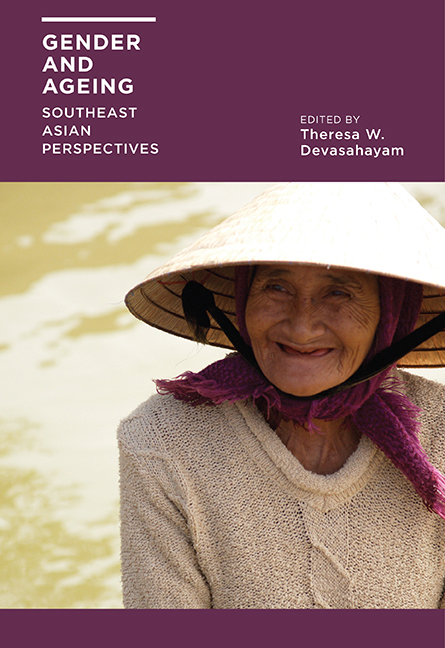
This book examines common themes related to gender and ageing in countries in Southeast Asia. Derived from quantitative or qualitative methods of data collection and analysis, the chapters reveal how ageing has become tempered by globalization, cultural values, family structures, women's emancipation and empowerment, social networks, government policies, and religion. The chapters are concerned primarily with the following questions related to gender and ageing: (a) how do women and men experience old age? (b) do women and men have different means of coping financially and socially in their old age? (c) does having engaged in wage work for longer periods of time serve as an advantage to older men in contrast to older women? (d) does a woman's primary role as caregiver serve to disadvantage her in old age? (e) what kinds of identities have older women and men constructed for themselves? (f) do women and men prepare for ageing differently and has this preparation been mediated by educational levels? (g) does having a higher level of education make a difference to how one experiences ageing? (h) how does class shape the way women and men cope in old age? and (i) what does it mean to be a 'single' older person who has either lost a spouse through death or has never been married? Because the book employs a cross-country analysis, readers gain an understanding of contemporary emergent trends not only in each of the countries but also in Southeast Asia as a whole. Wherever relevant, some chapters have also identified similarities in trends on gender and ageing between countries in the Western hemisphere and those in Southeast Asia to highlight broader patterns across the world."The share of the elderly in Southeast Asia's population is steadily rising, and it is increasingly important to understand and plan for the implications of this trend. While in some aspects, the situation of older women and men in the region is similar, their life experiences of education, marriage, child-raising, work, and social networks differ, and this makes for different issues as they grow older. Moreover, a much higher proportion of elderly women than men face old age without a spouse. This book makes a major contribution to understanding the issues arising from ageing trends in Southeast Asia. Individual chapters in the book deal authoritatively with almost every country in the region, and are written by noted experts on the subject. The book will be an essential reading for anyone wishing to understand ageing issues in Southeast Asia, particularly from the perspective of gender." - Gavin Jones, Director, JY Pillay Comparative Asia Research Centre, National University of Singapore
America is drifting towards another collision with Asian countries. This book sets the situation in perspective by tracing the development of relations between them during the last two centuries. No longer needing allies as it did during the Cold War, the United States is now using its economic power to force them to open their markets to its exports and to move towards Western democracy. American pressure is making Asians appreciate what they have in common, and helping to overcome the divisions that have kept them dependent on outside powers. But collision is not inevitable. America has played a critical part in the transformation of East Asia. It still has much to teach, and it now has much to learn as well. By studying Asian experience, Americans can re-learn the importance of self-discipline, and face Asian competition without relying on their power and resorting to protectionism. APEC shows the way for the United States and other Western countries to benefit from the fast growth of Asian economies, and make the whole of the Pacific area more prosperous.
The richness and vibrancy of Vietnamese spirituality are vividly portrayed in these twelve essays that shed light on the remarkable reflorescence of religion in this communist country. Ancestor worship, mediumship, sacrifices, and communal rituals have not only survived Vietnam's reintegration into the capitalist world; they are intrinsic to the dramatic reshaping of its contemporary social and cultural life. Transnational Buddhism and Christianity challenge the political status quo as they answer conflicting aspirations for enlightenment, justice, national development and cultural identity. Making conceptual contributions to anthropology and comparative religion, this book provides insights from post-revolutionary Vietnam into the diverse passages to re-enchantment in the modern world.