To save content items to your account,
please confirm that you agree to abide by our usage policies.
If this is the first time you use this feature, you will be asked to authorise Cambridge Core to connect with your account.
Find out more about saving content to .
To save content items to your Kindle, first ensure no-reply@cambridge.org
is added to your Approved Personal Document E-mail List under your Personal Document Settings
on the Manage Your Content and Devices page of your Amazon account. Then enter the ‘name’ part
of your Kindle email address below.
Find out more about saving to your Kindle.
Note you can select to save to either the @free.kindle.com or @kindle.com variations.
‘@free.kindle.com’ emails are free but can only be saved to your device when it is connected to wi-fi.
‘@kindle.com’ emails can be delivered even when you are not connected to wi-fi, but note that service fees apply.
This work focuses on how less developed economies in Southeast Asia, namely Cambodia, Laos, Myanmar and Vietnam (CLMV), can establish links with neighbouring countries and participate in production networks. It also takes a look at links between Singapore and the Batam-Bintan-Karimun (BBK) Special Economic Zone in Indonesia. Leading Southeast Asian economies have achieved rapid economic growth by participating in production networks organized by multinational enterprises. It is thus crucial for less developed economies in Southeast Asia to improve their investment climate, attract foreign direct investment, and form competitive industrial clusters. Service link costs must also be reduced substantially to make production fragmentation economically feasible. The authors in this book discuss these issues and provide policy recommendations.
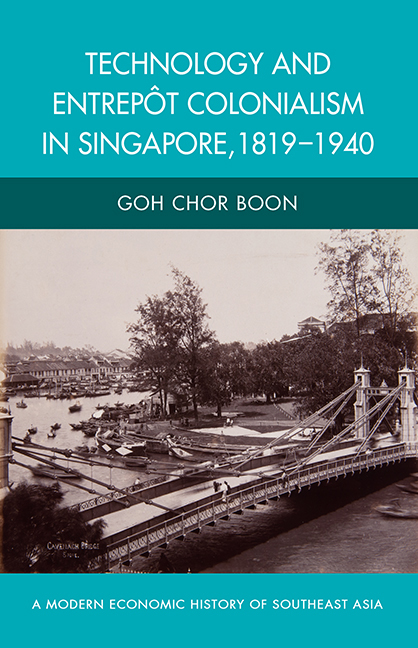
How did imported technology contribute to the development of the colony of Singapore? Who were the main agents of change in this process? Was there extensive transfer and diffusion of Western science and technology into the port-city? How did the people respond to change? Examining areas such as shipping, port development, telegraphs and wireless, urban water supply and sewage disposal, economic botany, electrification, food production and retailing, science and technical education, and health, this book documents the role of technology and, to a smaller extent, science, in the transformation of colonial Singapore before 1940. In doing so, this book hopes to provide a new dimension to the historiography of Singapore from a 'science, technology and society' perspective.'The connections between technology and colonialism is an important aspect of modern history. Singapore is a special case, as it was developed as a port, entrepot, and naval base serving the British Empire in Asia. Professor Goh's work on the role of technology in the development of Singapore promises to be a valuable contribution to the field of colonial technology studies.'– Professor Daniel Headrick, Professor Emeritus of Social Science and History, Roosevelt University 'A remarkable and eminently readable analysis of the historical forces that have contributed to the development of contemporary Singapore. While there are many existing studies of various aspects of science and technology in contemporary Singapore, this to my knowledge is the first comprehensive narrative that incorporates a historical dimension which is crucial for a deep understanding of the present condition. This analytically rigorous book is a major contribution to a deeper understanding of Singapore.'– Professor Zaheer Baber, University of Toronto, author of The Science of Empire
This book takes a multi-disciplinary approach to the great financial crisis of 2007-09. It combines the disciplines of economics, finance, sociology and politics to analyse the causes, consequences and challenges of the crisis. The authors propose that the causes of the crisis should be understood at three inter-related levels - the level of theory and ideology; the level of financial industry practices and malpractices; and finally the level of structural imbalances in the international economy. Above all, the book is historical and holistic in perspective. This book is an excellent read for the critical layman interested in understanding the causes that underlie the global financial crisis. The authors combine the inquisitive and critical mind of a scholar and the lucid writing style of a journalist. The book provides a perspective on the crisis that is both practical and down to earth and at the same time, rigorous and holistic. Khor Hoe Ee, Chief Economist, Abu Dhabi Council for Economic Development, and former Assistant Managing Director, Economics, Monetary Authority of Singapore The authors trace the rise of finance and its domination over the real economy, the consequences of financial innovation and deregulation for systemic fragility, and the failure of conventional economic and financial theory to analyse and anticipate the consequent dangers. Their main original contribution is to relate these Western market developments to recent trends in the East Asian region and to call for appropriate systemic reforms, not only to avoid similar future crises, but also to address other underlying development and analytical problems. K.S. Jomo, Assistant Secretary General, Department of Economic and Social Affairs, United Nations In linking wealth and income distribution to financial instability, this book makes an important point that is often missed in the debate on the crisis. Central Banks have become strongly opposed to the idea of accommodating wage demands with the help of monetary easing, but they have been increasingly tolerant, or even supportive, of debt-financed consumption and asset inflation. Indeed, by serving to concentrate wealth further in the hands of a small rentier class, while protecting that class from the risks of debt defaults, they are only adding to systemic pressures that give rise to serious financial crises.Yilmaz Akyuz, Special Economic Advisor, South Centre, and former Chief Economist at United Nations Conference for Trade and Development
This volume examines different ethnic configurations and conflict avoidance and resolution in five different Southeast Asian countries. Tin Maung Maung Than traces the history and impossibility of the current Myanmar regime's quest to integrate the various ethnic groups in the border regions while insisting on a unitary state with all real power kept to themselves.Rizal Sukma divides conflicts in Indonesia into horizontal (Kalimantan, Maluku and Sulawesi) and vertical ones (the Madurese versus the Dayaks) and assesses the prospects for peaceful resolution if the country's fledgling democracy does not properly address them.Miriam Coronel Ferrer examines the conflicts in Mindanao against the apparent lack of willingness of Manila to come to terms with the root causes as well as the infusion of arms and ideology from outside.Zakaria Haji Ahmad and Suzaina Kadir analyse Malaysia's relatively successful handling of an ethnically divided society, which has permitted impressive stability since 1969. Chayan Vaddhanaphuti focuses on the non-Thai border peoples of northern Thailand, noting the legacy of the government's policy of selective citizenship. Ethnic Conflicts in Southeast Asia will be an invaluable resource for scholars of contemporary Southeast Asia as well as in other regions, policy-makers and others, who wish to assess and develop strategies to prevent, modulate and resolve such conflicts.
This study investigates the activities of small and medium entrepreneurs in the manufacturing sector in South and Southeast Asia, to examine their actual and potential contribution to social and economic development in their countries. The factors that encourage or hinder this contribution are also identified and suggestions are put forward on how the contribution towards development can be rendered more effective.
Countries like Vietnam, Cambodia, Laos, and Myanmar are seeking their niches in the emerging opportunities and constraints, that characterize today's international economic and political scene. This, coupled with the dynamism of the member states of ASEAN, makes Southeast Asia a particularly promising and exciting area at a turning point in world history and human affairs. Written in a format and style that is unencumbered by lengthy analyses or commentaries, Regional Outlook provides sucinct yet substantive and easily readable overviews and insights into the current geopolitical and economic situations in the individual countries and the region as a whole, together with the likely trends over the next year or so. The review serves as a useful and handy guide to the region's aspiration and prospects each year, in addition to casting a look ahead.
The book focuses on the impact of the 1997-99 economic crisis on human development in Indonesia, especially in 1998, its worst year. Based on the definition used by the UNDP, human development is analysed as covering human capital (education and health) and purchasing power. In this book, the concept of human capital is broadened to include freedom from fear, health, education, and migration. The first part of the book discusses the economic situation in Indonesia. The second elaborates on what happened to human capital during the crisis and the third part examines its effects on purchasing power. Because human development does not occur in a vacuum, the fourth part discusses some emerging issues in Indonesia. The book concludes with some thoughts on people-centred development, which may contribute to more sustainable development than the development concept that simply pursues high economic growth. With this people-centred development, growth rates of about 3 to 4 per cent are adequate, as long as Indonesia achieves success in human development.
Launched in 1992, Regional Outlook is an annual publication of the Institute of Southeast Asian Studies, published every January. Designed for the busy executive, professional, diplomat, journalist, or interested observer, Regional Outlook aims to provide a succinct analysis of current political and economic trends shaping the region, and the outlook for the forthcoming two years. This forward-looking book contains focused political commentaries and economic forecasts on all ten countries in the Association of Southeast Asian Nations (ASEAN), as well as a select number of topical pieces of significance to the region.
This book consists of papers that present the findings of research done by the SMERU Research Institute in Jakarta, Indonesia. Most describe the effects on the poor of the Indonesian economic crisis of 1997-98 and the response of the Indonesian government in the form of a Social Safety Net consisting of poverty mitigation programs. With the gradual recovery of the economy after 2000, the Indonesian government began reducing subsidies for fuel products and has channelled budgetary savings into a new series of targeted social protection and poverty alleviation undertakings that include unconditional cash transfers. The effectiveness of Indonesia's poverty alleviation programs has, however, been reduced by the difficulty of targeting beneficiaries accurately because of a lack of reliable, up-to-date poverty figures. In many instances unsuitable targeting methodology has been compounded by bad governance at the local level, while the introduction of regional autonomy, accompanied by the decentralization of authority to the district level, has formed a further complicating factor.
Understanding the nexus between employment, living standards and poverty is a major challenge in Indonesia. Trends in poverty are heavily dependent on labour market opportunities and social spending in education and health. The question is how to create opportunities and spend money wisely - a subject of intense debate in Indonesia. The government has brought a renewed focus to poverty reduction since the end of the Asian financial crisis, especially under the current president, Susilo Bambang Yudhoyono. This book shows how Indonesia is travelling with regard to employment, social policy and poverty. It identifies promising new directions for strategies to alleviate poverty, some of which are already showing results.
Asia is rising and will wield greater economic and strategic weight in world affairs. However Asia also faces numerous challenges like poverty, domestic instability, deficiencies in governance and the rule of law, inter-state disputes and rivalries, and military build-ups, to name just a few. The celebration of Asia's rise would be premature if it is not accompanied by lasting peace and cooperation between states and justice and prosperity at home. The achievement of this happy state of affairs will require continuation of wise and pragmatic leadership, especially among the major powers. This collection of essays reflects on some of the major political and security issues in the region in recent times, including the balance of power among the major powers, American engagement and policies in Asia, India's rise, the global war on terrorism, the Iraq war, domestic developments in some countries as well as ASEAN's efforts to build regional peace and security.
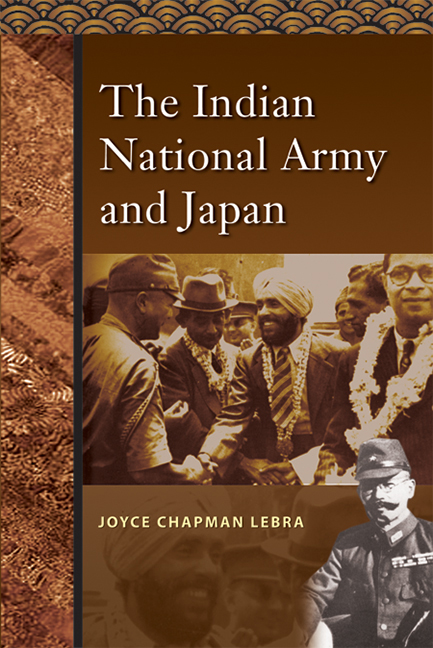
This study traces the origins of the Indian National Army in the imagination of Iwaichi Fujiwara, a young Japanese intelligence officer, and the relationship between the Imperial Japanese Army and the Indian National Army as it evolved under the leadership of Bengali revolutionary, Subhas Chandra Bose. The study is unique in its use of Japanese archival sources for analysis of the relationship between Japanese policy formulation and the Indian independence movement in its military phase.
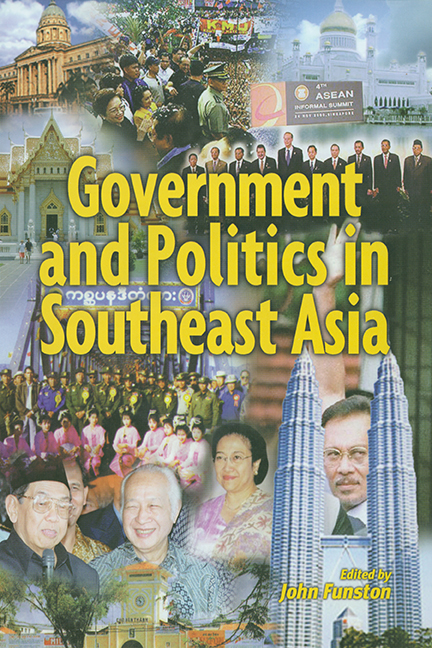
There has been an avalanche of publications on Southeast Asia in recent years, but no one volume provides an accurate and up-to-date account of political institutions and practices in the region. This book fills that gap. Each country chapter provides a broad overview of the historical, social and economic setting. It then analyses in detail the political "institutions" of that country -- the constitution, head of state, executive (cabinet and both military and civilian bureaucracies), the legislature, elections, the judiciary, political parties, ideology, civil society and human rights. Finally, it examines major traditional concerns of political scientists -- who rules, who benefits, and the extent of legitimacy -- before addressing the more modern preoccupation with governance.
Vietnam is a country on the move. Yet contemporary Vietnam's education system is at a crossroads. Rapid economic growth has permitted rapid increases in the scale and scope of formal schooling, but there is a prevailing sense that the current education system is inadequate to the country's needs. Sunny assessments of Vietnam's "achievements" in the sphere of education have given way to a realization that the country lacks skilled workers. Some have even spoken of an "education crisis". These are not abstract concerns. What is occurring in Vietnam's education system today has broad implications for the country's social, political, economic, and cultural development.Featuring contributions from scholars and policy analysts from within and outside Vietnam, Education in Vietnam addresses key issues pertaining to the political economy of education, the provision and payment for primary and secondary education, and the development of vocational and tertiary education. The book marks an important contribution to existing understandings of Vietnam's education system and contributes to broader understandings of social conditions and change in contemporary Vietnam.
This report, the first in the ASEAN Studies Centre report series, begins with a brief account of the important points raised during the discussions made at the workshop on 'The ASEAN Community: Unblocking the Roadblocks', organized by the ASEAN Studies Centre and the Regional Economic Studies Programme on 15 April 2008. The first endeavour in which the new ASEAN Studies Centre was actively involved, the closed-door workshop gathered Southeast Asian experts on ASEAN for what was essentially a brainstorming session on the nature of the ASEAN Community that the association aspires to be, segmented into its three pillars - the ASEAN Economic Community, the ASEAN Security Community, and the ASEAN Socio-Cultural Community. The session examined the benefits expected from regional community building for the people of Southeast Asia and the obstacles that lay on the way to its achievement. The workshop suggested certain measures for removing those obstacles. It then discussed the newly signed ASEAN Charter: the significance of its provisions, how it could help build the ASEAN Community, and how it might fall short of doing so. The workshop also heard a short briefing on the aims and functions of the ASEAN Studies Centre and proffered suggestions for it.
"This engaged and vital edited volume brings together the varied viewpoints of academics, consultants and activists all concerned with the astonishing expansion of palm oil as a globally traded commodity. It reveals how this complex, contested and controversial expression of globalization transcends narrow national and sectoral interests, stimulating a transnational exchange of goods, capital and labour, as well as laws, norms, values and even understanding. Compelling, readable and insightful, the study shows that corporate responses to civil societys concerns about palm oils role in global warming, human rights abuses, land grabbing and biodiversity loss, now need to be complemented by legal, regulatory and governance reforms to be effective." - Marcus Colchester, Director, Forest Peoples Programme
What would a history that put women at the centre of the rise and fall of kingdoms be like? When the armies of Khubilai arrived on Java in 1293, they found themselves in the middle of two warring states. Two historical traditions developed concerning the ensuing events: the official Chinese dynastic records in which no women are mentioned, and a number of Javanese histories and poems in which everything depends upon the actions and fates of certain women. The Chinese account has long been regarded as factual, whilst the Javanese versions have been dismissed as mere romance, their women stereotypical representations of male fantasies. But what happens if the women and the narratives about them are taken seriously rather than dismissed? Of Palm Wine, Women and War offers just such a reading.
After Suharto gained power in Indonesia in the mid-1960s, he stayed as the country's president for more than three decades, helped by the powerful military, hefty foreign aid and support from a coterie of cronies. A pivotal business backer for his New Order government was Liem Sioe Liong, a migrant from China, who arrived in Java in 1938. A combination of the Suharto connection, serendipity and personal charm propelled him to become the wealthiest tycoon in Southeast Asia. This is the story of how Liem built the Salim Group, a conglomerate that in its heyday controlled Indonesia's largest non-state bank, the country's dominant cement producer and flour mill, as well as the world's biggest maker of instant noodles.The book features exclusive input from Liem, who died in 2012, and his youngest son, Anthony Salim. It traces the founder's life and the group's symbiosis with Suharto, his generals and family. After the tumultuous 1997–98 Asian financial crisis sparked Suharto's fall and a backlash against the strongman's cronies, Anthony staved off the crushing of the debt-laden group. Told in a journalistic style, the story of the Salim Group provides insights into Suharto's New Order. For business executives, students and anyone with an interest in Southeast Asia's largest economy, the volume makes a valuable contribution towards understanding the country's modern history.
Three case studies (Indonesia, the Philippines and Thailand) on decision-making in the automotive complementation project at the government and private sector levels.
The Malayan Emergency lasted from 1948 to 1960. During these tumultuous years, following so soon after the Japanese surrender at the end of the Second World War, the whole country was once more turned upside down and the lives of the people changed. The war against the Communist Party of Malaya's determined efforts to overthrow the Malayan government involved the whole population in one form or another. Dr Comber analyses the pivotal role of the Malayan Police's Special Branch, the government's supreme intelligence agency, in defeating the communist uprising and safeguarding the security of the country. He shows for the first time how the Special Branch was organised and how it worked in providing the security forces with political and operational intelligence. His book represents a major contribution to our understanding of the Emergency and will be of great interest to all students of Malay(si)a's recent history as well as counter-guerrilla operations. It can profitably be mined, too, to see what lessons can be learned for counterinsurgency operations in other parts of the world.