To save content items to your account,
please confirm that you agree to abide by our usage policies.
If this is the first time you use this feature, you will be asked to authorise Cambridge Core to connect with your account.
Find out more about saving content to .
To save content items to your Kindle, first ensure no-reply@cambridge.org
is added to your Approved Personal Document E-mail List under your Personal Document Settings
on the Manage Your Content and Devices page of your Amazon account. Then enter the ‘name’ part
of your Kindle email address below.
Find out more about saving to your Kindle.
Note you can select to save to either the @free.kindle.com or @kindle.com variations.
‘@free.kindle.com’ emails are free but can only be saved to your device when it is connected to wi-fi.
‘@kindle.com’ emails can be delivered even when you are not connected to wi-fi, but note that service fees apply.
Once acting as local representatives of the national government and content to let their larger counterparts do the 'heavy lifting', state and provincial governments are increasingly expected to be stewards of their economies and deliver sustained growth rates for their citizens. Spurred on by increasing competition, not least from neighbouring territories, sub-national governments are increasingly formulating their own plans for economic development, taking out loans, investing in specialist facilities, and establishing marketing offices abroad. Despite this increasingly challenging environment, there is little research on what sub-national governments can or should do to catalyze the development of their economies. Focussing on the electronics sector, this book draws together ten cases of promising states or provinces largely, but not exclusively, from Asia. These dynamic regions have managed to outcompete the primary economic and political centres of power in their countries and are negotiating their own entry into one of the most challenging and demanding sectors. In exploring the issues of agency, autonomy, and state-business relations at the sub-national level, this book aims to shed light on a vital, but overlooked topic.
An updated set of population projections using population estimates by sex and age as well as fertility indices for 1985. Use is also made of the 1985 labour-force survey.
Maiden Voyages is a fascinating, unusual study of the centrality, impact and place of sea travel on the lives of women in Eastern Indonesia. It shows how women there travel constantly by sea, to move between islands, to urban centres and even overseas. In doing so, they negotiate and cross and re-make their social boundaries. In contrast to the dominant economic approach to migration, this book uses Eastern Indonesian women's own travel accounts to show how sea voyages recreate their identities. The book is based on research of contemporary rural and semi-rural women in the East Nusa Tenggara province of Indonesia.This book is an original and valuable contribution to the debates on gender, subjectivity, and the local specificity. It aims to contribute to an understanding of women's mobility and spatial relations in Eastern Indonesia. It will be of interest to scholars of geography, migration, gender and microeconomics as well as of appeal to general readers.
Realpolitik Ideology presents path-breaking research on the Indonesian military (TNI) going beyond traditional scholarship on the TNI's dual function or dwifungsi which has been one of the dominating fields of analysis in Indonesian studies since the 1970s. Addressed to political scientists, sociologists, historians, anthropologists and defence practitioners, this book interprets security policy in terms of its social roots asserting that the realpolitik behaviour of the TNI has strong 'socio-cultural' undertones, which in turn shape the development of military doctrine. The argument made in the book is that only through a better understanding of the doctrines that reinforced the military's significant presence in Indonesian affairs and their subsequent restructuring can Indonesia's policy-makers attempt meaningful reform of the TNI. Readable, accessible and yet exhaustively researched, Realpolitik Ideology examines the origins and development of ideas on security from the point of view of the TNI and explains why civil/military relations are still fraught with uncertainty, and why the recent changes in military ideology, removal of military posts in the legislature, ongoing divestment of its business, and other measures still do not guarantee that the military will not intervene in the affairs of state. Among its many valuable contributions, this book details: - the background to Indonesian concepts of national security - internal operations and the weak infrastructural power of the state, with an excellent discussion on the intelligence agencies- concepts for external defence, according to the TNI, including Indonesia's important but little-known contribution to UN peacekeeping missions- defence and national security planning - the most recent laws relating to national security and the role of the military in Indonesia. Realpolitik Ideology offers suggestions about how to redefine concepts of national security to increase civil and democratic space and accountabilities and redress the historic imbalances between the civilian government and the military in Indonesia.
This book is the most up-to-date and authoritative work on Indonesia's rural non-farm development characteristics and potential. The essays, by experts and well-known specialists in the field, emphasize the changing importance of off-farm income, employment contributions of small enterprises, the role of gender and mobility in entrepreneurial behaviour and the policy implications for rural non-farm enterprises. A unique feature is the use of case studies to provide insights and context for activities. The book is both a summary of current knowledge and a call for new inquiries on this critical theme.
Undeniably, Asian societies are in a period of transition, when people are learning to live with new information and communication technologies (ICTs) - whether in commerce, government or development work. Living the Information Society in Asia describes the interaction of people and new ICTs as the technologies seep into everyday life, such as how mobile phones forge relationships among families separated by migration, how camera phones threaten personal space, how cultural identities are strengthened in call centres, and how religion is incorporated into the new communication technologies people use. Living the Information society in Asia looks at the phenomenon as it unfolds and raises the implications for policy and future research.
Southeast Asian Affairs, of which there are now twenty-three in the series, is an annual on the political, economic and social trends and developments in Southeast Asia. First published in 1974, Southeast Asian Affairs represented then, as it still does now, a unique collection of analyses on contemporary Southeast Asia by contributors primarily from the region and reflecting the viewpoint of the region.Designed to be easily readable yet in-depth, informative yet analytical, issue-focused yet providing a background, the annual has come to be a useful tool for all serious students, academics, diplomats, senior executives, journalists and publicists who seek to understand the dynamics of Southeast Asian developments.Southeast Asian Affairs 1996, like the previous volumes, is divided into two parts. The first part consists of articles that provide the regional and ASEAN overviews. The second focuses on internal developments in each of the ten Southeast Asian countries. There is a state-of-the-nation analysis as well as articles devoted to a salient issue or significant theme for selected countries.
The Asia-Europe Meeting (ASEM), officially established in 1996, is an inter-regional forum consisting of the 15 member states of the European Union and the European Commission, 7 member of the 10 states of ASEAN and China, Japan and South Korea. In this important volume academics from Asia and Europe examine the level of engagement between both continents and highlight how the ASEM process has been conducive in enhancing the political, economic and cultural ties between the various Asian and European countries. They address questions such as: how does the euro fit in the developing East Asian monetary cooperation; how does ASEM influence the process of East Asian identity building and what is the ASEM factor in the formulation of the new foreign policy of China? ASEM is wrongly a little known process because it plays a key role in formulating the emerging multilateralist world order of the 21st century.
Driven by demographic changes, and reinforced by intensifying globalization, international labour mobility has been on the rise in recent decades in the Asia-Pacific region. It seems that, after trade and investment, labour mobility constitutes the final frontier for regional integration among the Asia-Pacific economies. There is no doubt that labour movements are integral to regional economic integration and critical to the long-term health of the regional economies and business operations. In reality, however, such movements are much burdened with political and social problems in the labour origin economies as well as the labour destination economies, and yet many of these problems remain not just unaddressed by the relevant governments but not even well studied.The present volume seeks to fill this gap by offering synthesis papers stemming from the studies on international labour migration in twenty Asia-Pacific economies which were discussed at a joint PECC-ABAC conference held in Seoul, Korea, on 25-26 March 2008, organized by KOPEC. These papers examine the demographic transition, the associated pattern of international labour migration, the national policies associated with it as well as their implications for business and the issues they raise, and, finally, the implications of these analyses for cooperation among the APEC governments, for each of the four subregions in the Asia-Pacific, as well as for the whole region.
The volume concentrates on Teaching and Research, and Environment and Development. Part I covers conceptual theories, experiences of institutions in the West, a regional perspective, and problems of teaching and research. Part II includes articles on trends, themes, and issues, and the place of human ecology in Southeast Asian Studies programmes.
Launched in 1992, Regional Outlook is an annual publication of the Institute of Southeast Asian Studies, published every January. Designed for the busy executive, professional, diplomat, journalist, or interested observer, Regional Outlook aims to provide a succinct analysis of current political and economic trends shaping the region, and the outlook for the forthcoming two years. This forward-looking book contains focused political commentaries and economic forecasts on all ten countries in Southeast Asia, as well as a select number of topical pieces of significance to the region.
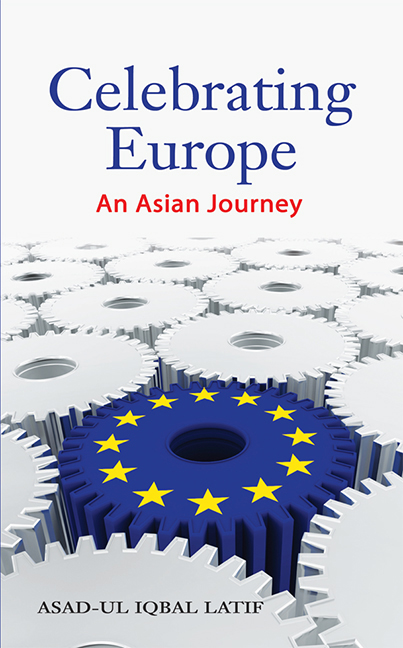
Europe's mythical origins lie in Zeus' abduction of the Asian princess Europa. Down the real centuries, Asia has played a crucial role in the making of Europe - as an object of Orientalist fantasy and colonial desire, but also of the spread of the liberating values and humane letters associated with the continent. In this book, a lifelong admirer of Europe casts a critical yet loving eye on the continent to ask what it means to him. The book revolves around a series of personal encounters. These range from following his father to Cambridge, and meeting two Bengali lovers in Calcutta who cherish Eros with classical Greek purity, to watching his wife recover in a Polish hospital that lavishes care on her for almost free.These encounters are intertwined with passionately argued essays on the Holocaust, the Soviet ideal and the Berlin Wall as keenly-contested sites of the European imagination. A chapter on Giuseppe Tomasi di Lampedusa's historical novel, The Leopard, combines literary and political analysis to peer into the heart of Italy, while an essay on champagne in France discovers the France in champagne. An analysis of secularism in the post-9/11 world defends one of the abiding legacies of Europe. Finally, a chapter on postmodern Europe upholds the European Union as perhaps the most exciting international project on offer today.The literary flair of this scholarly book captures the vividness of the intellectual engagement between Asia and Europe.
"This is an excellent and rare exploration of a sensitive religious issue from many perspectives legal, cultural and political. The case studies from Indonesia, Malaysia, Singapore and Thailand portray the important and exciting, yet very difficult, negotiation of Islamic teachings in the changing realities of Southeast Asia, home to the majority of Muslims in the world. Interreligious marriage is an important indicator of good relations between communities in religiously diverse countries. This book will also be of great interest to students and scholars of religious pluralism in a Southeast Asian context, which has not been studied adequately." -Zainal Abidin Bagir, Executive Director, Center for Religious and Cross-cultural Studies (CRCS), Gadjah Mada University, Indonesia
This book explains the relationship between Islam and the state and politics in contemporary Indonesia. President Soeharto's departure from office in May 1998 brought tremendous and far-reaching impacts to Indonesia's political landscape. At least 181 new political parties came into being, a sizeable portion of which use Islam as their symbol and ideological basis.
The global financial and economic shock of 2007–09 is the third major economic crisis to have buffeted Cambodia in its post-conflict period, coming in the wake of the food crisis of 2007–08 and just a decade after the Asian financial crisis of 1997–98 (the 'triple crises'). Cambodia's post-conflict history can be divided into two periods: 1991–98, referred to as the early phase of transition during which the first of the triple crises, the Asian financial crisis, occurred; and 1998 to the present, the late phase of transition during which the food and economic shocks transpired. A stocktake of the developments in Cambodia's post-conflict history suggests that the country has come a long way in reinstituting the foundations of a capitalist economic and procedural democracy but has yet to make significant headway in economic sophistication and substantive democracy. The triple crises were different, yet had similar characteristics. They were all exogenously-driven shocks with their own specific causes but their effects were shaped by the country's situation at the time.In terms of magnitude of impact, the global financial and economic downturn was the worst of the three crises. That it caused the first ever growth contraction in the post-conflict period was sufficient rationale for the series of studies that substantiate this book. Like the two shocks that preceded it however, the way it impacted on Cambodia cannot be understood in isolation from the overall post-conflict milieu. The thesis here is not that endogenous factors caused the crisis. It is simply that endogenous factors shaped the impact of the crisis and a historical, as opposed to a static, analysis better illuminates the nature of the impact.This book is an in-depth comprehensive examination of the impact of the global financial and economic crisis on Cambodia. It probes into the effects of the shock at macro, sectoral and micro levels using qualitative and quantitative techniques.
In November 2008, the Regional Economic Studies Programme of the Institute of Southeast Asian Studies (ISEAS) and the Singapore office of the International Development Research Centre (IDRC) of Canada organised a forum on 'Regional Economic Integration - ASEAN and Canadian Perspectives'. The forum concluded that fundamentally the ASEAN Free Trade Area (AFTA) and the North American Free Trade Agreement (NAFTA) were two different kinds of agreements. First, while NAFTA focused entirely on trade and investments, the scope of AFTA was much broader, going beyond issues of trade and investments alone. Secondly, NAFTA was a lightly institutionalized regional trade agreement. There was no formal policy of institutional or policy development, and it lacked legislative instruments. Although ASEAN had a secretariat, its regional institutions remained weak in comparison to those of the European Union. Thirdly, the dispute-settlement mechanism in ASEAN was different from that of NAFTA. The ASEAN provisions were scattered over a number of documents and covered both economic (trade and investment) issues and other disputes (e.g., political or territorial), while NAFTA provisions were contained in a single document and could be applied only to matters related to trade and investments. Finally, although many studies presented trade liberalisation as a win-win proposition, the distribution of costs and benefits was mostly uneven. In the case of Canada, short-run gains in efficiency from expanded trade could be identified, but it was harder to determine longer-term dynamic gains. On the other hand, in the case of ASEAN, it was still grappling with the issue of the development divide, especially since the admission of Cambodia, Laos, Myanmar and Vietnam into the group.
Based on questionnaires and interviews with journalists and news editors, the study examines the ASEAN perception of the flow of news in the region. From the news practitioner's point of view, the study covers issues on what are considered useful sources of news, quality of reporting on the region, and outside, perception of news coverage (in the news media) of individual ASEAN countries by other ASEAN members, and how news exchange functions within the region.
In this book, the author marshals evidence to support an arena-specific approach towards viewing Vietnam's state-society relations. In practice, the Vietnamese party-states relations with society vary from the hard and uncompromising state, with the bureaucracy getting its way, to society's ability to negotiate the state’s boundaries and regimes to make them less harsh. Any analysis of Vietnam's state-society relations needs to recognize and demonstrate both elements of dominance and accommodation, as well as specify the context in which either or both are seen. Alone, neither is adequate. In particular, the idea of the "state" needs to be disaggregated because "state" is not a singular actor that is coherent or uniform through time and space. To demonstrate how state-disaggregation can make our view more nuanced, this book analyses state-society interaction at the ward level of Hanoi, an urban local authority.
This collection of articles takes a long look at the dynamics of regionalism in Eastern Asia and shows how although the past limits the future, its hold on our possibilities for peaceful coexistence is not as strong as we think. What makes this volume unique is that Taiwanese scholars are brought together with Malaysian scholars to discuss a subject that is vital to the future of both East and Southeast Asians. Japan's diplomatic history as well as the heritage of its conquest of Eastern Asia is examined alongside China's cultural geography, paradigmatic dynamics, and intra-regional economics. Ties between East Asia and Southeast Asia, as well as the influence of American military power and European integration are also thoroughly dealt with. The end result is that the reader is offered multidisciplinary perspectives on present and future regional trends.
This rich collection of essays explores the dramatic political, economic, and social transformations in Southeast Asia since 1945. Academics and practitioners trace three themes – transformations within Southeast Asian countries, the actors and processes that contributed to these changes, and new dynamics in foreign relations. These diachronic essays examine how engagement among Southeast Asians and between regional and outside actors have affected patterns of democracy, development, and international relations. By looking back to understand the contemporary political and economic landscape of Southeast Asia, these essays shed light on how modern Southeast Asia has evolved. Special focus centres on U.S. engagement with the region, by both governmental and non-governmental organizations. Through its macrohistorical synthesis of changes in the region over time, this book offers an accessible lens to understand contemporary Southeast Asia.