To save content items to your account,
please confirm that you agree to abide by our usage policies.
If this is the first time you use this feature, you will be asked to authorise Cambridge Core to connect with your account.
Find out more about saving content to .
To save content items to your Kindle, first ensure no-reply@cambridge.org
is added to your Approved Personal Document E-mail List under your Personal Document Settings
on the Manage Your Content and Devices page of your Amazon account. Then enter the ‘name’ part
of your Kindle email address below.
Find out more about saving to your Kindle.
Note you can select to save to either the @free.kindle.com or @kindle.com variations.
‘@free.kindle.com’ emails are free but can only be saved to your device when it is connected to wi-fi.
‘@kindle.com’ emails can be delivered even when you are not connected to wi-fi, but note that service fees apply.
Using 1981–99 panel data on Indonesian manufacturing establishments and a survey of 2000 top business in Indonesia, Indonesia's Financial Liberalization analyses the consequences of financial liberalization on investment and allocation of credit, noting differential effects depending on size of firms, organizational form, and other categorizations.Using rigorous econometric tools, the conclusion derived is that although financial liberalization has increased borrowing costs, particularly for smaller firms, it has widened access to finance. The move from administrative-based to market-based allocation of credit has increased credit flow to firms that are more efficient, and these firms consequently have a higher concentration of investment.
With the world watching closely, Myanmar began a process of political, administrative and institutional transition from 30 January 2011. After convening the parliament, elected in November 2010, the former military regime transferred power to a new government headed by former Prime Minister (and retired general), U Thein Sein. With parliamentary processes restored in Myanmar's new capital of Naypyitaw, Thein Sein's government announced a wide-ranging reform agenda, and began releasing political prisoners and easing press censorship. Pivotal meetings between Thein Sein and Aung San Suu Kyi led to amendment of the Election Law and the National League for Democracy contesting by-elections in April 2012. The 2011 Myanmar/Burma update conference considered the openings offered by these political changes and media reforms and the potential opportunities for international assistance. Obstacles covered include impediments to the rule of law, the continuation of human rights abuses, the impunity of the Army, and the failure to end ethnic insurgency.
In an era of great changes and much uncertainty, such as the revival of an active Russia, buoyed by increasing energy wealth, a U.S. mired in Iraq and Afghanistan, rising China and India, as well as Japan moving towards normalization, ASEAN needs to closely monitor great power trends and thinking. This timely and topical book provides insights into various issues high on the regional agenda. The rise of China is closely observed in three chapters in this book. On Russia-ASEAN relations, three authors offer their perspectives. Energy issues are scrutinized. The ongoing efforts to build an East Asian Community are analysed. At a time when Russia has an active profile in Southeast Asia with its arms sales to Indonesia and its nuclear technology assistance to Myanmar, this book offers useful and authoritative discourses on its relations with ASEAN, building on an earlier volume published by ISEAS.
The Gulf Cooperation Council (GCC) is comprised of Bahrain, Kuwait, Oman, Qatar, Saudi Arabia and the United Arab Emirates. Possessing a significant share of the world's oil and gas reserves and including some of the world's fastest growing economies, the GCC is a significant regional grouping. As with the Association of Southeast Asian Nations (ASEAN), the Council has made significant progress towards economic integration. Seeking to draw out lessons applicable to ASEAN, this report looks at the structure and evolution of the GCC. This includes the context within which the Council was established, its rationale, and economic importance. It then follows the organization's development over time, paying particular importance to its progress from Customs Union and Common Market towards Monetary Union. The report then sets out the key challenges ahead for the Council, and concludes by highlighting the structural, organizational, and political lessons that resonate with ASEAN and its membership.
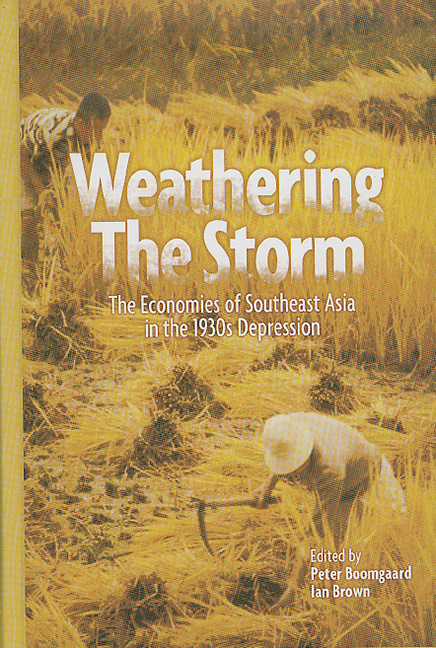
The principal cause of the 1930s depression in Southeast Asia lay outside the region - through a sharp contraction in demand for the region's major commodity exports. But it had important internal causes too: an oversupply of primary commodities and an increasing scarcity of new agricultural land leading to higher rents and lower wages, rising indebtedness and increasing landlessness. This work thoroughly analyses the pre-war depression. It also looks at the changes in the basic structures of the economies of Southeast Asia that were of long-term importance, such as the role of the state in the economy. The authors also draw similarities and contrasts between the 1930s depression and the 1990s Asian crisis.
When P.V. Narasimha Rao and Manmohan Singh launched India's "Look East" policy, it was only the first stage of the strategy to foster economic and security cooperation with the United States. But "Looking East" became an end in itself, and Singapore a valid destination, largely because of Lee Kuan Yew. He had been trying since the 1950s to persuade India's leaders that China would steal a march on them if they neglected domestic reform and ignored a region that India had influenced profoundly in ancient times. With his deep understanding of Indian life, close ties with India's leaders from Jawaharlal Nehru on, and sound grasp of realpolitik, Lee never tired of stressing that Asia would be "submerged" if India did not "emerge". Looking East to Look West recounts how India and Singapore rediscovered long-forgotten ties in the endeavour to create a new Asia. Singapore sponsored India's membership of regional institutions. India and Singapore broke diplomatic convention with unprecedented economic and defence agreements that are set to transform boundaries of trade and cooperation. This book traces the process from the earliest mention of Suvarnadbhumi in the Ramayana to Lee Kuan Yew's letter to Lal Bahadur Shastri within moments of declaring independence on 9 August 1965, from the Tata's pioneering industrial training venture in Singapore to Singapore's Information Technology Park in Bangalore. It explains the part Lee played in India's emergence as a player in the emerging Concert of Asia. History comes alive in these pages as Sunanda K. Datta-Ray, who had eight long conversations with Lee Kuan Yew, tells the story in the words of the main actors and with a wealth of anecdotes and personal details not available to many chroniclers.
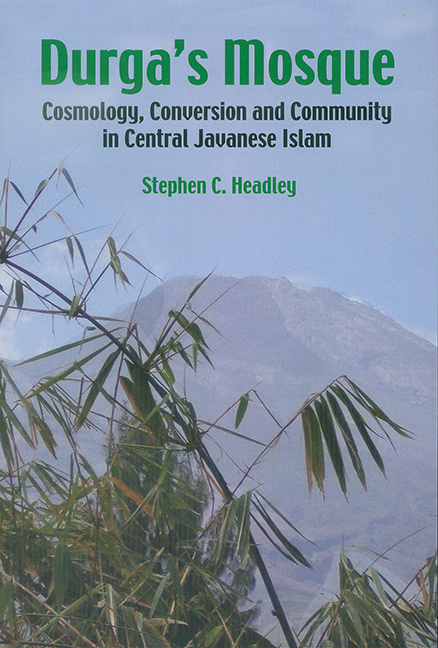
For two decades now, Stephen C. Headley has been one of the most original and systematic ethnographers of Javanese religion and cultural history. No one in contemporary Javanese ethnography has combed through the annals of nineteenth and twentieth century scholarship with as careful an eye for the variety of Javanese traditions. None combines this historical ethnography with as careful and unusual body of contemporary ethnography. Headley's new book brings these long-developed skills to bear on contemporary religious change in the Surakarta region of Central Java. In his analysis of the Durga ritual complex, Headley sheds light on one of the most unusual court traditions to have survived in an era of deepening Islamization. Headley's analysis of this ritual complex, and its implications for our understanding of popular Javanese religion, deserves to be read by all serious students of Java, as well as anyone interested in religion in Indonesia. However, Headley moves well beyond this unusual ritual complex, to take us through the twists and turns of religious culture and politics in what is one of the richest but also most troubled of cultural regions in Java. The result is a rich, multi-layered, and fascinating study, one that changes forever our understanding of Javanese tradition in a Java becoming Islamic. Robert Hefner, Institute on Religion and World Affairs, Boston University.
The United Nations Conference on the Law of the Sea produced a Convention in 1982 through which maritime regionalization is to be peacefully organized. However, jurisdictional application of the Law of the Sea has not been easy. In this book the basic problems of regionalization are concisely described in relation to each area regime and the regulations of the new Law of the Sea. The development of maritime law in the Pacific region is summarized and the economic significance of these sea-areas is also clearly stated.
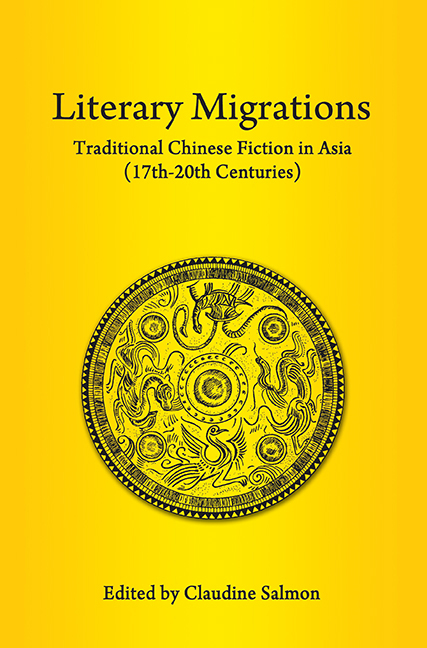
This book was written between 1981 and 1986, was first published in 1987, and has been out of print since. The Chinese version of it by Yan Bao et al., Zhongguo chuantong xiaoshuo zai yazhou, which also published in 1989, is also out of print. Since then more works especially in Chinese, Japanese, Korean, and Western languages have appeared which are mainly concerned with cultural exchanges between China and the countries of East Asia. Moreover a new interest has arisen among scholars from various countries on what has been termed 'Asian translation traditions' and conferences are regularly organized on this topic. Judging from this rising interest in translation history, this book on traditional Chinese fiction in Asia, which sets the question of Asian translations into a general framework, and so far has no equivalent, is still of service to researchers.
Since 1957, Malaysia's economic development has been an account of growth, transformation, and of structural change. More than 75 per cent of its gross domestic product (GDP) comes from the manufacturing and services sectors. However, Malaysia is stuck in a middle-income trap and is facing challenges on the economic and political front. In June 2010, Prime Minister Najib Razak unveiled the 10th Malaysian Plan (2011-15) to chart the development of Malaysia from a middle- to high-income nation. This publication represents a policy-oriented stocktake and evaluation by academics, policy-makers, and business people on Malaysia's achievements, present work-in-progress endeavours, and some of the future challenges facing the nation in its pursuit to achieve a developed high-income country status.
This volume focuses on some of the most important and topical questions about Myanmar. Many of these issues have not been sufficiently researched, comprehensively compiled, and comparatively examined within the broader Southeast Asian context. Especially important contributions in the book pertain to issues of historical influence and political considerations that have shaped the dominant thinking within the state and the military. There are equally important studies of sensitive topics like the political economy of the state and the level of human security in the country. The three major ethnic groups in the country - Karen, Kachin, and Shan - are also studied in detail. Some of the negotiations between the Karen and Kachin ethnic insurgent group representatives on the one hand, and the military junta on the other, are spelled out in detail. An important corollary finding is the importance of religion and religious personalities in brokering peace between the ethnic groups and the military government. Finally, the book deals with how the various ethnic groups are trying to cope with decades of conflict and reconstruct their communities.
This handbook provides basic information on the Association of Southeast Asian Nations (ASEAN), its organization and the various co-operation activities associated with it. The emphasis here is on economic co-operation. Although such information is available in many forms, it is mostly scattered in official documents and various literature on ASEAN. There is, thus, a need to provide the basic information in a handy volume, and this handbook fills that need.
International trade is the life-blood of the countries in the Association of Southeast Asian Nations (ASEAN). Faced with several global trade issues the ASEAN countries individually and collectively pursue a multilateral approach by actively participating in the current Uruguay Round of GATT. The seven studies in this volume assess the strengths and weaknesses of international trading.
"This book fills a gap in authoritative analyses of the causes of inter-religious conflict and the practice of religious toleration. The rise of more overt expressions of Islamic piety and greater bureaucratization of Islam in both Indonesia and Malaysia over several decades have tested the "live and let live" philosophy which used to characterize religious expression in these nations. The analyses in each chapter of the book break new ground with contextualized studies of particular and recent incidents of conflict or harassment in a variety of areas - from urban centres to more remote and, even complex, locations. As these studies show, legislation stands or falls on the ability and determination of local authorities to enforce it.This volume is essential reading for understanding the dynamics of state-religious interaction in Muslim-majority nations and the crucial role civil society organizations play in negotiating interfaith toleration." - Emeritus Professor Virginia Hooker FAHA, Department of Political & Social Change College of Asia & the Pacific, The Australian National University "A most welcome contribution to the academic discourse of political Islam in Indonesia and Malaysia! For this volume focuses not on Islamic resurgence as many others have done, but on the impact of Islamic resurgence upon its non-Muslim minority counterparts - Buddhists, Christians, Hindus and also the Syiah Muslims - in the two plural societies, and the varying responses of those minorities, themselves often fragmented, to Islamic resurgence. The rich case studies highlight the changing character of politics in the two countries and their capacities to deal with religious diversity, an aspect of politics often ignored because of the usual concern for economic and political institutional capacities. The juxtaposition of Malaysian and Indonesian cases in a single volume and comparisons of contrasting developments in the two countries, challenges readers not to resort to easy conclusions and overgeneralizations about rising inter-religious tensions, but to give more scholarly attention to this politics-religion diversity nexus." - Emeritus Professor Francis Loh Kok Wah, Department of Political Science, Universiti Sains Malaysia
"Half a century since Malayan independence in 1957, this collection of essays provides a welcome assessment of post-colonial, especially recent Malaysian policies on various fronts – development, 'looking East', 1997-98 crisis management, inter-ethnic redistribution, poverty reduction, trade, education, healthcare, globalization, Islam and national culture. This volume is a useful compendium for anyone seeking a broad overview of recent policy challenges and debates." – Jomo Kwame Sundaram, United Nations Assistant Secretary General for Economic Development
The vibrance and optimism in Southeast Asia during 1993 was palpable. In the wake of the end of the Cold War, the region built upon the development that was already on track. Even so, the pace has been surprising. Not only did the ASEAN economies perform well generally, Vietnam surged ahead in economic development, and Myanmar registered strong sings of economic growth. Politically, the region enjoys dynamic stability even though the South China Sea continues to pose a potential conflict area area, and a North Korean nuclear capability will be destabilizing. The political tranistion in Cambodia proved to be a greater success than anticipated. The major concern remains the question of an emerging power balance in the larger Asia-Pacific region, especially with the new economic weight of China. What will the next year look like? Follow and understand the fast-changing regional scene in Regional Outlook 1994-95.
The central focus of the book is the state's efforts to industrialize Myanmar, first through direct intervention and planning under a socialist economic framework as interpreted by the state leaders (1948-88) and lately (1989 onwards) through state-managed outward orientation. In examining developments during the 1948-88 period, this study situates the Myanmar case within the developmental state paradigm, whereby a critique of the investment-driven -pathway of Myanmar's political economy under socialist ethos is provided. On the other hand, in examining the post-1988 period, the focus is on drawing attention to continuities regarding the state's crucial role, despite attempts to introduce market-conforming policies and practices, in economic development in general and industrialization in particular.
Since the Doi Moi policy of economic renovation was introduced in 1986, Vietnam has undergone deep transformations as a result of the transition to a socialist-oriented market economy. Social and urban transition has taken place in parallel, as urban dynamics were spurred on by Vietnamese public and private stakeholders, and by external agents such as international organizations and international solidarity organizations, experts, consultants and bilateral aid organizations.Here are the results of research carried out by French, Canadian and Vietnamese teams from the north and south of the country on the overarching theme of Vietnamese cities in transition. Some of this research deals with urban dynamics, some with the issues at stake within such dynamics, or with the strategies of the most significant stakeholders in urban transition: civil society, donors within the framework of official aid for development, consultants and international consultancy firms. These projects were carried out between 2001 and 2004 as part of the Urban Research Programme for Development (PRUD), and mainly focus on Hanoi and Ho Chi Minh City, or both in the case of comparative studies.Is there such a thing as a Vietnamese model of an Asian city? It seems that urban transition in Vietnam is not taking place in as radical and abrupt a manner as in China. The country's capacity for absorbing external models, the quest for a third way between state intervention and economic liberalism, and the fact that the country's architectural heritage is taken into account in urban planning, are just some of the reasons for its particularity. The issues addressed in each chapter, as well as the proposals for further research suggested by the contributors, should act as a catalyst for urban research in Vietnam.
When Singapore became a sovereign state in 1965, the fledgling nation faced very similar problems as most other developing countries: high unemployment, low standard of living, and poor environmental conditions. In a scant four decades, it has become the 6th wealthiest country in the world in terms of per capita GDP and has managed its environment so well that it is now considered to be one of the best in the world. In this remarkable book, Tan Yong Soon authoritatively and objectively analyses how the environmental conditions were radically transformed within this period, and the enabling conditions which made this extraordinary transformation possible. This book will unquestionably make all Singaporeans proud of their environmental achievements, and at the same time enable other countries, both developed and developing, to learn many lessons from a most remarkable success story. This book is a must read for any individual interested in environment-development issues. —Prof Asit K. Biswas, President, Third World Centre for Water Management, Mexico and Distinguished Visiting Professor, Lee Kuan Yew School of Public Policy, Singapore.
This book offers an in-depth and detailed analysis of the political processes that led to formation of the Federation of Malaysia in 1963. It argues that the Malaysia that came into being following the amalgamation of Malaya, Singapore, Sarawak and North Borneo was a political creation whose only rationale was that it served a convergence of political and economic expediency for the departing colonial power, the Malayan leadership and the ruling party of self-governing Singapore. "Greater Malaysia" was thus an artificial political entity, the outcome of a concatenation of interests and motives of a number of political actors in London and Southeast Asia from the 1950s to the early 1960s. The book contrasts the complicated negotiations and hard bargaining between Singapore and Malaya on the critical issues of citizenship, control of finances and the development of a common market during the lead-up to merger with the relative ease with which the North Borneo Territories were incorporated in the Federation. The haste and testing conditions in which negotiations were conducted between 1961 and 1963, often with the British facilitating the process as an "honest broker", led to a number of unresolved compromises between Singapore and Kuala Lumpur. These compromises, however, did not obviate the possibility of future difficulties, and the seeds of dissension sown by the disagreements between the two governments were to sprout into major crises during Singapore's brief history in the Federation of Malaysia.