To save content items to your account,
please confirm that you agree to abide by our usage policies.
If this is the first time you use this feature, you will be asked to authorise Cambridge Core to connect with your account.
Find out more about saving content to .
To save content items to your Kindle, first ensure no-reply@cambridge.org
is added to your Approved Personal Document E-mail List under your Personal Document Settings
on the Manage Your Content and Devices page of your Amazon account. Then enter the ‘name’ part
of your Kindle email address below.
Find out more about saving to your Kindle.
Note you can select to save to either the @free.kindle.com or @kindle.com variations.
‘@free.kindle.com’ emails are free but can only be saved to your device when it is connected to wi-fi.
‘@kindle.com’ emails can be delivered even when you are not connected to wi-fi, but note that service fees apply.
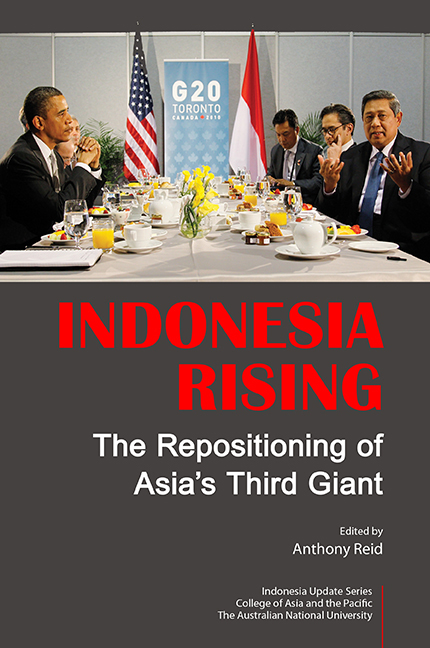
There are reasons for thinking that this is at last Indonesia's moment on the world stage. Having successfully negotiated its difficult transition to democracy after 1998, Indonesia has held three popular elections with a low level of violence by the standards of southern Asia. Recently its economic growth rate has been high (above 6 per cent a year) and rising, where China's has been dropping and the developed world has been in crisis. Indonesia's admission in 2009 to the G20 club of the world's most influential states seemed to confirm a status implied by its size, as the world's fourth-largest country by population, and the largest with a Muslim majority. Some international pundits have been declaring that Indonesia is the new star to watch, and that its long-awaited moment in the sun may at last have arrived.Those who know Indonesia well, like the experts writing in this book, are less easy to convince. In this volume they weigh the economic evidence (Ross Garnaut and M. Chatib Basri); the political equation between democracy and the massive obstacles to progress in corruption, inefficiency and legal inadequacies (Rizal Sukma and Donald K. Emmerson); and Indonesia's unrealized potential as a leader in matters environmental (Frank Jotzo) and Islamic (Martin van Bruinessen). The volume is rounded out by Scott Guggenheim's analysis of the potential for better performance in education, and by the longer-term considerations of Anthony Reid and R.E. Elson. Overall, the conclusion is one of cautious optimism, well aware of past disappointments."Perhaps, as the contributors to this eminently readable and thought-provoking volume suggest, Indonesia is finally emerging as the globally significant nation-state that it surely is. A timely and important publication that deserves to be widely read."–Hal Hill, H.W. Arndt Professor of Southeast Asian Economies, The Australian National University
The early years of the twenty-first century have been characterized by a sense of widespread anxiety and fear because of the violent activities of groups of terrorists who claim they act in the name of Islam. Their acts of terrorism, viewed by a majority in the Muslim world as crimes which must be subject to the law, are in tragic contrast to the efforts of many Muslim intellectuals who have been working for the past several decades to find common ground between people of all faiths based on the universality of humankind. This book aims to bring to the attention of non-Muslims, in particular, the range of views which Muslims in the Middle East and in South and Southeast Asia hold on six topics of importance to life in the twenty-first century. The topics have been addressed from the internal Muslim point of view to provide readers with a sense of the main debates within Islam on each of the issues. The topics addressed are: the new world order; globalization and modernity; banking and finance; the nation-state; the position of women; and law and knowledge. The chapters have been written by Muslims and non-Muslims, each of whom is an expert on the area about which they write. The chapters are presented in pairs which offer Middle Eastern (and in one case South Asian) points of view which are matched by Southeast Asian perspectives on each of the six topics. While the media is quick to report on the more violent expressions of Islam, including terrorism, the vigorous debates, which now characterize the intellectual discourse in Muslim communities, are rarely if ever reported. This book not only describes and analyses those debates but also reflects the views of many Muslims across the world, emphasizing the connections and contrasts between the Middle East and Southeast Asia.
The past five years have held tremendous significance for the process of nation building in Malaysia. Civil society and voters, especially in urban areas, are making new and strong demands on the government, in fact on governance per se; the opposition parties that managed to pull off successful electoral upsets in 2008 have formed a viable coalition to challenge the long-term federal government; and the federal government itself has been trying to adopt a reformist image without alienating its numerous conservative supporters. Although the government's slogan of 1Malaysia was meant to signify national unity, it lacked credibility because many of the systemic deficiencies of sustained one party - 1Party - rule still remained. This collection of articles studies various aspects of change now pushed into the foreground for discussion.
Immigrants from China started settling in Calcutta, the British capital of colonial India, from the late eighteenth century. Initially, the immigrant community comprised of male workers, many of whom sojourned between China and India. Only in the early twentieth century was there a large influx of women and children from China. To address the educational needs of the children - both immigrant and locally-born - several Chinese-medium primary and middle schools were established in Calcutta by the community in the 1920s and 1930s. Using many hitherto unexplored textual sources and interviews in India, China, and Canada, this detailed and unprecedented study examines the history and significance of these Chinese-medium schools. It focuses on the role they played in preserving Chinese cultural identity not only through the use of educational curricula and textbooks imported from China, but also with the emphasis on the need to return to the ancestral homeland for higher education. This study also breaks new ground by examining the impact of political and other factionalism within the community as well as the India-China conflict of 1962 that resulted in the closure of most of the Chinese-medium schools in Calcutta by the 1980s.
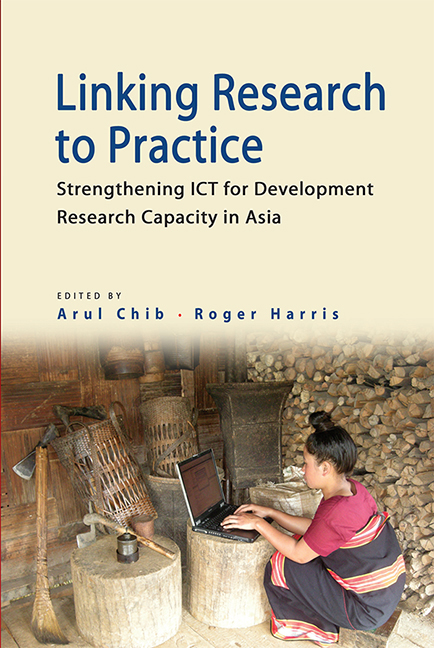
Information and communication technologies have long promised to provide quality education, improve healthcare, allow open government, and solve environmental issues. To realize this potential and influence policy-making and programme design, the Singapore Internet Research Centre, supported by the IDRC, created an innovative research capacity-building programme, SIRCA. The programme supports interdisciplinary ICTD research through the nurturing of research relationships. By bringing together experienced mentors with deserving early-career Asian researchers in an intellectually stimulating environment, SIRCA has fostered a cohort of talent capable of generating the rigorous scientific evidence needed. Their stories, and reflections upon the programme, are told here. If ever it needed demonstrating that ICTs are an indispensable tool for developing an information society rather than a reward for achieving it, then the SIRCA programme has achieved that.
This study examines the relationship of the dilemma and options faced by the Vietnamese leadership in planning reconstruction and development within socialism.
The tsunami that struck a dozen countries around the Indian Ocean on 26 December 2004 evoked international sympathy on a scale beyond any previous natural disaster. The international relief effort broke all records both in scale and diversity, with seven billion U.S. dollars donated from all over the world through public and private agencies for Sumatra alone. Simply as a reconstruction effort, therefore, the disbursement of those funds and the rebuilding of housing, infrastructure, and economy posed major national and international challenges. However this was not simply a reconstruction effort. Aceh at that time was a war zone, with Indonesia’s military engaged in a major operation to crush a separatist rebellion that had been simmering since 1976. Even though the funds had been donated for tsunami relief, any real reconstruction of Aceh had to consider the impact of the conflict on the well-being of the population, as well as governance and administrative capacities. This volumes serves the purpose not only of discussing some of the lessons of the Aceh reconstruction and peace processes, but also of maintaining critical links between Aceh and the international community after the initial tranches of aid expire.
Not just another book on ASEAN, this volume reappraises the organization from the inside, through controversial or perplexing issues such as the "ASEAN Way", the accession of the new members, including Myanmar, the principle of "non-interference", regional security, regional economic integration, the haze and SARS, and ASEAN's future.Written by a key player, the former ASEAN Secretary-General, this book will illuminate the inner workings of the key Southeast Asian regional institution. It is a must-read for journalists, policy-makers, political scientists and others who need an insiders' view on how ASEAN has evolved, how it operates and whether it will remain relevant in the evolving Asia Pacific and global order.
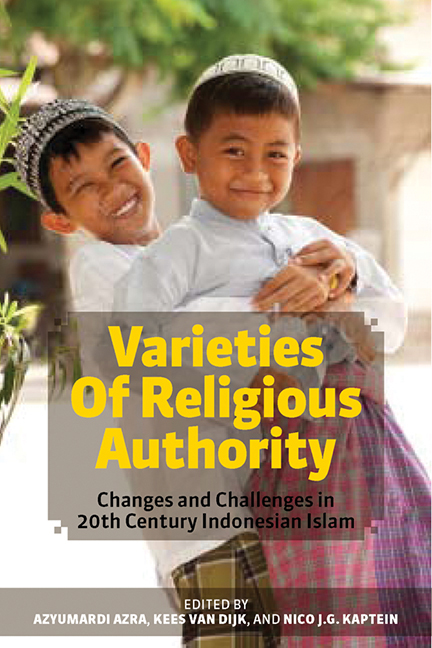
The twentieth century was a fascinating period of profound political, social and economic changes in Indonesia. These changes contributed to the diversification of the religious landscape and as a result, religious authority was redistributed over an increasing number of actors. Although many Muslims in Indonesia continued to regard the ulama, the traditional religious scholars, as the principle source of religious guidance, religious authority has become more diffused and differentiated over time. The present book consists of contributions which all deal with the multi-facetted and multidimensional topic of religious authority and aim to complement each other. Most papers deal with Indonesia, but two dealing with other countries have been included in order to add a comparative dimension. Amongst the topics dealt with are the different and changing roles of the ulama, the rise and role of Muslim organizations, developments within Islamic education, like the madrasa, and the spread of Salafi ideas in contemporary Indonesia.
The inauguration of the Asia-Europe Meeting (ASEM) in Bangkok in 1996 was celebrated with enthusiasm and hopes in the two regions because this forum represented a breakthrough in Asia-Europe relations. The region-to-region pattern of the relations becomes the study framework that enables the explorations of central themes which include the Asian regional identity, ASEAN collective diplomatic prominence, and the informality of the ASEM institution. In exploring those central themes, this book applies constructivist, realist, and neo-liberal institutional theories consecutively. The difference between Asian and European cooperative culture, as well as the longevity of an international institution, adds to the picture. This book contributes not only to the study of Asia-Europe relations but also to the understanding of regionalism in Asia.
This study argues that the extensive use of Information and Communications Technology (ICT) by the Association of Southeast Asian Nations (ASEAN) would: ( (1) enhance policy coordination within the intergovernmental organization; (2) promote inclusive regionalism by providing new avenues for broader stakeholder participation in regional affairs; (3) help develop a stronger regional identity, particularly among the young; and (4) improve "network management" or coordination of the collaborative activities of the member states. But this study is not merely about making ASEAN more effective. By looking at how ICT - with its ability to overcome distance and time - could be a tool for enabling effective non-state actors in regional rule making, it also contributes to the literature on Global eGovernance.
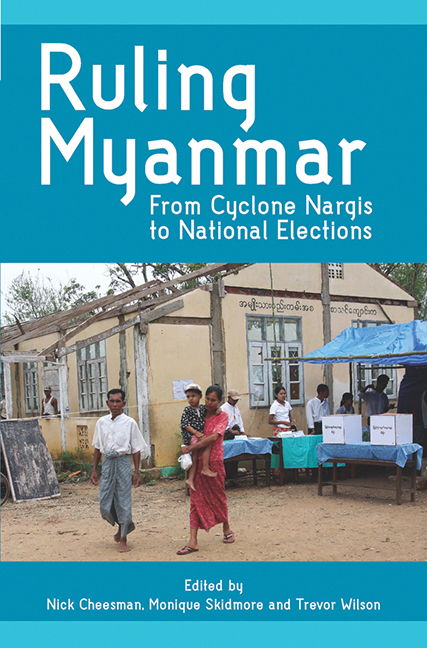
November 2010 sees the first elections in Myanmar/Burma since 1990, to be held as the culmination of the military regime's 'Road Map for Democracy' The conditions under which the elections are being held are far from favourable, although the laws and procedures under which they will be conducted have been in place for seven months and quite widely publicized. Political controls remain repressive, freedom of expression and assembly does not exist, and international access is restricted by government controls as well as sanctions. While the elections represent a turning point for Myanmar/Burma, the lead-up period has not been marked by many notable improvements in the way the country is governed or in the reforming impact of international assistance programmes. Presenters at the Australian National University 2009 Myanmar/Burma Update conference examined these questions and more. Leading experts from the United States, Japan, France, and Australia as well as from Myanmar/Burma have contributed to this collection of papers from the Conference.
This study outlines the framework of high-performance financial systems and the parameters for financial firms operating in them. It begins with an intuitive structural model of financial intermediation, and then considers issues facing players in, and users of the financial system, with emphasis on strategic positioning alternatives facing banks and other types of financial institutions, and the principal determinants of their competitive performance.
ASEAN leaders proclaimed to create an ASEAN Economic Community by 2015. But achieving the target requires cooperation and coordination both within and among the ten ASEAN economies. Currently, with countries having varying considerations towards complete liberalization, protectionism still persists in certain sectors of the economies. A lot of work needs to be done in addressing the domestic reforms, the gaps in infrastructure, the lack of human resources and adequate institutions. Moreover, it is the businesses whose decisions and actions will help the region to achieve an effective integration. The policymakers have vital roles to play in raising the engagement of the private businesses in ASEAN matters. As time is limited, one way for ASEAN is to focus on "core" elements of integration and implement them earnestly in the shortest possible time. The rest of the process, as envisaged in the AEC blueprint, can follow beyond 2015. This book examines the state of readiness of the member countries for regional integration and discusses the challenges to ASEAN businesses. It gives policy recommendations to address some of the issues faced by the key stakeholders.
With the completion of the ASEAN Charter, ASEAN needs to fully appreciate and work out the issues connected with its implementation. It is also important for ASEAN and its business sector to understand and implement the two newly completed key integration instruments (the ASEAN Trade in Goods Agreement and the ASEAN Comprehensive Investment Agreement 2009) and the business enhancing initiatives envisaged under them. Both areas of work have taken on added urgency in view of ASEAN's goal of putting in place an ASEAN Economic Community by 2015. This is the first book which examines both the above issues, the problems related to them and possible solutions."Mr Tiwari is a legal authority on ASEAN. This book is an important contribution to ASEAN law." – Professor Tommy Koh, Ambassador-at- Large, Ministry of Foreign Affairs, Singapore."The ASEAN Charter, and the economic integration of the ASEAN nations that the Charter will support, are essential to grow the competitiveness of the region. Mr Tiwari provides keen insights into the development of this emerging framework and of the challenges that remain." – Phillip Overmyer, Chief Executive, Singapore International Chamber of Commerce."I have known Mr Tiwari as a legal authority and a friend for over twenty years. I would like to congratulate him for having chosen to share his knowledge on ASEAN law through this book. Knowledge of the ASEAN Charter and the instruments underpinning ASEAN integration would be of immense benefit to people in the business sector as ASEAN moves towards forming an ASEAN Economic Community by 2015." – Jennie Chua, Chairperson, Singapore International Chamber of Commerce.
Myanmar's conduct within, and membership of, ASEAN continues to be a topic of interest and debate to those who wish to understand and assess the work of the regional organization as a whole. However, there are few accessible surveys which provide a background to Myanmar's accession and its growing economic, political and functional engagement and cooperation with the other countries in the regional community. Myanmar in ASEAN discusses the formation of ASEAN, its evolution and its integration process against an overview of the political and economic development of Myanmar. This volume explains and analyses the accession of Myanmar into ASEAN and the political, security and economic impact and implications for Myanmar; key ASEAN documents are included as a reference for students of regional integration.
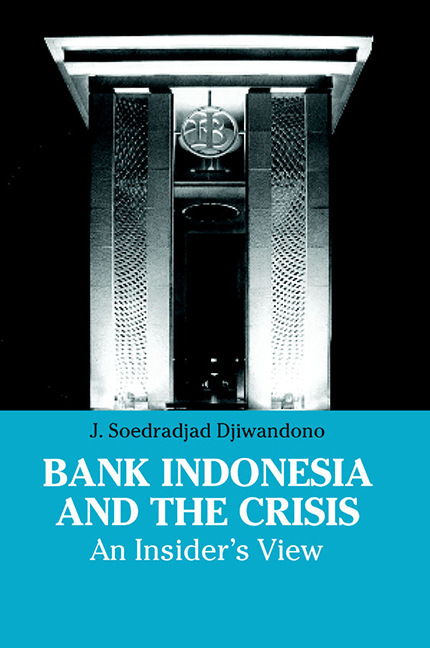
This important book is set to be a key document for those interested in Indonesia's recent economic and political history. There have been many unanswered questions about exactly how the regional currency crisis snowballed into a full-scale banking crisis in Indonesia, coupled with a total loss of credibility within a short time. This record by the official in the midst of the banking crisis, the ex governor of Bank Indonesia, gives a fuller and intriguing picture of the events, including the actions of President Soeharto, as well as a balanced account of the much criticised interventions by the International Monetary Fund. The author also analyses the lessons for monetary policy to avoid future such crisis. This is essential reading for economists and Indonesia watchers.
This paper analyses data released by the three EC member countries' Central Banks on payments and receipts for services traded between West Germany, France, and the Netherlands on the one hand and the five founding member states of ASEAN on the other. Chapter II analyses the changing role of services in the five ASEAN countries' balance of payment until 1987. Chapter III to V highlight the development of transactions in services between ASEAN countries on the one hand and West Germany, France, and the Netherlands during the 1970s and 1980s on the other, Chapter VI on common as well as country-specific elements of bilateral transactions in services between ASEAN and the EC countries.
Economic reforms in Vietnam have allowed its ethnic Chinese citizens to prosper, but growing Chinese economic strength harbours the seeds of political problems. The topic is also meshed with the larger concern of Sino-Vietnamese relations, which in the best of times can be coloured by a suspicion which goes back centuries. In the worst of times, as in 1978/79, both sides were engaged in open warfare. To understand the current situation, this book delves into the origins of Chinese settlement in Vietnam, tracking the flow of history through the major events which have shaped the Chinese mercantile community and made it what it is today. The most significant feature of this work is that it draws on Western, Russian, and Vietnamese sources, as well as the writer's own familiarity with the actual situation on the ground.
Geography has moulded Singapore's self-definition, much as it has shaped the contours of the rest of Southeast Asia, a region that lies south of China and east of India. Placed within overlapping Sinic and Indic zones, Singapore's entrepôt role has served both. Today, as China and India emerge simultaneously as rising powers, a port city is going beyond its trading role to engage them in political and security terms. This book combines diplomatic history and international relations theory to show how Singapore is facilitating China's and India's engagement of Southeast Asia.