To save content items to your account,
please confirm that you agree to abide by our usage policies.
If this is the first time you use this feature, you will be asked to authorise Cambridge Core to connect with your account.
Find out more about saving content to .
To save content items to your Kindle, first ensure no-reply@cambridge.org
is added to your Approved Personal Document E-mail List under your Personal Document Settings
on the Manage Your Content and Devices page of your Amazon account. Then enter the ‘name’ part
of your Kindle email address below.
Find out more about saving to your Kindle.
Note you can select to save to either the @free.kindle.com or @kindle.com variations.
‘@free.kindle.com’ emails are free but can only be saved to your device when it is connected to wi-fi.
‘@kindle.com’ emails can be delivered even when you are not connected to wi-fi, but note that service fees apply.
Singapore had been one of the nations severely affected by the 2008-09 global financial and economic crisis. The city state came under pressure through the financial, trade, and confidence channels. To counter these shocks, Singapore policymakers undertook unprecedented monetary and fiscal policy measures. They subsequently charted a revival strategy that would help the country emerge stronger after the crisis. These all-encompassing policies together with the global economic recovery in 2009 helped the city state bounce back faster and stronger than many other regional economies. This book provides an insight into the events that occurred during the crisis and Singapore's successful navigation to economic recovery."Although much has been written about the global financial crisis of 2008-09, not enough has been said about how it affected Singapore and the policy response. In this highly readable book, Sanchita Basu Das fills this gap, explaining how the crisis rippled through the Singapore economy via trade channels, the financial sector, and asset markets. But the greatest strength of this volume is its comprehensive account of the extraordinary measures Singapore put in place to deal pre-emptively with what could have been huge declines in output and employment in the face of the collapse of trade and credit flows. Singapore's multi-pronged approach, and especially the fiscal support and loan guarantees contained in the 2009 budget, must go down as one of the boldest and most creative policy responses to a crisis. It is a valuable lesson to economics students and practitioners alike. This book gives you the full story."- Vikram Khanna, Associate Editor, The Business Times"Sanchita Basu Das is to be congratulated for providing a fascinating, accessible, and forward-looking analysis of Singapore's response to the global economic crisis of 2008-09. As a highly trade-dependent economy, Singapore was hit hard by these events. But the government was nimble and quick to react. The author describes and evaluates this response, and draws out general lessons for crisis management and mitigation in small open economies. Highly recommended."- Hal Hill, H.W. Arndt Professor of Southeast Asian Economies, Australian National University."This is a comprehensive account of the impact of the global financial crisis on Singapore -- one of the most open economies in the world -- and policy responses by the government and central bank. The book identifies the need to move to a more knowledge-intensive economy as the key policy challenge for post-crisis Singapore."- Masahiro Kawai, Dean and CEO, Asian Development Bank Institute"Singapore was affected disproportionately by the global economic crisis of 2008-09. While it is currently rebounding impressively, government officials and the private sector would do well to learn from the crisis experience in devising future policies. Moreover, the Singapore experience is instructive as to how external economic shocks can be transmitted to open economies and, hence, has great relevance beyond its borders. This book by Sanchita Basu Das gives a comprehensive survey of Singapore in crisis and provides a wealth of information and insightful analysis, using clear, non-technical language. It is extremely useful contribution to scholars, policymakers, and other students of Asian economics."- Michael G. Plummer, Organisation for Economic Co-operation and Development (OECD)
Like his great contemporaries Sun Yat-sen and Mohandas K. Gandhi, the Philippine patriot and polymath JOSE RIZAL (1861-1896) helped write the history of freedom in Asia. His two subversive novels and an immortal last poem helped inspire the first nationalist revolution on the continent and led to the founding of the first Asian republic. But what was Rizal's impact on the nationalist awakening in Southeast Asia? REVOLUTIONARY SPIRIT argues that by infusing a revolutionary spirit into the struggle to create a Philippine nation in the late 19th century, Rizal ended up invigorating Indonesian nationalism and Malaysian scholarship, regional political discourse and world literature, in the 20thC and remains must reading in the 21st.
"Beyond previous more simplistic approaches, this book takes a giant step towards understanding and translating into people-centered policies the actual position and complexity of fish production in Southeast Asian economies. Tackling how fisheries and aquaculture are embedded in local and household economies and linked through dynamic supply chains to more distant, even global markets, the book makes essential policy and analytical recommendations. SEARCA and ISEAS have made a major contribution to the intellectual debate and action agenda for Southeast Asian fisheries."– Dr Meryl Williams, Chair of the Commission of the Australian Centre for International Agricultural Research
The organization of this study reflects the importance of such strategic factors as determinants of trade and investment. Chapter 2 focuses on the home environment of Japanese firms, and with comparisons drawn with the US economy, illustrate how, as the economy has restructured and modernized in the post-war period, firm behaviour has evolved too. Chapter 3 is an assessment of the concept of strategic behaviour of governments and firms, what it might look like and how it matters to trade and investment. Chapter 4 focuses on an examination of East Asian trade patterns with Japan and their evolution, while Chapter 5 focuses - through firm level comparisons and surveys - on patterns of FDI, in particular on production networks in the region. Regression analysis is used in Chapter 6 to test for the significance of 'strategic' behaviour by governments as a determinant of FDI.
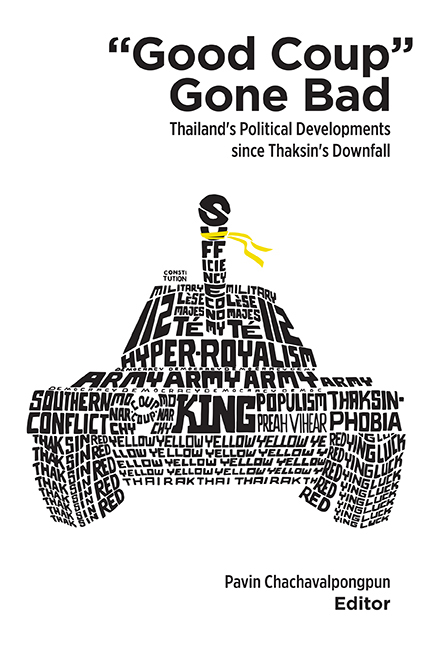
What did the 2006 military coup show us? It demonstrated that the crux of the Thai crisis is far more serious and much wider in scope than had previously been thought. The monarchy is surely not a victim in the protracted conflict, but the root cause and continuing factor that has eroded Thai politics. The coup set in motion more prejudicial uses of the lèse-majesté law, and in the process, has led to more political prisoners. It has also shredded the military into several segments, turning generals into desperate royalists who continue to live off the monarchy in order to survive. Issues of violence in the Thai south and the Thai-Cambodian dispute became greatly intensified in the age of militarized politics. The coup also produced unique colour-coded politics and created crises of legitimacy. This book is a collection of essays that reflect developments in Thai politics in the post-coup period.
This history is an account of Southeast Asia - New Zealand relations as they have emerged since the end of World War II. Drawing together the most prominent scholars of New Zealand's relations with Southeast Asia, this study examines the overall military, multilateral, and commercial relationships and those that assess individual bilateral relationships and diplomatic controversies. Southeast Asia remains a region of considerable importance for New Zealand, and has remained so through the course of decolonization, internal instability, external security, Cold War tensions, peacekeeping efforts, rapidly expanding economic growth (and crisis), and, increasingly, transitional security challenges such as terrorism.
The Institute of Southeast Asian Studies (ISEAS) launched its electronic publication ISEAS Perspective in mid-2012.During its first year in existence, 58 internally reviewed issues were produced. These were distributed in steady fashion by email to addresses registered with the Institute. However, ISEAS has deemed it a worthy public service to have selected articles from that first year published in a single printed volume at cost price.Articles herein were chosen according to strict criteria such as analytical strength; continued salience of the subject discussed; referential potential; literary quality in general; et cetera. ISEAS intends to print such annual selections in the coming years. We are certain that you, the reader, will find them informative and stimulating.—Tan Chin Tiong, ISEAS Director
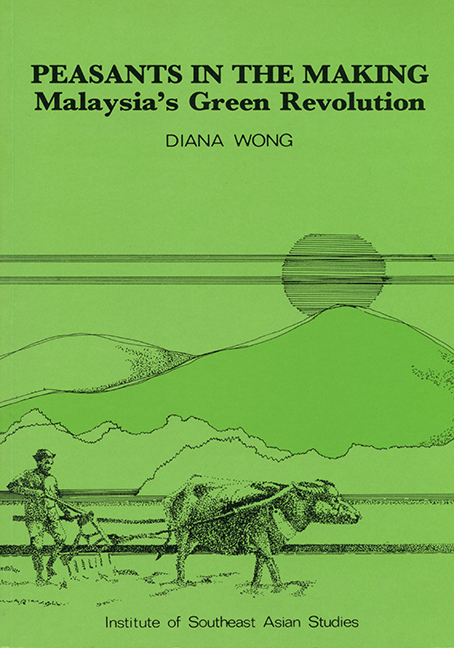
This study of the so-called "Green Revolution" in the rice bowl region of Malaysia aims to provide an interpretation of recent changes in the Malaysian agrarian structure, and to make an analytical and theoretical contribution to the long-standing intellectual debate on the "agrarian question". By joining the micro-world of household social structure and economy to the macro-world of changes in production relations, it traces out a specific trajectory of agrarian development in Malaysia.
This study is part of an ESCAP/UNCTAD/UNDP regional project. The objectives for the Singapore case-study include identifying the products affected by the GSP withdrawal and assessing how Singapore can regain its competitiveness, which may involve the restructuring of such industries and, if need be, also relocation. First, the economic impact of the pre-graduation country scenario is analysed in terms of composition and structure of GSP exports, GSP export growth, and market shares. This covers overall GSP performance as well as GSP exports to the United States. This is followed by an analysis of the post-graduation country scenario, that is, the economic impact after the withdrawal of the U.S. GSP in 1989. The policy implications and options at both the government and business sector levels are assessed and the conclusions of the study, which may be useful to other target countries, are also provided.
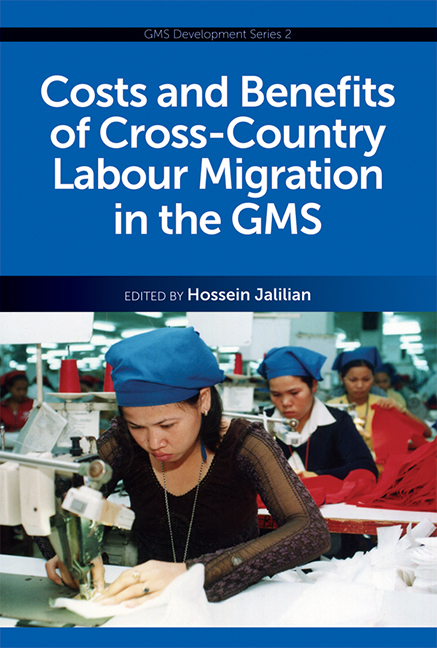
International labour migration can be characterized in three ways — as human aspiration, tradition, and necessity. For some people, working overseas is a dream. For others, international labour mobility is a tradition. For a great number of people however, international labour migration is an economic necessity. It is the only viable solution to realize their basic human right to a decent life. GMS worker movements to Thailand typify all three characterizations of international labour mobility. While this book focuses on the economic dimensions of international labour emigration, principally from Cambodia, Laos and Vietnam to Thailand, it recognizes at the very outset the equal standing of non-economic motivations for migration.
A collection of papers that were presented at the Conference on ASEAN-EEC Economic Relations organized by the Institute of Southeast Asian Studies in Singapore from 6 to 8 August 1981. Part I on trade includes an overview article and papers on trends and problems of EC-protection; issues relating to the EC's imports of ASEAN primary products; ASEAN manufactured exports in the EC markets - an empirical assessment of common and national tariff and non-tariff barriers confronting them; and a constant market shares analysis of ASEAN manufactured products to the EC. Part II on investment includes an overview article and papers on EC investment in ASEAN and transfer of technology - the Malaysian experience, and ASEAN-EC joint ventures - a case of promoted firms in Thailand.
In June 2009, the ASEAN Studies Centre of the Institute of Southeast Asian Studies and the Konrad Adenauer Stiftung organized ISEAS' annual roundtable, this time on the subject of "The Global Economic Crisis: Implications for ASEAN". The roundtable concluded that the crisis had a significant impact on the region, and ASEAN needed to have a better co-ordinated approach if it was to weather the storm. The region had taken into account the fact that the developed countries like the US and the EU would take a longer time to come out of the crisis. Hence, while export-led growth policies had served the region well in the past, governments now had to adopt policies that were oriented more to the domestic or regional markets. Another conclusion of the roundtable had to do with the notion of 'security'. The current economic crisis was considered as a new kind of insecurity. Hence, the future treatment of regional security should be reconceptualized, so that there could be better prospects of anticipating future threats from the economic realm. Lastly, the roundtable judged that ASEAN had not fully addressed the implications of the current crisis on the poor. In the light of the tendency of the crisis to push increasing number of people to become poor, ASEAN cooperation in labour and social protection needed to aim at preventing the crisis from causing further social damage.
This book presents a genealogy of the social networks and power struggles of the major influential group of Indonesian-educated Muslims called "intelligentsia". In this effort, the longue durée approach is combined with an interactive, inter-disciplinary and inter-textual method to better understand the various underlying impulses and interactions contributing to continuity and change in the long-term development of the Muslim intelligentsia and its relation to power. In doing so, this book provides a major and important contribution to the study of the social history of contemporary Indonesia a plausible claim to being the first of its kind.
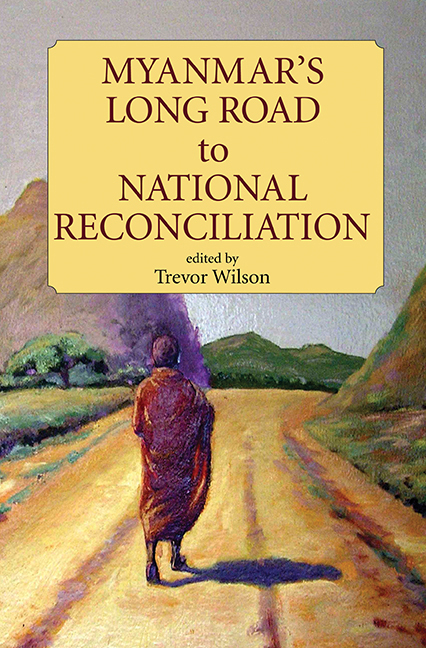
In late 2004, Myanmar's best known general and long-serving leader of the military regime, General Khin Nyunt, was suddenly dismissed. This shock development, perpetrated by a regime that has defied all predictions of its demise and disintegration, generated widespread uncertainty both inside and outside the country. Official reassurances about continuing the 2003 "Road Map" process left many questions about the path ahead unanswered. Would political dialogue with opposition groups be resumed? How would increasingly restive ethnic groups respond? Would nascent civil society groups be able to play a role in national reconciliation? How would the new leadership deal with the flagging economy? What are the prospects for the large but under-funded and highly regulated agricultural sector? This book addresses these issues.
Southeast Asian Affairs 2009 provides an informed and readable analysis of events and developments in the region in 2008. In the regional section of the volume, the first two articles give the political and economic overview of Southeast Asia, the third discusses the use of mediation as a means for conflict resolution, while the fourth examines regional cooperation in maritime security arena. Eleven country reviews as well as well as six special theme articles follow, covering political, economic, security and social developments in the various countries and their implications for the region.
In the past two decades, research on environmental issues in East and Southeast Asian countries has mainly focused on existing institutional mechanisms of environmental management, the establishment of new environmental management structures, the introduction of incentives to improve natural capital and foster environmental protection, and the culture of environmental or "green" groups. Virtually no rigorous research has been directed into the nature and significance of the existing relationship between government and civil society in individual country studies, with specific reference to the environmental policy sector, or into how this relationship may be evolving.This book explores this connection in Singapore, and what causes it to evolve, through three case narratives. Its rationale is to address this gap in the literature from a "governance theory" perspective that focuses on state adaptation to the external environment and new forms of coordination and collaboration between government and civil society to tackle new societal problems. The application of the "governance theory" approach to specific case studies is itself a topic that deserves much greater study than what it has so far received.
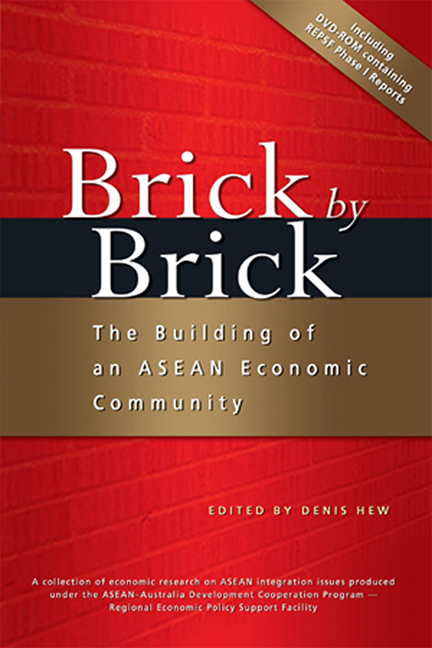
Against the backdrop of significant developments in regional economic cooperation and integration over the past decade, this book presents some of the key challenges facing ASEAN as it embarks on a bold and ambitious project to establish an ASEAN Economic Community by 2015. Organized under the auspices of the ASEAN-Australia Development Cooperation Program's Regional Economic Policy Support Facility, the book brings together authoritative studies written by prominent experts and academics on issues pertaining to ASEAN economic integration.
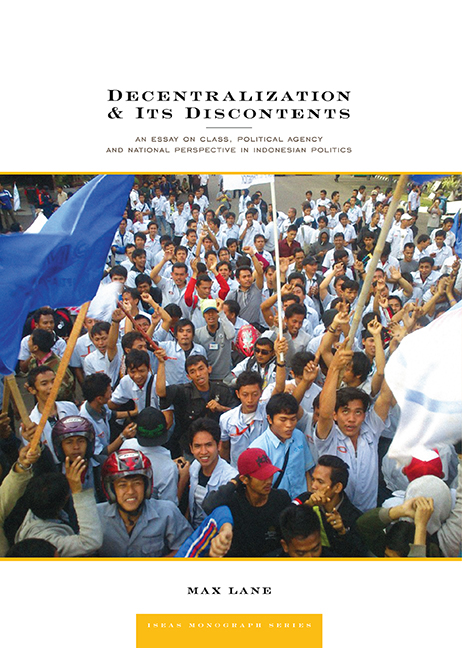
"Decentralization is a major trend in Indonesia since the first decades of that nation under Sukarno and Suharto. Max Lane is justly treasured for illuminating those first decades, for example, through his translations of Pramoedya Ananta Toer, and his excellent book, Unfinished Nation: Indonesia Before and After Suharto. Anyone who seeks insights into the current trend of decentralization, whether in Indonesia or other parts of the world, will find this work cogent."–James L. Peacock, Kenan Distinguished Professor, University of North Carolina at Chapel Hill"This book opens up the discussion on the history and political economy of the new populist policies that seem to gain momentum in the face of the Indonesian elections. It also addresses questions pertaining to the problems and options related to popular aspirations within this context-all of which cannot be explained very well by any of the predominant theses on Indonesia, whether as an oligarchy or a democratically liberal but economically predatory country."–Professor Olle Törnquist, University of Oslo
Throughout Malay-speaking Southeast Asia, the Malay pantun has long provided a medium for social intercourse between people of varied ethnic backgrounds. One of the most elaborate forms of pantun singing is Dondang Sayang. With a focus on Baba Chinese contributions, Like Tigers around a Piece of Meat traces the history of Dondang Sayang and analyses through texts from Singapore and Malacca how the poets achieve works of profound meaning.
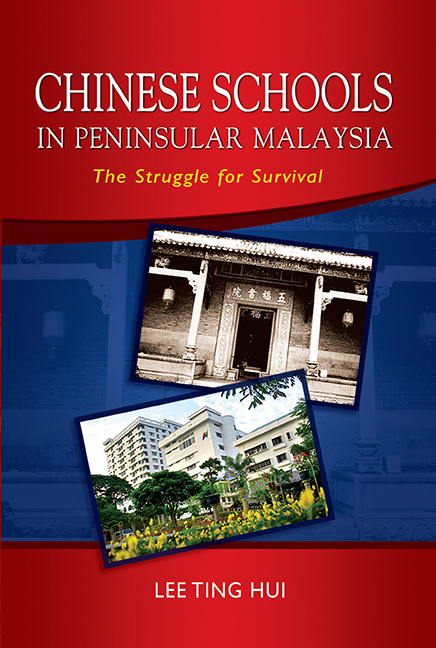
The history of modern Chinese schools in Peninsular Malaysia is a story of conflicts between Chinese domiciled there and different governments that happened or happen to rule the land. Before the days of the Pacific War, the British found the Chinese schools troublesome because of their pro-China political activities. They established measures to control them. When the Japanese ruled the Malay Peninsula, they closed down all the Chinese schools. After the Pacific War, for a decade, the British sought to convert the Chinese schools into English schools. The Chinese schools decoupled themselves from China and survived. A Malay-dominated government of independent Peninsular Malaysia allowed Chinese primary schools to continue, but finally changed many Chinese secondary schools into National Type Secondary Schools using Malay as the main medium of instruction. Those that remained independent, along with Chinese colleges, continued without government assistance. The Chinese community today continues to safeguard its educational institutions to ensure they survive.