To save content items to your account,
please confirm that you agree to abide by our usage policies.
If this is the first time you use this feature, you will be asked to authorise Cambridge Core to connect with your account.
Find out more about saving content to .
To save content items to your Kindle, first ensure no-reply@cambridge.org
is added to your Approved Personal Document E-mail List under your Personal Document Settings
on the Manage Your Content and Devices page of your Amazon account. Then enter the ‘name’ part
of your Kindle email address below.
Find out more about saving to your Kindle.
Note you can select to save to either the @free.kindle.com or @kindle.com variations.
‘@free.kindle.com’ emails are free but can only be saved to your device when it is connected to wi-fi.
‘@kindle.com’ emails can be delivered even when you are not connected to wi-fi, but note that service fees apply.
The case studies in this book focus on the emergence, extent and nature of national policies on ageing and associated strategies to address long-term care needs. Key opportunities for and constraints on policy are identified in this first round of regional studies, written by prominent researchers in Hong Kong, Korea, Malaysia, Singapore and Thailand, who are partners in the Ageing Research Network of the Asian Development Research Forum. The case-studies are set in the context of regional and international plans of action on ageing and the deliberations of the Second World Assembly on Ageing held in 2002.
Three decades of authoritarian rule in Indonesia came to a sudden end in 1998. The collapse of the Soeharto regime was accompanied by massive economic decline, widespread rioting, communal conflict, and fears that the nation was approaching the brink of disintegration. Although the fall of Soeharto opened the way towards democratization, conditions were by no means propitious for political reform. This book asks how political reform could proceed despite such unpromising circumstances. It examines electoral and constitutional reform, the decentralization of a highly centralized regime, the gradual but incomplete withdrawal of the military from its deep political involvement, the launching of an anti-corruption campaign, and the achievement of peace in two provinces that had been devastated by communal violence and regional rebellion.
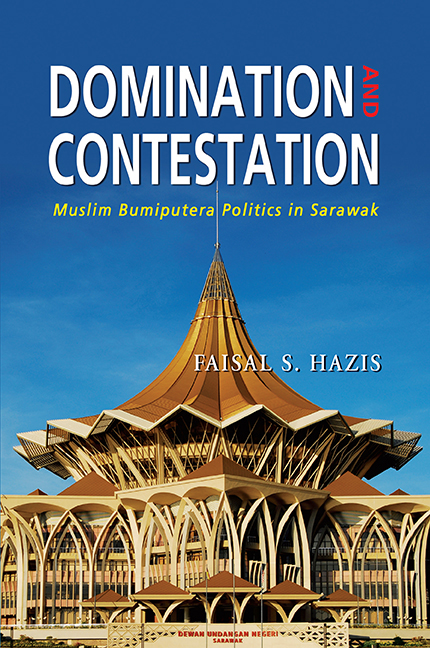
"This book makes an important contribution to understanding the ongoing political evolution of politics in Sarawak. It also provides a case study of the engagement of a dominant state with social forces in a multi-ethnic society."— Prof Harold Crouch, Emeritus Professor, Department of Political & Social Change, School of International, Political & Strategic Studies, Australian National University "Taking off from Joel Migdal's notions of 'the strongman-politician, 'strong society, weak state' and 'the state in society', the author discusses how the federal government accommodates Taib Mahmud's chief ministership over Sarawak, and how his long tenure is anchored in winning political support from the Sarawak Muslim Bumiputera community. An insightful book on contemporary Sarawak politics."—Prof Francis Loh Kok Wah, School of Social Sciences, Universiti Sains Malaysia"This volume will go a long way in explaining why a single Melanau family has been able to dominate Sarawak politics for the past four decades."—Prof James Chin, Head of School of Arts and Social Sciences, Monash University, Malaysia Campus
Launched in 1992, Regional Outlook is an annual publication of the Institute of Southeast Asian Studies, published every January. Designed for the busy executive, professional, diplomat, journalist, or interested observer, Regional Outlook aims to provide a succinct analysis of current political and economic trends shaping the region, and the outlook for the forthcoming two years. This forward-looking book contains focused political commentaries and economic forecasts on all ten countries in Southeast Asia, as well as a select number of topical pieces of significance to the region.
Sixty years after the end of World War II, the political and social fallout from the War is alive and divisive, as scholars in this volume show. One example is how former Japanese Prime Minister Junichiro Koizumi's visit to the Yasukuni Shrine prevented China, Japan and South Korea from sitting down together to talk about Northeast Asian integration, and wider Asian integration. Another example is the question of comfort women. Former Japanese Prime Minister Shinzo Abe's statement - that there is no evidence that Japan's government or army forced women to work in military brothels during the War - appeared to go back on a 1993 apology for the comfort women. How such issues of history are dealt with by countries of this region has an effect on contemporary relations among the major powers contending for leadership in East Asia.
"As we celebrate the 40th Anniversary of the ASEAN-Japan Dialogue Partnership, the essays in this book remind us, and amplify the ASEAN-Japan relations. The complexities of this relationship, including the external influences which have impinged on its development over the years, are cogently discussed and recorded for the younger generation and students of ASEAN-Japan ties. The intricacy and spread of ASEAN-Japan cooperation mechanisms are also well highlighted in this book, while several thought-provoking commentaries on the future of this four-decade old partnership give pause to the readers. Many of the challenges that exist in this relationship originated from domestic political dynamics in the ASEAN countries and Japan, as well as from the neighbouring states and key trading partners."Ambassador Ong Keng Yong, Former ASEAN Secretary General"The monograph on ASEAN-Japan relations is the intellectual highlight of the 40 years anniversary of ASEAN-Japan cooperation. ASEAN has become an indispensable partner and friend of Japan and its role as the hub of cooperation, development and stability in the region will without doubt become even more important after the establishment of the ASEAN Communities in 2015. The monograph containing contributions of the most renowned and respected experts on ASEAN provides us with enlightening overview, inspiration as well as guidance for our future common path. I would like to recommend this monograph to everybody interested in the further deepening of the ASEAN-Japan relations."Ambassador Yoshinori Katori, Ambassador of Japan to Indonesia,Former Ambassador in charge of ASEAN
"This two-volume set pulls together several interdisciplinary studies historicizing Portuguese 'legacies' across Asia over a period of approximately five centuries (ca. 1511-2011). It is especially recommended to readers interested in the broader aspects of the early European presence in Asia, and specifically on questions of politics, colonial administration, commerce, societal interaction, integration, identity, hybridity, religion and language."–Associate Professor Peter BorschbergDepartment of History, National University of Singapore
Launched in 1992, Regional Outlook is an annual publication of the Institute of Southeast Asian Studies, published every January. Designed for the busy executive, professional, diplomat, journalist, or interested observer, Regional Outlook aims to provide a succinct analysis of current political and economic trends shaping the region, and the outlook for the forthcoming two years. This forward-looking book contains focused political commentaries and economic forecasts on all ten countries in Southeast Asia, as well as a select number of topical pieces of significance to the region.
The creation of a national school of Islamic law in Indonesia has been on the legal agenda for the past fifty years. This book is a summary of what has been achieved. The material shows us a complex range of references for syariah. These include the formal structures of a "new fiqh", philosophies of law, transmissions of syariah through tertiary curricula and the Friday sermon in mosques, a bureaucratic form for conducting the Hajj, and contemporary debates on syariah values as expressions of public morality. Together these references indicate just how elusive the meaning of syariah has become in contemporary Indonesia.
This volume is the result of collaborative research between ASEAN and South Asian scholars and deals with economic relations between two important regions.
The grim state of the Myanmar economy in the second half of the 1980s forced the previous government of the Burma Socialist Programme Party to liberalize its external and internal trade. Since the military coup following political chaos in the later part of 1988, Japan, the European Community and the United States have suspended new economic aid to Myanmar. This has led to the present military government, the State Law and Order Restoration Council (SLORC), to work towards closer cooperation in diplomatic and trade relations with other Southeast Asian countries and to further liberalize its trade sector. This study explores and analyzes Myanmar's external trade and its trade relations with Southeast Asian nations, many of which are members of the Association of Southeast Asian nations (ASEAN), and raises issues and prospects of economic cooperation with neighbouring countries in the region, including the option for active participation in ASEAN.
The decision to establish the ASEAN Free Trade Area (AFTA) was initially met with widespread enthusiasm. Some of this enthusiasm has since dissipated as all countries except Singapore have voiced concerns regarding the ability of sensitive industries to compete in the new protection-free environment. Underlying these concerns is the view that the evolving pattern of trade will be more complementary, or that inter-industry of net trade will dominate intra-industry trade. This study employs a new methodology to analyse the dynamics of trade in the ASEAN countries as they approach the deadline of AFTA, with a view to identify likely adjustment costs associated with liberalizing their trade.
The third edition of this book presents a most comprehensive and up-to-date analysis of population trends and patterns in Singapore since its foundation in 1819 to the present day. Separate chapters are devoted to population growth and distribution, changing population structure, migration, mortality trends and differentials, marriage trends and patterns, divorce trends and patterns, fertility trends and differentials, family planning, abortion and sterilisation, fertility policies and programmes, immigration policies and programmes, labour force and future population trends. The strength of the book lies in the author's deep familiarity with the subject acquired through some personal involvement in the compilation of demographic statistics, as well as the formulation of population policies for the country.
This edited volume containing thirty-five chapters focuses on three main contemporary issues: the phenomenon of "new Indians" in the past five decades, the impact of rising India on settled Indian communities, and the recent migrants. By examining these interrelated aspects, this study seeks to address questions like: what does "Rising India" mean to Indian communities in East Asia? How are members of Indian communities responding to India's rise? Will India pay greater attention to people of Indian origin? And last but not least, will Indians in East Asia identify themselves with their ancestral land or view such identification as problematic?
More than a quarter of century after the end of the war in 1975, the Lao leadership is still in search for a compelling nationalist narration. Its politics of culture and representation appear to be caught between the rhetoric of preservation and the desire for modernity. Meanwhile, originating from the periphery where ethnic minorities had hitherto been symbolically, politically and administratively confined, the participation of some of their members in the Indochina Wars (1945-75) exposed these individuals to socialization and politicization processes.This rigorously researched and cogently argued book is a fine-grained analysis of substantial ethnographic material, showing the politics of identity, the geographies of memory and the power of narratives of some members of ethnic minority groups who fought during the Vietnam War in the Lao People's Liberation Army and/or were educated within the revolutionary administration. No study has ever been conducted on the latter's views on the national(ist) project of the late socialist era. Their own perceptions of their membership of the nation have been overlooked.Post-War Laos is a set to be a landmark study, and an original contribution which refines established theories of nationalism, such as Anderson's 'imagined community', by addressing a common weakness: namely, their tendency to deny agency to individuals, who in fact interpret their relationship to, and place within, the nation in a variety of ways that may change according to time and circumstance.
Energy is a very basic need for the economy and also for civilization. Nothing moves and no machine operates without an energy source, whether it is manpower, animal power, natural (wind, water, solar) or fossil fuels (oil, coal, gas, bio-mass) or scientific/technological (nuclear, ion-drive, fusion). When an adversary cuts off energy supplies, this is clearly a hostile act, and is recognized as such. Thus strategists understood why Imperial Japan reacted in military terms to the U.S. action in imposing an oil embargo on Tokyo. This is also the reason why India and China today are concerned about the security of energy supplies, needed for their booming economies. Energy security has thus moved to the top of the international and national agendas. It is therefore very timely that ISEAS and three government agencies have cooperated to organize and launch the Singapore Energy Conference (SEC).This Summary Report of the Inaugural SEC, held on 8 and 9 November 2006, serves to briefly record the main points of the various presentations and discussions by several energy experts on important energy issues and trends. It signals the commitment by the Government of Singapore to raise awareness and understanding of energy issues amongst policy-makers and others who need to know and understand such issues.
Admiral Zheng He and Southeast Asia commemorates the 600th anniversary of Admiral Zheng He's maiden voyage to Southeast Asia and beyond. The book is jointly issued by the Institute of Southeast Asian Studies, Singapore and the International Zheng He Society. To reflect Asian views on the subject matter, nine articles written by Asian scholars - Chung Chee Kit, Hsu Yun-Tsiao, Leo Suryadinata, Tan Ta Sen, Tan Yeok Seong, Wang Gungwu, and Johannes Widodo - have been reproduced in this volume. Originally published from 1964 to 2005, the articles are grouped into three clusters. The first cluster of three articles examines the relationship of the Ming court, especially during the Zheng He expeditions, with Southeast Asia in general and the Malacca empire in particular. The next cluster looks at the socio-cultural impact of the Zheng He expeditions on some Southeast Asian countries, with special reference to the role played by Zheng He in the Islamization of Indonesia (Java) and the urban architecture of the region. The last three articles deal with the route of the Zheng He expeditions and the location of the places that were visited.
In this highly personal account, the author, Chao Tzang Yawnghwe, a son of the first President of the Union of Burma, tells of his youth and involvement in the Shan resistance movement. He gives his version of Shan history and explains the complexity of Shan politics covering the issues of autonomy, Shan-Burmese relations, opium, and other contraband trade. He discusses the personalities involved in the war that is now more than twenty years old. The final part of this book is a compendium of who's who in Shan history and politics. The author passed away in July 2004.
Free Trade Agreements (FTAs) are often considered as one of the building blocks for regional economic integration. They specify a set of rules or standards that govern trade among the members who are signatories to these agreements. However, by definition, FTAs tend to be discriminatory and are often considered to be hindering rather than facilitating the goal of achieving global free trade. In the context of Southeast Asia, consumers and businesses must understand in what way a bilateral FTA might affect them, given that this is hitherto an unknown trend to most of the region.This book attempts to create a conceptual understanding on the features and benefits of FTAs proliferating in Southeast Asia. It focuses on the debate of whether such FTAs are a building or stumbling block towards achieving global free trade. The book details the concluded as well as ongoing FTA initiatives of Singapore, highlighting the benefits to the Singapore economy. It further details the other ongoing ASEAN-wide FTA initiatives, both at the bilateral and regional levels, and analyses their implications for the economies of Southeast Asia. The book observes that it is important to understand the exact nature of the gains from trade when entering into such agreements, given their wide scope and diverse nature.This is the first book in the ISEAS Southeast Asia Background Series.
How can a developing, democratic and predominantly Muslim country like Indonesia manage its foreign relations, while facing a myriad of security concerns and dilemmas in the increasingly complex post-Cold War international politics, without compromising its national interests and sacrificing its independence? Approaching this problem from the vantage point of the Indonesian foreign policy elite, this book explores the elite's perceptions about other states and the manner in which these shape the decision-making process and determine policy outcomes. The combined qualitative and quantitative research strategy draws on a unique series of in-depth interviews with 45 members of the Indonesian foreign policy elite that included the country's (present and/or former) presidents, cabinet ministers, high-ranking military officers, and senior diplomats. Among all state actors, Indonesian relations with the United States and China are the highest concern of the elite. The leaders believe that, in the future, Indonesia will increasingly have to manoeuvre between the two rival powers. While the United States during George W. Bush's presidency was seen as the main security threat to Indonesia, China is considered the main malign factor in the long run with power capabilities that need to be constrained and counter-balanced.