To save content items to your account,
please confirm that you agree to abide by our usage policies.
If this is the first time you use this feature, you will be asked to authorise Cambridge Core to connect with your account.
Find out more about saving content to .
To save content items to your Kindle, first ensure no-reply@cambridge.org
is added to your Approved Personal Document E-mail List under your Personal Document Settings
on the Manage Your Content and Devices page of your Amazon account. Then enter the ‘name’ part
of your Kindle email address below.
Find out more about saving to your Kindle.
Note you can select to save to either the @free.kindle.com or @kindle.com variations.
‘@free.kindle.com’ emails are free but can only be saved to your device when it is connected to wi-fi.
‘@kindle.com’ emails can be delivered even when you are not connected to wi-fi, but note that service fees apply.
To celebrate Anthony Reid's numerous and seminal contributions to the field of Southeast Asian history, a group of his colleagues and students has contributed essays for this Festschrift. In addition to introductory essays which provide personal and intellectual histories of Anthony Reid the man, there is a range of original scholarly contributions addressing historical issues which Reid has researched during his career. Divided into sections which examine Southeast Asia in the world, early modern Southeast Asia, and modern Southeast Asia, these works engage with issues ranging from the Age of Commerce and comparative Eurasian history, to nationalism, ethnic hybridity, Islam, technological change, and the Chinese and Arabs in Southeast Asia. The authors include some of the foremost historians of Southeast Asia in our generation.
In the 20 years since the Paris accords of 1991 brought peace to Cambodia, the country has undergone what can only be described as astounding change. From a polity where the entire fabric of society had been rent asunder through years of war and genocide, contemporary Cambodia is fast becoming a vibrant state and assuming a new position in the Asia-Pacific region. The contributions to this volume — many by prominent figures who were intimately connected with the process — describe the diverse strands of mediation and peace-building which went into the creation of the 1991 accords. The subsequent role of UNTAC and the 1993 general elections in the process of Cambodian revival and social rebuilding are also described. While not denying that obstacles and difficulties remain, the contributions outline the evolving economic, political, religious and human resource situations within Cambodia, while also examining the country's contemporary international relations. This book constitutes a particularly fitting testament to the 20 years of Cambodian reconstruction which have followed the 1991 peace accords.
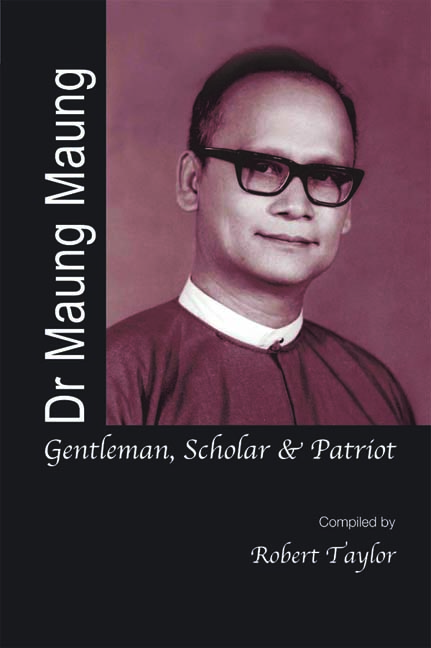
Dr Maung Maung (1925–94) was a man of many parts: scholar, soldier, nationalist, internationalist, parliamentarian, and public servant. His life spanned seven decades of political, economic and social turbulence in the country he loved and served, Myanmar. A pioneer amongst post-colonial journalists in Southeast Asia, he was equally at home in the libraries and seminars of universities in the United States, Europe and Australia during the Cold War. As a jurist, Dr Maung Maung knew the law must remain relevant to changing societal requirements. As an author, he wrote weighty scholarly tomes and light-hearted accounts spiced with his wry observations on human foibles. He was a keen observer of human strengths and weaknesses. A loyal friend, he never maligned his critics or denied their merits. As a man of affairs, he was capable of understanding the weaknesses of the institutions that he served and that ultimately failed to live up to their ideals. This book collects together a number of his now obscure but important historical and journalistic essays with a full bibliography of his works.
This book provides examples of possible triple-win solutions for simultaneously reducing poverty, raising the quality of the environment, and adapting to climate change. The book provides empirical evidence and observations from sixteen case studies in Southeast and East Asia, and from the Pacific. It argues that a spatial approach focussing on the environments in which the poor and vulnerable live, would trigger changes for development policies and implementation that better balance environmental and social concerns. In line with the post-2015 Millennium Development Goals (MDG) and Sustainable Development Goals (SDG) agenda, emphasizing integrated development approaches for the slum poor, the upland poor, the dryland poor, the coastal poor, and the flood-affected wetland poor, would also bring the environment and poverty agenda closer.The book emerged from a cooperation of the Asian Development Bank (ADB) with the Institute of Southeast Asian Studies (ISEAS) in partnership with experts from research institutes and think-tanks in the Asian region.
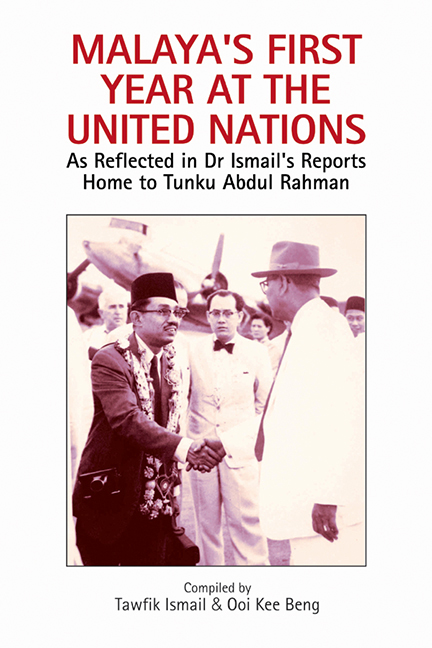
Dr Ismail's writings and speeches, and his letters to the Tunku, covering a variety of foreign policy issues, are a valuable asset in understanding the unique role he played in the nation's history. He was without doubt the primary architect of Malayan (Malaysian) Foreign Policy.– Tengku Tan Sri Dato' Seri Ahmad Rithauddeen, Former Foreign Minister of MalaysiaNot only was Dr Ismail Abdul Rahman Malaysia's first ambassador to the United States and permanent representative to the United Nations, he was also Foreign Affairs Minister in 1959-60. Later, as long-time Home Affairs Minister, Deputy Prime Minister and occasionally Acting Prime Minister, he played a decisive role in making neutrality the pillar of Malaysia's foreign policy.This important collection of notes he wrote to the Tunku in 1958 and of his speeches made in 1957-58 at the UN are being published for the very first time. It gives us a window into his seminal thinking and makes us understand the contribution he made to Malaysian nation-building in the early years. Tawfik Ismail and Ooi Kee Beng deserve kudos for compiling these into one volume and for providing elaborate footnoting that presents the reader with an intriguing picture of the Cold War year of 1958. The book is a "must read" for the diplomatic corps and Malaysian foreign policy analysts.– Johan Saravanamuttu, Former political science Professor and Dean, Science University Malaysia (USM)
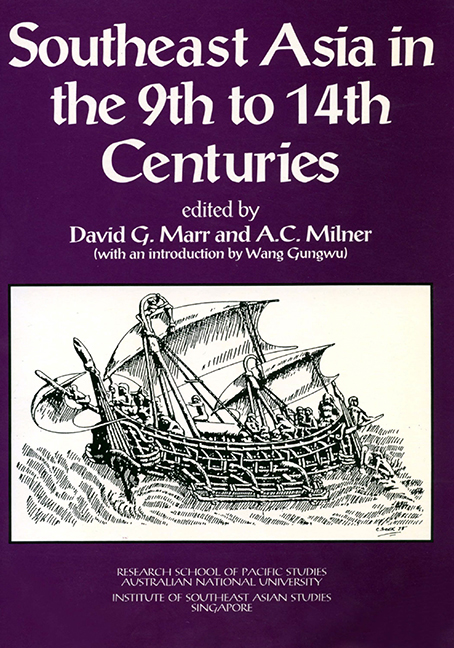
Southeast Asia has sometimes been portrayed as a static place. In the ninth to fourteenth centuries, however, the region experienced extensive trade, bitter wars, kingdoms rising and falling, ethnic groups on the move, the construction of impressive monuments and debate about profound religious issues. Readers of this volume will learn much of how people lived in Southeast Asia five hundred to one thousand years ago; the region today cannot be comprehended without reference to the seminal developments of that period.
The theme of this volume on Vietnam is 'creating a sound investment climate'. Vietnam embarked on doi moi or 'renovation' of its economy in 1986. Since then, its economy has made a dramatic turnaround, achieving a low-inflation sustained growth for most of the 1990s. However, even at the current high rates of growth, it will still take Vietnam some 15 years to reach the standard of living that Indonesia currently enjoys. Furthermore, decades of sustained growth will require higher rates of investment than in the past, as excess capacity created under central planning is being utilised. A sound investment climate is essential for the fulfilment of Vietnam's ambitions to catch up with other rapidly growing countries in the Asia-Pacific region. An understanding of how to achieve such a climate in Vietnam is essential to an assessment of the country's prospects now and into the 21st century.
This paper highlights the operation of ASEAN PTA, and identifies issues which could be of relevance to SAARC that has yet to incorporate trade cooperation in its sphere of activities.
Competitiveness of a country requires continuous upgrading and, sometimes, major transformation. Thailand is at the crossroad. It can no longer pursue a strategy based on low-cost advantages, but its capability achievements are still too low to become an advanced economy. This book points out weaknesses of Thailand's national innovation system or education and suggests how the country should develop new capabilities to survive and prosper in the globalized and fiercely competitive world. It will be useful to researchers and students who want to learn more about Thailand and emerging countries, and also to policy-makers and executives involved in economic and industrial development.
As the forces of globalisation and modernisation buffet Islam and other world religions, Indonesia's 200 million Muslims are expressing their faith in ever more complex ways. Celebrity television preachers, internet fatwa services, mass religious rallies in soccer stadiums, glossy jihadist magazines, Islamic medical treatments, alms giving via mobile phone and electronic sharia banking services are just some of the manifestations of a more consumer-oriented approach to Islam which interact with and sometimes replace other, more traditional expressions of the faith.This book examines some of the myriad ways in which Islam is being expressed in contemporary Indonesian life and politics. Authored by leading authorities on Indonesian Islam, it gives fascinating insights into such topics as the marketisation of Islam, contemporary pilgrimage, the rise of mass preachers, gender and Islamic politics, online fatwa, current trends among Islamist vigilante and criminal groups, and recent developments in Islamic banking and microfinance.
Today it is recognized the world over, and especially in Asia that education has not only a social and moral function but it is also an economic necessity. The education system generaly provides limited access to the rural poor and other disadvantaged groups, and to a certain extent contributes to inequalities in society. How does one provide wider access to education to the rural poor, to working adults, to women at home and to disadvantaged groups?
Based on a decade of research in Indonesia, this book provides an in-depth account of the military's struggle to adapt to the new democratic system after the downfall of Suharto's authoritarian regime in 1998. Unlike other studies of the Indonesian armed forces, which focus exclusively on internal military developments, Mietzner's study emphasizes the importance of conflicts among civilians in determining the extent of military involvement in political affairs. Analysing disputes between Indonesia's main Muslim groups, Mietzner argues that their intense rivalry between 1998 and 2004 allowed the military to extend its engagement in politics and protect its institutional interests. The stabilization of the civilian polity after 2004, in contrast, has led to an increasing marginalization of the armed forces from the power centre. Drawing broader conclusions from these events for Indonesia's ongoing process of democratic consolidation, the book shows that the future role of the armed forces in politics will largely depend on the ability of civilian leaders to maintain functioning democratic institutions and procedures.
China has long claimed the ownership of a network of widely-scattered islands and their surrounding waters and resources in the South China Sea. These claims overlap in a substantial way with those of at least three ASEAN countries: Vietnam, the Philippines and Malaysia. To this day, the South China Sea has remained one of the region's most dangerous 'flashpoints'. Despite regional efforts to calm the situation, the complicated nature of the issue continues to challenge regional security. The ASEAN Studies Centre has taken this initiative to host a discussion on "Energy and Geopolitics in South China Sea", with contributions from Michael Richardson and a number of experts in this area to put across their analytical views of the issue.
In this book, Jiro Okamoto explores the development of Australia's foreign economic policy towards ASEAN. He examines in detail decisive factors such as changes in the international and regional environment and the replacement of a dominant policy coalition with another in Australia's domestic policy process. His analysis shows that the shifts in Australia's ASEAN policy have not only closely reflected changes in Australia's overall foreign economic policy orientation, but that Australia's ASEAN policy strongly drove the change at key junctures. His work also offers important insights into the prospect of an "inclusive" economic integration process in East Asia. Although Australia's foreign economic policy has been an important element in regional economic cooperation, its inclusion in the East Asian integration process still remains ambiguous.
This is a ground-breaking history of the Rani of Jhansi Regiment, part of the Indian National Army led by Bengali revolutionary Subhas Chandra Bose during World War II. The Regiment, a hitherto forgotten part of "the Forgotten Army", was composed largely of teenage volunteers from Malayan rubber estates, girls who had never seen India yet were eager to enlist to liberate India from colonial bondage. Bose, creator of the Regiment, connected a historical thread extending from the original Rani of Jhansi, killed in battle by the British in 1858, through Bengali women revolutionaries of the 1930s, to the Regiment, which he hoped would spearhead the liberation of India. The Rani of Jhansi Regiment provides a model of empowerment relevant for contemporary Indian women.
This study focuses on married couples' decision concerning the timing of their first child and attempts to identify the relevant factors involved in such a decision. The first section gives background on the situation in Singapore while the second reviews findings of other studies concerning parenthood decisions, their causes, and consequences. The third section discusses the aspects of modernity and traditionalism that are found to be related to the choice of delayed motherhood. The concluding section summarizes the main findings and their implications.
Connecting and "distancing" have been two prominent themes permeating the writings on the historical and contemporary developments of the relationship between Southeast Asia and China. As neighbours, the nation-states in Southeast Asia and the giant political entity in the north communicated with each other through a variety of diplomatic overtures, political agitations, and cultural nuances. In the last two decades with the rise of China as an economic powerhouse in the region, Southeast Asia’s need to connect with China has become more urgent and necessary as it attempts to reap the benefit from the successful economic modernization in China. At the same time, however, there were feelings of ambivalence, hesitation and even suspicions on the part of the Southeast Asian states vis-a-vis the rise of a political power which is so less understood or misunderstood. The contributors of this volume are authors of various disciplinary backgrounds: history, political science, economics and sociology. They provide a spectrum of perspectives by which the readers can view Sino-Southeast Asia relations.
The chapters in this book are an assembly of commentaries by a distinguished team of specialists on the social impact of the Singapore Women's Charter on women and men. The Women's Charter is the main legislation protecting women's rights in the context of the family in Singapore. Highlights of this book include the reasons for the significance of legislation to protect women's rights in marriage; how the legislation came about; case studies from Southeast Asia; how the Singapore Women's Charter evolved and became established; how the Charter goes beyond protecting women's rights by reinforcing men's and women's obligations and duties in a marital partnership; how the Charter has come to be perceived by men and women especially in its enforcement in the context of divorce; and the social repercussions of the Charter on the family in its application.There has been ongoing discussion on the implications of the Charter on the lives of Singaporean women and men for some years since its implementation. The purpose of this book is to enrich our understanding of this legislation further – its objectives, efficacy and shortfalls.
Southeast Asia and Bangladesh are at present global hot spots of pirate attacks on merchant vessels and fishing boats. This book explains why, and in what form, piracy still exists. It offers an integrated analysis of the root causes of piracy, linking declining fish stocks, organized crime networks, radical politically motivated groups, the use of flags of convenience, the lack of state control over national territory, and the activities of private security companies, and identifies their wider security implications.
The publication of this book, comprising chapters written by distinguished scholars, is a timely recognition that these days we are bombarded by suggestions that knowledge is power, that we are operating in a knowledge economy, and that the greatest driver for financial growth and national development is the knowledge industry. There are more sources of knowledge available to a wider range of the world's population than ever before. The Internet has made the dissemination of knowledge possible in ways not contemplated fifty years ago. National boundaries are crossed with consummate ease.Knowledge is not like other assets. It can be accessed rapidly and used by thousands, often millions, of people. This makes knowledge as an asset that generated much of the wealth in the early development of most nations. And different countries and regions need different strategies to support and promote the growth of their knowledge economies. These call for nationally and regionally-based approaches, and they entail new dynamics and challenges in wealth creation, legal regulation, national and social organization and the protection of environmental and natural resources.