To save content items to your account,
please confirm that you agree to abide by our usage policies.
If this is the first time you use this feature, you will be asked to authorise Cambridge Core to connect with your account.
Find out more about saving content to .
To save content items to your Kindle, first ensure no-reply@cambridge.org
is added to your Approved Personal Document E-mail List under your Personal Document Settings
on the Manage Your Content and Devices page of your Amazon account. Then enter the ‘name’ part
of your Kindle email address below.
Find out more about saving to your Kindle.
Note you can select to save to either the @free.kindle.com or @kindle.com variations.
‘@free.kindle.com’ emails are free but can only be saved to your device when it is connected to wi-fi.
‘@kindle.com’ emails can be delivered even when you are not connected to wi-fi, but note that service fees apply.
This compilation of biographical data on the military officers in the National Administrative Reform Assembly (1976–77), the National Legislative Assembly, and/or the Senate (1979 to the present) is meant to provide base-line data for further study of military intervention in Thai politics. It also provides the officers' social background, military rank and position at the time they were appointed to their political positions.
The first book on Ko-tai, a new theatre form. It gives a good factual account of the origins, setting, context, and the mechanics of the organization of Ko-tai theatre. Included are complete translations of comic skits, photographs, calendar of Ko-tai events in Penang, and a glossary.
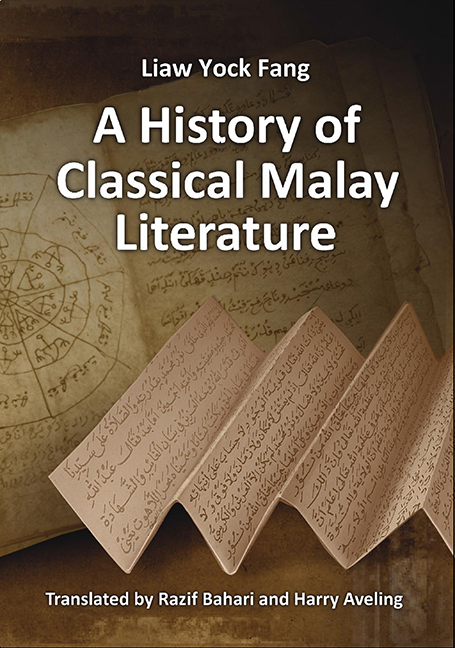
This is a detailed, narrative-based history of Classical Malay Literature.It covers a wide range of Malay texts, including folk literature; the influence of the Indian epics and shadow theatre literature; Panji tales; the transition from Hindu to Muslim literary models; Muslim literature; framed tales; theological literature; historical literature; legal codes; and the dominant forms of poetry, the pantun and syair.The author describes the background to each of these particular literary periods. He engages in depth with specific texts, their various manuscripts, and their contents. In so doing, he draws attention to the historical complexity of traditional Malay society, its worldviews, and its place within the wider framework of human experience.Dr Liaw's A History of Classical Malay Literature will be of benefit to beginning students of Malay Literature and to established scholars alike. It can also be read with benefit by those with a wider interest in Comparative Literature and in Southeast Asian culture in general.
What is being done to counter threats of maritime terrorism and how effective are the safeguards? The author presents evidence that Al-Qaeda aims to disrupt the seaborne trading system, the backbone of the model global economy, and would use a crude nuclear explosive device or radiological bomb to do so if it could obtain one and position it to go off in a port-city, shipping strait or waterway that plays a key role in international trade. Improving maritime trade is especially important for the US and Canada, member states of the EU, Australia and New Zealand and for China, Japan and South Korea, Thailand, Malaysia and other East Asian economies that have extensive direct seaborne trade. It is doubly vital for places like Singapore, Hong Kong and Rotterdam that are not only very large global seaports but also giant giant container transshipment hubs. This book discusses some major threats to seaborne trade and its land links in the global supply chain, their potential impact and the new security measures in place or pending for ships, ports and cargo containers, and recommendations for preventing or handling a catastrophic terrorist attack designed to disrupt world trade.
This study is a critical investigation into the category of tribes in South Asia. It breaks away from previous studies of tribes in the region. While it focuses on one so-called tribal community, the Garos of Bangladesh, it neither studies Garo culture as such, nor their social organization. Instead it deals with the evolution of Garo identity/ethnicity and with the progressive making of cultural characteristics that support a sense of "Garo-ness", in the context of the complex historical developments in this part of South Asia and the world.The importance of this work is not confined to a better understanding of how smaller ethnic groups form, survive or disappear in modern society. It also leads to a more comprehensive insight into how social life in the border region of South and Southeast Asia is organized and how it has transformed over time.This book will be of interest to historians, anthropologists, sociologists, political scientists, students, scholars of South and Southeast Asia and policy-makers.
This book is a product of the Expert Round-Table Discussion on the topic 'The Road to Ratification and Implementation of the ASEAN Charter' jointly organised by the ASEAN Studies Centre (ASC) of the Institute of SouthEast Asian Studies (ISEAS) and the Habibie Centre, on 17 July 2008 in Jakarta. The objective of the discussion was to illuminate the provisions of the ASEAN Charter and its strengths and weaknesses. Despite its evident merits, the signing of the ASEAN Charter has brought to prominence the sharp differences that have divided partisans and critics of ASEAN, as reflected by selected speakers who voiced their views on the subject. They, however, agreed that the Charter was imperfect in its current state and required clarification and further attention to detail. Even the more sceptical participants in the Round-Table discussion did not consider the Charter a complete failure but admitted that, if implemented well, it could be beneficial to the people of the ASEAN member states.
Islam is a major religion in Southeast Asia, with Indonesian Muslims comprising the largest Muslim population in the world. Events and developments since 11 September 2001 have added greater attention to Islam and its adherents in this part of the world.This general survey of Islam in Southeast Asia is intended to inform, explain and update readers about the more significant aspects of Islam in Southeast Asia, then and now. These include the following: the geographical origins and sources by which the faith spread in this region; the social, economic and political profiles of the Muslim communities; relations between Muslims and non-Muslims and between Muslims and the State; the strands and trends that shapes the role of Islam and the Muslims in the national body politic; and the challenges confronting Muslims in confronting the vicissitudes of their lives in this era of rapid change, characterized by modernization, capitalism, secularization and globalization.The discussion will begin with an overview of the broad picture of Islam and the Muslims in the region as a whole, covering both Muslim-majority and Muslim-minority countries. This will be followed by case-study analysis of Islam and the Muslims in individual countries: Indonesia, Malaysia, Brunei, Singapore, Thailand, Philippines, Myanmar, Vietnam, Cambodia and Laos.Given the difficulty of writing on such a complex and contentious topic, this book attempts to present the subject matter in a manner that is sufficiently objective to scholars and yet simple and accessible enough to be readily understood by ordinary readers.
This is the first book in English to examine local government and authority in Vietnam since the country's reunification in 1975. Beyond Hanoi addresses four questions: what local institutions and offices have authority to govern; who are the local officials and how do they get their positions; what do local governments do and whose interests do they serve; and what do residents say about local officials and governing institutions?Based on in-depth research, six chapters emphasize particular villages and districts in different parts of the country, one examines a ward in Hanoi, another focuses on Ho Chi Minh City, and one compares leaders in several provinces. To contextualize conditions today, two chapters analyse local government in Vietnam's long history. The opening chapter synthesizes the findings in this book with those in other studies by researchers inside and outside Vietnam.
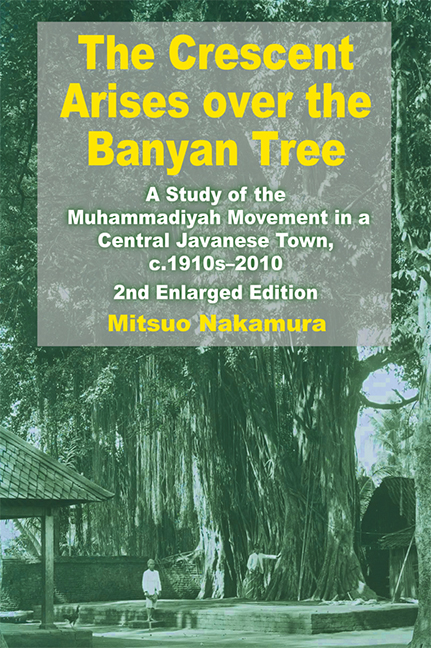
Part One of this book is based on ethnographic fieldwork conducted by the author during 1970_72 on a local branch of the Muhammadiyah in the town of Kotagede, a suburb of Yogyakarta, Indonesia. This work, first published in 1983, observed that the Muhammadiyah social and educational movement had reformed traditional Javanese Islam into a vital living faith and adapted Muslim life to modernity. The author was one of the first scholars who had noted that there was continuing Islamization in Indonesia and predicted its progress in the future.Part Two is based on the author's three decades of follow-up visits to the Kotagede from the 1970s to 2010. During this period, the Muhammadiyah movement made enormous advancements, enough to to make the town known as a "Muhammadiyah town". On the national level, the Muhammadiyah has grown to be the second largest Islamic civil society organization (after the traditionalist Nahdlatul Ulama) in Indonesia, with millions of members and supporters. Yet, the wider environment for it has been altered greatly by urbanization, diversification and globalization. It is also facing unprecedented challenges arising from calls for democratization in the post-Soeharto era. The longitudinal study in this volume depicts the most recent dynamics of the Muhammadiyah movement in a local as well as transhitoric context.
This paper is one in a series called 'Research Notes and Discussions', published at regular intervals by the Institute of Southeast Asian Studies. Each number represents either the summary of discussions or tentative results of ongoing research, circulated for the purpose of stimulating further thought on the issues concerned. Because of the nature and objective of this series, every effort is made to disseminate the material in a readable format as quickly and inexpensively to reach as many scholars and specialists as possible.
As part of a study on Japanese direct investment, this study covers four other countries of Indonesia, Malaysia, Singapore and Thailand, which together account for 95 per cent of the total flow of Japanese investment into ASEAN in the period 1985-87. This study has three main parts: a review of existing theoretical approaches to overseas investment and especially Japanese overseas investment; a study of supply side factors driving and shaping demand side factors within the ASEAN host countries.
The volume is divided into four parts. Part I considers the broad trends in the recent economic performances of the United States and the problem of increasing protectionism. Part II analyses the structural adjustments in both the United States and the developing countries in ASEAN. Part III provides analyses of U.S. ASEAN trade in services from both the U.S. and ASEAN perspectives.
Well over half of the world's Muslim population lives in Asia. Over the centuries a rich constellation of Muslim cultures developed there and the region is currently home to some of the most dynamic and important developments in contemporary Islam. Despite this, the internal dynamics of Muslim societies in Asia do not often receive commensurate attention in international Islamic Studies scholarship. This volume brings together the work of an interdisciplinary group of scholars discussing various aspects of the complex relationships between the Muslim communities of South and Southeast Asia. With their respective contributions covering points and patterns of interaction from the medieval to the contemporary periods, they attempt to map new trajectories for understanding the ways in which these two crucial areas have developed in relation to each other, as well as in the broader contexts of both world history and the current age of globalization.
Stable monetary systems form one of the pillars on which rapid economics development in Southeast Asia in recent decades has been based. The same was true in the past. Monetary stabilization became as important issue after 1870, when silver depreciated rapidly against gold and Western countries switched to the gold standard. Colonial Indonesia followed the Netherlands in this respect. On the ardent advice of N.P van den Berg, then president of the central bank, the Java Bank, it was the first Asian country to stabilize its currency against gold, in this case against the gold-based Dutch guilder. Van den Berg was a prominent proponent of monetary stabilization and was well known for his contributions to he dicussion about currency systems and monetary policy in the government of British India, which was at the time exploring ways to achieve stabilization of the rupee. Both the arguments and the wealth of data in the reprint of this very rare book will be of interest to historians of Southeast Asia.
In view of the 100th anniversary of the 1911 Revolution and Sun Yat-sen's relations with the Nanyang communities, the Institute of Southeast Asian Studies and the Chinese Heritage Centre came together to host a two-day bilingual conference on the three-way relationships between Sun Yat-sen, Nanyang and the 1911 Revolution in October 2010 in Singapore. This volume is a collection of papers in English presented at the conference. While there are extensive research and voluminous publications on Sun Yat-sen and the 1911 Revolution, it was felt that less had been done on the Southeast Asian connections. Thus this volume tries to chip in some original and at times provocative analysis on not only Sun Yat-sen and the 1911 Revolution but also contributions from selected Southeast Asian countries.
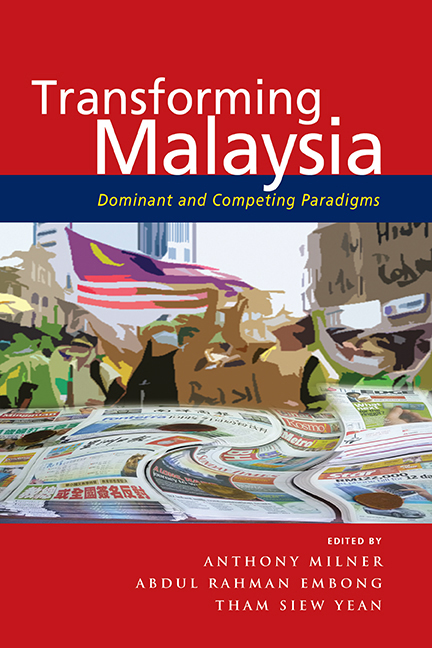
In the wake of Malaysia’s 13th General Election some commentators speak of a sharpening of ethnic politics — with Prime Minister Najib blaming a “Chinese tsunami” for his government’s polling setbacks; others are optimistic about the arrival of a new “non-racialized form of politics” and the emergence of “transethnic solidarity”. This book, which engages with both the race paradigm and its opponents, warns that change is likely to come slowly — but is not impossible. Malaysia’s race paradigm is a man-made ideological construct — one that has been contested in the past, and could realistically be contested in the future. In confronting the continuing challenge of globalization, Malaysians should not neglect the history of ideas — and ideology — as they search for new options.
David Marshall (1908-1995) was one of Singapore's most remarkable sons. The eldest son of migrant Sephardic Jews, Marshall's brilliant academic career at Raffles Institution was brought to an abrupt end when he collapsed from tuberculosis. Sent away to recuperate in Switzerland, Marshall not only learnt the French language but also imbibed the French ideals of Liberty, Equality and Fraternity and returned a strong opponent of colonialism. Qualifying as a barrister in half the normal time, he rose to become Singapore's greatest criminal and constitutional lawyer. In 1955, he unexpectedly found himself the leader of the Labour Front and Singapore's first Chief Minister. His fourteen tumultuous months in office led to the eventual withdrawal of the British from Singapore but his emotional personality and impatience made him an unlikely politician. In the twilight of his career, Marshall was appointed Singapore's first ambassador to France. This is the story of this extraordinary man who was, for many, Singapore's "missionary of democracy". Using previously unavailable sources, author Kevin Tan chronicles the remarkable life, times and achievements of the man many regarded as "Singapore's Conscience".
Security and economic imperatives are increasingly intertwining the destinies of Southeast Asia and South Asia, making it necessary for scholars on both sides to deepen their understanding of each other's regions. This collection of papers, first presented at a Dialogue between the Institute of Southeast Asian Studies in Singapore and the Observer Research Foundation of India in March 2006, provides perspectives from India and Singapore on some of the major security and political issues facing the two regions. The subjects covered include regional integration trends as symbolized by the first East Asian Summit, the roles of the major powers, maritime security and naval deployments in the Indian Ocean region, and political and security developments within Southeast Asia.
This book, a project of the ISEAS Malaysia Study Programme, documents the series of important events that have contributed to the warmer relations presently enjoyed by Singapore and Malaysia under Abdullah Badawi. The eight chapters cover background, solving bilateral ties, intensifying official visits, developing people-to-people contacts, deepening public sector economic ties, expanding private sector economic ties, renewing educational and sporting events, and uplifting future relations. Four useful appendices have also been included to provide the opinions of eminent persons on the current state of bilateral relations between the two close neighbours. In an era of rapid globalization and inter-dependence, the two countries have much to gain by maintaining harmonious relations and by strengthening economic cooperation to bring peace and prosperity to their people. The book provides readers, whether businessmen, analysts, politicians, students or policy-makers, with a greater appreciation of recent developments in the bilateral relationship that will have a profound impact on the future direction of the two countries.