To save content items to your account,
please confirm that you agree to abide by our usage policies.
If this is the first time you use this feature, you will be asked to authorise Cambridge Core to connect with your account.
Find out more about saving content to .
To save content items to your Kindle, first ensure no-reply@cambridge.org
is added to your Approved Personal Document E-mail List under your Personal Document Settings
on the Manage Your Content and Devices page of your Amazon account. Then enter the ‘name’ part
of your Kindle email address below.
Find out more about saving to your Kindle.
Note you can select to save to either the @free.kindle.com or @kindle.com variations.
‘@free.kindle.com’ emails are free but can only be saved to your device when it is connected to wi-fi.
‘@kindle.com’ emails can be delivered even when you are not connected to wi-fi, but note that service fees apply.
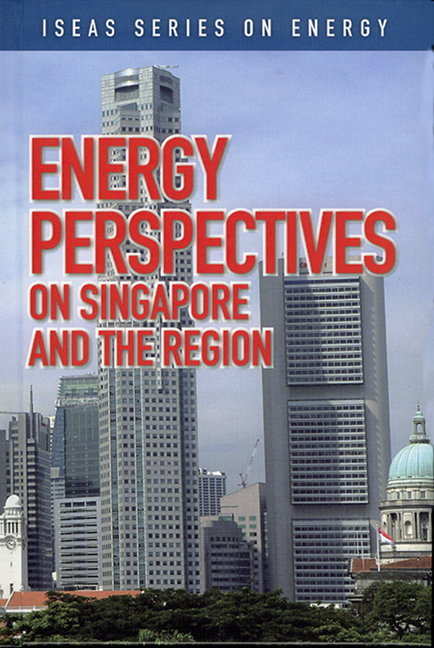
This book published by ISEAS contains selected papers based on some of the lectures delivered over 2005/2006 at the ISEAS Energy Forum. The aim is to educate the public on a whole range of energy issues and trends in Singapore, Southeast Asia and the wider region. It is a timely review of an important issue which is now on top of regional and international agendas. The papers are written by various experts, who provide detailed and extensive knowledge on a wide variety of energy issues. It is meant for the general reader who wishes to update and inform himself/herself.
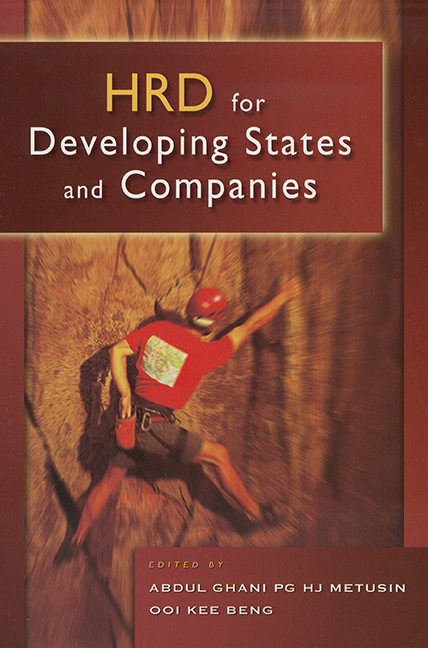
The competitive edge and creativity which globalization demands of corporations and states alike requires fresh management methods. There is growing awareness that unlocking human potential is a key to sustaining growth. However, hierarchical management structures, which reward adherence to outdated thinking and hamper creative and energetic citizens and employees, are still widespread in government and private sectors in Southeast Asia. The articles on Human Resource Development (HRD) in this volume span and link the concerns of states and business. The first section contains advice on HRD for government leaders and policymakers. The second considers HRD in the corporate sector, with analysis and advice on strategic HRD, developing competence, and corporate case studies. HRD for Developing States and Companies is intended to be an inspirational and practical guide for change and will be useful for statesmen, policymakers, businesspersons and students of management.
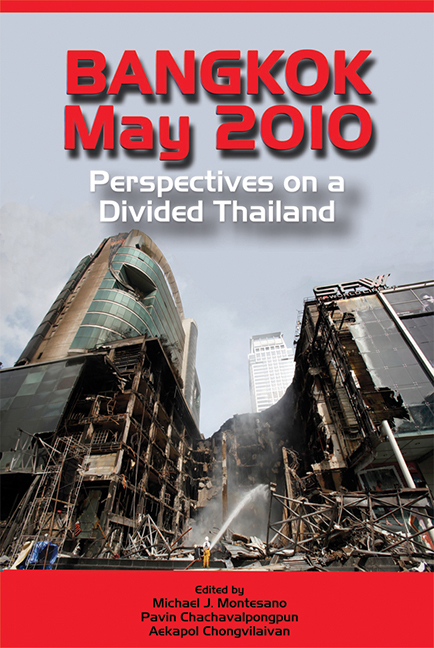
After a two-month stand-off between Red Shirt protestors and the government of Prime Minister Abhisit Vejjajiva, violence and arson scarred central Bangkok in mid-May 2010. This shocking turn of events underlined how poorly understood the deep divisions in the society and politics of Thailand remained, even five years into the country’s prolonged crisis. This volume collects analysis and commentary on those divisions from an unusually large and prominent group of Thai and foreign scholars and observers of the country. Contributions examine socio-economic, political, diplomatic, historical, cultural, and ideological issues with rare frankness, clarity, and lack of jargon.
This volume makes an important and unique contribution to scholarly understandings of migration and diversity through its focus on Asian contexts. Current scholarship and literature on processes of migration and the consequences of diversity is heavily concentrated on Western contexts and their concerns with "multiculturalism", "integration", "rights and responsibilities", "social cohesion", "social inclusion", and "cosmopolitanism". In contrast, there has been relatively little attention given to migration and growing diversity in Asian contexts which are constituted by highly distinct and varied histories, cultures, geographies, and political economies.This book fills this significant gap in the literature on migration studies with a concentrated focus on communities, cities and countries in the Asian region that are experiencing increased levels of population mobility and subsequent diversity. Not only does it offer analyses of the policies and processes of migration, it also addresses the outcomes and implications of migration and diversity – these include a focus on multiculturalism and citizenship in the Asian region, the emerging complex forms of governance in response to increased diversity, discussions of different settlement experiences, and the practices of everyday life and encounters in increasingly diverse locales.
This book is the first on the history of the marine fisheries of Southeast Asia. It takes as its central theme the movement of fisheries into new fishing grounds, particularly the diverse ecosystems that make up the seas of Southeast Asia. This process accelerated between the 1950s and 1970s in what the author calls 'the great fish race'. Catches soared as the population of the region grew, demand from Japan and North America for shrimps and tuna increased, and fishers adopted more efficient ways of locating, catching, and preserving fish. But the great fish race soon brought about the severe depletion of one fish population after another, while pollution and the destruction of mangroves and coral reefs degraded fish habitats. Today the relentless movement into new fishing grounds has come to an end, for there are no new fishing grounds to exploit. The frontier of fisheries has closed. The challenge now is to exploit the seas in ways that preserve the diversity of marine life while providing the people of the region with a source of food long into the future.
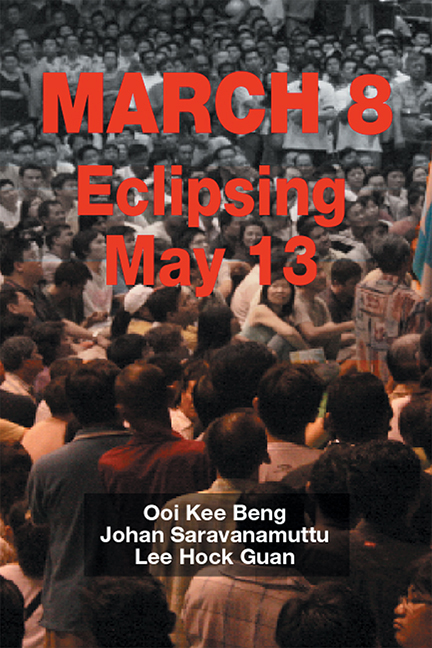
For a whole generation of Malaysians, no proper closure to the traumas of the racial riots of May 13, 1969 has been possible.But then came March 8, 2008The surprising results of the General Election on that special day have started eclipsing the fears linked for so long to that spectral night forty years ago.All the three researchers from ISEAS who each authored separate chapters for this book were in different parts of Malaysia monitoring its 12th General Election during the thirteen days of campaigning. Their analyses provide new insights into the phenomenon that Malaysians now simply refer to as "March 8".Ooi Kee Beng scrutinizes in detail the electoral campaign in the state of Penang, Johan Saravanamuttu studies the case of Kelantan state and the elections in general, while Lee Hock Guan examines changes in the voting pattern in the Klang Valley.
At a dialogue session organized by the New Zealand High Commission and the Asia-New Zealand Foundation, ten New Zealand experts gave their views on subjects as varied as New Zealand and Southeast Asia Defence Links and New Zealand-ASEAN Economic Relations. These views were matched by an equal number of researchers from ASEAN countries.The range of topics included ASEAN Integration and ASEAN-New Zealand Dialogue: Nature, Status, Characteristics and Future Possibilities; New Zealand-Singapore Relations; Business Opportunities for a Stronger Singapore-New Zealand Relationship; and Beca: A Case Study in Creativity and Connectivity for Sustainable Business Growth. The latter focused on the practical business and commercial connections.
This second volume on ASEAN-China Economic Relations focuses on macro-economic and institutional developments in China and in selected sectors in ASEAN and China, and their implications for bilateral economic relations.
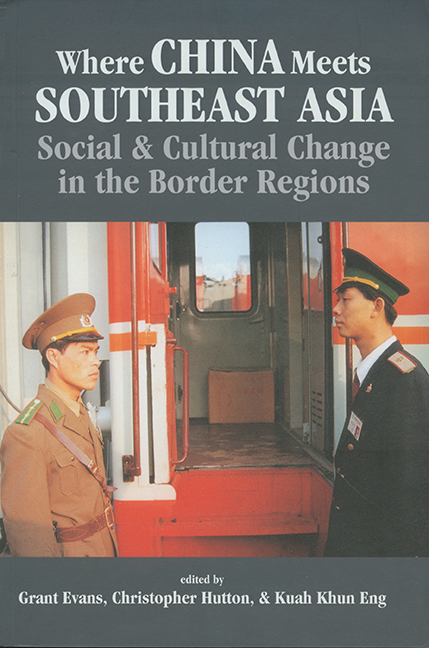
This book provides readers with the first survey of social conditions since the opening of the borders between China and mainland Southeast Asia in the early 1990s. There have been radical changes in the economic policies of the various states involved, in particular, China, Vietnam, and Laos. Each chapter provides a close-up survey of a particular area and problem, but cumulatively they provide an invaluable general picture of social and cultural change in the border regions where China meets Southeast Asia.
This study re-examines some of the issues, challenges and policy options facing the Singapore economy in the light of the 1985-86 recession. Particular attention is paid towards reappraising the role of the government as an entrepreneur in economic activity, in macro-economic management, in savings and investment, and in the labour market. This is done in the context of and alongside an assessment of Singapore's linkages with the global economy and its future comparative advantage in a dynamic international environment.
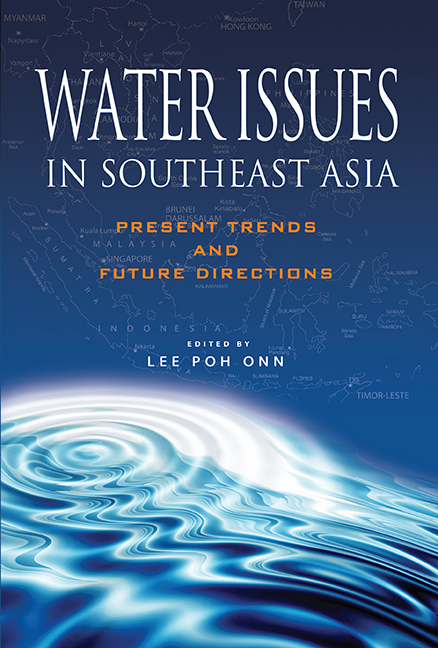
Water has been dubbed the "oil of the 21st century" because of its increasing global scarcity. In Southeast Asia, water resources have been strained by the greater demand from different sectors such as agriculture, industry and domestic users. This situation is only likely to worsen in the future if active measures are not taken now. Is there a standard framework that can be adopted to promote cooperation in the use of water among countries? Could clearer institutions in river basins provide the backdrop for a more effective water management strategy in Southeast Asia? Does private sector involvement or privatization resolve some of the "public good" woes of water management? How does a sense of security and ownership enhance sustainability measures in a country? How have civil groups been able to promote effective water management in a country? How have water shortages been overcome in a predominantly urban city state? How have water pollution problems been resolved? Is there a potential for water conflicts in the years to come? What are some of the issues involved in sustainable watershed management?This publication draws from regional and country studies of the Mekong Basin, Malaysia, Indonesia, Singapore, Thailand and the Philippines to understand the political and socio-economic dynamics involved in water management. It is a must read for anyone interested in water management issues in the region, understanding the past and present and also looking to future trends.
Launched in 1992, Regional Outlook is an annual publication of the Institute of Southeast Asian Studies, published every January. Designed for the busy executive, professional, diplomat, journalist, or interested observer, Regional Outlook aims to provide a succinct analysis of current political and economic trends shaping the region, and the outlook for the forthcoming two years. This forward-looking book contains focused political commentaries and economic forecasts on all ten countries in Southeast Asia, as well as a select number of topical pieces of significance to the region.
Most earlier works have long held that Penang's hey-day finished when Singapore emerged in 1819 at the tip of the Malay Peninsula. This new British colony was strategically situated and able to attract commerce and investment from both the region and the world. Thereafter, Penang was of no real importance, as the rise of Singapore necessarily reduced it to nothing but a local commercial centre. However, this chapter reveals that Penang continued as a flourishing regional hub for the whole of the nineteenth century, and was in some respects even more important than Singapore. It then goes on to discuss the operations of the leading Hokkien merchants, the Big Five, considering their various economic activities from shipping through to entrepot trade, commodity production, opium farming, to coolie trade, and how the Big Five dominated all these economic activities.
The Continuing Prosperity of Penang
The foundation of Penang by the British in 1786 was mainly due to strategic and commercial interests. A series of events in the early 1780s — the active presence of French naval forces in Indian Ocean and their intention to secure the tin trade of the Tenasserim coast during the early 1780s, the closure of Dutch East Indies ports to British ships during 1782–83, and the Dutch conquest of Riau in 1784 — had made the British (East India Company) greatly aware of the dangerous stranglehold two hostile European powers had on their mercantile interests in Southeast Asia. This exigency prompted the British to establish a base in Penang, an island off the west coast of Kedah. Situated at the northern end of the Melaka Straits and on the periphery of the archipelago, Penang was in close proximity to some old trading ports. Aceh in northern Sumatra was nearby in the west, while Kedah and Perak in the western Malay states flanked the east of the island. To the north, it was open to Rangoon and Mergui in southern Burma and Phuket of southwestern Siam, Selangor and Melaka lay to the south. Penang, in the middle of this matrix of ports, developed rapidly as an entrepot. If Penang suffered a decline in trade when Singapore was established in 1819, it quickly rose as a centre of regional trade in the 1820s (Raman 1969/70, pp. 29–30; Freeman 2003, p. 139).
The secret of how the Big Five could assert their dominance in the Penang region lies in the multiple alliances between them and other prominent families. However, different from the conventional beliefs that Chinese family networks were as closed as they could be, cross-dialect and crossethnic alliances played a major role in the Big Five's business partnerships. Yet this cluster of five families was able to form all these alliances and attain their economic predominance in the face of the fluid and plural socio-economic environment of the region. This chapter explores how and why this situation came about.
The family network of the Big Five, which was composed of a web of kinship ties based on extended consanguineal lineages and strategic intermarriages, inextricably bound the five families together and while also connecting them to other prominent Hokkien and Hakka families. Further a field, Indo-Malay families in Penang, Kedah, Perak and North Sumatra as well as Siamese and Chinese families in southern Siam and southern Burma were all woven into the net of marriage alliance. Extensive criss-crossing of kinship ties clearly served as an important foundation for the forging of inter-family and inter-ethnic alliances and partnerships between business families in the promising, yet potentially hostile and insecure, environment of competing colonial and indigenous powers. Through this web of kinship ties the Big Five families were able to establish their business concerns in Penang and the surrounding states.
Clan association in Penang is more popularly known as kongsiand here it refers to an autonomous organization of shared interests based upon blood ties and geographical affinity among its members. Each of the Big Five was grouped within and represented by its own kongsi: the Seh Khoo Kongsi, the Seh Cheah Kongsi, the Seh Yeoh Kongsi, the Seh Lim Kongsi, and the Seh Tan Kongsi (Yen 1995, pp. 81–86). Both Cheah Kongsi and Tan Kongsi were established in 1810; it was then followed by the Yeoh in 1834, the Khoo in 1835, the Tan in 1851, and the Lim in 1863. With such groupings each of the five families was able to develop extended consanguineal lineages which in turn led to the formation of a substantial agnatic or blood-related kinship group.