To save content items to your account,
please confirm that you agree to abide by our usage policies.
If this is the first time you use this feature, you will be asked to authorise Cambridge Core to connect with your account.
Find out more about saving content to .
To save content items to your Kindle, first ensure no-reply@cambridge.org
is added to your Approved Personal Document E-mail List under your Personal Document Settings
on the Manage Your Content and Devices page of your Amazon account. Then enter the ‘name’ part
of your Kindle email address below.
Find out more about saving to your Kindle.
Note you can select to save to either the @free.kindle.com or @kindle.com variations.
‘@free.kindle.com’ emails are free but can only be saved to your device when it is connected to wi-fi.
‘@kindle.com’ emails can be delivered even when you are not connected to wi-fi, but note that service fees apply.
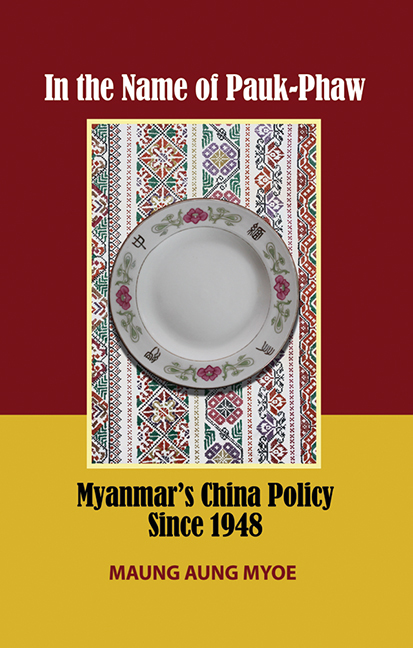
Since its independence in January 1948, Myanmar has tried to find a way to deal with (at one time) ideologically hostile and traditionally chauvinistic China which has pursued a foreign policy aimed at restoring its perceived influence in Myanmar. To counter China's attempts to influence Myanmar's foreign policy options has always been a challenge for the Myanmar government. Since the 1950s, successive Myanmar governments have realized that Myanmar's bilateral relations with the People's Republic of China should best be conducted in the context of promoting the Five Principles of Peaceful Coexistence, the Bandung spirit and the Pauk-Phaw (kinsfolk) friendship. The term Pauk-Phaw is exclusively devoted to denote the special nature of the Sino-Myanmar relationship. This work argues that Myanmar's relationship with China is asymmetric but Myanmar skilfully plays the "China Card" and it enjoys considerable space in its conduct of foreign relations. So long as both sides fulfill the obligations that come under "Pauk-Phaw" friendship, the relationship will remain smooth. Myanmar has constantly repositioned her relations with China to her best advantage. Myanmar's China policy has always been placed somewhere in between balancing and bandwagoning, and the juxtaposition of accommodating China's regional strategic interests and resisting Chinese influence and interference in Myanmar's internal affairs has been a hallmark of Myanmar's China policy. This is likely to remain unchanged.
Situated in a remote area long a historical buffer zone between competing political entities, the Sulu Arms Market is an illicit market of a typical form in that it is both a source and a destination for less-than-legal guns. What makes the Sulu market unique is its longevity which is measured in centuries. In modern times, guns from the area supply conflicts and crime from Japan to Sri Lanka to Papua New Guinea and beyond; and in turn the world pours guns and ammunition into Mindanao, the Maluku (Molucca) Islands, and to a lesser extent, Malaysia and the rest of the Philippines. Like most black arms pipelines, the Sulu Arms Market is intertwined with piracy, terrorism, and the traffic of other illicit commodities. Criminal gangs, communists, Moro independence groups, and Islamic militants are all major players in the market, making it a security problem for at least five member states of the Association of Southeast Asian Nations (ASEAN).
It is now apparent, especially in the aftermath of the regional financial crisis of 1997, that globalization has been impacting upon the Southeast Asian economies and societies in new and harrowing ways, a theme of many recent studies. Inadvertently, these studies of globalization have also highlighted that the 1980s and 1990s debate on democratization in the region _ which focused on the emergence of the middle classes, the roles of new social movements, NGOs and the changing relations between state and civil society _ might have been overly one-dimensional. This volume revisits the theme of democratization via the lenses of globalization, understood economically, politically and culturally. Although globalization increasingly frames the processes of democracy and development, nonetheless, the governments and peoples of Southeast Asia have been able to determine the pace and character _ even the direction of these processes _ to a considerable extent. This collection of essays (by some distinguished senior scholars and other equally perceptive younger ones) focuses on this globalization_democratization nexus and shows, empirically and analytically, how governance is being restructured and democracy sometimes deepened in this new global era. A historical review introduces the volume while an analytical assessment of the ten case-studies concludes it.
Founded in 1974, Southeast Asian Affairs provides, without fear or favour, informed and in-depth annual analyses of this vibrant region and its component countries. It is the only publication which does this and is in its own class without peers. It is a mandatory reference and read for those seriously interested in knowing Southeast Asia.–Professor A.B. Shamsul, Founding Director, Institute of Ethnic Studies, Universiti Bebangsaan Malaysia."Now in its 39th edition, Southeast Asian Affairs offers an indispensable guide to this fascinating region. Lively, analytical, authoritative, and accessible, there is nothing comparable in quality or range to this series. It is a must read for academics, government officials, the business community, the media and anybody with an interest in contemporary Southeast Asia. Drawing on its unparalleled network of researchers and commentators, ISEAS is to be congratulated for producing this major contribution to our understanding of this diverse and fast-changing region, to a consistently high standard and in a timely manner."–Hal Hill, H.W. Arndt Professor of Southeast Asian Economies, Australian National University
The ASEAN Economic Community (AEC) constitutes the most ambitious programme of economic cooperation in the developing world. Its goal is to create no less than a free flow of goods, services, foreign direct investment, and skilled labour, as well as a freer flow of capital, throughout the region. Implementing this agenda will be technically and politically difficult. Hence, understanding the potential economic "payoff" is of the essence. The goal of this book is to assess empirically the likely economic effects of the AEC on the ASEAN Member States and associated stakeholders. It mobilizes a number of techniques to do so, and finds that the likely effects will be large, even greater than the anticipated effects of the Single Market Program in Europe, for example. The AEC will help the region improve competitiveness, facilitate the creation of production networks, foster the diffusion of 'best practices', and help ASEAN project its interests more effectively in an increasingly integrated, global economy.
This book is an innovative analysis of regime maintenance and transformation in Malaysia. It goes beyond familiar approaches centred on communal politics, or the corporate workings of Malaysia Inc., to stress the importance of power maintenance -- tracing a path from consociational bargaining, to authoritarian UMNO dominance, to Dr Mahathir's personal dominance.
This book is a study of the political development of the Malaysian state of Sabah under the administration of Parti Bersatu Rakyat Jelata Sabah (Berjaya – Sabah People's United Party), which controlled the state legislature between 1976 and 1985. It attempts to disentangle the three dominant themes within social scientific studies of Sabah: the issues of federalism, the politics of ethnicity, and the political economy of development. The book argues that the emergence of a developmental discourse under the Berjaya regime in Sabah can largely be traced to its failure to reconcile the localized ethnic politics of Sabah with the demands of a strong central state and thus the need to find an alternative strategy of political support and control. While this strategy proved effective when developmental growth was high during the first Berjaya administration (1976–81), the relative collapse of the state economy from 1982 onwards exposed its ethnic predilections and prefigured declining support for the regime, particularly among the non-Muslim bumiputera groups. Despite the consolidation of federal support for Berjaya under the Mahathir administration, the unravelling of the Berjaya project was by this stage unstoppable. In the final analysis, the attempt to create a more compliant state administration under Berjaya came undone precisely because it failed to take into account the localized dimension of politics in Sabah.
This book focuses on constitutional reform in Indonesia (1999–2002) from the perspective of shari'a. Since the end of Soeharto's New Order government in 1998, Indonesia, the largest Muslim country in the world, has amended the 1945 Constitution four times. Soeharto's departure also opened the way for several Muslim groups and political parties to propose the introduction of shari'a into the Constitution. This book poses the crucial question implicit in the amendments to the 1945 Constitution: can shari'a and democratic constitutionalism be fused without compromising on human rights, the rule of law, and religious liberty? The contributions of Islamic political parties in Indonesia to the process and the outcome of the amendments, by adopting a substantive shari'a approach, reflect the ability to deal with a modern Constitution without abandoning the principles and the objectives of shari'a. The study reveals one possible picture of how Islam and constitutionalism can co-exist in the same vision, not without risk of tension, but with the possibility of success.
This volume reflects the wide range of development issues and problems of the economies of East and Southeast Asia whose dynamic performances have caught the attention of many around the world. It also serves to honour Professor Shinichi Ichimura for his dedication and many contributions to creating a better understanding of the development issues faced by the countries in the region. Both the editors and all of the contributors in this book have worked with Professor Ichimura at one time or another.
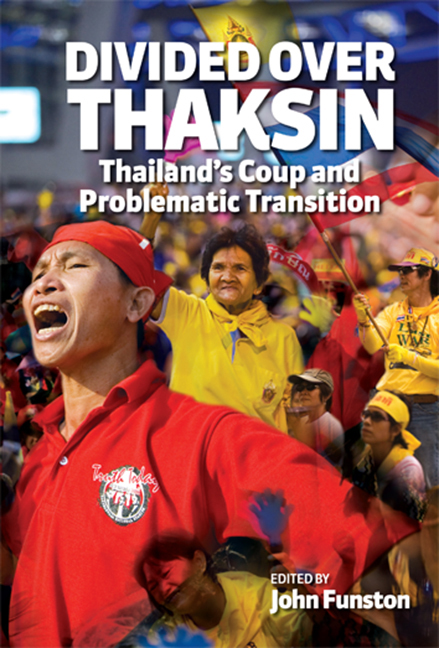
Thailand's political problems attracted international attention when yellow shirted anti-Thaksin protestors closed down Bangkok's international airports in November 2008; the following April pro-Thaksin red shirts prevented an ASEAN-East Asia Summit, and clashed violently with the army in the streets of Bangkok. Conflict between groups for and against former Prime Minister Thaksin has polarized Thai society. Under his watch, violence also returned to the Malay Muslim south, with the loss of over 3,000 lives. The military coup that ousted Thaksin was supposed to end all this, but instead polarization increased and southern violence continued. This book is about how Thaksin divided Thailand, the nature of the southern conflict, and problematic attempts to establish a consensus around a post-Thaksin political order.
"Amitav Acharya has written a splendidly ambitious book. Travelling from the discipline of International Relations to the historiography of Southeast Asia and back again, it draws upon a range of methodologies to analyse the issue of identity in the configuration of Southeast Asia. But it provides more than an academic assessment. With this book, Acharya must be judged to have contributed not just to the study of Southeast Asian regionalism, but to the process itself."–Anthony Milner, Basham Professor of Asian History, Australian National University
However impressive the economic success of Penang has been over the past four decades, structural conditions in the region call for a fundamental reconfiguration of this Malaysian state’s competitive advantage.In the 1970s, the ageing entrepôt transformed itself into a manufacturing hub for the electronics industry and a well-known tourist site. This outward-looking model of economic growth has underpinned Penang’s economic development up until the present. The question that now arises is whether Penang’s present mode of development will continue to be effective, or whether it will have to transform itself. First, Malaysia in general, and Penang in particular are caught in a middle-income trap. Second, while the evolving weight of the global economy is shifting towards Asia, many of its emerging powers are competing with Penang in areas where it formerly excelled. Third, Penang is a state within a federation, and its capital, George Town, is a secondary city. Neither can rival Kuala Lumpur in terms of size or facilities, and thus must offer investors other attributes.Effectively meeting these challenges while retaining Penang’s vibrant and living culture are the key issues that are dealt with in this second volume of the Penang Studies Series.
This book provides a framework for considering the ramifications of Japan's expanding role and influence in the Asia-Pacific region. It documents Japan's emergence as the regional "core economy"; reviews the factor that may influence Tokyo's future political and military rule; poses alternative scenarios for the evolving Asia-Pacific economic, political and security order; analyses the factors and conditions that may determine which, if any, of those alternative scenarios might prevail; and considers the implications for future politico-economic relationships and the Asia-Pacific power balance.
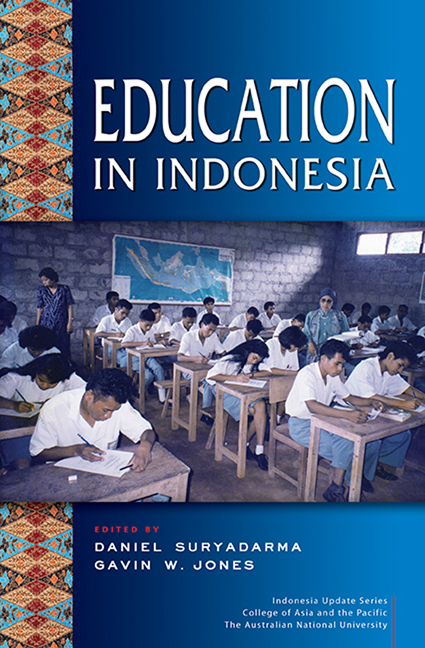
In Indonesia, as elsewhere in Asia, education will inevitably play a key role in the national development experience as the twenty-first century unfolds. Not much international attention is paid to how the education sector is faring in Indonesia, but that is not because nothing is happening. The past decade has seen major changes in the structure of the education system and in the schooling trajectories of Indonesian children and adolescents. The administration of primary and secondary education has been decentralized to the regions. A new paradigm of school-based management has been introduced. Public spending on education has finally reached one-fifth of total government spending, as required by law. But although enrolment rates at all levels continue to increase, the quality of education remains low and has not improved, and the tertiary sector continues to experience problems of autonomy and unsatisfactory performance.This book delves into the major developments in education in Indonesia. Drawing on the expertise of some of the most knowledgeable people in the field, it identifies the challenges facing the sector and offers recommendations on how these challenges could be overcome.
In their evolution of political structures and life, countries often undergo significant conjunctures, major events that reorder political structures and norms. The examination of such conjunctures offers an important methodological framework to uncover and document changes that have significantly altered the political template of a country. This collection of case studies examines the critical conjunctures that have affected the countries of Southeast Asia in recent decades. Each chapter traces the antecedent conditions prior to the event, describes the changes brought about by the conjuncture, and details the lasting legacy.
This book is a study of the Taiwan issue after the Cold War. It focuses on the changes in Mainland China's Taiwan policy in the period between Lee Teng-hui's 1995 U.S. tour and his "two states" theory in 1999. It discusses why the tension across the Taiwan Strait flared up in 1995 and 1999, and how Mainland China handled, and is going to handle, its relations with Taiwan and the United States in the 21st century.
This story centres on the time Maria Hertogh spent in Singapore in 1950, when she became the innocent focus of a tangle of cultures and religions which aroused world-wide interest. There are introductory chapters outlining Maria's origins and an epilogue sketching what happened to her afterwards. The author was at the time head of the Singapore Social Welfare Department which was intimately involved. The account is thus largely based on firsthand knowledge.
This is the most comprehensive account of the internal dynamics of the young intellectual generation of NU advocating for pluralism and democracy within Islam in Indonesia, during Gus Dur's leadership of PBNU. Because of the author's unique vantage point, her sometimes sharp criticism of this movement and its internal dynamics is extremely useful to those who continue to advocate for reform, within NU and in Indonesia generally. - Ahman Suaedy, Executive Director, Wahid Institute, Jakarta"Robin Bush provides an authoritative, insightful and engaging account of the political and intellectual world of Nahdlatul Ulama. She carefully analyses the tumultuous and often tangled dynamics within NU from the 1980s to the post-Soeharto period and unearths deeper historical and cultural resonances in explaining the organisation's outlook and actions. This is a valuable work for anyone seeking to understand contemporary Islamic politics in Indonesia." - Greg Fealy, Fellow and Senior Lecturer in Indonesian Politics, Australian National University, Canberra
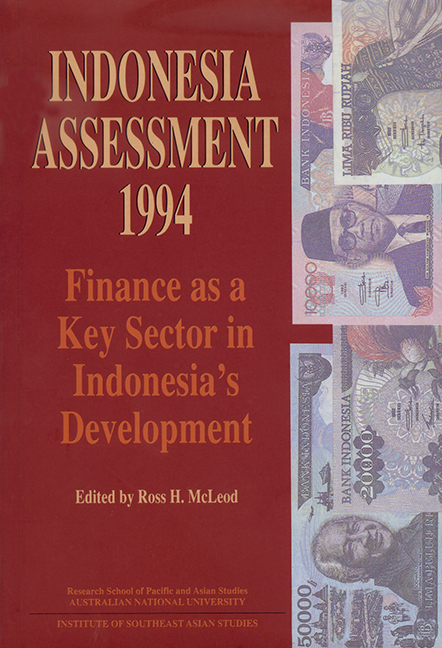
This volume is based on "Indonesia Update 1994", the latest in the series of anual conferences on Indonesia held at the Australian National University. It presents overviews of economic and political developments, together with a collection of papers on the role of the finance sector. Indonesia Assesment 1994 contains the Keynote Address to the conference by Professor Dr Ali Wardhana, Special Adviser to the President, former Minister of Finance, and former Coordinating Minister for Economics, Finance and Industry. Three present or former directors of the central bank joint Professor Wardhana to contribute wide-ranging discussions of the process of financial policy reform as seen from the inside. They are joined by a range of other contributors drawn mainly from academic circle in Indonesia, Australia and elsewhere, and some from the private sector. Indonesia Assesment 1994 provides the most complete available coverage of the current state of the financial sector in Indonesia and the policies which affect it. This volume will be an invaluable reference for policy-makers, academics, and all those interested in the finance sector and in economic and political developments in Indonesia. The editor is a Fellow at the ANU's Indonesia Project, with many years of research and consulting experience in the Indonesian financial system.
Vietnam's economy has been fundamentally changed by the policy reforms implemented in the 1980s to provide an environment that is more conducive for economic growth and social stabilization. The policy reforms have had a tremendous impact on economic activities and on all aspects of social life. The economy is presently moving from a centrally planned system largely based on public ownership to a market-oriented and mixed economy. Social structures and values have changed, and legal, institutional, and administrative systems are gradually changing as well. The reform process gives rise to exciting challenges and opportunities for development. Based largely on Vietnamese sources of data and information, this book presents an analysis of the main features of economic policy reforms in Vietnam, their socioeconomic impact, and several major theoretical and practical problems Vietnam faces on its path to development.