To save content items to your account,
please confirm that you agree to abide by our usage policies.
If this is the first time you use this feature, you will be asked to authorise Cambridge Core to connect with your account.
Find out more about saving content to .
To save content items to your Kindle, first ensure no-reply@cambridge.org
is added to your Approved Personal Document E-mail List under your Personal Document Settings
on the Manage Your Content and Devices page of your Amazon account. Then enter the ‘name’ part
of your Kindle email address below.
Find out more about saving to your Kindle.
Note you can select to save to either the @free.kindle.com or @kindle.com variations.
‘@free.kindle.com’ emails are free but can only be saved to your device when it is connected to wi-fi.
‘@kindle.com’ emails can be delivered even when you are not connected to wi-fi, but note that service fees apply.
Indonesia is the world's largest archipelagic state. In 2001 it embarked on a "big bang" decentralization involving a major transfer of administrative, political and financial authority to its districts, now numbering more than 500. Together with the rapid transition from authoritarian to democratic rule in the late 1990s, this initiative has transformed the country's political, social and business life. While national government is the major area of contestation, power has shifted irreversibly away from the centre. How this significantly increased regional autonomy works will have a crucial bearing on the future of the Indonesian nation-state.This volume features contributions by over 40 writers with deep expertise on Indonesia. The book provides a timely, comprehensive and analytical assessment of the country's regional development dynamics in the post-decentralization environment. It explores historical, political and development patterns at the regional level; the relationship between decentralization and governance; local-level perspectives; migration, cities and connectivity; and the challenges confronting the peripheral regions of Aceh and Papua.
This book presents a detailed account of the development of strong and substantive economic relations that existed between Singapore and China since the time when the two countries established diplomatic ties in October 1990. The chapters provide a comprehensive discussion of the main areas of cooperation, such as the institutional framework for pursuing economic links, the Suzhou Industrial Park, the Sino-Singapore Tianjin Eco-City, investments, trade, finance, tourism and education. The economic opportunities and challenges in these economic sectors in the two countries are examined in the context of the profound political and social changes taking place in mainland China and the globalization of the world economy. The book will be invaluable to policy-makers, academics and students specializing in Chinese studies, as well as businessmen and the general public interested in seeking a greater understanding of the complex economic relations between the two nations.
Born in Malacca in 1918, Dr Goh Keng Swee reached maturity at a time when European colonialism was breathing its last. By the time this keen-eyed Malayan became self-governing Singapore's first Minister of Finance in 1959, he had made a name for himself as the colony's foremost social scientist, having carried out groundbreaking surveys on urban poverty and housing. He immediately initiated pioneering projects that laid the ground for the island's economic success. When Singapore separated from Malaysia in 1965, Dr Goh took charge of building an army from scratch.His contributions to the infrastructure of Singapore in the fields of Finance, Defence and Education are well recorded. What is less understood was the man's legendary practical sense. This work avoids reliance on secondary accounts and concentrates strongly on Dr Goh's own words to comprehend his potent and proactive powers of reasoning, and in the process captures the history of Singapore as well.
This book provides a comprehensive analysis of the constraints facing the development of rural non-farm enterprises in Indonesia. Recent years have seen a substantial effort by the Indonesian government to improve the investment climate. To date, much of this effort has focused on the constraints faced by businesses at the national level. However, if Indonesia is to be successful in creating jobs and reducing poverty across the archipelago, this will require improving the investment climate for the 15.7 million micro and small enterprises that employ more than half of all the non-farm workers in the country. This book brings together leading Indonesian and international academics to consider seven key constraints that RNFEs face: labour regulations and practices; infrastructure; competition and marketing; knowledge transfer and technology; access to credit and financial services; local taxation and user charges; and insecurity. In each case the authors draw on the Indonesian Rural Investment Climate Survey, a unique dataset of more than 2,500 RNFEs, to identify the size and nature of the constraints, the way in which they impact upon enterprise growth and the implications for policy. In addition, a key chapter estimates the strength of the linkage between agriculture and non-agricultural activities in rural areas, showing that agricultural revitalization is an essential complement to the development of the non-farm economy. "Understanding the rural investment climate in both slow- and fast-growing economies has taken on new urgency in the wake of the world food crisis. The rural non-farm economy often provides half or more of the income of farm families and is especially important for food-deficit rural households hard-hit by rising food prices. The Indonesian Rural Investment Climate Assessment is the "gold standard" for how to achieve this understanding. It is a delight to see it published and available to a wide audience." - C. Peter Timmer, Visiting Professor, Program on Food Security and Environment, Stanford University; Non-Resident Fellow, Center for Global Development
This book deals with Singapore's transition from a British Crown Colony to a state in the Federation of Malaysia, and expulsion from the Federation to become a separate independent nation. For the leaders of Singapore's PAP Government, Malaysia was a traumatic experience. Yet, but for it, they might never have found the resolve and the secret of building this extraordinary nation, this nation based on Singapore alone that they and an entire generation had once believed an impossibility.This story of nation-building deals with topics on national (army) service, economic development, education in schools and in universities, housing and home ownership. It deals also with issues of ethnicity and national identity in the context of challenges from within and without, in the latter case from globalization and global Islamism.
Presently, ASEAN stands ready to make a major step towards economic integration. This book looks at the issues involved in moving ASEAN towards a free trade area. It examines some indicators of gains and costs of integration and presents two quantitative analyses of the potential effects of integration on growth and trade in the region. The first, a partial equilibrium analysis, provides a disaggregated view of changes in production and trade patterns that could occur with integration. The second, a macroeconometric analysis, is able to capture general equilibrium effects and identifies the effects of integration on overall economic growth. These two analyses represent the first systematic, quantitative studies of intra-ASEAN trade.
This study is the result of collaborative research by ASEAN and Japanese scholars. By means of cross analyses, the study attempts to understand the problems faced by both Japan and the ASEAN countries with the aim of generating effective joint mechanisms that would facilitate the relocation of certain industries from Japan to the ASEAN countries.
The book aims to further the debate on the impacts of fisheries policies in the Indian Ocean Region in order to facilitate a new regional policy direction. A key argument of the volume is that ecologically sustainable and socially just development and management of Indian Ocean fisheries require a paradigm shift in the perceptions and policies of major stakeholders. A central policy challenge is to identify a collective regional interest for fisheries and accordingly the development of integrated management policies that link ecology and society and which incorporate individuals, communities, agencies, states and regimes into a holistic cooperative endeavour. Successful ocean governance therefore requires greater inter-state and inter-agency consultation and cooperation, an improvement in linking national initiatives to local action, increased participation of local government and local communities and the enhancement of local capability. In order to achieve this overall goal requires either the enhancement of existing regional institutions or the creation of a new regional body.
Indonesia is the world's largest archipelagic state, with more than 18,000 islands and over 7.9 million square kilometres of sea. The marine frontier presents the nation with both economic opportunities and political and strategic challenges. Indonesia has been affected more than most countries in the world by a slow revolution in the management of its waters. Whereas Indonesia's seas were once conceived administratively as little more than the empty space between islands, successive governments have become aware that this view is outmoded. The effective transfer to the seas of regulatory regimes that took shape on land, such as territoriality, has been an enduring challenge to Indonesian governments. This book addresses issues related to maritime boundaries and security, marine safety, inter-island shipping, the development of the archipelagic concept in international law, marine conservation, illegal fishing, and the place of the sea in national and regional identity.
Social inequalities have grown during Vietnam’s transition to a market-based economy, even as average incomes have increased and the number of people living in poverty has lessened. Do widening social rifts - between rich and poor, urban and rural communities and along regional, gender and ethnic lines - have the potential to undermine Vietnam’s liberal reforms and its integration with its region? How has the socialist state responded to these challenges? Based on research and analysis of recent conditions, Social Inequality in Vietnam and the Challenges to Reform offers detailed descriptions of disparities in income, spatial access, gender, ethnicity and status, addressing their causes and consequences. The eleven chapters in this book illustrate the changing ways in which people have accumulated wealth, social and cultural capital in Vietnam’s move from a socialist to a market-oriented society. They assemble data from the Northern Uplands to the Mekong delta to explore geographic variability in patterns of social differentiation. Offering critical insights into state policy, the chapters assess the adequacy of government responses and outline local responses and informal solutions to social disadvantage.This book features a diverse mix of theoretical and methodological approaches and bridges some of the disciplinary and institutional divides that have impeded understanding of inequality in Vietnam. The wide range of themes it covers will make it a sought-after resource for those interested in contemporary Vietnam and the effects of liberal reforms, globalization and post-socialist development strategies.
This volume is a collection of essays from a diverse group of scholars. Collectively, they present a multidimensional perspective of globalization in Southeast Asia. They delve into the political, economic, security, social, and cultural dimensions of globalization and local responses, offering evidence of complex interfacing between the global and the local, thus championing the need for a multidisciplinary approach to globalization studies. This volume depicts globalization as an uneven and, sometimes, undesired process, and resists the temptation for easy conclusions to the challenges facing the region today.
Ever since Myanmar regained her independence in January 1948, the Tatmadaw (Myanmar Armed Forces) has been crucial in restoring and maintaining law and order. It is one of the most important institutions in Myanmar politics. Various aspects of the Tatmadaw have been studied. The most notable area of study has been the political role of the military. This study looks at the organizational development of the Myanmar armed forces. It analyses four different aspects of the Tatmadaw: military doctrine and strategy, organization and force structure, armament and force modernization, and military training and officer education. It sets out security perceptions and policies, charting developments in each phase against the situation at the time, and also notes the contributions of the leading actors in the process. Since early 1990s, the Tatmadaw has implemented a force modernization programme. This work studies rationales and strategy behind the force modernization programme and examines the military capabilities of the Tatmadaw. Drawing extensively from archival sources and existing literature, this empirically grounded research argues that, while the internal armed security threat to the state continues to play an important role, it is the external security threat that gives more weight to the expansion and modernization of the Tatmadaw since 1988. It also argues that, despite its imperfections, the Tatmadaw has transformed from a force essentially for counter-insurgency operations into a force capable of fighting in limited conventional warfare.
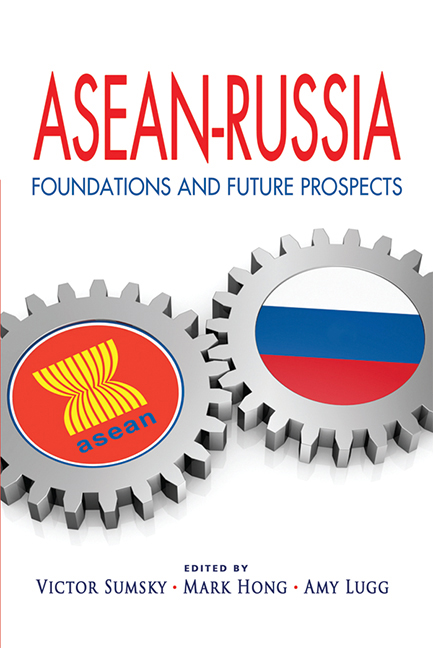
In 2012, Russia assumes the Chairmanship of APEC, and is keen to build on its memberships of both the East Asia Summit (EAS) and the Asia-Europe Meeting (ASEM). Russia is geographically and historically part of Asia and the Asia Pacific, and has been a dialogue partner of ASEAN since 1996. Still, the obstacles of distance and languages have led ASEAN member states and Russia to know and interact little between both sides. As growth poles in the world economy, there is much benefit in greater interaction between their rich economies. To commemorate the 15th Anniversary of the Russia-ASEAN dialogue partnership in 2011, the ASEAN Studies Centre at ISEAS and its counterpart from MGIMO-University, Moscow co-organized a two-day conference that year, in which papers were presented offering perspectives from Russia and the ten ASEAN member states. Representatives from academia, and the public and private sectors offered insights on topics including geopolitics, bilateral relations, business and economics, and culture and education. This is a timely book that affords the reader insights into where ASEAN-Russia relations currently stand and suggests how they can improve and move forward.
Established in 1971 by Singapore, Malaysia, Britain, Australia and New Zealand, the Five Power Defence Arrangements (FPDA) has proved to be one of Asia's most enduring military pacts. Since its foundation, the FPDA has functioned as an important confidence building measure between its two Southeast Asian members, and has facilitated interoperability, professionalization and cooperation among the armed forces of the five countries. Crucially, its inherent flexibility and adaptability has enabled it to respond effectively to changes in the geopolitical environment as well as the emergence of new security threats. Now in its fortieth year, the FPDA remains a valuable component of Asia's security architecture in a time of change and uncertainty.This volume marks the fortieth anniversary of the establishment of the FPDA. Regional and international scholars examine the primary motivations of the five members, the FPDA's contribution to regional security over the past four decades and explore possible future roles for the alliance in the context of emerging geopolitical trends and security challenges in the twenty-first century.
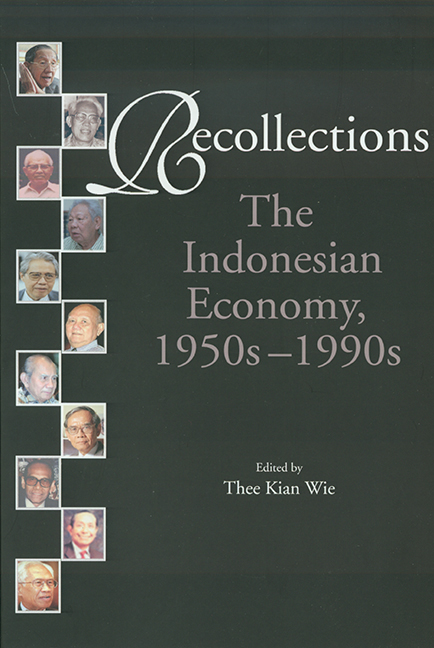
This collection of memoir-style articles is based on extended interviews with a number of eminent Indonesians who have played an important role in influencing the evolution of Indonesia's economy."Thee Kian Wie, one of Southeast Asia's most eminent economists, has provided a great service to the research and policy communities with an interest in Indonesia. In this fascinating volume, we get 'up close' to many of the most influential architects of economic policy during the Soeharto era -- their backgrounds, their world views, and their reminiscences about government."Hal Hill, H.W. Arndt Professor of Southeast Asian EconomiesAustralian National University
Financial crises after financial crises have occurred, but for many countries the last one, the 2008-09 global recession, was the deepest since the 1930s great depression. This book started with an objective to understand the impact of high inflation on poverty and food security in Southeast Asia. However, the global economy moved quickly into recession in 2008. Global recession has also come to Southeast Asia. Anticipating that the impact of global recession would be more severe than that of high inflation, we refocused the title of the book to Poverty and Global Recession in Southeast Asia. This book attempts to contribute a better understanding of poverty and food security in Southeast Asia during the recent global recession, considering both recent developments and the previous major crisis of 1997-98.
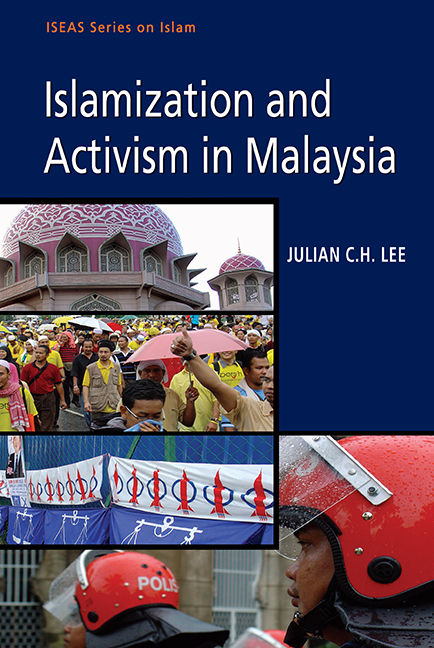
Islamization and Activism in Malaysia examines aspects of the increasing political and social profile of Islam in Malaysia and describes how different kinds of activists in Malaysia have sought to protect fundamental liberties and to improve the state of democracy in Malaysia. In particular, focus is paid to activists who engage with electoral process, the law and the public sphere, and in particular, to movements that cut across or combine these realms of action.Spanning the period of the Prime Ministership of Abdullah Badawi, Julian C. H. Lee's grounded analysis examines the most important issues of that period including the freedom of religion case of Lina Joy, the Islamic state debate, and events surrounding the 8 March 2008 general elections.
There is a growing dialogue between India and Southeast Asia. From a marginal relationship during the Cold War days to the participation of India at the East Asia summit in December 2005 has been a long journey.In the context of the geopolitical situation in the Asia-Pacific in the post-September 11 period, the security dimension between India and Southeast Asia cannot be overemphasized. With the continued U.S. preponderance in the region and China's phenomenal rise, the countries of Southeast Asia and India have an opportunity to evolve a co-operative relationship not only with one another, but also with the major powers of the region.This book examines the areas of comprehensive security and the growing understanding between India and Southeast Asia where there is less divergence and greater convergence. The author argues that India-Southeast Asia security convergence is not and should not be aimed at any particular country. On an optimistic note he concludes that such convergence will contribute to creating harmony among the major powers of Asia to make the twenty-first century the "Asian century".
This selection of lectures by Professor Hla Pe, who has published widely in the fields of Burmese language and literature, and cultural studies, provides an insight into Burmese literature, culture, beliefs and way of life through the author's own personal life and career. The lectures are divided into six parts: On Literature, On Historiography, On Scholarship, On Language, On Life, and On Buddhism.
"Once celebrated in the Western media as a shining example of a 'liberal' and 'tolerant' Islam, Indonesia since the end of the Soeharto regime (May 1998) has witnessed a variety of developments that bespeak a conservative turn in the country’s Muslim politics. In this timely collection of original essays, Martin van Bruinessen, our most distinguished senior Western scholar of Indonesian Islam, and four leading Indonesian Muslim scholars explore and explain these developments. Each chapter examines recent trends from a strategic institutional perch: the Council of Indonesian Muslim scholars, the reformist Muhammadiyah, South Sulawesi's Committee for the Implementation of Islamic Shari'a, and radical Islamism in Solo. With van Bruinessen's brilliantly synthetic introduction and conclusion, these essays shed a bright light on what Indonesian Muslim politics was and where it seems to be going. The analysis is complex and by no means uniformly dire. For readers interested in Indonesian Muslim politics, and for analysts interested in the dialectical interplay of progressive and conservative Islam, this book is fascinating and essential reading."—Robert Hefner, Director, Institute on Culture, Religion, and World Affairs, Boston University"Indonesian Islam has been (and still is) largely known as Islam with 'smiling faces'. But in the last decade at least, drawing benefit from the democratic opening up, some figures and groups introduced radical Islamic ideas and praxis that have transnational origins that in turn could affect the future of Indonesian Islam. This book is an excellent anthology of this disturbing development brought about by the so-called 'conservative turn' within certain elements of moderate Islam in the largest Muslim country in the world. There is no doubt that this book contributes a great deal to a better grasp of some recent development to watch in Indonesian Islam."—Azyumardi Azra, Professor of History, Director of Graduate School, State Islamic University, Jakarta, Indonesia"Over the course of the past decade, journalists and other observers have noted a 'conservative turn' in Indonesian Islam, but without seriously investigating or explaining the nature and extent of the transformation(s) under way. With the publication of this excellent new volume, Martin van Bruinessen and his collaborators have now provided a fine-grained account of the complex and diverse manifestations of this 'conservative turn', with in-depth treatments of developments and trends across a range of different arenas and institutions - and regions - of Indonesian Islam. Van Bruinessen has always been a pioneering figure in the study of Islam in Indonesia, and with this volume he once again brings unparalleled insight and illumination to our understanding of Islamic life in the archipelago. This is a must-read book for anyone interested in Indonesian politics and society today."—John Sidel, Professor of International and Comparative Politics, London School of Economics and Political Science