To save content items to your account,
please confirm that you agree to abide by our usage policies.
If this is the first time you use this feature, you will be asked to authorise Cambridge Core to connect with your account.
Find out more about saving content to .
To save content items to your Kindle, first ensure no-reply@cambridge.org
is added to your Approved Personal Document E-mail List under your Personal Document Settings
on the Manage Your Content and Devices page of your Amazon account. Then enter the ‘name’ part
of your Kindle email address below.
Find out more about saving to your Kindle.
Note you can select to save to either the @free.kindle.com or @kindle.com variations.
‘@free.kindle.com’ emails are free but can only be saved to your device when it is connected to wi-fi.
‘@kindle.com’ emails can be delivered even when you are not connected to wi-fi, but note that service fees apply.
Lim Kim San's name is linked inextricably to Singapore's public housing. This is entirely appropriate because he played a crucial role in the success of the Housing Board, which transformed both the country's physical landscape and gave Singaporeans a tangible stake in the future of their young nation. However, important though Lim's role was at the Board and as Minister for National Development, it was not his sole contribution to Singapore. He made a decisive difference in several other key areas, including Finance, and Interior and Defence. This biography draws on Lim's Oral History Interview, which was made accessible to the author, the Hansard, Lim's speeches, and newspaper clippings, in addition to fresh interviews conducted with other Singapore leaders who had worked with Lim. The result is a composite picture of a great Singapore leader.
This book presents the key findings of studies done under the ASEAN Phase III Population Project, "Socio-Economic Consequences of the Ageing of the Population" in Indonesia, Malaysia, the Philippines, Singapore, and Thailand. It begins by outlining the demographic background to the ageing process in these countries and a projection of the situation of ageing into the future. It examines the profile of the aged and gives a brief overview of the living arrangements of the elderly, their employment, financial support, and health care, and the role played by their children in old age security. It then goes on to describe the services provided at the national and local levels by government and private agencies and gives an evaluation of the role and contribution of the aged in the community. The book ends with a discussion on the social and policy implications of ageing in each of the participating countries.
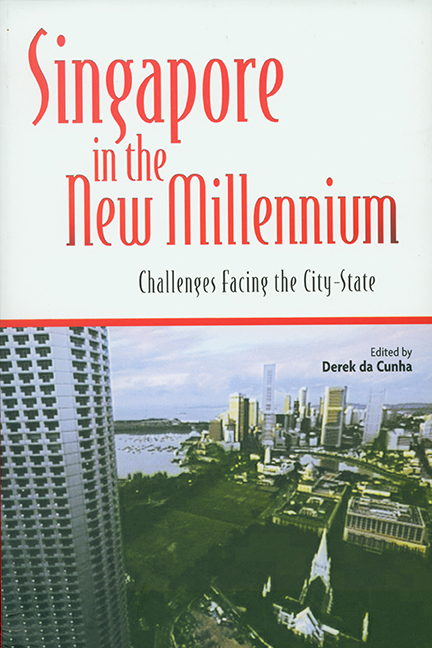
Among nation-states, Singapore ranks as possibly the greatest success story of the 20th century. It is a story of how a small city-state in the politically volatile region of Southeast Asia transformed itself, within a relatively short period of time, from being an economic backwater to an economic dynamo not just within Southeast Asia but the wider Asia-Pacific region. That success story has been well chronicled. What is less well known, however, is that beneath the veneer of success there are undercurrents within the economic, social, and body politic of the city-state which pose significant challenges for it in the new millennium. Those challenges are not just from within the city-state but also from without. This volume explores those multifaceted challenges, some of which are counter-intuitive to the general impression that the Singapore state projects of itself not just to its citizens but to the world at large.
Tan Ta Sen has modestly suggested that, as a book to illustrate the peaceful impact of culture contact, he is concerned to show how such cultural influences not only led to transmissions, conversions and transferences involving Inner Asian Muslims from China and Yunnan Muslims, Chams, Javanese, Malays, Arabs and Indians, but also enabled many Chinese in the Malay world to retain their non-Muslim cultural traits. In placing Cheng Ho's voyages in this context, the author offers a fresh perspective on a momentous set of events in Chinese maritime history. Professor Wang Gungwu, National University of Singapore. Tan Ta Sen's book on Cheng Ho and Islam in Southeast Asia is not the first one on the subject, but it is the first book that puts Cheng Ho's voyages in the larger context of "culture contact" in China and beyond. He has garnered numerous sources, from published documents to architectural sites and buildings, to support his arguments. He has done much more than previous scholars writing on this subject. - Professor Leo Suryadinata, Chinese Heritage Centre (Singapore). This long-awaited book is welcomed by the academic community - Tan Ta Sen has used historical facts to strengthen the argument on the existence of the "Third Wave", i.e. "the Chinese Wave", in the spread of Islam in the Southeast Asian region. Until now, we only know two major waves, i.e. the India-Gujarat Wave and the Middle East Wave through the development of trade relations. - Professor A. Dahana, University of Indonesia (Jakarta).
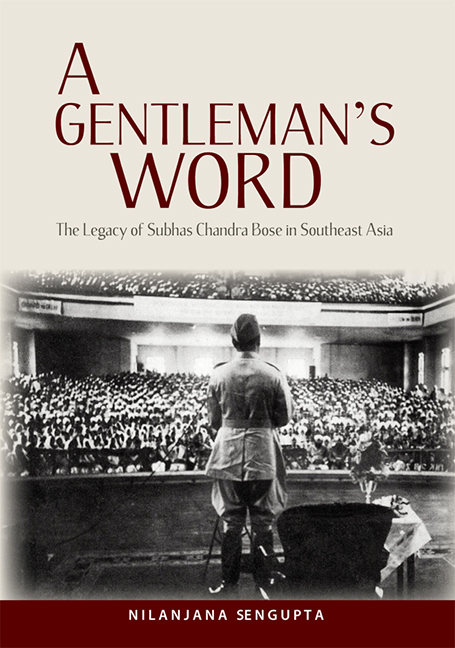
The great Indian nationalist leader Subhas Chandra Bose arrived in Singapore in 1943 to revitalize the Indian National Army (INA). Taking the opportunity of the Japanese occupation of parts of Southeast Asia, he launched armed struggle against British colonial rule in India. Two years later, that attempt failed at the eastern gates of India. Yet, it was a temporary failure because the INA helped set in motion a series of developments within India. These would culminate in its freedom in a further two years. Bose is household name in India. He is remembered in Southeast Asia as well, particularly among Indians. However, while his contributions to India's independence movement have been recorded exhaustively, less is known about the legacy that he left behind in Southeast Asia.This book seeks to fill that gap in the international understanding of a great Indian nationalist and pan-Asianist. It records how participation in the nationalist struggle invested Southeast Asian Indians with a rare sense of dignity and helped foster a mushrooming of militant trade unions, making it difficult for the returning British planters to perpetuate their control over what had been a docile workforce. The INA's Rani of Jhansi movement proved to be a pioneering effort at drawing Southeast Asian Indian women out of their traditional roles and expectations. It inspired some of them to take up mainstream roles for the cause of equality and emancipation. A Gentleman's Word retraces this journey of self-discovery of those who were inspired by Subhas Chandra Bose.
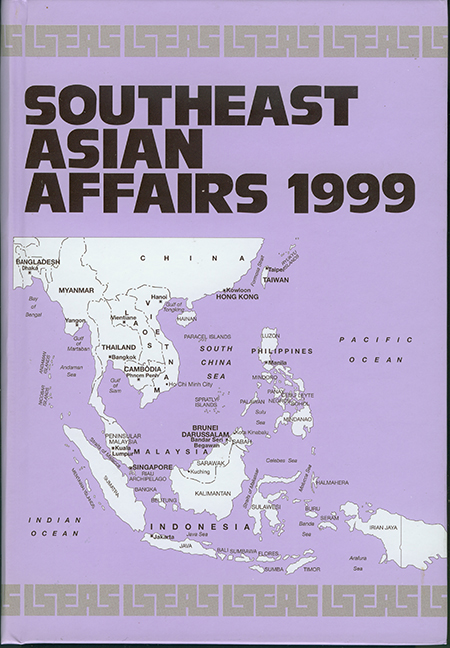
Southeast Asian Affairs, of which there are now twenty-six in the series, is a review of significant developments and trends in the region, with particular emphasis on ASEAN countries. The publication aims primarily at giving the enquiring reader a broad grasp of current regional affairs. Readable and easily understood analyses are made of major political, economic, social, and strategic developments within Southeast Asia.
ASEAN has a goal to create an economic community by 2015. To achieve the goal, connectivity among the member states needs to be given due importance. In 2010, ASEAN adopted the Master Plan on ASEAN Connectivity (MPAC), which looked at physical, institutional and people-to-people connectivity. It pinned down fifteen priority projects which can potentially transform the ASEAN region, providing the conditions for a single market and production base. But MPAC is an expensive initiative, and funding remains a major challenge. The private sector needs to be actively involved as a number of infrastructure projects identified in the MPAC are lacking substantial investment.This book looks at the current state of ASEAN's physical connectivity and challenges in building better infrastructure. It contains a collection of papers that discuss specific issues pertaining to each kind of physical connectivity transportation infrastructure, telecom connectivity, ICT and energy infrastructure. The book concludes with the steps needed to be taken for implementation of the various plans, and policy recommendations.
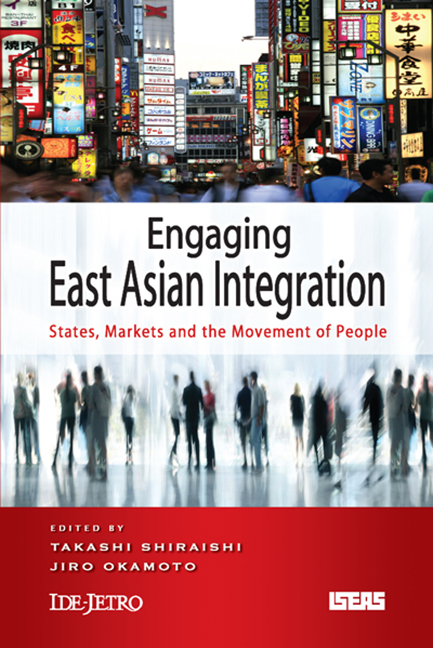
Both international trade and investment by East Asian countries have become significantly regionalized. To support this development further, efforts for regional integration have flourished in the forms of bilateral and regional free trade agreements and the ASEAN+3 and East Asia Summit processes, among many others. This book is a compilation of papers and discussions originally presented at the international symposium held during the recent global financial crisis. The symposium aimed to shed light not only on the usual economic aspect but also on other aspects of the multidimensional phenomenon called "regional integration". Thus, in this volume the authors explore the relationship between the U.S. influence and East Asian regionalism, the characteristics of East Asian integration, and the politics of inclusion/exclusion in the integration process. In addition, they point out some "missing links" in integration efforts such as cooperation in the areas of logistics, finance, trade in services, infrastructure and human resource movement. Since the global financial crisis did not deter integration efforts (rather, it has encouraged them), this book serves as a guide for future East Asian integration in terms of what to expect and what is to be done.
A clear guide to current EU institutions, practices, and policies, this is also an informed insider's account of how they have emerged in their present form, with clues on future change. The mixture of analysis and history, description and prescription, works well, because the author has had a ringside seat, but retains a cool Nordic non-partisan detachment. The hints he offers to those, for example in Asia, considering following a similar path to regional integration, represent the distilled wisdom of a career in balancing economic benefits and national sensitivities. As his story shows, it can be done. - Lord Kerr, Former Head of the UK Diplomatic Service, now Chairman of Imperial College, London and Deputy Chairman of Royal Dutch Shell.
The author presents some of the wider debates on housing and development while focusing on the major Southeast Asian capital cities: Jakarta, Bangkok, Kuala Lumpur and Metro Manila. All of these have expanded enormously in terms of population and size, all have enormous problems ranging from provision of clean water and sustainable housing for the poor to dealing with the constant inflow of urban migrants. Despite this, most city governments remain worryingly ineffectual or uncommitted to solving urgent problems of their expanding cities.
The book provides an understanding of the trend of MNC investments in ASEAN especially in Malaysia, Singapore and Thailand. It presents a case showing that contrary to some popular beliefs, MNC investments benefitted the host countries. In particular, industrialization of the host countries was given a boost. A detailed analysis is also provided on various critical factors which MNCs consider in their investment decisions. These include labour supply and manpower development, infrastructure, and so forth.
This book focuses on the defence policy of the Nakasone administration and attempts to provide an explanation for the policy measures which its administration implemented or initiated. It suggests that the widening disparity between economic interests and political power forced Japan to review the traditional bases for defence policy making and prompted the search for a balance that would allow the country a more active role in the international sphere. The book is organized around the central theme that Nakasone's defence policy can be understood as an attempt to rehabilitate Japan as a 'normal' state and end the state of affairs that had relegated it to a unique, and low, position.
Developing countries have traditionally been highly dependent on their natural resources for conversion into capital for consumption and development purposes. There is, however, a limit to which some natural resources, notably biotic renewable resources, can be exploited as overexploitation can lead to collapse and in the case of wildlife, extinction. This study focuses on the problems of exploiting an open-access renewable resource: the sea fisheries of Peninsular Malaysia. It traces the history of fisheries development in that country, and shows how open access to a rich resource can rapidly lead to overfishing and serious stock depletion. The various efforts of managing the fisheries are also discussed.
By analysing foreign direct investment (FDI) in a macroeconomic framework, this study throws new light on various channels through which FDI influences saving, investment, growth, and the balance of payments on current account. The finding that FDI has differential impacts in a sample of five Southeast Asian and eleven other developing countries leads to several policy conclusions. First, FDI is attracted for privatization or debt-equity swap programmes, it may provide additional or alternative balance-of-payments support, but will not accelerate capital formation or economic growth. Second, in the presence of financial and trade distortions, FDI can remove from the host country more that it contributes. In other words, it can be immiserizing. Third, the most efficacious way of encouraging FDI is to implement policies that generally improve the investment climate. Where domestically financed investment is booming, FDI will seek to participate. Finally, maximum benefit from FDI can be achieved in open economies that are free of domestic distortions such as financial repression and trade controls.
"A timely assessment of what Thailand has hitherto achieved in its efforts to improve corporate governance and a realistic look at how it can grapple with the remaining challenges on its agenda." Olarn Chaipravat, Fiscal Policy Research Institute, Thailand "A well-crafted work by Thai scholars who take readers on a journey from the pre- to the post-Asian financial crisis. Looking from the current standpoint, this book serves as a reflection on the developments in Thailand's first major efforts on corporate governance which have since moved Thailand away from that turbulent period." Chalee Chantanayingyong, Securities and Exchange Commission, Thailand
Almost all developing countries are plagued by the problem of peasants crowding into cities in search of a better life. For scholars of and visitors to Vietnam, it is increasingly clear that the problem has also arrived in this recently freed socialist economy.Is it going to get worse before it gets better? What is officialdom's response to the social disruptions and friction it causes?This ISEAS study completed at the end of 1993 is one of a few early surveys of this urban drift, and provides empirical data on the spontaneous migration to Hanoi from its rural environs. It also draws on a vast corpus of journalistic and academic literature in Vietnamese as well as government documents and decrees. The final work provides a picture of the migration pattern, the lifestyle of migrants in the city, the institutional changes that have been energized by this movement, and its many political and socio-economic implications.
The Korea-Singapore Free Trade Agreement (KSFTA) is Korea's first comprehensive FTA involving any ASEAN member country and provides a framework for building a strong strategic and economic partnership between Korea and the ASEAN countries. It is therefore designed to be a building block in the process of community building efforts towards an East Asian Community in the long run as well as towards global free trade. This book analyses and documents the rationale behind the agreement and its impact on the economies of Korea and Singapore, underpinning the growing economic linkages between the two countries that have become stronger since the enforcement of the agreement.
The development of resource-based industries has featured importantly in the industrialization strategies of both Malaysia and Thailand and there is considerable potential for the further expansion of the industries. This study provides some background details of the Malaysian and Thai economies and examines some of the features of resource-based industries and their current status in the two countries.
In 2010, we can expect that oil and gas prices will again increase beyond the US$100 per barrel, as the global economy recovers gradually from the global recession and uses more oil and gas. It is therefore important for the general public to read and understand more about complex energy issues which affect their lives. This useful energy book, based on lectures delivered at the ISEAS Energy Forum, as well as papers written by invited experts, provides a means to access energy information. It is part of the ISEAS Energy books series which serves to educate and raise public awareness on energy issues. "As the author of The Grand Energy Transition (GET), I am naturally interested in energy books which discuss renewable energy and electric vehicles. The Grand Energy Transition shows us how to accelerate the transition to the sustainable energy gases of natural gas, wind, solar and hydrogen. What is clear is that we cannot continue with business as usual. It is imperative that energy consumption patterns should immediately begin to change dramatically. For this to happen, the public must be kept informed and mobilized. One excellent tool for public education is the ISEAS energy book with its wealth of information and which covers a wide range of energy issues. I appreciate ISEAS' good work done via the energy seminars and books, and I commend this book as an important read on energy issues." - Robert A. Hefner III, Founder, The GHK Company. "The issues of environment, climate change and energy continue to feature prominently on the international agenda. There is clearly a higher level of public awareness and debate. The Copenhagen Conference focuses global attention on global warming and the rise in sea level, and provides opportunity to take a step towards transition to a low-carbon economy. Shell is working on energy and environmental issues, and continues to contribute resources, technology and skills to these global challenges. This ISEAS energy volume is timely, and a comprehensive in-depth analysis and recounting of the facts and challenges." - Lee Tzu Yang, Chairman, Shell Companies in Singapore
Malaysia's general election in October 1990 was of special significance. This was the first time since independence that a credible multi-ethnic coalition had emerged to challenge the ruling coalition that had been in power for thirty-three years. The election campaign turned into a "no-holds-barred" struggle, where ethnic and religious issues were thrown into the fray - with serious implications for the process of nation-building. The paper discusses the events and issues leading to the elections, the political parties involved, the alignments they made, the strategies and tactics that were deployed, and the manifestos and issues that were raised in the campaign. The author gives an analysis of the results and suggests that the Barisan Nasional's return to power is not unqualified, given the setbacks to the ethnic and federal-state relations in the course of the elections.