To save content items to your account,
please confirm that you agree to abide by our usage policies.
If this is the first time you use this feature, you will be asked to authorise Cambridge Core to connect with your account.
Find out more about saving content to .
To save content items to your Kindle, first ensure no-reply@cambridge.org
is added to your Approved Personal Document E-mail List under your Personal Document Settings
on the Manage Your Content and Devices page of your Amazon account. Then enter the ‘name’ part
of your Kindle email address below.
Find out more about saving to your Kindle.
Note you can select to save to either the @free.kindle.com or @kindle.com variations.
‘@free.kindle.com’ emails are free but can only be saved to your device when it is connected to wi-fi.
‘@kindle.com’ emails can be delivered even when you are not connected to wi-fi, but note that service fees apply.
The Iron Age and the Archaic period were a period of profound transformations in Sicily: Greek and Phoenician colonial settlers interacted with the Indigenous communities of the hinterland and played a key role in processes of change that also involved daily social and economic life.
This chapter presents the archaeological evidence from three settlements in western Sicily, dating from between the early Iron Age and the late Archaic period: Monte Maranfusa, in the middle Belice valley; Makella, located in the Eleuterio valley; and the small settlement on the Castello della Pietra in the lower Belice valley.
This engaging Cambridge Companion introduces readers to the richness, complexity and diversity of one of the most important periods in Chinese history: the Song dynasty, 960–1279 CE. Bringing together leading scholars from Asia, Europe, and the United States, it provides an overview of key institutions, political, economic and military history, while also delving into the everyday lived experience of medieval China. Together, the authors create a vividly detailed and intimate portrayal of people, places, ideas, and material culture at both the 'centre' and 'margins' of Song society. They explore the lives of people and groups from diverse backgrounds, as well as places and things from the Yellow River to the publication of Buddhist prints and medical formularies. This volume highlights the brilliant accomplishments of Song scholarship in recent decades and provides an inspirational introduction for future researchers.
This article examines the day-to-day religious lives of Roman Catholic laywomen in the pre-Confederation Canadian Maritimes. Historical scholarship on the religious experiences of Atlantic Canadian women has been sparse and has addressed Protestants more often than Catholics. The rural Catholic Acadian laywomen of this study were builders of their spiritual experiences in both the private sphere of the home and the public sphere of the church. Using the concepts of devotional labor and lived religion, this article foregrounds women’s material production and healing practices. I examine in close detail women from two parishes in southwestern Nova Scotia for which records survive. Women there influenced public experiences of worship by creating or obtaining the materials necessary for liturgical observances. Some laywomen were midwives and, in the frequent absences of priests, regularly baptized newborn children. All these women made do with their less-than-perfect circumstances, working to reconstruct their community’s spiritual integrity during a tenuous period of resettlement following the Acadian deportation.
Thirty years after his Veinte poemas de amor y una canción desesperada, Neruda’s three books of “elemental odes” (1954–57) refocused his poetry into the everyday things and the everyday life of the common people. This new type of poetry responded to an invitation by Miguel Otero Silva, the director of the Caracas journal El Nacional, for a weekly collaboration, which the poet envisioned as an opportunity to offer a chronicle of the daily life of his time, his people, and the everyday objects that surrounded them. This anecdote led the way for Neruda’s “impure” poetry to challenge the assumed range of topics for poetic discourse, beyond his reputation as a poet of love and politics, earned from his previous poetry collections. He began to write in a simpler way, as the “invisible man” who walks the streets talking to common people about their daily experience.
Brief remarks suggest different reading strategies to different readers, both specialist and nonspecialist. Those less familiar with modern Iranian history and politics are invited to begin with Chapter 1, the “Introduction.” More knowledgeable readers may prefer to skim over parts of Chapter 1 in order to begin with Chapter 2, “Tied Up in Tehran.” Thanks to the community of support who have contributed to this project.
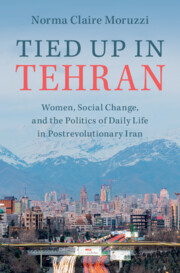
Tied Up in Tehran offers a richly interdisciplinary study of ordinary life in Iran since the 1979 revolution and a critical intervention in political theory debates on knowledge and method. Drawing from over ten years of field work in Iran since the 1990s, and originating in the author's surreal experience of being served tangerines during a home invasion in Tehran, Norma Claire Moruzzi examines the experiences of women, young people, artists, and activists: at home, at work, and in the street. These stories - of food and family, film and politics, shopping and crime-reckon with the past, demonstrate resilient democratization in the present, and provide glimpses of a plausible future while offering a refreshing model to ethically engaged modes of study. Moruzzi's lucid and engaging writing explores Iranian daily life as unexpected, contradictory, and full of political promise.
Nazi Germany’s policies profoundly altered both private and public lives of religious Jews in Germany and then across Europe. Despite targeting Jews as a “race,” anti-Jewish measures forced the Jewish religious leadership to seek new ways to assist their communities. Maintaining Jewish religious practices during the Holocaust became increasingly challenging and eventually impossible for most Jews.
The Introduction focuses on the experiences of victims of the Holocaust rather than perpetrators. It addresses victims’ perceptions, understandings, reactions, self-help and varied attempts at resistance. It also concerns Roma, mentally and physically challenged individuals, Slavs and Soviet POWs, and homosexuals. Finally, it addresses historiography, as do most of the chapters in this volume.
Resilience is the dynamic process of adapting to or recovering from stressors, maintaining positive mental health. While most studies have investigated resilience after major life events, less is known about resilience in everyday life. To understand how individuals recover from everyday stressors, and associations with other psychosocial variables, well-being and mental health, we conducted a systematic review of studies to daily resilience, i.e., recovery from daily stressors, using the experience sampling method (ESM). Out of 36 included studies, 11 studies investigated daily resilience in youth (10.9–24.7 years) and 25 in adult samples. Daily resilience was operationalized either with self-report items adapted from trait measures (17 studies) or in terms of affective recovery from daily stressors (20 studies). The self-reported ability to recover from daily stressors reflects subjective experiences of coping with stressors, whereas daily resilience as recovery from daily stressors captures the dynamic process, but is understudied in youth. Daily resilience was associated with psychosocial variables, including better sleep quality and greater optimism. Furthermore, individuals with mental health problems consistently showed longer recovery times after daily stressors. Overall, ESM studies highlight that daily resilience could help to identify individuals at-risk for mental health problems. The findings may facilitate timely interventions.
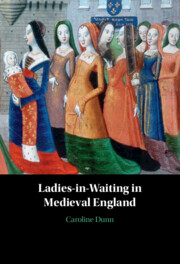
Chapter 3 focuses on the kinds of domestic duties expected of women in gentle, noble, and royal establishments and thus offers an understanding of everyday life in a late medieval elite household. The range of activities required of highborn household servants was broad, encompassing both public and private obligations. They saw to their queens’ or noblewomen’s personal needs in terms of apparel, entertainment, and piety. They traveled when duties demanded it and assisted their queens and ladies with medical care. To perform these tasks, they were entrusted with significant household resources and also, sometimes, care and custody of royal and noble children. Over years of service, through daily serving the needs of their employers, some serving women and their mistresses developed affectionate relationships as they shared literary tastes and devotional practices. Their employment provided opportunities for elite female servants to live a sumptuous lifestyle surrounded by luxury and entertainments, and also to network with other courtiers. I argue that investigating the domestic duties and daily lives of these often-overlooked women completes our understanding of courts and great households by showing the importance of female employment in the Middle Ages.
Ladies-in-Waiting in Medieval England examines female attendants who served queens and aristocratic women during the late medieval period. Using a unique set of primary source based statistics, Caroline Dunn reveals that the lady-in-waiting was far more than a pretty girl sewing in the queen's chamber while seeking to catch the eye of an eligible bachelor. Ladies-in-waiting witnessed major historical events of the era and were sophisticated players who earned significant rewards. They had both family and personal interests to advance – through employment they linked kin and court, and through marriage they built bridges between families. Whether royal or aristocratic, ladies-in-waiting worked within gendered spaces, building female-dominated social networks, while also operating within a masculine milieu that offered courtiers of both sexes access to power. Working from a range of sources wider than the subjective anecdote, Dunn presents the first scholarly treatment of medieval English ladies-in-waiting.
This chapter provides an introduction to the use of mobile sensing in social and personality psychology. It first looks at mobile sensing’s historical roots and discusses how, in the field, the method follows in the footsteps of other traditional approaches to the collection of behavioral data. It then covers research questions of the kind that mobile sensing lends itself to, and provides a high-level summary of the current literature on mobile sensing. In the third section, the chapter illustrates the very basic how-to of mobile sensing with respect to technical rationale, implementation in studies, and coverage of variables. The fourth and final section is a psychometric reflection on where mobile sensing currently stands and where it is or should be going. To this end, five predictions are evaluated that were made for mobile sensing research when it first emerged in the psychological research landscape about a decade ago.
This chapter provides an overview of the conditions and experiences of the 22 million people who lived on farms and who inhabited the villages and small towns in the countryside during the revolution. The relationship between these people and revolutionary legislators in Paris was one of negotiation, confrontation and dialogue. This chapter will highlight how rural dwellers adopted, adapted and resisted change from the capital. It discusses the cahiers de doléances, not only as they represent a decisive moment of mass politicization, but also because they emphasize so very well the concerns, hopes and fears of the majority of the population. The chapter also pays attention to the various waves of peasant insurrection – against feudalism and taxation – during 1789-1793. A balance sheet is drawn up for the outcomes of the French Revolution for the rural population, which reveals that changes in family life, religious practices and socio-economic relations combined to fundamentally alter the mental universe of all French citizens.
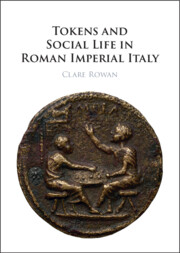
Tokens are underutilised artefacts from the ancient world, but as everyday objects they were key in mediating human interactions. This book provides an accessible introduction to tokens from Roman Italy. It explores their role in the creation of imperial imagery, as well as what they can reveal about the numerous identities that existed in different communities within Rome and Ostia. It is clear that tokens carried imagery that was connected to the emotions and experiences of different festivals, and that they were designed to act upon their users to provoke particular reactions. Tokens bear many similarities to ancient Roman currency, but also possess important differences. The tokens of Roman Italy were objects used by a wide variety of groups for particular events or moments in time; their designs reveal experiences and individuals otherwise lost to history. This title is also available as Open Access on Cambridge Core.
Settlement scaling theory predicts that higher site densities lead to increased social interactions that, in turn, boost productivity. The scaling relationship between population and land area holds for several ancient societies, but as demonstrated by the sample of 48 sites in this study, it does not hold for the Northern Maya Lowlands. Removing smaller sites from the sample brings the results closer to scaling expectations. We argue that applications of scaling theory benefit by considering social interaction as a product not only of proximity but also of daily life and spatial layouts.
My objective in this chapter is to investigate these questions through the examination of the relationship between society and the city in nineteenth-century Tehran. This relationship focuses on the spatiality of ordinary people’s daily lives. Social theories of space have become a common domain for geographers, sociologists, anthropologists, and ethnographers as a means to investigate socio-spatial processes. In this chapter, I unfold this theoretical framework and explain the impact of the spatial approach on social and historical examinations of cities before presenting the main empirical analysis of daily life and social spaces in nineteenth-century Tehran. My objective is to socialize the spatial analysis and, more importantly, to spatialize the social analysis. This chapter focuses on the relationship between urban society and Tehran in the nineteenth century. It examines people’s everyday lives in the city and their religious and non-religious spatial practices. It investigates various social spaces of day-to-day interactions in the city. I start by presenting a social analysis of Iranian urban society in the nineteenth century. Afterwards, I examine social spaces in two main categories: spaces based on religious gatherings and spaces based on nonreligious practices. This chapter ends with the examination of women’s social life and spaces in the city.
Ambulatory monitoring is gaining popularity in mental and somatic health care to capture an individual's wellbeing or treatment course in daily-life. Experience sampling method collects subjective time-series data of patients' experiences, behavior, and context. At the same time, digital devices allow for less intrusive collection of more objective time-series data with higher sampling frequencies and for prolonged sampling periods. We refer to these data as parallel data. Combining these two data types holds the promise to revolutionize health care. However, existing ambulatory monitoring guidelines are too specific to each data type, and lack overall directions on how to effectively combine them.
Methods
Literature and expert opinions were integrated to formulate relevant guiding principles.
Results
Experience sampling and parallel data must be approached as one holistic time series right from the start, at the study design stage. The fluctuation pattern and volatility of the different variables of interest must be well understood to ensure that these data are compatible. Data have to be collected and operationalized in a manner that the minimal common denominator is able to answer the research question with regard to temporal and disease severity resolution. Furthermore, recommendations are provided for device selection, data management, and analysis. Open science practices are also highlighted throughout. Finally, we provide a practical checklist with the delineated considerations and an open-source example demonstrating how to apply it.
Conclusions
The provided considerations aim to structure and support researchers as they undertake the new challenges presented by this exciting multidisciplinary research field.
This chapter imagines an ordinary day in the life of a female monastic community in twelfth-century Germany. The chapter, like the monastic day, is organized around the celebration of the monastic liturgy of the hours. Between the liturgical hours in the oratory, the nuns attend to their daily business in the cloister, chapter house, lavatory, refectory, and workshops. The flow and activities of this monastic day are based primarily on the Rule of St. Benedict, the customary of Hirsau, and Hildegard of Bingen’s own commentary on the Rule of St. Benedict, as well as on archaeological and bioarchaeological evidence that reflects medieval monastic lifeways.
Though millennia of building and rebuilding in the city center have affected archaeologists’ ability to recover domestic architecture and assemblages from the Archaic and Classical periods, the evidence which does survive provides a window into the daily lives of ordinary Athenians. Ancient Athenian houses hosted many activities, including family life, ritual practice, and craft production.